TL;DR

Get backup power and energy gear delivered free with Prime
- Fast, free delivery on millions of items
- Prime Video, Amazon Music and more included
- Member-only deals all year
Qcells plans to open a gigawatt-scale factory for perovskite-silicon tandem solar panels in 2029, Global CTO Danielle Merfeld told Canary Media. The company is testing full-size panels, but long-term durability and commercial viability remain unproven.
Qcells plans to open a gigawatt-scale factory in 2029 to manufacture perovskite-silicon tandem solar panels, Global Chief Technology Officer Danielle Merfeld told Canary Media. The proposal would put the U.S.-active manufacturer among companies seeking to commercialize panels that can produce more electricity from the same area, although their durability over decades remains unproven.
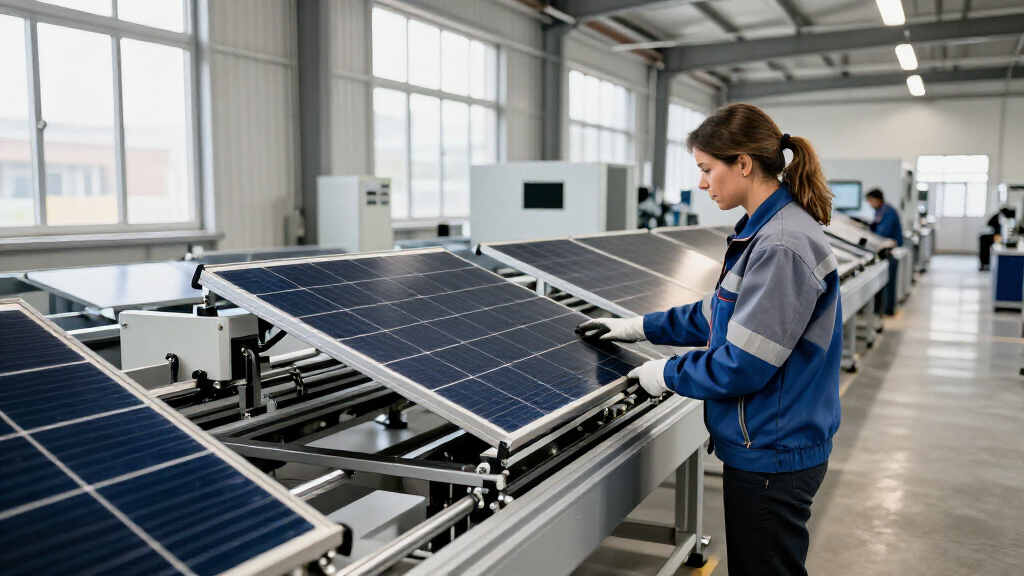
Qcells has been developing tandem solar cells since 2016. The company opened a pilot research and development line in Germany in 2022, then started a 40-megawatt pilot line in South Korea in 2024 that makes full-size panels. Merfeld said Qcells has also installed tandem panels at its own test sites over the past year. The company has not released field-performance data.
In July, Qcells said its tandem panels passed testing against quality standards set by UL and the International Electrotechnical Commission. The tests subject panels to calibrated physical stresses and assess whether they continue to produce power. Such accelerated tests provide evidence about reliability, but they cannot substitute for decades of real-world operation.
The technology combines a conventional silicon solar cell with a layer of perovskite, a crystal material that can be made from different ingredients. The layers capture sunlight in ways that can raise efficiency beyond silicon alone. Qcells has not disclosed the perovskite ingredients it uses or shared degradation data from its field tests, leaving outside observers without key details for evaluating performance over time.
More Power From the Same Area
If Qcells or another developer can produce reliable tandem panels at scale, the technology could increase the electricity generated by a rooftop or solar field without expanding its footprint. Alternatively, a project could produce the same amount of power using fewer panels and less land. That may also reduce some costs tied to installation, including wiring, auxiliary equipment and labor, though the source report does not provide cost estimates for Qcells’ planned product.
The proposed factory matters because tandem solar is moving from laboratory records toward manufacturing plans. Solar already ranks among the leading sources of new electricity generation in the United States and globally, according to the report. Higher-output panels could make available sites more productive, but only if manufacturers can deliver dependable products and project financiers are willing to back them.
That commercial test is still ahead. Solar panels are expected to operate for decades, and lenders need confidence in their long-term output before financing projects. Passing standardized accelerated tests is one step; field data and product warranties that can stand alongside conventional solar offerings are also central to broader adoption.
perovskite silicon tandem solar panels
As an affiliate, we earn on qualifying purchases.
As an affiliate, we earn on qualifying purchases.
From Lab Records to Factory Plans
Conventional high-performance solar panels convert sunlight to electricity at around 24% efficiency, according to Canary Media. Merfeld said the industry has improved efficiency by about half a percentage point each year over the past decade. In 2024, Qcells recorded a 28.6% tandem efficiency for a standard-size silicon cell layered with perovskites, a result confirmed by an independent body.
That figure is a laboratory or cell-level efficiency result, not a guarantee of how much electricity a commercial panel will produce over its lifetime. The challenge for tandem developers is to preserve the extra performance while making panels that withstand light, heat and moisture. Qcells says it has spent years studying degradation issues in silicon products and is applying its manufacturing experience to those challenges.
Qcells is not alone in pursuing large-scale production. Chinese company GCL said it opened a 1-gigawatt factory in Kunshan last year, while U.S. startup Tandem PV is targeting 2028 to build a gigawatt-scale facility, its CEO Scott Wharton told Canary Media. Factory capacity plans do not by themselves establish that a company is producing panels at scale or selling them with a commercial warranty. The report also cautions that public support available to Chinese developers makes direct comparisons with companies elsewhere difficult.
“We’re not a startup, unlike a lot of the Western tandem developers. We don’t need to raise money. We don’t need to excite investors, except for our own internal owners. We’re only working on commercial scale.”
— Danielle Merfeld, Qcells global chief technology officer
Durability and Factory Details Remain Open
Qcells’ 2029 target is a plan, not a report that the factory is already built or producing panels. The source report does not specify the proposed factory’s location, construction schedule, investment amount, expected output beyond its gigawatt scale, or when commercial sales might begin.
The company has not disclosed its perovskite formulation or field-test degradation data. It is also not yet clear how tandem panels will perform over the decades expected of conventional solar products, what warranty Qcells will offer, or how their manufacturing and installation costs will compare with standard panels. The UL and IEC-related tests are useful reliability evidence, but the report does not establish long-term field performance.
Plans announced by other developers also do not settle the question of commercial readiness. GCL’s reported factory opening and Tandem PV’s target are points of comparison, but factory capacity, actual production, product sales and bankable warranties are distinct milestones. The available material does not establish that any developer has solved all of them.
Field Results Before Mass Production
Qcells’ next evidence will come from continued testing of its full-size panels at field sites and further reliability results. The company has not said when it will publish detailed degradation data or disclose the materials used in its perovskites. Those disclosures would help customers, lenders and independent analysts judge how well the panels hold up outside controlled tests.
Before the planned factory can translate into commercial supply, Qcells will need to move from its existing pilot production toward manufacturing at gigawatt scale. The company’s stated target is 2029; the report does not provide intervening construction or commissioning milestones. The broader race will also depend on whether competing developers meet their own factory targets and demonstrate products suitable for long-term financing.
Key Questions
What is Qcells planning?
Qcells says it plans to open a gigawatt-scale factory in 2029 to make perovskite-silicon tandem solar panels. The factory is a future target, not an operating facility.
What are tandem solar panels?
They pair a conventional silicon cell with a perovskite layer. The materials can capture sunlight differently, potentially producing more electricity from the same panel area than silicon alone.
Has Qcells proven the panels will last for decades?
No. Qcells said its panels passed standardized testing and that it has installed them at test sites, but it has not shared field degradation data. Decades of operating history are not yet available for tandem panels.
Are other companies planning tandem factories?
Yes. The report says GCL stated it opened a 1-gigawatt factory in China, while Tandem PV has targeted 2028 for a U.S. gigawatt-scale factory. Those plans and claims do not by themselves establish sustained commercial production or long-term product performance.
When will Qcells’ factory begin production?
Qcells is targeting 2029, but the report does not give a construction schedule, commissioning date or expected start of commercial sales.
Source: rss
Columbus Day / Indigenous Peoples' Day Picks
long weekend sales
As an affiliate, we earn on qualifying purchases.