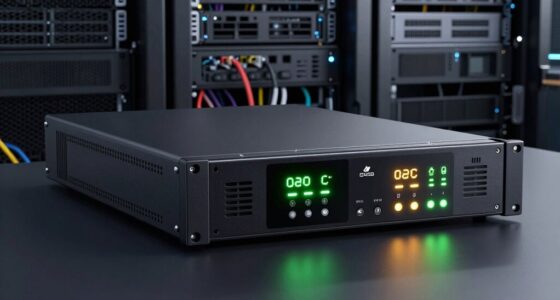

The best commercial battery energy storage systems pair enough usable capacity with compatible power electronics, safe installation, and a practical path to expansion. From the listed options, my best overall pick is the ECO-WORTHY Cubix100 600Ah system with 12,000W hybrid inverter, which combines substantial battery capacity with an integrated inverter. The Growatt 48V 100Ah stands out for buyers who value stated certifications and modular expansion, while the WattCycle 48V 400Ah four-pack offers a rack-battery route for projects built around separate equipment. These systems differ in how much integration they provide, how easily capacity can grow, and how much engineering and installation work they leave to the buyer. Read on for the full breakdown and guidance on matching a system to your site.

Get backup power and energy gear delivered free with Prime
- Fast, free delivery on millions of items
- Prime Video, Amazon Music and more included
- Member-only deals all year
Key Takeaways
- Integrated equipment changes the project workload: The ECO-WORTHY 600Ah system with a 12,000W hybrid inverter brings storage and conversion equipment together, while rack-battery packs generally require buyers to select and coordinate compatible inverters.
- Capacity alone does not make a system commercial-ready: Several listed products offer roughly 16kWh, but buyers still need to check continuous output, parallel limits, installation requirements, and applicable certifications for the full system.
- Rack batteries favor configurable projects: The WattCycle four-pack and ECO-WORTHY rack systems give installers a modular starting point, but system design and component compatibility become the buyer’s responsibility.
- Monitoring features are useful only when they fit operations: Bluetooth, Wi-Fi, and LCD displays on options such as the VPauexii can aid local checks, but remote fleet monitoring and site controls should be verified separately.
- Certification claims distinguish the Growatt listing: It specifically names UL1973 and UL9540A and describes expansion to 40kWh; buyers should still verify certificates, system-level approvals, and the exact configuration before specifying it.


| commercial battery energy storage system | Warranty | Voltage | Capacity |
|---|---|---|---|
| ECO-WORTHY Cubix100 48V 400Ah | — | 51.2V per battery | 100Ah per battery; 400Ah total |
| ECO-WORTHY 48V Home Backup Pow | — | — | — |
| WattCycle 48V 100Ah Server Rac | — | — | — |
| HumsiENK 16.1 kWh Home Backup | — | — | — |
| HumsiENK 48V 628Ah LiFePO₄ Bat | — | 48V | 628Ah |
| ECO-WORTHY Cubix100 48V 600Ah | 10 years | — | — |
| AOUSK 48V 314Ah LiFePO4 Batter | 5 years | 48V | 314Ah |
| VPauexii 51.2V 314Ah LiFePO4 B | 5 years | — | 314Ah |
| SUNGOLDPOWER 51.2V 200Ah Lithi | 10 years | 51.2V | 200Ah |
| ECO-WORTHY Cubix100 48V 600Ah | Battery: 10 years; inverter: 5 years | — | — |
| SUNGOLDPOWER 48V 314Ah LiFePO4 | — | 48V | 314Ah |
| Wattcycle 51.2V 100Ah LiFePO4 | 5 years | 51.2V (48V nominal) | 100Ah |
| HumsiENK 48V 100Ah LiFePO4 Ser | 10-year limited | 48V | 100Ah |
| GROWATT 48V 100Ah LiFePO4 Lith | 10 years, as stated in the listing | 48V | — |
| Wattcycle 48V 400Ah LiFePO4 Se | 5 years | — | — |
More Details on Our Top Picks
ECO-WORTHY Cubix100 48V 400Ah LiFePO4 Server Rack Battery, 4-Pack
The four-battery, 20.48 kWh package suits commercial-style installations that need rack-format storage and room to scale. CAN and RS485 support communication with compatible inverters, while Bluetooth and Wi-Fi add local and app-based monitoring. Its stated ability to parallel as many as 32 units gives it more growth potential than the HumsiENK 16.1 kWh system, which pairs storage with an inverter but starts with a different, integrated approach. The tradeoff is that this package is battery-focused: buyers need to plan for a compatible inverter and system installation rather than treating it as a complete power system. I would also confirm the warranty terms before ordering, since the listing gives both a three-year product warranty and a ten-year limited warranty. Multiple-package delivery may complicate receiving and installation.
Pros:- 20.48 kWh total storage spread across four rack batteries
- CAN and RS485 communication for compatible inverter integration
- Bluetooth and Wi-Fi monitoring
- Listed parallel expansion up to 32 units
Cons:- Requires a compatible inverter and system integration
- Warranty information conflicts between the product details and description
- Four units may arrive in multiple packages, complicating delivery and handling
Best for: Solar installers and facility owners who already have a compatible 48V inverter and want rack batteries they can expand over time.
Not ideal for: Buyers seeking a turnkey battery-and-inverter system or those who need clear, consistent warranty terms before purchase.
- Battery chemistry:LiFePO4
- Battery count:4
- Voltage:51.2V per battery
- Capacity:100Ah per battery; 400Ah total
- Energy capacity:20.48 kWh
- Communications:CAN, RS485, Bluetooth, Wi-Fi
- Maximum parallel units:32
- Certifications:UL9540, UL1973, CEC listed
Our verdict“Choose this four-pack when modular rack storage and future expansion matter more than an included inverter or unambiguous warranty terms.”
ECO-WORTHY 48V Home Backup Power System with 30,720Wh Battery and 10kW Inverter
This is the most complete package in this group: 30.72 kWh of batteries, a 10 kW inverter, and a six-layer server rack arrive as a coordinated system. Its 120V or 120/240V split-phase output can serve a wider range of loads than the battery-only ECO-WORTHY Cubix100 four-pack, which leaves inverter selection and integration to the buyer. Two independent MPPT controllers and a stated expansion path to six inverters and 32 batteries make it a fit for larger off-grid or backup projects, not just a small battery installation. The cost of that completeness is a more involved setup: the equipment is substantial, ships as multiple components, and requires compatible system design and installation. Buyers should verify the exact certification scope, since the listed specifications and description cite different standards.
Pros:- Includes six batteries, a 10 kW inverter, and a server rack
- 30.72 kWh total battery capacity
- Supports 120V and 120/240V split-phase output
- Expandable with parallel inverters and batteries
Cons:- Large, multi-component system needs significant space and installation planning
- Setup requires compatible equipment and system-level configuration
- Certification details differ between the specifications and description
Best for: Commercial-property owners or experienced off-grid system planners who want substantial storage, a matched inverter, and 120/240V output in one package.
Not ideal for: Small sites, buyers who only need a battery bank, or anyone without space and qualified help for a multi-component installation.
- Battery capacity:30,720Wh total
- Battery configuration:Six 51.2V 100Ah LiFePO4 batteries
- Inverter output:10,000W
- Peak output:20,000W
- Output voltage:120V or 120V/240V split-phase
- MPPT controllers:Two independent
- Expansion:Up to 6 inverters and 32 batteries in parallel
- Dimensions:25.59 × 21.26 × 9.45 in
Our verdict“Pick this package when you want a high-capacity battery bank and split-phase inverter together, and have the space and installation support to set them up.”
WattCycle 48V 100Ah Server Rack Batteries with 12kW Split-Phase Inverter
The WattCycle pairs 10.24 kWh of LiFePO4 storage with a 12 kW split-phase inverter and a stated UPS transfer time under 10 ms. That short transfer can help keep sensitive equipment running through an outage, giving this package a different emphasis from the larger ECO-WORTHY 30.72 kWh system, which offers much more stored energy for extended backup. Its 24 kW maximum solar input and 250 A charging current also suit sites designed to replenish the battery quickly from a substantial solar array. The tradeoff is capacity: two batteries provide less energy reserve than either ECO-WORTHY package here, so long-duration loads may call for expansion. The system can grow with additional compatible equipment, but the inverter and batteries still require installation space and a properly planned electrical setup.
Pros:- 12 kW inverter with 120V/240V split-phase output
- UPS transfer time specified as under 10 ms
- Supports up to 24,000W of solar input and 250A charging
- Expandable with additional compatible inverters and batteries
Cons:- Included 10.24 kWh storage is lower than the ECO-WORTHY systems in this group
- Expansion requires additional compatible equipment
- System needs dedicated installation space and electrical planning
Best for: Small commercial sites with brief outage-sensitive loads, strong solar capacity, and an installer able to configure a split-phase system.
Not ideal for: Facilities that need long-duration backup from the included batteries alone or buyers who want a compact, plug-in setup.
- Battery configuration:Two 48V 100Ah LiFePO4 batteries
- Battery capacity:10.24 kWh total
- Inverter output:12 kW, 120V/240V split-phase
- Maximum solar input:24,000W
- Maximum charging current:250A
- UPS transfer time:Under 10 ms
- Battery management:100A BMS with 3A active balancing
- Maximum parallel expansion:6 inverters and 20 batteries
Our verdict“Choose the WattCycle when fast transfer and high solar charging capacity matter more than getting the largest included battery reserve.”
HumsiENK 16.1 kWh Home Backup Battery with 8000 W Hybrid Split-Phase Inverter
For buyers who want an inverter and battery in one coordinated unit, this HumsiENK combines 16.1 kWh of LiFePO4 storage with an 8 kW hybrid inverter and native 120/240V split-phase output. That integrated format is simpler to plan around than the battery-only ECO-WORTHY Cubix100 four-pack, which requires a separately chosen inverter; it also gives less storage than the HumsiENK 32.15 kWh battery, which is a better fit when capacity is the priority and inverter arrangements are handled separately. A 10 kW MPPT controller and transfer switching rated at 10 ms support solar charging and backup operation. Its 294 lb weight is a serious installation constraint despite the built-in wheels, and freight delivery needs suitable access. This is a substantial system, not a casually movable appliance.
Pros:- 16.1 kWh battery paired with an 8 kW hybrid inverter
- Native 120/240V split-phase output
- 10 kW MPPT solar charge controller
- Built-in wheels, LCD touchscreen, and Bluetooth monitoring
Cons:- 294 lb weight makes positioning and installation difficult
- Freight delivery requires truck-accessible receiving arrangements
- 8 kW inverter output is lower than the WattCycle system’s 12 kW rating
Best for: Small commercial buildings that need integrated 120/240V backup and have a prepared location and crew for a heavy system.
Not ideal for: Sites requiring a high-output inverter beyond 8 kW, limited-access delivery locations, or buyers who need a lightweight installation.
- Battery capacity:16.1 kWh
- Battery voltage and capacity:48V, 314Ah
- Battery chemistry:LiFePO4
- Inverter output:8,000W
- Surge capacity:10,000W
- Output voltage:120/240V split-phase
- MPPT solar charge controller:10,000W
- Weight:294 lb
Our verdict“Choose this integrated HumsiENK for mid-size split-phase backup if the 8 kW output and heavy freight installation fit your site.”
HumsiENK 48V 628Ah LiFePO₄ Battery with Bluetooth, Active Balancing, and LCD
With 32.15 kWh of storage and 10.24 kW continuous output, this wall-mount HumsiENK is the capacity pick for sites that need a sizable battery reserve without buying an inverter as part of this listing. Its 628Ah rating exceeds the storage in the HumsiENK 16.1 kWh integrated system, but that smaller model includes an 8 kW hybrid inverter and split-phase output. Here, buyers instead get a 200A BMS, 3A active balancing, Bluetooth app monitoring, and an LCD, plus RS485, CAN, and RS232 communications for supported integrations. The tradeoff is a larger installation footprint and the need to plan separately for inverter compatibility. Freight delivery also calls for suitable receiving access, while the listed five-year warranty is shorter than the ten-year limited warranty stated for the ECO-WORTHY four-pack, whose own listing has conflicting warranty details.
Pros:- 32.15 kWh capacity for extended backup or solar storage
- 10.24 kW continuous output with a 200A BMS
- Bluetooth app and built-in LCD monitoring
- 3A active balancing and RS485, CAN, and RS232 communications
Cons:- Battery listing does not include an inverter
- Large wall-mount unit requires dedicated installation space
- Freight delivery and a five-year warranty may not suit every project
Best for: Facilities with a compatible 48V inverter that need substantial stored energy, high continuous battery output, and monitoring options.
Not ideal for: Buyers looking for a complete inverter-and-battery package, limited wall space, or a site that cannot receive freight shipments.
- Battery chemistry:LiFePO4
- Voltage:48V
- Capacity:628Ah
- Energy capacity:32.15 kWh
- Continuous output:10.24 kW
- Battery management system:200A BMS
- Cell balancing:3A active balancing
- Cycle life:Over 6,000 cycles at 80% DoD
- Communications:RS485, CAN, RS232
Our verdict“Choose this battery when stored energy and continuous output are the priority and you already have a compatible inverter plan.”
ECO-WORTHY Cubix100 48V 600Ah LiFePO4 Battery System with RACK6 V3 Cabinet
For a commercial or larger off-grid installation that already has an inverter plan, I’d put this Cubix100 kit near the top of the battery-only options. Its six LiFePO4 modules provide 30.72kWh in a rack cabinet, while a 600A busbar and parallel support for up to 32 units leave room to scale. Compared with the ECO-WORTHY Cubix100 48V 600Ah system with a 12,000W hybrid inverter, this kit omits the inverter, so it suits buyers who want to select or retain their own equipment rather than buy a bundled power system. Bluetooth and Wi-Fi monitoring add useful visibility, but integrated communications depend on inverter compatibility. The cabinet and installation accessories simplify the hardware package, though its footprint calls for dedicated rack space and a qualified installation plan.
Pros:- Six LiFePO4 batteries provide 30.72kWh of stated storage.
- Supports expansion by paralleling up to 32 units.
- Rack cabinet, 600A busbar, and installation accessories are included.
- Lists ETL UL9540 DC, UL1973, and CEC credentials.
Cons:- A compatible inverter is required and may be needed for integrated communications.
- Cabinet dimensions require dedicated installation space.
- The battery kit does not include an inverter.
Best for: Commercial property owners and off-grid operators who need a 30.72kWh rack battery bank and already have a compatible inverter.
Not ideal for: Buyers seeking an all-in-one battery-and-inverter package or those without space for a dedicated battery cabinet.
- Chemistry:LiFePO4
- System voltage:48V (51.2V)
- Total capacity:600Ah
- Energy capacity:30.72kWh
- Battery configuration:Six 100Ah batteries
- Busbar current:600A
- Communication:CAN, RS485, Bluetooth, Wi-Fi
- Expansion:Up to 32 units; stated maximum 163.8kWh
- Warranty:10 years
Our verdict“Choose this kit if you want a scalable 30.72kWh rack battery bank and prefer to source the inverter separately.”
AOUSK 48V 314Ah LiFePO4 Battery, 16.07 kWh
The AOUSK is a useful middle-capacity choice for buyers who want one substantial battery with several ways to check status and communicate with an inverter. It stores 16.07kWh and offers display, app, and PC monitoring alongside RS485, CAN, RS232, Bluetooth, and Wi-Fi. That gives it a more varied monitoring and interface set than the SUNGOLDPOWER 51.2V 200Ah Lithium Battery, though the SUNGOLDPOWER is specified for parallel banks of up to 32 units rather than AOUSK’s 15. Handles and wheels can help position this unit, but at 291 pounds, they do not make it a one-person installation. Its stated 5-year warranty is also shorter than the 10-year coverage listed for the ECO-WORTHY Cubix100 battery system. Buyers should verify inverter compatibility before building around its communications features.
Pros:- Provides 16.07kWh of stated storage in one battery.
- Offers display, app, and PC monitoring plus several communication interfaces.
- Supports parallel connection of up to 15 units.
- Built-in handles and wheels assist with positioning.
Cons:- At 291 pounds, installation and repositioning require planning and suitable equipment.
- The 5-year warranty is shorter than the 10-year coverage stated for the ECO-WORTHY Cubix100 systems.
- Inverter compatibility depends on the specific installation.
Best for: Small commercial sites and off-grid operators who want a 16.07kWh battery with multiple monitoring methods and compatible inverter links.
Not ideal for: Installers needing a lightweight battery, a longer stated warranty, or a bank expandable beyond 15 units.
- Chemistry:LiFePO4
- Voltage:48V
- Capacity:314Ah
- Energy storage:16.07kWh
- BMS:200A
- Cycle life:Up to 6,000 cycles at 80% state of health
- Communication:RS485, CAN, RS232, Bluetooth, Wi-Fi
- Parallel connection:Up to 15 units
- Warranty:5 years
Our verdict“Pick the AOUSK if varied monitoring options matter more than lighter handling or a longer warranty.”
VPauexii 51.2V 314Ah LiFePO4 Battery, 16.07kWh with 200A BMS, 250A Breaker, LCD, Bluetooth and Wi-Fi
VPauexii’s clearest point of difference is its stated automatic aerosol fire suppression system, paired with a 16.07kWh LiFePO4 battery. For buyers comparing similarly sized units, that feature gives it a distinct safety-oriented pitch alongside an LCD, Bluetooth and Wi-Fi monitoring, and CAN, RS485, and RS232 ports. The AOUSK 48V 314Ah battery offers a similarly sized storage block and broader stated cycle-life detail at up to 6,000 cycles at 80% state of health; VPauexii instead claims over 10,000 cycles at 80% depth of discharge. Those cycle figures use different wording and should not be treated as directly comparable. VPauexii supports up to 15 units in parallel, but a five-year warranty and the space and electrical planning required for a larger bank temper its appeal.
Pros:- Includes an automatic aerosol fire suppression system.
- Provides 16.07kWh of stated storage with a 200A BMS and 250A breaker.
- Supports LCD, Bluetooth, and Wi-Fi monitoring.
- Can be expanded by paralleling up to 15 units.
Cons:- The stated warranty is five years.
- Larger parallel banks require substantial installation space and electrical planning.
- The manufacturer’s cycle-life claim uses a different test description from the AOUSK’s stated figure.
Best for: Commercial and off-grid buyers seeking a 16.07kWh LiFePO4 battery with built-in fire suppression and remote monitoring.
Not ideal for: Buyers who need a longer stated warranty or want cycle-life figures directly comparable with products using different test conditions.
- Chemistry:LiFePO4
- Nominal voltage:51.2V
- Capacity:314Ah
- Energy storage:16.07kWh
- BMS:200A
- Breaker:250A
- Monitoring:LCD, Bluetooth, Wi-Fi
- Expansion:Up to 15 units in parallel
- Warranty:5 years
Our verdict“Choose VPauexii if built-in fire suppression is a priority in a 16.07kWh battery, and confirm its specifications against your inverter and installation requirements.”
SUNGOLDPOWER 51.2V 200Ah Lithium Battery with 200A BMS
This SUNGOLDPOWER battery is a smaller building block than the 16.07kWh AOUSK and VPauexii units: its 200Ah capacity makes it a better fit for staged growth than for buyers seeking maximum storage from one battery. Its standout system-level feature is support for up to 32 units in parallel, compared with 15 for those larger-capacity alternatives. The stated cycle life exceeds 8,000 deep cycles, and a 10-year warranty gives it longer listed coverage than either of those 16.07kWh options. A touchscreen displaying charge, current, and voltage helps operators check basic status locally, while CAN/RS485 supports compatible inverter connections. The tradeoff is physical handling: at 295.4 pounds, this is not an easy unit to move, and its inverter compatibility needs checking before purchase.
Pros:- Supports parallel connection of up to 32 units.
- Manufacturer states more than 8,000 deep cycles.
- Touchscreen displays charge, current, and voltage.
- Includes a 10-year warranty.
Cons:- At 295.4 pounds, installation requires appropriate handling and support.
- Its 200Ah capacity is lower than the 314Ah AOUSK and VPauexii batteries.
- Inverter compatibility should be confirmed before purchase.
Best for: Commercial operators building a modular battery bank in stages who value 32-unit parallel expansion and a 10-year stated warranty.
Not ideal for: Buyers who want 16kWh or more in one battery, need easy manual handling, or have not confirmed inverter compatibility.
- Battery chemistry:Lithium-ion
- Voltage:51.2V
- Capacity:200Ah
- BMS current:200A
- Cycle life:Over 8,000 deep cycles
- Parallel units:Up to 32
- Communication:CAN, RS485
- Weight:295.4lb
- Warranty:10 years
Our verdict“Choose this SUNGOLDPOWER model for a modular bank that can grow to 32 units, rather than for the largest single-battery capacity.”
ECO-WORTHY Cubix100 48V 600Ah LiFePO4 Battery and 12,000W Hybrid Inverter System
For buyers who want batteries, inverter, and cabinet specified as one package, this Cubix100 system is the most complete option in this group. Six 51.2V 100Ah LiFePO4 batteries provide 30.72kWh, and the included hybrid inverter supports 120V/240V split-phase or 120V/208V three-phase output. That makes it a stronger fit for a high-power site with defined output needs than the Cubix100 48V 600Ah battery-only cabinet, which leaves inverter selection to the buyer. This package also lists dual MPPT controllers and expansion to six inverters and 32 batteries. The added integration comes with more installation coordination: components ship separately, and installers must manage the system as a complete electrical setup. The five-year inverter warranty is shorter than the batteries’ ten-year coverage.
Pros:- Bundles six batteries, a 12,000W hybrid inverter, and a six-layer cabinet.
- Provides 30.72kWh of stated battery capacity.
- Supports split-phase or three-phase output and dual MPPT controllers.
- Lists expansion to six inverters and 32 batteries in parallel.
Cons:- Components ship separately, requiring delivery and installation coordination.
- The inverter warranty is five years, shorter than the battery warranty.
- The included inverter may be redundant for buyers who already have compatible equipment.
Best for: Commercial property owners and off-grid operators who need 30.72kWh of storage with an included hybrid inverter and split-phase or three-phase output.
Not ideal for: Buyers who already own a suitable inverter, want to choose each component independently, or cannot coordinate a multi-component installation.
- Battery chemistry:LiFePO4
- Battery configuration:Six 51.2V 100Ah batteries
- Total battery capacity:30.72kWh
- Inverter peak power:24,000W
- Output options:120V/240V split-phase or 120V/208V three-phase
- Battery communication:CAN, RS485, Bluetooth, Wi-Fi
- Expansion:Up to 6 inverters and 32 batteries in parallel
- Certifications and testing:Intertek UL9540 DC testing, UL1741 testing, CEC standards
- Warranty:Battery: 10 years; inverter: 5 years
Our verdict“Pick this package if you need a high-capacity battery bank and hybrid inverter together, and can coordinate professional installation.”
SUNGOLDPOWER 48V 314Ah LiFePO4 Solar Battery, 16.07kWh
I’d shortlist the SUNGOLDPOWER 16.07kWh battery for a commercial or larger off-grid installation that needs substantial storage without starting with several smaller modules. Its stated capacity is more than three times that of the Wattcycle 51.2V 100Ah rack battery, which can simplify the initial battery layout, while support for up to 16 parallel units leaves room to scale. RS485 and CAN communication, plus Wi-Fi, Bluetooth, and an LCD, give buyers several ways to monitor the system and connect compatible inverters. The tradeoff is physical: at 271.2 lb, this freestanding tower calls for careful delivery planning and suitable floor placement. I’d also confirm inverter compatibility and installation requirements before committing; a larger battery capacity alone does not establish commercial system readiness.
Pros:- 16.07kWh capacity in a single battery unit
- Rated for over 8,000 deep cycles
- Supports parallel connection of up to 16 units
- RS485, CAN, Wi-Fi, Bluetooth, and LCD monitoring
Cons:- Heavy at 271.2 lb, making delivery and placement more demanding
- Requires a compatible inverter and separately planned system integration
Best for: Commercial and off-grid system buyers who want a high-capacity 48V battery unit and have suitable space and lifting support.
Not ideal for: Installers who need lightweight, easily handled modules or buyers seeking a complete inverter-and-battery system in one package.
- Chemistry:LiFePO4
- Voltage:48V
- Capacity:314Ah
- Energy:16.07kWh
- Maximum power:16,076W
- Cycle life:Over 8,000 cycles
- Maximum parallel units:16
- Communications:RS485, CAN, Wi-Fi, Bluetooth
- Weight:271.2 lb
Our verdict“Choose this when substantial storage in one battery matters more than easy handling or an all-in-one system.”
Wattcycle 51.2V 100Ah LiFePO4 Rack-Mount Battery with Bluetooth
The Wattcycle 5.12kWh rack battery suits buyers who want to add storage in standard-size increments rather than place a large tower battery at the center of the installation. Its 3U rack format and CAN, RS485, and RS232 ports make it a more natural fit for a planned battery cabinet than the freestanding SUNGOLDPOWER 16.07kWh. Bluetooth and the LCD touchscreen also provide local monitoring without relying on a single viewing method. Wattcycle states a cycle life of 15,000+ cycles at 60% depth of discharge, but that figure is tied to the stated operating condition, and the warranty is five years. A 100A BMS and 5.12kWh per unit mean larger storage targets require multiple batteries, rack space, compatible controls, and additional installation work.
Pros:- 3U rack-mount form factor suited to modular installations
- CAN, RS485, and RS232 support for inverter integration
- LCD touchscreen and Bluetooth monitoring
- Expandable to 16 batteries in parallel
Cons:- Each unit stores 5.12kWh, so larger systems require multiple batteries
- Five-year warranty is shorter than the stated 10-year warranties on the SUNGOLDPOWER and HumsiENK options
- 91.9 lb unit weight still requires planning for rack installation
Best for: System integrators and facility owners building a rack-based 48V storage bank in expandable 5.12kWh increments.
Not ideal for: Buyers who need high capacity from one battery, want a longer stated warranty, or lack a rack cabinet and compatible inverter.
- Voltage:51.2V (48V nominal)
- Capacity:100Ah
- Energy:5.12kWh
- Maximum output:5,120W
- BMS:100A
- Cycle life:15,000+ cycles at 60% DOD
- Expansion:Up to 16 batteries in parallel
- Communications:Bluetooth 5.0, CAN, RS485, RS232
- Warranty:5 years
Our verdict“Pick this for a rack-based system that benefits from incremental expansion and several communication options.”
HumsiENK 48V 100Ah LiFePO4 Server Rack Battery, 3U
The HumsiENK 3U battery is a fit for installers planning to build capacity from repeated 5.12kWh modules: it lists support for up to 20 parallel connections, compared with 16 for the Wattcycle 100Ah rack battery. App monitoring and CAN, RS232, and RS485 communication add useful options for system oversight and inverter pairing. Its stated protection set covers overcharge, over-discharge, overload, short circuit, low temperature, and overheating, while the 10-year limited warranty is longer than Wattcycle’s five-year term. I would resolve two listing ambiguities before ordering: the weight appears as both 96.45 lb and 66 lb, and the page refers to both a single battery and a 2-pack. Those uncertainties complicate rack planning and capacity calculations, despite the appealing expansion ceiling.
Pros:- Supports up to 20 parallel connections
- App monitoring and CAN, RS232, and RS485 communication
- Built-in protections cover several electrical and temperature faults
- 10-year limited warranty
Cons:- Listing gives conflicting weights of 96.45 lb and 66 lb
- Listing describes both a single battery and a 2-pack, leaving quantity unclear
Best for: Installers designing a large rack-based battery bank who can verify the delivered configuration and weight before purchase.
Not ideal for: Buyers who need unambiguous pack quantity, confirmed shipping weight, or a clearly documented system configuration without seller clarification.
- Chemistry:LiFePO4
- Voltage:48V
- Capacity:100Ah
- Energy:5,120Wh
- Output power:5,120W
- Rack size:3U
- Parallel connections:Up to 20
- Communications:CAN, RS232, RS485
- Warranty:10-year limited
Our verdict“Consider it for a scalable rack bank only after confirming the exact battery count, weight, and included accessories.”
GROWATT 48V 100Ah LiFePO4 Lithium Battery, 5120Wh Expandable to 40kWh, Home Energy Storage Off‑Grid Solar Battery, Whole House Backup On‑Grid Off‑Grid Power System, UL1973 UL9540A Certified (2PCS
This Growatt battery bundle is aimed at buyers already building around Growatt equipment: the listing describes compatibility with Growatt inverters and all-in-one storage systems, along with a stackable, plug-and-play setup. That ecosystem focus distinguishes it from the Wattcycle 4-pack, whose listed communication choices suit a broader range of integration plans but require buyers to confirm inverter compatibility themselves. The listing states 5.12kWh per battery and expansion up to 40kWh, but the product title indicates two pieces while the supplied data does not clearly specify the bundle’s total delivered energy. It also advertises 10kW AC output and 15,000W solar input without giving enough battery-level detail to treat those as standalone battery output ratings. I’d verify pack quantity, inverter pairing, and system configuration before specifying it for a project.
Pros:- Designed for integration with compatible Growatt inverters and all-in-one systems
- Stackable design described as plug-and-play
- IP66 rating is specified for indoor and outdoor use
- Listing states UL 1973 and UL 9540A certifications
Cons:- Supplied details do not clearly establish the bundle’s total energy capacity or exact battery count
- Compatibility is focused on Growatt equipment
- Advertised system output and solar input are not clearly tied to battery-level ratings
Best for: Home or small-site storage buyers who already use compatible Growatt inverters and can confirm the exact bundle configuration.
Not ideal for: Commercial buyers needing clearly documented battery-level output specifications, broad inverter compatibility, or an unambiguous delivered energy total.
- Chemistry:LiFePO4
- Voltage:48V
- Capacity per battery:100Ah
- Energy per battery:5,120Wh
- Expandable capacity:Up to 40kWh, as stated in the listing
- Certifications stated:UL 1973, UL 9540A, FCC, UN38.3, RoHS
- Compatibility:Designed for Growatt inverters and all-in-one systems
- Warranty:10 years, as stated in the listing
Our verdict“Choose this for a Growatt-centered installation after confirming the bundle contents and system-level ratings with the seller.”
Wattcycle 48V 400Ah LiFePO4 Server Rack Battery, 20.48kWh 4-Pack
For buyers who want a substantial rack-based bank from the outset, this Wattcycle 4-pack combines four 5.12kWh batteries for 20.48kWh nominal storage. That gives it more stated capacity as supplied than the single-unit SUNGOLDPOWER battery, while distributing the weight and storage across four 3U modules. Each module has its own 100A BMS, LCD touchscreen, Bluetooth, and CAN, RS232, and RS485 ports, offering monitoring and integration options across the bank. The tradeoff is installation footprint: four rack batteries need a suitable cabinet or enclosure, and the listed 5-year warranty is shorter than the 10-year terms stated for SUNGOLDPOWER and HumsiENK. Inverter communication still depends on compatibility, so I’d confirm protocols and system limits before treating the pack as a complete commercial storage solution.
Pros:- 20.48kWh nominal energy across four batteries
- Four 3U modules allow a distributed rack installation
- Each battery includes a 100A BMS and 3A active balancing
- LCD, Bluetooth, CAN, RS232, and RS485 are listed
Cons:- Requires a compatible rack cabinet or enclosure
- Five-year warranty is shorter than the 10-year terms listed for some alternatives
- Inverter communication and compatibility need to be confirmed for the planned system
Best for: Facilities and off-grid operators seeking a 20.48kWh modular bank with per-battery monitoring and rack installation.
Not ideal for: Buyers without a rack cabinet, those seeking a complete inverter system, or projects that prioritize a longer stated warranty.
- Configuration:4-pack
- System voltage:48V
- Total capacity:400Ah
- Nominal energy:20.48kWh
- Energy per battery:5,120Wh
- BMS:100A per battery
- Cycle life:6,000+ cycles
- Rack format:3U
- Warranty:5 years
Our verdict“Choose this when you want a sizeable modular rack bank supplied as a four-battery set and already have a compatible enclosure and inverter plan.”

How We Picked
I compared the 15 listings as commercial-scale storage candidates, not as interchangeable batteries. The ranking gives more weight to system completeness, stated capacity and power, expandability, monitoring, and the clarity of integration than to a single large capacity figure. I also considered how much additional work each option appears to leave for the buyer, including choosing an inverter, combining battery modules, and validating electrical compatibility.
The leading positions favor options with a clearer route from storage to a working backup or solar system. The ECO-WORTHY 600Ah package with a 12,000W hybrid inverter leads for combining substantial storage with conversion hardware; the Growatt earns distinction for named certifications and stated expansion potential. Modular rack batteries remain compelling for engineered installations, but their rank reflects the added design and compatibility work. Product listings do not establish suitability for every commercial site, so I treat performance, certification, warranty, and code details as items buyers must confirm with the manufacturer and qualified installer.
Factors to Consider When Choosing Best Commercial Battery Energy Storage Systems
Battery capacity is only one part of a commercial storage decision. I would start by defining the job the system must do, then check that the battery, inverter, site electrical design, and approval path work as a single project.
Size for the load profile, not the headline capacity
List the equipment that must stay powered, its running draw, startup surges, and the number of hours it needs backup. Then separate energy needs, measured over time, from power needs, which determine what can run at once. A battery with substantial kWh can still fall short if its inverter or battery discharge limit cannot support peak loads. Include reserve capacity for aging, temperature effects, and days when solar input is weak. A common mistake is sizing to total building consumption instead of the critical-load panel. Ask the installer to model both ordinary operation and the outage scenario that matters most.
Check inverter and battery compatibility as a system
A battery’s nominal voltage does not by itself establish compatibility with a hybrid inverter. Confirm approved battery models, communication protocols, charge and discharge limits, and firmware requirements before buying. For a package with an included inverter, verify that its output type and power level match the site’s phase, service, and load needs. For rack batteries, account for the extra design work of selecting an inverter and setting up parallel communication. Mixing components that are individually capable can still create commissioning problems when their controls do not communicate. Request written compatibility confirmation for the exact battery and inverter configuration.
Treat safety approvals as project-level checks
Battery and system certifications can affect permits, insurance, and acceptance by local authorities, but one listed standard does not automatically approve an entire installation. Confirm the exact model number, certificate scope, installation location, and any required fire or electrical provisions with the authority having jurisdiction. Ask whether the approval applies to the battery alone or to the battery-inverter combination being proposed. Commercial sites may face requirements that differ from residential backup projects, especially for equipment placement and emergency access. Do not rely on a product-page claim without documentation you can match to the delivered hardware. Make code review part of procurement rather than a late installation step.
Compare modular expansion with a right-sized initial build
Expandable systems can let a business stage investment as its loads grow, but expansion is useful only if later modules remain compatible and the inverter supports the planned configuration. Check maximum parallel battery count, communication limits, and whether adding modules changes warranty conditions. A larger single package may reduce complexity at commissioning, while several rack modules can make replacement or staged growth more flexible. Avoid buying extra capacity without a forecast for load growth or backup duration. Ask the supplier how the system behaves when modules have different ages or charge states. Include rack space, cabling, breakers, and future installation labor in the expansion plan.
Plan monitoring, maintenance, and service access
Local screens and wireless connections can help an operator check battery status, but they are not the same as site-wide energy management or remote fleet support. Determine what data the system records, who can access it, and whether alerts remain available if internet service fails. Clarify the battery’s maintenance schedule, warranty process, replacement logistics, and expected service response before specifying equipment for a business. A system that is easy to monitor but difficult to service may create avoidable downtime. Check that staff can isolate equipment safely and that installers leave clear operating documentation. For multiple sites, prioritize consistent controls and service arrangements over convenience features alone.
Evaluate the full project cost and operating case
Compare proposals using installed system scope rather than battery capacity alone. Include inverters, switchgear, protection, wiring, commissioning, permits, monitoring, and any site upgrades needed to support the storage system. Then model the intended value: backup resilience, solar self-consumption, peak-load management, or another specific operating goal. A system with integrated hardware may simplify procurement, while a modular battery package can suit a project with an existing inverter and engineering team. Ask for assumptions behind usable capacity, efficiency, warranty coverage, and expected operating limits. The better fit is the one whose verified performance and installed scope match the business case, not simply the largest stated battery.
Frequently Asked Questions
Can a 48V battery system serve a commercial facility?
It can fit some small facilities, workshops, telecom loads, or critical-load panels, but the voltage label alone does not establish commercial suitability. Check the inverter’s continuous output, battery current limits, parallel configuration, and the facility’s electrical service requirements. Larger loads may call for a different architecture or a professionally engineered multi-unit installation. Confirm local code acceptance and system-level approvals before specifying a low-voltage package. Have a qualified designer compare the system against measured load and backup-duration needs.
Should I choose a battery package with an included inverter or separate rack batteries?
An integrated package can simplify component selection and reduce the number of compatibility decisions, making it attractive when its inverter matches the site. Separate rack batteries can be a better fit when a business already has compatible power electronics or needs a tailored system layout. The tradeoff is that modular builds require closer attention to communications, protection, commissioning, and future expansion. Compare complete system documentation rather than treating the battery and inverter as independent purchases. Get confirmation that the exact configuration is approved and supported as a whole.
Is a 16kWh battery enough for a business backup system?
It depends on which loads need backup and how long they must run, not on the business label. A 16kWh class battery may cover a limited critical-load panel for a defined period, while HVAC, pumps, refrigeration, or production equipment can consume that energy quickly. Power output and surge capacity matter just as much as stored energy when several loads start together. Ask for a load calculation that accounts for usable capacity, inverter limits, and reserve requirements. If the system must cover extended outages, model solar recharge and multiple-day operation as well.
What should I verify before relying on a product’s certification claim?
Match the certificate to the exact model and confirm which component or system it covers. A battery certification does not necessarily certify the inverter, the assembled energy storage system, or the proposed installation. Request current documentation from the manufacturer and ask the installer or local authority whether it satisfies the project’s requirements. Confirm any limits on installation location, battery count, and approved pairings. This check is especially important when a listing names a standard but does not show the full certificate scope.
How do I decide between one large battery and several smaller modules?
Several modules can offer staging, redundancy, and easier capacity growth, while a larger unit may reduce wiring and configuration complexity. The right choice depends on the inverter’s supported battery count, available space, service access, and how the system behaves if one module is unavailable. Ask whether modules can be added later without replacing existing hardware or changing warranty coverage. Factor in installation labor and protection equipment, not only battery capacity. For a business where downtime matters, have the installer explain the failure and maintenance plan for both layouts.
Conclusion
My best overall choice is the ECO-WORTHY Cubix100 600Ah system with 12,000W hybrid inverter for buyers seeking a substantial battery package with inverter hardware included. For best value in a modular design, I would compare the WattCycle 48V 400Ah four-pack with the ECO-WORTHY rack systems, especially when an installer can confirm the right inverter and configuration. The best premium-minded pick is the Growatt 48V 100Ah option for projects that place weight on its stated certifications and expansion path, subject to verifying exact approvals. For beginners, an integrated ECO-WORTHY backup package is the clearer starting point than standalone rack batteries, though professional design is still needed. For buyers who need monitoring features, the VPauexii’s listed LCD, Bluetooth, and Wi-Fi distinguish it; for any commercial site, choose only after confirming load fit, system compatibility, code acceptance, and service support.