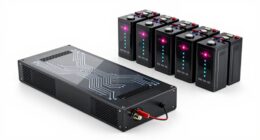

Using telematics for predictive maintenance of your automotive batteries allows you to continuously monitor key health indicators like voltage, temperature, and capacity. This real-time data helps you spot early signs of declining battery performance and set alerts for potential failures. By acting proactively, you can prevent unexpected breakdowns and reduce repair costs. Staying ahead with telematics guarantees your vehicle stays reliable longer, and if you keep exploring, you’ll discover how to optimize your maintenance strategies further.
Key Takeaways
- Telematics enables continuous remote monitoring of battery parameters to detect early signs of deterioration.
- Trend analysis of voltage, current, and temperature data helps predict potential battery failures proactively.
- Automated alerts inform maintenance teams about battery health issues before breakdowns occur.
- Integrating telematics data optimizes maintenance schedules, reducing unplanned downtime and repair costs.
- Fleet managers can oversee multiple vehicles’ battery health in real time, improving overall operational efficiency.

Automotive batteries are vital to vehicle performance, but their failure often catches drivers off guard, leading to inconvenient breakdowns. You might not realize it, but understanding your battery’s health and predicting potential issues can make a significant difference in avoiding unexpected failures. One of the key factors in maintaining your battery is monitoring its battery life, which can be unpredictable without the right tools. That’s where telematics steps in to revolutionize how you manage your vehicle’s health. By integrating telematics systems, you gain access to real-time data about your battery’s condition, allowing you to address problems before they turn into costly repairs or breakdowns.
Traditionally, checking a battery’s health relied on manual inspections or basic diagnostic tools that could only provide a snapshot of the battery’s status at a specific moment. These diagnostic tools analyze parameters such as voltage, current, and temperature to give you an idea of the battery’s current condition. However, they fall short in offering continuous insight, which is essential for predicting failures proactively. With telematics, you can continuously monitor these variables remotely. This constant stream of data helps you understand trends over time, such as gradual decreases in battery capacity or unexpected fluctuations, which often signal declining battery life or impending failure.
Manual diagnostics fall short; telematics enables continuous, remote monitoring of battery health trends for proactive maintenance.
By leveraging telematics, you can set alerts that notify you when your battery’s health drops below a certain threshold. This proactive approach means you don’t have to wait until your vehicle stalls or the dashboard warning light appears. Instead, you’ll receive timely updates, giving you the chance to schedule maintenance or replace the battery at your convenience. Diagnostic tools integrated with telematics can also analyze patterns and predict when your battery might fail, enabling you to plan ahead and avoid roadside emergencies.
Furthermore, telematics data can be invaluable for fleet management, where multiple vehicles need regular maintenance. It allows fleet managers to monitor battery health across all vehicles in real time, optimizing maintenance schedules and reducing downtime. For individual drivers, it offers peace of mind by providing detailed insights into the battery’s performance that would be difficult to obtain otherwise.
In essence, using telematics for predictive maintenance transforms your approach from reactive to proactive. It helps you extend your battery’s life, avoid unexpected breakdowns, and save money in the long run. By combining continuous monitoring with advanced diagnostic tools, you gain a broad understanding of your vehicle’s health—ensuring your battery remains reliable when you need it most.

Slakerbe Telematics Control Unit Battery LR089861 1500mAh 4.2V for Land Rover Range Rover Evoque 2018-2020
- OE Part Number: Lr089861
- Compatible Land Rover Models: Range Rover Evoque 2018-2020, 2018-2021, Sport 2018-2022, Discovery 2018-2020, Velar 2017-2020
- Battery Capacity: 1500mAh, 4.2V
As an affiliate, we earn on qualifying purchases.
As an affiliate, we earn on qualifying purchases.
Frequently Asked Questions
How Accurate Are Telematics-Based Battery Predictions?
Telematics-based battery predictions are quite accurate, helping you estimate battery lifespan effectively. They leverage real-time data, which improves data accuracy and provides early warnings for potential issues. While no system is perfect, telematics can markedly reduce unexpected failures by analyzing patterns and trends. You can trust these predictions to plan maintenance better, extend battery life, and avoid costly breakdowns, making your vehicle more reliable and efficient.
What Are the Costs Involved in Implementing Predictive Maintenance?
You’ll need to think about the cost analysis of equipment, software, and ongoing maintenance when implementing predictive maintenance. Initial setup costs can be significant, especially for telematics devices and integration. Implementation challenges like staff training and data management also add to expenses. However, investing upfront can reduce long-term repair costs and improve battery lifespan, making it a worthwhile consideration for your fleet’s efficiency and reliability.
Can Predictive Maintenance Prevent All Battery Failures?
Predictive maintenance can’t prevent all battery failures, but it markedly extends battery lifespan by identifying early signs of issues. You can optimize maintenance scheduling, reducing unexpected breakdowns and costly repairs. By continuously monitoring battery health through telematics, you stay ahead of potential problems. However, some failures may still occur due to factors beyond predictive capabilities, like extreme weather or manufacturing defects. Overall, it improves reliability but doesn’t guarantee complete prevention.
How Does Telematics Data Integrate With Existing Vehicle Systems?
You might wonder how telematics data seamlessly integrates with your vehicle systems. It connects through advanced vehicle integration, linking sensors and onboard computers to share real-time insights. This integration enhances performance and safety, but it also raises concerns about data security. Rest assured, robust encryption protects your information, ensuring that your vehicle’s data stays private while providing the benefits of predictive maintenance. Stay tuned—your vehicle’s future depends on it.
What Privacy Concerns Arise With Telematics Data Collection?
You should be aware that telematics data collection raises privacy concerns, especially around data security and user consent. If your vehicle collects and shares information without proper safeguards, your personal data could be vulnerable to breaches. Always guarantee that your car’s telematics system asks for your explicit consent and employs strong data security measures to protect your information from unauthorized access or misuse.
Conclusion
By leveraging telematics for predictive maintenance, you can stay ahead of battery failures like a lighthouse guiding ships through fog. This approach not only reduces unexpected breakdowns but also extends your battery’s lifespan, saving you time and money. Embracing this technology turns maintenance from reactive to proactive, giving you confidence on the road. Just as a skilled navigator charts a course, telematics helps you steer clear of battery issues before they arise, ensuring smoother journeys ahead.