TL;DR

Get backup power and energy gear delivered free with Prime
- Fast, free delivery on millions of items
- Prime Video, Amazon Music and more included
- Member-only deals all year
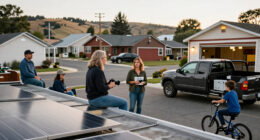
Cherokee County supervisors in Iowa reversed a moratorium on battery storage, clearing a path for a proposed solar-and-battery project on Smith family farmland. The project still needs necessary permissions, and the family hopes to begin installation next fall.
Cherokee County, Iowa, has reversed its moratorium on battery storage, opening a route for a proposed solar-and-battery installation on Smith family farmland. The decision followed local discussions about fire safety, land-use rules and potential tax revenue; the project is not yet built and still requires necessary permissions.
The Smiths proposed the project in partnership with Nomad Infrastructure, an Indiana-based energy developer with experience building solar and battery projects. Mark Smith said the local rural electric cooperative had given permission to transmit the project’s generation over its lines and sell it into the regional grid operated by the Midcontinent Independent System Operator.
County supervisor Bellefy argued that the project could bring investment and tax income to a rural area with limited options for attracting large developments. He estimated the installation would involve more than $80 million in investment and could generate $60,000 to $80,000 in annual county tax revenue. Those figures are estimates, not reported revenues from an operating facility.
The county zoning board initially proposed broad setbacks that would have restricted where battery projects could be located. Bellefy warned that wide-ranging limits could weaken the project’s business prospects and reduce its potential local tax contribution. Supervisors also heard a battery-safety workshop in February and received further information at a May meeting, including discussion of updated safety standards and emergency-response concerns.
A Path for Rural Energy Investment
The reversal gives a proposed energy project a chance to proceed in a county where large-scale development can be difficult to attract. If built, the installation could add a new source of local tax revenue and offer electricity to a regional grid where, according to the report, demand is rising amid data-center expansion and wind and solar generation are already substantial.
The decision also illustrates a local policy trade-off: supervisors had to weigh property owners’ ability to develop land against community concerns about a relatively unfamiliar technology. The estimated investment and tax receipts may be relevant to that debate, but they depend on the project going forward and are not guaranteed outcomes.
As an affiliate, we earn on qualifying purchases.
From Moratorium to Safety Hearings
County leaders faced questions about the risk of battery fires. Large lithium-ion battery fires can be difficult to extinguish after cells overheat and trigger a chain reaction. The report points to the Moss Landing battery facility in California, where a fire led to an evacuation in early 2025, as a prominent example of the hazards that have shaped public concern.
At the Cherokee County meetings, safety advocate Seaberg described changes in the industry since older facilities were installed. The report says grid batteries now mostly use lithium-iron-phosphate chemistry, follow safety codes that were not in place for the first Moss Landing facility, and are arranged in modular containers intended to limit fire spread. These points were presented during the county’s information sessions; they do not remove the need to assess site-specific risks and emergency plans.
Bellefy also drew on arguments about private property rights and infrastructure development. He was supported in his campaign by the Private Property Rights Institute, a conservative nonprofit launched in 2024. Its executive director, Charlie Kolean, said the group backs owners who want to use their land responsibly and favors fewer regulations.
“Land in Iowa is our No. 1 asset. It’s a row-crop state, cow-calf operations — it’s what we do.”
— Cherokee County supervisor Bellefy
Permits, Safety and Project Timing
The available account does not specify the full set of remaining approvals, the project’s final design or whether construction financing and other conditions are settled. The cooperative’s permission to transmit generation does not by itself establish that every required county, state or grid-related approval is complete.
The report also does not provide a finalized emergency-response plan or detailed site-specific assessment of fire risk and possible effects on nearby farms. Residents’ questions included how battery smoke might affect a nearby hog operation and whether local responders have suitable equipment. The county held informational sessions, but the account does not say that every concern has been resolved.
The Smiths’ Proposed Build Schedule
The Smiths hope to obtain the necessary permissions, convert the parcel to grass in the spring and begin installing solar panels and batteries the following fall. That is the family’s stated plan, not a confirmed construction schedule. The next practical milestones are the remaining approvals and any project preparations required before work begins.
County officials and residents may continue to assess the project’s local implications as details develop, particularly emergency readiness and the proposed setbacks. The available reporting does not give a date for further county action or a confirmed construction start.
Key Questions
What did Cherokee County decide?
County supervisors reversed a moratorium on battery storage, allowing proposed battery projects to move forward under the applicable rules and approvals. The decision does not mean the Smith project has been built or has secured every necessary permission.
Who is proposing the project?
The Smith family proposed a solar-and-battery installation in partnership with Nomad Infrastructure, an Indiana-based energy developer.
How much could the project contribute to county revenue?
Bellefy estimated that the project could produce $60,000 to $80,000 in annual county tax revenue. That is an estimate tied to a proposed project, not income the county is already receiving.
What safety issues did county residents raise?
Concerns included battery fires, smoke effects on nearby agriculture and whether local emergency responders have the equipment to manage an incident. County meetings included information about battery chemistry, safety codes and modular designs, but the available account does not establish that all site-specific questions have been answered.
When could construction begin?
The Smiths hope to begin installing solar and batteries the fall after converting the parcel to grass in the spring, once they secure necessary permissions. The account does not provide a confirmed start date.
Source: rss
Halloween Picks
halloween
As an affiliate, we earn on qualifying purchases.