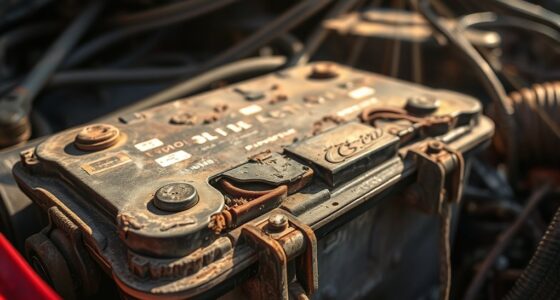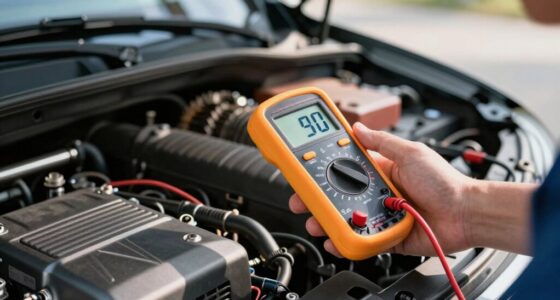
Even if a Group 31 battery physically fits in your vehicle, it might not be the best choice because dimensions alone don’t match electrical specs or manufacturer recommendations. Different batteries within the same group can have varying cranking amps, reserve capacity, or internal design, which can impact performance and safety. Using the wrong one can cause problems or even damage your vehicle. Keep exploring to discover what truly makes a battery compatible for your car’s needs.
Key Takeaways
- Physical fit doesn’t ensure the battery meets the vehicle’s electrical specifications or manufacturer requirements.
- Variations in internal construction and CCA affect starting performance and system compatibility.
- Using mismatched batteries can strain the vehicle’s electrical system and reduce battery lifespan.
- Proper installation requires matching manufacturer guidelines, not just physical size.
- Non-interchangeable batteries may cause safety risks and premature failure despite fitting physically.

When it comes to replacing your vehicle’s battery, understanding whether Group 31 batteries are interchangeable can save you time and money. Even if a battery physically fits in your vehicle’s battery tray, it doesn’t automatically mean it’s the right choice. Many car owners assume that because batteries share the same group size, they can be swapped without issues. However, this isn’t always the case. Group 31 batteries are designed with specific dimensions, terminal positions, and electrical characteristics in mind. Using an incompatible battery can compromise your vehicle’s performance and safety, and it may reduce the battery’s lifespan.
One of the main reasons why these batteries aren’t always interchangeable is because of differences in their internal construction and electrical specifications. For example, some Group 31 batteries have higher cold cranking amps (CCA) or reserve capacity, which are vital for your vehicle’s starting power and overall battery longevity. Installing a battery with lower CCA than what your vehicle requires can lead to starting problems, especially in cold weather. Conversely, a battery with excessive CCA might not fit properly or could put unnecessary strain on your vehicle’s charging system. Always check your owner’s manual or consult a professional to verify that the battery you choose meets the exact specifications. Additionally, battery technology can influence compatibility and performance, making it crucial to select the right type for your vehicle.
Another important factor is installation safety. Even if a battery fits physically, improper installation can be dangerous. Batteries contain acid and produce electrical power, so handling them with care is essential. Using the wrong size or type can lead to improper connections, risking sparks, short circuits, or even acid leaks. When replacing your battery, verify that terminal connections are correct and secure. A loose connection can cause electrical issues or damage to your vehicle’s electrical system. Proper installation safety also involves disconnecting the negative terminal first and reconnecting it last to prevent sparks or accidental shorts.
Choosing a non-interchangeable battery might seem like a minor detail, but it can greatly impact your vehicle’s performance and your safety. Batteries designed specifically for your vehicle’s make and model are engineered to maximize battery lifespan and ensure safe operation. Skipping this step or ignoring the specifications can lead to premature battery failure, costly repairs, or safety hazards. Always double-check compatibility, and if in doubt, seek professional advice before installing a new battery. This way, you protect yourself, your vehicle, and your investment.
Frequently Asked Questions
Can I Use a Different Brand of Group 31 Battery?
You can use a different brand of Group 31 battery, but you should verify battery compatibility first. Brand variability can affect factors like terminal placement, reserve capacity, and internal construction. Even if the battery fits physically, differences may cause issues with your vehicle’s electrical system. Always compare specifications and ensure the replacement matches the original’s performance requirements to avoid potential problems and ensure reliable operation.
Do All Group 31 Batteries Have the Same Capacity?
Not all Group 31 batteries have the same capacity. You might think they do because they fit in your vehicle, but battery chemistry and manufacturing standards vary widely. These factors influence capacity, lifespan, and performance. Some batteries prioritize cold-cranking amps, while others focus on longer runtime. Always check the specifications for each brand and model to guarantee you’re getting the right capacity, rather than assuming all Group 31s are identical.
Are There Size Differences Within Group 31 Batteries?
Yes, there are size differences within Group 31 batteries. You might find variations in battery dimensions, which can lead to compatibility issues if the physical size doesn’t match your vehicle’s tray or terminal placement. Always check the specifications carefully before replacing your battery, even if it’s labeled as a Group 31, to guarantee it fits correctly and functions properly. Ignoring size differences can cause installation problems and affect performance.
How Do I Know if My Vehicle Requires a Group 31 Battery?
You need a Group 31 battery if your vehicle demands serious power to start and run like a beast! Check your owner’s manual or look inside the engine bay for the battery size info—sometimes, vehicles scream for specific battery compatibility to avoid performance nightmares. If you’re unsure, consult your mechanic or compare your current battery’s group size; it’s the key to keeping your ride running smoothly and reliably.
Can I Upgrade to a Higher Amp-Hour Group 31 Battery?
Yes, you can upgrade to a higher amp-hour group 31 battery, but you need to take into account battery chemistry and terminal configurations first. Ensure the new battery’s chemistry matches your vehicle’s requirements—like AGM or flooded lead-acid—and check that terminal positions are compatible. This way, you’ll get more capacity without risking fit issues or electrical problems. Always confirm specifications with your vehicle’s manual or a professional before upgrading.
Conclusion
Just like puzzle pieces that look alike but don’t fit, Group 31 batteries might seem interchangeable but aren’t. Always check the specs and terminal configurations before swapping. Ignoring these details is like trying to fit a square peg in a round hole—you’re asking for trouble. So, take the time to choose the right battery for your vehicle, ensuring it works smoothly and keeps you moving. Don’t settle for the look—fit and function matter just as much.