

Understanding the State of Health (SOH) reports from EV diagnostics helps you assess your battery’s condition, capacity, and aging. These reports analyze key parameters like voltage, temperature, and internal resistance to show how well your battery performs now and over time. They help identify potential issues early, so you can plan maintenance and avoid surprises. Continuing will reveal how these insights can boost your EV’s performance and longevity.
Key Takeaways
- State of Health reports provide a snapshot of battery capacity, aging, and performance metrics to evaluate overall battery condition.
- They analyze parameters like voltage, temperature, and internal resistance to detect potential issues and capacity loss.
- Diagnostic tools use advanced algorithms to generate easy-to-understand reports and track health trends over time.
- Continuous monitoring with AI enhances early detection of degradation signs, enabling proactive maintenance and longevity planning.
- Regular health reports help prevent unexpected failures, optimize charging, and extend battery lifespan through informed management.
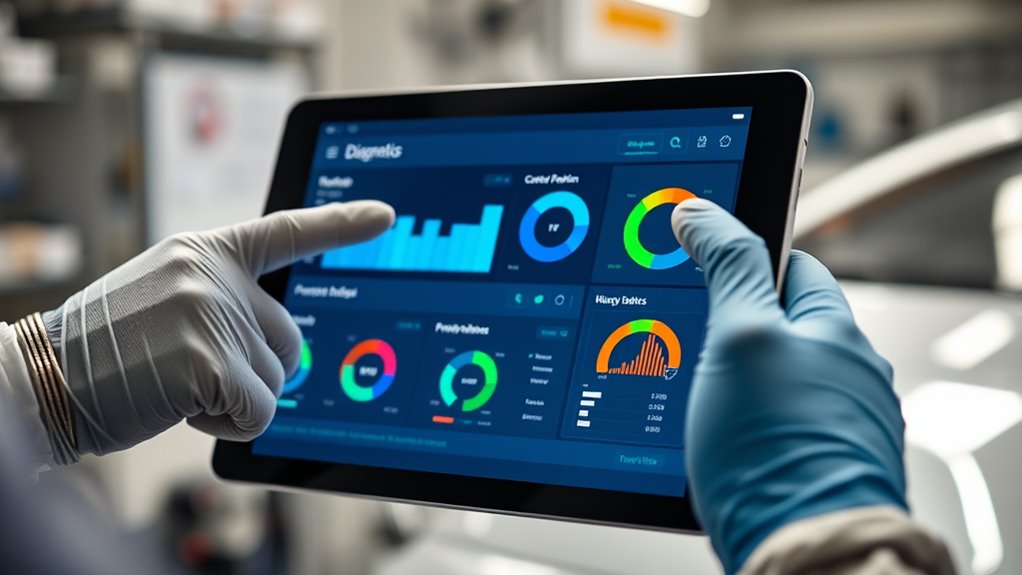
State of health reports from EV diagnostics have become essential tools for understanding the condition of electric vehicle batteries. These reports give you a clear picture of how well your battery is performing and help you anticipate any issues before they become serious. As batteries age, their capacity diminishes, and their ability to hold charge decreases. Battery aging is a natural process, but the rate at which it occurs can vary based on usage, temperature, and charging habits. That’s where diagnostic tools come into play, providing detailed insights into the battery’s health and enabling you to make informed decisions about maintenance and usage.
When you receive a state of health report, it’s like getting a snapshot of your battery’s current condition. These reports analyze data collected through diagnostic tools that monitor various parameters, such as voltage, current, temperature, and internal resistance. By examining these factors, the diagnostic tools can assess the extent of battery aging and identify potential problems, like cell imbalances or capacity loss. This information is crucial because it helps you understand whether your battery is still within peak performance ranges or if it’s approaching a point where replacement or servicing might be necessary.
Understanding how diagnostic tools work is key to appreciating the value of state of health reports. They utilize advanced algorithms to process real-time data, compare it against baseline standards, and generate an easy-to-interpret report. These tools often come integrated into the vehicle’s onboard systems or can be accessed through specialized software. They continually track the battery’s health over time, allowing you to see trends and determine if aging is accelerating. This ongoing monitoring makes it easier to plan for replacements, optimize charging practices, or adjust driving habits to extend your battery’s lifespan. Additionally, AI-driven analytics are increasingly being incorporated into these systems to enhance predictive accuracy and provide more proactive maintenance recommendations.
Moreover, these reports help you avoid unexpected breakdowns. By regularly checking your battery’s health, you can catch early signs of degradation caused by battery aging. For example, an increase in internal resistance or a drop in capacity can signal that the battery is nearing the end of its useful life. Addressing these issues early can save you money and inconvenience down the line. In short, state of health reports, driven by sophisticated diagnostic tools, empower you to maintain your EV’s battery in prime condition, prolong its lifespan, and ensure reliable performance. They’re an essential part of responsible electric vehicle ownership, giving you peace of mind and maximizing your investment.
Frequently Asked Questions
How Often Should I Review My Ev’s Health Report?
You should review your EV’s health report at least every 3 to 6 months to monitor battery longevity and guarantee peak performance. Regular checks help you stay on top of your maintenance schedule, catching potential issues early. If you notice any unusual readings or a drop in range, review the report sooner. Consistent monitoring keeps your vehicle in top shape and extends its lifespan.
Can I Interpret the Report Without Technical Expertise?
Interpreting your EV’s health report isn’t as intimidating as it seems. While it might look technical, you can understand key indicators with basic knowledge of battery maintenance and diagnostic tools. Think of the report as a map guiding you to potential issues, not a complex puzzle. You don’t need expert skills—just pay attention to simple warning signs and recommended maintenance steps, making your EV’s health easier to manage.
What Are Common Signs of Declining Battery Health?
You’ll notice signs of declining battery health through symptoms like battery degradation, which reduces your EV’s range and performance. Voltage fluctuations during charging or driving can also indicate issues. If your vehicle’s acceleration feels sluggish or the battery drains faster than usual, these are signs to check your diagnostics report. Regularly monitoring these signs helps you catch problems early, ensuring your EV stays reliable and efficient.
How Do Repairs Impact the Vehicle’s Health Report?
When you get repairs on your EV, they can substantially impact your vehicle’s health report, especially if they involve the battery. Repair impact may temporarily hide signs of battery degradation or mask underlying issues, leading to a misleading report. This can make it harder to predict future performance or detect ongoing battery deterioration. Stay vigilant—repair effects might obscure true battery health, so always review diagnostic updates carefully after service.
Is There a Way to Improve My Ev’s Health Score?
To improve your EV’s health score, focus on good battery maintenance and smart charging habits. Keep your battery between 20% and 80% charge and avoid frequent deep discharges. Use fast charging sparingly and opt for regular, moderate charging sessions. These practices help reduce battery wear, maintain peak performance, and enhance your vehicle’s health report, ensuring your EV stays reliable and efficient over time.
Conclusion
By understanding how to interpret state of health reports from EV diagnostics, you can better maintain your vehicle’s performance and longevity. These reports provide valuable insights that put you in control of your EV’s health. Isn’t it empowering to know you can proactively address issues before they become costly? Staying informed helps you drive confidently and extend your vehicle’s lifespan. So, why not take charge of your EV’s health today and enjoy the road ahead?