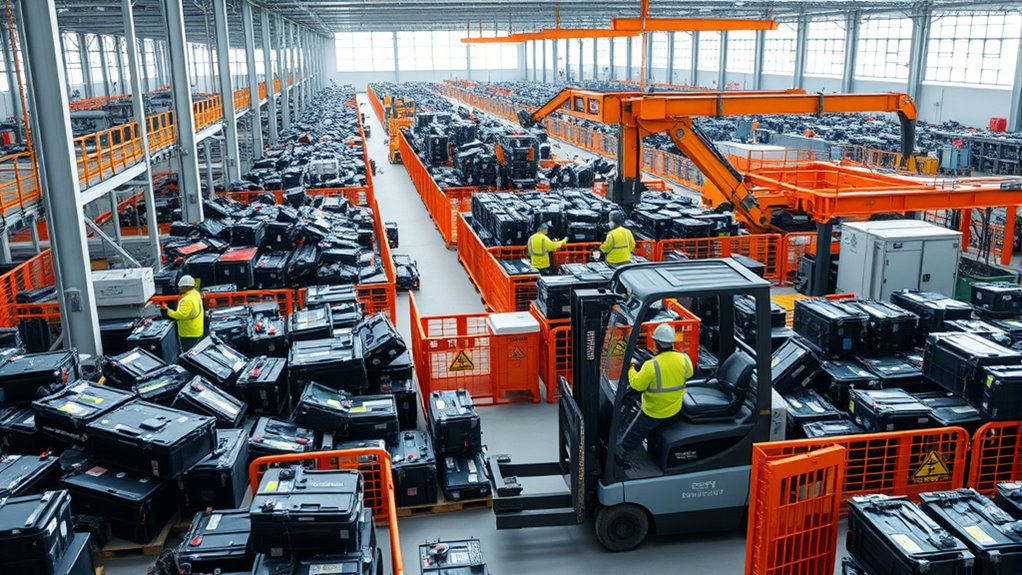

Recycling end-of-life EV batteries involves several processes, including pyrometallurgical, hydrometallurgical, and mechanical methods, which recover valuable metals like lithium, cobalt, and nickel. Providers are establishing specialized facilities and partnering with automakers and researchers to improve efficiency and sustainability. These efforts help reduce environmental impact and support resource conservation. If you keep exploring, you’ll discover more about innovative technologies and the key players shaping this essential industry.
Key Takeaways
- Recycling EV batteries prevents environmental harm and recovers valuable metals like lithium, cobalt, nickel, and manganese.
- Techniques include pyrometallurgical, hydrometallurgical, and mechanical processes to maximize metal recovery efficiently.
- Environmental impact assessments ensure recycling processes are safe, sustainable, and compliant with regulations.
- Specialized recycling providers partner with automakers and research institutions to develop advanced, high-efficiency recycling methods.
- Recycling supports resource conservation, waste reduction, and promotes sustainable practices within the EV industry.
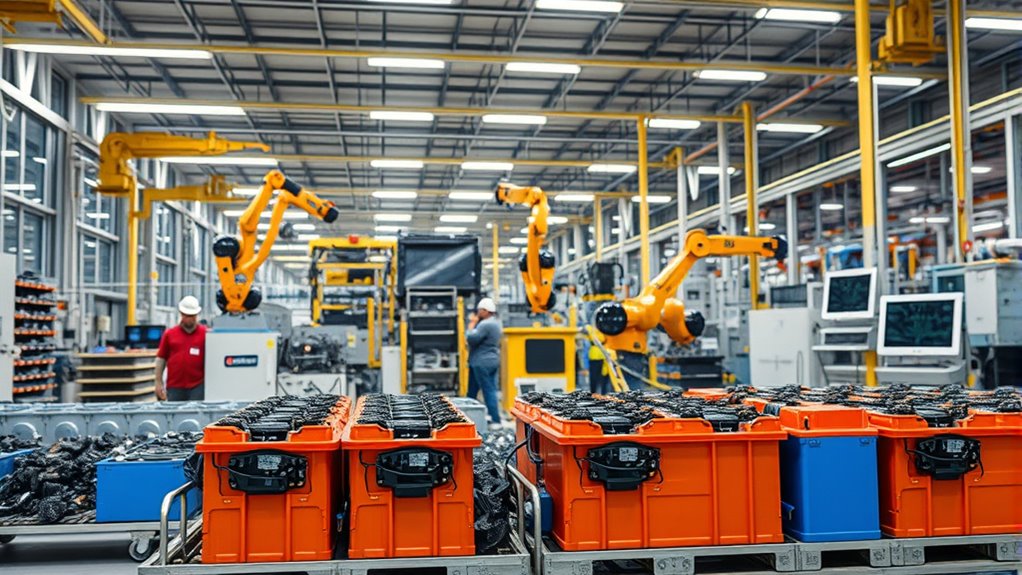
As electric vehicle batteries reach the end of their lifespan, recycling becomes essential to prevent environmental harm and recover valuable materials. When you consider the growing number of EVs on the road, it’s clear that effective recycling processes are critical for managing waste and conserving resources. One of the primary goals is battery material recovery, which involves extracting metals like lithium, cobalt, nickel, and manganese from decommissioned batteries. These materials are finite and often expensive to mine anew, so reclaiming them helps reduce the environmental footprint of battery production and minimizes the need for primary extraction. Recycling companies employ various techniques—pyrometallurgical, hydrometallurgical, or mechanical—to efficiently separate and purify these materials, guaranteeing they can be reused in new batteries or other applications.
Recycling EV batteries recovers valuable metals and reduces environmental impact through advanced separation techniques.
Before implementing these recycling processes, conducting thorough environmental impact assessments is indispensable. These assessments help identify potential risks associated with recycling operations, such as hazardous waste generation or emissions, and guide companies to adopt safer, cleaner practices. By evaluating a facility’s environmental footprint, you can guarantee that the recycling method chosen aligns with sustainability goals and regulatory standards. This not only minimizes ecological damage but also boosts public confidence in EV recycling initiatives. Many providers now integrate environmental impact assessments early in their planning stages, optimizing processes for both efficiency and sustainability.
As you explore different recycling providers, you’ll find that many have established specialized facilities equipped to handle various types of EV batteries. These providers often partner with automakers, waste management firms, and research institutions to develop innovative recycling methods. They aim to maximize battery material recovery while lowering costs and environmental impacts. Some companies incorporate circular economy principles, designing processes that ensure maximum material reuse and minimal waste. Others are investing in new technologies that streamline the recovery process, making it faster and more cost-effective. Additionally, advances in high-efficiency recycling methods are expanding the capabilities of the industry to recover even more valuable materials with less energy consumption.
Ultimately, effective recycling of end-of-life EV batteries protects the environment and conserves resources. By prioritizing battery material recovery and conducting comprehensive environmental impact assessments, you can support sustainable practices that benefit society as a whole. As the industry continues to evolve, you’ll see more providers adopting advanced techniques and environmentally conscious policies, ensuring that the transition to electric mobility remains eco-friendly. Recycling isn’t just about managing waste—it’s a fundamental step toward a cleaner, more sustainable future powered by responsible resource management.
Frequently Asked Questions
What Are the Environmental Impacts of EV Battery Recycling?
Recycling EV batteries helps reduce pollution by preventing hazardous materials from entering the environment. It promotes battery material recovery, minimizing the need for raw resource extraction. This process lowers the environmental footprint of battery production and disposal, conserving energy and reducing emissions. Overall, recycling EV batteries supports a cleaner, more sustainable future by efficiently managing waste and reducing the negative impacts associated with battery disposal.
How Cost-Effective Is Recycling Compared to New Battery Production?
Recycling EV batteries is like finding a hidden treasure, making it more cost-effective than producing new ones. It boosts economic viability by reducing raw material costs and easing supply chain constraints. While initial recycling expenses can be high, advancements are lowering these costs, making it a smarter choice financially. Over time, recycling proves to be a sustainable, economical alternative, helping you save money while supporting the environment.
Are There Any Health Risks Associated With Recycling Processes?
You should be aware that recycling processes can pose health risks if proper safety measures aren’t followed. Workers might face chemical exposure from handling hazardous materials like electrolytes and heavy metals, potentially leading to health issues. To protect worker safety, recycling facilities use protective gear and strict safety protocols. When these precautions are in place, the risks are minimized, but ongoing monitoring remains vital to guarantee safe working environments.
What Innovations Are Emerging in EV Battery Recycling Technology?
You might worry about outdated recycling methods, but cutting-edge innovations are transforming the industry. Solid-state batteries are making recycling more efficient, while artificial intelligence helps optimize processes, reducing waste and recovery time. These advancements enable us to better reclaim valuable materials, lower environmental impacts, and prepare for future EVs. As technology evolves, your role in supporting sustainable practices becomes even more crucial, ensuring cleaner transportation for generations to come.
How Do Regulations Vary Globally for End-Of-Life EV Battery Management?
You’ll notice that regulations for end-of-life EV battery management vary globally due to international standards and policy diversity. Some countries enforce strict recycling and disposal rules, while others have more lenient policies. You need to stay informed about local regulations, as they impact how you handle and recycle batteries. Understanding these differences helps you comply with legal requirements and promotes responsible recycling practices worldwide.
Conclusion
Think of end-of-life EV batteries as treasures in a shipwreck, waiting to be rediscovered. By recycling them, you’re the skilled diver, carefully salvaging precious materials hidden beneath the surface. Each process and provider acts as your guiding light, turning what once seemed lost into new resources. Embrace this journey, knowing you’re helping to restore the ship of our planet’s health, ensuring it sails smoothly into a cleaner, greener future.