When you charge a battery, using constant current delivers a steady flow of power until it reaches a set voltage, helping to quickly refill the battery but risking overheating if not controlled properly. Constant voltage, on the other hand, applies a fixed voltage, gradually reducing current for safe topping off and better battery health. Combining both methods creates a hybrid approach that maximizes efficiency and safety—if you want to understand how these protocols work together, keep exploring.

Get backup power and energy gear delivered free with Prime
- Fast, free delivery on millions of items
- Prime Video, Amazon Music and more included
- Member-only deals all year
Key Takeaways
- Constant current delivers a steady flow until a voltage threshold is reached, ideal for rapid initial charging.
- Constant voltage applies a steady voltage, gradually decreasing current as the battery nears full capacity, ensuring safe topping off.
- Hybrid charging combines both methods, switching from constant current to voltage to optimize efficiency and battery health.
- Proper protocols use safeguards like temperature sensors and current limiters to prevent overheating and damage.
- Using the correct protocol prolongs battery lifespan, reduces safety risks, and maintains device performance over time.
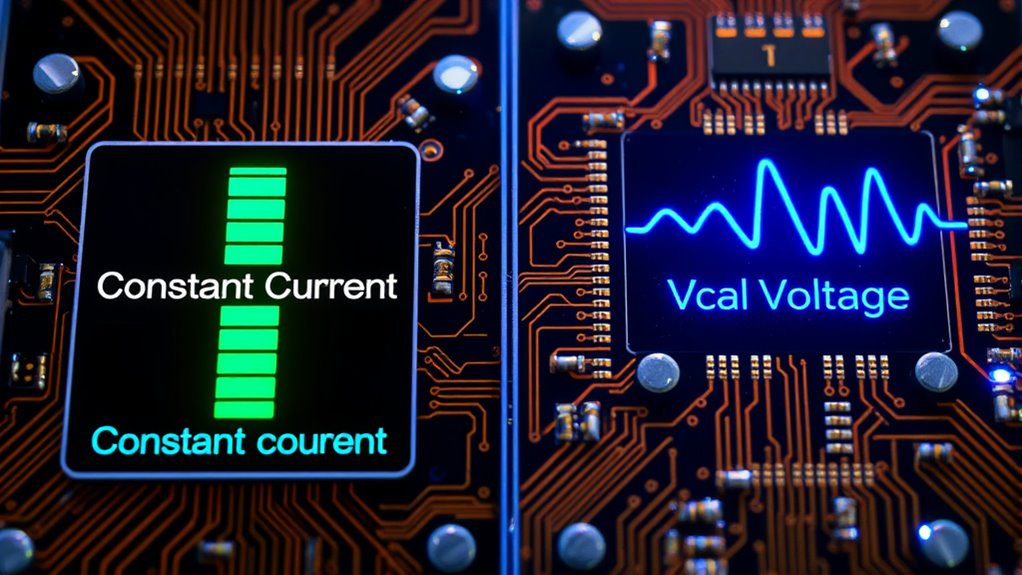
Have you ever wondered how devices guarantee safe and efficient charging? When you plug in your phone or laptop, there’s a lot happening behind the scenes to protect your device and ensure it charges properly. One key aspect is the charging protocol the device uses, which considerably impacts both battery lifespan and charging safety. Understanding the difference between constant current and constant voltage charging can help you appreciate how your device maintains ideal performance and longevity.
Constant current charging delivers a steady flow of current to the battery until it reaches a certain voltage threshold. This method is commonly used during the initial stages of charging because it allows the battery to quickly regain charge without risking damage. However, because the current remains fixed, the voltage gradually increases as the battery fills up. While efficient, if not carefully controlled, constant current charging can generate excess heat or stress on the battery, potentially shortening its lifespan or compromising safety. That’s why advanced devices incorporate safeguards, like temperature sensors and current limiters, to prevent overheating or overcurrent situations. Proper management of these parameters guarantees that the battery remains safe throughout the charging process, minimizing risks like swelling or thermal runaway.
Constant current charging provides a steady flow of current until the battery reaches a safe voltage.
On the other hand, constant voltage charging involves applying a steady voltage level to the battery, with the current gradually decreasing as the battery approaches full capacity. This method is typically used in the latter stages of charging because it allows the battery to top off safely without pushing too much current into it. Since the voltage remains fixed, the charging process becomes gentler, reducing stress on the battery and helping preserve its health over time. By using constant voltage protocols, devices can extend battery lifespan and prevent overcharging, which is vital for maintaining safety and battery integrity.
Modern chargers often combine both methods into a hybrid approach, switching from constant current to constant voltage as the battery charges. This seamless transition maximizes charging efficiency while protecting the battery’s health. Devices equipped with smart charging circuits monitor temperature, voltage, and current in real-time, adjusting their charging protocols to maximize safety and lifespan. This intelligent management reduces heat buildup and prevents overcharging, which are common causes of battery degradation and safety hazards. Additionally, advances in AI-driven charging algorithms enable devices to optimize charging speed and battery health based on usage patterns and environmental factors.
Ultimately, understanding these protocols reveals why your device might charge faster at certain stages and slow down at others. It also highlights the importance of using quality chargers that adhere to proper charging standards. When you follow these protocols, your device’s battery stays healthier and safer for longer, giving you reliable performance and peace of mind. So, next time you connect your device, remember that behind the scenes, sophisticated charging strategies work tirelessly to protect your device and extend its battery life.
smartphone fast charger with constant current
As an affiliate, we earn on qualifying purchases.
As an affiliate, we earn on qualifying purchases.
Frequently Asked Questions
How Do Temperature Variations Affect Charging Protocols?
Temperature variations impact your charging process by causing thermal expansion, which can affect battery safety and efficiency. To combat this, you should use temperature compensation in your protocols, adjusting charging parameters based on ambient conditions. This guarantees peak performance and longevity. Always monitor temperature closely, especially during rapid charging, so you can adapt your approach accordingly and prevent potential damage caused by extreme heat or cold.
Can Combining Constant Current and Constant Voltage Improve Battery Lifespan?
Yes, combining constant current and constant voltage can improve your battery lifespan. By tailoring the charging process to your battery chemistry, you optimize charging efficiency and reduce stress on the cells. Starting with constant current quickly charges the battery without overheating, then switching to constant voltage maintains a safe, efficient charge. This approach minimizes degradation, extends your battery’s life, and guarantees better overall performance over time.
What Safety Precautions Are Necessary During High-Current Charging?
Think of high-current charging as a racecar zooming down the track—you need safety measures to keep control. Always guarantee proper thermal management to prevent overheating and wear, and activate safety mechanisms like automatic shutoff systems. Use quality cables and chargers, and avoid charging in extreme temperatures. Stay vigilant, monitor the process, and follow manufacturer guidelines to keep your battery safe and extend its lifespan during high-current charging.
Are Certain Devices More Compatible With Specific Charging Protocols?
Yes, certain devices are more compatible with specific charging protocols based on their battery chemistry and charging equipment. For example, lithium-ion batteries often prefer constant current charging initially, followed by constant voltage to prevent overcharging. Using the correct protocol ensures safety and prolongs battery life. Always check your device’s specifications and use compatible charging equipment to match its battery chemistry, guaranteeing ideal performance and safety during charging.
How Do Aging Batteries Respond to Different Charge Protocols?
Aging batteries often pretend to be the life of the party but secretly suffer. You’ll notice their battery capacity shrinks faster, and charging efficiency drops like a bad joke. When you use constant current, they struggle to hold onto energy, and with constant voltage, they might swell or overheat. So, treat your aging batteries kindly—sometimes they need a gentle touch, not a full-blown charge marathon.
Conclusion
In the end, choosing between constant current and constant voltage charging depends on your battery’s needs and your priorities. You might find that one size doesn’t fit all, so it’s best to understand each method’s strengths. Remember, don’t put all your eggs in one basket—sometimes a hybrid approach works best. By knowing when to use each protocol, you keep your batteries happy and extend their lifespan. It’s all about playing your cards right!
Fall Picks
fall essentials
As an affiliate, we earn on qualifying purchases.