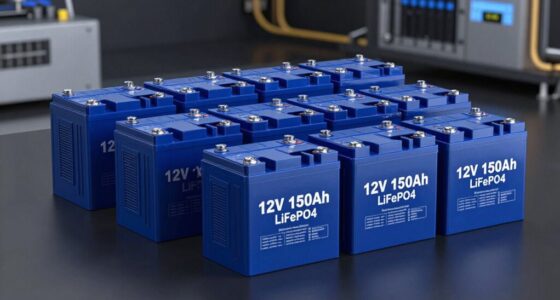
The best home energy storage systems depend on whether you need a portable backup, a solar-ready kit, or a larger off-grid setup. My best overall pick is the ECO-WORTHY PowerMega 48V 314Ah system with a 10kW hybrid inverter, which pairs substantial battery capacity with high-output power conversion. For a more complete solar package, the ECO-WORTHY 32 kWh system includes panels, batteries, and an inverter; for simpler portable backup, the Jackery HomePower 3600 Plus offers a more self-contained format. The main tradeoffs are usable capacity, output, installation complexity, solar integration, and how much equipment you need to supply separately. Read on for how all 13 options compare and which type of system fits your home.

Get backup power and energy gear delivered free with Prime
- Fast, free delivery on millions of items
- Prime Video, Amazon Music and more included
- Member-only deals all year
Complete the kit


Key Takeaways
- Complete systems reduce guesswork: The ECO-WORTHY 32 kWh kit bundles panels, batteries, and a hybrid inverter, while several other large-capacity options require buyers to plan around separate components.
- Battery capacity alone does not define backup capability: The 16.07 kWh ECO-WORTHY battery is a substantial storage component, but it is not equivalent to a complete system with an inverter and solar generation.
- Portable stations prioritize simpler setup over whole-home scale: Jackery and EcoFlow models offer a different path from fixed 48V systems, but their listed capacities and outputs suit more limited loads.
- High inverter output and long runtime solve different problems: Systems listed with 8kW or 10kW inverters can support higher simultaneous loads, while battery capacity determines how long those loads can run.
- The Anker SOLIX E10 stands apart for expandable capacity: Its stated 12–90 kWh range targets buyers planning a scalable system, while the fixed-capacity options are easier to compare upfront.
| Jackery HomePower 2000 Plus v2 Portable Power Station, 2048Wh, 2400W |  | Best Portable Home Backup | Battery capacity: 2,048Wh | AC output: 2,400W | Expandable capacity: Up to 12kWh | VIEW LATEST PRICE | See Our Full Breakdown |
| ECO-WORTHY Powermega 51.2V 314Ah LiFePO4 Battery, 16.07kWh |  | Best High-Capacity Battery for a Custom System | Battery chemistry: LiFePO4 | Voltage: 51.2V | Capacity: 314Ah | VIEW LATEST PRICE | See Our Full Breakdown |
| HumsiENK 10.24 kWh Home Backup Kit with Two 48V 100Ah LiFePO₄ Batteries and 8000W Hybrid Inverter |  | Best Complete Split-Phase Starter Kit | Total battery storage: 10.24kWh | Battery configuration: 2 × 48V 100Ah LiFePO₄ | Inverter power: 8,000W | VIEW LATEST PRICE | See Our Full Breakdown |
| ECO-WORTHY 32 kWh Solar Backup System with Six 590W Panels, Two LiFePO4 Batteries, and 10 kW Hybrid Inverter |  | Best Integrated Solar-and-Storage Package | Included solar panels: Six 590W N-type bifacial monocrystalline panels | Battery configuration: Two 48V 314Ah LiFePO4 batteries | Stated usable energy: 30kWh+ | VIEW LATEST PRICE | See Our Full Breakdown |
| ECO-WORTHY PowerMega 48V 314Ah LiFePO4 Energy Storage System with 10kW Hybrid Inverter |  | Best High-Power Battery-and-Inverter Pair | Battery chemistry: LiFePO4 | Battery voltage and capacity: 51.2V, 314Ah | Usable energy: 16.1kWh | VIEW LATEST PRICE | See Our Full Breakdown |
| Jackery HomePower 3600 Plus Portable Power Station, 3584Wh, 3600W |  | Best for Flexible, Portable Backup | Battery capacity: 3,584Wh | Output: 3,600W | Parallel output: Up to 7,200W | VIEW LATEST PRICE | See Our Full Breakdown |
| ECO-WORTHY 10 kW Off-Grid Solar Power System with 2,950 W Solar Panels and 48 V 314 Ah Battery |  | Best Complete Off-Grid Starter System | PV capacity: 2,950W across five panels | Battery capacity: 16.076kWh | Battery: 48V, 314Ah LiFePO₄ | VIEW LATEST PRICE | See Our Full Breakdown |
| ECO-WORTHY 10 kW Off-Grid Solar Panel Kit with 32.2 kWh Battery Storage |  | Best for High-Capacity Off-Grid Storage | Solar panel count: 18 | Total PV capacity: 10,620W | Maximum daily generation: 39.36kWh under optimal conditions | VIEW LATEST PRICE | See Our Full Breakdown |
| EF EcoFlow TITAN 5000 Classic Power Station, 5017Wh, 4000W AC Output |  | Best Quiet Portable Power Station | Capacity: 5,017Wh | Expandable capacity: 5–30kWh | AC output: 4,000W | VIEW LATEST PRICE | See Our Full Breakdown |
| EF ECOFLOW TITAN Portable Power Station with 5 kWh Extra Battery |  | Best for High-Output 240V Backup | Capacity: 10,017Wh | Continuous output: 7,200W | Voltage: 120V/240V AC | VIEW LATEST PRICE | See Our Full Breakdown |
| EcoFlow DELTA Pro Portable Power Station 3600Wh | 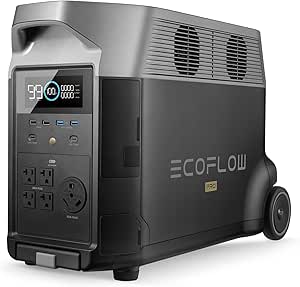 | Best Expandable Portable System | Battery capacity: 3,600Wh; expandable to 25kWh | Battery chemistry: LiFePO4 (LFP) | AC output: 3,600W; up to 4,500W with X-Boost | VIEW LATEST PRICE | See Our Full Breakdown |
| EF ECOFLOW TITAN 5017Wh Power Station with Smart Home Panel 10 |  | Best for Split-Phase Home Backup | Battery capacity: 5,017Wh; expandable to 30kWh | Battery chemistry: Lithium iron phosphate (LFP) | Continuous output: 7,200W | VIEW LATEST PRICE | See Our Full Breakdown |
| Anker SOLIX E10 Power Dock and Extra Battery, 12–90 kWh |  | Best for Whole-Home Expansion | Starting battery capacity: 12kWh | Expandable capacity: Up to 90kWh | Battery chemistry: LFP | VIEW LATEST PRICE | See Our Full Breakdown |
More Details on Our Top Picks
Jackery HomePower 2000 Plus v2 Portable Power Station, 2048Wh, 2400W
The Jackery HomePower 2000 Plus v2 is the most portable, self-contained choice in this group for buyers who want backup power without starting with a rack of heavy batteries and a separate inverter. Its 2,048Wh capacity and 2,400W AC output suit selected essentials and smaller loads, while expansion to 12kWh leaves room to build capacity later. The LFP battery’s stated 6,000+ cycles is a useful fit for regular use, not only occasional outages. Compared with the HumsiENK 10.24 kWh Home Backup Kit, Jackery is far easier to move and simpler to approach, but it offers much less capacity and does not provide the same stated 120/240V split-phase setup. Priority routing can help direct power to chosen essential circuits, though the solar panel is an extra and the 40.6-pound unit is still a substantial lift.
Pros:- Expandable capacity up to 12kWh lets buyers add storage as backup needs grow.
- LFP battery is rated for 6,000+ cycles.
- Priority routing helps keep selected essential circuits powered.
- 140W USB-C output supports high-power compatible devices.
Cons:- The 40.6-pound unit is portable but still heavy to carry regularly.
- Solar panels are optional and not included.
- Base capacity is limited beside the larger fixed-storage systems in this roundup.
Best for: Households that want a portable, expandable battery for essential loads, RV use, and short outages without beginning with a rack-mounted installation.
Not ideal for: Buyers who need substantial whole-home storage or a specified 120/240V split-phase system from the outset; the 2,048Wh base capacity is much smaller than the HumsiENK kit’s.
- Battery capacity:2,048Wh
- AC output:2,400W
- Expandable capacity:Up to 12kWh
- Battery type:LFP
- USB-C output:140W
- Voltage:120V AC
- Weight:40.6 lb
Our verdict“Choose the Jackery for movable, expandable essential-load backup, but pick the HumsiENK kit or a larger ECO-WORTHY system if you need more storage and a fixed home setup.”
ECO-WORTHY Powermega 51.2V 314Ah LiFePO4 Battery, 16.07kWh
The ECO-WORTHY Powermega 16.07kWh battery makes the most sense for buyers who already have, or are planning, a compatible inverter-based system and want a large storage block they can expand. A single unit holds substantially more energy than the Jackery HomePower 2000 Plus v2, and support for up to 15 units gives system designers a path to much larger storage. Its 200A active-balancing BMS, circuit breaker, and aerosol fire-suppression modules add built-in protection and cell management; the touchscreen and wireless monitoring also make system status easier to check. This is not a plug-and-play power station or a complete solar kit: inverter compatibility and installation remain the buyer’s job. Compared with the ECO-WORTHY 16.1kWh system with 10kW inverter, this battery offers a similar capacity but leaves the inverter out. Palletized truck delivery also calls for suitable access and unloading arrangements.
Pros:- 16.07kWh capacity provides substantial storage in one battery.
- Supports expansion to as many as 15 units, with stated system capacity up to 241kWh.
- 200A smart BMS includes active cell balancing.
- Touchscreen, Wi-Fi, and Bluetooth provide several ways to monitor battery status.
Cons:- An inverter is not included, so buyers must confirm compatibility and source the rest of the system.
- Large, heavy freight delivery requires suitable truck access and unloading plans.
- A battery-only purchase requires more system planning than a complete kit such as the HumsiENK backup kit.
Best for: Solar installers and technically prepared homeowners who need a large 51.2V battery for a compatible inverter system and may expand storage later.
Not ideal for: Buyers seeking a ready-to-use backup system, an included inverter, or delivery to a location that cannot accept palletized truck freight.
- Battery chemistry:LiFePO4
- Voltage:51.2V
- Capacity:314Ah
- Energy:16.07kWh
- BMS:200A smart BMS with active cell balancing
- Expansion:Up to 15 units; stated total capacity up to 241kWh
- Monitoring:7-inch HD touchscreen, Wi-Fi, and Bluetooth
- Communication ports:RS485 and CAN
- Warranty:10 years
Our verdict“Choose this ECO-WORTHY battery when large, expandable storage is the priority and you already have a compatible inverter plan.”
HumsiENK 10.24 kWh Home Backup Kit with Two 48V 100Ah LiFePO₄ Batteries and 8000W Hybrid Inverter
The HumsiENK 10.24 kWh kit pairs two batteries with an 8,000W hybrid inverter, making it a more complete starting point than the battery-only ECO-WORTHY Powermega. Its 120/240V split-phase output and 16,000W surge capacity suit a broader range of home loads than the Jackery HomePower 2000 Plus v2, whose 120V AC output and smaller capacity are aimed more at portable backup. A 10,000W MPPT controller gives the kit room to accept substantial solar input, while the stated ≤10 ms transfer switching is designed to respond quickly when power changes. Expansion to 20 batteries and up to six inverters leaves a growth path, although that scale brings more installation planning. The main practical drawback is handling: each battery weighs 96.45 pounds and needs rack space. This is a substantial home system, not an easy-to-carry backup unit.
Pros:- Includes two LiFePO4 batteries and an 8,000W hybrid inverter as a kit.
- 120/240V split-phase output supports a wider range of home circuits than a 120V-only portable station.
- 16,000W surge capacity and ≤10 ms transfer switching address startup loads and power interruptions.
- Supports app monitoring and expansion up to 20 batteries and six inverters.
Cons:- Each battery weighs 96.45 pounds, making delivery and installation difficult without help.
- Rack-mounted batteries require planned space and a suitable support setup.
- The included 10,000W solar controller does not remove the need to plan and install compatible panels.
Best for: Homeowners building a fixed solar-backup system who want batteries and a split-phase hybrid inverter in one package, with room to expand.
Not ideal for: Renters, frequent movers, or buyers without rack space and help for handling 96.45-pound batteries; portable options such as the Jackery are easier to relocate.
- Total battery storage:10.24kWh
- Battery configuration:2 × 48V 100Ah LiFePO₄
- Inverter power:8,000W
- Inverter surge capacity:16,000W
- Output:120/240V split phase
- Solar charge controller:10,000W MPPT
- Transfer switching:≤10 ms
- Maximum battery expansion:20 batteries; up to 102.4kWh
- Warranty:10-year limited warranty
Our verdict“Pick the HumsiENK kit if you want a scalable split-phase home system in one package and can manage its heavy rack batteries.”
ECO-WORTHY 32 kWh Solar Backup System with Six 590W Panels, Two LiFePO4 Batteries, and 10 kW Hybrid Inverter
For buyers who want panels, batteries, and an inverter together, the ECO-WORTHY 32 kWh Solar Backup System is the most integrated package in this group. It includes six 590W bifacial N-type panels, two large LiFePO4 batteries, and a 10kW hybrid inverter, so it covers more of the system than the battery-and-inverter-only ECO-WORTHY PowerMega. The stated usable energy is 30kWh+, with 120V and 240V output, making it better suited to sustained home backup than the 10.24kWh HumsiENK kit. Its extensive package also creates the biggest site and delivery demands here: panels measure nearly 90 inches long and weigh 72.8 pounds each, while the full system ships by truck on a pallet. Buyers should also note that the inverter exterior version is selected at random. This is a fit for planned installations, not an easy add-on for limited space.
Pros:- Package includes six solar panels, two batteries, a 10kW inverter, and cables.
- More than 30kWh of stated usable energy exceeds the HumsiENK kit’s 10.24kWh storage.
- 120V and 240V output supports a range of home loads.
- Battery monitoring and protection include wireless monitoring, active balancing, a breaker, fire suppression, and an alarm.
Cons:- Large panels and palletized truck delivery require significant site space and freight access.
- Each panel weighs 72.8 pounds and measures nearly 90 inches long, complicating handling and installation.
- The inverter version is selected at random, so its exterior appearance may vary.
Best for: Homeowners with room for a substantial solar array and battery installation who want panels, storage, and a hybrid inverter supplied as one package.
Not ideal for: Buyers with limited roof or ground space, difficult freight access, or a preference to select a specific inverter exterior version.
- Included solar panels:Six 590W N-type bifacial monocrystalline panels
- Battery configuration:Two 48V 314Ah LiFePO4 batteries
- Stated usable energy:30kWh+
- Inverter power:10kW
- Output voltage:120V and 240V
- Solar panel efficiency:25%
- Battery cycle life:9,000+ cycles at 80% DoD
- Monitoring:Bluetooth, Wi-Fi, and LCD screen
- Battery communication:RS485, CAN, and RS232
Our verdict“Choose this ECO-WORTHY package when you want substantial solar generation and storage together and have the space and logistics for a full installation.”
ECO-WORTHY PowerMega 48V 314Ah LiFePO4 Energy Storage System with 10kW Hybrid Inverter
The ECO-WORTHY PowerMega 16.1kWh system sits between a battery-only purchase and a panel-inclusive package: it combines one 51.2V battery with a 10kW hybrid inverter, but leaves solar panels and parallel cables to the buyer. Its 10,000W output and choice of 120V single-phase or 240V split-phase give it a higher inverter rating than the HumsiENK kit’s 8,000W unit, while its 16.1kWh capacity also exceeds that kit’s 10.24kWh. The included inverter makes it more turnkey than the separate ECO-WORTHY Powermega battery, though buyers still need to confirm system compatibility and arrange installation. Wi-Fi and Bluetooth monitoring, plus RS485, CAN, and RS232 connections, support varied setup needs. Its tradeoffs are practical: this is a heavy freight delivery, the inverter exterior is selected at random, and parallel cables are not included.
Pros:- Pairs 16.1kWh of usable energy with a 10kW hybrid inverter.
- Supports 120V single-phase or 240V split-phase output.
- Offers Wi-Fi, Bluetooth, LCD, RS485, CAN, and RS232 monitoring and communication options.
- Includes active-balancing BMS, a breaker, aerosol fire suppression, and a buzzer alarm.
Cons:- Solar panels and parallel connection cables are not included.
- Battery delivery uses truck freight on a pallet, with packages potentially arriving separately.
- The inverter exterior version is selected at random.
Best for: Homeowners or installers seeking a high-output hybrid inverter paired with one large battery for backup, off-grid use, or future solar storage.
Not ideal for: Buyers who need panels and connection cables included, want a portable station, or cannot accept palletized truck freight.
- Battery chemistry:LiFePO4
- Battery voltage and capacity:51.2V, 314Ah
- Usable energy:16.1kWh
- Inverter output power:10,000W
- Output voltage:120V single-phase or 240V split-phase
- Output waveform:Pure sine wave
- Battery cycle life:9,000+ cycles at 80% DoD
- Communications:RS485, CAN, RS232, Wi-Fi, and Bluetooth
- Warranty:10 years
Our verdict“Choose this system over the HumsiENK kit when you want more battery energy and a higher-rated inverter in one pairing, but plan to source panels and cables separately.”
Jackery HomePower 3600 Plus Portable Power Station, 3584Wh, 3600W
I’d pick the Jackery HomePower 3600 Plus for households that want substantial backup capacity without starting with a fixed solar installation. Its 3,584Wh LFP battery and 3,600W output can support a useful mix of essential appliances, while four charging methods give owners more ways to replenish it. Compared with the EF EcoFlow TITAN 5000 Classic, it has less capacity and output, but its 77.2-pound wheeled design is easier to reposition than that larger, heavier unit. Parallel operation adds 240V support and higher output, which makes this a more adaptable choice than a small single-unit power station. The tradeoff is that the wheels help with rolling, not lifting, and solar panels are optional. I’d choose it for flexible backup, not as a ready-made whole-home solar system.
Pros:- 3,584Wh LFP battery offers substantial stored energy in a portable format.
- 3,600W output supports a broader range of appliances than lower-output portable stations.
- AC, hybrid AC+DC, solar, and generator charging provide several replenishment options.
- Wheels and a telescopic handle make rolling the 77.2-pound unit easier.
Cons:- At 77.2 pounds, it is difficult to lift or carry despite the wheeled design.
- Solar panels are optional, so solar charging requires a separate purchase.
- 240V output depends on pairing units in parallel rather than using one unit alone.
Best for: Households seeking portable backup for essential appliances, with the option to add capacity or use 240V output through parallel units.
Not ideal for: Buyers who want a complete panel-and-battery solar system in one shipment, or anyone who needs a light unit they can carry up stairs.
- Battery capacity:3,584Wh
- Output:3,600W
- Parallel output:Up to 7,200W
- Voltage:120V; 240V in parallel
- Battery type:LFP
- Expandable capacity:Up to 21kWh per unit or 43kWh with multiple units
- Charging options:Hybrid AC+DC, AC, solar, and gas generator
- Weight:77.2lb
- Warranty:5 years
Our verdict“Choose the Jackery HomePower 3600 Plus if you want expandable portable backup and varied charging options rather than an included, installed solar system.”
ECO-WORTHY 10 kW Off-Grid Solar Power System with 2,950 W Solar Panels and 48 V 314 Ah Battery
The ECO-WORTHY 10 kW Off-Grid Solar Power System brings the core pieces together: panels, a split-phase inverter, and a 16.076kWh LiFePO₄ battery. That makes it a more complete starting point for off-grid planning than the Jackery HomePower 3600 Plus, which is a portable power station with optional solar panels. Its 10,000W continuous inverter output and 120V/240V capability suit larger loads, while Bluetooth, Wi-Fi, and other connection options let owners monitor the battery. The five bifacial panels are a relatively modest 2,950W array beside the battery and inverter, so the system’s ability to store energy is greater than its listed solar input may replenish quickly. I’d shortlist it for a planned off-grid installation, but not for a plug-and-play backup setup: professional installation is recommended, and freight delivery adds logistical work.
Pros:- Includes five panels, a 10kW inverter, a 16.076kWh battery, and cables.
- Split-phase 120V/240V output can support a wider range of household circuits.
- Battery monitoring supports Bluetooth, Wi-Fi, PC, RS485, and CAN connections.
- Battery capacity can be expanded by connecting additional units.
Cons:- Professional installation is recommended, adding planning and installation requirements.
- The 2,950W panel array may recharge the sizable battery more slowly than a larger array.
- Freight shipment on a pallet makes delivery and handling less convenient than portable systems.
Best for: Homeowners planning an off-grid installation who want panels, a split-phase inverter, and a sizable battery in one system.
Not ideal for: Renters, first-time buyers expecting a simple plug-in backup station, or households without room and professional support for a freight-delivered solar installation.
- PV capacity:2,950W across five panels
- Battery capacity:16.076kWh
- Battery:48V, 314Ah LiFePO₄
- Continuous inverter output:10,000W
- Peak inverter output:20,000W
- Output voltage:120V or 120V/240V split phase
- Maximum battery expansion:15 units; up to 241kWh
- Panel type:N-type monocrystalline, half-cut, bifacial dual-glass
- Battery monitoring:Bluetooth, Wi-Fi, PC, RS485, and CAN
Our verdict“Choose this ECO-WORTHY kit if you want a bundled foundation for a professionally installed off-grid system and can work within its 2,950W solar array.”
ECO-WORTHY 10 kW Off-Grid Solar Panel Kit with 32.2 kWh Battery Storage
Where the other ECO-WORTHY kit prioritizes a bundled off-grid foundation, this version puts more weight on solar production and stored energy. Its 18 panels provide 10,620W of PV capacity, paired with two LiFePO₄ batteries totaling 32.2kWh. That is twice the storage of the ECO-WORTHY 10 kW Off-Grid Solar Power System with 2,950 W Solar Panels, making this a stronger fit for buyers with high daily consumption or a need to carry more energy into low-sun periods. Both use a 10kW split-phase inverter, so the main distinction is the substantially larger panel array and battery bank, not inverter output. The capacity comes with a substantial installation footprint: the panels are large, and professional installation is recommended. I’d skip it for a compact backup need or a property that cannot accommodate a full solar array.
Pros:- 18 panels provide 10,620W of total PV capacity.
- Two LiFePO₄ batteries offer 32.2kWh of storage for longer backup needs.
- 10kW split-phase inverter supports 120V and 120/240V output.
- Monitoring includes a display, Bluetooth, and Wi-Fi.
Cons:- The large panel array requires substantial installation space.
- Professional installation is recommended, so it is not a simple self-contained backup station.
- Published daily generation depends on optimal conditions and may not match real-world output.
Best for: Owners planning a large off-grid setup who need substantial battery reserves and have space for an 18-panel array.
Not ideal for: Buyers seeking a compact or portable backup system, or properties without suitable roof or ground area and installation support.
- Solar panel count:18
- Total PV capacity:10,620W
- Maximum daily generation:39.36kWh under optimal conditions
- Battery storage:32.2kWh
- Battery configuration:2 × 48V, 314Ah LiFePO₄
- Inverter continuous output:10,000W
- Inverter peak output:20,000W
- Output voltage:120V or 120V/240V split phase
- Panel dimensions:89.68 × 44.65 × 1.18in
Our verdict“Choose this kit over the smaller ECO-WORTHY system when your priority is a much larger solar array and battery reserve, and you have space for professional installation.”
EF EcoFlow TITAN 5000 Classic Power Station, 5017Wh, 4000W AC Output
The EF EcoFlow TITAN 5000 Classic is a portable-station pick for buyers who want more stored energy than the Jackery HomePower 3600 Plus offers, without moving to a full panel-and-inverter kit. Its 5,017Wh capacity and 4,000W AC output provide more reserve and output than the Jackery’s 3,584Wh and 3,600W, while operation below 30dB is a useful advantage for indoor settings. Expansion up to 30kWh gives it room to grow, though this remains a 120V unit; it does not provide the TITAN Portable Power Station’s included 5kWh extra battery or 7,200W split-phase output. Automatic switchover also depends on pairing it with the Smart Home Panel 10. At 102.5 pounds, it is better treated as a stationary backup than something to move often.
Pros:- 5,017Wh LiFePO₄ battery provides more capacity than the Jackery HomePower 3600 Plus.
- 4,000W AC output supports substantial essential loads.
- Operation below 30dB suits noise-sensitive indoor locations.
- Expandable from 5kWh to 30kWh with compatible batteries.
Cons:- At 102.5 pounds, it is difficult to move regularly.
- Automatic switchover under 20ms requires a compatible Smart Home Panel 10.
- 120V output lacks the split-phase capability of the larger TITAN package.
Best for: Households wanting quiet, expandable 120V backup for essential appliances and willing to add a compatible panel for automatic switchover.
Not ideal for: Buyers who need 240V split-phase output, frequent portability, or automatic home backup without a separate Smart Home Panel 10.
- Capacity:5,017Wh
- Expandable capacity:5–30kWh
- AC output:4,000W
- Voltage:120V
- Battery type:LiFePO₄ (LFP)
- Noise level:Under 30dB
- Automatic switchover:Under 20ms with Smart Home Panel 10
- Weight:102.5lb
- Warranty:5 years
Our verdict“Choose the TITAN 5000 Classic for quiet, expandable 120V backup, but select the TITAN package if you need included extra storage and 120V/240V output.”
EF ECOFLOW TITAN Portable Power Station with 5 kWh Extra Battery
This TITAN package is the strongest choice here for buyers who need high-output split-phase backup in a portable power-station format. The included extra battery brings capacity to 10,017Wh, and its 7,200W continuous output supports a broader range of household loads than the 4,000W, 120V-only EF EcoFlow TITAN 5000 Classic. It also accepts up to 4kW of solar input and supports AC or generator charging, giving owners multiple ways to restore stored energy. The tradeoff is substantial weight: at 119 pounds, this is not a unit to move casually, and its dimensions call for dedicated storage space. Compared with the ECO-WORTHY off-grid kits, it avoids starting with a large panel installation, but it does not include a solar array. I’d favor it for flexible backup rather than fixed off-grid generation.
Pros:- 7,200W continuous output provides 120V/240V split-phase power.
- Included 5kWh extra battery brings listed capacity to 10,017Wh.
- Supports AC, solar, and generator charging.
- Wi-Fi, Bluetooth, and app control support energy management.
Cons:- At 119 pounds, moving the combined setup is difficult.
- Its 13.2 × 16.9 × 24.5in dimensions require dedicated storage space.
- Solar panels are not listed among the included components.
Best for: Homeowners who need substantial 120V/240V backup output and want a bundled extra battery with multiple charging options.
Not ideal for: Buyers who need a lightweight portable unit, a complete solar-panel system, or a compact option for tight storage.
- Capacity:10,017Wh
- Continuous output:7,200W
- Voltage:120V/240V AC
- Battery chemistry:Lithium iron phosphate (LFP)
- Expandable capacity:5–30kWh
- Maximum solar input:4kW
- Maximum AC input:7.6kW
- UPS transfer time:20ms
- Weight:119lb
Our verdict“Choose this TITAN package over the Classic when you need included extra storage and 240V split-phase output, and can accommodate its weight and size.”
EcoFlow DELTA Pro Portable Power Station 3600Wh
The DELTA Pro is a strong fit for buyers who want substantial backup capacity without committing to a permanently installed system. Its 3,600Wh LFP battery and 3,600W AC output can support a mix of household essentials, while expansion up to 25kWh gives it more room to grow than the Jackery HomePower 2000 Plus v2. Fast wall and solar charging can also help refill the unit between outages when power or sunlight returns.
The tradeoff is portability in name more than in day-to-day handling: at 99 pounds, it is difficult to move alone, and its footprint needs dedicated storage space. Its 120V output is less suited to split-phase home backup than the EcoFlow TITAN 5017Wh, which can serve 120V and 240V loads through its Smart Home Panel. Choose the DELTA Pro for flexible, expandable backup; skip it if you need a light unit or built-in circuit-level integration.
Pros:- 3,600Wh LFP capacity can expand up to 25kWh for longer backup periods.
- 3,600W AC output and 15 ports support a wide mix of appliances and devices.
- Rapid wall and solar charging can shorten downtime between uses.
- App controls let owners monitor power use and adjust settings remotely.
Cons:- At 99 pounds, it is difficult for one person to move.
- Its large footprint can be awkward in compact homes, RVs, or storage areas.
- 120V output does not match the split-phase capability of the EcoFlow TITAN 5017Wh.
Best for: Homeowners and RV users who want a portable 120V power station with room to expand for longer outages or off-grid stays.
Not ideal for: Buyers who need 240V circuit backup, an integrated home panel, or a unit they can regularly carry without help.
- Battery capacity:3,600Wh; expandable to 25kWh
- Battery chemistry:LiFePO4 (LFP)
- AC output:3,600W; up to 4,500W with X-Boost
- Voltage:120V
- Output ports:15
- Charging time:As little as 1.8 hours via 240V wall input; 2.8 hours via solar
- Weight:99 lb
- Dimensions:25 × 11.2 × 16.4 in
Our verdict“Pick the DELTA Pro if you want a high-capacity portable system with substantial expansion headroom and can accommodate its weight.”
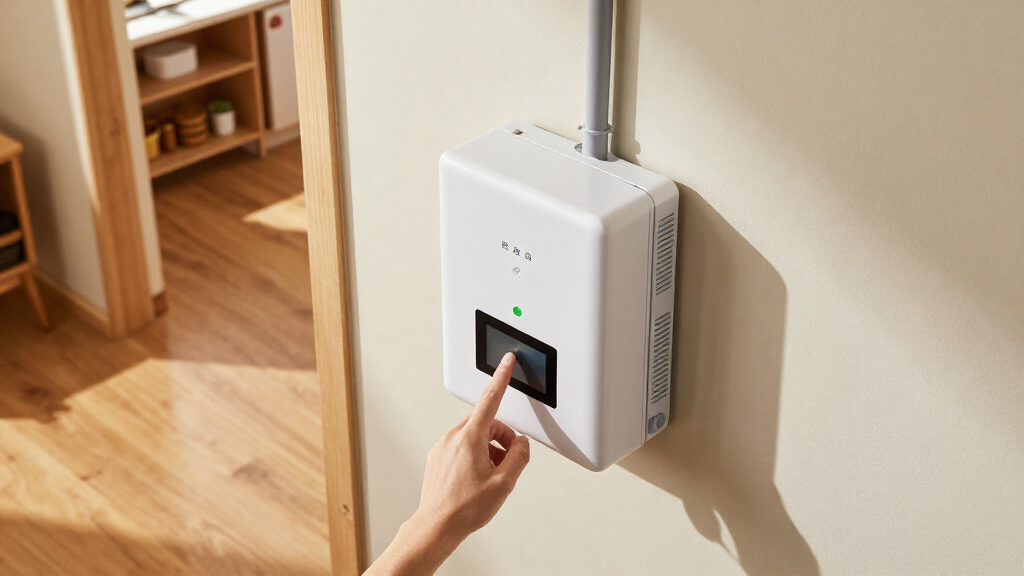
EF ECOFLOW TITAN 5017Wh Power Station with Smart Home Panel 10
The EcoFlow TITAN 5017Wh with Smart Home Panel 10 is the more home-centered choice in this group. It pairs a 5,017Wh LFP battery with 7,200W continuous 120V/240V output, and the included panel is prewired to back up 10 circuits. That makes it better suited than the DELTA Pro to households that want selected hardwired loads covered, including compatible 240V equipment, rather than relying mainly on individual plugged-in devices.
Its capacity can grow to 30kWh, and AC, solar, or generator charging offers several ways to replenish it. The main compromise is mobility: at 119 pounds, it is heavier than the DELTA Pro and is not a casual carry-around unit. The system also has just four power outlets, so its value lies in panel-based backup rather than lots of direct device connections. Choose it for integrated circuit backup; skip it if you want a simpler portable station.
Pros:- 7,200W continuous split-phase output supports compatible 120V and 240V loads.
- Included prewired Smart Home Panel 10 backs up 10 circuits.
- Capacity can expand from 5,017Wh to 30kWh with additional batteries.
- Supports AC, solar, and generator charging.
Cons:- The 119-pound unit is difficult to relocate.
- Reaching the stated maximum capacity requires purchasing additional batteries.
- Four direct power outlets make it less convenient for many plug-in devices than the DELTA Pro.
Best for: Homeowners seeking split-phase backup for up to 10 selected circuits, with expansion potential and multiple charging sources.
Not ideal for: Campers or renters who need a lightweight, outlet-rich portable station rather than a heavy system built around a home panel.
- Battery capacity:5,017Wh; expandable to 30kWh
- Battery chemistry:Lithium iron phosphate (LFP)
- Continuous output:7,200W
- Output voltage:120V/240V split-phase
- Smart Home Panel circuits:10
- Solar input:Up to 4kW
- Weight:119 lb
- Dimensions:13.2 × 16.9 × 24.5 in
Our verdict“Choose the TITAN with Smart Home Panel 10 if circuit-level 120V/240V backup matters more than portability or a high count of direct outlets.”
Anker SOLIX E10 Power Dock and Extra Battery, 12–90 kWh
The Anker SOLIX E10 is the clearest choice here for buyers planning a residential backup installation with room to scale well beyond portable-station capacity. Its included Power Module and two B6000 battery modules provide 12kWh to start, with expansion up to 90kWh, while 7.6kW continuous output and 200A whole-home coverage are aimed at broader household backup than the EcoFlow DELTA Pro. A switchover time of 20 milliseconds or less can also help keep supported loads online during an outage.
The weatherproof design allows indoor or outdoor installation, and solar input reaches 9kW per unit. This is not the easy, self-contained alternative: the Power Dock and extra battery ship separately, and professional installation may be needed. Compared with the EcoFlow TITAN and its included 10-circuit panel, the E10 targets wider whole-home coverage and much greater expansion, but asks for more planning around installation and included components. Skip it if you want a grab-and-go power station.
Pros:- 12kWh starting capacity can expand up to 90kWh.
- 200A whole-home coverage and automatic switchover of 20ms or less support residential backup.
- Weatherproof construction allows indoor or outdoor installation.
- Up to 9kW solar input per unit supports substantial solar charging.
Cons:- The Power Dock and extra battery ship separately.
- Professional installation may be needed, adding planning and setup work.
- Its residential installation focus makes it far less convenient to move than the DELTA Pro.
Best for: Homeowners planning professionally installed, expandable backup for broad household coverage, including future battery additions and solar charging.
Not ideal for: Renters, campers, or buyers seeking a ready-to-use portable unit with no installation planning or separately shipped components.
- Starting battery capacity:12kWh
- Expandable capacity:Up to 90kWh
- Battery chemistry:LFP
- Continuous output:7.6kW
- Turbo output:10kW
- Whole-home coverage:200A
- Solar input:9kW per unit
- Switchover time:20ms or less
- Operating temperature:-4°F to 131°F
Our verdict“Choose the SOLIX E10 if you want an installable whole-home system with major expansion headroom and are prepared for a more involved setup.”
How We Picked
I compared the 13 systems by the factors that shape home backup decisions: stored energy capacity, stated power output, included components, solar readiness, expandability, and setup style. I treated portable power stations, battery-only products, and bundled solar systems as different kinds of solutions rather than ranking them as interchangeable products. A large battery can offer long runtime, but without an inverter or compatible charging plan it may not serve as a ready-to-use home backup system.
The ranking favors options that combine useful capacity with clear system roles and practical paths to power delivery. The ECO-WORTHY PowerMega with a 10kW hybrid inverter leads for its pairing of a substantial 48V battery and high-output inverter; the bundled 32 kWh ECO-WORTHY kit follows for buyers seeking panels and core equipment together. Portable stations rank lower for whole-home coverage, but remain compelling for simpler, more contained backup needs. I also account for tradeoffs: larger kits ask more of the buyer in installation and system planning, while smaller portable units offer less capacity and output.
Factors to Consider When Choosing Best Home Energy Storage Systems
Before choosing a system, I would define what needs power, for how long, and how the battery will recharge. These decisions can matter more than headline capacity: a large battery with an unsuitable inverter or no practical charging plan may not meet a home’s backup needs.
Match inverter output to the loads you will run together
List the appliances you expect to run at the same time, then check their operating and startup demands against the system’s output rating. A refrigerator, well pump, and other motor-driven equipment can briefly draw more power when starting than while running. That makes inverter capability a separate question from battery size: more stored energy extends runtime, while higher output supports more simultaneous demand. Avoid adding every appliance’s label wattage without checking whether the loads actually overlap. If you need a transfer switch or a dedicated home connection, confirm compatibility and installation requirements before buying. A portable station can be useful for selected circuits without being suitable for whole-home backup.
Estimate usable runtime, not just nominal battery capacity
Capacity figures describe stored energy, but your real runtime depends on the loads, conversion losses, reserve settings, and the battery’s usable range. Start by estimating daily energy use for essential appliances rather than assuming the system must power the entire house. A battery-only unit also needs a compatible inverter and charging source before it can operate as part of a home system. Compare the full power path: battery, inverter, wiring, controls, and any equipment needed to charge it. Ask the seller or installer for usable capacity and operating limits, since listed capacity alone may not answer those questions. This prevents paying for storage that your chosen system cannot access or replenish as expected.
Check what the kit includes—and what remains your responsibility
Bundled systems can simplify component matching, but the word “kit” does not guarantee every part needed for a working installation is included. Verify whether panels, inverter, batteries, mounting hardware, cables, monitoring, and grid connection equipment are part of the package. Separate the included hardware from installation scope, permits, and any electrical work required at your home. A bundle with panels may still need site-specific design to account for roof space, orientation, shading, and local rules. Battery-only products can make sense when you already own compatible equipment, but may add complexity for first-time buyers. Ask for a written component list before comparing packages.
Plan how the battery will recharge during an outage
Backup capacity only helps while the system can store enough energy, so decide how you will recharge after a prolonged outage. Solar panels can replenish a battery when conditions allow, though output varies with weather, season, placement, and system configuration. A portable station may support more contained charging plans, while a larger hybrid system can call for more careful equipment matching. Do not assume panel wattage equals dependable daily energy; sunlight hours and conversion losses affect what reaches the battery. If outages commonly last several days, prioritize a realistic recharge plan alongside storage capacity. Check whether the system can accept the charging sources you expect to use.
Choose between portable backup and a home-integrated setup
Portable power stations are easier to position around selected devices and can suit renters or households seeking a flexible backup option. Fixed or hybrid systems are a better fit when the goal is higher output, solar integration, or a more extensive home backup plan. The tradeoff is simplicity versus system scale: portable units can limit installation work but may not serve larger loads, while integrated equipment can take more planning and professional support. Check how a system connects to household circuits before assuming it will power the whole home. Also consider where equipment can be installed and whether its operating conditions fit that location. Your housing situation and backup goals should guide the format before brand or capacity does.
Look beyond capacity when comparing expansion and support
Expansion can help a system grow with changing needs, but only when batteries, inverter, controls, and firmware remain compatible. Ask which extra batteries are supported, whether expansion changes output or only runtime, and whether additional equipment is required. Scalability is useful only when the upgrade path is clear; a stated capacity range does not by itself explain what each configuration needs. Review warranty terms, service access, replacement options, and installation support as part of the decision. A fixed system may be easier to plan when your requirements are stable, while an expandable design may suit buyers expecting higher future demand. Get compatibility details in writing before building a system around future additions.
Frequently Asked Questions
Can a portable power station run my whole home during an outage?
Not automatically. A portable station can power selected devices, but whole-home operation depends on its output, the home’s connection method, and which circuits you intend to back up. Check both continuous and startup power needs, especially for pumps and other motor-driven appliances. A compatible transfer arrangement may be required, and household electrical work should be planned with a qualified professional. If your goal is to run many circuits or larger loads together, compare hybrid systems with higher inverter output rather than relying on capacity alone.
Should I buy a battery-only product or a complete solar backup kit?
A battery-only product can be a sensible choice if you already have a compatible inverter and a clear charging plan. If you are starting from scratch, a kit that includes batteries, inverter, and panels can reduce the work of matching major components. Still, confirm exactly what the package contains, since installation materials and home connection equipment may be separate. Compare the full cost and scope of the system rather than the battery capacity on its own. The right choice depends on what equipment you already own and how much system design you want to handle.
How much battery capacity do I need for overnight backup?
Estimate the energy used by the specific appliances you want to keep running overnight, then compare that total with the system’s usable capacity. A home’s total daily consumption is not a useful substitute if you plan to back up only essentials. Include inverter losses and allow for variation in appliance use, particularly for equipment that cycles on and off. Ask the manufacturer or installer how much of the listed capacity is available for use. If you also need power during the following day, include a realistic recharge plan in the calculation.
Do I need solar panels with a home energy storage system?
No, but you do need a way to charge the battery, and solar can provide a useful source when the grid is unavailable or when your system is designed to use it. A battery without panels may still be charged from the grid or another compatible source, depending on its configuration. Solar production varies with weather, time of year, panel placement, and system limits, so it should not be treated as a guaranteed refill rate. Check which solar inputs the system supports and whether your planned panels match them. If outage resilience is the goal, plan for cloudy periods and extended interruptions.
What should I verify before installing a high-capacity home battery system?
Confirm the equipment’s electrical compatibility, installation location requirements, permitted uses, and local code or permitting obligations before purchase. Ask whether the quoted system includes a transfer switch, wiring, controls, and professional installation, or whether those items are separate. High-capacity batteries and hybrid inverters may require careful planning around household circuits and available space. Check warranty coverage, service arrangements, and the process for adding or replacing batteries. A qualified installer can assess your site’s electrical setup and identify requirements that product listings cannot resolve.
Conclusion
For the strongest blend of substantial storage and inverter output, my best overall choice is the ECO-WORTHY PowerMega 48V 314Ah system with its 10kW hybrid inverter. Buyers seeking a bundled solar route should look first at the ECO-WORTHY 32 kWh kit, while the ECO-WORTHY 10 kW Off-Grid Solar Panel Kit with 32.2 kWh storage is another large-scale option to compare. The best value depends on what equipment you already own: the 16.07 kWh PowerMega battery makes more sense for buyers who can supply a compatible inverter, not for someone expecting a complete backup system. For beginners who want a portable, more contained setup, I would start with the Jackery HomePower 3600 Plus; its format is simpler than planning a fixed hybrid system, though it is not a substitute for whole-home capacity. For premium or expandable needs, compare the Anker SOLIX E10’s stated 12–90 kWh range with the EcoFlow TITAN options, and confirm the equipment and installation required for your chosen configuration. Pick by load, runtime, and recharge plan first, then choose the system format that fits your home.