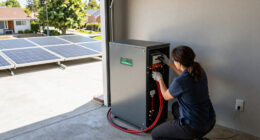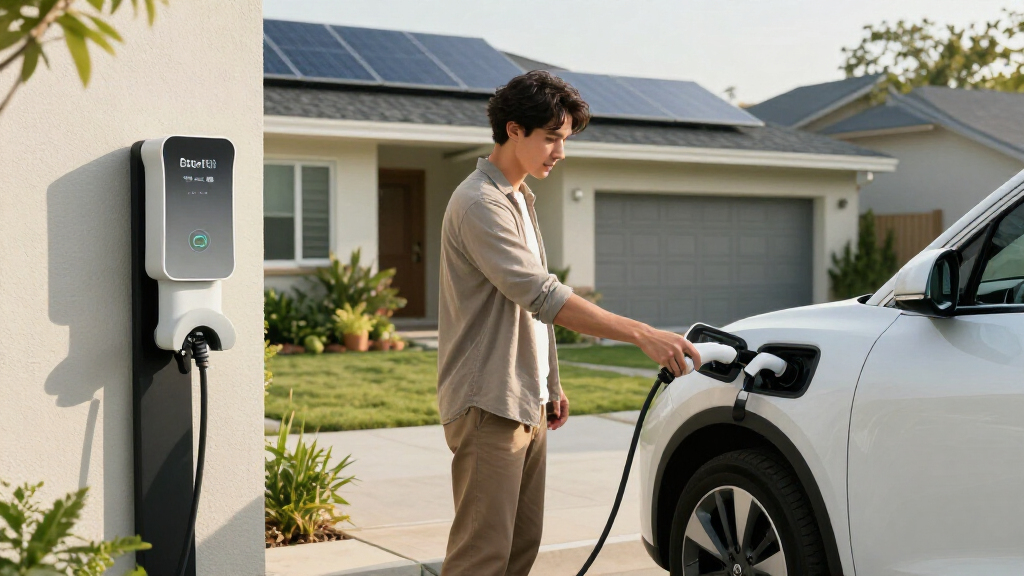
The best EV charging stations balance charging speed, installation needs, connector compatibility and everyday ease of use. My best overall pick is the ChargePoint HomeFlex with J1772 for its established home-charging feature set, while the Emporia 48A hardwired charger stands out for buyers who want strong output and Wi-Fi features. For a portable setup, the EVDANCE Level 1 and Level 2 charger offers more flexibility than a fixed wall unit. The main tradeoffs are plug-in convenience versus hardwired power, smart controls versus simplicity, and a longer cable versus a tidier installation. Read on for the full comparison and guidance on matching a charger to your vehicle, electrical service and parking layout.

Get backup power and energy gear delivered free with Prime
- Fast, free delivery on millions of items
- Prime Video, Amazon Music and more included
- Member-only deals all year
Key Takeaways
- Installation type separates the leading choices: plug-in models such as the ChargePoint HomeFlex with NEMA 14-50 suit compatible existing outlets, while hardwired options such as Emporia and Lectron can fit installations planned around higher output.
- Rated amperage alone does not settle the choice: a 48A or 50A charger needs a suitable circuit and installation, so buyers should match charger output to the home’s electrical capacity rather than choose the biggest number.
- Long cables help with awkward parking, not every garage: the 25-foot models from EV Range, Emporia and Autel offer reach, while shorter 18-foot REV+ cables may make more sense where the parking position is fixed.
- Connector choice narrows compatibility: most listed stations use J1772, while the ChargePoint HomeFlex with NACS is aimed at compatible vehicles; owners should check the car’s inlet and any adapter needs before ordering.
- Portable units solve a different problem from wall stations: EVDANCE and ELEGRP can suit flexible or temporary charging needs, but fixed home stations offer a more permanent setup and may better fit daily charging routines.


| EV charging station | Connector | Cable length | Voltage | Installation |
|---|---|---|---|---|
| REV+ Dual EV Charger Level 2 | J1772 | 18 ft | 240V AC | Plug-in or hardwired; indoor or outdoor |
| IYILO Level 2 EV Charger | SAE J1772 | 25 ft | 240V | — |
| Lectron Level 2 J1772 Nexus EV | J1772 | 23 ft | 240V | Hardwired; professional installation required |
| EV Range Commercial Level 2 EV | J1772 | 25 ft | 240V AC | — |
| ChargePoint HomeFlex Level 2 E | J1772 | 23 ft | 240V | Indoor or outdoor; electrician installation |
| VDLPOWERVP Level 2 EV Charger | J1772 | 27.3 ft | — | — |
| Autel MaxiCharger AC Wallbox 5 | J1772 | 25 ft | 240V | Hardwired |
| Emporia Level 2 WiFi EV Charge | SAE J1772 | 25 ft | 240V | Hardwired with whip |
| EVDANCE Level 1 and Level 2 Po | J1772 | 25 ft | — | — |
| REV+ Dual-Port Level 2 EV Char | J1772 | 18 ft | 240V | Hardwired or NEMA 14-50 plug |
| Leviton Smart Level 2 EV Charg | SAE J1772 | 25 ft | — | Indoor or outdoor |
| Autel MaxiCharger Level 2 EV C | — | — | 240V | Plug-in |
| 50-Amp Level 2 J1772 EV Charge | J1772 | — | 240 V | — |
| ChargePoint HomeFlex Level 2 H | NACS | — | — | Hardwired; electrician required |
| ELEGRP 40A Level 2 Portable EV | J1772 | 25 ft | — | — |
More Details on Our Top Picks
REV+ Dual EV Charger Level 2, 50 Amp, Home EV Charging Station, 18ft Cable
The REV+ Dual EV Charger is the lineup’s clearest fit for a home that needs two charging connections in one station. Its two independent ports can serve two EVs or plug-in hybrids, unlike the single-port ChargePoint HomeFlex and Lectron Nexus. The listed 50A, 11.5 kW output gives it strong Level 2 capability, while Wi-Fi and Bluetooth app controls add scheduling and energy monitoring. It can be plugged in or hardwired and is rated for indoor or outdoor installation, giving buyers more setup flexibility than the hardwired-only Lectron. The tradeoff is its 18-foot cable, shorter than the cables on the IYILO and EV Range models, and the supplied details do not explain how power is allocated when both ports charge at once. I’d choose it for dual-vehicle convenience, not for the longest reach or most clearly specified load sharing.
Pros:- Two independent ports can connect two vehicles.
- Up to 50A and 11.5 kW at 240V.
- Wi-Fi and Bluetooth support app-based scheduling and energy monitoring.
- Indoor or outdoor installation, with plug-in or hardwired setup options.
Cons:- The 18-foot cable is shorter than the 25-foot cables on the IYILO and EV Range chargers.
- The provided product details do not specify how power is shared between ports during simultaneous charging.
Best for: Households with two plug-in vehicles that want one home station with app controls and two charging ports.
Not ideal for: Drivers who need a long cable reach or clear published details on how charging power is divided between both ports.
- Current:50A
- Power:11.5 kW
- Voltage:240V AC
- Ports:2
- Connector:J1772
- Cable length:18 ft
- Connectivity:Wi-Fi and Bluetooth; app control
- Installation:Plug-in or hardwired; indoor or outdoor
- Certification:UL certified
Our verdict“Choose the REV+ if two vehicles need charging access from one station; pick a single-port option if cable reach or documented power sharing matters more.”
IYILO Level 2 EV Charger, 40A, 9.6 kW, 240V, NEMA 14-50P with Wi-Fi
The IYILO gives buyers more control over charging current than the ChargePoint HomeFlex, with adjustment from 6A to 40A in 1A steps. That flexibility can help match charging to a home circuit or coordinate energy use, while scheduled charging, app-based tracking, and RFID access add practical control. Its 25-foot J1772 cable also reaches farther than the REV+ dual charger’s 18-foot lead, though the REV+ is the better choice when two ports matter. Built-in connector temperature monitoring can stop charging if the connector exceeds its stated threshold, and power sharing allows two chargers to use one breaker. The compromises are 2.4 GHz-only Wi-Fi and a 40A hardwired installation that calls for a 50A breaker and licensed electrician. Tesla owners also need a separate NACS adapter.
Pros:- Current adjusts from 6A to 40A in 1A increments.
- App supports scheduled charging, energy tracking, and RFID access.
- Connector temperature monitoring can automatically stop charging above 221°F.
- Power sharing lets two chargers use one circuit breaker.
Cons:- Wi-Fi operates on 2.4 GHz only.
- Tesla vehicles require a separate NACS adapter.
- Hardwired 40A output requires a 50A breaker and licensed electrician.
Best for: EV owners who want fine control over charging amperage, schedules, and access, especially where circuit capacity needs careful management.
Not ideal for: Buyers who need 5 GHz Wi-Fi, want native Tesla connector compatibility, or prefer a simple installation without electrician involvement for 40A hardwired output.
- Current:6A–40A, adjustable in 1A increments
- Power:Up to 9.6 kW
- Voltage:240V
- Plug:NEMA 14-50P
- Connector:SAE J1772
- Cable length:25 ft
- Wi-Fi:2.4 GHz
- Safety features:Built-in GFCI breaker; connector temperature monitoring and automatic shutoff above 221°F
- Warranty:3 years
Our verdict“Choose the IYILO for granular current settings and access controls; the ChargePoint HomeFlex is a simpler alternative if those adjustments are not needed.”
Lectron Level 2 J1772 Nexus EV Home Charger, 48A Hardwired
For buyers prioritizing high output in a permanently installed home charger, the Lectron Nexus delivers up to 48A and 11.5 kW. Its 23-foot cable is longer than the REV+ dual charger’s, and the IP66 enclosure makes it a strong choice for exposed outdoor locations. The listed electrical protections and certifications also give it a more detailed safety profile than the product information supplied for the REV+. Compared with the IYILO, the Nexus offers higher maximum output, but gives up the IYILO’s adjustable current controls and plug-in NEMA 14-50 setup. Professional hardwired installation is required, so it suits buyers planning a dedicated circuit rather than renters or anyone seeking a portable station. Tesla drivers will need a compatible NACS adapter, and the 48A output depends on the vehicle and electrical installation.
Pros:- Up to 48A and 11.5 kW for high-output Level 2 charging.
- IP66 weather resistance supports demanding outdoor placement.
- 23-foot cable provides flexible reach.
- Built-in protection covers overheating, overcurrent, voltage faults, and ground faults.
Cons:- Requires hardwired installation by a professional.
- Tesla vehicles need a compatible NACS adapter.
- Does not provide the IYILO’s adjustable current settings.
Best for: Homeowners with a suitable electrical service who want a high-output, hardwired J1772 charger for indoor or exposed outdoor installation.
Not ideal for: Renters, buyers who need a plug-in charger, or drivers who want adjustable amperage or native NACS support.
- Output:Up to 48A
- Power:11.5 kW
- Voltage:240V
- Connector:J1772
- Cable length:23 ft
- Installation:Hardwired; professional installation required
- Weather resistance:IP66
- Certifications:UL 2594, UL 2231, UL 2251; ETL listed; Energy Star and FCC certified
- Weight:21.6 lb
Our verdict“Pick the Lectron Nexus if you want a weather-resistant, high-output hardwired station and are ready for professional installation.”
EV Range Commercial Level 2 EV Charging Station, 32A, J1772, 25 ft Cable
The EV Range station is aimed at shared parking, fleets, and businesses rather than a typical one-car garage. Its RFID and app-based access controls, driver payment support, usage reports, and monthly revenue deposits make it more suited to managed charging than the ChargePoint HomeFlex. The NEMA 4 enclosure and IK10 impact resistance also address weather and physical contact in public or commercial settings. At 32A, it has less maximum output than the 40A IYILO or 48A Lectron Nexus, so drivers focused on faster home charging have stronger alternatives in this group. The 25-foot cable and wall-or-pedestal mounting add placement flexibility, but the pedestal is not included. Its network features are most useful when an operator will manage access and payments; they add little value for a private household charging a single car.
Pros:- RFID and app-based controls support managed access.
- EV Range network offers usage reports and monthly revenue deposits.
- NEMA 4 enclosure and IK10 impact resistance suit shared locations.
- 25-foot cable and wall or pedestal mounting allow flexible placement.
Cons:- 32A output is lower than the IYILO’s 40A and Lectron Nexus’s 48A.
- Pedestal is not included.
- Tesla vehicles require an adapter.
Best for: Property managers, small businesses, and fleet operators who need access control, usage reporting, and driver payment support.
Not ideal for: Homeowners seeking the highest charging output or a straightforward private charger without network and payment management.
- Current:32A
- Voltage:240V AC
- Connector:J1772
- Cable length:25 ft
- Ports:1
- Enclosure:Polycarbonate, NEMA 4; IK10 impact resistance
- Mounting:Wall or pedestal; pedestal not included
- Compliance:CTEP certified, UL certified, OCPP 1.6J compliant
- Warranty:2 years
Our verdict“Choose the EV Range for a shared or commercial site that needs managed access and payment tools, not for a home seeking maximum charging speed.”
ChargePoint HomeFlex Level 2 EV Charger with J1772 Connector and NEMA 14-50 Plug
The ChargePoint HomeFlex suits buyers who want a familiar single-port home setup with app controls and smart-home connections, rather than the dual-vehicle capacity of the REV+ or the commercial access tools of the EV Range. Its 23-foot cable gives useful reach, and the cold-resistant design is a practical advantage for garages and outdoor installations in colder climates. It uses a NEMA 14-50 plug and is UL-certified for indoor or outdoor installation, but the supplied information calls for an electrician and a 40A or 50A circuit. That makes it less convenient for someone who already expects a straightforward outlet connection. Compared with the IYILO, the HomeFlex does not list adjustable current settings or RFID access. Tesla owners also need an adapter, while the included connector is J1772.
Pros:- App offers charger controls, reminders, charging information, and smart-home connections.
- 23-foot cable provides useful reach.
- Cold-resistant cable suits colder locations.
- UL-certified for indoor or outdoor installation.
Cons:- Requires a 240V NEMA 14-50 outlet and a 40A or 50A circuit.
- Installation requires an electrician.
- Tesla vehicles need an adapter, and the charger has one J1772 port.
Best for: EV owners who want a single-port, app-connected J1772 home charger with a cold-resistant cable and smart-home links.
Not ideal for: Households charging two vehicles, buyers who need built-in Tesla connector support, or anyone seeking adjustable current and RFID controls.
- Charging level:Level 2
- Voltage:240V
- Plug type:NEMA 14-50
- Connector:J1772
- Ports:1
- Cable length:23 ft
- Installation:Indoor or outdoor; electrician installation
- Certification:UL
- Warranty:3-year parts warranty
Our verdict“Choose the HomeFlex for app-connected single-car charging and cold-weather cable flexibility; select the REV+ for two vehicles or the IYILO for more charging controls.”
VDLPOWERVP Level 2 EV Charger EC51B, 50A, 27.3-Foot Cable
The 27.3-foot cable gives this plug-in charger a reach advantage over the 25-foot cords on the Autel MaxiCharger AC Wallbox and Emporia charger. That extra length can make a practical difference when an outlet or mounting spot does not line up neatly with a vehicle’s charge port. Its NEMA 14-50 plug avoids the hardwired installation required by those two models, while adjustable current settings let owners match charging to their circuit. Wi-Fi app controls add scheduling and remote status checks, though they depend on a working connection and app setup. The main tradeoff is that the product data is less reassuring on certification and warranty detail than the CSA-certified Autel or UL-listed Emporia. I’d shortlist it for reach and plug-in convenience, not for buyers prioritizing clearly documented credentials.
Pros:- 27.3-foot cable reaches farther than the 25-foot cables on the Autel and Emporia models
- NEMA 14-50 plug supports plug-in setup without permanent hardwiring
- Adjustable current from 16A to 50A accommodates different charging needs
- Wi-Fi app offers scheduling, remote monitoring, and charging status
Cons:- Product information does not identify a UL or CSA certification
- Warranty information is limited to one year, with an offer to contact the seller about an additional year
- Tesla vehicles require a separately obtained J1772 adapter
Best for: Drivers with a NEMA 14-50 outlet whose parking position calls for a longer-than-standard cable and adjustable charging current
Not ideal for: Buyers who want hardwired installation, clearly listed third-party safety certification, or a long, explicitly stated warranty
- Connector:J1772
- Maximum current:50A
- Power:Up to 11.5 kW
- Input voltage:240V
- Cable length:27.3 ft
- Plug:NEMA 14-50
- Current settings:16A, 32A, 40A, 48A, or 50A
- Connectivity:Wi-Fi and app control
Our verdict“Choose the VDLPOWERVP if cable reach and a NEMA 14-50 plug matter more to you than a documented certification and warranty record.”
Autel MaxiCharger AC Wallbox 50A Level 2 EV Charger
The Autel MaxiCharger is the strongest fit here for a buyer planning a permanent outdoor installation. Its NEMA 4X enclosure is specified for weather-exposed locations, and CSA certification gives the installation credentials more definition than the VDLPOWERVP’s product information provides. It also reaches up to 12 kW, with current adjustable from 6A to 50A, so charging can be set to suit the home’s electrical setup rather than simply run at maximum output. Wi-Fi and Bluetooth support app scheduling and control. Compared with the Emporia, the Autel adds Bluetooth and a wider stated current-adjustment range; compared with either plug-in convenience of the VDLPOWERVP, it requires hardwiring. Its 20.9-pound body is also a fixed-install choice, not a charger to pack for travel.
Pros:- NEMA 4X enclosure is suited to indoor or outdoor installation
- CSA-certified design
- Adjustable current from 6A to 50A supports different electrical setups
- Wi-Fi and Bluetooth app connectivity with scheduling and remote controls
Cons:- Hardwired installation may require an electrician
- At 20.9 pounds, it is not a practical portable charging option
- Its 25-foot cable is shorter than the VDLPOWERVP’s 27.3-foot cable
Best for: Homeowners arranging a hardwired charger in an exposed garage or outdoor parking area who want app control and broad current adjustment
Not ideal for: Renters, frequent travelers, or homeowners who need a plug-in charger and do not want to arrange a permanent electrical installation
- Connector:J1772
- Maximum current:50A
- Adjustable current:6A–50A
- Power output:Up to 12 kW
- Voltage:240V
- Cable length:25 ft
- Installation:Hardwired
- Connectivity:Wi-Fi and Bluetooth
- Certification and enclosure:CSA; NEMA 4X
Our verdict“Pick the Autel MaxiCharger if you want a certified, weather-rated hardwired station and can plan for permanent installation.”
Emporia Level 2 WiFi EV Charger, 48A, Hardwired
Emporia’s advantage is a useful mix of energy monitoring and scheduled charging, backed by UL listing and ENERGY STAR certification. For drivers who want to track charging use or set sessions around their household routine, those features give the app a clear job beyond simply showing whether the car is plugged in. The charger delivers up to 48A when hardwired and is rated for up to 46 miles of range per hour, though actual charging depends on the vehicle and installation. Its 25-foot J1772 cable and included mounting hardware make it a ready-to-plan fixed station. Compared with the Autel MaxiCharger, Emporia gives up the Autel’s stated 50A maximum and Bluetooth, but it has explicit ENERGY STAR certification. Like the Autel, it requires hardwiring, so it is less flexible than the plug-in VDLPOWERVP.
Pros:- Wi-Fi app supports energy monitoring and scheduled charging
- UL listed and ENERGY STAR certified
- 48A output is rated for up to 46 miles of range per hour
- Includes a 25-foot cable, wall mount, holster, and mounting hardware
Cons:- Hardwired installation is required, with professional installation recommended
- Wi-Fi operates on 2.4 GHz rather than offering a stated Bluetooth connection
- Tesla and NACS vehicles need a compatible adapter or another charger
Best for: EV owners who want a certified hardwired station with Wi-Fi energy tracking and scheduled charging
Not ideal for: Renters or drivers who need a portable charger, a plug-in installation, or built-in compatibility with Tesla and NACS vehicles
- Charging level:Level 2
- Connector:SAE J1772
- Voltage:240V
- Maximum current:48A
- Cable length:25 ft
- Installation:Hardwired with whip
- Connectivity:2.4 GHz Wi-Fi
- Certifications:UL listed; ENERGY STAR
Our verdict“Choose Emporia if energy monitoring and listed certifications matter more than plug-in flexibility or a 50A maximum.”
EVDANCE Level 1 and Level 2 Portable EV Charger, 16A
The EVDANCE is the most flexible pick for drivers who need a charger they can move between outlets, rather than a fast, permanent home station. It supports Level 1 at 120V and Level 2 at 240V, with a carry bag and 25-foot cable for travel or backup use. The tradeoff is output: at a maximum of 3.84 kW, it is far below the 11–12 kW output of the VDLPOWERVP, Autel, and Emporia, so it makes less sense as the main charger for a high-mileage driver. Its LED display reports status and errors, while the IP66-rated housing adds protection for portable use. Outlet compatibility is specific: the included adapter covers certain 120V outlets, but it does not turn this into a NEMA 14-50 charger.
Pros:- Supports both 120V Level 1 and 240V Level 2 charging
- 25-foot cable and carry bag suit travel and backup use
- LED display shows charging status and errors
- IP66-rated housing and built-in control-box monitoring
Cons:- Maximum output of 3.84 kW is well below the fixed 48A–50A chargers in this roundup
- Does not support NEMA 14-50 without a separately sold adapter
- One-year warranty is shorter than the three-year Autel and Emporia warranties
Best for: Drivers who want a portable J1772 charger for occasional use at compatible 120V outlets or a NEMA 6-20 240V outlet
Not ideal for: High-mileage drivers seeking fast daily home charging, or anyone whose available outlet is NEMA 14-50 without a separately sourced adapter
- Connector:J1772
- Charging levels:Level 1 and Level 2
- Current and voltage:12A at 120V; 16A at 240V
- Maximum power:3.84 kW
- Cable length:25 ft
- Compatible outlets:NEMA 5-15/5-20 at 120V; NEMA 6-20 at 240V
- Included adapter:NEMA 6-20 to 5-15
- Housing protection:IP66
- Weight:7 lb
Our verdict“Buy the EVDANCE as a portable backup for compatible outlets, not as a substitute for a high-output home charging station.”
REV+ Dual-Port Level 2 EV Charger, 50A, 18-Foot Cable
The REV+ earns its place through two independent J1772 ports, a feature none of the single-connector chargers here can match. For a household with two plug-in vehicles, that can reduce the need to alternate charging sessions; its app also supports scheduling, remote start and stop, and energy monitoring. Installation can be hardwired or use a NEMA 14-50 plug, giving it more setup flexibility than the hardwired-only Autel and Emporia. The compromise is reach: its 18-foot cables are notably shorter than the 25-foot Autel and Emporia cords and the VDLPOWERVP’s 27.3-foot lead, so the mounting position needs careful planning. The provided data lists 50A and 12 kW but does not clarify how power is allocated when both vehicles charge at once. I’d confirm that detail before relying on simultaneous charging.
Pros:- Two J1772 ports support charging two compatible vehicles
- Supports hardwired or NEMA 14-50 plug installation
- Wi-Fi and Bluetooth app includes scheduling, remote start and stop, and energy monitoring
- Five-year warranty is longer than the listed Autel and Emporia warranties
Cons:- 18-foot cables are shorter than the cables on the VDLPOWERVP, Autel, and Emporia
- Product information does not specify how the 12 kW output is shared between ports
- Tesla vehicles require a compatible J1772 adapter
Best for: Households with two J1772-compatible EVs or plug-in hybrids and a parking layout that lets both ports reach their vehicles
Not ideal for: Drivers with one vehicle, distant parking positions, or Tesla vehicles without a compatible J1772 adapter
- Number of ports:2
- Connector:J1772
- Voltage:240V
- Current:50A
- Power:Up to 12 kW
- Cable length:18 ft
- Installation:Hardwired or NEMA 14-50 plug
- Connectivity:Wi-Fi and Bluetooth
- Warranty:5 years
Our verdict“Choose the REV+ for a two-vehicle household if both cars can reach its short cables and you confirm its power-sharing behavior.”
Leviton Smart Level 2 EV Charger, 40A, Wi-Fi, White
The Leviton EV40P suits drivers who want app controls without giving up the simplicity of a plug-in charger. Its My Leviton app supports schedules, remote start and stop, status checks, and fault alerts, making it more management-focused than the ELEGRP portable charger, which offers a delay timer and selectable current but no listed Wi-Fi controls. The 25-foot cable and water-resistant enclosure also give it flexibility for garages and outdoor mounting. Output tops out at 9.6 kW, a familiar 40A level rather than the higher hardwired capacity of the 50-Amp J1772 charger. It also needs a NEMA 14-50 receptacle, and Tesla drivers need a separate adapter. Choose it for connected home charging, not for maximum output or native Tesla compatibility.
Pros:- My Leviton app provides scheduling, remote start and stop, status monitoring, and fault notifications.
- 25-foot cable offers useful reach from the outlet to the vehicle.
- Water-resistant enclosure supports indoor or outdoor installation.
- Pre-attached input cable and included mounting hardware simplify setup.
Cons:- Requires a compatible NEMA 14-50 receptacle.
- J1772 connector requires a separate Leviton NACS adapter for Tesla vehicles.
- 40A output is lower than the hardwired 50A capability of the 50-Amp J1772 charger.
Best for: J1772 drivers with a NEMA 14-50 outlet who want Wi-Fi scheduling, remote controls, and charging fault notifications.
Not ideal for: Tesla owners who want a native connector, or households seeking higher output than 40A without an adapter or installation changes.
- Model:EV40P
- Input voltage:240 V AC
- Maximum output:Up to 9.6 kW
- Connectivity:Wi-Fi; My Leviton app
- Cable length:25 ft
- Connector:SAE J1772
- Plug:NEMA 14-50P
- Installation:Indoor or outdoor
Our verdict“Choose the Leviton EV40P if app-based control and a long cable matter more than higher output or native Tesla charging.”
Autel MaxiCharger Level 2 EV Charger, 40A, 240V, NEMA 14-50 Plug, 25-Foot Cable
The Autel MaxiCharger stands out for letting owners choose among 16A, 24A, 32A, and 40A output settings. That flexibility can help match charging to a home circuit or reduce the load when other appliances are running; the fixed 40A Leviton is less adaptable on that front. Autel pairs those settings with a 25-foot cable, NEMA 4X-rated protection, and app scheduling and automatic updates. The tradeoff is that it remains a plug-in charger, so a NEMA 14-50 receptacle is required; unlike the 50-Amp J1772 charger, it is not presented as a hardwired higher-output option. RFID access control is optional, so buyers who need built-in user restriction should check that requirement before choosing. It is a practical fit for households that value adjustable current over maximum charging capacity.
Pros:- Four selectable current settings from 16A to 40A accommodate different circuit capacities.
- 25-foot cable provides flexible reach to the vehicle.
- NEMA 4X-rated enclosure supports indoor and outdoor installation.
- App supports charging schedules and automatic updates.
Cons:- Requires a 240V NEMA 14-50 receptacle.
- Maximum output is 40A, below the 50A hardwired capability listed for the 50-Amp J1772 charger.
- RFID access control is optional rather than included.
Best for: Households with a NEMA 14-50 outlet that want to adjust charging current to suit their electrical capacity or charging routine.
Not ideal for: Drivers seeking a hardwired setup, output above 40A, or included RFID access control.
- Maximum amperage:40A
- Voltage:240V
- Adjustable amperage:16A, 24A, 32A, or 40A
- Charging cable:25 ft
- Plug type:NEMA 14-50
- Installation:Plug-in
- Warranty:3 years
Our verdict“Pick the Autel MaxiCharger if adjustable current is more useful to you than a higher-output hardwired installation.”
50-Amp Level 2 J1772 EV Charger, NEMA 14-50 or Hardwired, 240V
This 50-Amp J1772 charger earns its place through two installation paths: plug it into a NEMA 14-50 outlet or have an electrician hardwire it for up to 50A. That makes it more adaptable than the plug-in-only Autel MaxiCharger, while its app adds scheduling, charging status, history, and access control. Built-in thermal sensors and automatic power cutoff address a different buyer concern: safety monitoring during charging. The listing does not give a cable length or a named weather-protection rating, so buyers comparing outdoor setups have less specific information than they do with the ChargePoint HomeFlex NACS. Tesla compatibility also depends on a separate adapter. This is the most flexible installation choice in this group, but its hardwired option calls for professional work and its J1772 connector may not suit Tesla owners seeking a direct connection.
Pros:- Offers both NEMA 14-50 plug-in and professional hardwired installation.
- Hardwired configuration supports up to 50A.
- App includes scheduling, charging status, history, and access control.
- Thermal sensors can trigger automatic power cutoff.
Cons:- Hardwiring requires a professional electrician.
- Tesla vehicles require an adapter for the J1772 connector.
- Product data does not specify cable length or a named weather-protection rating.
Best for: J1772 drivers who may start with a NEMA 14-50 outlet but want the option of professional hardwiring for up to 50A.
Not ideal for: Tesla owners who want a native connector, or buyers who need clearly stated cable length and enclosure ratings before choosing an outdoor charger.
- Charger level:Level 2
- Voltage:240 V
- Maximum current:Up to 50A when hardwired
- Connector:J1772
- Installation options:NEMA 14-50 plug or professional hardwiring
- Smart features:App scheduling, charging status, history, and access control
- Safety features:Thermal sensors and automatic power cutoff
- Enclosure:Flame-retardant PC+ASA shell; weather-resistant
Our verdict“Choose this model if you want a J1772 charger that can use an outlet now and support a 50A hardwired setup later.”
ChargePoint HomeFlex Level 2 Hardwired EV Charger with NACS Connector
The ChargePoint HomeFlex with NACS is the clearest fit here for Tesla drivers who want a charger with a native connector rather than an adapter-dependent J1772 model like the Leviton EV40P. Its 50A hardwired design is rated to provide up to 45 miles of range per hour, depending on the vehicle, and ChargePoint’s app adds controls, reminders, charging information, and smart home connections. Compared with the plug-in Autel, this is a more permanent installation and requires an electrician, so it makes less sense for renters or anyone who may relocate the charger. The product information also lists a circuit requirement of 20A or 80A, which buyers should confirm with an electrician before planning the installation. It offers a focused Tesla-oriented setup, but J1772 drivers should choose a compatible connector model instead.
Pros:- Native NACS connector is compatible with Tesla vehicles.
- Up to 45 miles of range per hour, depending on the vehicle.
- Indoor or outdoor installation is supported.
- App offers charging controls, reminders, charging information, and smart home connections.
Cons:- Hardwired installation requires an electrician.
- Listed circuit requirement of 20A or 80A calls for electrical compatibility checks.
- NACS connector is less suitable for J1772 drivers than the Leviton or Autel models.
Best for: Tesla owners with a suitable electrical circuit who want a hardwired NACS charger and app-based charging controls.
Not ideal for: Renters, drivers who need a portable plug-in charger, or J1772 vehicle owners who do not want to use a separate adapter.
- Output voltage:240V
- Amperage:50A
- Connector:NACS
- Installation:Hardwired; electrician required
- Charging rate:Up to 45 miles of range per hour, depending on vehicle
- Indoor/outdoor use:Both
- Dimensions:7.06 x 11.19 x 5.2 in
- Warranty:3 years
Our verdict“Choose this ChargePoint if you drive a Tesla and prefer a permanent NACS installation over a plug-in J1772 charger.”
ELEGRP 40A Level 2 Portable EV Charger with J1772 Connector and 25 ft Cable
The ELEGRP ECP24-40A0-01 is the portable pick for drivers who want a long cable and current choices without relying on an app. Five settings from 16A to 40A let owners match charging to the available circuit, while a 1–12 hour delay timer covers basic scheduled charging. Its IP67 rating and stated operating range from -21°F to 121°F give it a stronger defined weather specification than the Leviton, whose enclosure is described as water-resistant. Unlike the Wi-Fi-enabled Autel MaxiCharger, though, the ELEGRP does not list app scheduling or remote monitoring. It also needs a NEMA 14-50 outlet and a separate NACS adapter for Tesla vehicles. Choose it for portable, straightforward charging rather than connected features or a permanent hardwired installation.
Pros:- Five current settings from 16A to 40A help match charging to electrical capacity.
- 25-foot cable offers flexible reach.
- IP67 rating and stated -21°F to 121°F operating range support outdoor use.
- ETL certification, overheat protection, and a triple-layer safety system are listed.
Cons:- Requires a 240V NEMA 14-50 outlet.
- Tesla vehicles need a separately sold NACS adapter.
- Provides a delay timer but no listed Wi-Fi app control or remote monitoring, unlike the Autel MaxiCharger.
Best for: J1772 drivers who want a portable 40A charger with adjustable current, a delay timer, and a clearly specified outdoor protection rating.
Not ideal for: Buyers who want Wi-Fi monitoring and remote controls, a hardwired installation, or a native Tesla connector.
- Model:ECP24-40A0-01
- Maximum current:40A
- Maximum output:9.6 kW
- Current settings:16A, 20A, 24A, 32A, or 40A
- Connector:J1772
- Plug:240V NEMA 14-50
- Cable length:25 ft
- Ingress protection and temperature:IP67; -21°F to 121°F
- Warranty:2 years
Our verdict“Pick the ELEGRP if portability and adjustable current matter more than app features or a hardwired setup.”
How We Picked
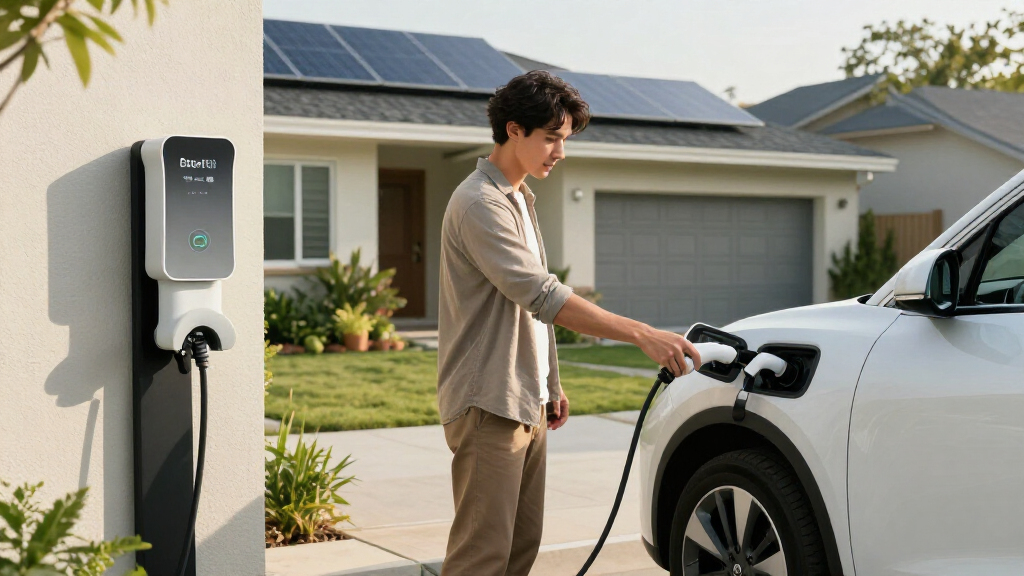
I compared the 15 listed stations on factors that change the ownership experience: electrical fit and charging output, plug-in versus hardwired installation, connector type, cable reach, smart controls, portability and the likelihood that a buyer can use each unit without paying for features they do not need. I treated specifications as useful only when they translated into a practical benefit, such as reaching a car parked outside the garage or supporting a higher-output circuit.
The ranking favors versatile home choices with a clear fit for common buyers, followed by specialized options that make sense for a narrower setup. ChargePoint HomeFlex J1772 leads for its broad home-use appeal; Emporia and Autel bring different strengths for buyers prioritizing smart features, output or build flexibility. Portable and dual-port models appear lower because their usefulness depends more heavily on a particular parking arrangement or charging plan. Before purchase, buyers should confirm current product specifications, vehicle connector compatibility, circuit capacity and installation requirements.
| EV charging station | Connector |
|---|---|
| REV+ Dual EV Charger Level 2 | J1772 |
| IYILO Level 2 EV Charger | SAE J1772 |
| Lectron Level 2 J1772 Nexus EV | J1772 |
| EV Range Commercial Level 2 EV | J1772 |
| ChargePoint HomeFlex Level 2 E | J1772 |
| VDLPOWERVP Level 2 EV Charger | J1772 |
| Autel MaxiCharger AC Wallbox 5 | J1772 |
| Emporia Level 2 WiFi EV Charge | SAE J1772 |
| EVDANCE Level 1 and Level 2 Po | J1772 |
| REV+ Dual-Port Level 2 EV Char | J1772 |
| Leviton Smart Level 2 EV Charg | SAE J1772 |
| Autel MaxiCharger Level 2 EV C | — |
| 50-Amp Level 2 J1772 EV Charge | J1772 |
| ChargePoint HomeFlex Level 2 H | NACS |
| ELEGRP 40A Level 2 Portable EV | J1772 |
Factors to Consider When Choosing Best EV Charging Stations
The product list shows how much a charger choice depends on the home around it. I would settle the electrical and parking questions before comparing apps or extra features: those choices affect whether a unit can be installed safely and used comfortably every day.
Match Charger Output to Your Electrical Circuit
A charger’s maximum amperage is not the same as the power your home can deliver to it. The circuit, panel capacity and installation method all set practical limits, and continuous EV charging calls for a properly sized circuit. A higher-output model may shorten charging sessions when the vehicle and electrical setup support it, but it can add installation work if the panel needs changes. Plug-in chargers can be convenient when a correctly rated outlet is already available, while hardwired units may suit a planned installation. Do not assume a dryer outlet or an existing 240V receptacle is suitable just because its shape looks familiar. Have a qualified electrician verify the circuit and installation plan before buying around a headline amperage figure.
Choose J1772 or NACS Around Your Vehicle
Connector compatibility should be checked against the vehicle’s charging inlet, not just the charger’s product title. Many home units in this roundup use J1772, while one ChargePoint HomeFlex option has a NACS connector. Some vehicles can use an adapter, but buyers should confirm that the adapter supports the intended AC charging use and is approved for their vehicle. A household with more than one EV may need to weigh current connector needs against likely future vehicles. Also check whether the cable connector can be stored neatly and protected from weather or accidental damage. A connector mismatch can turn an otherwise suitable station into an inconvenient purchase.
Measure the Route From Charger to Charging Port
Cable length is about where the car parks, not simply the size of the garage. Measure from the proposed mounting point to the vehicle’s charging port with the car in its usual position, allowing room to route the cable without stretching it across a walkway. A 25-foot cable can help when the inlet is on the far side of a vehicle or a second parking position is used, but extra cable needs a safe place to hang. A shorter cable can keep a fixed installation tidier and reduce the chance of it being driven over. Check whether the station’s cable reaches outside the garage if the vehicle sometimes parks in the driveway. Planning around real parking habits helps avoid paying for reach that is never used—or discovering the cable falls short.
Decide Whether Smart Controls Will Change Your Routine
Wi-Fi and app controls are useful when they support a specific routine, such as checking charging status remotely or setting schedules around utility rules. They are less compelling if the car already handles scheduling well and the charger will be used as a simple plug-in station. Before choosing a connected model, check app requirements, home network coverage at the installation point and whether key functions still work when Wi-Fi is unavailable. Smart features can also vary by model, so do not assume every connected charger offers the same controls. Buyers who prefer straightforward operation may be better served by prioritizing dependable charging and a clear interface. Treat connectivity as a convenience layer, not a substitute for confirming electrical and vehicle compatibility.
Pick Fixed or Portable Based on Where You Charge
A wall-mounted station makes the most sense when the vehicle returns to the same parking spot and the home has a suitable installation point. Portable units can be a better fit for renters, households that travel between locations, or drivers who need a charger that can be packed away, though their use still depends on an appropriate power source. Portability does not remove the need to check outlet type, circuit rating or weather exposure. A dual-port station may help when two vehicles share a location, but buyers should check how its power is allocated and whether both cables can reach their parking spots. Think through storage, cable handling and who will use each outlet before choosing a flexible design. The best format is the one that suits the routine without creating new setup steps.
Plan for Installation, Weather and Long-Term Upkeep
Installation cost and complexity depend on distance from the electrical panel, wall material, conduit routing and any panel work—not just whether the charger is plug-in or hardwired. A nearby outlet can simplify setup, but it still needs to meet the charger’s requirements and local electrical rules. For a garage or outdoor location, confirm the unit’s approved mounting environment and cable handling guidance rather than assuming every model can live in the weather. Leave room to coil the cable without sharp bends, and mount the connector where it will not be stepped on or hit by a car door. Ask the electrician about permits and local code requirements before scheduling work. Planning these details up front can matter more than a small difference in charger features.
Frequently Asked Questions
Should I choose a plug-in charger or a hardwired EV charger?
A plug-in charger can be convenient if you already have a correctly rated outlet in a suitable location, since the unit can be unplugged for service or relocation. Hardwired models can suit a permanent installation and may support higher output, depending on the charger, circuit and vehicle. Neither format is automatically safer or easier in every home; the electrical setup determines the practical choice. Have an electrician confirm that an existing outlet and circuit meet the charger’s specifications before relying on them. If the installation needs new wiring either way, compare the total work involved rather than focusing only on the charger connection.
How do I know whether a 48A or 50A charger will work at my home?
Start with the home’s electrical panel and the proposed circuit, then check the charger’s installation instructions for its required breaker and wiring. A charger’s rated amperage does not mean it can be connected to any available 240V outlet. The vehicle also limits how much AC power it can accept, so a higher-rated station may not make charging faster for every car. An electrician can determine whether the existing service has capacity or whether upgrades are needed. If the installation requires major electrical work, a lower-output option may better fit your daily charging needs.
Will a J1772 charger work with an EV that has a NACS inlet?
It may work with a compatible adapter, but buyers should verify support for their exact vehicle and the intended home AC charging use. Check the vehicle maker’s guidance and the adapter’s specifications before relying on one. The reverse situation also needs a compatibility check: a NACS charger may not connect directly to a vehicle with a J1772 inlet. A household with multiple EVs should account for every vehicle, not just the one being charged most often. Connector fit is only one part of compatibility; also confirm that the charger’s electrical requirements suit the home.
Do I need a Wi-Fi EV charger if my car already has scheduled charging?
Not necessarily. If the vehicle reliably manages charging times and you do not need remote charger status, a simpler station may cover your routine. Wi-Fi can add value when you want to check charging away from home or use charger-side scheduling, but available controls differ by model. It is also worth checking wireless coverage where the unit will be mounted and what functions remain available during an internet outage. Choose connected features for a task you expect to use, rather than treating an app as a requirement for home charging.
Is a portable EV charger a good substitute for a wall-mounted station?
A portable charger can suit occasional charging, travel between locations or a parking arrangement that does not support a permanent mount. It is not automatically a plug-in-anywhere solution: the power source, outlet rating and circuit still need to meet the charger’s requirements. For a fixed daily routine, a wall-mounted station can keep the cable accessible and reduce repeated setup and storage. Portable models may also have different output limits from hardwired home stations, so compare charging needs as well as convenience. Choose portable when flexibility solves a real problem, not just because it sounds easier to install.
Conclusion
My best overall recommendation is the ChargePoint HomeFlex with J1772 for drivers seeking a versatile home setup; choose the NACS version instead only when its connector matches your vehicle plan. For best value, compare the IYILO 40A plug-in model or ELEGRP portable charger against the outlet and charging speed you actually need, rather than paying for unused output. The best premium-leaning choice is the Autel MaxiCharger AC Wallbox for buyers prioritizing a dedicated, higher-output home installation, while the Emporia 48A hardwired model suits those who want Wi-Fi features alongside strong output. For beginners, the plug-in ChargePoint HomeFlex is a clear starting point when a suitable NEMA 14-50 circuit is already in place. For specific needs, consider EVDANCE for portable Level 1 and Level 2 flexibility, REV+ Dual for a two-vehicle setup, and the long-cable Autel or Emporia options when parking distance is the main constraint; confirm installation and compatibility before choosing.