TL;DR

Get backup power and energy gear delivered free with Prime
- Fast, free delivery on millions of items
- Prime Video, Amazon Music and more included
- Member-only deals all year
Winners of Phius’ 2026 Passive Projects Design Competition highlight the expanding use of Passive House design in larger and more complex buildings, including multifamily and affordable housing. The competition offers examples of developer and designer interest, but the available report does not provide project-level performance results or details about costs.
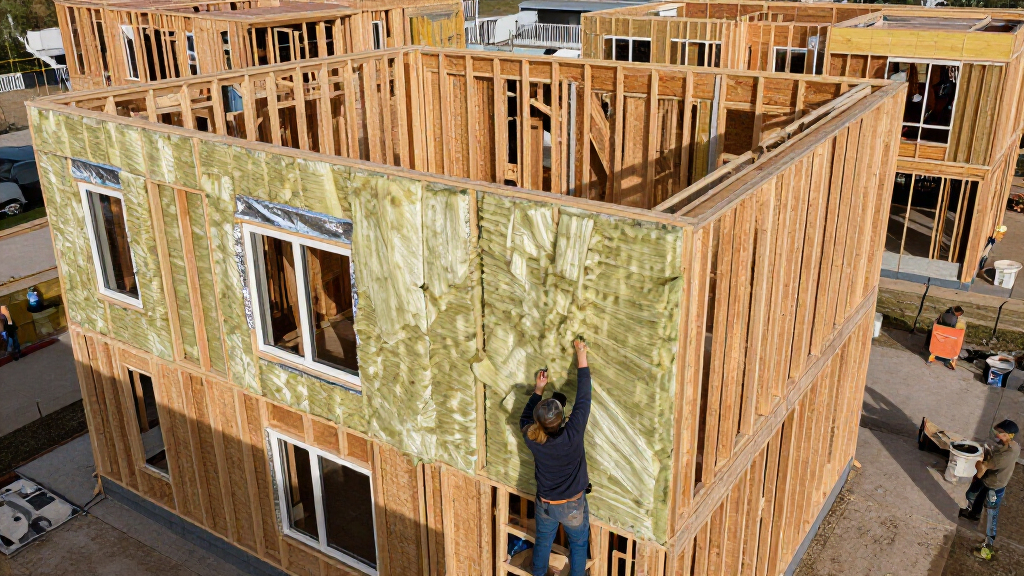
The winners of Phius’ 2026 Passive Projects Design Competition reflect growing use of Passive House design in multifamily and affordable housing, according to a November 3 report by GreenBuildingAdvisor. The projects point to designers applying high-performance building strategies to larger, more complex developments, extending a standard historically associated with houses.
The competition, now in its 11th year excluding a brief hiatus in 2024, recognizes projects using Passive House principles. Its latest winning entries include examples from beyond the single-family category, as the building standard is applied to a broader range of development types. The report describes multifamily and affordable housing as markets where the approach is making headway.
Phius, which sponsors the competition, said in a press release that the standard has grown “from an idea to an ecosystem,” with designers and developers applying high-performance strategies to increasingly large and complex buildings. The competition’s results offer a snapshot of that evolution; they do not, on their own, establish how common Passive House construction is across the housing market.
Co-executive director Katrin Klingenberg said the competition has consistently included a mix of building categories. The report frames that diversity as evidence that Passive House is no longer limited to detached homes. It does not provide a full list of winners, project budgets, measured energy use or comparisons with conventional buildings in the material available here.
Why Multifamily Adoption Matters
Multifamily and affordable housing projects can bring high-performance design to more residents than a single home, while also testing whether such strategies can work at the scale and complexity of larger developments. The competition’s focus matters because it shows architects and developers are applying Passive House principles to housing types with different design and delivery challenges.
Passive House aims to support indoor comfort while reducing energy demand through climate-responsive design and building systems. If the approach can be incorporated into affordable housing without making projects financially impractical, it could connect lower operating-energy goals with housing accessible to more households. The available report, however, offers no cost or operational data to establish that outcome for the winning projects.
Products Worth Considering

Samsung 27-Inch Odyssey OLED G5 QHD Gaming Monitor

Logitech MX Mechanical Wireless Illuminated Keyboard, Tactile Quiet, Graphite

Bose QuietComfort Headphones (2nd Gen), Wireless Over-Ear Noise-Cancelling Headphones, Hazelnut Taupe
As an affiliate, we earn on qualifying purchases.
From Homes to Larger Buildings
Passive House, also known as Passivhaus, was formalized as a modern building standard in the 1990s after earlier design practices were adapted into a prescriptive framework. Its principles emphasize responding to local climate, managing sunlight and weather exposure, and maintaining interior comfort while limiting energy needs.
GreenBuildingAdvisor says improvements in energy-modeling software, appliances, windows, renewable energy and heating, ventilation and air-conditioning equipment have supported the standard’s development. The report identifies its use outside single-family homes as a major factor in its growth. Phius’ annual design competition has tracked a range of building types, though it paused in 2024 before returning.
“from an idea to an ecosystem”
— Phius, in a press release quoted by GreenBuildingAdvisor
Costs and Performance Data Missing
The report identifies a shift toward multifamily and affordable housing, but the material provided does not specify the winning projects’ locations, sizes, construction costs or certification status. It also does not report measured energy use, resident comfort outcomes or savings compared with similar conventional buildings.
It is therefore unclear how broadly the competition’s examples represent the wider housing market, or whether the projects demonstrate that Passive House construction is financially feasible across different affordable housing programs. The competition signals interest and design activity, but does not quantify market adoption.
Project Results and Market Uptake
The next useful evidence will be project-level information: where the winning buildings are being built, whether they are completed or still in design, and how their energy use and costs compare with expectations. Data collected after occupancy could clarify whether design targets translate into lower energy demand and comfortable indoor conditions.
Broader adoption will also depend on whether developers can apply the strategies within project budgets and local requirements. Phius’ future competitions and reporting may provide further examples, but the available material does not state when additional results or performance data will be released.
Key Questions
What did Phius announce?
The 2026 Passive Projects Design Competition recognized projects that illustrate the use of Passive House strategies in a wider range of building types, including multifamily and affordable housing.
What is Passive House design?
Passive House is a high-performance building standard that uses climate-responsive design and building systems to support indoor comfort while limiting energy demand. The report describes its modern codification in the 1990s.
Does the competition prove that these buildings save money?
No cost comparisons or measured savings are provided in the available report. The competition highlights design projects, but it does not establish their construction costs or actual operating performance.
Why does multifamily and affordable housing adoption matter?
These building types can serve many households, so applying high-performance strategies at this scale could broaden their reach. Whether the approach fits affordable housing budgets and produces expected outcomes remains unclear without project-level data.
Source: greenbuildingadvisor.com