The best home battery backup systems balance usable capacity, appliance-running power, and a setup that fits your home. I rank the EF ECOFLOW DELTA Pro first for its 3,600Wh capacity and 3,600W output, while the BLUETTI FridgePower stands out for a focused, expandable fridge-backup setup and the PECRON F3000LFP pairs substantial capacity with strong output. The main tradeoffs are how long a system can run your loads, which appliances it can start or power, and whether you want a portable station or a more tailored backup arrangement. Capacity alone does not tell you how long a fridge, furnace, or other essential device will run. Read on for the full breakdown, ranking logic, and guidance on choosing for your home.

Get backup power and energy gear delivered free with Prime
- Fast, free delivery on millions of items
- Prime Video, Amazon Music and more included
- Member-only deals all year
Complete the kit

Key Takeaways
- High output is not the same as long runtime: the PECRON F3000LFP and Jackery HomePower 3000 list 3,600W output and 3,072Wh capacity, while the lower-output Anker SOLIX S2000 is a different fit for lighter loads.
- Expandable capacity changes the planning equation: BLUETTI FridgePower grows from 2,016Wh to 4,032Wh with its BC200 battery, and the DELTA 3 Max Plus package is listed with 4,096Wh.
- The EF ECOFLOW DELTA Pro is the strongest all-rounder in this lineup: its 3,600Wh capacity and 3,600W output provide a useful balance for buyers who need both meaningful runtime and substantial appliance support.
- Some systems are built around a narrower job: BLUETTI FridgePower is oriented toward refrigerator backup, while Anker’s 2,010Wh capacity and 1,500W output better suit a more limited load plan than high-demand whole-home expectations.
- Several options share similar headline output but differ in capacity and positioning: the Jackery HomePower 3000 and PECRON F3000LFP both list 3,072Wh and 3,600W, so buyers should compare setup, expansion, and intended use rather than treating wattage as the only deciding factor.
| PECRON F3000LFP Portable Power Station |  | Best for Fast Recharging | Capacity: 3,072Wh; expandable to 10,752Wh | Output: 3,600W | Battery: LiFePO4 | VIEW LATEST PRICE | See Our Full Breakdown |
| Jackery HomePower 3000 Portable Power Station |  | Best for Battery-Life Documentation | Capacity: 3,072Wh | Running output: 3,600W | Surge output: 7,200W | VIEW LATEST PRICE | See Our Full Breakdown |
| EF ECOFLOW DELTA Pro Portable Power Station | 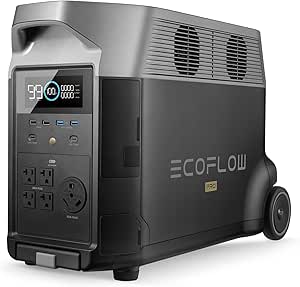 | Best for Large-Scale Expansion | Battery capacity: 3,600Wh | AC output: 3,600W | X-Boost maximum: 4,500W | VIEW LATEST PRICE | See Our Full Breakdown |
| FOSSiBOT F3600 Portable Power Station |  | Best for UPS Response and High Cycle Life | Capacity: 3,840Wh; expandable to 11,520Wh | Continuous output: 3,600W | Surge output: 7,200W | VIEW LATEST PRICE | See Our Full Breakdown |
| Jackery HomePower 3600 Plus Portable Power Station |  | Best for Easier Movement and Multiple Charging Sources | Capacity: 3,584Wh | AC output: 3,600W | Expandable capacity: Up to 21kWh per unit or 43kWh with multiple units | VIEW LATEST PRICE | See Our Full Breakdown |
| BLUETTI FridgePower Backup System with BC200 Expansion Battery, 2016Wh Expandable to 4032Wh |  | Best for Refrigerator-Focused Backup | Battery capacity: 2016Wh, expandable to 4032Wh | Output: 1800W | UPS switchover: 10ms | VIEW LATEST PRICE | See Our Full Breakdown |
| Anker SOLIX S2000 Portable Power Station, 2,010Wh, 1,500W |  | Best for Portable, Multi-Device Backup | Battery capacity: 2010Wh | Battery type: LiFePO4 (LFP) | Continuous output: 1500W | VIEW LATEST PRICE | See Our Full Breakdown |
| EF ECOFLOW DELTA 3 Max Plus Portable Power Station with Extra Battery, 4096Wh |  | Best Expandable Mid-Size System | Capacity: 4096Wh | Maximum output: 3000W | X-Boost output: Up to 3800W | VIEW LATEST PRICE | See Our Full Breakdown |
| Jackery HomePower 3600 Pro Max Portable Power Station, 3584Wh |  | Best for Whole-Home Expansion | Capacity: 3584Wh | Battery type: LFP | Output: 4000W | VIEW LATEST PRICE | See Our Full Breakdown |
| home battery backup system | Weight | Capacity |
|---|---|---|
| PECRON F3000LFP Portable Power | 63.3 lb | 3,072Wh; expandable to 10,752Wh |
| Jackery HomePower 3000 Portabl | 59.5 lb | 3,072Wh |
| EF ECOFLOW DELTA Pro Portable | 99 lb | — |
| FOSSiBOT F3600 Portable Power | 42kg | 3,840Wh; expandable to 11,520Wh |
| Jackery HomePower 3600 Plus Po | 77.2 lb | 3,584Wh |
| BLUETTI FridgePower Backup Sys | 41.9 lbs | — |
| Anker SOLIX S2000 Portable Pow | 35.7 lbs | — |
| EF ECOFLOW DELTA 3 Max Plus Po | — | 4096Wh |
| Jackery HomePower 3600 Pro Max | 74 lbs | 3584Wh |
More Details on Our Top Picks
PECRON F3000LFP Portable Power Station
The PECRON F3000LFP pairs a 3,072Wh LiFePO4 battery with 3,600W output, giving it the muscle to run demanding appliances such as a refrigerator while keeping smaller electronics powered. Its standout is the stated two-hour AC recharge, a useful advantage when an outage pauses and you have a short window to refill. It also has an 8–20ms UPS mode for equipment that needs a quick backup handoff. Compared with the Jackery HomePower 3000, it offers the same listed capacity and output, plus expansion to 10,752Wh; Jackery lists a 4,000-cycle battery rating, which PECRON’s supplied specs do not. The tradeoff is a 63.3-pound chassis, and expansion requires an optional cascade cable. I’d choose it for quick recharge and capacity growth, not frequent carrying.
Pros:- 3,600W output can support demanding household appliances.
- Stated two-hour AC recharge reduces downtime between uses.
- Expandable capacity reaches 10,752Wh with compatible add-on batteries.
- UPS switching is listed at 8–20ms for backup to connected electronics.
Cons:- At 63.3 pounds, it is cumbersome to move regularly.
- Expansion requires a separately sold cascade cable.
- The supplied specs do not state a battery cycle-life rating.
Best for: Homeowners who want a high-output backup that can recharge quickly between outages and may add battery capacity later.
Not ideal for: Buyers who need to carry their power station often or want expansion hardware included.
- Capacity:3,072Wh; expandable to 10,752Wh
- Output:3,600W
- Battery:LiFePO4
- AC recharge:2 hours, 0–100%
- Ports:13 total: 6 AC, 2 USB-C, 2 USB-A, 1 car, 2 DC
- UPS switching:8–20ms
- Weight:63.3 lb
- Warranty:2+3 years
Our verdict“Choose the PECRON F3000LFP if fast AC recharging and future capacity expansion matter more than easy lifting.”
Jackery HomePower 3000 Portable Power Station
The Jackery HomePower 3000 offers the same core 3,072Wh capacity and 3,600W running output as the PECRON F3000LFP, but its buying case is clearer on documented battery longevity: Jackery rates its LiFePO4 battery for 4,000 cycles to 70% capacity. A listed 7,200W surge rating and UPS switching of 20ms or less suit homes that need a fast handoff for connected electronics. Recharging takes 2.2 hours on AC, or 1.7 hours with hybrid AC/DC input, so the PECRON is quicker on AC alone while Jackery offers a faster hybrid route. Solar charging is supported, but panels are optional, and the unit weighs 59.5 pounds. I’d favor this model when cycle-life documentation and multiple recharge paths matter more than expansion; unlike the PECRON, the listed capacity is not expandable.
Pros:- 3,072Wh capacity and 3,600W running output support substantial backup loads.
- Battery is rated for 4,000 cycles to 70% capacity.
- Hybrid AC/DC charging is listed at 1.7 hours.
- UPS switching of 20ms or less supports quick backup handoff.
Cons:- At 59.5 pounds, it remains awkward to move frequently.
- Solar panels are optional, adding a separate purchase for solar charging.
- Listed capacity is not expandable, unlike the PECRON F3000LFP.
Best for: Households seeking a 3,000Wh-class backup with a stated battery cycle-life rating and several ways to recharge it.
Not ideal for: Buyers who want to expand storage for longer outages or need a light, easily carried power source.
- Capacity:3,072Wh
- Running output:3,600W
- Surge output:7,200W
- Battery:LiFePO4; 4,000 cycles to 70% capacity
- UPS switching:20ms or less
- Recharge time:2.2 hours AC; 1.7 hours hybrid AC/DC
- Solar charging:Up to 80% in 9 hours with two 200W SolarSaga panels
- Weight:59.5 lb
Our verdict“Pick the Jackery HomePower 3000 if a stated cycle-life rating and flexible recharging matter more than expandable storage.”
EF ECOFLOW DELTA Pro Portable Power Station
The EF ECOFLOW DELTA Pro is the capacity-growth pick: its 3,600Wh base battery can expand to up to 25kWh with compatible batteries or generators. That ceiling gives it a different role from the PECRON F3000LFP and FOSSiBOT F3600, whose listed expansion limits are much lower. It also provides 3,600W AC output, with X-Boost listed up to 4,500W, plus 15 output connections and app control over Wi-Fi and Bluetooth. Five charging methods, including EV stations and solar, give owners more ways to replenish it. The major compromise is physical: at 99 pounds, it is far less convenient to reposition than the Jackery HomePower 3000. Solar panels and compatible expansion equipment are also separate needs. I’d select it for a planned, expandable home backup setup, not for a portable unit that moves room to room.
Pros:- Base capacity is 3,600Wh, with expansion listed up to 25kWh.
- Five charging methods include EV station, solar, wall outlet, generator, and car outlet.
- Fifteen output connections support multiple devices at once.
- Wi-Fi and Bluetooth app connectivity add remote monitoring and control.
Cons:- At 99 pounds, it is notably harder to move than the other listed units.
- Compatible batteries, generators, and solar panels add to the setup requirements.
- X-Boost output is listed separately from the 3,600W AC output and should not be treated as continuous rated output.
Best for: Homeowners planning a high-capacity backup setup who want multiple charging methods, app controls, and a path to substantial expansion.
Not ideal for: Buyers who need to carry the unit regularly or want a complete solar setup without sourcing compatible panels.
- Battery capacity:3,600Wh
- AC output:3,600W
- X-Boost maximum:4,500W
- Expandable capacity:Up to 25kWh
- Output connections:15
- Charging methods:EV station, solar, wall outlet, smart outdoor generator, car outlet
- Wall recharge time:2.7 hours at 1,800W
- Weight:99 lb
Our verdict“Choose the DELTA Pro when long-term expansion toward whole-home-scale storage matters more than portability.”
FOSSiBOT F3600 Portable Power Station
The FOSSiBOT F3600 combines a larger-than-3,000Wh battery with a 10ms UPS switch, making it a strong fit for homes where rapid backup handoff matters. Its 3,840Wh capacity exceeds the Jackery HomePower 3000’s 3,072Wh, while both list 3,600W continuous output; the FOSSiBOT also lists a 7,200W surge rating. The EVE LiFePO4 battery is rated for more than 6,500 cycles, and capacity can expand to 11,520Wh with optional batteries. Fast AC and solar inputs give it useful recharge flexibility. Its limits are practical: at 42kg it is heavy, the expansion batteries and solar panels are separate, and adding storage does not raise the inverter’s output. Compared with the EcoFlow DELTA Pro, it offers a faster listed UPS switch but a lower expansion ceiling.
Pros:- 3,840Wh capacity provides more stored energy than the Jackery HomePower 3000.
- 10ms UPS switching is the quickest listed handoff among these five models.
- EVE LiFePO4 battery is rated for more than 6,500 cycles.
- Up to 2,000W MPPT solar input and 1,500W AC input support rapid recharging.
Cons:- At 42kg, it is difficult to move without help.
- Solar panels and expansion batteries are sold separately.
- Adding expansion batteries increases stored capacity but not inverter output.
Best for: Homeowners prioritizing fast UPS switching, a high cycle-life rating, and more base capacity than a 3,072Wh unit.
Not ideal for: Buyers who need a portable station to carry often or expect added batteries to increase appliance output.
- Capacity:3,840Wh; expandable to 11,520Wh
- Continuous output:3,600W
- Surge output:7,200W
- Battery:EVE LiFePO4; 6,500+ cycles
- UPS switching:10ms
- Solar input:Up to 2,000W MPPT
- AC input:Up to 1,500W
- Weight:42kg
Our verdict“Choose the FOSSiBOT F3600 if fast UPS response and high battery-cycle ratings outweigh its heavy build and fixed 3,600W output.”
Jackery HomePower 3600 Plus Portable Power Station
The Jackery HomePower 3600 Plus is the most movement-friendly choice here, not because it is light, but because its wheels and telescoping handle make a 77.2-pound unit easier to reposition than the 99-pound EcoFlow DELTA Pro. It stores 3,584Wh and supplies 3,600W, with expansion listed up to 21kWh per unit or 43kWh across multiple units. That makes it better suited to a growing backup setup than the non-expandable Jackery HomePower 3000. Charging options include AC, solar, gas generator, and hybrid AC/DC; the listed two-hour hybrid recharge is useful when compatible inputs are available. The tradeoff is a modest two-outlet count, and the solar panel is optional. I’d pick it when wheeled mobility and varied charging sources matter more than abundant outlets.
Pros:- Wheels and telescoping handle make it easier to reposition than the heavier EcoFlow DELTA Pro.
- 3,584Wh capacity can expand to 21kWh per unit or 43kWh across multiple units.
- Supports hybrid AC/DC, AC, solar, and gas-generator charging.
- Battery is rated for 6,000 cycles.
Cons:- At 77.2 pounds, lifting it remains difficult despite its wheels.
- Only two outlets are listed, limiting how many devices can connect directly.
- Solar panels are optional.
Best for: Households that need expandable storage and expect to roll their backup unit between a garage, utility area, or living space.
Not ideal for: Buyers who need many AC outlets, a lightweight unit for lifting, or solar charging hardware included.
- Capacity:3,584Wh
- AC output:3,600W
- Expandable capacity:Up to 21kWh per unit or 43kWh with multiple units
- Charging options:Hybrid AC+DC, AC, solar, gas generator
- Hybrid recharge time:2 hours
- Battery cycle life:6,000 cycles
- Outlets:2
- Weight:77.2 lb
Our verdict“Choose the HomePower 3600 Plus if you want expandable backup power that is easier to roll and can recharge from several sources.”
BLUETTI FridgePower Backup System with BC200 Expansion Battery, 2016Wh Expandable to 4032Wh
I’d choose the BLUETTI FridgePower for buyers who want a backup system shaped around keeping a refrigerator running, rather than a general-purpose station with no appliance-specific emphasis. Its 10ms UPS switchover is designed to limit interruption when household power fails, while the included BC200 brings capacity from 2016Wh to 4032Wh. Its 1800W output also gives it room for other essentials such as a freezer or sump pump, though actual runtime depends on appliance draw.
Compared with the more portable Anker SOLIX S2000, this bundle offers more expansion headroom and higher output, but it weighs 41.9 pounds and is less convenient to move. The slim 75mm profile, storm alert charging, and voice control suit a fixed backup spot. I’d be cautious about relying on its listed two-minute runtime: the supplied data gives no conditions for that figure.
Pros:- Included BC200 raises capacity to 4032Wh
- 10ms UPS switchover is suited to reducing interruption for a refrigerator
- 1800W output can support appliances such as freezers and sump pumps
- Slim profile, storm alert charging, and voice control support a dedicated home setup
Cons:- 41.9-pound weight makes frequent carrying less practical
- Listed two-minute runtime lacks the conditions needed to interpret it
- At 1800W, output is lower than the 3000W EF ECOFLOW DELTA 3 Max Plus
Best for: Households prioritizing refrigerator continuity that want an included expansion battery and plan to keep the system near essential appliances.
Not ideal for: Buyers who need a lightweight station for frequent relocation or who require clearly documented runtime estimates for their specific appliances.
- Battery capacity:2016Wh, expandable to 4032Wh
- Output:1800W
- UPS switchover:10ms
- Standby draw:4W
- Weight:41.9 lbs
- Dimensions:13.78 × 22.83 × 2.95 in
- Power sources:Solar, AC, car, lead-acid battery, or generator
Our verdict“Choose the FridgePower bundle for expanded, refrigerator-oriented backup in a mostly fixed location, not for a lightweight portable station.”
Anker SOLIX S2000 Portable Power Station, 2,010Wh, 1,500W
The Anker SOLIX S2000 is the most portable choice in this group for buyers who want one battery station to move between home backup, a vehicle, and outdoor use. Its 2010Wh LFP battery and under-10ms UPS switchover suit essential electronics and some household appliances, while eight outlets make it easier to connect several devices at once. The manufacturer’s refrigerator runtime claim is up to 35 hours, but I’d treat that as usage-dependent rather than a guaranteed outage duration.
Against the BLUETTI FridgePower, the Anker weighs less and has more outlets, but it offers no stated capacity expansion and its 1500W continuous output is lower. Solar input tops out at 400W, so replenishing a large battery from panels may take time. The missing 12V DC port also limits direct connection for gear that relies on that output.
Pros:- 2010Wh LFP capacity balances home backup and portable use
- Eight outlets support multiple connected devices
- Under-10ms UPS switchover supports backup for sensitive electronics
- 35.7-pound weight and AC, solar, vehicle, and generator charging options aid portability
Cons:- 1500W continuous output is below the BLUETTI FridgePower and larger systems in this group
- No 12V DC port
- Refrigerator runtime varies with appliance load and conditions, so the stated maximum is not a household guarantee
Best for: People who want a mid-capacity LFP station they can carry between household emergency use, camping, and vehicle trips, with several devices connected at once.
Not ideal for: Households seeking expandable storage, higher continuous output, or a native 12V DC connection for their backup equipment.
- Battery capacity:2010Wh
- Battery type:LiFePO4 (LFP)
- Continuous output:1500W
- Peak output:3000W
- Solar input:Up to 400W
- Outlets:8
- UPS switchover:<10ms
- Weight:35.7 lbs
- 12V DC port:None
Our verdict“Pick the SOLIX S2000 if portability and multiple device connections matter more than expandable capacity or high appliance output.”
EF ECOFLOW DELTA 3 Max Plus Portable Power Station with Extra Battery, 4096Wh
With its included extra battery, the EF ECOFLOW DELTA 3 Max Plus starts at 4096Wh and can expand to 10kWh, giving it a useful middle ground between portable stations and much larger home backup builds. Its 3000W output is a substantial step up from the Anker SOLIX S2000, making it better suited to running several essentials or appliances with higher demand. LiFePO4 chemistry and transfer time under 10ms add to its appeal for backup use.
Charging flexibility is another strength: AC, solar, car, generator, and combined PV-and-car charging give owners more ways to replenish power. App control can help monitor the system remotely. The tradeoff is that the supplied charging information conflicts, listing 80% in both 43 and 64 minutes. Port details are also sparse, with only three total outlets specified, so buyers should confirm connection needs before choosing it over the outlet-rich Anker.
Pros:- 4096Wh included capacity with expansion up to 10kWh
- 3000W output exceeds the Anker SOLIX S2000’s continuous rating
- LiFePO4 battery and under-10ms transfer time suit backup use
- AC, solar, car, generator, and combined PV-and-car charging options
Cons:- Supplied 80% charging-time figures conflict: 43 minutes and 64 minutes
- Only three total outlets are specified, with no outlet types or detailed port count
- Larger capacity and an extra battery make it less suited to buyers prioritizing a compact single-unit setup
Best for: Households and RV owners who need more than 4kWh of included storage, want room to expand, and can plan their appliance connections around the specified outlets.
Not ideal for: Buyers who need a clearly documented port layout or dependable charging-time figures before setting up an outage plan.
- Capacity:4096Wh
- Maximum output:3000W
- X-Boost output:Up to 3800W
- Battery chemistry:LiFePO4
- Expandable capacity:Up to 10kWh
- Transfer time:Under 10ms
- Charging methods:AC, solar, car, Smart Generator, PV + car
- Power outlets:3 total outlets specified
- Dimensions:19.44 × 9.52 × 12 in
Our verdict“Choose the DELTA 3 Max Plus for included high capacity and expansion flexibility if its limited published port details fit your setup.”
Jackery HomePower 3600 Pro Max Portable Power Station, 3584Wh
The Jackery HomePower 3600 Pro Max stands apart for its combination of 120V/240V output from one unit and expansion potential up to 43kWh. That makes it the strongest fit here for buyers planning a larger residential backup setup, rather than simply keeping a few devices charged. Its 3584Wh base capacity, under-10ms UPS switch, and claimed operation below 30dB address outage coverage, power continuity, and noise in a home installation.
Compared with the EF ECOFLOW DELTA 3 Max Plus, Jackery lists far more expansion headroom and 240V output, while EcoFlow includes 4096Wh and provides several named charging methods. The Jackery is also substantially heavier at 74 pounds, and it requires a manual transfer switch for home backup. Solar panels are optional, so buyers need to plan the charging setup separately. Its stated 6000-cycle life is useful context, though it does not replace checking system installation requirements.
Pros:- Single-unit 120V/240V output supports a broader range of home backup needs
- Expandable capacity up to 43kWh exceeds the listed expansion ceiling of the EF ECOFLOW DELTA 3 Max Plus
- Under-10ms UPS switching supports fast backup response
- Listed operating noise below 30dB suits quieter residential settings
Cons:- At 74 pounds, it is difficult to move compared with the 35.7-pound Anker SOLIX S2000
- A manual transfer switch is required for home backup setup
- Solar panel is not included
Best for: Homeowners planning a substantial expandable backup system who need 120V and 240V output and can arrange a manual transfer switch.
Not ideal for: Buyers looking for a light, grab-and-go power station or a ready-to-use solar package with panels included.
- Capacity:3584Wh
- Battery type:LFP
- Output:4000W
- Voltage:120V/240V
- Expandable capacity:Up to 43kWh
- UPS switch time:Under 10ms
- Battery cycle life:6000 cycles
- Noise level:Under 30dB
- Weight:74 lbs
Our verdict“Choose the HomePower 3600 Pro Max for a planned, expandable 120V/240V home setup, provided you can handle its installation needs and weight.”

How We Picked
I compared each system on the factors that shape real outage planning: listed capacity for potential runtime, continuous output for the loads it may support, and expandability where the product details specify it. I also weighed how clearly each unit serves a distinct buyer need, from a focused refrigerator backup to a higher-capacity portable station. These published specifications do not predict exact runtime in a home; appliance draw, startup surges, conversion losses, and operating conditions all affect results.
The ranking favors systems that offer a useful balance of capacity, output, and flexibility for a range of essential household loads. That puts the EF ECOFLOW DELTA Pro first as a balanced choice, with the PECRON F3000LFP and Jackery HomePower 3000 as close alternatives sharing the same listed output and capacity. Expandable and larger-capacity packages earn a place for buyers prioritizing longer coverage, while lower-output or more specialized systems rank for narrower needs rather than broad backup duty. I do not treat any portable power station as a whole-house solution without checking its transfer method, circuit compatibility, and installation requirements.
Factors to Consider When Choosing Best Home Battery Backup Systems
Before choosing a battery, I would start with the appliances you intend to keep running and the length of outage you want to cover. The product specifications are only the starting point; a workable backup plan also depends on surge demand, recharge options, connection methods, and safe placement.
Match Capacity to Your Outage Plan
Capacity, listed in watt-hours, gives a rough sense of how much energy a battery stores, not a guaranteed number of hours for your home. Add up the watt-hours your essential devices use over the period you want to cover, then allow room for power-conversion losses and changing appliance cycles. A refrigerator may cycle on and off, while a heater or medical device can draw power steadily, so estimates based on a single appliance label can mislead. A common mistake is buying the largest capacity you can find without deciding which loads take priority. Write a short outage plan with essential, optional, and high-draw devices separated. This helps reveal whether a 2,000Wh-class unit is a practical targeted backup or whether an expandable or larger system fits better.
Check Running Watts and Startup Surges
Output ratings determine how much power a unit can deliver at once, and they should be matched against the devices you expect to run together. Motors in refrigerators, pumps, and some heating equipment can briefly demand more power when starting than they use during normal operation. A system that has enough stored energy may still fail to start a high-surge appliance if its output limits are too low. Check the appliance’s running and startup requirements, then compare those figures with the battery’s stated output and any surge rating. Avoid assuming that a high watt-hour figure means the system can handle every household appliance. For mixed loads, plan what can run simultaneously and what must be switched on one at a time.
Decide Whether Expandability Is Worth It
An expandable system can let you begin with less stored energy and add capacity when longer backup becomes a priority. That flexibility can be useful, but the extra battery must be compatible with the main unit and may add space, weight, cables, and setup complexity. Compare the cost and practicality of expansion with buying a larger package from the start, without assuming that an expansion battery increases output as well as capacity. More stored energy generally helps extend runtime; it does not automatically let you run more powerful appliances at once. If you only need to keep a refrigerator and a few small devices running, a larger system may add bulk without solving a real problem. Choose expansion for a defined future need, not just as a vague option.
Plan Recharging Before the Outage
A battery’s useful runtime depends partly on how you can recharge it when the grid stays down. Check the supported charging inputs and compatible solar equipment, then estimate whether your available power source can restore meaningful capacity during the outage. Solar output varies with weather, season, panel placement, and daylight, so do not base an emergency plan on ideal conditions. Grid charging is convenient before a storm but cannot help during a prolonged outage unless power returns. Buyers often focus on stored energy and overlook the time and equipment needed to replenish it. Think through a full cycle: charge the system, run essential loads, and decide how quickly you need it ready again.
Choose Portable Backup or Home-Circuit Backup
A portable power station can power selected appliances directly, but backing up household circuits involves different connection and safety requirements. If you want to power fixed wiring, ask a qualified electrician about compatible transfer equipment, circuit selection, and local requirements before buying. Never connect a portable generator or battery to household wiring through an improvised cord; that can create a serious shock and backfeed hazard. A plug-in approach is simpler for a refrigerator, router, or small devices, although extension cords and placement need planning. Consider where the unit will sit, how close it is to the appliances, and whether its weight makes moving it realistic. The right category depends on whether you want targeted backup or a professionally integrated home setup.
Account for Battery Chemistry, Warranty, and Storage
Battery chemistry and manufacturer support affect ownership beyond the headline capacity. Several products in this lineup identify LiFePO4 chemistry, but buyers should still compare the stated cycle life, warranty terms, and conditions attached to those claims. Check how the system should be stored, whether it needs periodic charging, and what operating temperatures the manufacturer permits. A battery kept in an unsuitable location may be less available when an outage arrives, regardless of its capacity. Review warranty coverage for both the main unit and any expansion battery, since their terms may differ. These details matter most for a backup system that may sit unused for long stretches and then be expected to work on demand.
Frequently Asked Questions
Can one of these portable battery systems power my whole house?
Not automatically. These products are portable power stations, and their listed output and capacity do not by themselves establish that they can supply every home circuit. Whole-home or selected-circuit backup requires compatible transfer equipment and, in many cases, installation by a qualified electrician. The practical route for many buyers is to identify essential loads and power them directly or through an approved setup. Confirm the exact connection method and appliance requirements before treating any unit as a whole-house backup system.
How do I estimate how long a battery will run my refrigerator?
Start with the refrigerator’s energy use over a normal day, preferably from its energy label or a plug-in energy meter, rather than multiplying its startup wattage by 24 hours. Then compare that estimate with the battery’s capacity and allow for energy lost during conversion and other devices sharing the battery. Refrigerator use varies with room temperature, door openings, and how full it is, so a calculation is only an estimate. Check the station’s output against the refrigerator’s startup demand as well as its average use. For a long outage, include a recharge plan instead of relying on a single full battery.
Should I buy more capacity or more output?
Choose more capacity when your main goal is to run modest loads for longer, and more output when you need to start or run higher-demand appliances. The two measures solve different problems: extra watt-hours do not raise the maximum power the unit can deliver, and higher output does not mean the battery stores more energy. List the appliances you want to use at the same time, including any startup surges, then estimate their combined runtime needs. If both are important, compare systems that balance the two or can expand capacity without changing your intended load plan. This distinction is why a lower-output unit can suit a focused backup job but be a poor fit for demanding appliances.
Is an expandable battery system better than buying a larger unit now?
Expansion is useful when you have a clear chance of needing longer runtime later and the added battery is compatible with the system. It may let you start with a smaller setup, but it adds equipment, storage needs, and potentially more setup steps. Buying a larger package now can be simpler if you already know your outage plan requires more energy. Check whether an expansion battery adds capacity only or changes any other system limits; do not assume it increases appliance output. Compare the complete setup you will actually own, including cables, placement, charging, and warranty terms.
What should I verify before connecting a battery to home wiring?
Confirm that the battery supports the intended connection method and that the transfer equipment is compatible with both the system and the circuits you want to back up. Ask a qualified electrician to review installation, local electrical requirements, and any limits on the loads involved. Never use an improvised connection that can feed power back into utility lines or energize wiring unexpectedly. If you only need to run a few appliances, plugging them directly into the station may avoid home-wiring work, though safe cable routing and the unit’s placement still matter. Read the manufacturer’s instructions and do not assume that a portable outlet can connect directly to a home panel.
Conclusion
For the broadest mix of capacity and output, I recommend the EF ECOFLOW DELTA Pro as the best overall in this group. Buyers seeking a strong alternative with the same listed 3,600W output and 3,072Wh capacity should compare the PECRON F3000LFP and Jackery HomePower 3000; the better value depends on their current package details and support terms, not a wattage tie alone. For a premium, longer-runtime direction, look at the EF ECOFLOW DELTA 3 Max Plus with its 4,096Wh package or the expandable BLUETTI FridgePower, depending on whether you want a broader portable station or a fridge-focused setup. Beginners who need targeted, simpler appliance backup may find the BLUETTI FridgePower easier to match to a defined job, while buyers with lighter loads should consider the Anker SOLIX S2000 rather than paying for capacity and output they will not use. For any system, choose only after checking appliance startup needs, runtime estimates, recharge plans, and whether your home requires professionally installed transfer equipment.