
The best home battery storage system for most buyers in this lineup is the EF ECOFLOW DELTA Pro, a portable, high-output option that balances useful capacity with simpler setup than a fixed 48V system. The Jackery HomePower 3600 Plus is another strong choice for buyers who want a portable unit, while the ECO-WORTHY 10 kW off-grid kit suits households planning a larger solar-powered installation. The central tradeoff is convenience versus expandability: portable stations are easier to deploy, while battery banks and kits can support larger, more permanent systems but call for more careful compatibility and installation planning. Capacity alone does not tell you which system can run your essential circuits or for how long. Read on for the full comparison and guidance on matching a system to your home.

Get backup power and energy gear delivered free with Prime
- Fast, free delivery on millions of items
- Prime Video, Amazon Music and more included
- Member-only deals all year
Complete the kit

Key Takeaways
- Portable power stations are the simplest starting point: the EF ECOFLOW DELTA Pro and Jackery HomePower models are easier to deploy than a 48V battery bank, but their output and expansion options still need to match your home loads.
- Large battery capacity needs a compatible inverter: the 16.08 kWh AOUSK and KEEPNOWN batteries store substantial energy, but buyers must plan for a suitable inverter, wiring, controls, and installation.
- Complete kits reduce some compatibility guesswork: ECO-WORTHY‘s 10 kW off-grid kit pairs major system components, though a kit still requires planning for site conditions and safe installation.
- Battery-bank listings serve different scales: a single 48V rack battery is a different proposition from ECO-WORTHY‘s six-pack system, so buyers should compare total usable energy and inverter capacity rather than model names alone.
- Backup power and off-grid power are not the same goal: a portable station may cover selected devices during an outage, while a larger inverter-and-battery setup is better suited to planned whole-home or off-grid use, subject to system design.
| EF ECOFLOW DELTA Pro Portable Power Station, 3600Wh, 120V, 3600W AC Output | 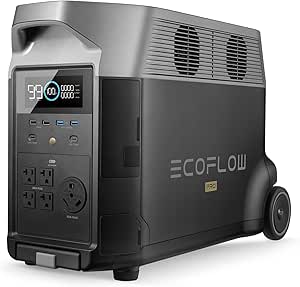 | Best for Expandable Portable Backup | Battery capacity: 3,600Wh | Expandable capacity: Up to 25kWh | Running output: 3,600W | VIEW LATEST PRICE | See Our Full Breakdown |
| Jackery HomePower 3000 Portable Power Station with Two 200W Solar Panels |  | Best Portable Solar Bundle | Battery capacity: 3,072Wh | Battery type: LiFePO4 | Battery lifespan: 4,000 cycles to 70% capacity | VIEW LATEST PRICE | See Our Full Breakdown |
| ECO-WORTHY 10 kW Off-Grid Solar System Kit with Split-Phase Inverter, Batteries, and Solar Panels |  | Best Complete Off-Grid System | Inverter continuous output: 10,000W | Inverter peak output: 20,000W | Output voltage: 120V/240V split-phase | VIEW LATEST PRICE | See Our Full Breakdown |
| ECO-WORTHY Cubix100 Pro 48V 100Ah LiFePO4 Server Rack Battery |  | Best for Cold-Weather Rack Systems | Battery chemistry: LiFePO4 | Voltage: 51.2V | Capacity: 100Ah | VIEW LATEST PRICE | See Our Full Breakdown |
| AOUSK 48V 314Ah LiFePO4 Lithium Battery, 16.08 kWh |  | Best High-Capacity Single Battery | Chemistry: LiFePO4 | Voltage: 48V | Capacity: 314Ah | VIEW LATEST PRICE | See Our Full Breakdown |
| KEEPNOWN PowerUltra 48V 314Ah LiFePO4 Battery |  | Best for Large Single-Battery Capacity | Chemistry: LiFePO4 | Nominal voltage: 48V (51.2V model) | Capacity: 314Ah | VIEW LATEST PRICE | See Our Full Breakdown |
| ABOK Ark3600 Portable Power Station with Three 200W Solar Panels |  | Best Portable System with Included Solar | Capacity: 3,840Wh; expandable to 11,520Wh | Peak power: 7,200W | Battery chemistry: LiFePO4 | VIEW LATEST PRICE | See Our Full Breakdown |
| ECO-WORTHY Cubix100 48V 600Ah LiFePO4 Server Rack Battery System, 6-Pack |  | Best for High-Capacity Whole-Home Storage | Battery chemistry: LiFePO4 | Nominal voltage: 51.2V | Capacity per battery: 100Ah | VIEW LATEST PRICE | See Our Full Breakdown |
| Jackery HomePower 3600 Plus Portable Power Station, 3584Wh, 3600W |  | Best Portable Option for Flexible Recharging | Battery capacity: 3,584Wh | Output wattage: 3,600W | Parallel output: 7,200W | VIEW LATEST PRICE | See Our Full Breakdown |
| ECO-WORTHY 48V Home Backup Power System with 10kW Inverter and Two 100Ah LiFePO4 Batteries |  | Best Complete Inverter-and-Battery Kit | Battery chemistry: LiFePO4 | Battery configuration: 2 × 51.2V 100Ah | Total storage capacity: 10,240Wh | VIEW LATEST PRICE | See Our Full Breakdown |
| ECO-WORTHY 48V Home Backup Power System with 10,240Wh LiFePO4 Batteries and 5,000W Inverter |  | Best for Expandable 120V Backup | Battery chemistry: LiFePO4 | Total battery capacity: 10,240Wh | Battery voltage: 51.2V | VIEW LATEST PRICE | See Our Full Breakdown |
| home battery storage system | Weight |
|---|---|
| EF ECOFLOW DELTA Pro Portable | 99 pounds |
| Jackery HomePower 3000 Portabl | 59.5 pounds |
| ECO-WORTHY 10 kW Off-Grid Sola | — |
| ECO-WORTHY Cubix100 Pro 48V 10 | — |
| AOUSK 48V 314Ah LiFePO4 Lithiu | 291 pounds |
| KEEPNOWN PowerUltra 48V 314Ah | 288.81 lbs |
| ABOK Ark3600 Portable Power St | 92 pounds |
| ECO-WORTHY Cubix100 48V 600Ah | — |
| Jackery HomePower 3600 Plus Po | 77.2 pounds |
| ECO-WORTHY 48V Home Backup Pow | — |
| ECO-WORTHY 48V Home Backup Pow | 236.9 lb |
More Details on Our Top Picks
EF ECOFLOW DELTA Pro Portable Power Station, 3600Wh, 120V, 3600W AC Output
The DELTA Pro makes the most sense for buyers who want a ready-to-use portable station that can grow into a larger backup setup. Its 3,600Wh battery and 3,600W running output can serve several household essentials, while support for expansion up to 25kWh gives it a path beyond short outages. That is a more flexible starting point than the Jackery HomePower 3000, which has less base capacity and is sold here with solar panels. EcoFlow also offers a wide range of charging inputs and app monitoring, useful when charging plans change with the weather or outage conditions. The tradeoff is substantial: at 99 pounds, moving it is a two-person job for many buyers, and recharge speed depends on the chosen source. It is portable in format, not light in practice.
Pros:- 3,600Wh base capacity with expansion up to 25kWh
- 3,600W running output and 15 ports support several loads at once
- Charges from wall, solar, EV station, generator, or car outlet
- App provides remote monitoring and settings control
Cons:- At 99 pounds, it is difficult to move regularly
- Recharge time varies by power source and available input
- Solar panels are not included in the listed package
Best for: Homeowners who want a high-output portable battery that can start as outage backup and expand for longer power needs.
Not ideal for: Buyers who need a battery they can carry frequently or want solar panels bundled in the box; its 99-pound weight and separate solar purchase may be inconvenient.
- Battery capacity:3,600Wh
- Expandable capacity:Up to 25kWh
- Running output:3,600W
- X-Boost output:Up to 4,500W
- Paired output:7,200W
- Output ports:15
- Charging methods:EV station, solar, wall outlet, smart outdoor generator, car outlet
- Weight:99 pounds
Our verdict“Choose the DELTA Pro if expandable capacity matters more than easy lifting or an included solar bundle.”
Jackery HomePower 3000 Portable Power Station with Two 200W Solar Panels
For buyers who want a portable battery and a defined solar starter kit, the HomePower 3000 is a practical all-in-one pairing: a 3,072Wh LiFePO4 station with two 200W panels. Its 3,600W AC output matches the DELTA Pro’s listed running output, and a 20ms-or-less UPS transfer can help supported electronics stay powered through a brief interruption. The included panels make the package more solar-ready than the EcoFlow DELTA Pro, though the stated solar charge time—up to nine hours to reach 80%—sets realistic expectations for limited panel wattage. At 59.5 pounds, it is also easier to reposition than EcoFlow’s 99-pound unit, but still not effortless to carry. Panels may ship separately, so buyers should plan for staggered delivery.
Pros:- 3,072Wh LiFePO4 battery with a 4,000-cycle rating to 70% capacity
- 3,600W AC output and 7,200W surge rating
- Includes two 200W solar panels and supports several other charging methods
- UPS transfer time of 20ms or less for supported equipment
Cons:- Included panels can take up to nine hours to charge the battery to 80%
- The station and solar panels may arrive in separate packages
- At 59.5 pounds, it is still a substantial unit to lift
Best for: RV owners and households seeking a portable LiFePO4 backup package with panels included and UPS support for compatible devices.
Not ideal for: Buyers who need rapid solar replenishment or a lightweight carry-anywhere battery; the included 400W of panels can take up to nine hours to reach 80%.
- Battery capacity:3,072Wh
- Battery type:LiFePO4
- Battery lifespan:4,000 cycles to 70% capacity
- AC output:3,600W
- Surge output:7,200W
- UPS transfer time:20ms or less
- Solar panels:2 × 200W
- Weight:59.5 pounds
Our verdict“Pick the HomePower 3000 if you want a portable LiFePO4 station with solar panels in the package and can work around slow solar charging.”
ECO-WORTHY 10 kW Off-Grid Solar System Kit with Split-Phase Inverter, Batteries, and Solar Panels
This kit is a different class of solution from the portable DELTA Pro and Jackery HomePower 3000: it combines 20.48kWh of storage, a 10,000W inverter, and 5,310W of solar panels into a home-scale off-grid system. Its 120V/240V split-phase output is the key distinction for buyers planning to run compatible household circuits, rather than just plug appliances into a portable station. Four LiFePO4 batteries and dual MPPT inputs provide a substantial foundation, while Wi-Fi monitoring helps track system operation. The capacity and output make it a stronger fit for a permanent installation than the smaller standalone batteries in this lineup, but that scale brings real setup demands. Professional installation is recommended, and the large panels ship on a pallet, so this is not a simple plug-in purchase or a good match for renters.
Pros:- 20.48kWh of LiFePO4 storage supplied as four batteries
- 10,000W continuous inverter output with 120V/240V split-phase support
- Includes nine 590W solar panels with 5,310W total capacity
- Dual MPPT, Wi-Fi monitoring, and support for parallel inverter expansion
Cons:- Professional installation is recommended
- Large panels ship on a pallet and require substantial space
- More involved to install and site than portable options such as the DELTA Pro
Best for: Homeowners planning an off-grid or substantial solar-backed setup who have installation space and access to qualified system support.
Not ideal for: Renters, apartment residents, and buyers seeking a plug-and-play outage battery; the large panels and installation requirements call for a permanent site.
- Inverter continuous output:10,000W
- Inverter peak output:20,000W
- Output voltage:120V/240V split-phase
- Solar panels:9 × 590W
- Total solar capacity:5,310W
- Battery configuration:4 × 48V, 100Ah LiFePO4
- Total energy storage:20.48kWh
- Solar panel efficiency:23.23%
Our verdict“Choose this kit for a planned, professionally supported off-grid installation rather than portable or occasional backup.”
ECO-WORTHY Cubix100 Pro 48V 100Ah LiFePO4 Server Rack Battery
The Cubix100 Pro is a modular 48V battery, not a complete home backup system: buyers need a compatible inverter and installation plan. Its 5.12kWh capacity makes it a smaller building block than the AOUSK 16.07kWh battery, but that can be an advantage when a rack system is being assembled in stages or needs a single replacement module. The standout detail is its stated ability to charge down to -4°F, a useful distinction for cold locations where many batteries restrict charging. Active balancing, inverter compatibility, and Bluetooth/Wi-Fi monitoring add system-management options; the touchscreen also puts status information on the unit. The tradeoffs are the need to confirm inverter compatibility and provide rack space. Compared with a portable station such as the Jackery, this requires more system planning and cannot operate as a self-contained power source.
Pros:- 5.12kWh LiFePO4 module for building or expanding a 48V rack system
- Supports charging down to -4°F as specified
- 3A active cell balancing and Bluetooth/Wi-Fi monitoring
- Includes a 4.3-inch touchscreen and a 10-year limited warranty
Cons:- Requires a compatible inverter and a separately planned system
- Provides less energy per unit than the AOUSK 16.07kWh battery
- Its rack dimensions require dedicated installation space
Best for: Owners of compatible 48V inverter systems who want a rack battery for staged expansion and have cold-weather charging needs.
Not ideal for: Buyers seeking a self-contained power station or a high-capacity single battery; this unit needs an inverter and provides 5.12kWh per battery.
- Battery chemistry:LiFePO4
- Voltage:51.2V
- Capacity:100Ah
- Energy capacity:5,120Wh
- Active balancing:3A
- Low-temperature charging:Down to -4°F
- Cycle life:6,000+ cycles
- Warranty:10-year limited
Our verdict“Choose the Cubix100 Pro when cold-weather charging and modular 48V expansion matter more than a plug-and-play setup or large single-unit capacity.”
AOUSK 48V 314Ah LiFePO4 Lithium Battery, 16.08 kWh
The AOUSK is the lineup’s choice for buyers who want substantial storage in one battery rather than stacking several smaller rack modules. Its 16.07kWh capacity is more than three times the Cubix100 Pro’s 5.12kWh, reducing the number of battery units needed for a compatible system. A 200A BMS, communications over RS485 and CAN, and support for up to 15 units in parallel give system designers several routes for monitoring and later expansion. Bluetooth and Wi-Fi add app monitoring, while built-in wheels and handles help with positioning. Those features do not make it light: 291 pounds calls for careful placement and assistance. The five-year warranty is also shorter than the Cubix100 Pro’s 10-year limited warranty, and inverter compatibility must be checked before purchase.
Pros:- 16.07kWh capacity in a single LiFePO4 battery
- 200A BMS with multiple safety protections
- Supports parallel connection of up to 15 units
- RS485, CAN, RS232, Bluetooth, and Wi-Fi communication options
Cons:- At 291 pounds, it needs careful placement and help to move
- Compatibility depends on the specific inverter and system
- Five-year warranty is shorter than the Cubix100 Pro’s 10-year limited warranty
Best for: Homeowners with a compatible 48V inverter who want a high-capacity LiFePO4 battery and room to expand a larger storage bank.
Not ideal for: Buyers who need a readily movable battery, have limited access or floor space, or want a longer stated warranty like the Cubix100 Pro offers.
- Chemistry:LiFePO4
- Voltage:48V
- Capacity:314Ah
- Energy:16.07kWh
- BMS:200A
- Cycle life:Up to 6,000 cycles at 80% state of health
- Parallel connection:Up to 15 units
- Weight:291 pounds
Our verdict“Choose the AOUSK if you want a large single battery for a compatible system and can accommodate its weight and installation needs.”
KEEPNOWN PowerUltra 48V 314Ah LiFePO4 Battery
The PowerUltra’s 16.07kWh capacity puts a substantial reserve in one battery, making it a better fit for buyers who want to build around fewer, larger units than the six-battery ECO-WORTHY Cubix100 system. Its IP65 enclosure, built-in aerosol fire suppression, and 200A smart BMS add practical protection features, while the touchscreen and Bluetooth or Wi-Fi monitoring make system status easier to check. RS485, CAN, and RS232 give installers several routes to connect compatible equipment. The tradeoff is the installation burden: at 288.81 pounds, this is a freight-delivered component, not a portable backup unit, and it needs compatible charging and inverter gear. Choose it for a fixed, expandable setup; skip it if you want an all-in-one power station.
Pros:- 16.07kWh capacity in one battery, with support for up to 15 units in parallel
- IP65-rated enclosure and built-in aerosol fire suppression
- Touchscreen, Bluetooth, and Wi-Fi monitoring
- RS485, CAN, and RS232 interfaces support integration with compatible inverters
Cons:- At 288.81 pounds, it requires freight delivery and a planned installation
- Needs compatible LiFePO4 charging equipment and an inverter
- System performance depends on matching communication and electrical requirements across components
Best for: Homeowners and off-grid users building a fixed 48V system who want substantial capacity in one battery and have compatible inverter equipment.
Not ideal for: Buyers who need a portable or ready-to-use backup unit, or who cannot accommodate a heavy battery and separate compatible charging and inverter equipment.
- Chemistry:LiFePO4
- Nominal voltage:48V (51.2V model)
- Capacity:314Ah
- Energy:16.07kWh
- BMS current:200A
- Ingress protection:IP65
- Parallel expansion:Up to 15 units
- Weight:288.81 lbs
- Warranty:10 years
Our verdict“Choose the PowerUltra if you want a high-capacity battery for a fixed, compatible 48V system and can handle its weight and installation requirements.”
ABOK Ark3600 Portable Power Station with Three 200W Solar Panels
The Ark3600 is a portable power station rather than a hardwired home battery, so it suits buyers who want one unit for outages, RV trips, and camping. Its 3,840Wh capacity and 3,600W rated output provide more room for appliances and devices than a small portable backup, while the three included 200W panels offer a way to recharge away from grid power. It also has 15 output ports and app control, a more device-friendly setup than the Jackery HomePower 3600 Plus, which lists only two outlets. The cost of that portability is limited starting capacity compared with fixed systems such as the ECO-WORTHY Cubix100 six-pack, and the Ark3600 still weighs 92 pounds. Its advertised fast recharge also depends on optimal conditions.
Pros:- 3,840Wh capacity expandable to 11,520Wh
- 3,600W rated output and 15 ports support multiple connected devices
- Includes three 200W solar panels, as stated in the product title
- LiFePO4 battery, BMS protections, and app control
Cons:- At 92 pounds, it is portable in principle but cumbersome to move often
- Base capacity is limited for prolonged whole-home backup
- The 0–80% recharge claim depends on optimal conditions
Best for: RV owners, campers, and households seeking a portable backup with included solar panels and enough output for several devices or appliances.
Not ideal for: Homeowners seeking a permanently installed whole-home battery or large storage reserve; its 3,840Wh base capacity is far below fixed multi-battery systems.
- Capacity:3,840Wh; expandable to 11,520Wh
- Peak power:7,200W
- Battery chemistry:LiFePO4
- AC and solar input:Up to 3,500W combined
- Output ports:15
- Solar panels:Three 200W panels (as stated in title)
- Weight:92 pounds
- Warranty:5 years
Our verdict“Pick the Ark3600 if you want a movable backup with included solar panels, but choose a fixed battery system for greater home storage and a permanent installation.”
ECO-WORTHY Cubix100 48V 600Ah LiFePO4 Server Rack Battery System, 6-Pack
With 30.72kWh spread across six batteries, the Cubix100 six-pack is the strongest fit here for buyers who want a large fixed storage bank. That gives it almost twice the listed energy of the KEEPNOWN PowerUltra, though the KEEPNOWN keeps comparable capacity in a single unit. The Cubix100’s UL9540, UL1973, and CEC listings, plus CAN/RS485 communication and Bluetooth or Wi-Fi monitoring, make it a more clearly specified choice for a substantial integrated system. Expansion to 32 units leaves room to grow, but that scale calls for planning: the rack is not included, and the batteries may arrive in multiple packages. Unlike the portable ABOK Ark3600, this is not a grab-and-go backup. I’d choose it for a planned rack installation, not a simple plug-in setup.
Pros:- Six batteries provide 30.72kWh of total storage
- UL9540, UL1973, and CEC listed
- CAN/RS485 communication with Bluetooth and Wi-Fi monitoring
- Supports expansion to up to 32 units
Cons:- Battery rack is not included
- Six-unit installation requires planning for cabling and system compatibility
- Order may arrive in multiple packages
Best for: Homeowners and off-grid operators planning a rack-based installation with high storage needs, compatible inverter equipment, and room to expand.
Not ideal for: Buyers who need portability, an all-in-one power station, or a turnkey installation that includes the battery rack.
- Battery chemistry:LiFePO4
- Nominal voltage:51.2V
- Capacity per battery:100Ah
- Number of batteries:6
- Total energy storage:30.72kWh
- Communication:CAN/RS485, Bluetooth, Wi-Fi
- Maximum parallel units:32
- Certifications:UL9540, UL1973, CEC listed
- Rack included:No
Our verdict“Choose the Cubix100 six-pack for a large, expandable fixed battery bank if you already have a plan for the rack and compatible system components.”
Jackery HomePower 3600 Plus Portable Power Station, 3584Wh, 3600W
The HomePower 3600 Plus stands out for charging flexibility: it supports AC, solar, gas generator, and hybrid charging, which gives owners more ways to replenish power than a battery that relies on a fixed inverter setup. Its 3,584Wh capacity and 3,600W output put it in a similar portable class to the ABOK Ark3600, but Jackery lists 6,000 cycles and a five-year warranty. Wheels and a telescopic handle make moving it more manageable than the Ark3600’s 92-pound body, though at 77.2 pounds it is still heavy. The key limitation is connectivity: just two outlets are listed, compared with the Ark3600’s 15 ports. It can expand and paired units can provide 240V output, but buyers should weigh those options against the needs of their specific backup setup.
Pros:- 3,584Wh capacity and 3,600W output
- AC, solar, gas generator, and hybrid charging options
- Wheels and telescopic handle aid movement
- Expandable storage and 240V output when units are paired
Cons:- Only two outlets are listed
- At 77.2 pounds, it remains heavy to lift or carry
- 240V output requires paired units rather than a single-unit setup
Best for: Households wanting a portable backup with several recharge methods, or users who may need to move the unit between home and other locations.
Not ideal for: Buyers who need many directly connected devices or a permanent high-capacity home battery; only two outlets are listed and base storage is 3,584Wh.
- Battery capacity:3,584Wh
- Output wattage:3,600W
- Parallel output:7,200W
- Voltage:120V; 240V in parallel
- Charging options:Hybrid AC+DC, AC, solar, gas generator
- Battery cycle life:6,000 cycles
- Weight:77.2 pounds
- Number of outlets:2
- Warranty:5 years
Our verdict“Choose the Jackery for portable backup with flexible recharging, but favor the ABOK Ark3600 if you need more listed ports for directly connected devices.”
ECO-WORTHY 48V Home Backup Power System with 10kW Inverter and Two 100Ah LiFePO4 Batteries
This kit bundles the parts a fixed backup system needs: two 51.2V 100Ah batteries and a 10kW inverter, rather than asking buyers to source an inverter separately as they would with the KEEPNOWN PowerUltra. Its 10.24kWh of storage is smaller than the 16.07kWh KEEPNOWN battery and far below the ECO-WORTHY Cubix100 six-pack, but the included inverter delivers 120V or 240V pure sine wave output and has dual MPPT controllers. That makes this a more direct route to a coordinated home backup setup for buyers who are comfortable with a substantial installation. Expansion is available through parallel inverters and batteries. The tradeoff is physical and logistical: the listed weight is 265.5 pounds, components ship separately, and the kit still requires proper installation and system planning.
Pros:- Includes two LiFePO4 batteries and a 10kW inverter
- Supports 120V or 240V pure sine wave output
- Dual MPPT controllers and a 200A battery charger are included
- Can expand to six parallel inverters and 32 batteries
Cons:- Total listed weight is 265.5 pounds
- Components ship separately
- The included batteries provide 10.24kWh, less than the KEEPNOWN PowerUltra or Cubix100 six-pack
Best for: Homeowners assembling a fixed backup system who want batteries and a 10kW split-phase inverter in one kit, with room to expand.
Not ideal for: Buyers who need a portable, lightweight power station or who want a high storage reserve without adding more batteries.
- Battery chemistry:LiFePO4
- Battery configuration:2 × 51.2V 100Ah
- Total storage capacity:10,240Wh
- Inverter output:10,000W
- Peak output power:20,000W
- Output voltage:120V or 240V
- Battery charger:200A
- Expandable battery capacity:Up to 32 batteries in parallel
- Item weight:265.5 lb
Our verdict“Pick this kit if you want a fixed backup system with a matched 10kW inverter and batteries, and can manage its weight and installation.”
ECO-WORTHY 48V Home Backup Power System with 10,240Wh LiFePO4 Batteries and 5,000W Inverter
This kit suits buyers who want a substantial 48V battery bank and inverter together, rather than piecing a system together from separate components. Its two LiFePO4 batteries provide 10,240Wh of storage, while the 5,000W inverter and built-in 100A MPPT controller handle solar charging and household 120V loads. Compared with the portable EF ECOFLOW DELTA Pro, this is a more installation-oriented setup with greater stated storage capacity and room to add parallel equipment; the tradeoff is less portability and a more involved system setup.
Expansion is a key advantage, but the inverter outputs 120V on its own, so buyers needing higher-voltage output must add parallel inverters. The system also weighs 236.9 lb, and its components ship separately. I’d shortlist it for a planned off-grid or backup installation, not for someone seeking a simple plug-and-play power station.
Pros:- Includes two LiFePO4 batteries totaling 10,240Wh and a 5,000W inverter
- Built-in 100A MPPT controller supports solar charging
- Bluetooth and Wi-Fi app monitoring provide battery status visibility
- Supports expansion with parallel inverters and batteries
Cons:- A single inverter outputs 120V; higher-voltage output requires parallel inverters
- System weight is 236.9 lb, making placement and installation less convenient
- Batteries and inverter ship separately
Best for: Homeowners planning a 48V off-grid or backup setup who want batteries, inverter, and solar charging control in one expandable kit.
Not ideal for: Buyers who need portable, ready-to-use backup power or 240V output from a single inverter; this system is heavy and its inverter provides 120V on its own.
- Battery chemistry:LiFePO4
- Total battery capacity:10,240Wh
- Battery voltage:51.2V
- Inverter output:5,000W; 10,000W peak
- Output waveform and voltage:Pure sine wave; 120V
- MPPT controller:100A
- PV input voltage range:120–500V DC
- Connectivity and monitoring:CAN/RS485, Bluetooth, Wi-Fi, LED display
- Weight:236.9 lb
Our verdict“Choose this kit for expandable 48V backup with substantial battery storage, but skip it if you need portability or higher-voltage output without adding another inverter.”
How We Picked
I ranked these systems by how well their stated configuration fits a recognizable home-energy need, not by capacity alone. I weighed usable energy, inverter output, included components, expandability, portability, and the amount of system design a buyer must handle. Those factors determine whether a product is a practical outage backup, a starting point for solar, or a more involved home-energy project.
The ranking favors options with a clear balance of capability and approachability, then distinguishes specialized choices by scale and setup demands. Portable stations rank well for buyers who want a contained unit, while 48V batteries and larger kits can make more sense for planned fixed installations. I also treat advertised battery capacity and inverter power as separate measures: a large battery cannot run high-demand loads without a suitably rated inverter, and product compatibility should be confirmed before purchase.
Factors to Consider When Choosing Best Home Battery Storage Systems
Choosing a home battery starts with the job you need it to do. A device that keeps a router and refrigerator running during short outages is not automatically the right foundation for whole-home backup or off-grid living. These broader checks can help you avoid buying capacity, output, or components that do not fit your actual setup.
1. List Essential Loads Before Comparing Capacity
Write down the appliances and circuits you expect to power, then note each device’s running wattage and startup demand. Motors in refrigerators, pumps, and some heating equipment can draw more power when starting than while running. Battery capacity estimates how long energy may be available; inverter output determines whether the system can run the load at all. A common mistake is to add up daily energy use but ignore simultaneous demand. Decide whether you need a few outlets, selected circuits, or broad household coverage before comparing products. For a home-panel connection, have a qualified electrician confirm the required transfer equipment and wiring.
2. Match Battery Energy to the Outage You Want to Cover
Think in hours or days of backup, rather than selecting the largest capacity you can find. Estimate the energy your essential loads use over that period, then allow room for conversion losses and reserve capacity. Solar input can extend runtime, but only when panels, weather, charge controllers, and system limits line up. Buyers often overestimate how much a small panel array can replenish during cloudy weather or short winter days. If outages are brief, portability and quick access may matter more than a very large battery bank. If outages last longer, plan for both storage and a reliable way to recharge it.
3. Choose Portable Convenience or a Fixed System Deliberately
A portable power station can be a sensible fit for renters, occasional outages, or backup that moves between rooms or locations. A fixed battery bank may support a more integrated setup, but it usually calls for more planning around an inverter, protection equipment, wiring, and a safe installation site. Do not assume that a product described as a home backup system automatically connects to household circuits without additional hardware or professional work. Portable units can be easier to start with, yet they may not deliver the same expansion path as a designed 48V system. Choose based on how you will use and install the equipment, not on the word “home” in a listing.
4. Check Inverter Compatibility and Expansion Limits
For battery-only products, verify which inverter types and voltage ranges the battery supports, along with communications requirements and charge limits. A battery and inverter can each have impressive specifications and still fail to work together as a system. Ask whether the setup allows additional batteries later and whether expansion requires matching models or firmware. Buyers sometimes focus on a large amp-hour figure without checking the inverter’s continuous and surge output. For packaged kits, confirm exactly which components are included and which must be sourced separately. Get compatibility details in writing before building around a battery bank.
5. Plan for Installation, Location, and Maintenance
Battery systems need a suitable location with the clearances, temperature range, and protection from moisture specified by the manufacturer. A large 48V bank can be heavy and may need secure mounting, suitable cabling, overcurrent protection, and professional commissioning. Check whether the system supports monitoring that makes it easy to track charge, output, and faults. Consider the practical work involved in keeping panels clear, checking connections, and maintaining safe access. A lower-complexity portable station can reduce installation demands, while a larger fixed setup may repay that effort with a more tailored home system. Local electrical rules and permitting can affect both the schedule and total project scope.
6. Pay More for Capability You Will Actually Use
Extra capacity and higher output are useful only if they serve your backup plan or future expansion. Paying for a large battery without enough inverter power can leave high-demand appliances unsupported; paying for an oversized inverter may add cost and complexity without improving runtime. For occasional device backup, prioritize portability, clear controls, and an easy charging routine. For whole-home or off-grid goals, budget for the complete system, including solar, installation, protection equipment, and any required transfer hardware. Compare the cost and effort of adding components later with buying a more complete setup now. A realistic load plan is a better guide than choosing the biggest advertised number.
Frequently Asked Questions
Can a portable power station run my whole house during an outage?
Usually, a portable station is better suited to selected devices or circuits than to an entire home. Whether it can run a particular appliance depends on both the station’s continuous and surge output, plus how much energy the appliance uses over time. Whole-home connection may also require compatible transfer equipment and professional electrical work. Make a list of essential loads and check their starting demands before buying. If you need several high-draw appliances at once, compare a purpose-built inverter and battery system as well.
Should I buy a battery-only unit or a complete solar system kit?
A battery-only unit makes sense when you already have a compatible inverter and know how the system will be wired. A kit can reduce the work of matching major components, but it does not remove the need to check included parts, site requirements, and installation details. Confirm that the inverter output fits your loads and that the solar components suit your roof or ground-mount layout. Also check what is excluded, such as wiring, mounting hardware, transfer equipment, or professional labor. Choose the format that matches your technical experience and the completeness of your existing setup.
How much battery capacity do I need for an overnight outage?
Start by identifying which devices must stay on and estimating their energy use over the hours you need coverage. Add the loads together, then account for conversion losses and keep a reserve rather than planning to drain the battery completely. A refrigerator, lights, communications gear, and medical equipment can create a different demand from heating, cooking, or well-pump loads. The inverter must also handle the devices running at the same time and any motor startup surge. If you are unsure, measure real usage or ask an electrician to help size the system.
Can I add a 48V battery to my existing inverter?
Possibly, but matching the nominal voltage is not enough to establish compatibility. Check the inverter’s approved battery chemistry, voltage range, charge and discharge limits, communications protocol, and supported battery configuration. Confirm that the battery’s continuous output and protection settings suit the inverter and your household loads. Mixing battery models or connecting them in a larger bank can create additional requirements. Ask both manufacturers or a qualified installer to confirm the exact pairing before purchase.
Is a high-capacity battery enough for off-grid living?
No. Off-grid use depends on a complete energy plan, not just stored energy. You need an inverter sized for peak loads, enough solar or another charging source to replace daily use, compatible charge controls, and a battery bank that covers periods of low generation. Seasonal weather and heavier-than-expected loads can leave an undersized system short even when its capacity looks large on paper. Plan for essential loads, recharge opportunities, and reserve days, then have the electrical design checked before relying on it as your only power source.
Conclusion
For the best overall balance, I would start with the EF ECOFLOW DELTA Pro if portable backup suits your home and its output matches your essential loads. For best value in a simple portable setup, compare the Jackery HomePower 3000 and ABOK Ark3600 bundles against the devices you need to run and the included solar equipment. The best premium direction is a larger, planned system such as the ECO-WORTHY 10 kW off-grid kit, provided you are ready for installation and system design. For beginners, a self-contained portable station is generally less involved than assembling a 48V battery bank. For specific needs, choose the six-battery ECO-WORTHY rack system for a larger fixed-storage project, or a standalone 48V battery only if you already have a compatible inverter and know how it will integrate. Match the inverter, storage, and installation plan to your actual loads before choosing.