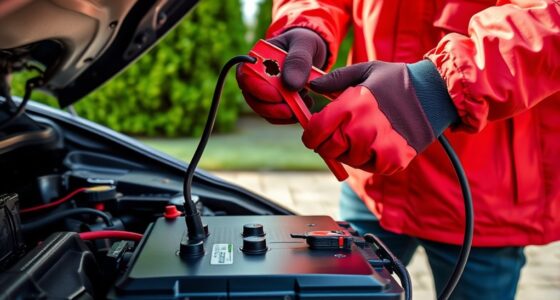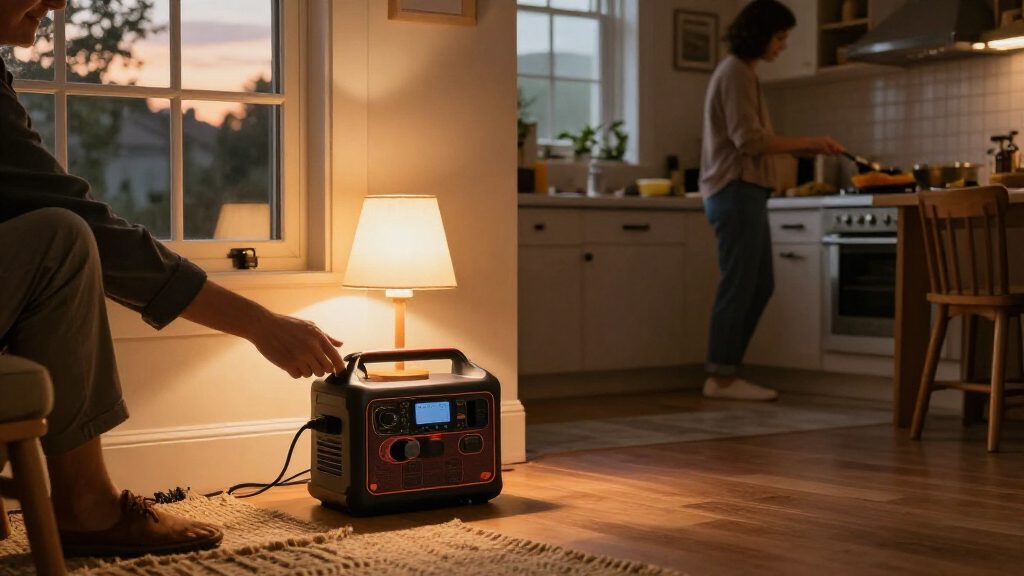
Choosing a portable power station for home backup is a choice between keeping a few essentials running and covering a larger share of household needs. A compact model typically offers a few hundred to around 1,000 watt-hours of storage, with enough output for phones, lights, routers, and some small appliances. An expandable high-capacity model starts with more storage, supports higher loads, and may accept extra batteries or a home transfer connection.

Get backup power and energy gear delivered free with Prime
- Fast, free delivery on millions of items
- Prime Video, Amazon Music and more included
- Member-only deals all year

Jackery HomePower 3600 Plus & 2x200W Solar Panels, 3584Wh, 3600W AC Output
- ✔ Battery capacity: 3,584Wh
- ✔ AC output: 3,600W; 7,200W in parallel per listing
- ✔ Battery chemistry: LFP

Jackery HomePower 3600 Plus Power Station, 3584Wh, 3600W AC Output
- ✔ Battery capacity: 3,584Wh
- ✔ AC output: 3,600W; 7,200W in parallel per listing
- ✔ Battery chemistry: LFP

EBL 2400W Portable Power Station LiFePO4 Battery for Home Use
- ✔ Battery capacity: 1,843.2Wh
- ✔ AC output: 2,400W
- ✔ Battery chemistry: LiFePO4
The compact option is the better fit for short outages, apartments, and buyers who want a unit they can also take camping. The expandable option makes more sense when outages last longer, a refrigerator or medical equipment needs backup, or the household wants a path toward powering selected circuits. Runtime, output limits, and safe connection to household wiring matter more than headline capacity alone.
At a Glance
| Criteria | Compact portable power station | Expandable high-capacity power station | Winner |
|---|---|---|---|
| Typical usable storage | Often a few hundred to about 1,000 Wh; check usable capacity in the specifications | Often 1,000 Wh or more, with some models accepting additional batteries | B |
| Output and appliance support | Usually suited to low or moderate loads; inverter output varies by model | Typically higher continuous output and more appliance options, subject to ratings | B |
| Runtime during outages | Best for essential electronics and brief use; large appliances can drain it quickly | Can run more devices or extend backup time, especially with added capacity | B |
| Portability | Generally lighter and easier for one person to carry | Heavier and less convenient to move, particularly with extra batteries | A |
| Expansion and home integration | Often limited expansion; household wiring support is uncommon | May offer expansion, solar input, or transfer-switch compatibility; verify model support | B |
| Upfront value | Lower purchase cost for basic backup and portable use | Higher initial cost, potentially better value if extra capacity will be used | Depends |
Jackery HomePower 3600 Plus & 2x200W Solar Panels, 3584Wh, 3600W AC Output
For households that want a substantial reserve and a defined path to solar recharging, the Jackery HomePower 3600 Plus bundle is the strongest fit in this comparison. Its stated 3,584Wh capacity and 3,600W output exceed the EBL’s 1,843.2Wh and 2,400W, so it can support more demanding combinations of appliances or keep a given load running longer, subject to conversion losses and actual consumption. The included two 200W panels also make this listing more ready for solar use than the standalone Jackery, although the product description says panels and station may ship separately.Portability is a tradeoff: at 77.2 pounds, the Jackery is heavier than the EBL. Wheels and a telescoping handle help with rolling it across a suitable surface, but stairs and lifting into a vehicle remain difficult. The claimed expansion options and 120V/240V operation in parallel point toward a larger backup setup, but they require compatible equipment and should not be mistaken for direct whole-home connection. For a buyer wanting one station with more reserve than the EBL and panels in the package, this is the clearest all-around choice.Its main limitation is that the included panels total only 400W of rated solar input by panel capacity; actual charging depends on sunlight, placement, and system limits. The advertised fast recharge times are also conditional, and the listing does not establish the runtime for any particular home. Compared with the standalone Jackery, the station itself is not described as different, so the premium in convenience is the bundle—not a distinct battery platform.
Pros:
- 3,584Wh capacity and 3,600W stated output exceed the EBL’s listed figures.
- Includes two 200W solar panels for a ready-made solar charging option.
- Wheels and telescoping handle make it easier to roll than to carry.
- Listing describes expansion and parallel operation for larger backup configurations.
Cons:
- At 77.2 pounds, it is heavier than the EBL and awkward to lift.
- Solar panels and station may arrive in separate packages.
- Home integration and 240V operation require compatible equipment and setup.
Best for: Households seeking a higher-capacity station with two solar panels included for backup and eventual solar recharging.
Not ideal for: Buyers who need a lightweight unit to carry upstairs, or who expect the included panels alone to quickly refill the large battery in every weather condition.
Bottom line: Choose this bundle when you want the largest stated capacity in this lineup and want solar panels included, while accepting substantial weight and setup considerations.
“Choose this bundle when you want the largest stated capacity in this lineup and want solar panels included, while accepting substantial weight and setup considerations.”
Jackery HomePower 3600 Plus Power Station, 3584Wh, 3600W AC Output
This standalone listing offers the same stated 3,584Wh capacity and 3,600W output as the bundled Jackery, without the two 200W panels. That makes it a logical pick for buyers who already own compatible solar equipment, want to select a different panel arrangement, or expect to recharge primarily from AC or a generator. Against the EBL, it provides nearly double the listed capacity and 1,200W more AC output, which gives more room for higher-draw appliances—though appliance startup surges and sustained load still need checking.The Jackery’s 77.2-pound rolling form is easier to move over a flat floor than its weight suggests, but it is no compact carry-around battery. The listing describes 120V output and says 240V is available in parallel; buyers with essential circuits that require 240V should confirm the exact compatible configuration and transfer equipment before purchase. Expansion to higher storage capacity could help households planning a broader system, but expansion hardware and installation details are not specified in the supplied information.Compared with the bundle, this version gives less immediate solar capability because panels are optional. Its advantage is choice, not a different station. The listing’s advertised two-hour hybrid charge and 2.5-hour AC recharge are useful targets to investigate, but charging rates depend on the equipment and conditions. We would choose this model when we want Jackery’s larger reserve and have a clear plan for recharging; for someone starting from scratch with solar, the bundle is more straightforward.
Pros:
- Same 3,584Wh capacity and 3,600W output as the bundled Jackery.
- Solar panels are optional, allowing a buyer to use existing equipment or choose a setup.
- Rolling handle and wheels simplify movement on level surfaces.
- Listing describes expansion and multiple recharge methods.
Cons:
- No solar panels are included in this listing.
- The 77.2-pound weight remains challenging for stairs and frequent lifting.
- Parallel operation and home-circuit use require additional compatible equipment.
Best for: Buyers who want the Jackery’s capacity and output but already own compatible solar panels or want to choose their own charging setup.
Not ideal for: Shoppers seeking a complete solar bundle, or anyone who needs a portable station that is easy to carry or lift frequently.
Bottom line: Pick the standalone Jackery when its large reserve suits your needs and you have a separate, deliberate plan for charging it.
“Pick the standalone Jackery when its large reserve suits your needs and you have a separate, deliberate plan for charging it.”
EBL 2400W Portable Power Station LiFePO4 Battery for Home Use
The EBL Acc2400 is the more manageable choice for buyers who want to keep selected essentials running without moving a nearly 80-pound station. Its listed 1,843.2Wh battery and 2,400W output can serve devices such as routers, laptops, lights, and some kitchen or heating appliances, provided their power draw stays within the unit’s limits. The 12-device connection claim and mix of AC, USB-C, USB-A, DC, car, and wireless charging ports make it convenient when several small devices need power at once.Compared with either Jackery, the EBL gives up a lot of stored energy and output. That means shorter runtime at the same load and less headroom for running multiple high-draw appliances together. Its listed weight is about 54–55 pounds, roughly 22 pounds less than the Jackery, but that is still heavy enough that moving it around the house may take planning. The listing claims a 0.1-second emergency switch; buyers relying on it for computers or network gear should verify the transfer behavior and compatibility for their specific devices.The EBL earns its place for targeted backup rather than extended household coverage. Its 100W USB-C port and multiple outlet types are useful for electronics and mixed devices, while its smaller battery can be easier to store and move. The listing advertises over 3,500 charge cycles and a 10-plus-year service life, but long-term results depend on use and care. If outage duration or running powerful loads is the priority, the Jackery’s nearly doubled capacity is the better match; if the goal is a more compact station for a planned essentials list, the EBL is a credible alternative.
Pros:
- Lighter than either Jackery, at about 54–55 pounds.
- 2,400W output and multiple port types support a varied essentials setup.
- 100W USB-C charging is useful for compatible laptops and devices.
- Smaller dimensions may make storage and placement easier.
Cons:
- At 1,843.2Wh, it has about half the Jackery’s listed battery capacity.
- Lower output leaves less headroom for multiple high-draw appliances.
- Still weighs more than 50 pounds, so it is not effortless to carry.
Best for: People who want to power a defined set of essential devices and value lower weight and varied ports over maximum runtime.
Not ideal for: Households seeking longer backup for several appliances, or buyers who need substantial 240V capability or high output beyond the stated 2,400W.
Bottom line: Choose the EBL for a more movable, port-rich station when your outage plan centers on essentials and shorter runtimes.
“Choose the EBL for a more movable, port-rich station when your outage plan centers on essentials and shorter runtimes.”
As an Amazon Associate we earn from qualifying purchases.
Key Differences
Capacity determines how long a station can supply energy, while inverter output determines which loads it can run at the same time. The compact unit is usually enough for phones, a router, lights, and other modest electronics. It may not comfortably run a refrigerator for an extended outage, and a heater, kettle, or microwave can exceed its output rating or consume its stored energy very quickly. Buyers should check both watt-hours and continuous watts, along with any surge rating required by motor-driven appliances.
The expandable model costs more and takes up more space, but it can offer a more useful buffer for long outages. Extra batteries can extend runtime if the specific model supports them, and selected units can connect to a transfer switch or other approved home backup setup. Those features are not universal: confirm compatibility, installation requirements, and the limits of the outlets or circuits before buying. For most households seeking meaningful outage coverage, capacity and safe, practical integration are worth more than a broad list of ports.
Detailed Comparison
Storage capacity and runtime (Expandable high-capacity power station wins — major)
The expandable model wins by a major margin when its larger battery or supported add-on batteries are actually part of the setup. More watt-hours mean more energy available, but runtime still depends on the load: a router and a few LED lights draw far less than a refrigerator cycling on and off. The compact unit is sensible for short outages or electronics; it can feel inadequate when several essentials must run overnight. Estimate energy use and leave a reserve rather than treating the stated capacity as guaranteed runtime.
Power output and appliance compatibility (Expandable high-capacity power station wins — moderate)
The expandable model usually wins moderately because its higher inverter output can support a wider set of appliances. Still, neither label guarantees that a particular refrigerator, pump, or medical device will work. Check continuous output, surge capacity, voltage, and the appliance’s startup requirements. The compact unit is a better match for low-draw devices; pushing it beyond its rating can trigger overload protection or prevent the appliance from starting.
Portability and everyday use (Compact portable power station wins — major)
The compact model wins by a major margin for carrying, storage, and dual use away from home. A smaller unit is easier to move between rooms, keep in a closet, or take on a trip. High-capacity stations can weigh enough that moving one downstairs or into a vehicle becomes a chore, and extra batteries add more weight. If portability is a regular need rather than a backup convenience, the smaller unit may get used more often.
Expansion and home backup setup (Expandable high-capacity power station wins — moderate)
The expandable model wins moderately if its manufacturer supports extra batteries or connection to an approved transfer switch. That can extend runtime or supply selected circuits without running extension cords through the home. These capabilities vary by model, and home wiring connections may require compatible equipment and a qualified installer. A compact station generally works as a standalone source for devices plugged directly into it, which is simpler but covers less of the home.
Charging and solar flexibility (moderate difference)
This is a model-dependent criterion, so the winner depends on charging input limits and included options. Larger stations often accept more solar input and can recharge faster from suitable sources, which helps during a prolonged outage. Compact units may be easier to pair with a small panel, but their lower input limits can mean slower replenishment. Compare supported input wattage, charging time, and panel compatibility; solar availability does not by itself guarantee adequate charging in cloudy or shaded conditions.
Purchase cost and value (major difference)
The compact unit wins on upfront cost, and it is better value when the intended load is limited to electronics and lights. The expandable model costs more, but the premium buys useful runtime and output only if the household needs them. Paying extra is justified for longer outages, critical equipment, or planned circuit backup. If those needs are speculative, a smaller station plus a clear load plan is a more economical choice.
Compact portable power station: Pros and Cons
Pros:
- Lower initial cost for basic outage essentials
- Easier to carry, store, and use outside the home
- Well suited to phones, lights, routers, and modest electronics
Cons:
- Limited runtime for multiple devices or long outages
- May lack the output or surge capacity for larger appliances
- Usually offers fewer expansion and household connection options
Expandable high-capacity power station: Pros and Cons
Pros:
- More stored energy and typically greater appliance support
- Some models allow extra batteries or approved home connections
- More capable for longer outages and larger essential loads
Cons:
- Higher upfront cost and greater weight
- Features and compatibility vary substantially by model
- Still requires load planning; it may not run every appliance or the whole home
Who Should Choose What
Choose Compact portable power station if:
- Your plan is to keep phones, lights, a router, and small electronics running through brief interruptions.
- You need a station that one person can move easily or also use for travel and recreation.
- Your budget is limited and you have confirmed that the unit’s output and capacity cover your actual loads.
Choose Expandable high-capacity power station if:
- You expect longer outages and need more stored energy for essentials such as a refrigerator.
- You have checked appliance startup and running requirements and need higher inverter output.
- You want a supported expansion path or plan to connect selected circuits through compatible equipment.
Skip both if: You need whole-home backup for high-draw heating, cooling, or multiple large appliances; compare a properly sized standby generator or a professionally designed home battery system.
Value for Money
Paying more for an expandable station is worth it when the added capacity and output map to specific loads you need to keep running. A refrigerator, communications equipment, lights, and medical equipment can make longer runtime valuable, but confirm each device’s requirements and plan how the station will connect safely. Expansion is only value if compatible batteries or home equipment are available for that model and fit the budget.
For a few electronics and short outages, the compact station is better value because unused capacity adds cost and weight without improving the planned backup. Compare price per usable watt-hour alongside inverter output, warranty, charging speed, and included accessories. A cheap unit that cannot start the needed appliance is poor value; an expensive unit with capacity you never use is poor value too.
Final Verdict
For most buyers who want a portable station specifically for home backup, choose the expandable high-capacity model if you need to keep a refrigerator or several essentials running through a prolonged outage. Its larger energy reserve is the deciding advantage, provided its output matches the appliances and any home connection is supported. Choose the compact model for short interruptions, electronics, and a station you will carry regularly; it is the clearer value when those are the actual requirements. Do not expect either category to power an entire home without checking the loads and setup.
Frequently Asked Questions
Can a portable power station run a refrigerator?
Often, but the station must meet the refrigerator’s running and startup power needs, and have enough watt-hours for the desired runtime. Check the refrigerator label or manual and the station’s continuous and surge ratings. A larger battery extends runtime; it does not fix an inverter that cannot handle startup.
How do I estimate how long a station will last?
Add the expected energy use of the devices you plan to connect, then compare it with the station’s usable capacity. Actual runtime varies with appliance cycling, conversion losses, temperature, and operating conditions. Treat manufacturer estimates as guides and keep capacity in reserve for unexpected loads.
Is an expandable station worth the higher price?
Yes when you need longer runtime, higher output, or a supported route to add batteries or selected-circuit backup. For lights, phones, and a router during brief outages, a compact station usually costs less and meets the need. Confirm that the expansion parts are compatible and available before paying for the feature.
Can I connect a power station to my home’s electrical panel?
Only if the station and connection equipment are designed for that use. Follow the manufacturer’s instructions and applicable electrical requirements, and use a qualified installer where needed. Never feed power into a wall outlet to energize household wiring.