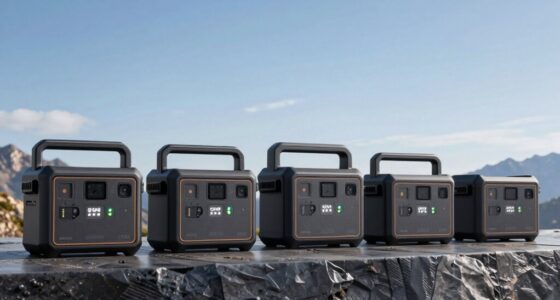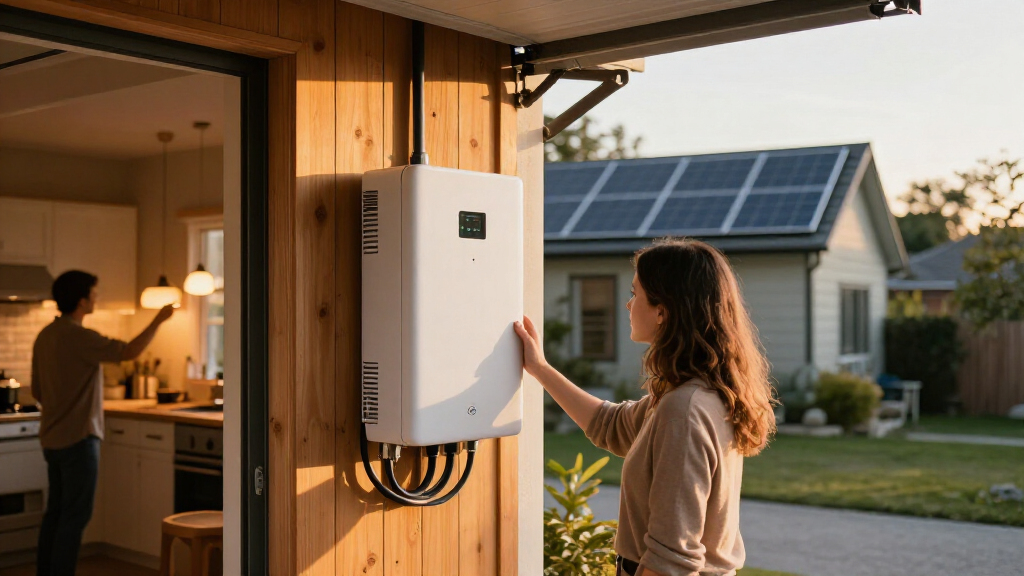

The best home battery storage system overall in this roundup is the ECO-WORTHY 48V Home Backup Power System, which pairs a 10kW inverter with six LiFePO4 batteries for a more complete backup setup. The WattCycle 48V system stands out for buyers who want a split-phase inverter, while the ECO-WORTHY Cubix100 4-pack offers a substantial 20.48kWh battery bank for larger storage needs. The main tradeoffs are whether you want an integrated inverter and battery package, how much usable capacity your household needs, and how much installation and configuration work you can handle. A DIY battery box can offer flexibility, but it shifts cell sourcing and assembly decisions to the buyer. Read on for the full comparison and guidance on matching a system to your home.

Get backup power and energy gear delivered free with Prime
- Fast, free delivery on millions of items
- Prime Video, Amazon Music and more included
- Member-only deals all year
Key Takeaways
- The ECO-WORTHY 48V Home Backup Power System ranks first because its 10kW inverter and six batteries create a more complete starting point than a battery-only purchase.
- WattCycle pairs 48V 100Ah server rack batteries with a 12kW split-phase inverter, making inverter configuration a distinguishing feature rather than an afterthought.
- The Cubix100 4-pack supplies 20.48kWh of listed storage, setting it apart from the single 100Ah rack battery and the 10kWh-class options.
- Capacity varies widely across the lineup: the 100Ah rack battery, 200Ah unit, and 314Ah battery are not interchangeable choices for backup duration.
- The HiXiMi battery box is a DIY enclosure, not a ready-to-use battery; cells are not included, so it calls for substantially more buyer planning than the packaged systems.
| ECO-WORTHY 48V Home Backup Power System with 10kW Inverter and Six LiFePO4 Batteries |  | Best for High-Capacity Expansion | Battery chemistry: LiFePO4 | Battery configuration: Six 51.2V 100Ah batteries | Total battery capacity: 30,720Wh | VIEW LATEST PRICE | See Our Full Breakdown |
| WattCycle 48V 100Ah Server Rack Batteries with 12kW Split-Phase Inverter |  | Best for Split-Phase Backup | Battery chemistry: LiFePO4 | Battery configuration: Two 48V 100Ah rack batteries | Energy storage: 10.24kWh | VIEW LATEST PRICE | See Our Full Breakdown |
| ECO-WORTHY Cubix100 48V 400Ah LiFePO4 Server Rack Battery (4-Pack, 20.48kWh) |  | Best Certified Battery Bank | Battery chemistry: LiFePO4 | Battery configuration: Four 51.2V 100Ah batteries | Total energy: 20.48kWh | VIEW LATEST PRICE | See Our Full Breakdown |
| ECO-WORTHY PowerMega 48V 314Ah LiFePO4 Energy Storage System with 10kW Hybrid Inverter |  | Best Integrated Hybrid System | Battery chemistry: LiFePO4 | Battery voltage and capacity: 51.2V, 314Ah | Usable energy: 16.1kWh | VIEW LATEST PRICE | See Our Full Breakdown |
| 10 kWh LiFePO4 Solar Storage Battery, 51.2V 200Ah |  | Best Wall-Mounted Battery Add-On | Chemistry: LiFePO4 | Voltage: 51.2V | Capacity: 200Ah | VIEW LATEST PRICE | See Our Full Breakdown |
| ECO-WORTHY Cubix100 Pro 48V 100Ah LiFePO4 Server Rack Battery |  | Best Monitored Rack Battery | Chemistry: LiFePO4 | Voltage: 51.2 V | Capacity: 100 Ah | VIEW LATEST PRICE | See Our Full Breakdown |
| HiXiMi 48V LiFePO4 DIY Battery Box with 200A JK BMS (Cells Not Included) |  | Best for DIY Battery Builders | Battery type: LiFePO4 | System voltage: 48 V | Supported cell capacity: 280Ah–314Ah | VIEW LATEST PRICE | See Our Full Breakdown |
| Dawnice 16 kWh LiFePO4 Solar Storage Battery, 51.2V 314Ah |  | Best for High-Capacity Single-Unit Storage | Chemistry: LiFePO4 | Voltage: 51.2 V DC | Capacity: 314 Ah | VIEW LATEST PRICE | See Our Full Breakdown |
| home battery storage system | Warranty | Battery chemistry | Capacity |
|---|---|---|---|
| ECO-WORTHY 48V Home Backup Pow | — | LiFePO4 | — |
| WattCycle 48V 100Ah Server Rac | — | LiFePO4 | — |
| ECO-WORTHY Cubix100 48V 400Ah | 10-year limited warranty | LiFePO4 | 400Ah |
| ECO-WORTHY PowerMega 48V 314Ah | 10 years | LiFePO4 | — |
| 10 kWh LiFePO4 Solar Storage B | 5 years | — | 200Ah |
| ECO-WORTHY Cubix100 Pro 48V 10 | 10-year limited warranty | — | 100 Ah |
| HiXiMi 48V LiFePO4 DIY Battery | 2 years | — | — |
| Dawnice 16 kWh LiFePO4 Solar S | 10-year limited warranty | — | 314 Ah |
More Details on Our Top Picks
ECO-WORTHY 48V Home Backup Power System with 10kW Inverter and Six LiFePO4 Batteries
For buyers who want an inverter and substantial storage in one package, this 30.72kWh system is the most built-out choice in this group. It combines six LiFePO4 batteries with a 10kW inverter, dual MPPT controllers, and a rack, while supporting expansion to as many as six inverters and 32 batteries. That gives it a much higher stated storage ceiling than the WattCycle system’s included 10.24kWh, though scaling this ECO-WORTHY setup also means planning for more hardware and installation. Its 20,000W peak output can help manage brief heavy loads, but standard 120V/240V output requires parallel inverters; the included inverter alone does not provide split-phase output. The system also ships in separate packages, so it suits buyers comfortable coordinating a larger installation rather than those seeking a simple battery add-on.
Pros:- Includes six LiFePO4 batteries, a 10kW inverter, and a server rack
- 30.72kWh of stated total battery capacity
- Expandable to up to six inverters and 32 batteries
- Dual MPPT controllers and Bluetooth/Wi-Fi monitoring
Cons:- 120V/240V output requires at least two inverters in parallel
- Components ship separately, complicating delivery and installation planning
- A large expandable system may be more equipment than smaller backup needs require
Best for: Homeowners or off-grid users who need substantial included storage, want an inverter-and-battery package, and plan to expand their system.
Not ideal for: Buyers who need 120V/240V output from a single inverter or prefer a compact, single-package system with minimal installation work.
- Battery chemistry:LiFePO4
- Battery configuration:Six 51.2V 100Ah batteries
- Total battery capacity:30,720Wh
- Inverter power:10,000W
- Peak output power:20,000W
- Output voltage:120V; 120V/240V with parallel inverters
- Expandable capacity:Up to 6 inverters and 32 batteries
- Monitoring and communication:CAN/RS485, Bluetooth, and Wi-Fi
Our verdict“Choose this package if you want high included storage and a clear path to a much larger system, and can accommodate the parallel-inverter requirement for split-phase power.”
WattCycle 48V 100Ah Server Rack Batteries with 12kW Split-Phase Inverter
The WattCycle package is the clearest fit here for buyers who need 120V/240V split-phase power without adding a second inverter: its listed 12kW inverter provides that output alongside two rack batteries. The included 10.24kWh of storage is less than the ECO-WORTHY 48V system’s 30.72kWh, but WattCycle pairs its smaller starting battery bank with a stated UPS transfer time under 10ms, a useful feature for equipment that should keep running through a brief outage. Its maximum 24,000W solar input and 250A charging current also give solar-heavy setups room to feed and replenish the bank. The tradeoff is that the system is still a multi-component installation, and its expansion potential does not change the modest storage included at the outset. I’d favor it over a battery-only option when inverter output and quick backup response take priority.
Pros:- 12kW inverter provides 120V/240V split-phase output
- UPS transfer time is specified as under 10ms
- Supports up to 24,000W solar input and 250A charging
- Expandable to up to 20 batteries and 6 inverters
Cons:- Included storage is 10.24kWh, substantially less than the ECO-WORTHY six-battery system
- Multiple components may require professional installation and system configuration
- A 100A BMS is specified for each battery, which buyers should match to their load and expansion plans
Best for: Homeowners seeking a ready-to-build 120V/240V backup setup, especially those with solar input and loads that benefit from quick UPS transfer.
Not ideal for: Buyers who need a large battery reserve included from day one or want a simple battery-only replacement without inverter installation.
- Battery chemistry:LiFePO4
- Battery configuration:Two 48V 100Ah rack batteries
- Energy storage:10.24kWh
- Inverter output:12kW
- Output voltage:120V/240V split phase
- Maximum solar input:24,000W
- Maximum charging current:250A
- UPS transfer time:Under 10ms
- Expansion capacity:Up to 20 batteries and 6 inverters
Our verdict“Pick WattCycle if integrated split-phase output and fast UPS transfer matter more than starting with a large battery reserve.”
ECO-WORTHY Cubix100 48V 400Ah LiFePO4 Server Rack Battery (4-Pack, 20.48kWh)
This four-battery pack makes sense for shoppers who already have an inverter or want to choose one separately. Its 20.48kWh of LiFePO4 storage is a substantial starting bank, yet unlike the ECO-WORTHY PowerMega it does not tie the buyer to an included 10kW hybrid inverter. The listed UL9540, UL1973, and CEC certifications give safety-conscious buyers useful information to check against their installer’s requirements, while CAN/RS485 and app monitoring support system integration and status checks. Expansion to 32 units leaves room to grow, but that ceiling can be excessive for a modest backup setup. Also, a battery pack alone does not provide household AC power: an appropriately matched inverter and installation are still needed. Separate-package delivery may complicate receiving the full kit, despite the included cabling and mounting accessories.
Pros:- Provides 20.48kWh across four LiFePO4 batteries
- Listed UL9540, UL1973, and CEC certifications
- CAN/RS485 communication plus Bluetooth and Wi-Fi monitoring
- Expandable to up to 32 units, with cables and installation accessories included
Cons:- No inverter is included, so the batteries cannot supply household AC loads on their own
- Inverter compatibility and system design need to be confirmed before purchase
- Packages may arrive at different times, delaying installation
Best for: Solar owners and installers who already have a compatible inverter and want a certified, expandable rack battery bank with app monitoring.
Not ideal for: Buyers who need an all-in-one battery-and-inverter system, or who cannot verify inverter compatibility and arrange installation.
- Battery chemistry:LiFePO4
- Battery configuration:Four 51.2V 100Ah batteries
- Total energy:20.48kWh
- Nominal voltage:51.2V
- Capacity:400Ah
- Certifications:UL9540, UL1973, CEC Listed
- Monitoring and communication:CAN, RS485, Bluetooth, and Wi-Fi
- Maximum expansion:Up to 32 units, listed as 163.8kWh
- Warranty:10-year limited warranty
Our verdict“Choose the Cubix100 pack if you want a certified, expandable battery bank and already have a compatible inverter plan.”
ECO-WORTHY PowerMega 48V 314Ah LiFePO4 Energy Storage System with 10kW Hybrid Inverter
PowerMega is a strong middle ground for buyers who want a complete hybrid setup without starting with the ECO-WORTHY six-battery system’s larger 30.72kWh bank. It combines a 10kW inverter with 16.1kWh of usable storage and lists 120V/240V output, so the inverter is part of the package rather than a separate purchase. Active balancing, a built-in circuit breaker, and multiple communication options give installers several useful tools for system management. The stated 9,000-plus cycles at 80% depth of discharge is also a specific longevity claim, not a substitute for checking warranty terms and operating conditions. At 293.2lb, the battery is far less convenient to position than the wall-mounted 10.24kWh battery, and truck-freight delivery requires planning. Buyers should also confirm which inverter exterior version will arrive.
Pros:- Combines 16.1kWh usable energy with a 10kW hybrid inverter
- Lists 120V/240V output and pure sine wave
- Active-balancing BMS, built-in circuit breaker, and fire suppression are specified
- Supports RS485, CAN, RS232, Wi-Fi, and Bluetooth
Cons:- Battery weighs 293.2lb and requires truck-freight delivery
- The inverter exterior version is selected randomly
- Its included storage is lower than the ECO-WORTHY six-battery system’s 30.72kWh
Best for: Homeowners who want a substantial battery, a 10kW hybrid inverter, and listed 120V/240V output in one integrated purchase.
Not ideal for: Buyers who need a lightweight wall-mounted battery, want to select a specific inverter exterior, or need the largest included storage bank.
- Battery chemistry:LiFePO4
- Battery voltage and capacity:51.2V, 314Ah
- Usable energy:16.1kWh
- Inverter power:10,000W
- Output voltage:120V/240V
- Cycle life claim:9,000+ cycles at 80% DoD
- Weight:293.2lb
- Communication:RS485, CAN, RS232, Wi-Fi, and Bluetooth
- Warranty:10 years
Our verdict“Choose PowerMega if you want an integrated 10kW hybrid system with split-phase output and can manage its heavy freight-delivered battery.”
10 kWh LiFePO4 Solar Storage Battery, 51.2V 200Ah
This wall-mounted battery is the most straightforward fit for buyers who need storage to pair with an existing solar inverter, rather than a bundled inverter system. Its 10.24kWh capacity and compact form make it a smaller starting point than the 20.48kWh ECO-WORTHY Cubix100 pack, while expansion to 30 batteries gives a path to a much larger bank. The touch-screen display shows voltage, current, energy, and inverter model, making local status checks accessible without relying solely on an app. A low-temperature cutoff is a useful battery protection feature, but it does not resolve the key buying question: the listing does not detail compatibility with specific inverter models. Compared with WattCycle, this is a battery-only option, not a split-phase package with a 12kW inverter and quick UPS transfer. Confirm compatibility before building around it.
Pros:- 10.24kWh capacity in a wall-mounted form factor
- Touch-screen display reports voltage, current, energy, and inverter model
- Built-in BMS includes low-temperature cutoff
- Supports parallel expansion up to 30 batteries
Cons:- Specific compatible inverter models are not detailed
- No inverter is included, unlike the WattCycle split-phase system
- The stated five-year warranty is shorter than the 10-year warranties listed for the ECO-WORTHY Cubix100 and PowerMega
Best for: Solar owners who need a wall-mounted 51.2V battery, want on-unit monitoring, and can confirm compatibility with their existing inverter.
Not ideal for: Buyers who need an included inverter, specified 120V/240V output, or clear compatibility guidance before purchase.
- Chemistry:LiFePO4
- Voltage:51.2V
- Capacity:200Ah
- Energy storage:10.24kWh
- Cycle life claim:6,000+ cycles
- Expansion:Up to 30 batteries in parallel
- Protection:Built-in BMS with low-temperature cutoff
- Monitoring:Touch-screen display for voltage, current, energy, and inverter model
- Warranty:5 years
Our verdict“Pick this battery for a compact solar-storage add-on only after confirming that your inverter and system configuration are compatible.”
ECO-WORTHY Cubix100 Pro 48V 100Ah LiFePO4 Server Rack Battery
The Cubix100 Pro is a 5.12 kWh rack battery for buyers who want clear system feedback without building a pack from loose cells. Its 4.3-inch touchscreen, Bluetooth, and WiFi make battery status easier to check than on a basic unit with limited monitoring, while 3A active balancing is intended to help keep cells working evenly over time. It also supports charging down to -4°F, a useful distinction for installations exposed to cold conditions. Compared with the Dawnice 16 kWh battery, this is a much smaller storage block, so it suits modular setups better than high-demand whole-home backup. The tradeoff is that inverter compatibility covers many mainstream models, not every model, and its 10-year warranty is limited. Buyers should confirm inverter fit and warranty terms before building around it.
Pros:- 3A active balancing supports more even cell operation.
- Touchscreen, Bluetooth, and WiFi provide several ways to check battery status.
- Charging is supported down to -4°F.
- Designed to communicate with many mainstream inverters.
Cons:- At 5.12 kWh, it offers less stored energy than the 16 kWh Dawnice battery.
- Inverter compatibility is not universal and should be checked before purchase.
- The 10-year warranty is limited rather than unconditional.
Best for: Solar owners who want a monitored 48V rack battery for a modular system, especially where cold-weather charging and inverter communication matter.
Not ideal for: Households seeking a single large-capacity battery for extended whole-home backup, or owners whose inverter compatibility has not been confirmed.
- Chemistry:LiFePO4
- Voltage:51.2 V
- Capacity:100 Ah
- Energy:5,120 Wh
- Active balancing:3 A
- Cycle life:6,000+ cycles
- Monitoring:4.3-inch touchscreen, Bluetooth, and WiFi
- Low-temperature charging:Down to -4°F
- Warranty:10-year limited warranty
Our verdict“Choose the Cubix100 Pro for a smaller, well-monitored rack setup with cold-weather charging support, not as a one-unit answer to high-capacity backup needs.”
HiXiMi 48V LiFePO4 DIY Battery Box with 200A JK BMS (Cells Not Included)
The HiXiMi is a build-your-own battery enclosure, not a ready-to-use storage battery: compatible 280Ah–314Ah cells must be sourced separately and assembled by the buyer. In return, the kit supplies a metal case, 16S 200A JK BMS, monitor, communication board, busbars, and assembly hardware. Bluetooth plus CANbus and RS485 give experienced builders useful monitoring and inverter-integration options. That flexibility sets it apart from the ECO-WORTHY Cubix100 Pro, which arrives as a complete 100Ah battery and is a simpler route to stored energy. The HiXiMi can support a much larger DIY pack, but it shifts cell selection, assembly, and compatibility checks onto the owner. Its two-year warranty is also shorter than the 10-year limited warranties listed for the Cubix100 Pro and Dawnice battery.
Pros:- Includes a 16S 200A JK BMS with temperature protection.
- Supports compatible 280Ah–314Ah LiFePO4 cells.
- Bluetooth, CANbus, and RS485 support monitoring and system communication.
- Comes with a metal case and listed assembly accessories.
Cons:- Cells are not included, so the kit is not a complete battery system.
- Assembly and cell-compatibility checks require DIY knowledge.
- The stated warranty is two years, shorter than the 10-year limited warranties on the Cubix100 Pro and Dawnice.
Best for: Experienced DIY solar or off-grid builders who can source compatible 280Ah–314Ah cells and want a 48V pack with a high-current BMS and communications options.
Not ideal for: Homeowners who need a ready-to-connect battery, do not want to assemble a pack, or prefer a longer stated warranty.
- Battery type:LiFePO4
- System voltage:48 V
- Supported cell capacity:280Ah–314Ah
- BMS:16S 200A JK BMS
- Communication:Bluetooth, CANbus, and RS485
- Cell inclusion:Cells not included
- Casing:Metal
- Included components:Empty case, epoxy plate, BMS, communication board, monitor, EVA foam, internet cable, screws, busbars, and M6 socket wrench
- Warranty:2 years
Our verdict“Pick the HiXiMi if you want to build and configure a large 48V pack yourself; skip it if you need finished, ready-to-install storage.”
Dawnice 16 kWh LiFePO4 Solar Storage Battery, 51.2V 314Ah
With 16 kWh of stated capacity, the Dawnice is the strongest fit here for buyers who want substantial storage in one battery rather than starting with a smaller rack unit. Its built-in BMS, Bluetooth monitoring, and parallel expansion give homeowners a path to monitor the system now and add capacity later. The Cubix100 Pro is easier to fit into a modular, lower-capacity setup, but its 5.12 kWh rating means a comparable stored-energy target requires multiple units. Dawnice’s larger format brings its own constraints: at 27 x 15 x 35 inches, placement can be difficult, and it still needs a compatible inverter. The listed 150A standard and maximum discharge current also deserve attention when matching the battery to loads; the advertised 16,000W maximum power should not be treated as a substitute for checking system-level compatibility.
Pros:- 16 kWh capacity provides substantially more stored energy than the 5.12 kWh Cubix100 Pro.
- Built-in BMS provides battery management and protection.
- Bluetooth monitoring gives access to battery information.
- Parallel connections support adding compatible units for more storage.
Cons:- Large 27 x 15 x 35-inch dimensions can restrict placement.
- Requires a compatible inverter, which must be verified separately.
- The listed 150A discharge-current limit needs to be matched to the intended loads and system design.
Best for: Home solar owners who need a large battery block for backup or energy storage and have space for a substantial unit plus a compatible inverter.
Not ideal for: Buyers with tight installation space, modest storage needs, or an inverter that has not been checked for compatibility with this battery.
- Chemistry:LiFePO4
- Voltage:51.2 V DC
- Capacity:314 Ah
- Energy:16 kWh
- Maximum power:16,000 W
- Standard charge-discharge current:150 A
- Maximum discharge current:150 A
- Monitoring and expansion:Bluetooth monitoring; parallel connection supported
- Warranty:10-year limited warranty
Our verdict“Choose Dawnice when a large single battery block suits your backup plan and installation space; choose a smaller rack battery if placement or modular sizing matters more.”
How We Picked
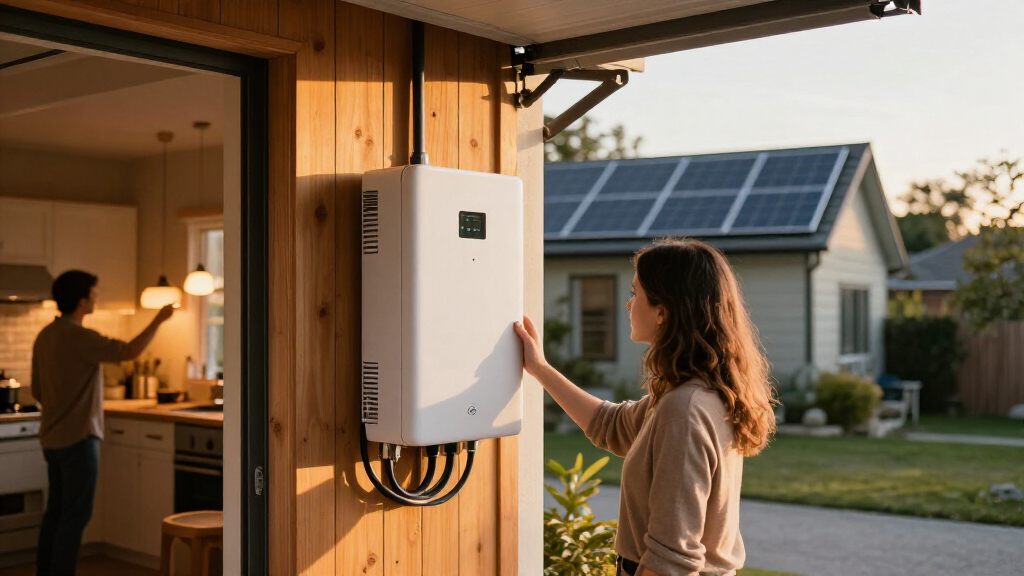
I compared these systems by how clearly they address a real home-storage need: usable battery capacity, inverter inclusion and configuration, expandability, and the amount of work left to the buyer. A battery bundled with an inverter can simplify system planning, while a rack battery may suit an existing compatible setup better. I also considered how product descriptions communicate the scope of the package, since a battery enclosure without cells has a very different readiness level from a complete battery-and-inverter offering.
The ranking favors practical system fit over a single headline capacity. The ECO-WORTHY 48V backup package ranks first for combining batteries and a 10kW inverter; WattCycle follows for its 12kW split-phase configuration. The Cubix100 4-pack earns a strong place for its stated 20.48kWh capacity, while the PowerMega combines a 314Ah battery with a hybrid inverter. Single batteries and the DIY box rank lower for buyers seeking a ready system, though they may be better choices for owners building around existing equipment or prioritizing a particular capacity or assembly approach. Product details supplied here do not establish compatibility with every home, code compliance, installation requirements, or exact usable capacity, so those points require confirmation before purchase.
Factors to Consider When Choosing Home Battery Storage Systems
Choosing a home battery is a system-design decision, not just a capacity comparison. I would start with the loads you need to support, then check how the battery, inverter, home wiring, and charging source work together. These broader checks can prevent buying a battery that is too small, difficult to integrate, or more involved to install than expected.
Match Capacity to the Loads You Need to Keep Running
List the circuits you want available during an outage and estimate their energy use over the period you care about. A battery’s stated capacity does not by itself tell you how long it will run a home, since actual runtime depends on load, inverter losses, and the portion of capacity the system allows you to use. Avoid sizing from whole-home consumption if you only need essentials such as refrigeration, lights, communications, and selected outlets. Also separate energy capacity, measured in kWh, from power delivery, measured in kW: a large battery may still be unable to support several high-demand appliances at once. Ask the seller for usable capacity and continuous output details before comparing models. This distinction is especially useful when comparing the lineup’s 100Ah, 200Ah, and 314Ah batteries, whose capacity labels alone do not establish identical system performance.
Check Inverter and Electrical Compatibility Before Buying
A battery does not automatically connect to a home’s electrical panel or work with any inverter. Confirm voltage, battery communication support, inverter charging limits, and whether the setup uses split-phase output if your home needs it. A bundled inverter can reduce the number of separate components to select, but it still needs to match the home’s service, solar equipment, and backup plan. Verify whether backup requires a transfer switch, a critical-loads subpanel, or other equipment not listed in the product package. Do not treat a product’s inverter rating as proof that it can power every appliance simultaneously; startup surges and circuit limits matter too. Before ordering, have a qualified installer review the system diagram and local electrical requirements.
Decide How Much Installation Work You Want to Take On
Packaged systems can reduce component-selection work, but installation may still require professional electrical work and careful commissioning. Rack batteries suit buyers who already have compatible inverters or are assembling a modular system, yet the buyer must confirm communication protocols, cabling, protection, and mounting needs. A DIY battery box adds another layer: the HiXiMi listing excludes cells, so the finished battery depends on sourcing and assembling compatible cells as well as configuring the BMS safely. Underestimating these tasks can erase the apparent simplicity of buying a lower-level component. Ask what is included, what tools and skills are expected, and who will support commissioning before choosing between a package and separate parts. If you do not want to make those decisions, favor a clearly documented system with professional installation support.
Plan for Expansion, Charging, and Future Equipment
Think beyond the first battery: consider whether you may add storage later, whether the inverter supports the planned battery count, and whether all units can share a compatible configuration. A multi-battery set such as the Cubix100 4-pack presents a different purchase path from adding individual rack batteries over time. Solar charging also depends on the inverter’s input specifications and compatibility with existing panels, not just on the battery chemistry. If you expect to add solar or change inverters, check those interfaces now rather than assuming future components will work together. Ask whether expansion requires matching the same battery model, firmware, or age. Buying a larger system than your current loads require can be wasteful, but leaving no compatible expansion route may lead to a more disruptive replacement later.
Compare the Full Installed System, Not Just the Battery Listing
A product listing may describe only a battery, while a working home backup setup can also need an inverter, disconnects, wiring, mounting, monitoring, and installation. Make a written inventory of included components and ask for a complete system quote before comparing options. This is particularly important when weighing a battery-only product against a package that names an inverter: the product descriptions cover different scopes. Check warranty duration and conditions, supported cycle or throughput limits, service availability, and replacement procedures in the manufacturer’s documentation. Clarify who handles troubleshooting if the battery and inverter come from different brands. A clear bill of materials makes the real tradeoff between packaged convenience and modular flexibility easier to judge.
Frequently Asked Questions
Should I choose a system with an inverter included or buy a battery for my existing inverter?
Choose a bundled inverter system when you need a coordinated starting point and have confirmed that its output and connections suit your home. The ECO-WORTHY backup package and PowerMega include inverter details, while the single rack batteries are more naturally suited to a system built around compatible equipment. If you already own an inverter, verify its battery voltage, communication protocol, charging limits, and support for the intended battery configuration before buying. A bundle is not automatically compatible with every solar array or electrical panel. Have an installer confirm the full system design, including any transfer equipment or subpanel needs.
How do I know whether a 100Ah, 200Ah, or 314Ah battery is large enough?
Use the battery’s stated voltage and amp-hour rating to estimate nominal energy, then ask the manufacturer for usable capacity and the inverter’s continuous output. Make a list of the circuits you want backed up and estimate their energy use over your target outage duration. Include high-demand loads and appliance startup surges, since those affect power delivery as well as stored energy. The labels in this roundup show a range of battery sizes, but they do not alone reveal runtime in your home. A qualified installer can help turn your load list into a capacity and inverter plan.
Can I connect these batteries to my existing solar panels?
Possibly, but compatibility depends on the inverter or charge controller, solar input limits, battery voltage, and communication requirements. A battery’s LiFePO4 chemistry does not guarantee that it will work with any solar equipment. Check the exact model documentation for supported connections and operating limits, then confirm whether your current inverter can charge and manage the battery correctly. If the system includes a new hybrid inverter, have an installer assess whether it can connect to your panels and home wiring. Do not assume a battery listing includes solar equipment or the parts needed to integrate it.
Is the HiXiMi DIY battery box a complete home battery?
No. The listed HiXiMi product is a battery box with a 200A JK BMS, and its cells are not included. The buyer must source compatible cells and confirm their configuration, electrical limits, assembly requirements, and compatibility with the inverter. This option can suit an experienced builder who wants control over the battery build, but it is a poor fit for someone seeking a ready-to-install storage system. Safe assembly and commissioning require suitable knowledge and adherence to applicable electrical requirements. Compare the full cost and work of the finished system against a packaged battery before deciding.
What should I verify before hiring an installer or ordering a large battery set?
Ask for a system diagram and a written list of included and excluded parts, including inverter, disconnects, wiring, transfer equipment, and monitoring. Confirm the battery’s usable capacity, continuous output, supported expansion, and compatibility with the planned inverter and solar equipment. Have the installer check electrical service limits, placement, ventilation or temperature requirements, and local permitting and code rules. For multi-battery packages, confirm how the units connect and whether they require matching models or settings. Get warranty and support terms in writing so you know who handles faults across the battery, inverter, and installation.
Conclusion
For most buyers seeking a coordinated starting point, I recommend the ECO-WORTHY 48V Home Backup Power System as best overall, thanks to its included 10kW inverter and six batteries. The best value depends on what you already own: WattCycle is a compelling fit when its 12kW split-phase inverter matches your plan, while the ECO-WORTHY Cubix100 4-pack is better for buyers prioritizing a larger stated battery bank. For a premium, higher-capacity direction, compare the 20.48kWh Cubix100 set with the 16kWh Dawnice battery and confirm inverter and installation needs before choosing. Beginners should favor a clearly scoped package over the HiXiMi DIY box, which requires cells and assembly planning. For specific needs, choose WattCycle for its split-phase inverter configuration, the PowerMega for a 314Ah battery paired with a hybrid inverter, or the HiXiMi only if you want to build around your own selected cells. Before buying any option, confirm usable capacity, compatibility, included equipment, and installation requirements with the manufacturer and a qualified installer.
Halloween Picks
halloween
As an affiliate, we earn on qualifying purchases.