
TL;DR

Get backup power and energy gear delivered free with Prime
- Fast, free delivery on millions of items
- Prime Video, Amazon Music and more included
- Member-only deals all year
A GreenBuildingAdvisor article published October 23, 2026, argues that healthy-home planning should include the people who build the home, not only future occupants. It calls for considering worker exposure, material handling and installation conditions when choosing products and designing assemblies, but does not propose specific standards or report a new regulation.
GreenBuildingAdvisor published a report on October 23 arguing that healthy-home design should account for the health and safety of the people who build the house, as well as those who live in it. The article, by Emily Mottram, says choices about materials and assemblies should include consideration of workers’ exposure and the practical conditions of installation.
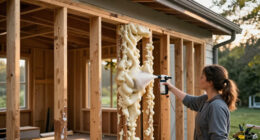
Mottram describes familiar healthy-home priorities, including ventilation, moisture control and low-emission finishes, and asks whether the same attention is given to the construction process. Materials can produce dust or vapors while being cut, mixed, sprayed or sanded, the article says. Workers may also have to install them in confined or awkward spaces such as crawlspaces.
The report frames worker health as part of the Pretty Good House approach, which it describes as questioning how a building performs as a whole rather than relying on individual measures. Alongside performance, durability, cost and indoor air quality, Mottram says designers should consider what it takes for tradespeople to install specified materials.
The article does not identify a particular product, injury, project or regulatory change. It presents a general argument for asking questions earlier, during product selection and design, rather than waiting for an installer to become ill or develop a reaction before reconsidering a material.
Material Choices Affect Installers
The report broadens the meaning of a healthy building: the people doing the construction work may encounter a material before it becomes part of the finished home. That makes installation exposure and access relevant to decisions often discussed mainly in terms of occupants’ indoor air and long-term building performance.
For designers, builders and clients, the practical implication is to consider not only how a product performs once installed, but also how it is handled and applied. The article does not set out a formal checklist or claim that a particular material is unsafe. Its point is that worker health belongs in project planning, alongside other building goals.
construction worker half face respirator with P100 filters
As an affiliate, we earn on qualifying purchases.
As an affiliate, we earn on qualifying purchases.
The Pretty Good House Approach
Mottram’s report is part of GreenBuildingAdvisor’s Pretty Good House Blog. The article presents the concept as an effort to question what high performance means and to consider how the whole building system works, rather than focusing on isolated metrics.
Healthy-home discussions commonly address what occupants breathe after moving in, as well as moisture management and material emissions. This report extends that discussion to the construction period. It does not describe a new program or a change in building codes; it is an argument about how project teams should think through their specifications and designs.
“A Pretty Good House should also consider the health and safety of the people installing them.”
— Emily Mottram, GreenBuildingAdvisor
No Standards or Cases Specified
The article does not provide exposure measurements, injury data or named product examples, and it does not say how frequently construction materials cause illness. It also does not establish a testing method, a set of required precautions or a proposed change to regulations.
Its recommendations are framed as questions for designers and builders, not as findings from a reported study. The available report therefore supports the general case for considering worker health, but does not quantify the risks associated with specific tasks or materials.
Questions for Project Teams
The report does not announce a follow-up study, policy proposal or implementation schedule. Its immediate implication is for project teams to raise worker-health questions while selecting materials and designing assemblies: what exposure could the work create, what access will installers have, and how can the specified product be handled safely?
Whether this approach leads to updated specifications, project procedures or broader industry guidance is not stated. The article’s next step is a change in planning: treat the construction process as part of the health assessment of a home, not as a concern to address only after a problem occurs.
Key Questions
What is the report about?
Emily Mottram’s GreenBuildingAdvisor article argues that healthy-home design should consider the health and safety of construction workers, as well as future occupants.
What construction exposures does it mention?
The article refers generally to dust and vapors associated with tasks such as cutting, mixing, spraying and sanding. It does not name specific products or assess particular exposure levels.
Does the article announce a new safety rule?
No. It makes a case for considering installer health during design and material selection, but reports no new regulation, standard or formal checklist.
What does the article say builders should do?
It urges project teams to think about how materials will be installed and handled, including the conditions workers face, before choosing products and finalizing designs. It does not give a detailed procedure for specific tasks.
Source: rss
Halloween Picks
halloween
As an affiliate, we earn on qualifying purchases.