
TL;DR

Get backup power and energy gear delivered free with Prime
- Fast, free delivery on millions of items
- Prime Video, Amazon Music and more included
- Member-only deals all year
A Hunker report describes a DIY backyard bar made from matching reclaimed wood pallets and concrete pavers, based on a project by YouTuber WetAndForget. The design can be adapted to different lengths, but the source does not give a verified project cost or establish that every pallet structure can safely carry the heavy paver top.
A YouTuber identified as WetAndForget built a compact backyard bar from matching wood pallets topped with concrete pavers, according to a Hunker report. The project offers a way to reuse reclaimed materials for an outdoor serving area, though the report provides no verified total cost and warns that the pallet base must be able to support the countertop’s weight.
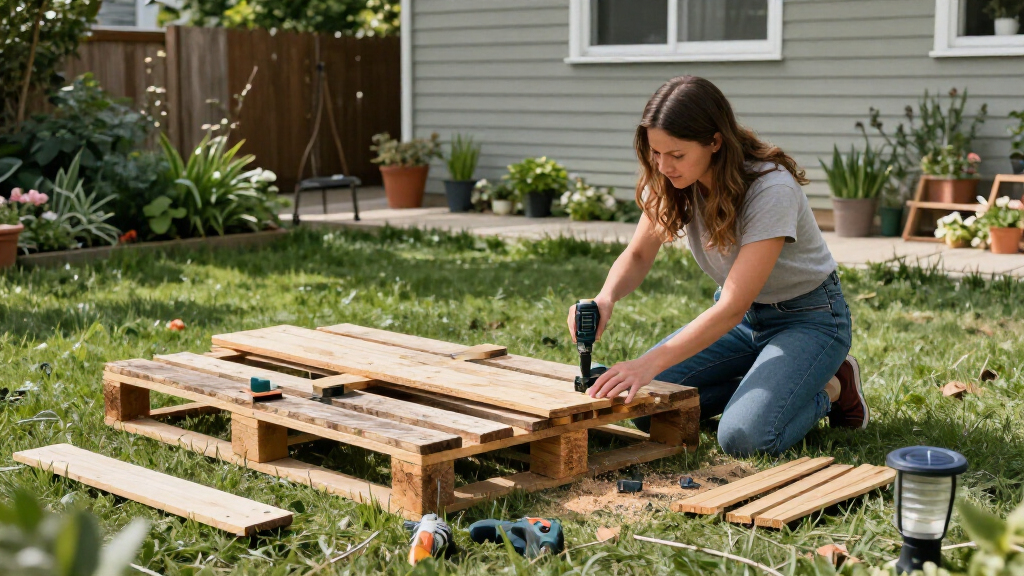
The described design uses at least two same-size pallets in sound condition, exterior wood screws, exterior paint with primer, and concrete pavers for the top. The source also lists a drill, sander, cleaning cloth, paintbrush, clamps, and construction adhesive rated for both concrete and wood. Hunker presents the project as a possible alternative to buying a ready-made outdoor bar, which it says can cost several hundred dollars at some big-box stores; it does not provide a materials estimate or a price comparison for this particular build.
Before assembly, the pallets should be checked for rot or contamination, and rough edges should be sanded. After painting and letting the finish dry, the pallets are placed upright with their backs together, aligned, clamped, and joined through their inner boards with exterior screws. The report says WetAndForget used at least three screws per connecting board, while noting that the number may vary. The completed base should sit on level ground and should not rock before the pavers are added.
The pavers are first dry-fitted across the top with minimal overhang. The builder then lifts each paver, applies compatible landscape construction adhesive, and presses it into place. The adhesive must fully dry before heavy items are set on the surface. For a longer bar, Hunker suggests making another matching unit and connecting the sections through their supports; each unit should carry its own pavers rather than leaving pavers over an unsupported gap.
A Reuse Project With Weight Limits
The project illustrates a practical reuse idea: discarded pallets can become outdoor furniture when they are structurally sound and assembled for the intended load. It may appeal to people looking for a serving space without buying a finished bar, but the source does not confirm that the DIY version is cheaper in every case. Costs depend on whether the pallets and tools are already available and on the price of pavers, adhesive, paint, and fasteners.
The main trade-off is that a concrete-paver top adds considerable weight to a structure not necessarily designed as furniture. Hunker specifically advises checking that the pallet frame and its connections can safely carry that load. A stable-looking bar is not, by itself, proof of a safe load capacity, so builders should not treat the project as a one-size-fits-all plan.
Personal additions such as a stencil, hooks, a bottle opener, or outdoor LED lighting can tailor the bar to a patio. These are optional details, not reported features of every version. The central value of the idea is its adaptable form: a compact unit can suit a small patio, while additional sections may provide more serving space if each section is properly supported.
As an affiliate, we earn on qualifying purchases.
How the Pallet Bar Is Assembled
Hunker’s report frames the bar as a smaller-scale alternative to store-bought outdoor furniture. The described build relies on joining two pallets back-to-back, securing them with screws, and using concrete pavers as a countertop. That sequence matters because the top is both the defining feature and a source of added load.
The article says the design can be lengthened with a second matching pallet unit. Its guidance is to connect the units at sturdy supports and keep the countertop supported by each section. The report also recommends choosing pallets in good condition, protecting the wood with exterior paint, and placing the finished structure on a level patio or deck. It does not provide engineering specifications, a tested weight rating, or a detailed construction plan for every pallet size.
“WetAndForget uses at least three screws per connecting board, but this might vary.”
— Hunker, describing the project by YouTuber WetAndForget
Cost and Load Capacity Unverified
The report does not state the project’s actual total cost, how long the build took, or whether the finished bar was tested under a particular load. Its comparison with store-bought bars is general and does not establish a specific saving. It also gives no engineering rating for the pallets, screws, adhesive, or pavers.
It is not clear what pallet dimensions or condition were used in the featured build, or whether the materials had prior exposure to contaminants. The source advises rejecting pallets that show rot or contamination, but does not identify a method for verifying a pallet’s history. Builders will need to assess the materials and the stability of their own structure rather than assume the pictured design is suitable for all pallets or surfaces.
Check Materials Before Building
The report describes a project rather than a scheduled product launch or follow-up, so no further milestone is identified. Anyone considering the build should first inspect the pallets, confirm the frame and connections can carry the paver load, and choose adhesive and fasteners suited to the materials and outdoor use.
Before using the bar, builders should allow paint and adhesive to dry as directed, check that the base remains stable on level ground, and avoid placing heavy items on the top until the adhesive has fully cured. The source does not provide a formal load test or construction certification, leaving safe capacity dependent on the materials and workmanship of each individual build.
Key Questions
What materials does the pallet bar use?
The described build uses at least two matching pallets, exterior screws, exterior paint with primer, concrete pavers, and construction adhesive rated for both concrete and wood. Tools listed include a drill, sander, clamps, and paintbrush.
Does the project have a confirmed cost?
No. Hunker describes the build as a potential alternative to store-bought bars but gives no verified project total or exact savings. Costs depend on which materials and tools are already on hand.
How can the bar be made longer?
The report suggests building and connecting another matching pallet unit through its sturdy supports. It advises that each section support its own pavers, rather than placing countertop pieces across an unsupported gap.
What safety checks does the report recommend?
Reject pallets with signs of rot or contamination, sand rough edges, use suitable exterior fasteners and adhesive, and place the bar on level ground. Because pavers are heavy, confirm that the pallet structure and connections can safely support them before installation.
Source: rss
Fall Picks
fall essentials
As an affiliate, we earn on qualifying purchases.