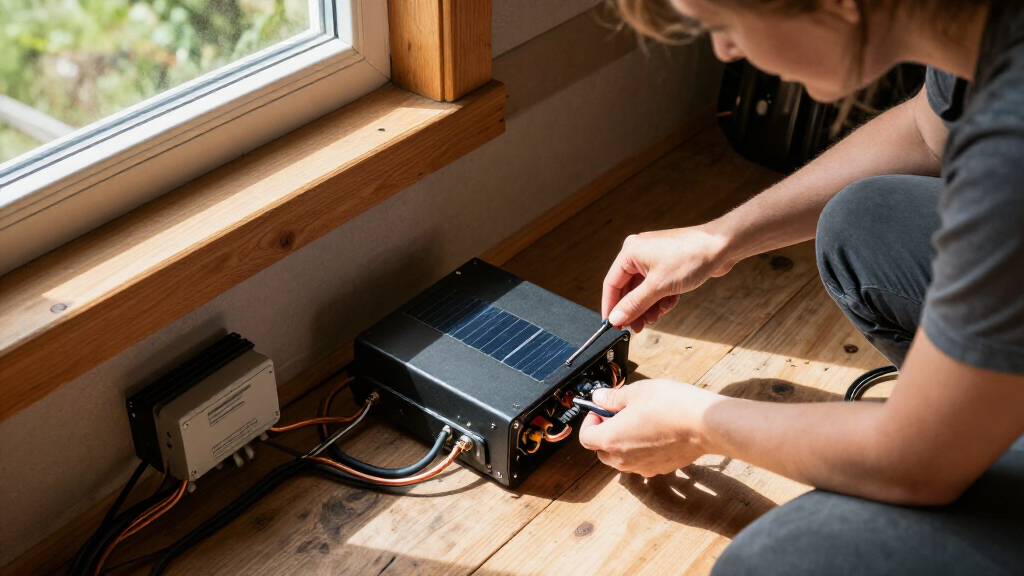

Off-grid solar inverters turn battery and solar power into usable AC electricity, but the right choice depends on your loads, battery voltage, and installation needs. I rank the ECO-WORTHY 6 kW Split-Phase All-in-One as the best overall for buyers who need substantial output and split-phase flexibility. The Renogy 3500W 48V is a more measured choice for a 48V system, while the AMPINVT 1200W suits modest loads and smaller setups. Across these options, higher output and more MPPT capacity can bring broader system flexibility, while voltage compatibility, wiring demands, and setup complexity narrow the field. Read on for my full comparison, selection criteria, buying guide, and answers to common sizing questions.

Get backup power and energy gear delivered free with Prime
- Fast, free delivery on millions of items
- Prime Video, Amazon Music and more included
- Member-only deals all year
Key Takeaways
- The ECO-WORTHY 6 kW split-phase model leads for larger mixed loads, while its higher capacity may be unnecessary for a small cabin or essential-load setup.
- 48V models make up much of the higher-output field; they can reduce current and cable demands compared with similarly powered 12V systems, but require a compatible battery bank.
- MPPT capacity is not a stand-in for inverter output: the VEVOR 6000W and Y&H 6.2 kW list 120A controllers, but buyers still need to match PV voltage and charging limits.
- Small systems have distinct picks: the AMPINVT 1200W is aimed at modest loads, and the VEVOR 3000W offers more inverter capacity without jumping to the 6 kW class.
- Output voltage and phase separate otherwise similar choices; verify whether a unit supplies the AC voltage and split-phase arrangement your appliances require before choosing by wattage.
| ECO-WORTHY 6 kW Solar Off-Grid Split-Phase All-in-One Inverter |  | Best Overall for Split-Phase Home Backup | Continuous output: 6,000W | Battery input: 48V DC | AC output: 120V/240V split-phase | VIEW LATEST PRICE | See Our Full Breakdown |
| SUMRY 4000W Hybrid Solar Inverter, 24V DC to 120V AC |  | Best for Battery-Free Solar Operation | Peak output: 8,000W | Battery input: 24V DC | AC output: 120V | VIEW LATEST PRICE | See Our Full Breakdown |
| VEVOR 6000W Hybrid Solar Inverter with 120A MPPT Controller |  | Best for 220/230V Single-Phase Systems | Peak output: 6,500W | Battery system: 48V | AC output: 220/230V single-phase | VIEW LATEST PRICE | See Our Full Breakdown |
| AMPINVT 1200W Pure Sine Wave Solar Inverter with 40A MPPT Controller |  | Best Compact All-in-One for Small Loads | Model: HTS-1200W12V (40A MPPT) | Battery input: 12V DC | Continuous output: 1,200W | VIEW LATEST PRICE | See Our Full Breakdown |
| Y&H 4200W Hybrid Off-Grid Solar Inverter, 12V/24V, 230V Pure Sine Wave, 100A MPPT |  | Best for Flexible 12V/24V Builds | Battery voltage: 12V or 24V DC | Output power: 2,300W at 12V; 4,200W at 24V | AC output: 230V | VIEW LATEST PRICE | See Our Full Breakdown |
| SUMRY 3600W Hybrid Solar Inverter Charger, 24V DC to 120V AC |  | Best for Flexible 24V Setups | Peak output: 7200W | System voltage: 24V DC | AC output: 110V/120V AC | VIEW LATEST PRICE | See Our Full Breakdown |
| Y&H 6.2 kW 48 V Solar Hybrid Inverter with 120 A MPPT Charge Controller |  | Best for 230V Off-Grid Loads | Power: 6200W | System voltage: 48V DC | AC output: 230V single-phase | VIEW LATEST PRICE | See Our Full Breakdown |
| 6500W 48V Hybrid Solar Inverter with Dual MPPT |  | Best for Split-Array Flexibility | Output power: 6500W | System voltage: 48V DC | AC output: 120V AC | VIEW LATEST PRICE | See Our Full Breakdown |
| 230V 11kW 48V Off-Grid Hybrid Solar Inverter |  | Best for High-Power 230V Systems | Continuous power: 11,000W | Surge capacity: 22,000W | System voltage: 48V | VIEW LATEST PRICE | See Our Full Breakdown |
| 4000W 24V Hybrid Solar Inverter Charger with 120V AC Output |  | Best for Stronger 24V Charging | Continuous power: 4000W | Surge power: 8000W | System voltage: 24V DC | VIEW LATEST PRICE | See Our Full Breakdown |
| Renogy 3500W Hybrid Solar Inverter Charger, 48V DC to 120V AC |  | Best for Fast Backup Switching | Continuous output: 3500W | Peak output: 7000W | Battery voltage: 48V DC | VIEW LATEST PRICE | See Our Full Breakdown |
| VEVOR 3000W Hybrid Solar Inverter with 100A MPPT Controller |  | Best for 24V System Builders | Continuous output: 3000W | Peak output: 4000W | Battery system: 24V DC | VIEW LATEST PRICE | See Our Full Breakdown |
| ECO-WORTHY 3500W Pure Sine Wave 48V Solar Inverter Charger |  | Best for Expandable 48V Systems | Continuous output: 3500W | Peak output: 6000W | Battery voltage: 48V | VIEW LATEST PRICE | See Our Full Breakdown |
| DATOUBOSS 48V 5000W Hybrid Solar Inverter with 100A MPPT |  | Best for High Solar Input | Continuous output: 5000W | Maximum load power: 5500W | Battery voltage: 48V | VIEW LATEST PRICE | See Our Full Breakdown |
| VEVOR 6400W 48V Hybrid Solar Inverter with 120A MPPT Controller |  | Best for Split-Phase Loads | Power: 6400W | Peak output: 8960W | Battery voltage: 48V | VIEW LATEST PRICE | See Our Full Breakdown |
| off grid solar inverter | AC output | Peak output |
|---|---|---|
| ECO-WORTHY 6 kW Solar Off-Grid | 120V/240V split-phase | 12,000W |
| SUMRY 4000W Hybrid Solar Inver | 120V | 8,000W |
| VEVOR 6000W Hybrid Solar Inver | 220/230V single-phase | 6,500W |
| AMPINVT 1200W Pure Sine Wave S | 120V | 3,600W |
| Y&H 4200W Hybrid Off-Grid Sola | 230V | — |
| SUMRY 3600W Hybrid Solar Inver | 110V/120V AC | 7200W |
| Y&H 6.2 kW 48 V Solar Hybrid I | 230V single-phase | — |
| 6500W 48V Hybrid Solar Inverte | 120V AC | — |
| 230V 11kW 48V Off-Grid Hybrid | 230V single-phase | — |
| 4000W 24V Hybrid Solar Inverte | 120V AC | — |
| Renogy 3500W Hybrid Solar Inve | 120V AC | 7000W |
| VEVOR 3000W Hybrid Solar Inver | 110/120V AC | 4000W |
| ECO-WORTHY 3500W Pure Sine Wav | 120V AC | 6000W |
| DATOUBOSS 48V 5000W Hybrid Sol | 120V AC | — |
| VEVOR 6400W 48V Hybrid Solar I | 120V/240V split phase | 8960W |
More Details on Our Top Picks
ECO-WORTHY 6 kW Solar Off-Grid Split-Phase All-in-One Inverter
For an off-grid home that needs both 120V and 240V circuits, this ECO-WORTHY stands out with 6,000W of output and a 9,000W MPPT solar controller in one unit. Its split-phase output suits common North American household setups more directly than the VEVOR 6000W Hybrid Solar Inverter, which outputs 220/230V single-phase and needs a separate transformer for 110/120V appliances. Wi-Fi monitoring, a touchscreen, and BMS communication give owners useful ways to track and coordinate a 48V battery system. The tradeoff is a firm commitment to 48V batteries and a relatively large enclosure; buyers planning a smaller 12V or 24V setup should look at the AMPINVT or Y&H instead. Its 12,000W peak rating is brief surge capacity, not continuous household output.
Pros:- Split-phase 120V/240V output fits a wider range of household circuits than single-phase alternatives.
- Combines a 6,000W inverter and 9,000W PV input capability in one unit.
- Built-in Wi-Fi, touchscreen controls, and BMS communication support system monitoring and setup.
- Pure sine wave output is suited to common household electronics and appliances.
Cons:- Requires a 48V battery system.
- The 12,000W peak rating should not be mistaken for continuous output.
- Its 18.58 × 16.22-inch footprint may be awkward in compact installations.
Best for: Off-grid homeowners who need 120V and 240V split-phase output, have a 48V battery bank, and want the solar controller and inverter together.
Not ideal for: RV owners or small-system builders using 12V or 24V batteries, or buyers whose expected continuous load exceeds 6,000W.
- Continuous output:6,000W
- Battery input:48V DC
- AC output:120V/240V split-phase
- Peak output:12,000W
- Maximum PV input:9,000W
- MPPT operating range:125–425V DC
- Waveform:Pure sine wave
- Monitoring and display:Built-in Wi-Fi; LED capacitive touchscreen
Our verdict“Choose this ECO-WORTHY for a 48V off-grid home that needs split-phase household power and integrated solar control.”
SUMRY 4000W Hybrid Solar Inverter, 24V DC to 120V AC
Battery-free operation under specified solar and grid conditions is the SUMRY’s clearest distinction in this group. That flexibility may suit a system owner who wants to power loads from available solar without making battery storage the first purchase, while its 24V input and 120V AC output keep the setup focused on smaller systems than the 48V, 6,000W ECO-WORTHY. It delivers 4,000W rated output, uses a 140A MPPT controller, and accepts several battery chemistries when storage is added. The 6.25-inch LCD and configurable power priorities help manage the system, but battery-free mode has specific operating conditions, so it is not a plug-and-play substitute for a complete off-grid setup. Buyers who need 240V household circuits should choose the ECO-WORTHY instead.
Pros:- Can operate without a battery under specified solar input and grid conditions.
- 140A MPPT controller supports solar charging.
- Supports AGM, gel, lead-acid, lithium-ion, and LiFePO4 batteries.
- Pure sine wave output and built-in overload, overheat, overcurrent, and short-circuit protections.
Cons:- Battery-free operation depends on specific solar input and grid conditions.
- 24V DC and 120V AC output limit its fit for larger split-phase home systems.
- Installation and operation require careful attention to the manual.
Best for: Small off-grid or solar-first system owners using 120V loads who want the option to operate without a battery under the stated conditions.
Not ideal for: Households needing 240V output, buyers seeking a 48V high-capacity system, or anyone unwilling to follow the battery-free operating requirements.
- Peak output:8,000W
- Battery input:24V DC
- AC output:120V
- MPPT controller:140A
- Maximum PV input:5,600W; 350V DC
- Waveform:Pure sine wave
- Display:6.25-inch LCD
Our verdict“Pick the SUMRY if you need a 24V, 120V system with conditional battery-free operation and can work within its operating rules.”
VEVOR 6000W Hybrid Solar Inverter with 120A MPPT Controller
Its 220/230V single-phase output makes this VEVOR a more natural fit for compatible off-grid equipment than for a standard North American 120V household. Like the ECO-WORTHY, it pairs a 6,000W inverter with an integrated solar controller, and both support 48V batteries. The ECO-WORTHY has the advantage for buyers needing split-phase 120V/240V circuits; this VEVOR instead offers a stated 60–500V solar input range and support for lithium, lead-acid, and custom battery settings. It also provides Wi-Fi monitoring, though app data updates every five minutes, so it is less immediate than continuous live tracking. A separate transformer is needed for 110/120V appliances, adding equipment and setup work. The 6,500W peak rating is close to its continuous capacity, so buyers should plan around the 6,000W rating.
Pros:- Combines a 6,000W inverter and 120A MPPT controller.
- Supports lithium, lead-acid, and custom battery settings.
- Offers Wi-Fi monitoring and adjustable charging modes.
- Includes over-temperature, overcurrent, voltage, short-circuit, and overload protections.
Cons:- 220/230V single-phase output requires a separate transformer for 110/120V appliances.
- App monitoring updates every five minutes rather than in real time.
- The stated 6,500W peak output is only modestly above the 6,000W rated output.
Best for: Off-grid system builders with compatible 220/230V single-phase loads, a 48V battery bank, and interest in app monitoring.
Not ideal for: North American homeowners who need native 120V or split-phase 120V/240V output without adding a transformer.
- Peak output:6,500W
- Battery system:48V
- AC output:220/230V single-phase
- MPPT charging current:120A
- Solar input:60–500V DC; maximum 6,500W
- Solar conversion efficiency:94%
- Monitoring:Wi-Fi; app updates every 5 minutes
Our verdict“Choose this VEVOR for a 48V off-grid installation built around 220/230V single-phase loads, not native 120V household circuits.”
AMPINVT 1200W Pure Sine Wave Solar Inverter with 40A MPPT Controller
For a modest 12V installation, this AMPINVT combines several functions in a relatively compact package: a 1,200W pure sine wave inverter, 40A MPPT controller, battery charger, and AC transfer switch. That makes it a more self-contained small-system choice than the 24V SUMRY, whose 4,000W output is aimed at much larger loads. Its 120V output and support for lead-acid and lithium batteries could suit a cabin, van, or backup circuit with carefully limited demand. The tradeoff is the 600W maximum PV array, which places a hard ceiling on how much solar capacity the system can accept. At 20 pounds, it is also not especially light for a portable setup. Buyers seeking whole-home capability should look to a higher-output 48V model such as the ECO-WORTHY.
Pros:- Combines inverter, 40A MPPT controller, battery charger, and AC transfer switch.
- Provides 120V pure sine wave output for compatible appliances.
- Supports lead-acid, LiFePO4, and lithium batteries in user mode.
- Includes overload, short-circuit, and temperature protections.
Cons:- Maximum PV array power is limited to 600W.
- Continuous output is only 1,200W, restricting simultaneous or high-draw loads.
- The 20-pound unit may be heavy for buyers prioritizing portability.
Best for: Cabin, van, or backup-system owners using a 12V battery bank and modest 120V loads with a solar array up to 600W.
Not ideal for: Whole-home users, high-draw appliance owners, or builders planning a large PV array or a 24V/48V battery system.
- Model:HTS-1200W12V (40A MPPT)
- Battery input:12V DC
- Continuous output:1,200W
- Peak output:3,600W
- AC output:120V
- MPPT controller:40A
- Maximum PV array:600W; maximum input 100V DC
- Weight:20 pounds
Our verdict“Choose the AMPINVT for a compact-function 12V system with light loads and a small solar array.”
Y&H 4200W Hybrid Off-Grid Solar Inverter, 12V/24V, 230V Pure Sine Wave, 100A MPPT
Battery-voltage flexibility is the Y&H’s defining advantage: it supports both 12V and 24V systems, unlike the 24V-only SUMRY or 48V-only ECO-WORTHY. That can help buyers match an existing battery bank or plan a smaller system that may grow, while its 100A MPPT controller and 4,000W maximum PV specification offer more solar input headroom than the AMPINVT’s 600W ceiling. Output depends on the battery voltage, however: the unit is rated for 2,300W at 12V and 4,200W at 24V. Its 230V AC output is another key constraint for buyers with North American 110/120V appliances, which need a step-up transformer. The 50Hz specification also calls for checking that connected loads match.
Pros:- Supports both 12V and 24V battery systems.
- 100A MPPT controller with a stated maximum PV power of 4,000W.
- Pure sine wave output and multiple charging modes.
- RS485 communication and overload, over-temperature, and short-circuit protections.
Cons:- 230V output requires a step-up transformer for 110/120V devices.
- Output is limited to 2,300W on a 12V battery system.
- 50Hz output may not match all appliances designed for 60Hz.
Best for: Off-grid builders with a 12V or 24V battery bank and compatible 230V, 50Hz appliances who want substantial MPPT input capacity.
Not ideal for: Buyers relying on 110/120V appliances without a transformer, or those needing 4,200W output while using a 12V battery bank.
- Battery voltage:12V or 24V DC
- Output power:2,300W at 12V; 4,200W at 24V
- AC output:230V
- Waveform:Pure sine wave
- MPPT charge current:100A
- MPPT operating range:55–500V
- Maximum PV power:4,000W
- Frequency:50Hz
Our verdict“Pick the Y&H for a compatible 230V system when 12V/24V battery flexibility matters more than native 120V output.”
SUMRY 3600W Hybrid Solar Inverter Charger, 24V DC to 120V AC
The SUMRY pairs a 120A MPPT controller with a 100A AC charger, giving 24V system builders one unit for solar charging, battery charging, and 120V loads. Its configurable power priorities help decide when to draw from solar, batteries, or utility power, while support for several battery chemistries leaves room to match an existing bank. Compared with the 4000W 24V Hybrid Solar Inverter Charger, this model has lower continuous output and PV capacity, but its stated 60–500V PV range gives panel designers a broad voltage window. The tradeoff is that remote monitoring needs a separately purchased module, and battery-free operation depends on specific PV and grid conditions. I’d choose it for a flexible, moderate-output 24V system rather than a large household load.
Pros:- Combines inverter, 120A MPPT solar controller, and 100A AC battery charger
- Supports AGM, Gel, lead-acid, lithium-ion, and LiFePO4 24V batteries
- Configurable priorities let users choose between solar, battery, and utility power
- Pure sine wave output and built-in electrical protections
Cons:- Remote monitoring module is optional and sold separately
- Battery-free operation depends on specific PV and grid conditions
- Lower rated output and maximum PV input than the listed 4000W 24V alternative
Best for: Off-grid cabin or workshop owners building a 24V system who want several charging sources and flexible battery compatibility.
Not ideal for: Buyers expecting remote monitoring out of the box or needing 4kW continuous output and higher PV capacity.
- Peak output:7200W
- System voltage:24V DC
- AC output:110V/120V AC
- Solar charge controller:120A MPPT
- Maximum PV input power:4200W
- PV input voltage range:60–500V DC
- Battery compatibility:AGM, Gel, lead-acid, lithium-ion, and LiFePO4
Our verdict“Choose the SUMRY for a flexible 24V off-grid setup with multiple charging options, provided its 3600W output meets your load needs.”
Y&H 6.2 kW 48 V Solar Hybrid Inverter with 120 A MPPT Charge Controller
For a 48V system built around 230V single-phase appliances, the Y&H combines 6.2kW output with a 120A MPPT controller and two load outputs. Battery-free operation and on-grid/off-grid modes offer flexibility for systems where daytime solar can carry loads directly. Compared with the 6500W 48V Hybrid Solar Inverter with Dual MPPT, it has slightly less stated output but a higher maximum PV open-circuit voltage of 450V; its two outputs also give the load arrangement more options. The central limitation is voltage compatibility: it cannot directly power common 110–120V appliances, so those loads need a separate transformer that is not included. I’d shortlist it for a 230V installation, but skip it for a typical North American 120V setup.
Pros:- Provides 6200W pure sine wave output from a 48V system
- Built-in 120A MPPT controller supports up to 6500W PV array power
- Supports battery-free operation and on-grid or off-grid use
- Two load outputs and multiple charging modes support flexible load management
Cons:- 230V output cannot directly power 110–120V appliances
- Transformer for 110–120V loads is not included
- Its 60Hz frequency may not suit every 230V installation
Best for: Owners of 48V off-grid systems with 230V appliances who want battery-free capability and separate load outputs.
Not ideal for: North American users with standard 110–120V appliances who do not want to add a transformer.
- Power:6200W
- System voltage:48V DC
- AC output:230V single-phase
- Waveform:Pure sine wave
- Maximum PV array power:6500W
- Maximum PV open-circuit voltage:450V DC
- Maximum charging current:120A
- Load outputs:2
Our verdict“Pick the Y&H when your off-grid loads use 230V and you want two outputs with battery-free operating capability.”
6500W 48V Hybrid Solar Inverter with Dual MPPT
Two MPPT channels make this 48V inverter a good fit when a roof, outbuilding, or site layout puts solar panels in different orientations. Each channel can track its own array, so one shaded or differently angled group is less likely to dictate the other’s harvest. It supplies 120V pure sine wave power and supports operation with or without batteries, placing it closer to North American loads than the 230V-output Y&H 6.2 kW. The tradeoff is a more limited PV voltage window of 90–260V and a 300V open-circuit ceiling, so string design needs careful checking. Its single AC output also offers less load separation than the Y&H’s two outputs, and wireless monitoring requires an optional module.
Pros:- Dual MPPT controllers can manage arrays with different orientations
- 120V pure sine wave output suits many North American loads
- Can operate without a connected battery when PV input is at least 80V DC
- Configurable charging modes and real-time fault display
Cons:- Single AC output limits load separation
- PV input voltage window is narrower than the Y&H 6.2 kW model’s stated range
- WiFi/GPRS monitoring is optional
Best for: 48V system builders with panel arrays on different roof faces who need 120V output and battery-free daytime operation.
Not ideal for: Installers whose panel strings exceed the 300V open-circuit limit or buyers who need multiple AC outputs or included remote monitoring.
- Output power:6500W
- System voltage:48V DC
- AC output:120V AC
- MPPT controllers:2
- Maximum PV array power:4500W per channel
- Maximum PV open-circuit voltage:300V DC
- MPPT voltage range:90–260V DC
- Maximum solar charge current:150A, configurable
Our verdict“Choose this inverter for a 48V, 120V system with solar arrays that benefit from separate MPPT tracking.”
230V 11kW 48V Off-Grid Hybrid Solar Inverter
With 11kW continuous output and 22kW surge capacity, this inverter is the lineup’s high-capacity choice for substantial 230V single-phase loads. Dual MPPT trackers can accommodate panel groups with different orientations, while the 11kW main and 5.5kW secondary AC outputs allow programmable load priorities. Compared with the 6500W 48V Hybrid Solar Inverter with Dual MPPT, it offers much more output and built-in Wi-Fi, but its 230V output makes it a poor match for US 120V split-phase homes. It also cannot be paralleled, so capacity cannot be expanded by linking units. The requirement for professional electrician installation makes this a more involved choice than a smaller all-in-one inverter. I’d reserve it for a large 230V installation with a clear load plan.
Pros:- 11,000W continuous output with 22,000W surge capacity
- Dual MPPT trackers support panel groups with different orientations
- Dual programmable AC outputs allow separate load priorities
- Built-in Wi-Fi and RS485 BMS communication
Cons:- Not compatible with US 120V split-phase grids
- Does not support parallel connection for future capacity expansion
- Professional electrician installation is required
Best for: Owners planning a large 48V off-grid installation with 230V single-phase loads and professional electrical installation.
Not ideal for: US homes with 120V split-phase service or buyers who expect to expand capacity by paralleling inverters.
- Continuous power:11,000W
- Surge capacity:22,000W
- System voltage:48V
- AC output:230V single-phase
- MPPT trackers:2
- Maximum combined charging current:160A
- AC outputs:11kW main and 5.5kW secondary
- Battery compatibility:48V LiFePO4, AGM, Gel, and flooded lead-acid
Our verdict“Choose this model for high-demand 230V off-grid loads when the system can be professionally installed and does not need parallel expansion.”
4000W 24V Hybrid Solar Inverter Charger with 120V AC Output
This 24V all-in-one combines 4000W continuous output, an automatic transfer switch, utility or generator input, and a 140A MPPT controller. Its 5600W maximum PV input gives it more solar capacity than the SUMRY 3600W 24V model, making it the stronger fit when a 24V battery bank and larger array are already part of the plan. A built-in transfer switch helps move between inverter and incoming AC power, while the LCD lets owners set charging and output priorities. The cost of that higher capacity is a demanding installation: the 24V battery and BMS settings need close matching, and the three fans call for a dry, ventilated location. A battery bank is also recommended for steadier performance through clouds and load surges.
Pros:- 4000W continuous and 8000W surge output for larger loads
- 140A MPPT controller supports up to 5600W PV input
- Built-in automatic transfer switch and utility or generator AC input
- Supports multiple 24V battery chemistries and configurable power priorities
Cons:- Battery voltage, charging settings, and BMS compatibility require careful matching
- A battery bank is recommended for stable operation during clouds and startup surges
- Needs suitable circuit breakers and a dry, well-ventilated installation area
Best for: Cabin and backup-power owners committed to a 24V battery bank who want stronger solar charging and automatic AC transfer.
Not ideal for: Buyers who need a simpler, lower-capacity 24V setup or lack space for a ventilated inverter installation.
- Continuous power:4000W
- Surge power:8000W
- System voltage:24V DC
- AC output:120V AC
- Solar charge controller:140A MPPT
- Maximum PV input:5600W
- Maximum solar input voltage:350V DC
- Maximum AC charging current:Up to 110A
Our verdict“Choose this 24V inverter for higher PV and load capacity with automatic AC transfer, if you can match and ventilate the system properly.”
Renogy 3500W Hybrid Solar Inverter Charger, 48V DC to 120V AC
The Renogy 3500W suits an off-grid cabin or home that needs solar charging plus a quick handoff to battery power when AC input drops. Its 10-millisecond UPS switching is faster than the ECO-WORTHY 3500W’s listed 20 milliseconds, which may help keep sensitive equipment running through a brief interruption. Solar MPPT and AC or generator charging in one unit also simplify a system that uses more than one charging source. Bluetooth monitoring and support for several battery chemistries add flexibility. The tradeoff is a 48V battery requirement, so it will not fit a 12V or 24V bank without a system redesign. Its stated idle draw can reach 25W even in Power Saving Mode, which matters when solar production is limited.
Pros:- Combines inverter, MPPT solar charging, and AC or generator battery charging
- 10-millisecond UPS switching supports quick backup handoff
- Bluetooth monitoring and compatibility with several lead-acid and lithium battery types
- Pure sine wave output for compatible household electronics
Cons:- Requires a 48V battery bank
- Power Saving Mode idle consumption can reach 25W
- 120V AC output does not provide split-phase power
Best for: Off-grid homeowners with a 48V battery bank who want generator charging and fast backup switching for sensitive loads
Not ideal for: Owners of 12V or 24V battery systems, or small solar setups where idle consumption is a major concern
- Continuous output:3500W
- Peak output:7000W
- Battery voltage:48V DC
- AC output:120V AC
- Solar controller:80A MPPT, 150V
- AC battery charger:40A
- Waveform:Pure sine wave
- UPS switching:10ms
Our verdict“Choose the Renogy if your 48V off-grid system needs multiple charging sources and faster backup switching than the ECO-WORTHY 3500W offers.”
VEVOR 3000W Hybrid Solar Inverter with 100A MPPT Controller
For buyers building around a 24V battery bank, this VEVOR combines a 3000W pure sine wave inverter with a 100A MPPT controller and support for up to 4000W of solar input. That gives a modest cabin or workshop room to charge from a substantial array without moving to a 48V battery setup. Compared with the Renogy 3500W, this model has lower continuous output but a higher stated MPPT current; the right choice depends on whether the system needs more inverter capacity or stronger solar charging. Wi-Fi monitoring and configurable charging modes help with remote oversight and battery setup. Its app only collects data every five minutes, so it is less useful for watching rapid changes in production or load.
Pros:- 100A MPPT controller paired with up to 4000W maximum solar input
- Supports lithium, lead-acid, and custom battery settings
- Built-in Wi-Fi monitoring and configurable charging modes
- Pure sine wave output with multiple electrical protections
Cons:- Designed for 24V battery systems
- App data updates every five minutes rather than continuously
- 3000W continuous output is lower than the Renogy 3500W
Best for: DIY cabin and workshop owners with 24V batteries who want a built-in MPPT controller and app-based monitoring
Not ideal for: Households with large simultaneous loads, 48V battery banks, or a need for live monitoring updates
- Continuous output:3000W
- Peak output:4000W
- Battery system:24V DC
- AC output:110/120V AC
- Solar input:60–500V DC; up to 4000W
- Solar controller:100A MPPT
- Waveform:Pure sine wave
- Weight:15.2 lb
Our verdict“Pick this VEVOR for a 24V off-grid system that prioritizes solar charging capacity and remote monitoring over the Renogy’s higher continuous output.”
ECO-WORTHY 3500W Pure Sine Wave 48V Solar Inverter Charger
The ECO-WORTHY stands out for off-grid owners who expect their system to grow: it supports parallel connection of up to six units, including single-phase or split-phase configurations. That gives it an expansion path the Renogy 3500W does not list, while its 3500W output and 80A MPPT controller serve a similar scale of installation. A 120A maximum battery charging current and up to 4400W PV input give the system several ways to replenish a 48V bank. The compromises are practical: its listed 120V AC output may limit direct use with 240V loads, and the 20ms switching time is slower than Renogy’s 10ms figure. ECO-WORTHY recommends professional installation for this 48V setup, so it is less suited to a casual plug-in project.
Pros:- Supports up to six units in parallel for system expansion
- 80A MPPT controller with up to 4400W PV input
- Up to 120A maximum battery charging current
- Supports lead-acid and lithium batteries with LCD controls and remote monitoring
Cons:- Professional installation is recommended for 48V systems
- Listed AC output is limited to 120V
- 20ms switching is slower than the Renogy 3500W’s 10ms specification
Best for: Experienced off-grid owners planning a 48V installation that may expand through parallel units
Not ideal for: Beginners seeking a simple self-install or buyers who need 240V loads from a single inverter
- Continuous output:3500W
- Peak output:6000W
- Battery voltage:48V
- AC output:120V AC
- Solar controller:80A MPPT
- Maximum PV input:4400W
- Maximum charging current:120A
- Parallel connection:Up to 6 units; single-phase or split-phase
Our verdict“Choose the ECO-WORTHY if parallel expansion matters more than the Renogy’s faster switching or the DATOUBOSS’s higher stated PV input.”
DATOUBOSS 48V 5000W Hybrid Solar Inverter with 100A MPPT
The DATOUBOSS is aimed at a 48V off-grid build with a large array: its stated 8500W maximum PV input is well above the ECO-WORTHY 3500W’s 4400W limit. Its 5000W continuous output also gives it more capacity for running several loads at once than the 3500W options in this group. A programmable LCD lets owners set charging and input priorities, while surplus solar can charge the battery as loads run. That combination makes it a stronger fit for a solar-heavy installation than a smaller, simpler setup. The limitation is system flexibility: unlike the ECO-WORTHY, it does not support parallel operation, and it cannot provide split-phase output. Buyers should plan around its single 120V output and make sure their loads fit within that configuration.
Pros:- 5000W continuous output for heavier 120V loads
- Up to 8500W PV input and a 100A MPPT controller
- Programmable LCD settings for charging and input priorities
- Pure sine wave output with overload, over-temperature, and short-circuit protections
Cons:- No parallel operation support
- No split-phase output for 240V loads
- 120V output limits its fit for homes with mixed-voltage equipment
Best for: Off-grid property owners with a 48V bank and large PV array serving substantial 120V loads
Not ideal for: Buyers who need split-phase 240V output or want to expand capacity by paralleling inverters
- Continuous output:5000W
- Maximum load power:5500W
- Battery voltage:48V
- AC output:120V AC
- Solar controller:100A MPPT
- Maximum PV input:8500W
- Maximum PV input voltage:500V
- Parallel and split-phase:Not supported
Our verdict“Choose the DATOUBOSS for high solar input and stronger single-unit 120V capacity; choose the ECO-WORTHY if future parallel expansion is a priority.”
VEVOR 6400W 48V Hybrid Solar Inverter with 120A MPPT Controller
Among these five, the VEVOR 6400W is the clearest choice for an off-grid system that needs both 120V and 240V split-phase output. Its 6400W rating and 8960W peak output give it more stated capacity than the Renogy and ECO-WORTHY 3500W models, while a 120A MPPT controller handles solar charging. It also supports lithium, lead-acid, and custom batteries. Compared with the DATOUBOSS, the VEVOR gives up its exceptionally high stated PV input figure, but gains split-phase output for compatible 240V equipment. This is a substantial 78.5-pound unit, so mounting and installation need planning. It has an LCD but no Wi-Fi, making remote monitoring less convenient than on the VEVOR 3000W.
Pros:- 120V/240V split-phase pure sine wave output
- 6400W power rating with 8960W peak output
- 120A MPPT controller and support for multiple battery types
- Built-in protections for temperature, current, voltage, short circuits, and overload
Cons:- 78.5 lb weight makes mounting and installation more demanding
- No Wi-Fi connectivity
- 48V battery requirement may call for a larger system redesign
Best for: Off-grid homeowners with a 48V battery bank who need split-phase 120V/240V power for compatible appliances
Not ideal for: Small-system builders who need a light inverter or owners who rely on Wi-Fi for remote monitoring
- Power:6400W
- Peak output:8960W
- Battery voltage:48V
- AC output:120V/240V split phase
- Solar controller:120A MPPT
- Waveform:Pure sine wave
- Weight:78.5 lb
- Wi-Fi:Not included
Our verdict“Choose this VEVOR when split-phase 240V loads and higher output capacity matter more than Wi-Fi monitoring or a lighter installation.”
How We Picked
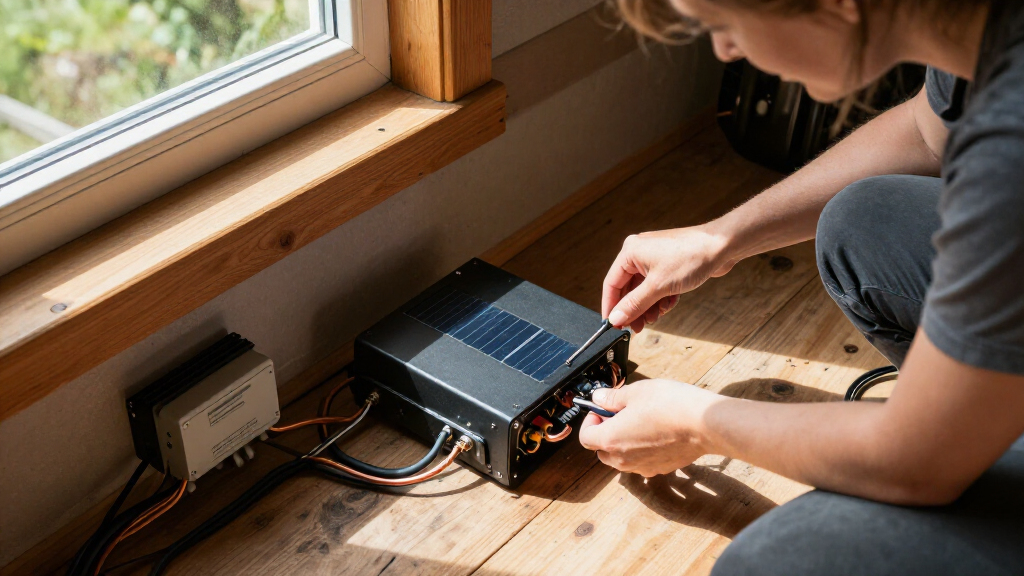
I compared the 15 listed models by the factors that shape an off-grid system: rated output, battery voltage, AC output, MPPT controller capacity, and the breadth of the intended use. I gave higher placement to models whose listed specifications suggest a practical fit for common standalone systems, including enough output headroom and a clearly stated battery and AC configuration. I also considered whether the product’s role was distinct, from a modest-load inverter to a larger 48V option.
The order reflects fit, flexibility, and the tradeoffs visible in the supplied product information, not hands-on testing. A higher wattage or larger MPPT number alone did not determine placement: buyers must also account for surge loads, PV array limits, battery compatibility, and installation complexity. Where the listing names fewer technical details, I treat that as a reason to verify the manual and system compatibility before purchase.
Factors to Consider When Choosing Off Grid Solar Inverters
I would start with the system the inverter must serve, then check that the battery, panels, and AC loads can work within its limits. These factors help avoid paying for unused capacity or building around a specification that does not match the installation.
Size for running loads and startup surges
List the appliances you expect to run at the same time, then add their continuous wattage rather than relying on the largest appliance alone. Motors in pumps, refrigerators, and compressors can draw a short startup surge that exceeds their normal running demand. Check both the inverter’s continuous rating and its surge rating in the manual; a headline wattage does not tell you how long peak output is supported. Leave headroom for loads you may add, but avoid sizing so high that the unit spends most of its time serving a fraction of its capacity. For cabins running lights and electronics, a modest inverter may be easier to pair with a battery bank than a large unit intended for workshop tools. If a critical appliance has a high surge, size around its startup behavior rather than its average energy use.
Match inverter voltage to the battery bank
Choose the battery voltage before settling on an inverter, since 12V, 24V, and 48V units are not interchangeable without a compatible battery design. At the same power, a lower-voltage system draws more current, which can call for heavier cables and careful attention to connection losses. A 48V design can make sense for higher loads or longer cable runs, though the battery bank and charge equipment must support that voltage. Do not assume that an existing 12V battery setup can simply be reused with a 24V or 48V model. Check the inverter’s permitted battery chemistry and charging profile as well as its nominal voltage. When planning a future expansion, choose a system voltage that can support the likely load without forcing a costly redesign.
Check PV limits, not just the MPPT amp rating
An MPPT controller’s charging current is only one part of solar input compatibility. The array’s open-circuit voltage, operating voltage, maximum PV wattage, and cold-weather voltage rise must all remain within the inverter’s published limits. A large amp figure does not mean every panel arrangement can be connected safely or that the controller can use the array’s full rated power. Compare panel strings with the inverter’s MPPT voltage window and maximum input voltage before wiring. If the system uses multiple roof directions or panel groups, separate MPPT inputs may help manage different array conditions, but only when the unit actually specifies independent trackers. Leave room for local temperature and panel tolerances when checking voltage limits.
Confirm AC voltage, phase, and transfer behavior
Match the inverter’s output to the appliances and circuits you intend to power. A 120V output does not directly serve a 230V appliance, and split-phase systems differ from a single AC output even when their wattage figures look similar. Check whether the inverter supports the required frequency and whether it can supply the needed voltage continuously. If the unit will also accept generator or grid input, read how its transfer function works and what happens when the source changes. Some installations need a qualified electrician to integrate the inverter with a distribution panel and backup source. Do not infer compatibility from a product name that mentions hybrid operation alone.
Plan battery storage around energy use
Inverter wattage describes how much power it can deliver at a moment; battery capacity describes how long the system can keep delivering it. Estimate daily energy use in kilowatt-hours and decide how many hours or days of autonomy matter for your location. Account for usable battery capacity, conversion losses, and the battery maker’s recommended depth of discharge. A powerful inverter paired with a small battery may run a large load briefly and then shut down, while a larger bank cannot fix an inverter that lacks surge capacity. Consider how quickly the solar array can recharge the bank after cloudy weather. Keep battery charge and discharge current limits aligned with the inverter’s operating requirements.
Weigh setup effort, protection, and support
Installation details can matter as much as the headline specifications, particularly for a permanent off-grid system. Review the manual for cable sizes, grounding, overcurrent protection, clearances, and any required external disconnects before choosing a model. Built-in protections and monitoring can make routine operation easier, but they do not replace correct system design or electrical safety practices. Check whether the manufacturer documents battery settings, fault codes, and firmware or service support for the exact model. A low-output unit may be simpler to integrate, while a high-capacity hybrid inverter can call for more planning and heavier equipment. Pay for added capability when it solves a real load, expansion, or installation need you have identified.
Frequently Asked Questions
Can I run a refrigerator and well pump from the same off-grid inverter?
Possibly, but compare both appliances’ running watts and startup surges with the inverter’s continuous and peak ratings. Pumps and compressors can start at several times their normal draw, and overlapping starts can exceed capacity even when average use seems low. Check the appliance labels or manufacturer documentation for locked-rotor or starting current. Add other loads that may run at the same time, such as lights or a freezer. If the inverter cannot handle the combined surge, stagger starts or use a larger model rated for the demand.
Should I choose a 24V or 48V inverter for a cabin system?
Base the choice on the system’s power level, cable distances, battery availability, and plans for expansion. A 48V bank generally carries less current than a 24V bank at the same output, which can ease cable and connection demands. A 24V setup can still suit a smaller system and may fit equipment you already own. Confirm that the batteries, charge controller, and inverter all use compatible voltage and charging settings. Compare the full system cost and wiring plan, not the inverter in isolation.
Does a 120A MPPT controller mean I can connect any large solar array?
No. The controller’s current rating does not override its maximum PV voltage, operating window, or permitted array wattage. Panel string voltage can rise in cold weather, so a layout that appears within range on a mild day may exceed the limit when temperatures drop. Check the exact inverter manual and calculate the array’s voltage using the panel specifications. Also confirm whether multiple inputs are independent MPPT trackers or simply connectors to the same controller. Have a qualified installer review the design if you are unsure about string configuration.
Can an off-grid hybrid inverter use a generator as backup?
Some hybrid models accept generator input, but the word “hybrid” by itself does not confirm that feature or explain how it behaves. Check the manual for supported AC input voltage and frequency, generator size, transfer operation, and battery charging limits. A generator may need stable output and adequate capacity to serve loads while charging batteries. Confirm whether the inverter prioritizes loads, charging, or source switching as you expect. Match the generator and inverter settings before connecting them, and follow the installation instructions for grounding and protection.
When is it worth choosing a higher-wattage inverter?
A higher rating is useful when measured simultaneous loads, motor startup surges, or a planned system expansion exceed the smaller unit’s safe capacity. It does not add battery runtime by itself, and it may require a larger battery bank, higher-current wiring, or more solar input to support sustained use. Estimate both peak power and daily energy before upgrading. If your loads are mostly lights and electronics, a large inverter may add capacity you rarely use. Choose extra headroom when it addresses a specific appliance or expansion plan, not simply because the number is larger.
Conclusion
For a larger standalone system that needs broad output flexibility, I would start with the ECO-WORTHY 6 kW Split-Phase All-in-One as my best overall pick. Buyers focused on a 48V system with a familiar midrange output can shortlist the Renogy 3500W as a value-minded option, while the Y&H 6.2 kW 48V or VEVOR 6400W 48V better fit buyers who need more capacity and can verify their battery and PV limits. For beginners with modest loads, the AMPINVT 1200W is the simpler scale of system to evaluate, though its lower output rules out many larger appliances. For a smaller setup seeking more headroom, compare the VEVOR 3000W; for 120V split-phase needs, prioritize the ECO-WORTHY configuration. Before deciding, verify surge rating, exact AC output, battery compatibility, and PV input limits in the model manual.
Halloween Picks
halloween
As an affiliate, we earn on qualifying purchases.