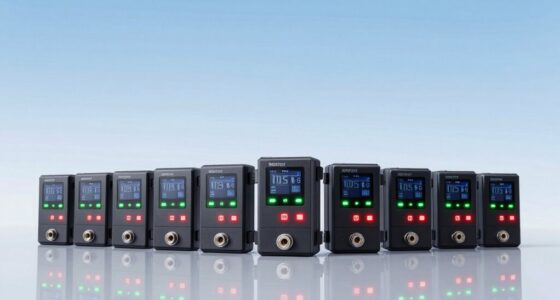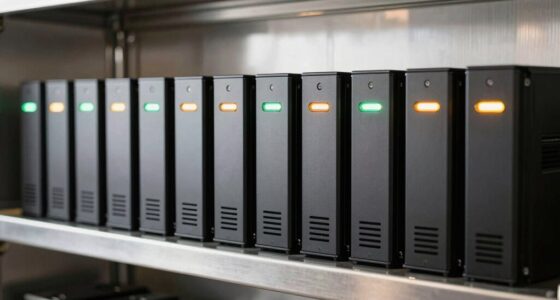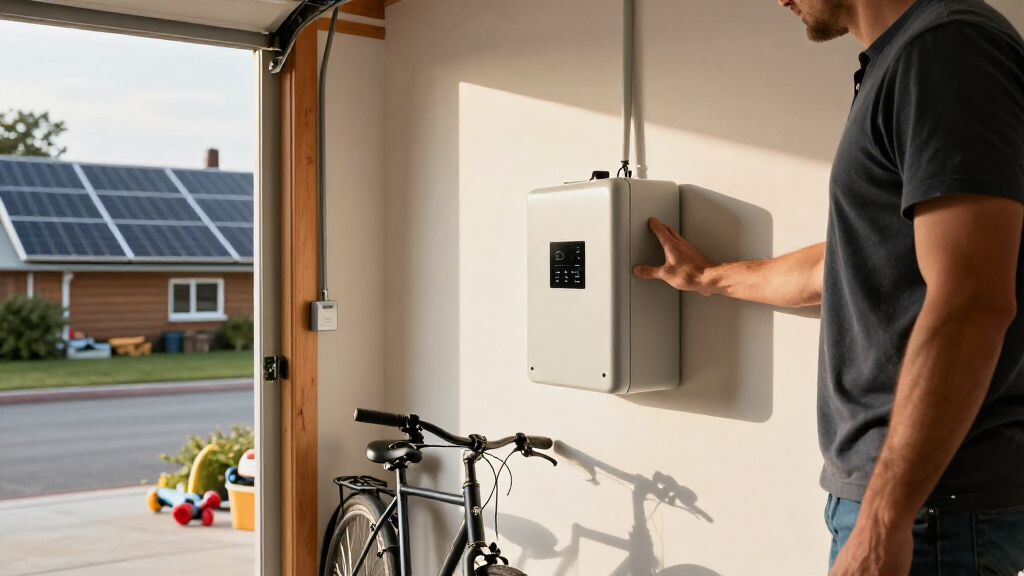
The best home energy storage batteries balance usable capacity, inverter compatibility, and installation demands—not just a large amp-hour figure. My best overall pick is the AOUSK 48V 314Ah battery, which offers 16.07kWh in a single unit; the ECO-WORTHY Cubix100 4-pack stands out for buyers who want a larger modular bank, while the Cubix100 100Ah is a simpler starting point for smaller systems. The main tradeoff is between ready-made capacity and the flexibility—or assembly work—of a multi-battery or cells-not-included setup. Keep reading for the full comparison, system-matching advice, and the buyer type each option suits best.

Get backup power and energy gear delivered free with Prime
- Fast, free delivery on millions of items
- Prime Video, Amazon Music and more included
- Member-only deals all year
Key Takeaways
- The AOUSK 16.07kWh battery leads for single-unit capacity: it offers substantial storage without requiring buyers to combine several batteries, though its size and system requirements still need checking.
- The Cubix100 lineup spans very different system sizes: the 100Ah unit suits a modest bank, the 2-pack adds capacity, and the 4-pack is aimed at buyers planning a larger installation.
- Multi-packs are not automatically the better value: they can expand storage, but require more space, suitable wiring, compatible charging, and a plan for parallel operation.
- The Powermega 2-pack and AOUSK prioritize capacity in different ways: the former is a paired-battery configuration, while the latter concentrates 16.07kWh in one battery.
- The HiXiMi box is a DIY project rather than a complete battery: cells are not included, so it is for buyers who can source cells and manage assembly, not those seeking a ready-to-use storage unit.
| AOUSK 48V 314Ah LiFePO4 16.07kWh Energy Storage Battery |  | Best Single-Battery Capacity | Battery chemistry: LiFePO4 | Nominal voltage: 51.2V | Capacity: 314Ah | VIEW LATEST PRICE | See Our Full Breakdown |
| ECO-WORTHY Cubix100 48V 200Ah LiFePO4 Server Rack Battery, 2-Pack |  | Best Certified Two-Battery Starter Set | Battery chemistry: LiFePO4 | Voltage: 51.2V | Listed capacity: 200Ah total (also described as 2 × 100Ah) | VIEW LATEST PRICE | See Our Full Breakdown |
| ECO-WORTHY Cubix100 48V 100Ah LiFePO4 Server Rack Battery |  | Best Modular Starting Point | Battery chemistry: LiFePO4 | Voltage: 51.2V | Capacity: 100Ah | VIEW LATEST PRICE | See Our Full Breakdown |
| ECO-WORTHY Cubix100 48V 400Ah LiFePO4 Server Rack Battery, 4-Pack |  | Best Large-Capacity Rack System | Battery chemistry: LiFePO4 | Quantity: 4 batteries | Voltage: 51.2V (48V nominal) | VIEW LATEST PRICE | See Our Full Breakdown |
| ECO-WORTHY Powermega 48V 314Ah LiFePO4 Battery, 2-Pack |  | Best Feature-Rich High-Capacity Set | Battery chemistry: LiFePO4 | Quantity: 2 batteries | Nominal voltage: 48V (51.2V) | VIEW LATEST PRICE | See Our Full Breakdown |
| HiXiMi 48V LiFePO4 Battery Box with 200A BMS (Cells Not Included) |  | Best for Custom DIY Builds | System voltage: 48V (51.2V nominal) | Advertised capacity: 15kWh; cells not included | Battery compatibility: LiFePO4 cells, 174 × 72 × 207 mm, 280Ah–314Ah | VIEW LATEST PRICE | See Our Full Breakdown |
| home energy storage batterie | Battery chemistry | Communication | Capacity | Warranty |
|---|---|---|---|---|
| AOUSK 48V 314Ah LiFePO4 16.07k | LiFePO4 | RS485, CAN, RS232, Bluetooth, and Wi-Fi | 314Ah | 5 years |
| ECO-WORTHY Cubix100 48V 200Ah | LiFePO4 | CAN, RS485, Bluetooth, and Wi-Fi | — | 10-year limited warranty |
| ECO-WORTHY Cubix100 48V 100Ah | LiFePO4 | CAN/RS485, Bluetooth, and Wi-Fi | 100Ah | 10-year limited warranty |
| ECO-WORTHY Cubix100 48V 400Ah | LiFePO4 | CAN/RS485, Bluetooth, and Wi-Fi | 100Ah per battery; 400Ah total | — |
| ECO-WORTHY Powermega 48V 314Ah | LiFePO4 | — | 314Ah | — |
| HiXiMi 48V LiFePO4 Battery Box | — | Bluetooth, CANbus, RS485 | — | 2 years |
More Details on Our Top Picks
AOUSK 48V 314Ah LiFePO4 16.07kWh Energy Storage Battery
The AOUSK pairs 16.07 kWh in one battery with a 200A BMS, making it a strong fit for buyers who want substantial storage without starting with a multi-battery rack. Its RS485 and CAN connections support integration with compatible inverters, while Bluetooth, Wi-Fi, display, and PC monitoring offer several ways to check system status. Compared with the ECO-WORTHY Cubix100 100Ah, it provides far more energy per unit and avoids assembling capacity from multiple smaller batteries. The tradeoff is physical: at 291 pounds, its wheels and handles help with positioning but do not make it easy to move. Inverter compatibility also needs checking before purchase, and its five-year warranty is shorter than the ECO-WORTHY Cubix100 models’ stated 10-year limited warranty.
Pros:- Provides 16.07 kWh of storage in a single battery
- 200A BMS and support for compatible inverter communication through RS485 and CAN
- Display, PC, Bluetooth, and Wi-Fi monitoring options
- Can be expanded to a parallel system of up to 15 units
Cons:- Weighs 291 pounds, making delivery and placement a substantial task
- Requires a compatible inverter for system integration
- Five-year warranty is shorter than the 10-year limited warranty stated for the ECO-WORTHY Cubix100 models
Best for: Homeowners building a compatible 48V backup or solar system who want roughly 16 kWh from a single battery and value flexible monitoring.
Not ideal for: Buyers who need a lightweight, easily carried battery, have not confirmed inverter compatibility, or prioritize a longer stated warranty.
- Battery chemistry:LiFePO4
- Nominal voltage:51.2V
- Capacity:314Ah
- Energy storage:16.07kWh
- BMS current:200A
- Cycle life:Up to 6,000 cycles at 80% state of health
- Communication:RS485, CAN, RS232, Bluetooth, and Wi-Fi
- Weight and dimensions:291 lb; 20.08 × 10.87 × 33.54 in
- Warranty:5 years
Our verdict“Choose the AOUSK if you want high capacity in one 48V battery and can accommodate its weight and inverter requirements.”
ECO-WORTHY Cubix100 48V 200Ah LiFePO4 Server Rack Battery, 2-Pack
This two-battery Cubix100 set suits buyers who prefer a paired, rack-oriented setup over one large-format battery. It lists UL9540, UL1973, and CEC certifications, plus CAN/RS485 communication and Bluetooth and Wi-Fi monitoring. The stated parallel limit of up to 32 units leaves room to build out a larger system later. Compared with the single ECO-WORTHY Cubix100 100Ah battery, this package offers a larger starting set; compared with the four-battery Cubix100 kit, it requires less system space and a smaller initial installation. A key drawback is unclear capacity information: the listing describes the set as both 200Ah total and two 100Ah batteries. At 206 pounds for the set, handling also calls for planning. I’d confirm the delivered configuration and inverter compatibility before ordering.
Pros:- Lists UL9540, UL1973, and CEC certifications
- Includes CAN/RS485 communication and Bluetooth and Wi-Fi monitoring
- Supports parallel expansion up to 32 units
- Two-battery package offers a larger starting setup than the single 100Ah Cubix100
Cons:- Capacity description is inconsistent, listing both 200Ah total and 100Ah × 2
- The 206-pound set is difficult to move and install without planning
- Rack-style dimensions may not suit installations without suitable mounting or floor space
Best for: Solar and backup buyers who want two rack-style LiFePO4 batteries, listed safety certifications, and room to expand their system.
Not ideal for: Anyone who needs unambiguous capacity specifications before buying, lacks rack space, or needs batteries that are easy to handle alone.
- Battery chemistry:LiFePO4
- Voltage:51.2V
- Listed capacity:200Ah total (also described as 2 × 100Ah)
- Certifications:UL9540, UL1973, and CEC listed
- Communication:CAN, RS485, Bluetooth, and Wi-Fi
- Maximum parallel units:32
- Weight and dimensions:206 lb; 22.09 × 19.02 × 5.63 in
- Warranty:10-year limited warranty
Our verdict“Pick this set if you want a certified, expandable two-battery rack setup, but verify its capacity details before purchase.”
ECO-WORTHY Cubix100 48V 100Ah LiFePO4 Server Rack Battery
The single Cubix100 100Ah is the most manageable entry into this lineup’s rack-battery format: its 5.12 kWh capacity lets buyers start with one unit and add up to 32 in parallel. It includes CAN/RS485 communication, Bluetooth and Wi-Fi monitoring, and installation accessories, with UL9540, UL1973, and CEC listed. Compared with the AOUSK 16.07kWh battery, this is a smaller first step that can be easier to scale in stages, but it takes multiple batteries to match the AOUSK’s storage. The compromises are practical rather than hidden: 103 pounds is still heavy for a single battery, and the rack-compatible form requires dedicated space. This is a better fit for a planned modular installation than for someone seeking high capacity from one unit.
Pros:- 5.12 kWh unit supports a staged, modular system build
- CAN/RS485 communication plus Bluetooth and Wi-Fi monitoring
- UL9540, UL1973, and CEC listed
- Includes cables, grounding wires, terminal covers, screws, and a manual
Cons:- A single unit stores much less energy than the AOUSK 16.07kWh battery
- Weighs 103 pounds, complicating solo handling
- Requires rack-compatible installation space
Best for: Homeowners or off-grid builders who want to start with one 48V rack battery and expand capacity as their system grows.
Not ideal for: Buyers seeking high storage from one battery, those without rack or floor space, or installers who need a lightweight unit.
- Battery chemistry:LiFePO4
- Voltage:51.2V
- Capacity:100Ah
- Energy:5,120Wh
- Communication:CAN/RS485, Bluetooth, and Wi-Fi
- Parallel expansion:Up to 32 units
- Certifications:UL9540, UL1973, and CEC listed
- Weight and dimensions:103 lb; 22.09 × 19.02 × 5.63 in
- Warranty:10-year limited warranty
Our verdict“Choose this Cubix100 if you want to build storage incrementally and have room for a rack-style installation.”
ECO-WORTHY Cubix100 48V 400Ah LiFePO4 Server Rack Battery, 4-Pack
With 20.48 kWh across four batteries, this Cubix100 set is the lineup’s largest stated starting system and is aimed at homes or off-grid installations that need substantial stored energy. Bluetooth and Wi-Fi monitoring and CAN/RS485 communication provide monitoring and inverter-integration options, while parallel expansion is listed up to 32 units. Compared with the single 100Ah Cubix100, this package avoids building capacity one battery at a time; compared with the AOUSK, it spreads storage across four rack batteries rather than one large unit. That modular layout can suit rack-based systems, but it takes more installation space and coordination. I’d also resolve the warranty discrepancy before buying: the specs list a three-year product warranty, while the description states a 10-year limited warranty. Multiple-package delivery may require extra logistics.
Pros:- Provides 20.48 kWh of stated total storage across four batteries
- Supports CAN/RS485 communication and Bluetooth and Wi-Fi monitoring
- Can be expanded by paralleling up to 32 units
- Includes parallel and communication cables and installation accessories
Cons:- Warranty information conflicts: specs list three years while the description states a 10-year limited warranty
- Four batteries require more installation space and setup than a single-unit option like the AOUSK
- The set may arrive in multiple packages
Best for: Homeowners and off-grid system builders who need a large 20.48 kWh starting bank and have room for four rack-style batteries.
Not ideal for: Buyers with limited installation space, those who want a single battery rather than a four-unit set, or anyone unwilling to clarify the conflicting warranty information.
- Battery chemistry:LiFePO4
- Quantity:4 batteries
- Voltage:51.2V (48V nominal)
- Capacity:100Ah per battery; 400Ah total
- Total energy storage:20.48kWh
- Certifications:UL9540, UL1973, and CEC listed
- Communication:CAN/RS485, Bluetooth, and Wi-Fi
- Parallel expansion:Up to 32 units
- Warranty information:3-year product warranty listed; 10-year limited warranty stated in description
Our verdict“Choose this four-pack for a large rack-based storage bank, after confirming the warranty terms and planning for delivery and installation.”
ECO-WORTHY Powermega 48V 314Ah LiFePO4 Battery, 2-Pack
The Powermega set targets buyers who want large-format capacity with built-in system oversight. Each battery is listed at 16.07 kWh and includes a 200A active-balancing BMS, aerosol fire suppression, and a 7-inch touchscreen, alongside Wi-Fi, Bluetooth, RS485, and CAN. Its UL 1973 certification and stated 10-year warranty add useful documentation for a long-term home backup or off-grid installation. Compared with the AOUSK 16.07kWh battery, the Powermega adds a touchscreen, active balancing, aerosol suppression, and a longer stated warranty; its two-battery package also represents a much larger installation commitment. Those features come with logistics costs: the set is large and heavy, ships by truck on a pallet, and delivery requires an address that can accommodate a truck. Confirm the site and system plan before ordering.
Pros:- Each battery is listed with 16.07 kWh of capacity
- 200A active-balancing BMS and aerosol fire suppression
- 7-inch touchscreen plus Wi-Fi and Bluetooth monitoring
- UL 1973 certification and a stated 10-year warranty
Cons:- Large, heavy equipment requires careful placement planning
- Pallet delivery by truck requires an address that can accommodate truck deliveries
- The two-battery set is a substantial installation commitment compared with the single AOUSK battery
Best for: Homeowners planning a substantial solar or backup installation who want touchscreen monitoring, added battery protections, and a stated 10-year warranty.
Not ideal for: Buyers with limited delivery access or installation space, or those who need a compact battery or a simple parcel delivery.
- Battery chemistry:LiFePO4
- Quantity:2 batteries
- Nominal voltage:48V (51.2V)
- Capacity:314Ah
- Energy capacity:16.07kWh per battery
- BMS:200A with active cell balancing
- Certification and warranty:UL 1973 certified; 10-year warranty
- Monitoring and communication:7-inch HD touchscreen, Wi-Fi, Bluetooth, RS485, CAN, and RS232
- Parallel expansion:Up to 15 units
Our verdict“Choose the Powermega set if you need a large system with hands-on and remote monitoring and can handle its truck delivery and installation demands.”
HiXiMi 48V LiFePO4 Battery Box with 200A BMS (Cells Not Included)
I’d choose the HiXiMi battery box when flexibility matters more than getting a ready-to-connect battery. It includes a 16S 200A BMS, enclosure, busbars, and assembly accessories, but you must source compatible LiFePO4 cells separately. The advertised 15kWh capacity depends on the cells you install; this is not a complete 15kWh battery out of the box. Compared with the AOUSK 48V 314Ah, which arrives as a finished battery, HiXiMi asks more of the buyer but allows a hands-on pack build. Its Bluetooth, CANbus, and RS485 connections support monitoring and system integration, while the steel-aluminum case provides a dedicated enclosure. The tradeoffs are cell-sourcing and assembly work, plus a two-year warranty and wheels only on the white case model.
Pros:- Includes a 16S 200A BMS with overcharge, over-discharge, over-current, short-circuit, and temperature protection.
- Bluetooth, CANbus, and RS485 support monitoring and system communication.
- Case, busbars, monitor, wiring, and assembly accessories are included for a custom build.
- Compatible with specified 174 × 72 × 207 mm LiFePO4 cells rated from 280Ah to 314Ah.
Cons:- Battery cells are not included, so the box is not usable as a complete storage battery on arrival.
- The buyer must handle cell selection and pack assembly, unlike with the finished AOUSK 48V 314Ah battery.
- Wheels are available on the white model but not the black model, and the warranty is two years.
Best for: DIY solar and backup-power builders who can source the specified cells and want a 48V pack enclosure with a capable BMS and communications options.
Not ideal for: Buyers who need a complete, ready-to-install battery, lack experience assembling battery packs, or want capacity guaranteed without separately selecting cells.
- System voltage:48V (51.2V nominal)
- Advertised capacity:15kWh; cells not included
- Battery compatibility:LiFePO4 cells, 174 × 72 × 207 mm, 280Ah–314Ah
- BMS:16S, 200A, with temperature protection
- Communication:Bluetooth, CANbus, RS485
- Case material:Steel-aluminum alloy
- Included components:Empty case, epoxy plate, BMS, communication board, monitor, EVA foam, internet cable, screws, busbars, M6 socket wrench
- Warranty:2 years
Our verdict“Pick HiXiMi if you can source and assemble compatible cells for a customizable 48V system; choose a complete battery instead if you want storage ready to install.”
How We Picked
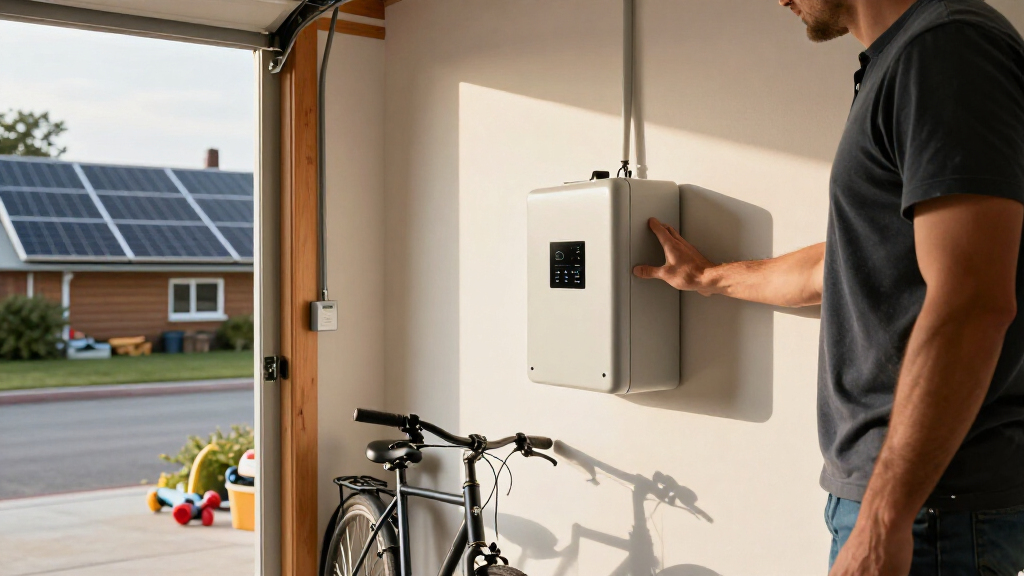
I ranked these options around the needs of home backup and solar storage: stated capacity, system expandability, practical setup demands, and how clearly each configuration fits a distinct buyer. A larger capacity can support more loads or longer backup, but only when the inverter, battery management system, wiring, and installation are suited to it. I also separated complete battery products from the HiXiMi battery box, because its cells-not-included design shifts substantial sourcing and assembly work to the buyer.
The ranking favors options with a clear use case and less guesswork for a typical home system, while recognizing that multi-packs may make more sense for buyers who need a larger bank. The AOUSK takes the lead for its stated single-unit capacity; the Cubix100 products rank by the scale and flexibility of their configurations. The HiXiMi is a specialist option rather than a direct plug-in alternative. Before buying any of them, I would confirm voltage, inverter compatibility, charge limits, installation requirements, and manufacturer guidance; the listed specs alone do not establish compatibility with every home system.
| home energy storage batterie | Communication | Parallel expansion |
|---|---|---|
| AOUSK 48V 314Ah LiFePO4 16.07k | RS485, CAN, RS232, Bluetooth, and Wi-Fi | — |
| ECO-WORTHY Cubix100 48V 200Ah | CAN, RS485, Bluetooth, and Wi-Fi | — |
| ECO-WORTHY Cubix100 48V 100Ah | CAN/RS485, Bluetooth, and Wi-Fi | Up to 32 units |
| ECO-WORTHY Cubix100 48V 400Ah | CAN/RS485, Bluetooth, and Wi-Fi | Up to 32 units |
| ECO-WORTHY Powermega 48V 314Ah | — | Up to 15 units |
| HiXiMi 48V LiFePO4 Battery Box | Bluetooth, CANbus, RS485 | — |
Factors to Consider When Choosing Best Home Energy Storage Batteries
Choosing a battery starts with the loads and system you need to support, not the largest capacity on a product page. I would work through these checks before deciding between a single large unit, a multi-pack, or a DIY battery box.
Match usable storage to the loads you need to back up
List the essential circuits you want to run and estimate their energy use over the outage period you care about. A refrigerator, lights, and communications equipment create a very different demand from electric cooking, space heating, or a well pump. Do not treat the battery’s stated capacity as a promise that every appliance can run at once; inverter output and surge capability also limit what the system can power. Ask the installer or supplier for usable capacity and expected runtime under your intended loads. A larger bank may extend runtime, but it cannot compensate for an inverter that cannot handle the required power.
Check voltage and inverter compatibility before comparing capacity
These products are 48V-class batteries, but that label alone does not prove compatibility with a particular inverter or solar charge controller. Confirm the supported battery voltage range, charging parameters, communication protocol, and approved battery list for your equipment. A mismatch can limit monitoring or charging behavior, and it may affect warranty coverage. Also check whether the system expects CAN or RS485 communication, or supports operation without battery communications. Resolve these details before selecting a multi-pack, since adding units can make system setup more involved.
Choose between one large battery and several smaller units
A single high-capacity battery can reduce the number of connections and simplify a system layout, while smaller units may offer more flexibility in how capacity is added. Multi-battery setups need suitable parallel support, consistent configuration, adequate cabling, and enough physical room for safe installation. Do not assume batteries can be mixed freely because their voltage labels match; confirm manufacturer guidance on combining models, ages, or capacities. A multi-pack can also mean more components and more points to inspect. Decide whether future expansion matters enough to accept that added planning.
Separate battery capacity from power delivery
Capacity, often expressed in kWh or derived from voltage and amp-hours, indicates stored energy; it does not tell you how much power can be delivered at one moment. For a home backup system, check continuous discharge current, peak output duration, and inverter limits against the appliances you intend to start. Pumps and compressors can draw a brief surge well above their normal running demand. A battery with ample stored energy may still be a poor fit for high-starting-load equipment if the system cannot supply that surge. Ask for the complete battery-and-inverter output specification, not just the battery capacity.
Treat cells-not-included products as a build project
A battery box without cells is not equivalent to a finished storage battery. The buyer must source compatible cells and account for cell matching, assembly, protection settings, enclosure requirements, and safe commissioning. This route may appeal to experienced builders who want control over component selection, but it adds technical and safety responsibilities that a complete battery avoids. Confirm what the BMS manages and what protection or monitoring remains the builder’s responsibility. If you need a straightforward backup system, compare complete batteries and professional installation before choosing a DIY route.
Plan for installation, environment, and service access
Before ordering, check the battery’s permitted operating temperatures, enclosure rating, mounting requirements, and ventilation or clearance guidance. A garage, utility room, and outdoor location can expose equipment to very different heat, cold, moisture, and dust conditions. Leave enough access to inspect terminals and service the system, especially when installing several rack batteries together. Confirm local electrical rules, permits, and whether a qualified installer is required for the intended setup. Installation constraints can rule out a seemingly attractive capacity before the battery reaches your home.
Frequently Asked Questions
Is the AOUSK 16.07kWh battery enough for whole-home backup?
Its stated capacity is substantial, but capacity alone cannot determine whether it can run an entire home. The answer depends on household energy use, outage length, inverter output, and which high-demand appliances must operate together. Heating, cooking, air conditioning, and well pumps can draw heavily or require a large startup surge. Ask for a load calculation based on the circuits you plan to back up and confirm the battery’s usable energy and discharge limits. Many homes get a more practical result by backing up selected essential circuits.
Can I add another battery later to a Cubix100 system?
Possibly, but expansion depends on the battery maker’s rules and the inverter’s supported configuration. Confirm whether the exact Cubix100 model can operate in parallel, how many units are supported, and whether new and existing batteries can be combined. Differences in age, state of charge, or configuration can affect how a bank behaves, so follow the manufacturer’s commissioning instructions rather than simply connecting another unit. Check cable, fuse, and busbar requirements before planning an expansion. If future growth is important, get the full system design in writing before buying the first battery.
What should I verify before buying a 2-pack or 4-pack?
First confirm the pack’s total capacity and whether the batteries are intended to operate together with your inverter. Then check the allowable parallel configuration, communication setup, charging limits, and required protective equipment. Measure the installation space and account for cabling, clearances, and access to each unit. A larger pack can extend backup time, but it does not necessarily increase the system’s power output unless the inverter and battery arrangement support that change. Ask the seller or installer to specify the expected usable capacity and output of the complete system.
Is the HiXiMi battery box a good choice for a first home battery?
Usually not if you want a ready-to-install storage battery. The HiXiMi box is sold without cells, so the buyer must source compatible cells and handle assembly and system setup. Its 200A BMS is a component specification, not a substitute for confirming cell compatibility, inverter settings, protection, and safe installation. For a first system, a complete battery such as one of the AOUSK or ECO-WORTHY options is generally a more direct route, subject to compatibility checks. The HiXiMi makes more sense for a technically capable builder who understands the additional responsibilities.
Should I choose one large battery or multiple smaller batteries for outages?
Choose based on your space, system design, and expansion plans rather than capacity alone. One large unit, such as the AOUSK, concentrates substantial stated storage in a single product, while the Cubix100 packs use several batteries to reach larger bank configurations. Multiple units can make capacity planning more modular, but add connections and installation checks. One unit may simplify the physical layout, though it does not automatically provide redundancy or sufficient power for every load. Compare the complete installed system, including inverter limits and backup circuits, before deciding.
Conclusion
For most buyers comparing these six options, I would start with the AOUSK 48V 314Ah as the best overall choice for its stated 16.07kWh in one battery. The best value direction is the ECO-WORTHY Cubix100 100Ah for buyers who need a smaller system rather than paying for capacity they will not use; verify system compatibility before purchase. For a larger installation, the Cubix100 4-pack is my best premium-scale pick, while the 2-pack suits buyers seeking a middle ground. Beginners should favor a complete battery with a clear installation and compatibility path, not the HiXiMi box, which requires separate cells and DIY assembly. Choose the HiXiMi only for a specific build project; whichever route you take, match the battery to your inverter, backup loads, and installation conditions before ordering.
Halloween Picks
halloween
As an affiliate, we earn on qualifying purchases.