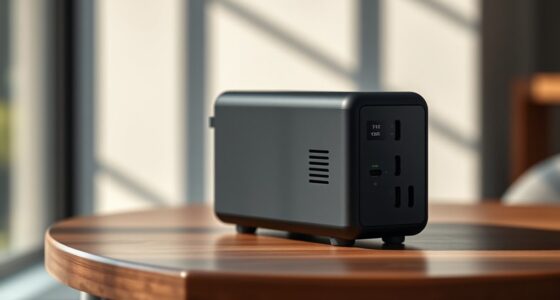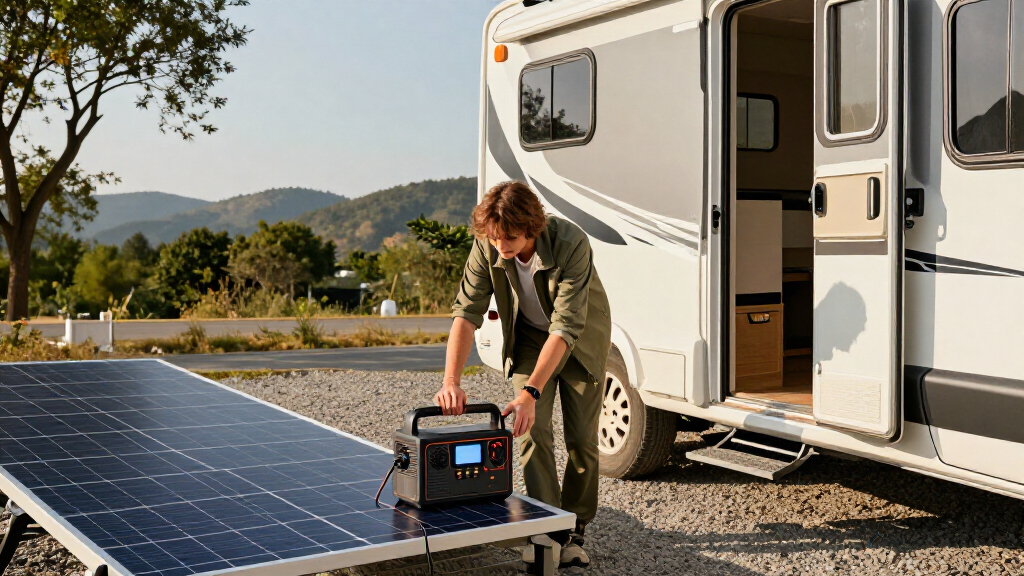
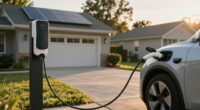
The Anker SOLIX F3000 is my best overall pick among the best RV solar generators, pairing 3,072Wh of capacity with substantial output for longer trips and heavier loads. The BLUETTI Elite 400 stands out for travelers who want 3,840Wh and included solar panels, while the Jackery Solar Generator 1000 V2 is a more manageable choice for lighter needs. The main tradeoff is between capacity and portability: larger stations can run more gear for longer, but take more space and effort to move. Solar panel wattage, appliance startup demands, and how you plan to recharge also affect whether a unit suits your RV routine. Read on for the full breakdown, ranking logic, and guidance on choosing a setup that matches your loads.

Get backup power and energy gear delivered free with Prime
- Fast, free delivery on millions of items
- Prime Video, Amazon Music and more included
- Member-only deals all year
Complete the kit


Key Takeaways
Capacity alone does not determine RV fit. The F3000 leads as a balanced large-capacity pick, while the 3,840Wh Anker SOLIX F3800 and BLUETTI Elite 400 better suit buyers who put extended runtime ahead of easier handling.
Included panel kits vary widely. Several bundles include two 200W panels, but the Jackery Explorer 300 bundle pairs a much smaller 40W panel with a compact station, making it better for modest charging needs than sustained RV power.
The 1,024Wh models serve a different trip style. The BLUETTI Elite 100 V2 and EF ECOFLOW DELTA 3 Classic are more suited to essentials and shorter stays than large loads or several days of heavy use.
Mid-size capacity can be the practical compromise. The Anker SOLIX C2000 Gen 2 and BLUETTI Elite 200 V2 offer around 2,000Wh, avoiding the bulk of the largest stations while providing more reserve than the 1,000Wh class.
A solar generator is not automatically a whole-RV power solution. Buyers still need to match inverter output, appliance startup draw, panel input, connectors, and available storage space to their own RV setup.
| Anker SOLIX F3000 Portable Power Station, 3,072Wh |  | Best for Expandable RV Backup | Battery capacity: 3,072Wh | Battery type: LiFePO4 | Output wattage: 3,600W | VIEW LATEST PRICE | See Our Full Breakdown |
| Anker SOLIX C2000 Gen 2 Portable Power Station, 2,048Wh, 2,400W |  | Best for Portable High-Output Power | Battery capacity: 2,048Wh | Battery type: LiFePO4 | Peak output: 4,000W | VIEW LATEST PRICE | See Our Full Breakdown |
| EF ECOFLOW DELTA 3 Ultra 3072Wh Solar Generator with Two 220W Solar Panels |  | Best Solar-Ready High-Capacity Bundle | Battery capacity: 3,072Wh | Battery type: LiFePO4 | Continuous output: 3,600W | VIEW LATEST PRICE | See Our Full Breakdown |
| BLUETTI Elite 100 V2 Portable Power Station with 200W Solar Panel, 1024Wh |  | Best for Quiet, Compact RV Setups | Capacity: 1,024Wh | Power Lifting output: 2,700W | Included solar panel: 200W | VIEW LATEST PRICE | See Our Full Breakdown |
| Jackery Solar Generator 1000 V2 with 200W Solar Panel |  | Best Lightweight Solar Kit | Battery capacity: 1,070Wh | Battery type: LiFePO4 | AC output: 1,500W | VIEW LATEST PRICE | See Our Full Breakdown |
| BLUETTI Elite 300 Solar Generator with Two 200W Solar Panels |  | Best RV-Ready Mid-Size Pick | Battery capacity: 3,014Wh | Battery chemistry: LiFePO4 | Battery cycle life: 6,000+ cycles | VIEW LATEST PRICE | See Our Full Breakdown |
| Jackery HomePower 3600 Plus Portable Power Station with 2 200W Solar Panels |  | Best for High-Draw RV Loads | Battery capacity: 3,584Wh | AC output: 3,600W | Expandable capacity: Up to 21kWh per unit or 43kWh with multiple units | VIEW LATEST PRICE | See Our Full Breakdown |
| Jackery Explorer 2000 v2 Portable Power Station with Two 200W Solar Panels |  | Best Compact 2kWh Option | Battery capacity: 2,042Wh | Battery type: LiFePO4 | AC output: 2,200W | VIEW LATEST PRICE | See Our Full Breakdown |
| Jackery HomePower 3000 Portable Power Station with Two 200W Solar Panels |  | Best High-Output RV Station | Battery capacity: 3,072Wh | Battery type: LiFePO4 | AC output: 3,600W | VIEW LATEST PRICE | See Our Full Breakdown |
| Jackery Explorer 300 Portable Power Station with 40W Solar Panel |  | Best Compact Auxiliary Pick | Capacity: 292Wh | Peak surge: 600W | Battery chemistry: LiFePO4 | VIEW LATEST PRICE | See Our Full Breakdown |
| Anker SOLIX F3800 Portable Power Station, 3,840Wh |  | Best for High-Power RV Setups | Battery capacity: 3.84kWh | Expandable capacity: Up to 26.9kWh with up to 6 additional battery packs | AC output: 6,000W | VIEW LATEST PRICE | See Our Full Breakdown |
| ZeroKor 300W Portable Power Station with 60W Solar Panel | 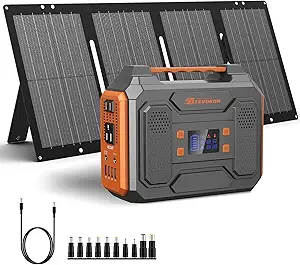 | Best for Small RV Essentials | Maximum output: 300W | Included solar panel: 60W monocrystalline | Panel conversion efficiency: 20.5% | VIEW LATEST PRICE | See Our Full Breakdown |
| BLUETTI Elite 400 Solar Generator with Two 200W Solar Panels, 3840Wh |  | Best Large-Capacity Solar Kit | Battery capacity: 3,840Wh | Battery type: LiFePO4 | Running output: 2,600W | VIEW LATEST PRICE | See Our Full Breakdown |
| BLUETTI Elite 200 V2 Solar Generator with Two 200W Solar Panels, 2073.6Wh |  | Best for High Output in a Smaller Package | Battery capacity: 2,073.6Wh | Battery type: LiFePO4 | Continuous AC output: 2,600W | VIEW LATEST PRICE | See Our Full Breakdown |
| EF ECOFLOW DELTA 3 Classic Solar Generator with 110W Solar Panel, 1024Wh |  | Best Compact All-Rounder | Battery capacity: 1,024Wh | Battery type: LiFePO4 | AC output: 1,800W | VIEW LATEST PRICE | See Our Full Breakdown |
| RV solar generator | Battery capacity | Battery type |
|---|---|---|
| Anker SOLIX F3000 Portable Pow | 3,072Wh | LiFePO4 |
| Anker SOLIX C2000 Gen 2 Portab | 2,048Wh | LiFePO4 |
| EF ECOFLOW DELTA 3 Ultra 3072W | 3,072Wh | LiFePO4 |
| BLUETTI Elite 100 V2 Portable | — | — |
| Jackery Solar Generator 1000 V | 1,070Wh | LiFePO4 |
| BLUETTI Elite 300 Solar Genera | 3,014Wh | — |
| Jackery HomePower 3600 Plus Po | 3,584Wh | — |
| Jackery Explorer 2000 v2 Porta | 2,042Wh | LiFePO4 |
| Jackery HomePower 3000 Portabl | 3,072Wh | LiFePO4 |
| Jackery Explorer 300 Portable | — | — |
| Anker SOLIX F3800 Portable Pow | 3.84kWh | LFP |
| ZeroKor 300W Portable Power St | — | — |
| BLUETTI Elite 400 Solar Genera | 3,840Wh | LiFePO4 |
| BLUETTI Elite 200 V2 Solar Gen | 2,073.6Wh | LiFePO4 |
| EF ECOFLOW DELTA 3 Classic Sol | 1,024Wh | LiFePO4 |
More Details on Our Top Picks
Anker SOLIX F3000 Portable Power Station, 3,072Wh
The F3000 suits RV owners who want a large base battery now and room to build a much bigger backup system later. Its 3,072Wh capacity and 3,600W output can handle more demanding loads than the smaller Jackery Solar Generator 1000 V2, while expansion to 24kWh gives it a path toward longer off-grid stays. Solar input reaches 2,400W, and generator charging adds another way to replenish power when sunlight is limited. The tradeoff is portability: at 91.5 pounds, this is better treated as a mostly stationary RV power hub than a unit to carry around camp. Its 240V capability also requires a second power station, so buyers needing that output must plan for a two-unit setup.
Pros:- 3,072Wh battery and 3,600W output support larger RV loads than compact 1kWh-class options.
- Expandable capacity up to 24kWh allows a much larger backup setup.
- Up to 2,400W solar input and generator charging provide multiple recharge paths.
- Can provide 240V output when paired with a second power station.
Cons:- At 91.5 pounds, it is cumbersome to move between a vehicle and campsite.
- 240V output requires a second power station rather than working from the unit alone.
Best for: RV owners who want a high-output power station with substantial capacity expansion for longer stays or backup use.
Not ideal for: Travelers who need a power station they can lift and move often, or buyers who need 240V output from a single unit.
- Battery capacity:3,072Wh
- Battery type:LiFePO4
- Output wattage:3,600W
- Expandable capacity:Up to 24kWh
- Maximum solar input:2,400W
- Weight:91.5 lbs
- Outlets:11
- Dimensions:25.6 × 11.8 × 14.8 in
Our verdict“Choose the F3000 if you want an expandable, high-output RV power hub and can accommodate its weight.”
Anker SOLIX C2000 Gen 2 Portable Power Station, 2,048Wh, 2,400W
The C2000 Gen 2 makes a strong case for RVers who need substantial output but do not want to manage a 90-pound power station. At 41.7 pounds, it is far easier to reposition than the Anker SOLIX F3000, yet its 2,400W rated output and 4,000W peak can handle demanding appliances with startup surges. Its 2,048Wh battery can expand to 4kWh, though that remains well below the F3000’s 24kWh ceiling. Fast AC-and-solar recharging is listed at 58 minutes, and 800W alternator charging offers a useful route to recharge while driving. The main limitation for campsite setups is that the provided data lists only one total power outlet, which can restrict how many AC devices you connect directly.
Pros:- 2,400W rated output and 4,000W peak output support loads with substantial startup demand.
- At 41.7 pounds, it is much easier to move than the Anker SOLIX F3000.
- Capacity expands to 4kWh with an expansion battery.
- Supports 800W alternator charging and fast AC-and-solar recharging.
Cons:- Expansion battery is required to reach the 4kWh maximum capacity.
- Only one total power outlet is listed, limiting direct AC connections.
Best for: RVers who need high appliance output and a comparatively manageable unit for moving between vehicle, campsite, and storage.
Not ideal for: Campers who need several AC outlets at once or want a power system expandable well beyond 4kWh.
- Battery capacity:2,048Wh
- Battery type:LiFePO4
- Peak output:4,000W
- Expandable capacity:Up to 4kWh
- Alternator charging:800W; listed full charge in 3 hours
- Weight:41.7 lb
- Warranty:5 years
Our verdict“Pick the C2000 Gen 2 if you want strong output in a more portable package and can work around its limited listed outlet count.”
EF ECOFLOW DELTA 3 Ultra 3072Wh Solar Generator with Two 220W Solar Panels
The DELTA 3 Ultra stands out for buyers who want a large-capacity RV power station with panels included, rather than sourcing solar hardware separately. Its 3,072Wh battery, 3,600W continuous output, and 7,200W surge rating put it in a more demanding-load class than the BLUETTI Elite 100 V2, while the included pair of 220W panels gives RVers a starting point for solar charging. It also offers wall, car, and generator charging, plus under-10ms UPS switching for connected equipment that needs a quick backup handoff. The listed 25dB under-load noise figure favors quiet campsites. Its panels ship separately from the power station, and the supplied data lists a one-hour runtime, so buyers should not treat that figure as a guide to typical RV use.
Pros:- 3,072Wh capacity and 3,600W continuous output suit larger loads than 1kWh-class stations.
- Includes two 220W solar panels to start building a solar-charging setup.
- Under-10ms UPS switching supports sensitive connected equipment during a power interruption.
- Accepts wall, solar, car, and EcoFlow Smart Generator charging.
Cons:- Solar panels and power station ship in separate packages.
- The supplied product data lists a one-hour runtime, which gives limited guidance for planning real RV loads.
Best for: RV owners seeking a high-capacity, high-output system with solar panels included and several ways to recharge.
Not ideal for: Buyers who need a compact, light unit or want all components delivered together in one package.
- Battery capacity:3,072Wh
- Battery type:LiFePO4
- Continuous output:3,600W
- Surge output:7,200W
- Solar panels:2 × 220W
- UPS switching time:Under 10ms
- Noise level:25dB under load
- Power outlets:6
Our verdict“Choose the DELTA 3 Ultra if you want substantial output and included solar panels, and can plan around separate deliveries.”
BLUETTI Elite 100 V2 Portable Power Station with 200W Solar Panel, 1024Wh
For RVers who value a smaller, quieter setup over long appliance runtimes, the Elite 100 V2 is a more practical fit than the larger Anker SOLIX F3000. It provides 1,024Wh and 1,800W rated AC output, with a 200W solar panel included to get solar charging started. The 10ms UPS switchover can help keep connected devices powered through an interruption, while Wi-Fi and Bluetooth add app control. Its LiFePO4 battery is rated for over 4,000 cycles to 80% capacity, and silent mode is listed at 30dB. The compromise is capacity: compared with the Jackery Solar Generator 1000 V2, it sits in a similar small-system class, not the range for running high-demand appliances or covering long stretches without recharging. The panel ships separately.
Pros:- Includes a 200W solar panel, giving buyers a starting point for solar charging.
- 1,800W rated AC output provides more headroom than many small power stations.
- 10ms UPS switchover and app connectivity suit backup and monitoring needs.
- LiFePO4 battery is rated for over 4,000 cycles to 80% capacity.
Cons:- 1,024Wh capacity limits runtime compared with the 3,072Wh Anker SOLIX F3000.
- The solar panel ships separately from the power station.
- The listed 70-minute AC recharge relies on TurboBoost charging.
Best for: Solo RV travelers and couples who want a quiet, modest-capacity power station for electronics and lighter appliance loads.
Not ideal for: Families or off-grid RVers who need multi-day capacity or plan to run several high-demand appliances.
- Capacity:1,024Wh
- Power Lifting output:2,700W
- Included solar panel:200W
- Maximum solar input:1,000W
- UPS switchover:10ms
- Battery chemistry:LiFePO4
Our verdict“Pick the Elite 100 V2 for a quiet, compact RV setup with included solar hardware, not for extended high-load power.”
Jackery Solar Generator 1000 V2 with 200W Solar Panel
The Jackery Solar Generator 1000 V2 is a sensible match for RVers who want a solar-ready kit that is easier to lift and store than the larger stations in this group. At 23.8 pounds, it is much lighter than the BLUETTI Elite 100 V2 class of setup and a fraction of the weight of the Anker SOLIX F3000. Its 1,070Wh battery supplies 1,500W AC output, with a 3,000W surge peak for brief startup demands, and the included 200W panel supports solar charging. Three pure sine wave AC outlets plus USB-C and USB-A ports make it useful for a mix of RV gear and personal devices. The tradeoff is modest capacity for extended off-grid use, and the one-hour charging claim requires emergency charging to be enabled in the app.
Pros:- At 23.8 pounds, it is easier to lift and store than the Anker SOLIX F3000.
- Includes a 200W solar panel for a ready-to-start solar setup.
- 1,500W AC output and 3,000W surge peak support a range of smaller RV appliances.
- Three AC outlets, USB-C, and USB-A ports accommodate different devices.
Cons:- 1,070Wh capacity is limited for long off-grid stays or repeated high-load use.
- One-hour charging requires enabling emergency charging in the app.
- The solar panel and power station ship separately.
Best for: RVers who prioritize low carrying weight and want a bundled solar panel for weekend trips and device charging.
Not ideal for: Travelers who need multi-day power for larger appliances or want the largest capacity and output in this lineup.
- Battery capacity:1,070Wh
- Battery type:LiFePO4
- AC output:1,500W
- Surge peak:3,000W
- Solar panel:200W
- Weight:23.8 lbs
- AC outlets:3 pure sine wave
- USB ports:2 USB-C, 1 USB-A
Our verdict“Choose the Jackery 1000 V2 if low weight and an included solar panel matter more than extended runtime.”
BLUETTI Elite 300 Solar Generator with Two 200W Solar Panels
The Elite 300 pairs a 3,014Wh LiFePO4 battery with a TT-30 RV outlet and 12V/30A DC port, so connecting common RV loads is more straightforward than with a station that lacks dedicated RV connections. Its 2,400W output and 4,800W surge capacity give it room for appliances with brief startup demands, while the included two 200W panels provide a solar option without requiring a separate panel purchase. Compared with the higher-output Jackery HomePower 3000, this BLUETTI has less AC output, but its RV-specific ports make the fit clearer for campsite use. The tradeoff is recharge pace: solar charging is listed at about 7–15 hours, and the panels ship separately, so the kit may not arrive all at once. I’d choose it for RV connection convenience over maximum output.
Pros:- TT-30 RV outlet and 12V/30A DC port suit common RV power connections.
- 3,014Wh LiFePO4 capacity provides a sizeable reserve for off-grid use.
- 2,400W output with 4,800W surge capacity supports loads with startup spikes.
- Includes two 200W solar panels.
Cons:- Solar charging is listed at about 7–15 hours, which can mean a long wait between uses.
- The power station and panels ship separately, so the complete kit may arrive in separate packages.
- Its 2,400W output is lower than the Jackery HomePower 3000’s 3,600W output.
Best for: RV owners who want a dedicated TT-30 connection, substantial battery capacity, and included panels for off-grid charging.
Not ideal for: Travelers who need the fastest solar replenishment or higher AC output for several demanding appliances; the listed solar charge time can reach 15 hours.
- Battery capacity:3,014Wh
- Battery chemistry:LiFePO4
- Battery cycle life:6,000+ cycles
- AC output:2,400W
- Surge output:4,800W
- Solar panels:2 × 200W
- RV connection:TT-30 outlet
- DC port:12V/30A
Our verdict“Choose the Elite 300 if dedicated RV ports and a generous battery matter more than the higher output or faster recharging of larger alternatives.”
Jackery HomePower 3600 Plus Portable Power Station with 2 200W Solar Panels
Among these five, the HomePower 3600 Plus offers the most AC output: 3,600W from a 3,584Wh LFP battery. That headroom is useful when an RV setup needs to run more demanding equipment or several loads together, while expansion options let capacity grow beyond the built-in battery. It also accepts AC, solar, gas-generator, and hybrid charging, making it less dependent on sunny travel days than the Jackery Explorer 2000 v2, which lists AC and solar charging. The compromise is portability: at 77.2 lb, it is heavy even with wheels and a telescopic handle, so moving it into position takes more effort than handling the 39.5 lb Explorer 2000 v2. The two 200W panels are included in the kit but may ship separately. This is the capacity-and-output choice, not the easy-lift choice.
Pros:- 3,600W output and 3,584Wh capacity suit demanding RV power needs.
- Expandable capacity supports larger backup needs beyond the built-in battery.
- AC, solar, gas-generator, and hybrid charging provide several ways to replenish it.
- Wheels and a telescopic handle help with rolling the heavy unit.
Cons:- At 77.2 lb, it is substantially heavier than the Jackery Explorer 2000 v2.
- The power station and panels may arrive in separate packages.
- Its size and weight make frequent lifting into an RV or storage compartment less convenient.
Best for: RV owners with high-draw appliances who want strong AC output, multiple charging methods, and the option to expand capacity.
Not ideal for: Solo travelers who frequently lift their generator into a vehicle or need a lighter station; the 77.2 lb unit is cumbersome despite its wheels.
- Battery capacity:3,584Wh
- AC output:3,600W
- Expandable capacity:Up to 21kWh per unit or 43kWh with multiple units
- Battery chemistry:LFP
- Battery cycle life:6,000 cycles
- Charging options:AC, solar, gas generator, and hybrid AC+DC
- Solar panels:2 × 200W
- Weight:77.2 lb
- Dimensions:19.3 × 15.2 × 12.2 in
Our verdict“Pick the HomePower 3600 Plus when high output and expandable capacity outweigh the hassle of moving a 77.2 lb station.”
Jackery Explorer 2000 v2 Portable Power Station with Two 200W Solar Panels
The Explorer 2000 v2 offers a useful middle ground for RVers who want around 2kWh of storage without stepping up to the heavier, higher-capacity Jackery HomePower 3600 Plus. Its 2,042Wh LiFePO4 battery and 2,200W AC output cover a broad range of everyday electronics and appliances, while the 39.5 lb station is easier to handle than the HomePower 3600 Plus at 77.2 lb. The 20ms UPS switching adds value for buyers who also want backup for sensitive equipment when shore power drops. Three AC ports and a 100W USB-C PD port help serve different devices, but the supplied panels total only 400W and solar charging is listed at about six hours. Buyers seeking longer reserves or stronger output should compare it with the larger HomePower 3000.
Pros:- 2,042Wh LiFePO4 battery balances capacity with a 39.5 lb station weight.
- 2,200W AC output supports a range of common RV loads.
- 20ms UPS switching helps maintain power to connected equipment during an interruption.
- Two 200W solar panels are included.
Cons:- Solar charging takes about six hours with the included 400W of panels.
- Its capacity and output are below those of the Jackery HomePower 3600 Plus and HomePower 3000.
- The station and solar panels may ship separately.
Best for: RVers who want a relatively manageable 2kWh station for everyday appliances, device charging, and backup power.
Not ideal for: Travelers who need multi-day capacity for high-draw appliances or faster solar replenishment; 2,042Wh and 400W of panels may be limiting.
- Battery capacity:2,042Wh
- Battery type:LiFePO4
- AC output:2,200W
- AC ports:3
- USB-C PD output:100W
- Solar panels:2 × 200W
- Solar charging time:About 6 hours with 400W panels
- UPS switching time:20ms
- Power station weight:39.5 lb
Our verdict“Choose the Explorer 2000 v2 for a more manageable 2kWh setup with UPS support, but step up to a larger Jackery for longer or heavier loads.”
Jackery HomePower 3000 Portable Power Station with Two 200W Solar Panels
The HomePower 3000 combines a 3,072Wh battery with 3,600W AC output and a 7,200W surge rating, giving it more output headroom than the BLUETTI Elite 300 while keeping a dedicated TT-30 RV outlet. That pairing makes it a strong fit for RVers who want to connect at the trailer and run higher-draw equipment. It can recharge by AC, hybrid AC/DC, solar, car, or gas generator, and its ≤20ms UPS switching adds a backup-power role beyond camping. The 59.5 lb weight is easier to manage than the Jackery HomePower 3600 Plus’s 77.2 lb, though still a substantial lift. One tradeoff is battery longevity: its rating is 4,000 cycles to 70% capacity, below the 6,000-cycle ratings listed for the Elite 300 and HomePower 3600 Plus. Panels ship separately.
Pros:- 3,600W AC output and 7,200W surge capacity offer substantial power headroom.
- TT-30 RV outlet supports a direct RV connection.
- AC, hybrid AC/DC, solar, car, and gas-generator charging give multiple replenishment options.
- UPS switching within 20ms can support connected equipment during power interruptions.
Cons:- At 59.5 lb, it is a heavy unit to lift or reposition.
- The battery is rated for 4,000 cycles to 70% capacity, fewer cycles than the Elite 300’s stated 6,000+.
- The solar panels and station ship separately.
Best for: RV owners who need a TT-30 connection, high AC output, and several ways to recharge during trips or outages.
Not ideal for: Buyers who prioritize lower carry weight or the longer stated cycle life of the BLUETTI Elite 300; this unit weighs 59.5 lb and is rated for 4,000 cycles to 70% capacity.
- Battery capacity:3,072Wh
- Battery type:LiFePO4
- AC output:3,600W
- Surge output:7,200W
- Solar panels:2 × 200W
- RV outlet:TT-30
- Battery cycle life:4,000 cycles to 70% capacity
- Hybrid AC/DC recharge time:1.7 hours
- Weight:59.5 lb
Our verdict“Choose the HomePower 3000 if you want strong output and a TT-30 connection, and can accept its weight and lower stated cycle count than the Elite 300.”
Jackery Explorer 300 Portable Power Station with 40W Solar Panel
The Explorer 300 is the outlier here: at 292Wh and 300W rated output, it is better suited to keeping small electronics and light-duty gear charged than powering an RV’s larger appliances. Its 12.9 lb listed weight makes it far easier to carry than the 39.5 lb Explorer 2000 v2, and its 100W USB-C PD port, two AC outlets, USB-A ports, and car port cover common small-device needs. The included 40W panel makes solar charging possible, but reaching 80% takes about 7.5 hours, so it is not a practical substitute for the larger two-panel kits on longer off-grid stays. The product information also lists conflicting weights—7.5 lb in the description and 12.9 lb in the specs—so I’d plan around the higher figure. Think of it as a compact companion, not an RV whole-power solution.
Pros:- 12.9 lb listed weight makes it much easier to carry than the larger RV-focused stations.
- 100W USB-C PD, two AC outlets, two USB-A ports, and a car port serve a range of small devices.
- LiFePO4 battery is rated for over 4,000 cycles to 70% capacity.
- Includes a 40W solar panel for basic off-grid recharging.
Cons:- 292Wh capacity and 300W rated output limit it to smaller loads and shorter runtimes.
- The included 40W panel takes about 7.5 hours to reach 80% capacity.
- Product information conflicts on weight, listing 7.5 lb in the description and 12.9 lb in the specifications.
Best for: RVers who need a light auxiliary battery for phones, laptops, lights, and other small devices rather than major appliances.
Not ideal for: Campers who want to power an air conditioner, microwave, or several larger loads; its 292Wh capacity and 300W rated output are far below the other stations here.
- Capacity:292Wh
- Peak surge:600W
- Battery chemistry:LiFePO4
- Charge cycles:Over 4,000 cycles to 70% capacity
- Ports:2 AC, 1 USB-C PD, 2 USB-A, 1 car port
- USB-C PD output:100W
- Solar panel:40W
- Listed weight:12.9 lb in specifications; description also lists 7.5 lb
Our verdict“Choose the Explorer 300 as a portable device-charging companion, not as a replacement for the much larger Explorer 2000 v2 or other RV power stations.”
Anker SOLIX F3800 Portable Power Station, 3,840Wh
The Anker SOLIX F3800 is the strongest fit here for RV owners who need more than standard 120V appliance support. Its 6,000W output and 120V/240V capability, alongside NEMA 14-50 and L14-30 connections, suit compatible RV and EV loads that smaller units cannot handle. The 3.84kWh battery is already substantial, and expansion up to 26.9kWh gives this model a longer-backup path than the BLUETTI Elite 400, which has the same listed starting capacity but lower output. That flexibility comes with a tradeoff: reaching the expanded capacity means adding battery packs, and the provided runtime information does not establish how long a particular RV load will run. I’d choose it for power headroom, not compactness or a complete solar kit; solar input is listed at 2,400W, but no panels are included in the supplied product details.
Pros:- 6,000W AC output with 120V/240V support handles a broader range of compatible RV loads than lower-output models.
- NEMA 14-50 and L14-30 ports support compatible RV and EV connections.
- Capacity can expand from 3.84kWh to as much as 26.9kWh with additional battery packs.
- Wi-Fi and Bluetooth app connectivity provide remote monitoring and control.
Cons:- Reaching the maximum stated capacity requires buying and managing additional battery packs.
- No solar panels are listed as included, despite the 2,400W solar-charging capability.
- The supplied one-hour runtime listing offers little practical guidance for estimating RV use.
Best for: RV owners with compatible 120V/240V equipment who want high output now and the option to add substantial battery capacity later.
Not ideal for: Minimalist campers seeking a light, ready-to-use solar kit, or buyers unwilling to add battery packs for extended runtime.
- Battery capacity:3.84kWh
- Expandable capacity:Up to 26.9kWh with up to 6 additional battery packs
- AC output:6,000W
- Voltage:120V/240V
- Battery type:LFP
- Solar charging:Up to 2,400W
- RV and EV ports:NEMA 14-50 and L14-30
- Connectivity:Wi-Fi and Bluetooth
- Warranty:5 years
Our verdict“Choose the F3800 if your RV setup needs dual-voltage power and expandable capacity more than a compact, panel-included package.”
ZeroKor 300W Portable Power Station with 60W Solar Panel
The ZeroKor 300W is the entry-level choice in this group for keeping small devices and basic camping gear powered, rather than running an RV’s larger appliances. Its included 60W monocrystalline panel and AC, car, and solar charging options make it a straightforward small-load kit, while its flashlight adds a useful campsite feature. The limit is the 300W maximum output: by comparison, the EF ECOFLOW DELTA 3 Classic can supply 1,800W continuously, making it much better suited to higher-demand equipment. ZeroKor’s listed data also omits battery capacity, so I can’t estimate how long it will run even modest loads. I’d treat it as a supplemental device-charging station, not the main power source for an RV, and keep its solar panel’s non-waterproof junction box protected from rain.
Pros:- Includes a 60W monocrystalline solar panel for basic daytime recharging.
- Accepts AC, 12V car, and compatible solar charging.
- Provides AC, DC, and USB outputs for a mix of small electronics.
- Built-in flashlight offers reading and SOS modes.
Cons:- The 300W output ceiling rules out many RV appliances and higher-draw equipment.
- Battery capacity is not specified, making runtime planning difficult.
- The solar panel junction box is not waterproof and needs protection from moisture.
Best for: RV campers who mainly need to recharge phones, lights, and other low-draw devices and want a small solar panel included.
Not ideal for: RV owners planning to run appliances or other equipment above 300W, or buyers who need a stated battery capacity to plan runtimes.
- Maximum output:300W
- Included solar panel:60W monocrystalline
- Panel conversion efficiency:20.5%
- AC outlets:2
- USB-A ports:3; up to 5V/3A
- DC output:9V–12.6V, 10A maximum
- Solar input:13V–23V with built-in MPPT
- Recharge options:AC outlet, compatible solar input, or 12V car port
Our verdict“Pick the ZeroKor as a supplemental solar charger for small electronics, not as the primary generator for an RV.”
BLUETTI Elite 400 Solar Generator with Two 200W Solar Panels, 3840Wh
The BLUETTI Elite 400 pairs a large 3,840Wh LiFePO4 battery with two 200W solar panels, making it a more ready-to-recharge package than the Anker SOLIX F3800, whose supplied details list solar input but no included panels. Its 2,600W running output and 3,900W surge rating cover many RV and campsite loads, while nine outlets reduce the need to rotate devices between sockets. The cost of this all-in-one setup is physical bulk: at 86 pounds and 41 inches tall, it is much less appealing to move in and out of an RV than the 53.4-pound BLUETTI Elite 200 V2. The Elite 400 also lacks the F3800’s listed 120V/240V output. I’d favor it when substantial capacity and included solar panels matter more than easy lifting or dual-voltage power.
Pros:- 3,840Wh LiFePO4 battery provides substantial stored energy for longer trips.
- Includes two 200W solar panels for recharging away from an outlet.
- 2,600W running output and 3,900W surge rating serve a wider range of equipment than the ZeroKor 300W.
- Nine outlets, a rolling trolley, and UPS backup add practical flexibility.
Cons:- At 86 pounds and 41 inches tall, it is bulky to lift and store in an RV.
- Its 2,600W running output is well below the Anker SOLIX F3800’s 6,000W.
- The solar panels ship separately, so the station and panels may not arrive together.
Best for: RV owners who want a large-capacity battery and included solar panels for extended stays with room to store a tall, heavy unit.
Not ideal for: Travelers who frequently lift their power station, have limited storage space, or need 240V output.
- Battery capacity:3,840Wh
- Battery type:LiFePO4
- Running output:2,600W
- Surge output:3,900W
- Included solar panels:2 × 200W
- Power outlets:9
- UPS switchover:15ms or less
- Weight:86lb
- Dimensions:17 × 11 × 41in
Our verdict“Choose the Elite 400 if you want a high-capacity station with panels included and can accommodate its substantial size and weight.”
BLUETTI Elite 200 V2 Solar Generator with Two 200W Solar Panels, 2073.6Wh
The BLUETTI Elite 200 V2 is a practical middle ground for RV owners who want high appliance output without the Elite 400’s 86-pound, 41-inch-tall form. At 53.4 pounds, it is still a serious lift, but its 2,073.6Wh capacity and 2,600W continuous output make it more capable than the 1,024Wh EF ECOFLOW DELTA 3 Classic for longer or more demanding use. Two 200W panels are included, and the stated charging time of 2.4 hours applies with 1,000W of panels, not the included 400W total—so I would not treat that figure as the kit’s solar recharge time. It supports several charging sources and has a sub-15ms UPS function, but it offers only four AC outlets. This pick suits buyers prioritizing output and battery longevity over easy handling.
Pros:- 2,600W continuous output and 3,900W power-lifting output exceed the DELTA 3 Classic’s listed 1,800W AC output.
- Includes two 200W solar panels and supports solar, AC, car, lead-acid, and generator charging.
- LiFePO4 battery is rated for over 6,000 cycles.
- UPS switchover of 15ms or less supports connected backup devices.
Cons:- At 53.4 pounds, it is heavy for frequent lifting in and out of an RV.
- Four AC outlets may constrain setups with several plug-in devices.
- The 2.4-hour solar charge figure uses 1,000W of panels, more than the included 400W total.
Best for: RV owners who need strong 120V output, multiple charging options, and included panels, but want a smaller station than the Elite 400.
Not ideal for: Campers who need a lightweight unit, lots of AC sockets, or a quick recharge using only the two included 200W panels.
- Battery capacity:2,073.6Wh
- Battery type:LiFePO4
- Continuous AC output:2,600W
- Power-lifting output:3,900W
- Included solar panels:2 × 200W
- AC outlets:4
- Battery cycle life:Over 6,000 cycles
- Weight:53.4lb
- UPS switchover:15ms or less
Our verdict“Choose the Elite 200 V2 if you need higher output than a compact 1kWh station and can manage its weight.”
EF ECOFLOW DELTA 3 Classic Solar Generator with 110W Solar Panel, 1024Wh
The EF ECOFLOW DELTA 3 Classic suits RVers who want a more capable compact station than the 300W ZeroKor, without hauling the multi-kilowatt-hour BLUETTI Elite 400. Its 1,024Wh battery and 1,800W AC output can serve many everyday electronics and smaller appliances, while 3,600W surge capacity gives some motor-driven loads extra startup headroom. The included 110W panel makes solar charging possible, but the stated recharge time is about 11.6 hours, so it is a modest input for a battery this size. By comparison, the BLUETTI Elite 200 V2 includes 400W of panels and has a larger battery, though it weighs 53.4 pounds. The DELTA 3 Classic’s fast AC charging and under-10ms UPS switchover are useful strengths; I would skip it if long off-grid runtime is the main goal.
Pros:- 1,800W AC output offers far more device support than the ZeroKor’s 300W limit.
- Includes a 110W solar panel with a stated 23% conversion rate.
- AC charging reaches 80% in 45 minutes.
- LiFePO4 battery is rated for over 10 years of daily use, with UPS switchover under 10ms.
Cons:- The 1,024Wh capacity is modest beside the 2,073.6Wh BLUETTI Elite 200 V2 and larger stations.
- The included 110W panel takes about 11.6 hours for the stated solar recharge.
- The station and solar panel ship separately.
Best for: RV travelers seeking a comparatively compact station for electronics and moderate loads, with the option of solar charging and fast AC top-ups.
Not ideal for: Off-grid travelers who need multi-day capacity or expect the included 110W panel to replenish the battery quickly.
- Battery capacity:1,024Wh
- Battery type:LiFePO4
- AC output:1,800W
- Surge output:3,600W
- X-Boost output:Up to 2,600W
- Included solar panel:110W; 23% conversion rate
- AC charging:0–80% in 45 minutes
- Solar charging:About 11.6 hours with the included 110W panel
- UPS switchover:Under 10ms
Our verdict“Pick the DELTA 3 Classic for a compact, quick-charging station for moderate RV loads, not for extended high-demand off-grid power.”

How We Picked
I ranked these options around the demands of RV use: usable battery capacity, inverter output for common appliances, included solar equipment, recharge flexibility, portability, and the practicality of the complete bundle. A larger battery can extend time off-grid, but it only earns a higher place when its output and handling make sense for the intended role. I also looked at how clearly each product fits a buyer type, from compact backup users to travelers seeking several days of reserve.
The order favors versatile systems that balance capacity and usability, followed by more specialized large-capacity, mid-size, compact, and entry-level picks. Bundled panels add value only when their output is plausible for replenishing the station; they do not guarantee fast recharging under real conditions. Product names and listed capacities provide a starting point, but RV owners should verify exact output limits, solar input specifications, connector compatibility, and included accessories before purchase.
Factors to Consider When Choosing Best RV Solar Generators
Choosing a generator for an RV starts with the way you camp, not the biggest battery number. I would work through these factors before deciding whether a compact unit, a mid-size station, or a high-capacity system makes sense.
Estimate daily energy use, not just battery size
List the devices you expect to run, their wattage, and roughly how many hours each will operate per day. A refrigerator, laptop, lights, and phone charging can add up differently from an air conditioner or electric cooking appliance. Multiply watts by hours for a rough energy estimate, then leave headroom because inverter losses and changing conditions reduce the energy available at the outlets. A common mistake is buying a station based on one appliance’s wattage while ignoring its runtime and the rest of the daily load. If you use power-hungry appliances only briefly, a smaller battery with adequate output may suit you better than a very large unit.
Check running watts and startup demand
Battery capacity says how long a station may run a load; inverter output says whether it can run that load at all. Motors in air conditioners, pumps, and some refrigerators can draw more power at startup than during steady operation. Compare the station’s continuous output with the appliance’s running draw, then check whether its surge rating covers startup demand. Do not assume that a high-capacity model can power every RV appliance: a large battery can still have an inverter limit. When appliance labels are unclear, check the manufacturer’s documentation or measure the load before choosing.
Match panel output to your camping routine
Included panel wattage affects how much sunlight the bundle can collect, but rated output is not a daily energy guarantee. Shade, clouds, panel angle, season, and short winter days can cut production, and an RV parked under trees may collect far less than an open campsite. Check the station’s maximum solar input and supported voltage range so added panels can be used safely and effectively. Buyers often focus on battery size while overlooking a small panel kit that may take a long time to replenish it. If you need dependable recovery between high-use days, plan for additional compatible panels or another charging source.
Plan around storage, weight, and access
A large station can add meaningful weight and occupy space that an RV also needs for water, food, and gear. Think through where it will ride, how you will lift or roll it, and whether the storage spot allows access to ports and ventilation. A unit that fits on paper may be awkward to move through a narrow doorway or secure during travel. For frequent short stops, easier handling can matter more than extra capacity you rarely use. Measure the intended storage area and check the product’s dimensions and weight before settling on a large model.
Confirm RV connection and charging compatibility
Portable power stations do not all connect to an RV in the same way. Check whether your setup needs a standard AC outlet, a particular RV adapter, a 12V connection, or a dedicated transfer arrangement, and confirm the station supports that use. Also check whether you can recharge from shore power or a vehicle while traveling, since solar may be limited by weather and campsite shade. Avoid assuming that a panel included in a bundle uses connectors compatible with other panels you already own. Clear compatibility checks can prevent a capable station from becoming an inconvenient one once it reaches camp.
Choose extra capacity for a reason
Paying for a larger battery makes sense when you regularly camp away from hookups, run several devices overnight, or want reserve for cloudy days. It makes less sense if your trips are short, you can recharge often, or your loads are limited to electronics and lights. Extra capacity also brings storage and handling tradeoffs, so compare the reserve you expect to use against the space it occupies. A common buying error is treating the biggest number as a substitute for estimating daily consumption. Start with your load plan, then select a capacity that covers your expected use with a realistic buffer.
Frequently Asked Questions
Can these solar generators run an RV air conditioner?
Some may run an RV air conditioner, but the answer depends on the station’s continuous and surge output, the air conditioner’s startup draw, and how long you expect it to operate. Battery capacity determines runtime, not whether the appliance can start. Check the air conditioner’s specifications and compare them with the station’s output limits, including surge capability. You may also need a soft-start device, though compatibility should be verified with the appliance and station manufacturers. If air conditioning is a regular priority, treat it as the deciding load rather than assuming a general-purpose power station will handle it.
Is a 1,000Wh station enough for RV camping?
A 1,000Wh class station can be a reasonable fit for lights, phones, laptops, and other modest loads, especially on short trips or when recharging is available. It is less suited to running several high-draw appliances or supporting heavy use for multiple days without a recharge. The amount of usable energy will also be lower than the battery’s stated capacity once conversion losses are included. The Elite 100 V2 and DELTA 3 Classic occupy this smaller-capacity category, while roughly 2,000Wh options provide more reserve for longer stays. Estimate your daily watt-hours before deciding whether the compact size is worth the shorter runtime.
Do the solar panels included in a bundle recharge the battery quickly?
Not necessarily; recharge speed depends on panel wattage, sunlight, orientation, shading, and the station’s solar input limits. A bundle with two 200W panels has more rated collection capacity than one with a 40W or 110W panel, but actual production can be much lower than the rating. A large battery paired with a modest panel kit may take a long time to recover after substantial use. Check both the panel total and the station’s maximum accepted solar input before buying. If campsite shade is common, plan for a backup charging method rather than relying on the bundle alone.
Should I choose a 2,000Wh station or a 3,000Wh-plus model?
Choose around 2,000Wh if your typical loads are moderate and you value a smaller storage footprint over several extra hours or days of reserve. A 3,000Wh-plus model is a better match when you regularly camp without hookups, have larger daily loads, or want more buffer between charging opportunities. The larger option may also be heavier and harder to stow, so the capacity gain has to justify the handling cost. Compare your estimated daily use with realistic recharge opportunities instead of choosing by battery size alone. The mid-size Anker C2000 Gen 2 and BLUETTI Elite 200 V2 illustrate the middle ground in this lineup.
Can I expand a station with panels I already own?
Possibly, but panel compatibility depends on the station’s accepted voltage and current range, connector type, and total solar input limit. The fact that a panel is advertised as portable or has a familiar plug does not confirm that it is suitable for a particular power station. Connecting incompatible panels can prevent charging or exceed the station’s supported input. Check the manuals for both the station and panels, including how multiple panels may be wired. If the specifications do not clearly match, ask the manufacturers before connecting them.
Conclusion
For a broad mix of RV power needs, I would start with the Anker SOLIX F3000 as the best overall choice, while travelers who prioritize extended reserve can look at the BLUETTI Elite 400 or Anker SOLIX F3800. For best value as a practical capacity compromise, I would compare the Anker SOLIX C2000 Gen 2 and BLUETTI Elite 200 V2 against the loads you actually run. Beginners with lighter needs may find the Jackery Solar Generator 1000 V2 easier to size around than a large, heavy station. For compact backup, the Jackery Explorer 300 or ZeroKor 300W better fit modest electronics use, while buyers seeking a bundled higher-capacity setup should examine the included panels and compatibility on the EF ECOFLOW DELTA 3 Ultra and other solar kits. My final choice would come from matching your daily energy estimate, appliance startup needs, and storage space—not simply selecting the largest battery.
Halloween Picks
halloween
As an affiliate, we earn on qualifying purchases.