The best EV fast chargers for home use are Level 2 chargers, and my best overall pick is the Emporia Pro with PowerSmart for its 48-amp output and energy-management features. The ChargePoint HomeFlex stands out for buyers who want a well-known connected charging option, while the Autel MaxiCharger 80A is aimed at homes equipped for higher-power charging. The main tradeoffs are charging capacity versus electrical-panel demands, hardwired installation versus plug-in flexibility, and J1772 versus NACS compatibility. I compare all 15 picks by those practical differences, so keep reading for the full breakdown and a fit for your setup.

Get backup power and energy gear delivered free with Prime
- Fast, free delivery on millions of items
- Prime Video, Amazon Music and more included
- Member-only deals all year
Key Takeaways
- The Emporia Pro is the balanced pick: its 48-amp rating and PowerSmart feature make it a strong fit for buyers who want substantial output with energy-management capability.
- Maximum amperage is not automatically better: the 80-amp Autel needs a suitable electrical installation, and many homes and vehicles cannot use its full capacity.
- Plug-in models trade some installation flexibility for convenience: options such as the EVIQO 40A and AIMILER 32A can suit existing NEMA 14-50 outlets, but outlet and circuit ratings still matter.
- Connector choice divides the hardwired picks: the EVIQO EVIPOWER-2 and one ChargePoint HomeFlex use NACS, while several other models use J1772; check the car and adapter plan before buying.
- Portable chargers solve a different problem than fixed units: the TopAutoGear, EVDANCE, and other portable options prioritize flexibility, while hardwired 48A-to-50A chargers favor a permanent higher-output setup.
| IYILO Level 2 EV Charger, 48A, 11.5 kW, 240V, J1772 |  | Best for Adjustable Charging | Maximum power: Up to 11.5 kW | Output current: 6A–48A, adjustable in 1A increments | Voltage: 240V | VIEW LATEST PRICE | See Our Full Breakdown |
| WOLFBOX E50 Level 2 50A EV Charger with J1772 Connector |  | Best for Outdoor Status Monitoring | Model: E50 | Voltage and current: 240V; up to 50A | Connector and cable: SAE J1772; 25 ft | VIEW LATEST PRICE | See Our Full Breakdown |
| EVIQO EVIPOWER-2 48A Hardwired Level 2 EV Charger with NACS Connector |  | Best for Native NACS Compatibility | Model: EVIPOWER-2 | Maximum output: 48A at 240V | Connector and cable: NACS; 25 ft | VIEW LATEST PRICE | See Our Full Breakdown |
| ChargePoint HomeFlex Level 2 Hardwired EV Charger with NACS Connector |  | Best App-Focused NACS Pick | Model: CPH50-HARDWIRE-L23-NACS | Voltage: 240V | Connector: NACS | VIEW LATEST PRICE | See Our Full Breakdown |
| ApexCharger MACH 1 48A Level 2 EV Charger with J1772 Connector and Tesla NACS Adapter |  | Best for Mixed-EV Households | Model: MACH 1 | Voltage: 240V | Connector compatibility: J1772 connector; Tesla NACS adapter included | VIEW LATEST PRICE | See Our Full Breakdown |
| SEGUMA Level 2 EV Charger, 40A, 25 ft Cable |  | Best Portable Pick for Adjustable Charging | Maximum output: 9.6 kW | Voltage: 240 V | Maximum current: 40 A | VIEW LATEST PRICE | See Our Full Breakdown |
| TopAutoGear Level 2 Portable EV Charger, 50A, 240V, NEMA 14-50, 25 ft Cable |  | Best High-Output Portable Pick | Maximum output: Up to 11.5 kW | Maximum current: 50 A | Voltage: 240 V | VIEW LATEST PRICE | See Our Full Breakdown |
| EVIQO Level 2 J1772 EV Charger, 40A, NEMA 14-50, 240V |  | Best App-Connected Plug-In Pick | Maximum current: 40 A | Voltage: 240 V | Connector: J1772 | VIEW LATEST PRICE | See Our Full Breakdown |
| Autel 50A Level 2 EV Charger with 25-Foot J1772 Cable |  | Best Hardwired Outdoor Pick | Installation: 240 V hardwired | Maximum output: 12 kW | Maximum current: 50 A | VIEW LATEST PRICE | See Our Full Breakdown |
| Emporia Pro Level 2 EV Charger with PowerSmart, 48 A, J1772, 25 ft Cable |  | Best for Electrical-Panel Load Management | Input voltage: 240 V | Maximum current: 48 A | Connector: J1772 | VIEW LATEST PRICE | See Our Full Breakdown |
| ChargePoint HomeFlex Level 2 J1772 EV Charger, Hardwired, 50A | 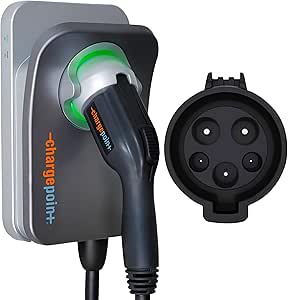 | Best for App-Based Home Charging | Connector: J1772 | Installation: Hardwired | Adjustable amperage: 16–50 A | VIEW LATEST PRICE | See Our Full Breakdown |
| AIMILER Level 2 EV Charger, 32A, 25 ft Cable, Wi-Fi App, NEMA 14-50 Plug, J1772 Connector |  | Best for Plug-In Flexibility | Connector: J1772 | Plug: NEMA 14-50 | Adjustable amperage: 16–32 A | VIEW LATEST PRICE | See Our Full Breakdown |
| Autel MaxiCharger 80A Level 2 EV Charger, Hardwired, J1772 |  | Best for High-Capacity Home Circuits | Maximum output: 19.2 kW / 80 A | Installation: Hardwired; 100 A circuit recommended for full output | Connector: SAE J1772 | VIEW LATEST PRICE | See Our Full Breakdown |
| EVDANCE Level 2 Portable EV Charger, 40A, 240V, 25 ft Cable |  | Best Portable Pick for Higher Amperage | Maximum current: 40 A | Maximum power: 9.6 kW | Voltage: 240 V | VIEW LATEST PRICE | See Our Full Breakdown |
| Autel MaxiCharger AC Home Level 2 EV Charger, 50A, 240V, Hardwired, 25-Foot Cable |  | Best for a Flexible Hardwired Installation | Charging power: Up to 12 kW | Maximum amperage: 50 A | Adjustable amperage: 6–50 A | VIEW LATEST PRICE | See Our Full Breakdown |
| EV fast charger | Cable length | Voltage | Connector | Installation |
|---|---|---|---|---|
| IYILO Level 2 EV Charger | — | 240V | — | Hardwired; 60A breaker and licensed electrician required |
| WOLFBOX E50 Level 2 50A EV Cha | — | — | — | Hardwired; circuit breaker rated 70A or greater |
| EVIQO EVIPOWER-2 48A Hardwired | — | — | — | Hardwired; dedicated 60A circuit recommended |
| ChargePoint HomeFlex Level 2 H | — | 240V | NACS | Hardwired; electrician installation |
| ApexCharger MACH 1 48A Level 2 | 30 ft | 240V | — | — |
| SEGUMA Level 2 EV Charger | 25 ft | 240 V | J1772 | — |
| TopAutoGear Level 2 Portable E | 25 ft | 240 V | SAE J1772 | — |
| EVIQO Level 2 J1772 EV Charger | 25 ft | 240 V | J1772 | — |
| Autel 50A Level 2 EV Charger w | 25 ft | — | J1772 | 240 V hardwired |
| Emporia Pro Level 2 EV Charger | 25 ft | — | J1772 | NEMA 14-50 plug or hardwired |
| ChargePoint HomeFlex Level 2 J | 23 ft | — | J1772 | Hardwired |
| AIMILER Level 2 EV Charger | 25 ft | 240 V | J1772 | — |
| Autel MaxiCharger 80A Level 2 | 25 ft | 240 V AC | SAE J1772 | Hardwired; 100 A circuit recommended for full output |
| EVDANCE Level 2 Portable EV Ch | 25 ft | 240 V | J1772 | — |
| Autel MaxiCharger AC Home Leve | 25 ft | 240 V | — | Hardwired |
More Details on Our Top Picks
IYILO Level 2 EV Charger, 48A, 11.5 kW, 240V, J1772
The IYILO suits drivers who want to tune charging around their home’s electrical setup and schedule sessions from an app. Its adjustable 6A–48A output gives more flexibility than the fixed maximums listed for the WOLFBOX E50, while power sharing can help when adding a second compatible charger to the same circuit. The 25-foot J1772 cable reaches across many garage layouts, and connector-temperature monitoring adds a layer of protection by stopping charging above 221°F.
The tradeoff is installation: reaching its full 48A output calls for hardwiring, a 60A breaker, and a licensed electrician. Its app features also rely on 2.4 GHz Wi-Fi, and Tesla drivers need a separate adapter. I’d choose the ApexCharger MACH 1 instead if plug-in installation or an included NACS adapter matters more than adjustable current and power sharing.
Pros:- Current adjusts from 6A to 48A in 1A increments
- App supports scheduling and energy tracking
- Power sharing supports two chargers on one circuit
- 25-foot J1772 cable and connector-temperature protection
Cons:- Full output requires hardwiring, a 60A breaker, and electrician installation
- App connectivity supports 2.4 GHz Wi-Fi only
- Tesla NACS adapter is not included
Best for: J1772 EV or plug-in hybrid owners who want adjustable current, scheduled charging, and the option to share a circuit with a second charger.
Not ideal for: Tesla drivers seeking an out-of-the-box connection, or households without 2.4 GHz Wi-Fi that want to use app features.
- Maximum power:Up to 11.5 kW
- Output current:6A–48A, adjustable in 1A increments
- Voltage:240V
- Installation:Hardwired; 60A breaker and licensed electrician required
- Connector and cable:SAE J1772; 25 ft
- Wi-Fi:2.4 GHz
- Certifications:ETL, Energy Star; UL 2594 test report and CSA listed
- Warranty:3 years
Our verdict“Choose the IYILO if adjustable output and power sharing matter more than plug-in setup or native Tesla compatibility.”
WOLFBOX E50 Level 2 50A EV Charger with J1772 Connector
The WOLFBOX E50 is a strong fit for drivers who want a hardwired J1772 station with clear status information at the charger itself. Its 4.3-inch LCD makes charging details easier to check without opening an app, while outage memory can preserve settings after a power interruption. Compared with the IYILO, the E50 offers a larger display and a NEMA 4X housing for outdoor installation, but the IYILO provides adjustable current and power sharing.
App scheduling, Wi-Fi, and voice-assistant compatibility add convenient controls, and the 25-foot cable gives useful reach. The main constraint is electrical: the E50 calls for hardwiring to a 70A-or-greater circuit, a higher stated circuit requirement than the IYILO’s 60A breaker. Tesla owners also need a separate adapter. I’d skip it if a plug-in installation or native NACS connector is a priority.
Pros:- 4.3-inch LCD provides charging status at the unit
- NEMA 4X weather protection supports indoor or outdoor installation
- App, Wi-Fi, voice controls, and scheduled charging
- Outage memory and a 25-foot J1772 cable
Cons:- Requires hardwiring on a circuit rated 70A or greater
- Tesla vehicles need a separate adapter
Best for: J1772 vehicle owners installing a hardwired charger outdoors who want an on-unit display, app scheduling, and outage memory.
Not ideal for: Drivers who need plug-in installation, native Tesla connectivity, or a lower circuit requirement than 70A.
- Model:E50
- Voltage and current:240V; up to 50A
- Connector and cable:SAE J1772; 25 ft
- Installation:Hardwired; circuit breaker rated 70A or greater
- Weather protection:NEMA 4X
- Display:4.3-inch LCD
- Connectivity:Wi-Fi, app controls, and voice assistant compatibility
- Certification:CSA certified; meets UL 2594 safety standards
Our verdict“Pick the WOLFBOX E50 for a hardwired outdoor setup where its large display and outage memory are more useful than adjustable current.”
EVIQO EVIPOWER-2 48A Hardwired Level 2 EV Charger with NACS Connector
The EVIQO EVIPOWER-2 makes the most sense for Tesla and other NACS drivers who want a high-output hardwired charger without relying on an adapter. It delivers up to 48A on a dedicated 60A circuit and includes a 25-foot cable, app controls, charging schedules, and energy tracking. Compared with the ChargePoint HomeFlex NACS model, EVIQO specifies a 48A maximum and lists more certification details; ChargePoint, by contrast, provides a stated charging-speed figure of up to 45 miles of range per hour.
Its outdoor/indoor suitability and three-year warranty add flexibility, but hardwired installation means an electrician is required. The NACS connector also makes this a less convenient match for J1772 vehicles, which need a separate adapter. App functions depend on 2.4 GHz Wi-Fi. I’d choose the ApexCharger MACH 1 for a mixed-connector household that values an included adapter and plug-in option over a native NACS setup.
Pros:- Native NACS connector works with compatible vehicles without an adapter
- Up to 48A output and a 25-foot cable
- App supports controls, schedules, and energy tracking
- UL, ETL, FCC, and Energy Star certifications listed
Cons:- Hardwired installation requires a licensed electrician and dedicated 60A circuit
- J1772 vehicles need a separate adapter
- App features require 2.4 GHz Wi-Fi
Best for: Tesla and other NACS vehicle owners with a dedicated 60A circuit who want a hardwired charger with scheduling and energy tracking.
Not ideal for: J1772-only households that do not want to buy an adapter, or drivers seeking a plug-in charger.
- Model:EVIPOWER-2
- Maximum output:48A at 240V
- Connector and cable:NACS; 25 ft
- Installation:Hardwired; dedicated 60A circuit recommended
- Wi-Fi:2.4 GHz
- Certifications:UL, ETL, FCC, Energy Star
- Dimensions:4 x 9.45 x 9.45 in
- Weight:18.86 lb
- Warranty:3 years
Our verdict“Choose the EVIPOWER-2 if you own a NACS vehicle and want native connector compatibility with 48A hardwired charging.”
ChargePoint HomeFlex Level 2 Hardwired EV Charger with NACS Connector
The ChargePoint HomeFlex NACS is aimed at Tesla drivers who want app-based charging controls and a stated vehicle-dependent rate of up to 45 miles of range per hour. That figure gives buyers a practical reference point, though actual range added varies by vehicle. Like the EVIQO EVIPOWER-2, it has a native NACS connector and supports indoor or outdoor installation; EVIQO lists a 48A maximum, while ChargePoint emphasizes its app information, reminders, and charging controls.
The cold-resistant cable is a useful detail for installations exposed to low temperatures, and the three-year warranty adds a defined coverage period. The limits are less fully specified electrical details: installation requires an electrician, and the product information calls for a 20A or 80A circuit without clarifying intermediate configurations. J1772 drivers need an adapter, so I’d favor the WOLFBOX E50 for a J1772 vehicle and its on-unit LCD.
Pros:- Native NACS connector for compatible Tesla vehicles
- App provides charging controls, reminders, and charging information
- Suitable for indoor or outdoor installation
- Cold-resistant cable and three-year warranty
Cons:- Requires electrician installation
- Listed circuit options are 20A or 80A, which may not fit every installation plan
- J1772 vehicles require a separate adapter
Best for: Tesla owners who want a hardwired NACS charger, ChargePoint app controls, and a cable described as cold-resistant.
Not ideal for: J1772 drivers who want a native connector, or buyers who need clearly stated maximum amperage and circuit options before purchase.
- Model:CPH50-HARDWIRE-L23-NACS
- Voltage:240V
- Connector:NACS
- Charging speed:Up to 45 miles of range per hour, depending on vehicle
- Installation:Hardwired; electrician installation
- Circuit options:20A or 80A
- Dimensions:7.06 x 11.19 x 5.2 in
- Warranty:3 years
Our verdict“Choose this ChargePoint model if you want a hardwired NACS charger with app features and a cold-resistant cable, and have confirmed the circuit requirements with an electrician.”
ApexCharger MACH 1 48A Level 2 EV Charger with J1772 Connector and Tesla NACS Adapter
The ApexCharger MACH 1 stands out for households with both J1772 and Tesla vehicles: it pairs a J1772 connector with an included NACS adapter, rather than requiring the adapter purchase needed with the IYILO or WOLFBOX. Its 30-foot cable is also longer than those models’ 25-foot leads, which can make reaching different parking positions easier. Wi-Fi, Bluetooth, app controls, and RFID cards give households several ways to manage access and charging.
Installation flexibility is its strongest distinction. The MACH 1 can use a NEMA 14-50 plug or be hardwired, but the output changes with the setup: product details limit the plug-in configuration to 40A, while 48A hardwired charging requires a 60A breaker. Buyers should not assume the highest output applies to both options. Compared with the IYILO, it gives up listed power sharing and adjustable-current detail, but offers a longer cable and broader connector coverage.
Pros:- J1772 connector plus included Tesla NACS adapter
- 30-foot cable reaches farther than the 25-foot cables on the IYILO and WOLFBOX
- Offers NEMA 14-50 plug-in or hardwired installation
- Wi-Fi, Bluetooth, app support, and included RFID cards
Cons:- NEMA 14-50 installation is limited to 40A
- 48A hardwired charging requires a 60A breaker
- Does not list power sharing or adjustable current increments
Best for: Households with J1772 and Tesla vehicles that want one charger, a long cable, RFID access, and a choice between plug-in and hardwired installation.
Not ideal for: Drivers who need 48A charging from a NEMA 14-50 setup, or who prioritize power sharing and finely adjustable current.
- Model:MACH 1
- Voltage:240V
- Connector compatibility:J1772 connector; Tesla NACS adapter included
- Installation options:NEMA 14-50 plug or hardwired
- Maximum output:48A hardwired; 40A maximum with NEMA 14-50 installation
- Cable length:30 ft
- Connectivity and display:Wi-Fi, Bluetooth, mobile app; 2.4-inch LED
- Included accessories:NACS adapter, RFID cards, wall mount plate, holster, and hardwire kit
- Certifications:ETL, Energy Star, UL, FCC, RoHS
Our verdict“Pick the MACH 1 for a mixed J1772-and-Tesla household that values its included adapter, long cable, and installation choices over 48A plug-in charging.”
SEGUMA Level 2 EV Charger, 40A, 25 ft Cable
The SEGUMA is a practical fit for drivers who want a portable charger with more control than a basic plug-in unit. Its 40 A output delivers up to 9.6 kW, while six current settings let you match charging to the outlet or vehicle rather than always drawing the maximum. The 2.4-inch TFT display shows charging status at the unit, and its delay timer supports scheduled sessions without relying on an app. Compared with the TopAutoGear 50A, it gives up peak output but offers more current-step choices and a clearer listed display type. The tradeoff is that it needs a compatible NEMA 14-50 outlet, and Tesla drivers need a separate adapter. Its 25-foot cable and included carry accessories favor flexible use, not a permanently hardwired setup.
Pros:- Six adjustable current settings, from 10 A to 40 A
- TFT display shows charging data and status at the charger
- 25-foot cable, carry bag, and holders support portable use
- IP66 rating and built-in electrical protections
Cons:- Requires a compatible 240 V NEMA 14-50 outlet
- Tesla vehicles need a separate J1772-to-NACS adapter
- Its 9.6 kW maximum is lower than the 11.5 kW TopAutoGear
Best for: J1772 EV and plug-in-hybrid owners who want a portable charger, visible charging status, and several current settings for different circuits.
Not ideal for: Drivers seeking maximum charging output, app-based control, or a charger that works with Tesla vehicles without a separate adapter.
- Maximum output:9.6 kW
- Voltage:240 V
- Maximum current:40 A
- Current settings:10 A, 16 A, 20 A, 24 A, 32 A, 40 A
- Connector:J1772
- Plug:NEMA 14-50
- Cable length:25 ft
- Display:2.4-inch TFT
- Certifications:ETL, FCC
Our verdict“Choose the SEGUMA if portability, a readable screen, and fine-grained current adjustment matter more than the higher output of the TopAutoGear.”
TopAutoGear Level 2 Portable EV Charger, 50A, 240V, NEMA 14-50, 25 ft Cable
Among these portable options, the TopAutoGear prioritizes output: its 50 A, 11.5 kW maximum exceeds the SEGUMA’s 40 A and 9.6 kW, which can make it a better match for vehicles able to accept more power. Five current settings offer room to reduce the draw when needed, while the LCD and delay timer provide at-unit status and scheduled charging without app dependence. It also keeps the useful portable format, with a 25-foot cable and NEMA 14-50 plug. That flexibility has limits: a compatible outlet is required, and the supplied details do not list outdoor-protection ratings or certifications. Compared with the app-connected EVIQO, this is a simpler choice for drivers who value higher stated output over Wi-Fi scheduling and energy tracking.
Pros:- Up to 50 A and 11.5 kW output
- Five adjustable current settings, up to 50 A
- 25-foot cable supports flexible parking positions
- LCD and delay timer provide on-unit information and scheduling
Cons:- Requires a compatible 240 V NEMA 14-50 outlet
- Tesla vehicles need a separate adapter
- No weather-protection rating or certification is listed in the provided specifications
Best for: Drivers with a compatible 50 A charging setup and J1772 vehicle who want a portable unit with higher stated output and a built-in timer.
Not ideal for: Buyers who need app-based energy tracking, documented weather protection, or a charger that connects to a home without a NEMA 14-50 outlet.
- Maximum output:Up to 11.5 kW
- Maximum current:50 A
- Voltage:240 V
- Connector:SAE J1772
- Plug:NEMA 14-50
- Cable length:25 ft
- Current settings:16 A, 24 A, 32 A, 40 A, 50 A
- Display:LCD
- Weight:14.12 lb
Our verdict“Pick the TopAutoGear over the SEGUMA when higher portable charging output is the priority and app features are not needed.”
EVIQO Level 2 J1772 EV Charger, 40A, NEMA 14-50, 240V
The EVIQO suits owners who want to manage charging from a phone rather than rely on controls at the unit. Its 2.4 GHz Wi-Fi app handles schedules, current adjustment, and energy tracking, giving it more remote oversight than the display-and-timer approach of the SEGUMA. The 40 A J1772 setup and 25-foot cable cover common home charging needs, while the IP66 and NEMA 4-rated housing supports indoor or outdoor placement. UL, ETL, FCC, and Energy Star certifications, along with a three-year warranty, add documented support that is not listed for the TopAutoGear. The tradeoff is a dedicated 50 A circuit with a NEMA 14-50 outlet, plus 2.4 GHz Wi-Fi for app features. Buyers who prefer a hardwired installation or more than 40 A should compare it with the Autel.
Pros:- App provides schedules, current adjustment, and energy tracking
- 25-foot cable and weather-resistant housing allow flexible placement
- UL, ETL, FCC, and Energy Star certifications are listed
- Three-year warranty and glow-in-the-dark connector holster
Cons:- Requires a NEMA 14-50 outlet on a dedicated 50 A circuit
- App features depend on 2.4 GHz Wi-Fi
- 40 A output is below the 50 A TopAutoGear and hardwired Autel
Best for: J1772 EV and plug-in-hybrid owners who want app-based scheduling and energy tracking from a plug-in charger with a long cable.
Not ideal for: Households without a dedicated 50 A circuit and NEMA 14-50 outlet, or buyers who need app connectivity through a network other than 2.4 GHz Wi-Fi.
- Maximum current:40 A
- Voltage:240 V
- Connector:J1772
- Outlet:NEMA 14-50
- Cable length:25 ft
- Wi-Fi:2.4 GHz
- Certifications:UL, ETL, FCC, Energy Star
- Warranty:3 years
- Weight:21 lb
Our verdict“Choose the EVIQO over the SEGUMA if app scheduling and energy tracking matter more than on-unit controls and simple portability.”
Autel 50A Level 2 EV Charger with 25-Foot J1772 Cable
The Autel is the strongest fit here for buyers planning a permanent hardwired installation. It delivers up to 50 A and 12 kW, edging past the TopAutoGear’s 11.5 kW maximum, and its adjustable 6–50 A range gives installers more flexibility to set charging current for the circuit. The NEMA 4X enclosure and CSA certification suit indoor or outdoor home mounting; Wi-Fi and Bluetooth add remote start, schedules, and session monitoring. Compared with the plug-in EVIQO, the Autel avoids dependence on a NEMA 14-50 receptacle, but that does not make installation simpler: hardwiring requires a suitable circuit and professional electrical work may be needed. Its J1772 connector also means some vehicles need an adapter. This is a fixed-installation choice, not the lineup’s portable option.
Pros:- Up to 50 A and 12 kW output
- Adjustable current from 6 A to 50 A supports circuit-specific setup
- Wi-Fi and Bluetooth enable remote controls, schedules, and monitoring
- NEMA 4X enclosure and CSA certification suit indoor or outdoor installation
Cons:- Hardwired installation limits portability and may require an electrician
- J1772 connection may require an adapter for some vehicles
- A permanent installation requires suitable electrical capacity and planning
Best for: Homeowners arranging a permanent 240 V installation who want high output, adjustable current, and app controls for a J1772 vehicle.
Not ideal for: Renters, frequent travelers, or anyone who needs a plug-in charger that can be moved between compatible outlets.
- Installation:240 V hardwired
- Maximum output:12 kW
- Maximum current:50 A
- Adjustable current:6 A to 50 A
- Connector:J1772
- Cable length:25 ft
- Connectivity:Wi-Fi and Bluetooth
- Weather protection:NEMA 4X
- Certification:CSA
Our verdict“Choose the Autel over the plug-in TopAutoGear if you want a permanently installed charger with higher stated output and remote controls.”
Emporia Pro Level 2 EV Charger with PowerSmart, 48 A, J1772, 25 ft Cable
Emporia’s distinguishing feature is not peak output but PowerSmart load balancing, which manages charging in relation to the home electrical panel. That can make this a more appealing choice than the Autel when panel capacity is a concern, especially since the package includes a Vue Home Energy Monitor for household energy insights. It supports up to 48 A and can be installed with a NEMA 14-50 plug or hardwired, so owners have more setup flexibility than with the hardwired-only Autel. The app adds scheduled charging and real-time usage tracking. The tradeoff is that installation still needs to match the home’s electrical capacity, and an electrician may be required. Its J1772 connector may also call for an adapter with some vehicles. Buyers seeking the highest listed output should compare it with the Autel’s 50 A, 12 kW rating.
Pros:- PowerSmart load balancing manages charging alongside the existing electrical panel
- Vue Home Energy Monitor is included for household energy insights
- App supports scheduled charging and real-time usage tracking
- Supports NEMA 14-50 plug-in or hardwired installation
Cons:- Installation may require an electrician and must suit the home’s electrical setup
- J1772 connector may require an adapter for some vehicles
- 48 A output is below the Autel’s listed 50 A maximum
Best for: Homeowners concerned about panel capacity who want load management, household energy monitoring, and a choice of plug-in or hardwired installation.
Not ideal for: Drivers whose main priority is the highest available output, or households that do not want app-connected charging and energy monitoring.
- Input voltage:240 V
- Maximum current:48 A
- Connector:J1772
- Cable length:25 ft
- Installation:NEMA 14-50 plug or hardwired
- Connectivity:Wi-Fi and Bluetooth
- Certifications:Energy Star, NEMA, UL
- Warranty:3 years
- Included monitor:Vue Home Energy Monitor
Our verdict“Choose the Emporia over the Autel if panel-aware load management and home energy monitoring matter more than the highest output.”
ChargePoint HomeFlex Level 2 J1772 EV Charger, Hardwired, 50A
The ChargePoint HomeFlex makes sense for drivers who want a permanently installed charger with app controls, charging data, and reminders. Its adjustable output, from 16 to 50 amps, gives an electrician flexibility to match the unit to the home circuit rather than requiring full output in every installation. Compared with the plug-in AIMILER Level 2, this is a fixed-install choice, not a portable charger you can move between suitable outlets. Its 23-foot cable and indoor/outdoor rating help with varied parking positions, while the cold-resistant cable is useful in harsher weather. The tradeoff is the need for electrician installation, and some app features depend on Wi-Fi. J1772 fits many non-Tesla EVs, but Tesla owners need a separate adapter.
Pros:- Adjustable output from 16 to 50 amps can match different electrical setups.
- App controls include charging data and reminders.
- 23-foot cable and indoor/outdoor suitability offer flexible placement.
- UL-certified and Energy Star certified.
Cons:- Hardwired installation requires an electrician.
- Some app features require Wi-Fi.
- Tesla vehicles need a separate adapter.
Best for: J1772 EV owners who want a hardwired home unit with app-based charging data and scheduling features.
Not ideal for: Renters or drivers who need a portable plug-in charger; Tesla owners who want a native connector without an adapter.
- Connector:J1772
- Installation:Hardwired
- Adjustable amperage:16–50 A
- Input voltage:240 V
- Cable length:23 ft
- Ports:1
- Certification:UL-certified, Energy Star
- Warranty:3 years
Our verdict“Choose the HomeFlex if you want a connected, fixed J1772 charger and have an electrician available for installation.”
AIMILER Level 2 EV Charger, 32A, 25 ft Cable, Wi-Fi App, NEMA 14-50 Plug, J1772 Connector
The AIMILER is the practical pick for drivers with a suitable NEMA 14-50 outlet who want Level 2 charging without a hardwired installation. Its 16–32 amp adjustment lets users reduce current to suit an outlet or vehicle, while the 25-foot cable can reach parking spots that are awkward for shorter leads. The touchscreen, Wi-Fi app, schedule controls, and charging history offer more feedback than the simpler EVDANCE portable charger, though both need an outlet and a separate Tesla adapter. AIMILER’s main compromise is its 32-amp ceiling: the hardwired ChargePoint HomeFlex and Autel 80A can support higher output when the vehicle and circuit allow it. App setup also depends on a 2.4 GHz Wi-Fi network, so this is less appealing for buyers who want a no-network setup.
Pros:- Adjustable charging current from 16 to 32 amps.
- 25-foot cable reaches farther parking positions.
- Wi-Fi app provides scheduling and charging history.
- Touchscreen display and built-in leakage protection.
Cons:- Recommended Level 2 use requires a compatible NEMA 14-50 outlet.
- Tesla and NACS vehicles need a separate adapter.
- Wi-Fi setup requires a 2.4 GHz network.
Best for: EV and plug-in hybrid owners with a NEMA 14-50 outlet who want adjustable portable charging and app scheduling.
Not ideal for: Drivers seeking higher output than 32 amps, or those without a compatible outlet or 2.4 GHz Wi-Fi network.
- Connector:J1772
- Plug:NEMA 14-50
- Adjustable amperage:16–32 A
- Voltage:240 V
- Cable length:25 ft
- Water protection:NEMA Type 4; described as IP66
- Certifications:ETL, FCC
- Ports:1
Our verdict“Pick AIMILER for flexible, app-managed charging from a NEMA 14-50 outlet when 32 amps is sufficient.”
Autel MaxiCharger 80A Level 2 EV Charger, Hardwired, J1772
For buyers whose vehicle and electrical service can use unusually high Level 2 output, the Autel MaxiCharger 80A is the standout in this group. Its stated maximum of 19.2 kW exceeds the 50A ChargePoint HomeFlex and 40A EVDANCE, but reaching full output calls for a recommended 100A circuit and professional hardwired installation. That makes it a specialized choice, not a default upgrade for every home: a vehicle may not accept the charger’s full output, and the electrical work can shape whether the extra capacity is useful. The 25-foot J1772 cable, app scheduling, energy monitoring, and remote controls add everyday flexibility. Compared with the 50A Autel MaxiCharger AC Home, this model targets greater capacity and offers a five-year warranty, while demanding a more substantial electrical setup.
Pros:- Up to 80 amps and 19.2 kW when the circuit and vehicle support it.
- App features include scheduling, remote control, and energy monitoring.
- 25-foot J1772 cable serves a broad range of North American EVs and PHEVs.
- CSA and UL certifications and a five-year warranty.
Cons:- Full 80A output calls for a recommended 100A circuit.
- Hardwired installation is best handled by a professional electrician.
- Tesla vehicles require a separate NACS adapter.
Best for: Owners of high-capacity EVs with a home electrical system that can support a professionally installed 100A circuit.
Not ideal for: Drivers with limited electrical capacity, vehicles that cannot benefit from 80A charging, or buyers seeking a plug-in unit.
- Maximum output:19.2 kW / 80 A
- Installation:Hardwired; 100 A circuit recommended for full output
- Connector:SAE J1772
- Cable length:25 ft
- Voltage:240 V AC
- Connectivity:Wi-Fi and Wi-SUN
- Certifications:CSA, UL
- Warranty:5 years
Our verdict“Choose this Autel when your vehicle and electrical service can use its 80A capacity; otherwise, a 50A model is a more fitting match.”
EVDANCE Level 2 Portable EV Charger, 40A, 240V, 25 ft Cable
The EVDANCE offers a useful middle ground for drivers who want a portable charger with more headroom than the 32A AIMILER, but do not need the hardwired capacity of the 80A Autel. It delivers up to 40 amps and 9.6 kW from a NEMA 14-50 outlet, with six selectable current settings and a delay-start timer. Those controls can help match charging to a household circuit or a preferred start time without app setup. A 25-foot cable, carry bag, display, and IP66 weather resistance suit garages and some outdoor setups. The tradeoff is that charging depends on access to a compatible outlet; this is not a permanent hardwired installation. Its J1772 connector covers compatible EVs and plug-in hybrids, while Tesla drivers need an adapter.
Pros:- Up to 40 amps and 9.6 kW through a NEMA 14-50 plug.
- Six selectable current levels and a 1–12 hour delay start.
- 25-foot cable, carry bag, and display support portable use.
- IP66 weather resistance and built-in electrical protections.
Cons:- Requires a compatible NEMA 14-50 outlet.
- Tesla vehicles need a separate J1772-to-Tesla adapter.
- Does not offer the higher output available from the hardwired Autel 80A.
Best for: Drivers with a NEMA 14-50 outlet who want portable 40A charging, manual current selection, and a delay timer.
Not ideal for: Homeowners seeking a permanently installed charger, or Tesla owners who do not want to use a separate adapter.
- Maximum current:40 A
- Maximum power:9.6 kW
- Voltage:240 V
- Plug type:NEMA 14-50
- Connector:J1772
- Cable length:25 ft
- Adjustable current:10 A, 16 A, 20 A, 24 A, 32 A, 40 A
- Weather resistance:IP66
- Delay start:1–12 hours
Our verdict“Choose EVDANCE for portable 40A charging from an existing NEMA 14-50 outlet, rather than for a permanent high-output installation.”
Autel MaxiCharger AC Home Level 2 EV Charger, 50A, 240V, Hardwired, 25-Foot Cable
This 50A Autel is a strong fit for drivers who want a hardwired home charger but do not need the specialized 80A output of its MaxiCharger sibling. Its adjustable range of 6–50 amps can accommodate different charging needs, while the 25-foot cable offers more reach than the ChargePoint HomeFlex’s 23-foot lead. App-based scheduling and charge-time controls add convenience, and the NEMA Type 4 rating supports indoor or outdoor installation. The tradeoff is straightforward: it requires hardwiring by an electrician and provides no plug-in portability. Compared with the ChargePoint, the Autel has the longer cable and higher stated 50A ceiling; the HomeFlex, in turn, lists UL and Energy Star certification and charging data and reminders. This Autel is best for buyers prioritizing cable reach and adjustable output in a fixed setup.
Pros:- Adjustable output from 6 to 50 amps, with up to 12 kW stated.
- 25-foot flexible cable offers added reach.
- NEMA Type 4 rating supports indoor and outdoor use.
- App controls include scheduling and charge-time management.
Cons:- Hardwired installation requires an electrician.
- Its 50A ceiling is below the 80A Autel MaxiCharger for setups able to use higher output.
- Tesla compatibility details are not specified in the supplied product information.
Best for: Homeowners who want an adjustable 50A hardwired charger with a long cable and app-based scheduling for indoor or outdoor placement.
Not ideal for: Renters or drivers who need a plug-in portable charger, or buyers whose vehicles and circuits call for more than 50A.
- Charging power:Up to 12 kW
- Maximum amperage:50 A
- Adjustable amperage:6–50 A
- Voltage:240 V
- Installation:Hardwired
- Cable length:25 ft
- Warranty:3 years
Our verdict“Choose this Autel for a fixed 50A installation where cable reach and adjustable app-managed charging matter more than portability or 80A capacity.”
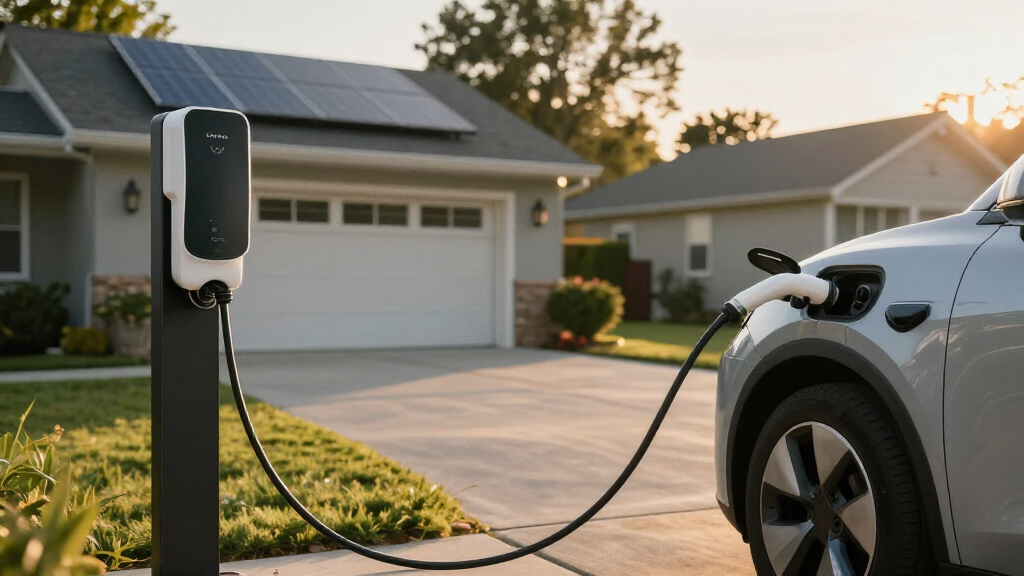
How We Picked
I compared the 15 chargers by the details that change a home-charging decision: stated amperage and power, connector type, cable length, installation style, portability, and advertised app or energy-management features. A high output rating can shorten charging sessions only when the vehicle, circuit, and installation can support it, so I treated usable compatibility as more important than the biggest number on a product page.
The order favors versatile choices that balance output, practical setup, and buyer fit, then gives more specialized roles to portable, lower-amperage, connector-specific, and high-capacity models. I also weighed what a buyer may need to arrange before installation, such as a suitable 240V circuit or electrician. Product specifications alone do not confirm compatibility with every vehicle or home, so I flag the checks that matter rather than presenting any model as a universal fit.
| EV fast charger | Certifications | Connector |
|---|---|---|
| IYILO Level 2 EV Charger | ETL, Energy Star; UL 2594 test report and CSA listed | — |
| WOLFBOX E50 Level 2 50A EV Cha | — | — |
| EVIQO EVIPOWER-2 48A Hardwired | UL, ETL, FCC, Energy Star | — |
| ChargePoint HomeFlex Level 2 H | — | NACS |
| ApexCharger MACH 1 48A Level 2 | ETL, Energy Star, UL, FCC, RoHS | — |
| SEGUMA Level 2 EV Charger | ETL, FCC | J1772 |
| TopAutoGear Level 2 Portable E | — | SAE J1772 |
| EVIQO Level 2 J1772 EV Charger | UL, ETL, FCC, Energy Star | J1772 |
| Autel 50A Level 2 EV Charger w | — | J1772 |
| Emporia Pro Level 2 EV Charger | Energy Star, NEMA, UL | J1772 |
| ChargePoint HomeFlex Level 2 J | — | J1772 |
| AIMILER Level 2 EV Charger | ETL, FCC | J1772 |
| Autel MaxiCharger 80A Level 2 | CSA, UL | SAE J1772 |
| EVDANCE Level 2 Portable EV Ch | — | J1772 |
| Autel MaxiCharger AC Home Leve | — | — |
Factors to Consider When Choosing Best EV Fast Chargers
Before choosing a charger, I would match the unit to the car and home electrical setup, not just compare amperage. These checks help avoid paying for output a vehicle cannot use, buying the wrong connector, or discovering that an existing outlet is not suitable for continuous charging.
Match charger output to the car and circuit
Amperage is only useful when both the vehicle’s onboard charger and the home circuit can accept it. A 48A or 50A unit may be a sensible choice for a compatible setup, but it will not make a car charge faster than that car’s own AC charging limit. Circuit sizing, wiring, and continuous-load rules affect the usable charging current, so have an electrician confirm the installation plan before buying a high-output model. An 80A charger is a specialty choice, not a default upgrade for every garage. If your current vehicle has a lower AC limit, spending more on maximum output may bring little immediate benefit, though a future vehicle could change that calculation.
Choose J1772 or NACS for your actual vehicle
Connector decisions depend on the charge port on the vehicle, model year, and any manufacturer-approved adapter arrangement. This lineup includes both J1772 and NACS models, so a connector name in the product title should be checked against the car rather than assumed to fit. An adapter can add compatibility in some cases, but it is another item to source and carry, and it may have limits set by the vehicle or charger maker. Buyers with more than one EV should think about the vehicles they charge now and likely future replacements. Confirm cable reach and adapter guidance before installation, since a connector mismatch can turn an otherwise suitable charger into an inconvenient purchase.
Decide between a plug-in and hardwired installation
A plug-in charger can be easier to remove or take along, especially when a correctly rated NEMA 14-50 outlet already exists. That does not mean any household outlet or previously installed receptacle is ready for frequent EV charging; the outlet, circuit, wiring, and breaker all need verification. Hardwired units can support a cleaner permanent installation and are common among higher-output models, but they call for fixed wiring and typically professional installation. Compare the full installation plan, not just the charger connection type. If you may move soon or want flexibility, a plug-in setup can be appealing; if the charger will stay in one place, hardwiring may better suit a permanent installation.
Treat cable length and mounting location as daily-use choices
A long cable can reach cars parked on either side of a garage or a charging port that sits far from the wall, but extra length also needs safe storage. Measure the route from the planned mounting point to the vehicle’s charge port, including how the cable must pass around parked cars or obstacles. Do not rely on a stated 25-foot cable to solve a poor mounting location if the route includes a sharp bend or a trip hazard. Portable models may make placement more flexible, but they still need a safe power source and a place to store the unit. Planning cable reach before purchase can prevent daily repositioning or the need for an extension arrangement that the manufacturer does not support.
Separate useful app features from features you will use
Connected controls can help schedule charging, review sessions, or coordinate power use, but those features matter most when they solve a real household need. If your utility offers time-based electricity rates, scheduled charging may help shift charging to a lower-cost period; verify that the charger’s controls work with your routine and local service. Energy-management functions such as PowerSmart may appeal to homes with competing electrical loads, but they do not replace a properly rated circuit or professional review. Buyers who want simple overnight charging may prefer a straightforward setup over extra software. Check network requirements, app functions, and any smart-home or utility compatibility before treating connectivity as a deciding advantage.
Pay for capacity or portability only when it solves a real need
Higher-amperage models make the most sense when the vehicle can use the power and the home can support the installation. A lower-output 32A or 40A unit may still cover routine overnight charging for drivers who have many hours at home, while a portable charger can be more useful to someone who needs to move equipment between locations. Fixed hardwired chargers generally prioritize a permanent setup over travel convenience. Before paying for a premium feature or larger output, estimate how many miles you typically need to replace overnight and check the car’s charging limit. The right choice is the one that meets your schedule without forcing an unnecessary electrical upgrade or leaving portability unused.
Frequently Asked Questions
Will a 50A or 80A charger make my EV charge faster?
Only if the vehicle’s onboard AC charger and the home circuit can use the higher output. The charger’s amperage rating describes its capability, not a guarantee of the charging rate your car will receive. A vehicle with a lower AC charging limit will not gain speed from an 80A unit compared with a suitable lower-output charger. Ask an electrician to confirm circuit capacity and installation requirements before selecting a high-amperage model. For many drivers, an overnight charging window makes the car’s limit and daily mileage more relevant than the charger’s maximum rating.
Should I buy a J1772 or NACS charger if I may change EVs?
Start with the charge-port standard on the car you own and check the compatibility guidance for any vehicle you expect to buy next. This roundup includes both connector types, so the right choice may depend on whether you value direct fit today or a planned future vehicle. Adapters can help in some vehicle-and-charger combinations, but they are not universal and may have operating limits. Check manufacturer documentation for the specific car, charger, and adapter rather than assuming one adapter covers every setup. If you charge multiple EVs, connector reach and the practical effort of swapping or storing adapters deserve attention too.
Can I use a plug-in EV charger with any NEMA 14-50 outlet?
No. The outlet must be correctly wired, in good condition, and supported by a circuit and breaker suited to the charger’s intended continuous load. A receptacle that was installed for another appliance may not be appropriate for regular EV charging, even if the plug fits. Have an electrician inspect the circuit, outlet, wiring, and panel before connecting a high-current charger. Also follow the charger maker’s instructions for current settings and plug-in use. If the existing setup cannot support the required load, hardwiring or electrical work may be a safer path.
Is a portable Level 2 charger a good choice as my only home charger?
It can be, if the portable unit’s output suits your vehicle and you have a safe, compatible power source where you park. Portability is valuable for drivers who travel between homes or want to store the charger when it is not in use. A fixed charger may be more convenient for daily use because it stays mounted and ready, while a portable model needs careful handling and storage. Check the specific outlet requirements and cable reach before relying on it as a permanent solution. If you expect to charge at one home location for years, compare the convenience of a mounted unit with the flexibility you would actually use.
Is it worth choosing an 80A charger for a future EV?
It may be worthwhile if a future vehicle can accept that level of AC charging and your home can support the required installation. Otherwise, the extra capacity may go unused, and the electrical work can outweigh any benefit for current charging habits. Vehicle charging limits can vary by model, so verify the specifications of likely replacement vehicles rather than relying on a general expectation. Ask an electrician whether the panel and wiring can support the planned charger, including any upgrade needs. A 48A or 50A option may be a more balanced choice for buyers who want strong home charging without planning around a specific high-capacity vehicle.
Conclusion
For a balanced home setup, I would start with the Emporia Pro as best overall: its 48A output and PowerSmart feature suit buyers seeking capacity with energy-management support. The best value fit is the EVIQO 40A J1772 for a buyer with a compatible NEMA 14-50 installation who does not need a hardwired 48A model. For beginners, the AIMILER 32A plug-in is a lower-output option to investigate when the home circuit and vehicle match, though professional electrical checks still apply. Buyers seeking a premium, high-capacity setup can look at the Autel MaxiCharger 80A if both vehicle and electrical system support it; for portability, compare the TopAutoGear 50A and EVDANCE 40A against your available outlet. My final recommendation is to verify connector, vehicle limit, and circuit capacity first—those checks matter more than choosing the largest amperage on the list.
Halloween Picks
halloween
As an affiliate, we earn on qualifying purchases.