
TL;DR

Get backup power and energy gear delivered free — and shop member deals
- Fast, free delivery on millions of items
- Access to Prime Big Deal Days deals on October 6–7
- Prime Video, Amazon Music and more included
Virginia Gov. Abigail Spanberger released an energy plan on Oct. 1 that models four pathways to net-zero carbon emissions by 2050 while serving projected electricity growth, including demand from data centers. The nonbinding blueprint proposes rapid solar expansion, more distributed energy and measures that could make data centers reduce grid use at peak times; how costs will be allocated remains unsettled.
Virginia Gov. Abigail Spanberger released an energy plan on Oct. 1 that lays out four modeled ways for the state’s utilities to reach net-zero carbon emissions by 2050 while meeting projected electricity demand growth of 85%, including demand from data centers. The blueprint backs the state’s existing clean-energy laws and argues that data center operators could help pay for the power and grid upgrades needed to serve their facilities.
The plan examines four pathways for investor-owned utilities Dominion Energy and Appalachian Power to meet future demand and comply with the Virginia Clean Economy Act, which requires utilities to produce all carbon-free energy by midcentury. It also retains Virginia’s participation in the Regional Greenhouse Gas Initiative, a multistate program to curb carbon pollution. The plan is a policy blueprint, not a new law, and does not itself require utilities or data center companies to follow its scenarios.
Each pathway assumes substantial new solar capacity: 1.2 to 1.8 gigawatts a year, alongside growth in distributed resources such as customer-sited solar panels and batteries. One pathway largely maintains current policies; three place more emphasis on demand flexibility. Under that approach, data centers could reduce their electricity use from the grid during peak-demand periods and draw instead on batteries, on-site clean power or other sources.
The plan assumes “moderate” demand growth of 85%, based on the expectation that most, but not all, proposed data centers will be built. It also models a fifth scenario that drops the state’s clean-energy goals. According to the plan, that scenario would nearly double carbon emissions and produce an estimated $145 billion in health impacts, while saving at least $90 billion in electricity-system costs. Those are modeled estimates, not observed outcomes or guaranteed future costs.
Who Pays for Virginia’s Power Buildout
The dispute is about more than how Virginia generates electricity. Data center construction is driving expectations of sharp demand growth, while residents and businesses are concerned about rising utility bills and the cost of expanding the grid. The plan’s proposed reliance on demand flexibility and its argument for assigning costs to large new electricity users are intended to address whether ordinary customers will bear expenses linked to data center growth.
The plan estimates that meeting future energy needs could cost as much as $422 billion, but says data center companies could contribute $265 billion to utilities through 2050, based on Dominion data. Those figures are the plan authors’ estimates; the document does not establish a binding payment arrangement. Regulators and lawmakers will still have to decide how costs are allocated and whether particular projects or requirements move forward.
The blueprint also offers a response to opposing proposals at either end of the debate: weakening clean-energy rules to lower costs and meet demand, or pausing new data center development. It argues that Virginia can pursue clean power and accommodate growth, but the modeled pathways depend on large-scale construction and policy choices that have not yet been settled.
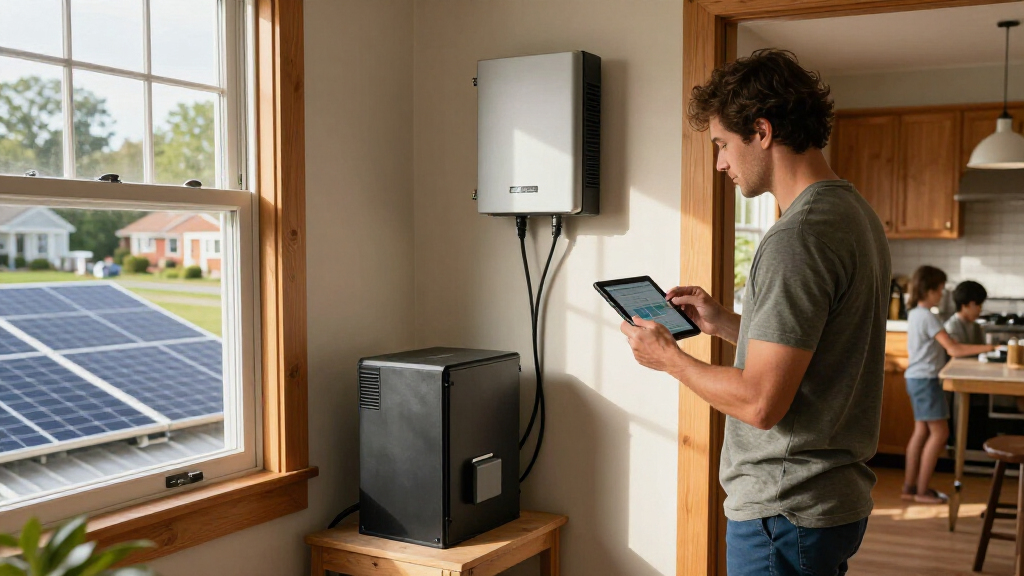
home energy monitor with solar integration
As an affiliate, we earn on qualifying purchases.
As an affiliate, we earn on qualifying purchases.
A Plan Amid Virginia’s Energy Dispute
Virginia’s energy debate has been shaped by two pressures: higher electricity bills and rapid growth in expected demand from data centers. Republicans and other critics of the state’s climate policy have argued that the Virginia Clean Economy Act should be scaled back or repealed to reduce costs and secure supply. Some environmental advocates have called for a moratorium on new data centers, as governors in Texas and New York have recently taken steps to pause projects.
The Virginia Clean Economy Act was enacted in 2020 and sets a requirement for utilities to move to carbon-free energy by midcentury. State law calls for the energy plan to be updated every four years. This year’s document uses advanced planning software to compare supply and demand scenarios, an approach the report describes as unusual for a governor’s energy plan.
Spanberger’s predecessor, Republican Glenn Youngkin, took a different approach to the climate law, according to the Virginia League of Conservation Voters. Spanberger’s plan does not settle the political dispute, but it provides modeled information that could inform future utility proposals, regulatory proceedings and legislative debate.
““This modeling should put that notion to bed.””
— Josephus Allmond, Virginia’s chief energy officer
Costs, Projects and Rules Remain Open
The plan does not require data centers to reduce electricity use at peak times or to cover a specified share of the cost of new generation and grid infrastructure. How cost allocation would work, and whether the industry would pay the amounts estimated in the document, remain unresolved. The $265 billion contribution estimate is based on Dominion data and is a projection through 2050, not a commitment from data center companies.
Demand forecasts also depend on how many proposed facilities are built and how quickly they come online. The plan’s 85% growth assumption is described as moderate and assumes most, but not all, proposals proceed. The source report does not specify which individual projects are included, nor does it establish whether the modeled solar, battery and demand-flexibility resources will be built on schedule.
The plan’s emissions, health-impact and cost figures are scenario results. They do not settle whether the legislature or regulators will accept the assumptions, how future electricity prices will change, or whether utilities’ proposals for new gas plants will be approved.
Regulators Weigh Utility Proposals
The blueprint is expected to inform decisions by state regulators and legislators as they consider utility plans, possible new gas plants and changes to policies governing data centers. Those proceedings will determine whether the modeled approaches become concrete requirements, investments or customer protections. The plan itself does not set a binding implementation schedule.
Future decisions will also show whether large electricity users are required or encouraged to shift demand, supply power from on-site resources, or pay a larger share of grid costs. The central test for the plan will be whether officials can translate its scenarios into enforceable policies and projects while tracking affordability, reliability and emissions.
Key Questions
What did Virginia’s new energy plan propose?
It models four pathways to net-zero carbon emissions by 2050 while serving projected electricity demand growth, including demand from data centers. The pathways include large increases in solar power and distributed energy resources; some also rely on data centers reducing grid use during peak periods.
Does the plan require data centers to pay for grid upgrades?
No. The plan argues that data center companies could contribute substantially toward future utility costs, but it is a nonbinding blueprint and does not impose a payment requirement.
How much electricity demand does the plan expect?
The scenarios use a projection of 85% growth in electricity demand, described as moderate. The assumption is that most, but not all, proposed data centers will be built.
What happens if Virginia drops its clean-energy goals?
The plan’s fifth modeled scenario says emissions would nearly double and estimates $145 billion in health impacts, while electricity-system costs would be at least $90 billion lower. These are scenario estimates, not confirmed future results.
What happens next?
State regulators and lawmakers may use the plan when reviewing utility proposals, potential gas plants and data center policies. No binding implementation decision or schedule is established by the plan itself.
Source: rss
Halloween Picks
halloween
As an affiliate, we earn on qualifying purchases.