TL;DR

Get backup power and energy gear delivered free — and shop member deals
- Fast, free delivery on millions of items
- Access to Prime Big Deal Days deals on October 6–7
- Prime Video, Amazon Music and more included
Home Assistant 2026.10 is in beta with new settings for supported Matter leak sensors and locks, plus frequency and power-factor readings for compatible devices. The release also revises the Map dashboard and makes multi-trigger automation conditions easier to configure. A stable release is expected Oct. 7, 2026, but beta features may change.
Home Assistant 2026.10 has entered beta testing with new controls for supported Matter leak sensors and smart locks, giving users access to device settings that the integration did not previously expose. The release also adds electrical measurements for compatible devices and revises map and automation tools; the stable version is expected Oct. 7, 2026, according to the release information.
Supported Matter leak sensors gain separate switches for their audible and visual alarms. IKEA KLIPPBOK is one confirmed example, and Matter Alpha reports that its testing also found the controls working with Shelly Flood. The settings operate independently: changing one does not change the other. They configure how the sensor handles alarms; they are not controls for sounding an alarm on demand.
Compatible Matter locks gain a one-touch locking setting that lets users choose whether a single touch on the keypad locks the door. Devices that expose the relevant electrical data can report frequency and power factor. WAGO Home Blind Control models 2757-1105 (Wi-Fi) and 2757-1106 (Thread) also gain settings for upward travel time, downward travel time and slat rotation time. According to the report, those devices can update travel timings after a full run between their end positions, with the revised values reflected in Home Assistant.
The beta includes additional changes to the Map dashboard and automation editor. Users can select triggers directly in a “Triggered by” condition rather than first exposing and assigning trigger IDs. The editor manages those IDs and can warn about missing references. The map adds a People, Devices and Zones overview, with different layouts for desktop and phones. The release also includes Matter setup and device-information fixes.
More Device Settings in Home Assistant
The new Matter options give users more ability to configure device behavior from Home Assistant instead of relying on settings exposed elsewhere. For leak sensors, independent controls for sound and visual alarms may help households adapt alerts to their setup while retaining the other warning method. The lock setting gives compatible users a way to decide whether a keypad supports single-touch locking.
Those changes may also make automations easier to organize. A person could, for example, keep leak and all-clear responses in one automation with separate triggers and action branches, rather than splitting related actions across multiple routines. That is an example of how the updated interface can be used, not a guarantee that every sensor or automation configuration supports it. Device capabilities vary, and the new switches appear only for supported features.
Frequency and power-factor readings add further detail for devices that report them, while the WAGO timing settings expose parameters used to position blinds. Taken together, the additions broaden the range of settings and measurements users can access in the platform. The release notes do not establish that every Matter device will receive these controls.
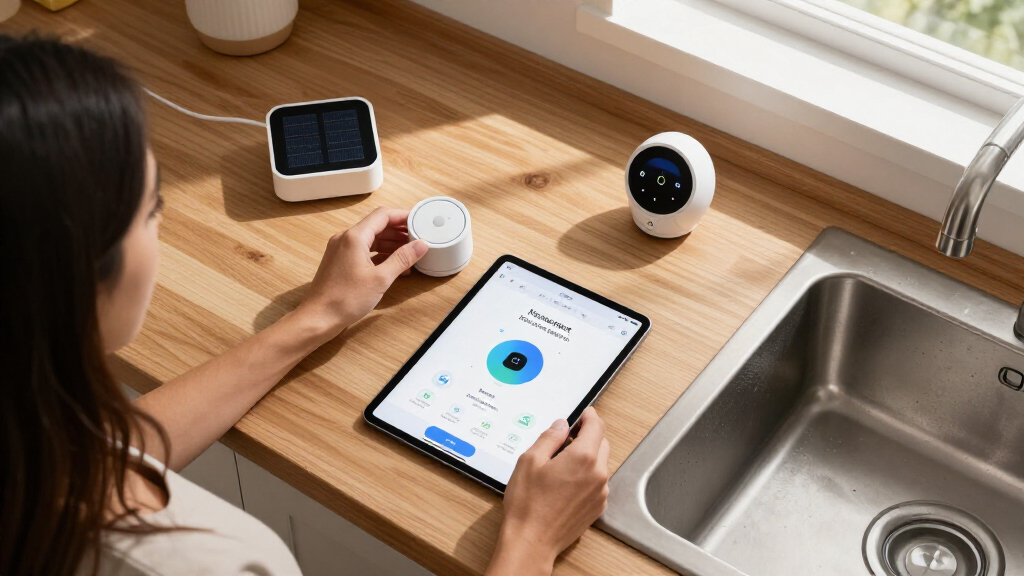
Matter leak sensor with audible and visual alarms
As an affiliate, we earn on qualifying purchases.
As an affiliate, we earn on qualifying purchases.
The 2026.9 Map Foundation
The map changes build on the Map tiles integration introduced in Home Assistant 2026.9. The map retrieves OpenStreetMap Foundation tiles through Home Assistant and caches recently used tiles. According to the source report, that cache can help the map remain usable during brief internet interruptions, but it is not a complete offline map.
The new overview places People, Devices and Zones beside the map on desktop and in a pull-up sheet on phones. Selecting a person displays recent activity; selecting a zone shows who is there. People are marked with photos, while zones use icons and colors. People in the same zone share a bubble, and overlapping bubbles merge when the map is zoomed out. A vector map keeps labels sharp, with a classic-map fallback for older devices. The zone editor under Settings > Areas, labels & zones adopts the same map styling, alphabetizes zones and pins Home at the top.
The automation change addresses a usability issue identified on the Open Home Foundation’s roadmap: users previously had to reveal a trigger’s ID field, assign an identifier and then select it in a condition. The new interface allows direct trigger selection. Users who refer to trigger.id directly in templates or action data still have to maintain those references themselves.
“The additions bring more device settings into Home Assistant, including controls that previously were not exposed through its Matter integration.”
— Matter Alpha, reporting on Home Assistant 2026.10 beta
Beta Features May Still Change
2026.10 remains a beta, so features may change or be removed before the stable release. The source report does not provide a complete list of supported leak sensors and locks, or specify which devices expose the new electrical measurements. Support depends on what each device reports through Matter, and the named IKEA, Shelly and WAGO products are examples rather than confirmation of universal compatibility.
The map’s cached tiles do not provide a full offline experience. The source also says users with direct trigger.id references in templates or action data must update those references themselves; the editor’s handling of trigger IDs does not automatically maintain every custom reference. Broader performance, compatibility and reliability results for the beta were not detailed in the supplied report.
Stable Release Set for October 7
The stable version of Home Assistant 2026.10 is expected Wednesday, Oct. 7, 2026, according to the source report. Beta users can install the test release through Settings > System > Updates by opening the three-dot menu, selecting “Join beta,” and installing the offered update. Because this is test software, the available features may differ from the final release.
Home Assistant users can follow beta discussion in the official community forum, as noted in the report. The next concrete milestone is the stable release; until then, the final feature set and the range of devices supporting each new Matter setting remain subject to confirmation.
Key Questions
What new Matter controls are in Home Assistant 2026.10?
The beta adds separate audible and visual alarm switches for supported Matter leak sensors and a one-touch locking setting for compatible Matter locks. Support depends on the device’s capabilities.
Which leak sensors are named in the report?
The report identifies the IKEA KLIPPBOK as a confirmed example and says its testing also found the alarm controls working with Shelly Flood. It does not give a complete compatibility list.
When is Home Assistant 2026.10 expected to be released?
The stable release is expected Oct. 7, 2026. The version is currently in beta, and features can change or be removed before then.
Does the updated map work fully offline?
No. Home Assistant caches recently used map tiles, which may help during brief internet interruptions, but the report says this is not a complete offline map.
What should users know about the new automation trigger interface?
Users can select triggers directly in a “Triggered by” condition, with Home Assistant managing trigger IDs. People who use trigger.id directly in templates or action data still need to maintain those references themselves.
Source: rss
Halloween Picks
halloween
As an affiliate, we earn on qualifying purchases.