
Proper off-season battery care guarantees your vehicle starts reliably and performs well during peak seasons. Regular inspection, cleaning terminals, and preventing corrosion help maintain a healthy charge. Using a maintainer or trickle charger during inactivity reduces capacity loss. Proper storage in a garage or covered area shields the battery from extreme weather. Staying proactive now keeps your battery healthy, so you experience fewer issues when you need your vehicle most. Keep going to discover more tips for peak performance.

Get backup power and energy gear delivered free with Prime
- Fast, free delivery on millions of items
- Prime Video, Amazon Music and more included
- Member-only deals all year
Key Takeaways
- Proper off-season care prevents battery failure during peak season, ensuring reliable vehicle starts.
- Regular maintenance reduces corrosion buildup, maintaining optimal electrical connections for better performance.
- Monitoring battery health year-round helps identify issues early, avoiding unexpected breakdowns during busy periods.
- Proper storage and charging during off-season protect the battery from extreme weather damage.
- Well-maintained batteries last longer and retain capacity, supporting peak-season vehicle performance.
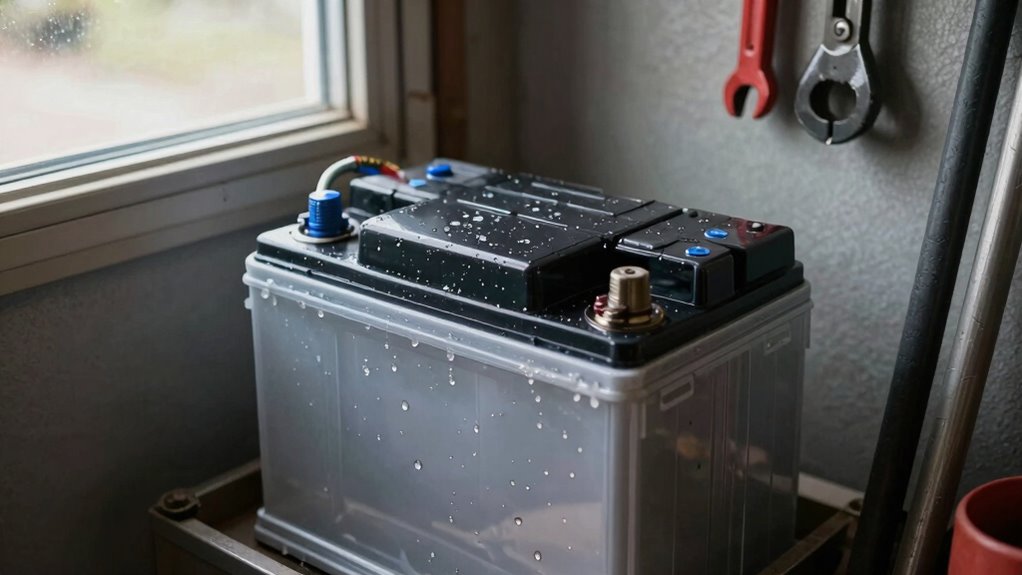
As the colder months approach, it’s essential to give your vehicle’s battery some extra attention. Off-season battery care isn’t just about avoiding frustrating breakdowns; it directly impacts your car’s performance when you need it most. Proper battery maintenance during this time helps guarantee your vehicle starts reliably, especially when temperatures plummet. Cold weather strains your battery, causing it to work harder and drain faster. By taking proactive steps now, you can prevent unexpected failures and extend your battery’s lifespan.
One of the most effective ways to prepare your battery for the off-season is to focus on corrosion prevention. Corrosion around the terminals is a common issue that hampers electrical flow, leading to weak starts or complete failure. Regularly inspecting your battery terminals for white, blue, or greenish deposits can help you catch corrosion early. A simple cleaning with a mixture of baking soda and water, along with a wire brush, can remove buildup and restore a solid connection. Applying a thin layer of dielectric grease afterward helps seal the terminals against moisture, further preventing corrosion and guaranteeing consistent performance.
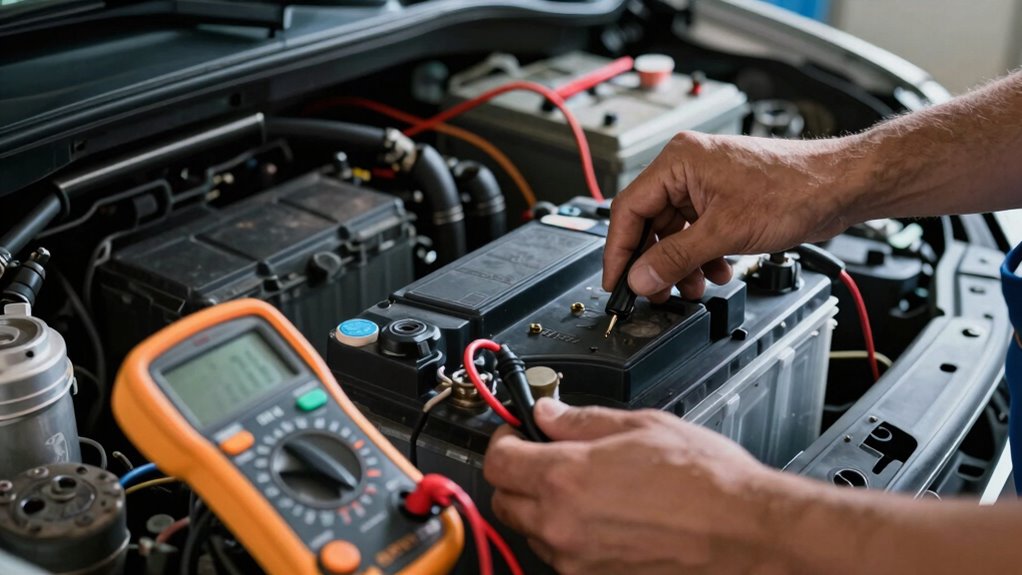
Battery maintenance also involves checking the overall health of your battery. Use a voltmeter or have a professional test it to confirm it’s holding a proper charge. If your battery is more than three to five years old, it’s wise to think about replacing it preemptively rather than waiting for it to fail unexpectedly. Keeping the battery terminals tight is another essential step, as loose connections can cause intermittent power issues, especially in colder weather. Make sure the battery is securely mounted to prevent vibrations, which can accelerate wear over time. Additionally, understanding the importance of battery longevity can help you make informed decisions about maintenance and replacement schedules. Regularly monitoring the battery’s health can help you identify potential issues before they become serious problems. Maintaining a healthy charge level is critical, especially because a well-maintained battery is less likely to suffer from capacity loss over time. If you use your vehicle infrequently during the off-season, consider investing in a battery maintainer or trickle charger. These devices keep your battery charged without overcharging, reducing strain and preventing it from going dead completely. Proper storage of your vehicle in a garage or covered area also helps shield the battery from extreme cold and moisture, both of which can impair its function. Additionally, understanding how battery technology has evolved can provide insights into choosing the right type of battery for your vehicle’s needs.
As an affiliate, we earn on qualifying purchases.
Frequently Asked Questions
How Often Should I Check My Battery During the Off-Season?
You should check your battery at least once a month during the off-season. Regular battery maintenance helps prevent issues like discharge or corrosion. During these checks, inspect for corrosion and make sure the terminals are clean. Use proper storage solutions, like a battery tender or trickle charger, to keep it charged and in good condition. Consistent maintenance guarantees your battery performs at its best when peak season arrives.
Can Storage Temperature Affect Battery Longevity?
Surprisingly, storage temperature can greatly impact your battery’s longevity. You might think extreme cold or heat wouldn’t matter, but temperature sensitivity plays a big role. Too hot, and your battery ages faster; too cold, and it struggles to hold charge. To maximize lifespan, focus on storage optimization—keep your battery in a cool, dry place, ideally around 50°F (10°C). Proper storage guarantees you’re ready for peak performance when season hits.
What Are the Signs of a Failing Off-Season Battery?
You’ll notice signs of a failing off-season battery if it shows corrosion around the terminals or if you need to charge it more frequently than usual. Corrosion can hinder proper connections, while increased charging needs indicate reduced capacity. If your battery struggles to start your vehicle or exhibits slow engine cranking, these are clear signs it’s losing its power. Regular maintenance and checking for corrosion help prevent complete failure.
Should I Disconnect My Battery When Not in Use?
Yes, you should disconnect your battery when not in use, especially during the off-season. This prevents parasitic drain and helps preserve your battery’s charge. Make certain to insulate the battery properly with battery insulation to avoid temperature damage. Additionally, check your charging frequency periodically; a maintained charge ensures your battery stays healthy and ready for peak-season performance. Disconnecting and proper insulation are key steps for long-term battery health.
Are Special Maintenance Tools Needed for Off-Season Battery Care?
You don’t need special maintenance tools for off-season battery care, but basic supplies like a wire brush for battery cleaning and corrosion prevention are helpful. Regularly clean the terminals to remove dirt and corrosion, which can impair performance. It’s also wise to check the electrolyte levels if applicable. These simple steps guarantee your battery stays in good shape, preventing issues when the season changes and ensuring peak performance.
Conclusion
Taking care of your batteries during the off-season is like tending to a trusty steed before a grand joust—you guarantee it’s ready to perform when the peak season arrives. By staying vigilant and following simple maintenance tips, you’ll avoid surprises and keep your vehicle running smoothly. Remember, neglecting this routine today could leave you stranded like a knight without his armor tomorrow. So, don’t delay—prepare now and conquer the roads ahead!
Halloween Picks
halloween
As an affiliate, we earn on qualifying purchases.