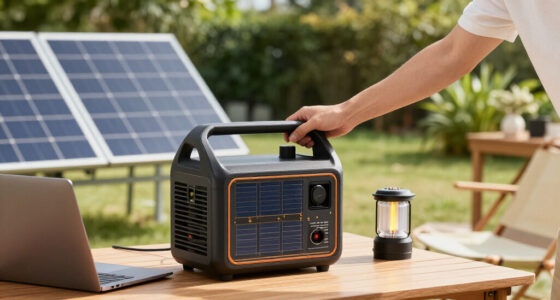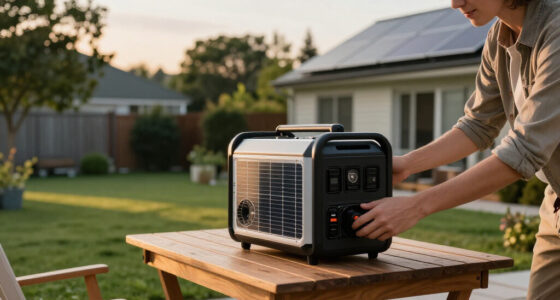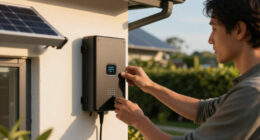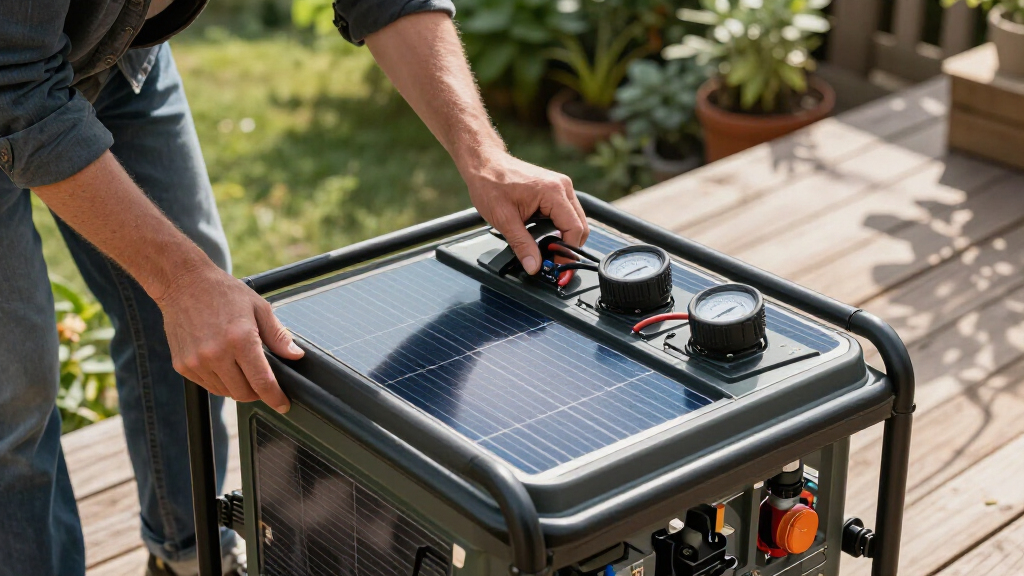
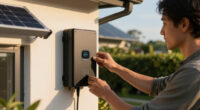
Solar-powered backup generators pair a battery power station with solar panels so you can keep essentials running during outages or off-grid trips without gas, fumes, or engine noise. The Jackery HomePower 3600 Plus stands out as the best overall pick for real home backup, with enough capacity and solar input to run refrigerators and medical devices through extended outages. For tighter budgets, the Jackery Solar Generator 300 and the MARBERO 237Wh kit cover lights, phones, and small electronics at a fraction of the size. The main tradeoff in this category is capacity versus portability: big units like the OSCAL PowerMax 6000 can run a household but weigh over 60 pounds, while compact kits recharge slowly because their panels are small. Read on for the full breakdown of all 14 models and which one fits your situation.

Get backup power and energy gear delivered free — and shop member deals
- Fast, free delivery on millions of items
- Access to Prime Big Deal Days deals on October 6–7
- Prime Video, Amazon Music and more included
Complete the kit


Key Takeaways
- Watt-hour capacity was the single biggest divider in this lineup: models ranged from 237Wh (enough for phones and lights for a night) to roughly 6000Wh (multi-day home backup), and picking the wrong size is the most common mistake.
- Built-in solar panels on the BROWEY and BLAVOR models are genuinely convenient for grab-and-go emergencies, but they recharge far slower than kits with separate 200W+ panels like the Jackery 1000 v2.
- The 40W panels bundled with most budget kits under this comparison can take a full day or more of good sun to recharge a 300Wh battery — buyers needing faster recovery should step up to 200W+ panel kits.
- Pure sine wave AC output, present on the MARBERO and all Jackery models, matters for sensitive electronics; cheaper modified sine wave units in this range can cause issues with some devices.
- One product (the BROWEY 1600W) appears under multiple listings, which suggests heavy marketplace saturation — I treated it as a single entry and compared alternatives against it directly.
| Solar Powered Generator 100W with 40W Solar Panels – Portable Power Station |  | Best Budget Starter Kit | Capacity: 146Wh | Running Output: 100W (200W starting) | Solar Panel: 40W monocrystalline, included | VIEW LATEST PRICE | See Our Full Breakdown |
| Jackery Explorer 300 Portable Power Station, 292Wh |  | Best Ultralight Power Station | Capacity: 292Wh | Weight: 7.5 lbs | Outlets: 2 AC, 1 USB-C PD, 2 USB-A, 1 car port | VIEW LATEST PRICE | See Our Full Breakdown |
| BROWEY 1600W Portable Power Station with Built-in Solar Panel |  | Best Mid-Size All-in-One | Capacity: 1024Wh | Output: 1600W continuous (3200W peak) | Built-in Solar Panel: 40W | VIEW LATEST PRICE | See Our Full Breakdown |
| Portable Solar Generator with 300W Power Station and 40W Solar Panel |  | Best Value Complete Kit | Capacity: 220Wh (60,000mAh) | Output: 300W continuous (600W peak) | Solar Panel: 40W high-efficiency, included | VIEW LATEST PRICE | See Our Full Breakdown |
| Jackery HomePower 3600 Plus Portable Power Station with 2x200W Solar Panels |  | Best Whole-Home Backup | Capacity: 3584Wh | AC Output: 3600W (7200W parallel) | Solar Panels: 2 x 200W included | VIEW LATEST PRICE | See Our Full Breakdown |
| Jackery Solar Generator 300 with 40W Solar Panel |  | Best Ultralight Pick | Capacity: 292Wh | Weight: 7.5 lbs | AC Outlets: 2 | VIEW LATEST PRICE | See Our Full Breakdown |
| BROWEY 1600W Portable Power Station with Built-in Solar Panel |  | Best All-in-One Emergency Backup | Battery Capacity: 1024Wh | Battery Type: LiFePO4 | Output: 1600W (3200W peak) | VIEW LATEST PRICE | See Our Full Breakdown |
| Jackery Solar Generator 1000 v2 with 200W Solar Panel |  | Best Overall | Capacity: 1070Wh | AC Output: 1500W (3000W surge peak) | Battery Type: LFP | VIEW LATEST PRICE | See Our Full Breakdown |
| BLAVOR 1600W Solar Generator with 1024Wh Capacity and Built-In 40W Panel |  | Best Accessory Bundle | Capacity: 1024Wh | Output Power: 1600W (3200W peak) | Battery Type: LiFePO4 | VIEW LATEST PRICE | See Our Full Breakdown |
| BROWEY 1600W Portable Power Station with Built-in Solar Panel |  | Best for Whole-Kit Portability | Battery Capacity: 1024Wh | Battery Cell Type: LiFePO4 | Output Wattage: 1600W (3200W peak, pure sine wave) | VIEW LATEST PRICE | See Our Full Breakdown |
| MARBERO 237Wh Solar Generator with 60W Solar Panel |  | Best Budget Starter Kit | Battery Capacity: 237Wh / 64000mAh | Output Power: 300W (375W peak) | AC Outlets: 2 (pure sine wave) | VIEW LATEST PRICE | See Our Full Breakdown |
| OSCAL PowerMax 6000 Solar Generator with 3×400W Solar Panels |  | Best Whole-Home Backup | Capacity: 3600Wh | AC Output: 4 outlets, 120V/240V, 6000W (9000W peak) | Charging Power: 2200W AC / 2400W solar | VIEW LATEST PRICE | See Our Full Breakdown |
| Portable Solar Generator 300W with 60W Solar Panel | 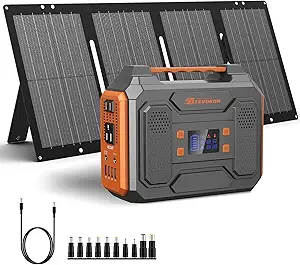 | Best for Campsite Charging | Power Output: 300W | Solar Panel: 60W monocrystalline, foldable | Conversion Efficiency: 20.5% | VIEW LATEST PRICE | See Our Full Breakdown |
| Portable Solar Generator with Panel, 300W Power Station and 40W Foldable Solar Panel |  | Best Light-Duty Home Backup | Output Wattage: 300W running / 550W starting | Solar Panel: 40W foldable | Total Power Outlets: 4 | VIEW LATEST PRICE | See Our Full Breakdown |
| solar-powered backup generator | Capacity |
|---|---|
| Solar Powered Generator 100W w | 146Wh |
| Jackery Explorer 300 Portable | 292Wh |
| BROWEY 1600W Portable Power St | 1024Wh |
| Portable Solar Generator with | 220Wh (60,000mAh) |
| Jackery HomePower 3600 Plus Po | 3584Wh |
| Jackery Solar Generator 300 wi | 292Wh |
| BROWEY 1600W Portable Power St | — |
| Jackery Solar Generator 1000 v | 1070Wh |
| BLAVOR 1600W Solar Generator w | 1024Wh |
| BROWEY 1600W Portable Power St | — |
| MARBERO 237Wh Solar Generator | — |
| OSCAL PowerMax 6000 Solar Gene | 3600Wh |
| Portable Solar Generator 300W | — |
| Portable Solar Generator with | — |
More Details on Our Top Picks
Solar Powered Generator 100W with 40W Solar Panels – Portable Power Station
For a true entry-level solar generator, this option stands out because the panel is in the box — something the Jackery Explorer 300 can’t claim at this size. The 146Wh capacity keeps phones, headlamps, and a laptop alive during a short outage or a weekend off-grid, and the aluminum-and-glass construction of the 40W panel feels more durable than typical budget folding panels. Compared with the 300W Portable Solar Generator (B0DHC51QJV), the tradeoff is raw output: 100W running means a mini-fridge or power tool is off the table entirely. The built-in LED flashlight with multiple modes adds genuine emergency value rather than a gimmick. This pick makes the most sense for first-time buyers testing whether solar backup fits their lifestyle before spending more.
Pros:- Solar panel included in the box, unlike similarly priced power-only units
- Tempered glass and monocrystalline panel construction for better durability and efficiency
- Seven output ports plus a multi-mode LED flashlight for emergency lighting
- Genuinely lightweight and compact for grab-and-go emergency bags
Cons:- 100W running output cannot handle even small kitchen appliances
- 146Wh capacity drains quickly — roughly a phone recharge cycle or two plus a laptop top-off
- Recharging depends entirely on available sunlight, which is slow at 40W
Best for: First-time buyers and casual campers who want a complete panel-plus-battery kit for phones, lights, and laptops without a big investment
Not ideal for: Anyone expecting to run a refrigerator, CPAP machine overnight, or any appliance beyond 100W — the capacity and output cap rule that out
- Capacity:146Wh
- Running Output:100W (200W starting)
- Solar Panel:40W monocrystalline, included
- Total Outlets:7
- Material:Aluminum, tempered glass, monocrystalline silicon
- Dimensions:7.5″ L x 3.7″ W x 6.1″ H
- Warranty:12-month customer support
Our verdict“A low-risk, complete starter kit for device-level backup — just don’t expect it to touch appliances.”
Jackery Explorer 300 Portable Power Station, 292Wh
At 7.5 lbs, the Explorer 300 doubles the capacity of the budget 146Wh starter unit while staying genuinely carryable one-handed — that ratio is the whole story here. The LiFePO4 chemistry rated for 4,000+ cycles means years of weekend use before meaningful degradation, a longevity advantage over cheaper lithium-ion units like the 300W portable generator with 220Wh elsewhere in this lineup. Compared with the BROWEY 1600W, this model is better suited to hikers and van-lifers than home backup: 300W covers laptops, drones, camera batteries, and a small fan, not kitchen gear. The main catch is that the solar panel is sold separately, so the total cost of a solar setup lands higher than all-in-one kits. Fast four-hour recharging partly offsets that when paired with a decent panel.
Pros:- LiFePO4 cells rated for 4,000+ charge cycles for multi-year lifespan
- 7.5 lb weight makes it one of the lightest 292Wh stations available
- Well-rounded port selection including USB-C PD and a car port
- Four-hour full recharge supports quick turnaround between uses
Cons:- No solar panel included, raising the real cost of a solar setup
- 300W rated output limits it to small electronics and personal devices
Best for: Backpackers, overlanders, and remote workers who prioritize carry weight and battery longevity over raw capacity
Not ideal for: Buyers wanting an out-of-the-box solar solution — no panel is included, and the 300W ceiling excludes most home appliances
- Capacity:292Wh
- Weight:7.5 lbs
- Outlets:2 AC, 1 USB-C PD, 2 USB-A, 1 car port
- Peak Surge:600W
- Battery Cell Type:LiFePO4
- Charge Cycles:Over 4,000
- Charge Time:4 hours
- Dimensions:15.43 x 9.92 x 11.89 inches
Our verdict“The lightest long-lived power station here for people who actually carry their gear — just budget for a panel.”
BROWEY 1600W Portable Power Station with Built-in Solar Panel
The BROWEY’s cleverest trick is the built-in 40W solar panel — there’s nothing to pack, connect, or forget, which the Jackery Explorer 300 and most rivals can’t match. With 1024Wh and a 1600W pure sine wave inverter, it crosses the threshold into real appliance territory: refrigerators, microwaves, and power tools are all viable, putting it a full class above the 300W units in this guide. The LiFePO4 battery and BMS protection deliver the same longevity story as the Explorer 300, scaled up. The tradeoffs are real, though: at 26.5 lbs it’s a car-camping and home-backup tool rather than something you haul on foot, and the integrated panel tops out at 40W, so serious off-grid recharging still needs an external panel. Versus the Jackery HomePower 3600 Plus, it’s the smaller, cheaper sibling for partial-home rather than whole-home outages.
Pros:- Built-in solar panel means genuinely nothing extra to buy or carry for top-up charging
- 1600W pure sine wave output runs sensitive electronics and most kitchen appliances
- 1024Wh LiFePO4 battery with BMS protection for long service life
- Eight total outlets let multiple devices and appliances run simultaneously
Cons:- 26.5 lbs makes it awkward for anything beyond vehicle-based use
- Integrated panel recharges slowly — full solar recovery from 1024Wh takes days at 40W
- Costs notably more than the sub-300W kits in this roundup
Best for: Households and RV owners who want fridge-and-appliance backup power with a zero-setup solar trickle charge built in
Not ideal for: Backpackers and anyone needing fast solar recharging off-grid — the built-in 40W panel is a trickle, not a primary charger
- Capacity:1024Wh
- Output:1600W continuous (3200W peak)
- Built-in Solar Panel:40W
- Battery Type:LiFePO4
- Total Outlets:8
- Waveform:Pure sine wave
- Weight:26.5 lbs
- Dimensions:5.7″ L x 13.3″ W x 17.2″ H
Our verdict“The most self-contained appliance-capable option here — ideal if you want one box that does everything at moderate scale.”
Portable Solar Generator with 300W Power Station and 40W Solar Panel
This kit hits a sweet spot the budget 100W unit can’t reach: 300W of continuous output with a 600W surge, a full port array for six simultaneous devices, and the panel included — all at just 5 lbs. Where the 146Wh starter model stalls on laptops, this one’s 220Wh plus tripled output handles a small TV, a fan, or a CPAP for a night. Compared with the Jackery Explorer 300, you give up the premium LiFePO4 longevity and brand ecosystem but gain an included panel and a 300-lumen floodlight rated for 30+ hours, which is genuinely useful during outages rather than a camping novelty. The absence of any stated weather resistance is the weak point — the panel needs careful handling in anything but dry conditions. This pick makes the most sense for value-focused buyers who want one purchase, complete, under $200-style expectations.
Pros:- Everything included in one box: power station, 40W panel, and floodlight
- 300W output with 600W surge handles small appliances the 100W kits can’t
- Featherweight at 5 lbs — the lightest full kit in this roundup
- Six devices can charge at once across AC, USB, and DC ports
Cons:- 220Wh capacity limits runtime to short outages or single overnight use
- No waterproofing or weather-resistance rating mentioned for panel or station
- Battery chemistry and cycle life fall short of LiFePO4 rivals like the Explorer 300
Best for: Value shoppers and emergency-prep beginners who want a complete panel-plus-battery-plus-light kit in a single affordable purchase
Not ideal for: Buyers planning extended off-grid trips or expecting long battery lifespan — 220Wh drains fast and the cells aren’t LiFePO4-grade
- Capacity:220Wh (60,000mAh)
- Output:300W continuous (600W peak)
- Solar Panel:40W high-efficiency, included
- Ports:2 AC, 3 USB, 1 USB-C, 1 DC carport
- LED Floodlight:300 lumens, 30+ hours runtime
- Weight:5 lbs
- Dimensions:8.5 x 6.7 x 4.1 inches
Our verdict“The most complete package per dollar for light-duty backup — accept the capacity limits and it’s an easy first kit.”
Jackery HomePower 3600 Plus Portable Power Station with 2x200W Solar Panels
This is the only pick here built for actual outage survival: 3584Wh and 3600W of AC output run refrigerators, well pumps, and HVAC-adjacent loads that would trip every other unit in this guide. The 400W of included solar panels recharge the unit in around four hours of good sun — a full order of magnitude faster than the BROWEY’s built-in 40W trickle. The 6,000-cycle, 10-year battery rating and parallel capability up to 7200W with 240V output make it expandable into a semi-permanent home system, and the wheels-and-handle design offsets what is inevitably a heavy machine. Compared with the BROWEY 1600W, this is the whole-house answer rather than the essentials-only answer. Tradeoffs: panels ship separately, capacity expansion requires buying additional units, and it’s a serious investment for anyone whose outages are rare and brief.
Pros:- 3584Wh capacity with 3600W output powers full-size household appliances
- Two 200W solar panels included, with roughly four-hour solar recharge
- 6,000-cycle LiFePO4-rated lifespan designed for a decade of service
- Parallel-capable up to 7200W and 240V for expanding into a whole-home system
Cons:- Solar panels ship in separate packages and may arrive on different timelines
- Meaningful capacity expansion requires purchasing additional units, not just batteries
- Overkill in cost and size for occasional short outages or outdoor recreation
Best for: Homeowners in outage-prone areas who need days of refrigerator, heating, and household appliance runtime, not just device charging
Not ideal for: Campers and casual users — the size, cost, and capacity are wasted on weekend trips and phone charging
- Capacity:3584Wh
- AC Output:3600W (7200W parallel)
- Solar Panels:2 x 200W included
- Solar Recharge Time:Approximately 4 hours
- AC+DC Recharge Time:2 hours
- Battery Lifespan:6,000 cycles / 10 years
- Voltage:120V (240V in parallel)
Our verdict“If an outage means spoiled food and a cold house rather than a dead phone, this is the tier you actually need.”
Jackery Solar Generator 300 with 40W Solar Panel
At 7.5 lbs, this is the lightest full kit in the roundup, and that changes who it serves. Compared with the Jackery Solar Generator 1000 v2, it gives up most raw capacity (292Wh versus 1070Wh), but for hikers, paddlers, and anyone carrying gear on foot, that weight gap is the whole decision. The LiFePO4 chemistry rated for 4,000+ cycles means this small unit won’t degrade into a paperweight after a few seasons, which is unusual at this size class. Pairing it with the included 40W panel means a full solar recharge takes roughly 7.5 hours of good sun, so this is a lunch-stop and weekend-camp charger, not an off-grid workhorse. The 300W output ceiling rules out anything with a heating element or heavy motor.
Pros:- Lightest solar kit in the lineup at 7.5 lbs, genuinely backpack-friendly
- LiFePO4 battery rated for over 4,000 charge cycles for years of reliable use
- Well-rounded port selection including a 100W USB-C PD and a 120W car port
- Complete kit with solar panel included, unlike larger stations sold without panels
Cons:- Full solar recharge with the included 40W panel takes roughly 7.5 hours of ideal sunlight
- 292Wh capacity and 300W output can’t handle high-wattage appliances or extended backup duty
Best for: Backpackers, car campers, and photographers who prioritize carry weight and only need to charge phones, laptops, drones, and small lights
Not ideal for: Anyone planning to run a fridge, CPAP machine, or power tools — the 292Wh capacity and 300W ceiling will run out fast
- Capacity:292Wh
- Weight:7.5 lbs
- AC Outlets:2
- USB-C Port:100W PD
- USB-A Ports:2
- Car Port:120W
- Battery Cycles:Over 4,000
- Solar Recharge (40W panel):Approximately 7.5 hours
Our verdict“Buy this if you carry your power on your back; skip it if your emergency plan involves refrigeration or medical devices.”
BROWEY 1600W Portable Power Station with Built-in Solar Panel
This BROWEY earns its place by putting a 1024Wh battery and a built-in 40W solar panel in one box, which removes the most common failure point in emergency prep: forgetting to buy the panel. Compared with the Jackery Solar Generator 300, it’s in a different league for backup duty — enough stored energy to keep a fridge or CPAP machine running through a short outage. The 3200W peak output covers motor startup surges that trip smaller units, and the MPPT controller squeezes more usable power out of marginal sunlight than basic charge controllers. The honest tradeoff: 40W of integrated solar is trickle-charge speed, so meaningful solar recovery means adding external panels, and the unspecified weight makes portability a gamble before it arrives.
Pros:- Built-in solar panel means the kit is complete with no extra purchases for basic renewable charging
- 1024Wh LiFePO4 battery sized for real appliance backup, not just phones and laptops
- 3200W peak output handles motor and compressor startup surges
- MPPT controller improves solar charging efficiency over standard controllers
Cons:- Weight and dimensions are not disclosed, making it hard to plan for storage or transport
- 40W of built-in solar is too slow to recharge 1024Wh in a single day without external panels
Best for: Households wanting a grab-and-go emergency kit that works out of the box for fridge, CPAP, and device backup during short outages
Not ideal for: Off-grid users who expect fast solar recharging — the built-in 40W panel alone is far too slow to cycle 1024Wh daily
- Battery Capacity:1024Wh
- Battery Type:LiFePO4
- Output:1600W (3200W peak)
- Built-in Solar Panel:40W with MPPT controller
- Charging Ports:AC, DC, USB-C PD 100W
- AC Charge Time:3 hours to 80%
- Cycle Life:3000+ cycles to 80% capacity
Our verdict“The right pick if you want one box that covers a short power outage from day one, as long as you accept slow built-in solar.”
Jackery Solar Generator 1000 v2 with 200W Solar Panel
This is the most complete package in the batch: 1070Wh of capacity, 1500W of AC output, and a 200W panel included — five times the solar harvest of the built-in 40W panels on the BROWEY and BLAVOR units. That panel difference is the story: where a 40W setup needs days of sun to refill, this kit does a full solar recharge in about 6 hours of good light, which is what makes genuine off-grid use possible. Add one-hour fast charging from the wall and a 23.8 lbs carry weight with a folding handle, and it balances power, portability, and recharge speed better than anything else here. The tradeoffs are real but small: the panel and station ship separately, unlocking the fastest charge mode requires the app, and PO Box delivery isn’t available.
Pros:- Included 200W panel recharges the unit fully in about 6 hours of sun, not days
- 1500W AC output with 3000W surge runs most household appliances simultaneously
- One-hour wall fast charging makes it practical for pre-storm top-ups
- 4,000-cycle LFP battery rated for over a decade of use
Cons:- Solar panel and power station arrive in separate shipments
- Super fast charging mode requires app activation before use
- Cannot ship to PO Box addresses
Best for: Campers, van lifers, and homeowners who want a serious solar-rechargeable backup that can run appliances and actually refill on sunshine in a day
Not ideal for: Minimalists who only need phone and laptop charging — the capacity and panel are overkill, and the Jackery 300 does that job for less
- Capacity:1070Wh
- AC Output:1500W (3000W surge peak)
- Battery Type:LFP
- Weight:23.8 lbs
- Ports:3 AC, 2 USB-C, 1 USB-A, 1 DC car port
- Fast Charge Time:1 hour
- Full Charge (600W charger):3 hours
- Solar Recharge (200W panel):Approximately 6 hours
- Lifespan:Over 10 years / 4,000 charge cycles
Our verdict“If you want one solar generator that does backup power and off-grid living without compromise, this is the pick that justifies its top ranking.”
BLAVOR 1600W Solar Generator with 1024Wh Capacity and Built-In 40W Panel
BLAVOR’s angle is everything-but-the-external-panel in the box: DC cords, a car cable, a carrying case, and ten adapter connectors that let it charge laptops, drones, and gadgets most stations don’t fit out of the gate. Compared with the BROWEY 1600W, the core specs nearly mirror each other — 1024Wh LiFePO4, 1600W output — but BLAVOR claims a higher 4000+ cycle life and, more usefully, accepts up to 200W of external solar input so the slow built-in panel can be supplemented toward Jackery 1000 v2-level charging speed. The built-in 40W panel remains a trickle charger: think days, not hours, to refill from sunlight alone, and you’ll need to buy that external panel to make the solar promise real. Its bundle value is the reason to choose it over near-identical rivals.
Pros:- Extensive included accessory bundle with 10 adapter connectors, DC cord, car cable, and carrying case
- Accepts up to 200W of external solar input for much faster recharging later
- 4000+ cycle LiFePO4 battery for long service life
- 1600W output with 3200W peak handles appliance and tool loads
Cons:- External solar panel needed for meaningful recharge speed is sold separately
- Built-in 40W panel is too weak to cycle the 1024Wh battery on its own
Best for: Gadget-heavy campers and RV owners who want a power station that comes ready to charge a wide variety of devices with included adapters and case
Not ideal for: Buyers expecting true solar self-sufficiency out of the box — the 40W built-in panel is too slow and the faster external panel costs extra
- Capacity:1024Wh
- Output Power:1600W (3200W peak)
- Battery Type:LiFePO4
- Cycle Life:4000+ cycles
- Built-In Solar Panel:40W
- External Solar Input:Up to 200W (panel sold separately)
- USB-C Port:100W fast charging
- Included Accessories:DC cord, car cable, carrying case, 10 adapter connectors, user manual
Our verdict“Choose this over the BROWEY if the included adapter bundle fits your devices and you plan to add a bigger panel later.”
BROWEY 1600W Portable Power Station with Built-in Solar Panel
This BROWEY variant stands apart from its sibling by being the only 1024Wh-class unit here with published dimensions and weight — 17.2 x 13.3 x 5.7 inches at 26.5 pounds — which matters when you’re deciding what fits in an RV bay or a closet shelf. It matches the Jackery 1000 v2 closely on weight while adding an eight-outlet array that lets you plug in more devices without a power strip, and the built-in 40W panel keeps renewable trickle charging always available. Where the Jackery wins decisively is solar speed: its included 200W panel refills in hours, while this unit’s 40W input means multi-day solar recovery unless you add panels. One detail to verify before buying: the 230V voltage rating may not suit standard North American outlets without an adapter.
Pros:- Published dimensions and weight make storage and transport planning simple
- Eight outlets allow many devices to run simultaneously without extra strips
- Pure sine wave 1600W output is safe for sensitive electronics
- Built-in 40W panel provides passive renewable charging wherever there’s light
Cons:- 230V voltage rating may require adapters or be incompatible with North American outlets
- 40W solar input limits solar recovery to multi-day timelines without external panels
Best for: RV owners and apartment dwellers who need to know exactly how much space the unit takes and want maximum devices plugged in at once
Not ideal for: North American buyers who don’t want to deal with a 230V system, or anyone needing fast solar recharging from the built-in panel alone
- Battery Capacity:1024Wh
- Battery Cell Type:LiFePO4
- Output Wattage:1600W (3200W peak, pure sine wave)
- Number of Outlets:8
- Built-in Solar Panel:40W
- Charging Time:3 hours to 80%
- Weight:26.5 lbs
- Dimensions:17.2 x 13.3 x 5.7 inches
- Voltage:230 volts
Our verdict“Pick this when footprint and outlet count matter more than solar recharge speed — but confirm the 230V rating works with your home first.”
MARBERO 237Wh Solar Generator with 60W Solar Panel
For anyone taking their first step into solar backup power, this kit keeps the entry cost low without cutting corners on the essentials. The 237Wh battery paired with a 60W foldable panel means you can top up phones, run LED lights, or keep a small fan going through a weekend outage. Compared with the similar 300W kits later in this roundup, MARBERO stands out for its pure sine wave AC output, which is gentler on sensitive electronics like laptops and CPAP accessories than modified sine alternatives. The tradeoff is capacity: this is a devices-only solution, not an appliance solution. Anyone hoping to run a refrigerator, microwave, or space heater needs to look at something like the OSCAL PowerMax 6000 instead.
Pros:- Pure sine wave inverter is safe for sensitive electronics
- Complete kit includes a 60W foldable panel, so no separate panel purchase needed
- Lightweight and genuinely portable at this capacity class
- Four USB ports including USB-C and QC3.0 cover modern device charging
Cons:- 237Wh capacity limits runtime to short outings or brief outages
- 300W output ceiling excludes most household appliances
- Solar charging slows dramatically under clouds or indirect light
Best for: First-time buyers and casual campers who want a complete, affordable solar kit for phones, tablets, lights, and laptops
Not ideal for: Households preparing for multi-day outages — 237Wh drains quickly and the 300W ceiling rules out kitchen appliances
- Battery Capacity:237Wh / 64000mAh
- Output Power:300W (375W peak)
- AC Outlets:2 (pure sine wave)
- USB Ports:4 (including USB-C and QC3.0)
- DC Output:12-16.8V / 10A
- Solar Panel Power:60W foldable
- Solar Conversion Rate:21.5-23.5%
Our verdict“A sensible, low-commitment entry point for device-level backup — just don’t expect it to run anything with a heating element.”
OSCAL PowerMax 6000 Solar Generator with 3×400W Solar Panels
This is the heavyweight of the batch, and it plays a different sport entirely. With 3600Wh of LiFePO4 capacity, a 6000W output ceiling, and 120V/240V dual voltage, the PowerMax 6000 can run well pumps, refrigerators, and power tools — things the MARBERO kit and the 300W campers in this guide simply cannot touch. The up to 3,500 charge cycles of the LiFePO4 chemistry translate to roughly a decade of regular use before meaningful degradation, and the included 3×400W panel array can recharge the unit at up to 2400W given good sun. The tradeoffs are real: this unit is heavy, setup is more involved than a plug-and-play camping kit, and the uninterruptible power supply function requires proper placement near your home’s critical circuits.
Pros:- 3600Wh capacity and 6000W output handle appliances, not just devices
- LiFePO4 battery rated for up to 3,500 cycles for long service life
- 120V/240V dual voltage supports heavy-duty and well-pump loads
- App control enables remote monitoring of charge status and output
Cons:- Heavy and bulky — this is a rolling or stationary unit, not a carry-along
- Installation and switchover setup demands more technical comfort than a simple kit
- Large panel array requires significant outdoor space and sunlight exposure
Best for: Homeowners who want true whole-home or essential-circuit backup for extended outages, with room for a large panel array
Not ideal for: Car campers and apartment dwellers — the weight and panel footprint make it impractical to move or deploy in small spaces
- Capacity:3600Wh
- AC Output:4 outlets, 120V/240V, 6000W (9000W peak)
- Charging Power:2200W AC / 2400W solar
- Battery Type:LiFePO4
- Charge Cycles:Up to 3,500
- Included Panels:3×400W solar panels
Our verdict“If your goal is keeping a household running through a multi-day outage rather than charging a phone at a campsite, this is the pick that actually delivers.”
Portable Solar Generator 300W with 60W Solar Panel
Where the MARBERO kit focuses on clean AC power for electronics, this option leans into charging flexibility at the campsite. With two AC outlets, a DC port, three USB ports, and a dedicated quick-charge USB port, it can simultaneously feed a camp lighting setup, a tablet, and a couple of phones — a port spread that outclasses the smaller 40W-panel kits in this guide. The included 60W monocrystalline panel also gives it a meaningful recharge advantage: compared with the 40W kits elsewhere in this roundup, it recovers meaningful power in an afternoon rather than a full day of sun. The battery management system and cooling add reliability for repeated seasonal use. The catch is the non-waterproof junction box on the panel — you’ll need to store and route it carefully in wet weather, which regular backpackers may find annoying.
Pros:- Eight total output ports let you charge a full group’s devices simultaneously
- 60W monocrystalline panel recharges noticeably faster than 40W alternatives
- Battery management system and cooling support safe, repeated use
- Comes with car-charging cables and adapters for flexible refueling away from the sun
Cons:- 300W ceiling means no kettles, hot plates, or power tools
- Junction box is not waterproof and requires dry storage
- Battery performance degrades if the unit sits unused for long stretches
Best for: Campers and road-trippers who charge many small devices at once and want faster solar recovery between uses
Not ideal for: Wet-weather or kayaking-focused adventurers — the panel’s junction box needs to stay dry, limiting where you can deploy it
- Power Output:300W
- Solar Panel:60W monocrystalline, foldable
- Conversion Efficiency:20.5%
- AC Outlets:2
- USB Ports:4 (including 1 quick charge)
- DC Ports:1
- Battery Management System:Yes, with built-in safety protections
- Included Accessories:AC adapter, car charger, solar panel kit, cables, manual
Our verdict“The strongest choice in this price tier for groups who need lots of ports and quicker solar top-ups, provided the weather stays dry.”
Portable Solar Generator with Panel, 300W Power Station and 40W Foldable Solar Panel
This kit sits at the most accessible end of the roundup, and its appeal is simplicity rather than capability. The 300W station with four outlets and a 40W foldable panel covers the basics of emergency preparedness — router, phone charging, a lamp, a small radio — without overwhelming a buyer who just wants something in the closet for storms. Compared with the Jackery Explorer 300-style options in this guide, the difference comes down to the included panel and the 7-hour rated runtime at light loads, which is enough to bridge a typical evening outage. The smaller 40W panel is the honest tradeoff: recharging takes a full sunny day, so this works best as an overnight bridge rather than an indefinite off-grid solution. Skip it if you already know you want appliance-level power — that conversation belongs to the OSCAL PowerMax.
Pros:- Everything needed for basic backup arrives in one box, panel included
- Four outlets plus USB charging covers a typical household emergency loadout
- Rated for up to 7 hours of runtime at light loads
- Lightweight enough to store on a shelf and grab quickly
Cons:- 40W panel needs a full day of sun for a meaningful recharge
- 300W output ceiling excludes nearly all kitchen appliances
- Runtime drops sharply as device load increases
Best for: Budget-minded households that want a simple storm kit for lights, phones, and a router during short outages
Not ideal for: Off-grid campers and anyone with medical devices or refrigeration needs — the small panel and modest runtime can’t sustain multi-day use
- Output Wattage:300W running / 550W starting
- Solar Panel:40W foldable
- Total Power Outlets:4
- Runtime:Up to 7 hours
- Frequency:60 Hz
- Battery Type:Lithium-ion
- Recommended Uses:Camping, home backup, light emergency power
Our verdict“A reasonable starter storm kit for light-duty home backup, as long as expectations stay at the phone-and-lamp level.”
How We Picked
I evaluated each kit through the lens a backup-power buyer actually cares about: usable capacity (watt-hours and sustained AC output), solar recharge speed (panel wattage and maximum solar input), portability (weight and form factor), and output quality (pure sine wave versus modified sine wave). Capacity and recharge speed carried the most weight, because a generator that cannot run your essentials or cannot refill itself within a day defeats the purpose of solar backup. I also factored in build quality, included accessories, and how honestly each kit’s marketing matched its real-world performance — a 300W peak rating often hides a much lower continuous output.
Ranking followed a simple logic: kits capable of meaningful home backup ranked highest, well-rounded midsize kits filled the middle, and small camping-oriented units rounded out the list with clear caveats about their limits. Where two kits were nearly identical, the one with faster solar input, better output quality, or a more complete accessory bundle placed higher. Every entry was compared head-to-head against at least one neighbor in the lineup so the differences — not just the specs — stay visible.
Factors to Consider When Choosing Solar-powered Backup Generators
Before settling on a specific kit, it helps to understand the broader landscape of solar backup power — including the mistakes that cost buyers the most. These are the factors I weighed during this comparison, explained in more depth than any single review allows.Size Your Battery to Real Outage Needs, Not Marketing Numbers
The most expensive mistake in this category is buying capacity you will never use — or far too little. Start by listing what you actually need to run during an outage: a refrigerator draws roughly 100–150W and needs 1,000–1,500Wh per day, while phone charging, LED lights, and a Wi-Fi router might only need 100Wh combined. That gap explains why this lineup spans from 237Wh to 6,000Wh. A common trap is trusting the big number in a product name, like “1600W,” which refers to inverter output, not stored energy — a 1600W unit with a small battery can run powerful devices only briefly. Multiply your daily essential load by the number of days you want coverage, add 20% for inefficiency, and buy against that figure. When in doubt, modestly oversizing is safer than undersizing, because batteries degrade over years of use.
Solar Input Speed Matters as Much as Capacity
A large battery with a tiny panel is just a heavy brick that slowly empties. Recharge math is straightforward: a 1,000Wh battery fed by a 40W panel in average conditions needs well over a full day of sun to refill, while the same battery with 400W of panels recovers in three to four peak-sun hours. Buyers routinely fixate on the power station and treat the bundled panel as an afterthought, then discover during their first real outage that they cannot regenerate power fast enough to matter. Also check the station’s maximum solar input rating — some units cap how much panel wattage they will accept, so adding extra panels later may not help. If multi-day outages are your concern, prioritize kits with 200W+ panels and expansion options. If you only need a top-up between car charges on camping trips, a small built-in panel is a reasonable convenience.
Pure Sine Wave Versus Modified Sine Wave
Inverter type is the spec most buyers skip and later regret. Pure sine wave output mimics grid power cleanly, and it is what laptops, CPAP machines, TVs, and anything with a motor or delicate circuitry expects. Modified sine wave, common on cheaper stations, can cause humming, excess heat, reduced efficiency, and in rare cases damage to sensitive devices. The budget end of this category leans heavily on modified sine wave to hit low capacity-per-dollar numbers, which is fine for incandescent lights or a fan but risky for anything you care about. My advice: if a medical device, computer, or refrigerator is part of your backup plan, pure sine wave is non-negotiable. Only accept the compromise for pure value buys dedicated to basic loads.
Battery Chemistry and Lifespan
Nearly all current models use LiFePO4 (lithium iron phosphate) or standard lithium-ion cells, and the difference compounds over years. LiFePO4 chemistry typically tolerates 2,000–4,000 charge cycles before degrading to 80% capacity, versus roughly 500–800 for older lithium-ion — meaning a LiFePO4 unit used monthly could last a decade where a lithium-ion unit fades in a few years. LiFePO4 also handles heat better and is less prone to thermal runaway, which matters for a device often left charging in a garage or vehicle. The tradeoff is weight and upfront cost per watt-hour. Check the cycle-life spec before buying; if it is not published, assume the lower figure. For occasional campers the cheaper chemistry may be fine, but for standby home power, cycle life should influence your decision as heavily as capacity.
Watch for Duplicate Listings and Inflated Specs
One pattern I noticed repeatedly in this category: identical units listed under multiple brand names or slightly different titles, a hallmark of white-label manufacturing. The BROWEY 1600W appearing three times in this comparison is a prime example. Duplicates are not automatically bad products, but they complicate warranty support, replacement parts, and firmware updates, and reviews get fragmented across listings. Similarly, be skeptical of headline wattage — always verify continuous output versus peak/surge output, and confirm capacity in watt-hours rather than trusting the model name. Established brands with consistent product lines generally offer better documentation and long-term support, which is worth something for a device you may rely on in an emergency.
Ports, Expandability, and Everyday Usability
Small usability details decide whether a generator gets used or sits in a closet. Look for USB-C Power Delivery ports (many budget kits still only offer slow USB-A), a display showing remaining percentage rather than vague bars, and a pass-through charging mode so the station can charge and power devices simultaneously. Expansion matters if you expect needs to grow: some ecosystems let you add extra batteries or link units, while cheaper stations are closed systems. Wireless phone charging pads, built-in lights, and carrying handles feel minor until you are fumbling in a dark house during an outage. None of these features should override capacity and solar input, but between two similarly sized kits, they are often the tiebreaker.
Frequently Asked Questions
Can a solar generator actually run a refrigerator during an outage?
Yes, but only the larger kits in this lineup can do it for meaningful stretches. A typical fridge draws 100–150W while running and consumes roughly 1,000–1,500Wh per day with compressor cycling, so a 292Wh unit like the Jackery Explorer 300 would give you only a few hours, while the Jackery HomePower 3600 Plus or OSCAL PowerMax 6000 can stretch to a full day or more per charge. The real question is recharge speed: to keep a fridge going indefinitely, your solar panels need to replace what the fridge consumes daily, which generally means 400W or more of panel capacity in decent weather. A small 40W panel cannot sustain a refrigerator no matter how patient you are. If fridge backup is your goal, buy for capacity and panel wattage together, not either one alone.
Are built-in solar panels better than separate foldable panels?
Built-in panels, like those on the BROWEY and BLAVOR units, win on convenience — there is nothing to connect, nothing to forget, and the station can trickle-charge on a windowsill or car dash. The tradeoff is raw speed: an integrated 40W panel is tiny compared to a separate 200W or 400W panel array, so recharging takes many times longer. Built-ins also only work well when you can position the whole unit toward the sun, which is awkward for a 30-pound power station. For emergency kits that sit ready and rarely deploy, or for topping up on multi-day camping trips, built-ins make sense. For home backup where recovery speed drives everything, separate high-wattage panels are clearly the better tool.
What capacity do I need for camping versus home backup?
Camping and home backup are different problems, and buying for the wrong one wastes money. A weekend camper powering lights, phones, a small fan, and maybe a portable fridge needs roughly 250–500Wh, which puts kits like the Jackery Solar Generator 300 or MARBERO 237Wh squarely in range. Home backup is a different scale: running essentials through an overnight outage — router, lights, phone charging, and a refrigerator for a few hours — demands 1,000Wh minimum, and multi-day coverage pushes toward 2,000Wh and beyond. Midsize units around 1,000Wh, like the Jackery 1000 v2, are the flexible middle ground that handles both roles reasonably well. The honest advice is to pick your primary use case and size for it, accepting that a true dual-purpose unit costs and weighs more.
How long do solar generators hold a charge while sitting in storage?
Most modern lithium stations self-discharge at a few percent per month, so a unit topped off and stored properly will retain the majority of its charge for six months to a year. Manufacturers typically recommend recharging to around 50–80% for long storage rather than keeping units at full charge, since sitting at 100% accelerates battery wear, and topping up every three to six months keeps the battery management system healthy. Heat is the real enemy — a station stored in a hot garage or vehicle will degrade much faster than one kept in a cool, dry spot. If you are buying this for emergency readiness, build a simple calendar reminder to check and recharge it quarterly. The best generator for an outage is one that actually has charge left when the lights go out.
Is it worth paying more for a name brand like Jackery versus a generic kit?
It depends on what you are protecting. Name brands justify their premium through consistent quality control, published cycle-life specs, accessible firmware updates, and warranty support that actually answers the phone — all of which matter for a device you may depend on during an emergency. Generic and white-label kits, including the several BROWEY listings in this comparison, often deliver impressive watt-hours per dollar and can be a smart buy for casual camping use where a failure is an inconvenience, not a crisis. The risk profile changes when a CPAP machine or home heating depends on the unit working. My suggestion: go generic for low-stakes portable power where value dominates, and stick with established brands for primary home backup where reliability and support justify the extra cost.
Conclusion
Matching the right kit to your situation is easier once you accept the core tradeoff of this category: capacity and speed cost money and weight, while portability and low prices mean accepting real limits. For best overall home backup, the Jackery HomePower 3600 Plus with its dual 200W panels is the most complete package — enough capacity for refrigeration and essentials, fast solar recovery, and pure sine wave output throughout. The OSCAL PowerMax 6000 is the best premium choice for buyers who want maximum off-grid endurance and are willing to handle the weight. The Jackery Solar Generator 1000 v2 earns best value for serious backup, delivering 1,070Wh and a 200W panel at a mid-tier commitment.
For beginners and casual campers, the Jackery Solar Generator 300 and MARBERO 237Wh kits are forgiving, simple, and inexpensive ways to learn what you actually use power for before spending more. The BROWEY and BLAVOR built-in-panel units are the best grab-and-go emergency picks — self-contained and always ready, provided you accept slow recharging. And if you want a single do-everything middle ground, the 1,000Wh class is where I would put my money. Whatever you choose, size the battery to a real list of essentials, verify the panel wattage can refill it within a day, and your solar backup will actually deliver when the grid does not.
Fall Picks
fall essentials
As an affiliate, we earn on qualifying purchases.