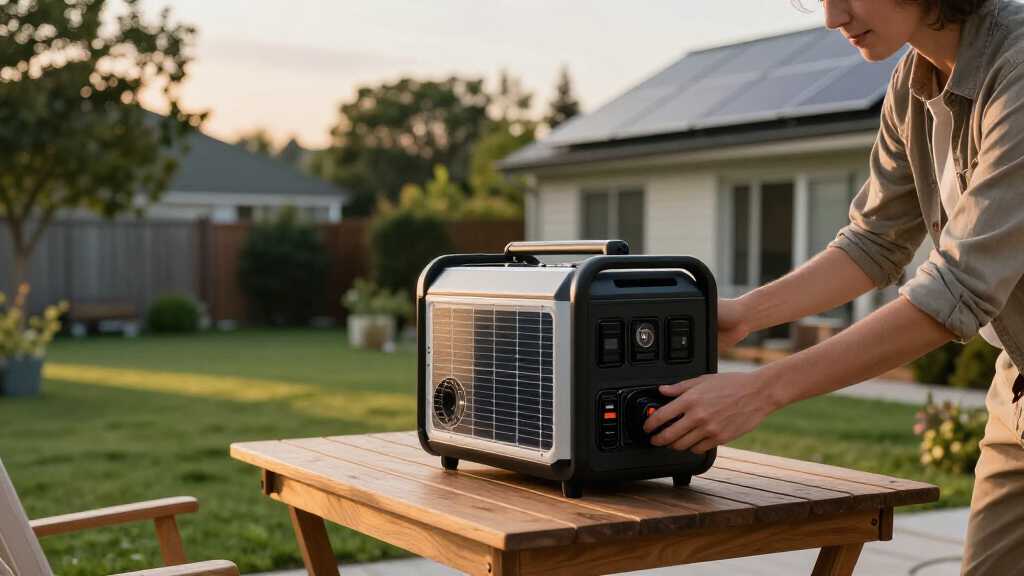

Solar-powered backup generators pair a battery power station with solar charging, but the right choice depends on what you need to keep running and for how long. The Jackery Solar Generator 5000 Plus is the strongest fit for substantial home backup, while the Jackery Explorer 2000 v2 offers a more portable path to higher-capacity power. For small devices and light outdoor use, the MARBERO 237Wh is a simpler, lower-capacity option. The main tradeoff is between stored energy and portability, with solar panel size affecting how quickly you can recharge. Read on for the full breakdown of where each system fits and what its specs mean for your plans.

Get backup power and energy gear delivered free with Prime
- Fast, free delivery on millions of items
- Prime Video, Amazon Music and more included
- Member-only deals all year
Complete the kit


Key Takeaways
- Home backup favors capacity and output: The Jackery 5000 Plus has 5040Wh capacity, 7200W output, 240V support, and expansion up to 60kWh, putting it in a different class from the compact kits.
- The Explorer 2000 v2 is the middle ground: Its 2042Wh battery and 2200W output can support more demanding needs than the 300W and 88Wh options, while remaining less ambitious than a whole-home setup.
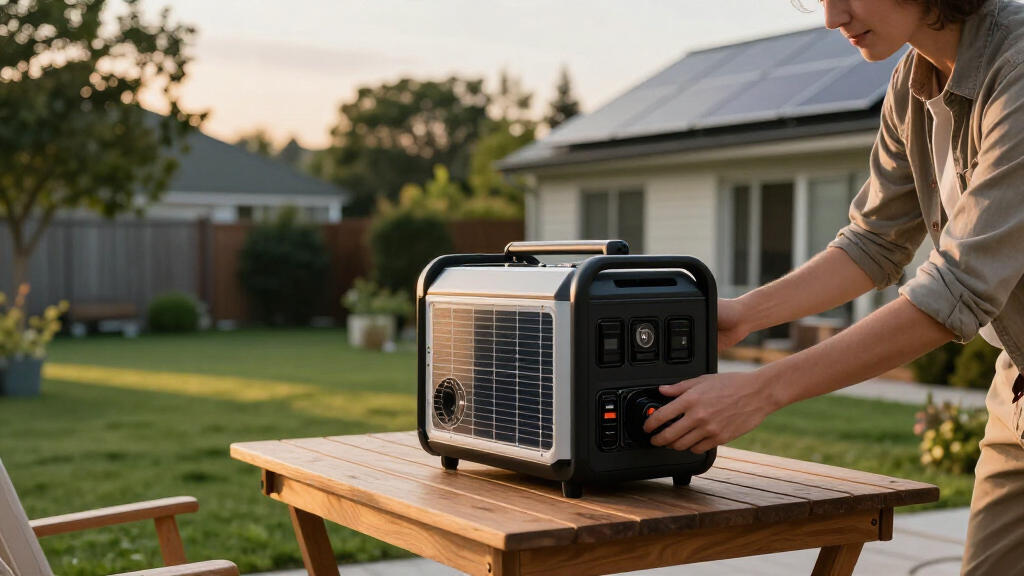
- Built-in panels trade convenience for collection area: The BROWEY and BLAVOR models include built-in solar panels, which reduce packing needs but are far smaller than the separate 200W panels bundled with the Explorer 2000 v2.
- Small kits are for small loads: The 88Wh MARBERO and 237Wh MARBERO, as well as 300W-class stations, suit phones, lights, and select low-draw devices better than long outages or high-wattage appliances.
- Panel wattage and battery size solve different problems: A larger battery stores more energy for later, while a larger panel can replenish it faster in good sun; buyers should match both to their daily use and available sunlight.




| solar-powered backup generator | Capacity | Rated output |
|---|---|---|
| BROWEY 1600W Portable Power St | 1024Wh | 1600W |
| MARBERO 237Wh Solar Generator | — | — |
| BROWEY 1600W Portable Power St | 1024Wh | 1600W |
| Portable Solar Generator with | — | 300W |
| Jackery Solar Generator 5000 P | — | 7200W |
| BLAVOR 1600W Solar Generator w | 1,024Wh | 1,600W |
| Portable Solar Generator 300W | — | — |
| Jackery Solar Generator 300 wi | 292Wh | 300W |
| Jackery Explorer 2000 v2 with | 2,042Wh | — |
| MARBERO Solar Powered Generato | 88Wh | — |
More Details on Our Top Picks
BROWEY 1600W Portable Power Station with Built-in Solar Panel
The BROWEY pairs a 1024Wh LiFePO4 battery with 1600W output, giving it far more room for small appliances and longer backup sessions than the MARBERO 237Wh Solar Generator. Its built-in panel also means there is no separate panel to pack, which suits a campsite or vehicle setup where simplicity matters. The tradeoff is solar speed: its 40W panel is modest for a battery this large, so treat sunlight as a trickle top-up rather than a quick refill. At 26.5 pounds, it is also less appealing for long walks than the five-pound Portable Solar Generator with 300W Power Station. I’d choose it for car camping or a home emergency kit where capacity and integrated charging matter more than light weight.
Pros:- 1024Wh capacity and 1600W output support more than phones and lights.
- Built-in 40W solar panel avoids packing a separate panel.
- LiFePO4 battery is rated for over 3000 cycles.
- AC, car, and solar charging provide several ways to replenish the battery.
Cons:- At 26.5 pounds, it is cumbersome for carrying far from a vehicle.
- The 40W panel is slow relative to the 1024Wh capacity.
- No app or remote monitoring feature is listed.
Best for: Car campers and emergency-kit owners who want a large battery with a solar panel built into the unit.
Not ideal for: Backpackers or buyers who need fast solar recharging, since it weighs 26.5 pounds and its built-in panel is only 40W.
- Capacity:1024Wh
- Rated output:1600W
- Peak output:3200W
- Battery:LiFePO4
- Built-in solar panel:40W
- Charging time:3 hours to 80%
- Outlets:8
- Weight:26.5 lb
Our verdict“Choose this BROWEY if you want substantial portable backup capacity and integrated solar for vehicle-based trips, and can accept slow solar charging.”
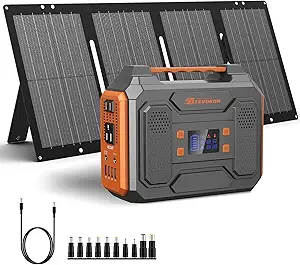
MARBERO 237Wh Solar Generator with Solar Panel Included Portable Power Station 300W Pure Sine Wave for Camping and Outdoor Use
The MARBERO is the compact choice for keeping small electronics going: its 237Wh battery, 300W continuous output, and included foldable 60W panel make a more practical solar kit for basic camp needs than the much larger BROWEY 1600W. That smaller scale is the point: phones, a laptop, and lights fit its role, while high-draw appliances do not. Its USB-C and four USB-A ports also let several personal devices charge without using the two AC outlets. The compromise is limited stored energy; a few devices can use up the battery quickly, especially when sunlight is poor or intermittent. I’d pick this for day trips and light overnight use, not as a household outage backup or a way to power appliances above 300W.
Pros:- Foldable 60W solar panel is included for off-grid charging.
- USB-C, four USB-A ports, and two AC outlets suit several small devices.
- Smaller battery and portable design are better suited to short outings than large backup stations.
- Built-in LED flashlight adds a useful camp and emergency light.
Cons:- 237Wh capacity runs short for extended use without recharging.
- 300W continuous output rules out high-power appliances.
- Solar charging depends on direct, usable sunlight.
Best for: Campers and travelers who need to recharge phones, a laptop, and small electronics with a portable panel included.
Not ideal for: Households seeking extended outage coverage or buyers who need to run appliances above 300W.
- Battery capacity:237Wh
- Battery capacity:64,000mAh
- Continuous output:300W
- Peak output:375W
- AC outlets:2 pure sine wave
- USB ports:4 USB-A, 1 USB-C
- Included solar panel:60W foldable
- Solar conversion rate:21.5–23.5%
Our verdict“Pick the MARBERO for portable solar charging of personal electronics, but choose a larger station for appliances or longer outages.”
BROWEY 1600W Portable Power Station with Built-in Solar Panel
This BROWEY offers a useful middle ground between the MARBERO 237Wh unit and the home-scale Jackery Solar Generator 5000 Plus: 1024Wh capacity and 1600W output can support more demanding gear without moving into a much larger backup system. Its LiFePO4 battery is rated for over 3000 cycles, while MPPT charging helps manage solar input. Still, the supplied description gives no solar panel wattage, so buyers cannot judge how quickly its built-in panels might refill the battery from the listed data. Its weight and bulk also reduce its appeal for hikes, and the price is not specified. I’d shortlist it for vehicle-based camping or limited emergency power where appliance-level output matters more than a clearly documented solar recharge rate.
Pros:- 1600W output and 3200W peak support more demanding loads than 300W-class stations.
- 1024Wh capacity offers substantially more stored energy than compact camping units.
- LiFePO4 battery is rated for over 3000 cycles.
- MPPT solar charging and AC, car, and solar charging options are listed.
Cons:- The product data does not state the solar panel wattage.
- Described as heavy and bulky for portable use.
- Price is not provided, making value harder to judge.
Best for: Car campers and homeowners who want a mid-size station with 1600W output for selected appliances and devices.
Not ideal for: Buyers who need a lightweight hiking power source or who want a clearly specified solar input and recharge plan.
- Capacity:1024Wh
- Rated output:1600W
- Peak output:3200W
- Battery:LiFePO4
- Solar charging:Built-in panels with MPPT
- Charging time:3 hours to 80%
- Ports:8, including AC, DC, and USB-C PD
- USB-C PD output:100W
Our verdict“Choose this BROWEY for a balance of appliance-capable output and mid-size capacity if its unspecified solar setup meets your needs.”
Portable Solar Generator with 300W Power Station and 40W Solar Panel
At just 5 pounds, this 220Wh station is the easiest option here to carry from a car to a campsite. Its included 40W panel and broad mix of ports—including two USB-C PD connections—make it a tidy kit for phones, a laptop, and small electronics. Compared with the MARBERO 237Wh Solar Generator, it has slightly less listed capacity but adds a compact form, floodlight, and a 600W peak rating. That peak figure does not change its 300W continuous limit, so it remains unsuitable for larger appliances. The small battery also means solar replenishment and careful load choices matter for overnight use. I’d choose it for portable essentials and lighting, while buyers needing multi-day backup should step up to a larger station such as the BROWEY.
Pros:- Five-pound weight and compact dimensions make it easy to carry and store.
- 40W solar panel is included.
- Two USB-C PD ports join AC, USB-A, and DC outputs.
- Integrated wide floodlight adds practical illumination.
Cons:- 220Wh capacity limits runtime for multiple devices or extended use.
- 300W continuous output cannot run high-power appliances.
- No built-in fan or cooling system is listed.
Best for: Campers and travelers who prioritize a light, compact kit for charging personal electronics and providing campsite light.
Not ideal for: People who need to power high-draw appliances or run several devices for long periods without recharging.
- Battery capacity:220Wh
- Rated output:300W
- Peak output:600W
- Weight:5 lb
- Dimensions:8.5 × 6.7 × 4.1 in
- Included solar panel:40W
- AC outlets:2
- Other ports:3 USB-A, 2 USB-C PD, 1 DC carport
Our verdict“Choose this compact kit for light-duty outdoor charging and illumination, not for appliance backup or long runtimes.”
Jackery Solar Generator 5000 Plus Portable Power Station, 5040Wh LiFePO4, 7200W 120V/240V AC Output, Expandable to 60kWh
The Jackery 5000 Plus is the clear choice for buyers whose solar-powered backup plan includes major household loads: 5040Wh of LiFePO4 storage, 7200W output, and 120V/240V support put it far beyond compact stations like the MARBERO 237Wh. Expansion to 60kWh also gives it a path to longer backup coverage, though that scale brings extra cost and a less portable setup. Solar recharge is described as taking about two hours, but actual results depend on the compatible panels and conditions; panels are not included in the supplied product details. Compared with the 1024Wh BROWEY, this is a home-first investment rather than a camping convenience. I’d choose it for serious outage preparation when capacity, high output, and expansion matter more than price or portability.
Pros:- 7200W rated output and 120V/240V AC support major household loads.
- 5040Wh LiFePO4 capacity is much larger than the mid-size BROWEY stations.
- Expandable capacity up to 60kWh supports longer backup plans.
- Solar recharge is specified at about two hours with compatible panels.
Cons:- Heavy and bulky for portable use.
- Higher price may put it beyond basic backup budgets.
- Solar panels are needed for solar recharging and are not specified as included.
Best for: Homeowners or small commercial users who need high-output backup, 240V support, and a system they can expand.
Not ideal for: Campers, budget-conscious shoppers, or anyone seeking a lightweight station with an included solar panel.
- Battery capacity:5040Wh
- Battery:LiFePO4
- Rated output:7200W
- AC voltage:120V / 240V
- Expandable capacity:Up to 60kWh
- Solar recharge time:About 2 hours
- Current rating:30A
- Frequency:60Hz
Our verdict“Choose the Jackery 5000 Plus for expandable home backup with high output, provided its cost and size fit your setup.”
BLAVOR 1600W Solar Generator with 1024Wh Capacity and Built-In 40W Panel
The BLAVOR pairs 1,024Wh of storage with a 1,600W rated output, giving it more room for household essentials and larger gear than the compact Jackery Explorer 300. Its LiFePO4 battery is rated for 4,000+ cycles, a useful advantage for buyers who expect frequent backup or camping use. The built-in 40W panel can add charge without extra setup, but it is a slow top-up for a battery this size; the unit also accepts up to 200W from an external solar panel, sold separately. That makes this a better fit for planned solar recharging than for relying on its built-in panel alone. I’d choose it for capacity and battery longevity, while skipping it if low carry weight or quick solar replenishment matters most.
Pros:- 1,024Wh capacity supports more gear and longer use than compact options such as the Jackery Explorer 300.
- 1,600W rated output covers a wider range of devices than 300W-class stations.
- LiFePO4 battery is rated for 4,000+ cycles.
- Built-in and external solar, AC, and car charging offer flexible replenishment.
Cons:- The built-in 40W panel is a limited charging source for the large battery.
- External solar panels are sold separately.
- The unit is relatively heavy and needs a carrying case for portability.
Best for: Campers or households seeking a mid-capacity LiFePO4 backup unit with several charging methods and plans to add an external panel.
Not ideal for: Buyers who need a light packable station or expect the built-in 40W panel to quickly refill a 1,024Wh battery.
- Capacity:1,024Wh
- Rated output:1,600W
- Peak power:3,200W
- Battery type:LiFePO4
- Cycle life:4,000+ cycles
- Built-in solar panel:40W
- External solar input:Up to 200W
- USB-C:100W bidirectional
- Recharging methods:AC wall, car, built-in solar, external solar
Our verdict“Choose the BLAVOR if you value a durable 1,024Wh battery and can bring an external panel for meaningful solar charging.”
Portable Solar Generator 300W with 60W Solar Panel
This kit makes solar backup approachable by including a 60W foldable panel alongside a 300W power station. Compared with the Jackery Explorer 300, it offers a higher-wattage included panel and an SOS flashlight, though the available data does not give its battery capacity, so I can’t judge how long it will run devices. Its multiple AC, DC, and USB ports suit phones, lights, and other small electronics; the 300W ceiling rules out higher-draw appliances. Safety protections for overload, heat, and electrical faults add reassurance for basic campsite use. The tradeoff is that solar performance can fall in weak light, and the panel junction box is not waterproof. I’d pick it as an entry-level bundle, not as a dependable household outage solution.
Pros:- Includes a 60W foldable monocrystalline solar panel.
- AC, DC, and USB outlets support several small-device charging needs.
- Protection features cover short circuits, over-current, over-voltage, overload, and overheating.
- Built-in flashlight includes an SOS mode.
Cons:- 300W output limits use to small devices and low-power equipment.
- Solar performance can decline in low-light conditions.
- The panel junction box is not waterproof.
Best for: First-time solar kit buyers who want an included panel for phones, lights, and other low-power camping devices.
Not ideal for: Households needing long runtimes or power for appliances above 300W, especially where rain exposure is likely.
- Power output:300W
- Included solar panel:60W monocrystalline
- AC outlets:2
- DC port:1
- USB ports:3 USB ports and 1 quick-charge USB port
- Battery management system:Yes
- Conversion efficiency:20.5%
- Included accessories:AC adapter, cigarette lighter adapter, car charging cable, solar panel kit, user manual
Our verdict“Choose this bundle for basic outdoor charging with a panel included, but look to a larger-capacity unit for outage backup.”
Jackery Solar Generator 300 with 40W Solar Panel
At 7.5 pounds and 292Wh, this Jackery favors easy carrying over the longer runtimes of the BLAVOR 1600W or Explorer 2000 v2. Its two AC outlets, USB ports, and car port make it useful for keeping personal devices and small electronics running on trips, while the 100W USB-C PD port can charge compatible devices quickly. The stated 300W output sets a clear limit: this is not the pick for high-wattage appliances or extended household backup. A 40W solar panel is listed, but the product data also says panels must be purchased separately, so buyers should confirm what the package includes before counting on solar charging. It suits light travel best; its small battery means frequent recharging for heavier use.
Pros:- At 7.5 pounds, it is substantially easier to carry than the larger BLAVOR and Explorer 2000 v2.
- 292Wh capacity suits personal electronics and short trips.
- 100W USB-C PD port supports fast charging for compatible devices.
- LiFePO4 battery is listed at over 4,000 charge cycles.
Cons:- 300W rated output excludes many larger appliances.
- 292Wh capacity limits runtime compared with the BLAVOR and Explorer 2000 v2.
- Product details conflict on whether the 40W solar panel is included or sold separately.
Best for: Solo campers and travelers who prioritize a light power station for phones, cameras, and small electronics.
Not ideal for: Families needing multi-day backup or buyers who need to run high-wattage appliances.
- Capacity:292Wh
- Weight:7.5 lbs
- Rated output:300W
- AC outlets:2
- USB-C PD port:100W
- USB-A ports:2
- Car port:120W
- Charge cycles:Over 4,000
- Solar panel:40W
Our verdict“Pick this Jackery for lightweight personal-device backup, and choose a larger station for appliances or longer outages.”
Jackery Explorer 2000 v2 with 2x200W Solar Panels, 2042Wh, 2200W AC Output
The Explorer 2000 v2 is the strongest option here for buyers who want substantial stored power and solar panels bundled: its 2,042Wh battery and 2,200W AC output exceed the BLAVOR 1600W on both capacity and rated output. The listed two 200W panels make it better equipped for solar replenishment than compact kits, though actual charging depends on conditions and setup. Fast charging and UPS capability also suit a home office or essential electronics during outages. The cost of that capacity is portability: at 66.8 pounds, it is a carry-with-care unit, despite the product description calling it compact. The listed 72-hour runtime lacks a stated load, so I would not treat it as a guaranteed duration. Choose it for heavier backup needs, not frequent carrying.
Pros:- 2,042Wh capacity and 2,200W AC output outsize the BLAVOR 1600W for heavier backup needs.
- Includes two 200W solar panels, according to the product title.
- UPS capability and fast charging support backup for essential electronics.
- LiFePO4 battery is described as offering up to 10 years of performance.
Cons:- At 66.8 pounds, it is difficult to move often.
- Solar panel connection is described as requiring multiple steps.
- The listed 72-hour runtime does not specify the load.
Best for: Homeowners or small businesses seeking a high-output battery backup with solar panels included for essential equipment.
Not ideal for: Campers who need a station they can carry easily, or buyers who need a runtime estimate tied to a specific appliance load.
- Capacity:2,042Wh
- AC output:2,200W
- Solar panels:2 × 200W
- Voltage:120V
- Outlets:3
- Current rating:18.3A
- Weight:66.8 lbs
- UPS:Yes
- Listed runtime:72 hours; load not specified
Our verdict“Choose the Explorer 2000 v2 for high-output home backup with included solar panels if its weight is manageable.”
MARBERO Solar Powered Generator 88Wh with 21W Solar Panel Kit
The MARBERO kit is the smallest pick in this group: its 88Wh capacity and 21W solar panel are aimed at topping up personal devices, rather than running household equipment. Compared with the Jackery Explorer 300’s 292Wh battery, it offers far less stored energy, but its modest scale may suit a light road-trip kit where size matters more than runtime. The included panel gives it an off-grid charging route, though solar input depends on sunlight and will be limited on cloudy days. The product data does not specify output wattage, port selection, or charging time, which makes it harder to match with particular devices. I’d keep it for phones and small electronics; buyers seeking appliance backup should move up to the BLAVOR or Explorer 2000 v2.
Pros:- Includes a 21W solar panel for off-grid charging.
- 88Wh capacity keeps the kit small and suited to personal-device backup.
- Solar charging provides an option when AC power is unavailable.
Cons:- 88Wh is far below the 292Wh Jackery Explorer 300 and limits runtime.
- Solar charging depends on sunlight and is less effective on cloudy days.
- Product data does not specify output wattage or port details.
Best for: Road-trippers or occasional campers who want a small solar kit for phone and personal-device top-ups.
Not ideal for: Buyers who need to power appliances, run devices for extended periods, or need a clearly specified AC output.
- Capacity:88Wh
- Solar panel power:21W
Our verdict“Choose the MARBERO for light device charging on short trips, not for appliance or household backup.”
How We Picked
I ranked these systems by how well their stated battery capacity, AC output, solar equipment, and portability align with actual backup needs. For home use, I gave more weight to stored energy, higher output, 240V capability, and expansion options. For camping and short outages, I weighed manageable size, included charging equipment, and the ability to power modest loads. A product’s stated wattage does not establish how long it will run a device, so runtime depends on the load and conversion losses.
The ranking reflects the differences visible in the supplied product details, not hands-on testing or independent performance measurements. That puts the Jackery 5000 Plus first for its home-scale capacity and flexibility, and the Explorer 2000 v2 next for a more portable high-capacity setup. Smaller 300W stations and sub-300Wh kits rank lower for backup because they are aimed at lighter loads. The BROWEY 1600W listing appears twice, so I treat the repeated entry as one distinct model and avoid inventing differences between the two listings.
Factors to Consider When Choosing Solar-powered Backup Generators
Before choosing a solar generator, I would start with the loads you need to cover and how long you need them powered. The product names and panel bundles can make two systems sound comparable even when their batteries, output limits, and recharge potential differ sharply.
Calculate the Energy You Need
List the devices you plan to run, their wattage, and the hours of use you expect each day. Multiply watts by hours to estimate watt-hours, then add a margin for conversion losses and changing conditions. This step matters because a station’s W output describes the load it can handle at once, while Wh capacity indicates the stored energy available over time. A 300W station may run a small device but cannot necessarily start or sustain an appliance with a higher draw. Avoid choosing by the biggest watt number alone; a high-output unit with too little capacity can still run out quickly.
Check Both Continuous and Surge Output
Some appliances briefly draw more power when their motors start, so compare their startup demand with the generator’s surge rating as well as its continuous rating. Refrigerators, pumps, and tools can be more demanding than their typical running wattage suggests. If you cannot find a clear surge specification, do not assume the unit will handle a motor load just because its headline output looks sufficient. Pure sine wave output can matter for sensitive electronics and some appliances, but it does not increase capacity. For a planned home backup circuit, confirm the power station’s supported connections and transfer method before purchase.
Match Solar Input to Your Recharge Window
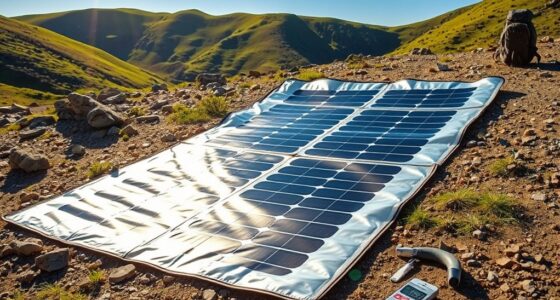
Panel wattage indicates rated charging potential under favorable conditions, not a guaranteed daily energy total. Shade, cloud cover, panel angle, temperature, and the unit’s solar input limit all affect how much energy reaches the battery. A larger panel can be more useful than extra battery capacity if you need to replenish energy each day, while a larger battery helps carry power through the night or poor weather. Check the generator’s maximum solar input and compatible connectors before pairing it with panels. Built-in panels make a kit easier to carry, but their smaller collection area can extend recharge time.
Treat Battery Capacity and Expandability as a Plan
A large battery can cover longer outages, but it also adds cost, weight, and storage needs. Expansion is useful when your energy needs may grow, though compatible batteries can add considerable expense and may have separate limits. If you only need to charge phones and run lights, a home-scale expandable system may be excess capacity you rarely use. For longer outages, consider how many days of cloudy weather you want to cover and whether you can reduce consumption. Compare usable capacity, expansion cost, and recharge options as one backup plan.
Decide What Portability Really Means
Portable can mean a small kit for a backpack, a wheeled station for a vehicle, or a large battery that can be moved between rooms. Check the weight and dimensions of both the station and its panels, since a powerful unit may be difficult to position where it is needed. Separate folding panels collect more energy but require setup space and safe storage. Integrated panels simplify carrying and deployment, with the tradeoff of limited panel area and positioning flexibility. Think through the full route from storage to sunlight rather than judging portability from the product label.
Account for Setup, Safety, and Ownership Costs
A solar generator is not automatically a whole-home backup system; connecting selected household circuits may require compatible transfer equipment and qualified installation. Never feed power into household wiring through an improvised connection. Check the manufacturer’s guidance for indoor placement, operating temperature, storage charge, and battery care before relying on a unit for emergencies. Also price the panels and cables you actually need, since an included small panel may not recharge a large battery quickly. Warranty terms and replacement or expansion battery availability can shape long-term value as much as the initial price.
Frequently Asked Questions
Can a 300W solar generator run a refrigerator during an outage?
It depends on the refrigerator’s startup surge and ongoing energy use, so the 300W label alone cannot answer the question. Check the appliance’s rated and startup wattage against the station’s continuous and surge output limits. Then compare its daily watt-hour consumption with the generator’s battery capacity to estimate runtime. A compact 300W model is better suited to modest electronics and lights unless its specifications clearly support the refrigerator load. Solar input and sunlight determine how much runtime you can restore during the day.
Is the Jackery 5000 Plus a better backup choice than the Explorer 2000 v2?
It is a better fit if you need much more stored energy, higher output, 240V capability, or a path to expand the system. The Explorer 2000 v2 is the more portable choice for buyers who need a substantial battery but do not need a home-scale system. The 5000 Plus also calls for a larger budget and more space, and its capabilities matter only if your appliances and backup plan can use them. Compare the loads you need to power and their expected runtime before paying for extra capacity. Neither model should be treated as a complete home installation without checking connection and transfer requirements.
Will a small included solar panel keep a large power station charged?
It can add energy in sunlight, but a small panel may take a long time to refill a large battery. The gap between a panel’s rated wattage and the station’s capacity is a useful warning: the system may be convenient for topping up, not rapid recovery after heavy use. Estimate how much energy you consume in a day and compare it with realistic panel production for your location and season. Check the power station’s maximum solar input before buying additional panels. A panel bundle is not automatically sized for the battery it accompanies.
Should I choose a built-in solar panel or separate folding panels?
A built-in panel favors quick setup and fewer separate pieces, making it appealing for light use or short trips. Separate panels offer more collection area and can be positioned toward the sun while the battery sits in shade. That flexibility can matter more during an outage, when you want meaningful daily recharge rather than a small top-up. Separate panels also add bulk and require storage space, and compatibility needs checking. Choose based on how much energy you expect to recover each day, not convenience alone.
What should I buy if I only need to charge phones and run lights?
A compact kit such as the 88Wh MARBERO or 237Wh MARBERO may cover light electronics without the cost and weight of a home-scale station. Estimate the number of phone charges and hours of lighting you need between recharges, since even small devices add up over several days. The 88Wh option favors a lighter, simpler setup; the 237Wh model gives more stored energy for longer use. A 300W unit can offer more output headroom, but that does not automatically mean better value for low-draw needs. Compare the included panel and recharge time with how often you expect to have sun.
Conclusion
For the broadest home-backup capability in this lineup, I would choose the Jackery Solar Generator 5000 Plus, especially when higher output, 240V support, and expansion matter. Buyers seeking a portable system for substantial loads should look at the Jackery Explorer 2000 v2, while the MARBERO 237Wh makes more sense as a lower-cost pick for phones, lights, and modest outdoor use. The best beginner choice is a compact bundled kit if its stated capacity covers your simple loads; the MARBERO 88Wh suits minimal needs, and a 300W model gives more output room. For buyers who prioritize an integrated panel, compare the BROWEY and BLAVOR listings against separate-panel systems and check the actual solar input before deciding. Match your final choice to the appliances you need, the runtime you expect, and the sunlight available where you will recharge.
Fall Picks
fall essentials
As an affiliate, we earn on qualifying purchases.