

When choosing batteries, it’s essential to take into account your seasonal power needs. You’ll want to match your battery selection with energy demands, especially during winter surges. Look for options that handle extreme temperatures while remaining efficient. Balancing discharge rates helps prevent quick drainage, ensuring you have power when you need it. Opt for batteries that can scale for future needs. Understanding these factors can guide you toward the best choice for your energy requirements and more insights await.
Key Takeaways
- Choose batteries that align with seasonal energy demands to ensure sufficient power during high usage periods.
- Opt for temperature-resistant batteries to maintain efficiency in extreme weather conditions throughout the year.
- Implement load balancing strategies to distribute energy usage and prevent quick battery drainage during peak seasons.
- Select batteries with appropriate discharge rates that match seasonal energy consumption patterns for optimal performance.
- Consider future scalability in battery capacity to accommodate changing seasonal energy needs over time.
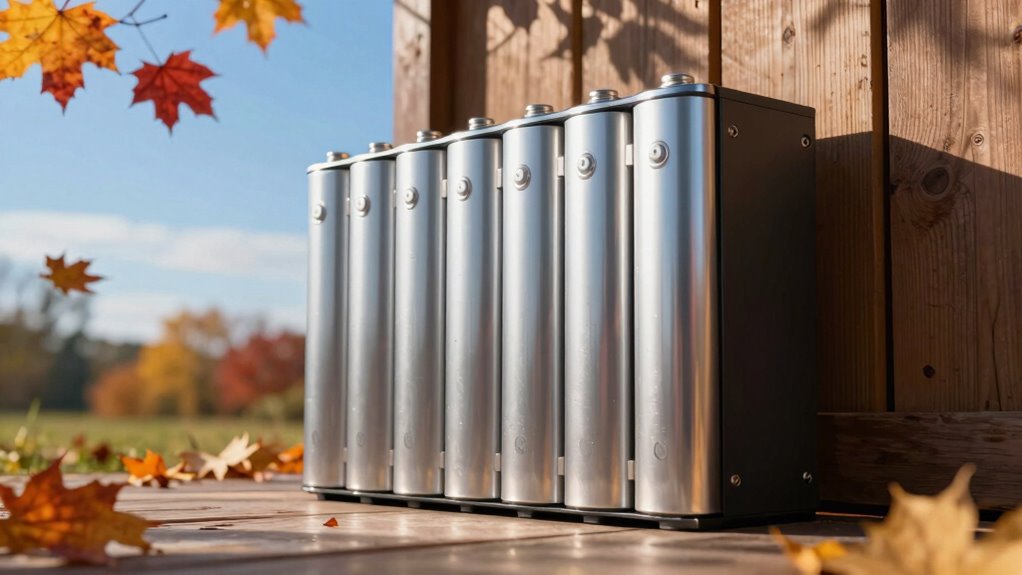
When you’re planning for seasonal power needs, choosing the right battery can make all the difference. In regions where energy demands fluctuate with the seasons, understanding how to match your battery choice with these needs is essential. You’ll want a battery that not only meets your immediate power requirements but also offers flexibility over time. This is where capacity scaling comes into play. If you anticipate seasonal spikes in energy demand, opting for a battery that allows you to scale up its capacity can help you avoid costly outages.
Temperature management is another significant factor. Batteries perform differently under various temperature conditions, and knowing how your chosen battery handles extreme heat or cold is critical. A battery that can maintain its efficiency across temperature ranges will guarantee that your energy needs are met, regardless of the season. In doing so, you’ll also enhance the longevity of your battery, which ties directly into lifecycle costs. Choosing a battery that lasts longer may have higher upfront costs, but it can save you money in the long run.
Temperature management is crucial for battery performance; choosing one that excels in extreme conditions ensures efficiency and longevity, ultimately saving you money.
When considering load balancing, think about how you’ll distribute energy usage throughout the day. A well-balanced load can prevent your battery from draining too quickly and can optimize its discharge rates. You want a system that allows you to tap into your battery’s stored energy efficiently, especially during peak usage times. Batteries with high energy density are particularly beneficial here. They store more energy in a smaller footprint, allowing you to maximize your space while guaranteeing you have enough power when you need it. Additionally, understanding the performance characteristics of your battery can help you fine-tune your energy management strategies for seasonal variations.
Furthermore, understanding the discharge rates of your battery is important for managing seasonal needs. A battery that discharges quickly may not be suitable for long-term storage, while one with a slower discharge rate could be ideal for maintaining power during off-peak seasons. Balancing these characteristics will help you choose a battery that aligns with your energy consumption patterns. Additionally, selecting batteries with appropriate temperature resilience can ensure consistent performance regardless of seasonal variations.

Weize Deep Cycle AGM 12 Volt 100Ah Battery, Maintenance-Free, 3% Self-Discharge Rate, 1150A Max Discharge Current, Perfect for RV, Solar, Trolling Motor, Wind, Marine, Camping and Off-Grid System
- Maintenance-Free Design: Sealed AGM battery, no acid leaks or maintenance
- Compact Dimensions: 12.99 x 6.73 x 8.43 inches
- Temperature Range: Operates from -10℃ to 50℃ (14℉ to 122℉)
As an affiliate, we earn on qualifying purchases.
As an affiliate, we earn on qualifying purchases.
Frequently Asked Questions
How Do Temperature Extremes Affect Battery Performance?
Temperature extremes can greatly impact battery performance. When it’s too hot or too cold, you’ll notice performance degradation. High temperatures can lead to faster chemical reactions, which might seem beneficial but actually shortens battery life. On the other hand, cold temperatures slow down these reactions, reducing capacity and efficiency. So, if you’re using batteries in varying climates, keep the temperature effects in mind to guarantee peak performance and longevity.
What Is the Lifespan of Seasonal Batteries?
You might think seasonal batteries don’t last long, but their lifespan can actually stretch from 5 to 15 years, depending on battery chemistry and usage. If you use them seasonally, you can maximize their longevity by choosing the right type for your needs. Proper maintenance and storage during off-seasons also play a vital role. So, keep an eye on your battery’s condition, and you’ll enjoy reliable power for years to come.
Can Batteries Be Recycled After Seasonal Use?
Yes, you can recycle batteries after seasonal use. Different battery types have specific recycling methods, ensuring they’re processed properly. By recycling, you minimize the environmental impact associated with improper disposal. Many recycling programs accept used batteries, so check local guidelines. It’s crucial to handle batteries responsibly to prevent hazardous materials from harming the environment. Embracing recycling not only supports sustainability but also promotes a cleaner, healthier planet for everyone.
How Do Maintenance Needs Vary by Season?
Maintenance needs vary by season, so you need to adjust your battery care accordingly. In warmer months, check for corrosion and guarantee connections are tight, while in colder months, monitor battery charge levels more frequently, as cold can drain batteries faster. Seasonal maintenance also involves cleaning terminals and verifying your battery’s fluid levels are adequate. By staying proactive, you’ll extend your battery’s life and make certain it’s ready for any seasonal demands.
What Are the Safety Concerns With Seasonal Batteries?
When it comes to seasonal batteries, you’re walking a tightrope of safety. You need to contemplate safety regulations and thermal management carefully. Extreme temperatures can cause battery degradation or even failure, leading to potential hazards like leaks or fires. Make sure you’re storing them properly and checking for any signs of damage. Regular maintenance helps you avoid these risks, ensuring your batteries perform safely throughout the changing seasons.
Conclusion
In choosing the right battery for your seasonal power needs, remember that it’s not just about capacity but also about adaptability. You want a battery that dances seamlessly with the changing seasons, providing reliable energy whether it’s the heat of summer or the chill of winter. By considering your specific requirements and the environmental factors at play, you’ll guarantee your energy solution shines bright all year round, powering your home with ease and efficiency.