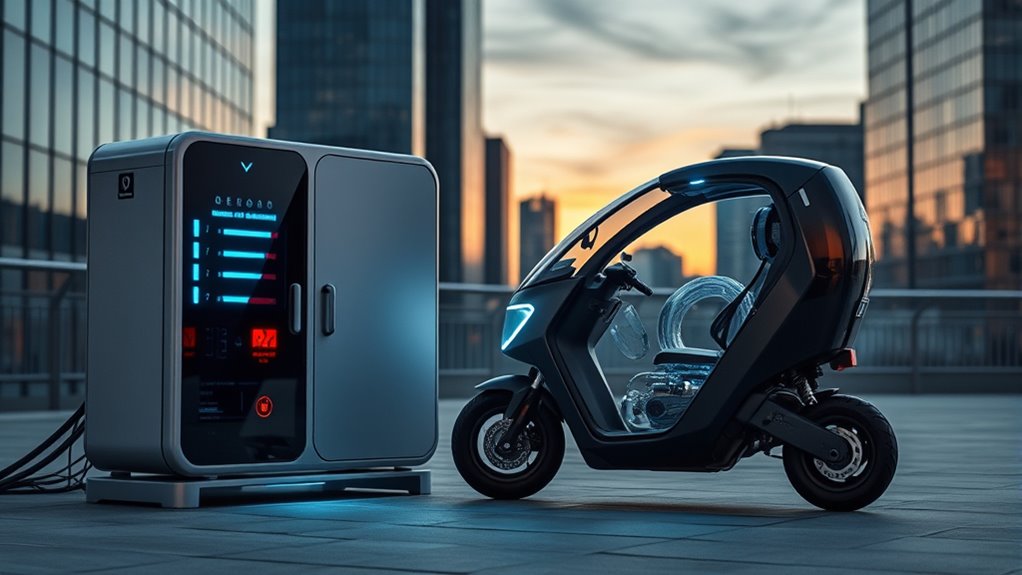

Second-life applications let you turn used batteries into valuable solutions for stationary energy storage, backup systems, and micro-mobility. By repurposing batteries no longer suitable for vehicles, you can support renewable energy, guarantee backup power during outages, and promote sustainable urban transportation. These applications help reduce waste, conserve resources, and lower costs. Exploring these options means you’ll discover how to extend battery life and build a more sustainable future—so there’s more to learn beyond this.

Get backup power and energy gear delivered free with Prime
- Fast, free delivery on millions of items
- Prime Video, Amazon Music and more included
- Member-only deals all year
Key Takeaways
- Second-life batteries extend usability by repurposing EV batteries for stationary energy storage and grid stability.
- They provide reliable, cost-effective backup power for data centers, hospitals, and critical infrastructure.
- Reused batteries support renewable energy integration by storing excess solar and wind energy.
- Micro mobility solutions, like e-bikes and scooters, utilize second-life batteries to promote sustainable urban transport.
- These applications reduce waste, lower environmental impact, and promote resource conservation through battery recycling.
Second-life applications are transforming how we use virtual environments across various industries. These innovative uses extend beyond digital realms, impacting real-world solutions like stationary storage, backup systems, and micro mobility. When you consider battery recycling, second-life applications become essential in prolonging the usefulness of batteries, especially those no longer suitable for their original purpose. Instead of discarding used batteries, you can repurpose them for stationary energy storage, reducing waste and supporting sustainable practices. This process not only conserves resources but also offers a cost-effective way to manage energy needs, especially in renewable energy setups. In urban micro mobility, second-life applications play a pivotal role in creating sustainable transportation options. You can see this in electric bikes and scooters that utilize batteries repurposed from electric vehicle (EV) batteries, which no longer meet the high standards for vehicle use but still hold enough capacity for shorter trips and urban commuting. By doing so, cities can promote eco-friendly transit options without relying solely on new battery production, thereby lowering environmental impact and transportation costs.
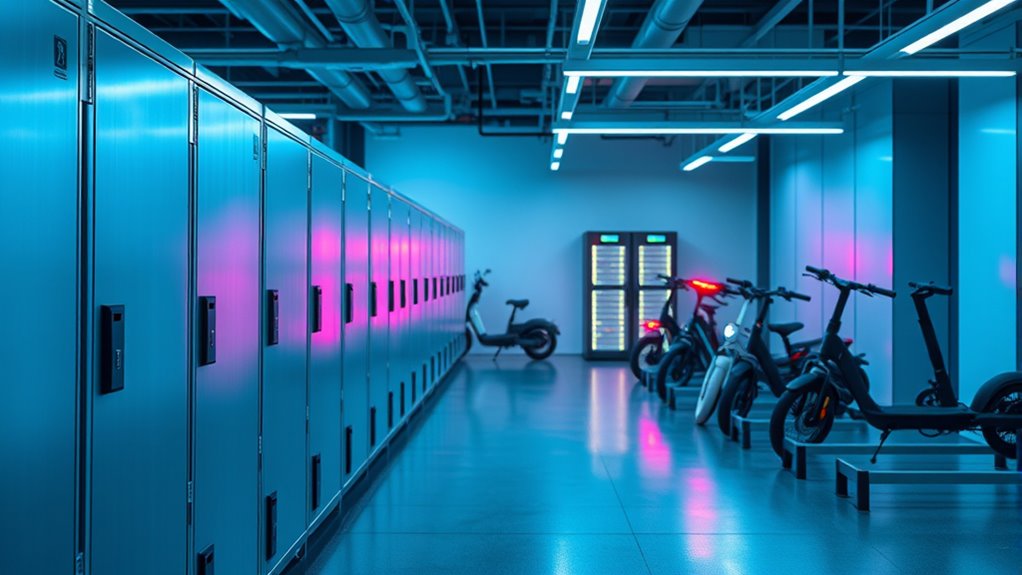
In the domain of stationary storage, second-life batteries are becoming a reliable solution for energy resilience. These batteries, once retired from their original EV roles, can be integrated into grid storage systems, emergency backup power, or residential energy solutions. You benefit from a more stable and resilient power supply, especially during outages or peak demand periods. This approach effectively extends the lifecycle of batteries, making renewable energy sources like solar and wind more viable by storing excess energy for later use. When it comes to backup systems, second-life applications ensure that critical infrastructure remains operational even during power failures. You can install these recycled batteries in data centers, hospitals, or remote facilities, knowing they provide dependable backup power at a reduced cost. Additionally, understanding the importance of proper storage conditions can further prolong battery life and performance.
In urban micro mobility, second-life applications support a circular economy by giving used EV batteries a second purpose. You can ride on electric scooters and bikes powered by batteries that are no longer suitable for vehicles but still have significant capacity for short-distance travel. This not only makes urban transportation more sustainable but also makes it more accessible and affordable. Additionally, these applications help reduce the environmental footprint of battery manufacturing by maximizing the lifespan of existing resources. Overall, embracing second-life applications across these fields allows you to participate in a more sustainable, efficient, and innovative future. It’s about transforming used batteries and devices into valuable assets, ensuring that every resource is used wisely and with purpose.
second life EV battery storage system
As an affiliate, we earn on qualifying purchases.
As an affiliate, we earn on qualifying purchases.
Frequently Asked Questions
What Are the Environmental Impacts of Second-Life Battery Applications?
You reduce your ecological footprint by using second-life batteries, which helps extend their lifespan and lowers waste. Recycling benefits are significant because they prevent harmful materials from entering the environment. These applications minimize the need for new battery production, cutting down on resource extraction and pollution. Overall, second-life uses promote sustainability and decrease environmental impacts, making them an eco-friendly choice for energy storage and micro mobility solutions.
How Cost-Effective Are Second-Life Battery Systems Compared to New Batteries?
You might think second-life battery systems aren’t cost-effective, but they often save you money through significant cost savings on replacement batteries. They tend to be cheaper than new batteries, making them a smarter choice for stationary storage and backup systems. This enhances market viability by providing affordable, sustainable energy solutions. Overall, second-life batteries offer a financially attractive option, especially when considering long-term benefits and environmental impact.
What Safety Standards Apply to Second-Life Battery Installations?
You need to guarantee your second-life battery installations meet strict safety standards and regulatory compliance. Follow safety protocols like proper ventilation, temperature monitoring, and secure mounting to prevent hazards. Adhering to industry standards such as UL, IEC, or local regulations helps minimize risks. Regular inspections and maintenance are essential, and consulting qualified professionals guarantees your system remains safe and compliant with all applicable safety standards.
How Is Battery Performance Monitored During Second-Life Usage?
You monitor battery performance during second-life usage by tracking battery health through various monitoring techniques. These include regular voltage, current, and temperature measurements, along with capacity testing. You can also use software tools that analyze data trends to detect potential issues early. By consistently applying these techniques, you guarantee the battery remains safe, efficient, and reliable, extending its lifespan and preventing failures.
What Are the Logistical Challenges in Repurposing Batteries for Second Life?
Imagine trying to untangle a giant, chaotic yarn ball—that’s what repurposing batteries feels like. You face logistical challenges like coordinating battery recycling, ensuring consistent quality, and managing a complex supply chain. These hurdles make it tough to safely and efficiently reuse batteries for second life, as you must track each cell’s history, handle variations, and streamline the process to prevent disruptions and maximize value.
Conclusion
As you explore second-life applications, you open a world where discarded energy finds new purpose, like a phoenix rising from its ashes. These innovations breathe fresh life into stationary storage, backup systems, and micro-mobility, transforming waste into wonder. Embrace this cycle of renewal, where each recycled component becomes an essential thread in the fabric of sustainable progress. In this dance of reuse, you become a steward of the planet’s future, turning yesterday’s waste into today’s opportunity.
Halloween Picks
halloween
As an affiliate, we earn on qualifying purchases.