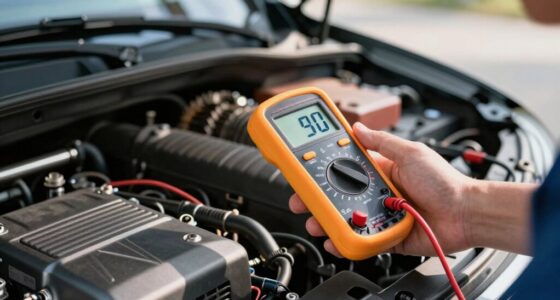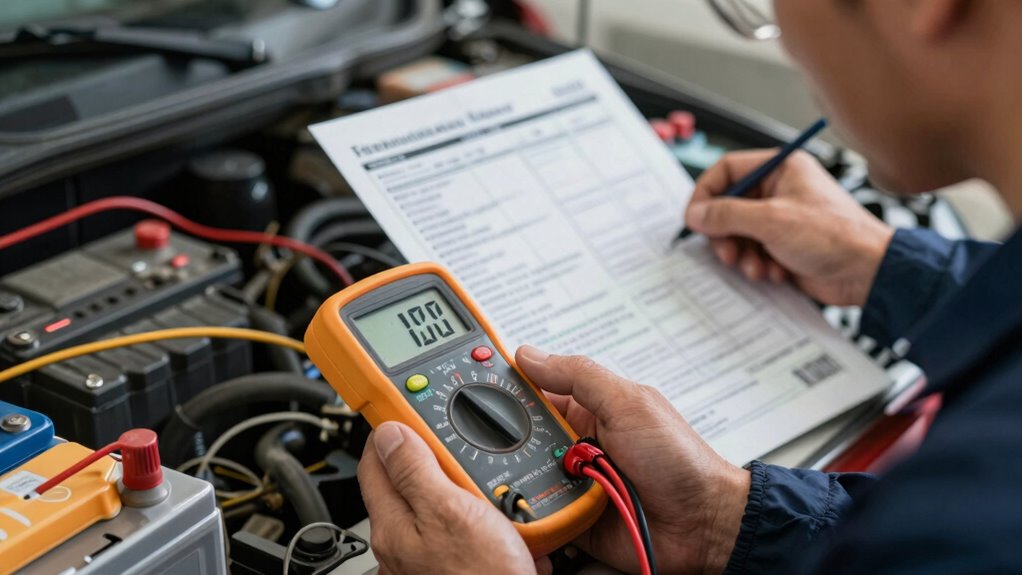

You need the full context of your battery’s history, chemistry, and usage patterns to accurately interpret test results. Relying only on numbers like voltage or load test outcomes can be misleading because factors like age, temperature, and how you use your vehicle affect performance. Without understanding these details, you might mistake a healthy battery for a failing one or miss underlying issues. Keep exploring to discover how these factors can help you make smarter maintenance decisions.
Key Takeaways
- Battery test results must be interpreted within the context of chemistry, age, and usage to accurately assess health.
- Different battery types have unique voltage thresholds, requiring context for correct diagnosis.
- Testing alone can’t identify underlying issues like poor charging or corrosion that affect performance.
- Age and environmental factors influence test outcomes, making context essential for reliable evaluation.
- Proper interpretation prevents misdiagnosis and ensures appropriate maintenance or replacement decisions.

When your vehicle’s battery starts to show signs of weakness, testing it becomes essential to identify the problem early. But understanding whether your battery needs a replacement isn’t just about reading a number on a tester; it’s about interpreting that number within the right context. The raw data from testing equipment can tell you a lot, but only if you consider the broader picture—like the battery’s chemistry, age, and how it’s been used. Battery chemistry plays a key role because different types of batteries—lead-acid, AGM, lithium-ion—have unique characteristics and failure modes. A voltage reading that seems low for one type might be normal for another. For instance, lead-acid batteries naturally have a different resting voltage than lithium-ion ones, which means a simple test without context can lead you to incorrect conclusions. Additionally, understanding the specific chemistry helps in choosing the appropriate testing methods and interpreting results more accurately. Proper testing techniques tailored to the battery type can improve diagnostic accuracy and prevent unnecessary replacements.
Knowing the testing procedures specific to each chemistry type can further enhance the reliability of your assessments. Testing equipment itself is just a tool; it provides essential data, but it doesn’t tell the full story. A load tester, for example, applies a simulated electrical load to measure how well your battery maintains voltage under stress. While it can give you a snapshot of the battery’s health, it doesn’t reveal the underlying reasons for poor performance. Is the battery old? Has it suffered from frequent deep discharges? Or is there a problem with the charging system? These questions matter because the same test result can mean different things depending on the battery’s history and operating environment. It’s also crucial to consider the battery’s age and usage patterns, as these factors influence performance and longevity. Beyond the numbers, you need to think about how your vehicle is used. Short trips, extreme temperatures, or frequent engine starts can all accelerate battery wear. Testing only the numbers without understanding these factors risks misdiagnosis. For example, a battery might pass a bench test but still fail prematurely because of underlying issues like poor charging voltage or corrosion on terminals. Recognizing the battery’s chemistry and usage patterns can significantly improve the accuracy of your diagnosis. Being aware of the battery’s history and how it has been maintained can further help in making informed decisions about replacement or repair.

ANCEL BA101 Car Battery Tester, 12V Digital Automotive Alternator Meter Diagnostic Tool,100-2000 CCA Load Capacity, Charging & Cranking Analyzer for Truck, Boat, RV, Marine Vehicle, and More
- Early Battery Issue Detection: Identifies problems before breakdowns
- Comprehensive Battery Analysis: Displays SOH, SOC, voltage, current, CCA
- Reliable and Accurate Results: High-quality clips and smart chip ensure dependability
As an affiliate, we earn on qualifying purchases.
As an affiliate, we earn on qualifying purchases.
Frequently Asked Questions
How Often Should Automotive Batteries Be Tested?
You should test your automotive battery at least twice a year, especially during extreme weather changes. Battery chemistry and charging cycles impact its lifespan, so regular testing helps catch issues early. If you notice slow starts or dim lights, test it immediately. Consistent testing guarantees your battery remains reliable, preventing unexpected breakdowns and extending its life. Stay proactive to keep your vehicle running smoothly.
What Are the Signs of a Failing Car Battery?
You’ll notice your battery acting like a tired performer—dim headlights, slow engine crank, or dashboard warning lights flashing like a warning sign. Battery corrosion might appear as white, powdery deposits, and if your alternator isn’t in top shape, it won’t keep your battery charged. These signs point to a failing car battery, so keep an eye on corrosion and alternator health to avoid being stranded.
Can Temperature Affect Battery Testing Results?
Yes, temperature can affect battery testing results. When testing, you need to take into account battery chemistry because temperature influences chemical reactions inside the battery. Cold temperatures can make the battery appear weaker, while heat might temporarily boost performance. Following proper testing protocols ensures accurate results. So, always test your battery in a controlled environment or account for temperature variations, as they directly impact the reliability of your battery’s health assessment.
What Tools Are Best for Accurate Battery Testing?
You should use a high-quality multimeter and conduct load testing to verify accuracy. For detailed analysis, a conductance tester or a specialized battery analyzer works best, considering battery chemistry and testing methodologies. These tools help measure voltage, current, and internal resistance, giving you an extensive view of the battery’s health. Always follow proper testing procedures to account for factors like temperature, which can affect results.
How Does Driving Style Impact Battery Lifespan?
Your driving style acts like a conductor, shaping your battery’s symphony of lifespan. Aggressive driving with rapid accelerations and frequent stops strains your battery, causing it to wear out faster. Gentle driving habits, on the other hand, help preserve your battery’s health, extending its life. Consistent, smooth driving promotes better battery preservation, ensuring your car’s energy source remains resilient over time. Remember, your habits write the story of your battery’s longevity.
Conclusion
Remember, battery testing isn’t just about reading numbers; it’s about understanding the story behind them. Like a detective piecing together clues, you need context to see the full picture of your battery’s health. Without it, you risk chasing shadows rather than solutions. When you consider the bigger picture, you’re not just testing a battery—you’re safeguarding your journey, making sure your automotive story continues smoothly, like a well-tuned engine whispering secrets only a careful eye can hear.