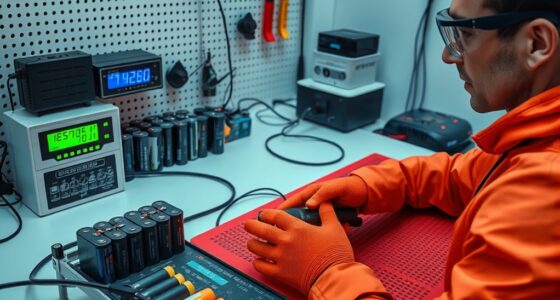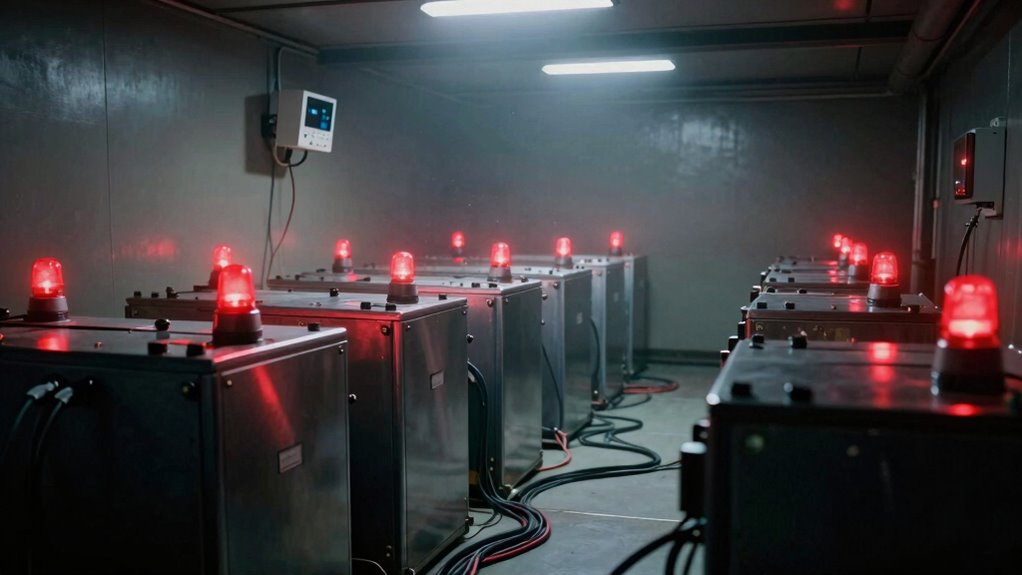

Proper placement of battery room detection systems is essential for your safety. With batteries emitting flammable gases and heat, you need early hazard identification to prevent catastrophic incidents. If detection systems are poorly positioned, you risk non-compliance with regulations, which could lead to fines or shutdowns. Ensuring ideal placement while considering airflow patterns enhances efficiency and protects your facility. There’s more to learn about how the right setup can make all the difference in your safety protocols.
Key Takeaways
- Proper placement of detection systems ensures early identification of fire hazards, mitigating risks before they escalate.
- Flammable gases emitted by batteries require strategic monitoring to prevent catastrophic outcomes in both facilities and surrounding environments.
- Regulatory compliance demands effective placement; poor locations can lead to fines or operational shutdowns.
- Inadequate airflow can hinder system functionality, emphasizing the need for optimal placement and regular maintenance checks.
- Understanding airflow patterns is crucial for maximizing detection system effectiveness and maintaining a safe operational environment.
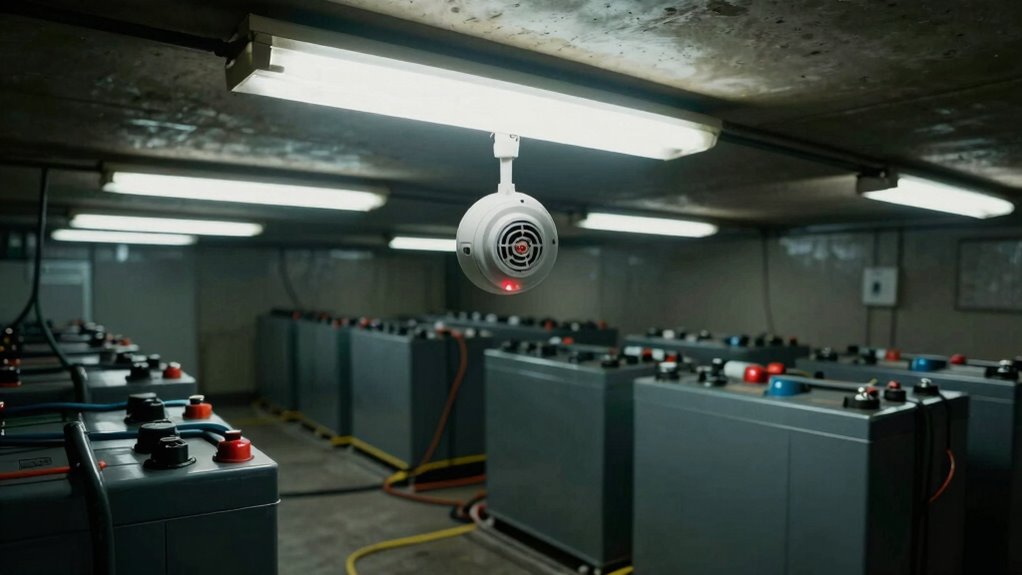
When it comes to guaranteeing safety in battery rooms, effective detection systems are vital. You might not realize it, but the placement of these systems markedly influences battery safety. Properly positioned detection technologies can identify fire hazards and other dangers early, helping you mitigate risks before they escalate. You may also want to consider how detection system placement can impact the overall safety measures in your facility. However, many facilities overlook the importance of strategic placement, leading to potential compliance issues and increased environmental impact.
Effective detection systems are crucial in battery rooms; their strategic placement significantly enhances safety and mitigates risks.
Think about the various fire hazards associated with battery operations. Batteries can emit flammable gases and heat, creating conditions ripe for accidents. If your detection systems aren’t ideally placed, they might not detect these dangers in time. This could lead to catastrophic outcomes, not just for your facility but also for the surrounding environment. You need to guarantee that your detection systems can effectively monitor all areas of your battery room, especially zones where gases may accumulate. Proper system placement can also help optimize response times during emergencies, reducing potential damage.
Regulatory compliance is another essential factor. Many regulations mandate specific safety measures for battery storage and operation. If your detection systems are poorly positioned, you could inadvertently fall short of these requirements, resulting in fines or shutdowns. By focusing on effective placement, you can enhance system efficiency and remain compliant with industry standards.
Installation challenges also come into play. When you’re setting up detection systems, consider the layout and airflow in your battery room. If the systems are installed in areas that don’t receive adequate air circulation, they may fail to function as intended. Regular maintenance protocols should include checks on both the systems and their locations. You don’t want to discover a malfunction only when it’s too late. Proper placement is crucial for ensuring the detection systems function optimally under varying conditions. Understanding airflow patterns within your battery room can significantly impact the effectiveness of your safety measures.

Kidde Carbon Monoxide & Explosive Gas Alarm, Plug-in & AA Battery, COPDLG
- Triple Detection Capabilities: Detects CO, natural gas, propane, 85 dB alarm
- Digital Backlit Display: Shows CO levels or gas presence clearly
- Early Low-Level CO Alerts: Warns at 30-70ppm with distinct signals
As an affiliate, we earn on qualifying purchases.
As an affiliate, we earn on qualifying purchases.
Frequently Asked Questions
How Often Should Battery Room Detectors Be Tested for Functionality?
You should test battery room detectors for functionality at least once a month. This testing frequency guarantees they’re operating properly and can detect hazards effectively. Don’t forget to perform detector calibration at least annually or as recommended by the manufacturer. Regular checks help identify any issues early, guaranteeing safety and compliance in your facility. Consistent maintenance keeps your battery room secure and minimizes risks associated with battery failures or leaks.
What Types of Sensors Are Best for Battery Room Detection?
For battery room detection, you want sensors that are as reliable as a superhero on a mission! Gas sensors, temperature sensors, and smoke detectors are your best bet for ensuring detection accuracy. Gas sensors can detect harmful fumes, while temperature sensors monitor heat levels, preventing fires. Combining these sensor types enhances your overall system, making sure you’re alerted to potential hazards before they escalate. Stay vigilant and keep your environment safe!
Can Battery Room Detectors Be Integrated With Existing Systems?
Yes, you can integrate battery room detectors with existing systems, but you might face some integration challenges. It’s essential to check sensor compatibility with your current infrastructure. If the detectors are compatible, you’ll streamline monitoring and enhance safety. However, make sure that you account for any necessary adjustments or upgrades to your existing systems to facilitate smooth integration. Taking these steps helps maintain an efficient and reliable safety framework in your battery room.
What Are the Costs Associated With Installing Detection Systems?
When you install detection systems, you need to take into account installation expenses and ongoing maintenance costs. Installation can vary based on the system’s complexity, ranging from a few hundred to several thousand dollars. Maintenance costs also add up, including routine checks and potential repairs. It’s essential to budget for both initial and long-term expenses to guarantee your system operates effectively and reliably without unexpected financial strain.
How Do Environmental Factors Affect Detection System Performance?
Imagine your detection system as a delicate flower in a changing garden. Just like flowers wilt in high humidity or get scorched by temperature fluctuations, your system’s performance can suffer too. High humidity can cause false alarms or hinder sensor accuracy, while drastic temperature changes might lead to delays in detection. You’ve got to guarantee your system thrives in its environment, or it won’t provide the safety you need.
Conclusion
In the world of battery rooms, detection systems are your watchful sentinels, but their placement can make or break their effectiveness. Just like a lighthouse guiding ships through foggy waters, the right positioning guarantees safety and alerts you to potential dangers in time. To truly safeguard your facility, it’s vital to rethink where these systems sit, optimizing their reach and responsiveness. Better placement isn’t just smart; it’s fundamental for a secure battery environment.