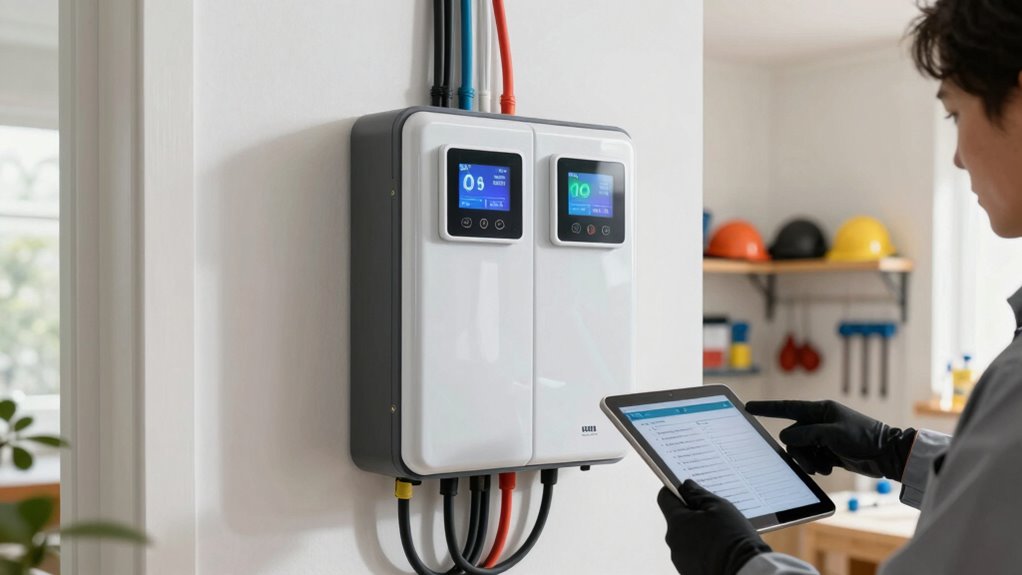

To set up a home battery inspection routine, start by creating a schedule based on your battery’s specifications and usage. Perform regular checks—monthly for most systems—using tools like a multimeter and inspecting for signs of corrosion or leaks. Tighten connections, review system logs, and note any irregularities. Pay attention to environmental factors like temperature. Staying consistent with these steps helps maintain peak performance and extends your battery’s life—if you want to master all the details, keep exploring further.

Get backup power and energy gear delivered free with Prime
- Fast, free delivery on millions of items
- Prime Video, Amazon Music and more included
- Member-only deals all year
Key Takeaways
- Assess battery specifications and usage to determine appropriate inspection frequency, typically monthly or as recommended.
- Develop a systematic checklist covering visual, mechanical, and system inspections for consistency.
- Gather necessary tools like a multimeter, hydrometer, and temperature sensors for accurate assessments.
- Record all inspection data and any anomalies in a maintenance log for trend analysis and scheduling adjustments.
- Incorporate environmental factors into your routine to optimize battery longevity and performance.
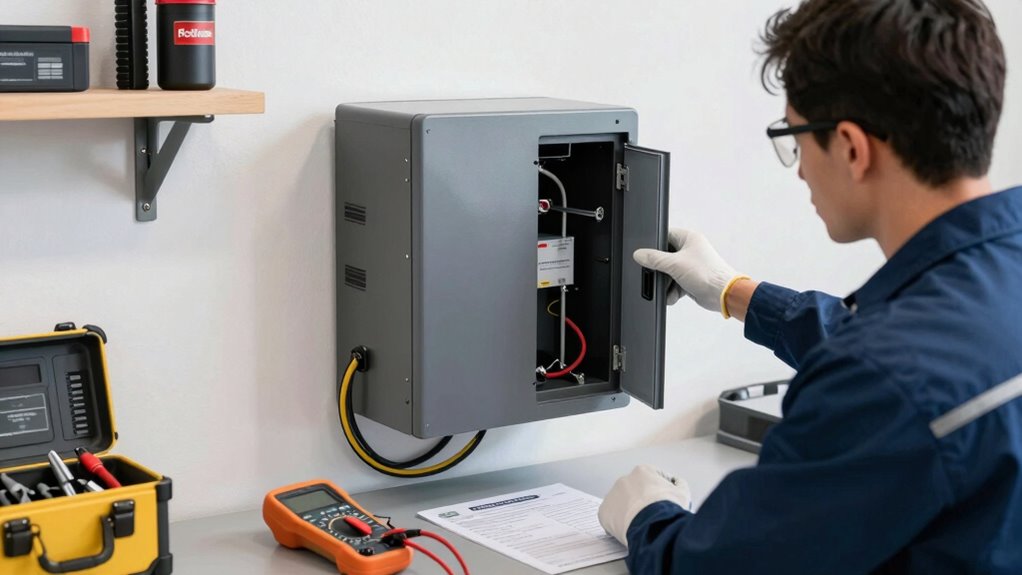
Regularly inspecting your home battery guarantees it operates efficiently and lasts longer, preventing unexpected failures. To achieve this, establishing a consistent inspection routine is essential. The first step is understanding how your battery’s lifespan can be affected by both usage and environmental factors. Regular checks help you spot issues early, reducing the risk of sudden breakdowns that could leave you without power when you need it most. Developing a systematic approach ensures you don’t overlook important maintenance tasks and keeps your system running optimally for years to come.
Regular inspections extend battery life and prevent unexpected failures through early issue detection and consistent maintenance.
Start by creating a schedule tailored to your battery’s specifications and usage patterns. Many batteries benefit from monthly inspections, while others may require less frequent checks. The key is consistency. When performing inspections, use appropriate inspection tools like a multimeter to measure voltage, a hydrometer if your system involves flooded lead-acid batteries, and temperature sensors to monitor for overheating. These tools provide real-time data on your battery’s health, allowing you to gauge whether it’s operating within safe parameters or if intervention is needed.
During each inspection, focus on visual cues first. Look for signs of corrosion, swelling, or leaks around terminals and casing. Clean any corrosion with a soft brush and a mixture of baking soda and water, then dry thoroughly. Check the battery terminals for loose connections and tighten if necessary to prevent power loss or sparks. Use your inspection tools to measure voltage levels; a significant drop from the rated voltage indicates potential issues that could shorten your battery’s lifespan. If your system includes a battery management system (BMS), review its logs to identify irregularities or warning alerts that may signal aging or malfunction. Additionally, understanding battery lifespan and how environmental factors influence it can help you optimize your maintenance routine and extend your battery’s longevity.
Incorporate maintenance tasks into your routine, such as topping off electrolyte levels if you use flooded batteries, or updating software and firmware if your battery system has smart features. Record all readings and observations in a maintenance log. Keeping detailed records helps you track trends over time, making it easier to predict battery replacement needs and avoid unexpected failures. Additionally, consider environmental factors like temperature and humidity, which can influence your battery’s health. Proper storage and placement can extend the life of your battery and improve performance.
As an affiliate, we earn on qualifying purchases.
Frequently Asked Questions
How Often Should I Replace My Home Battery?
You should replace your home battery when its lifespan reaches about 5 to 15 years, depending on the battery type and usage. Regular maintenance tips, like keeping it clean and guaranteeing proper charging, can extend its life. Keep an eye on performance indicators, such as reduced capacity or efficiency, and don’t wait too long to replace it. Timely replacement ensures your home’s energy system stays reliable and efficient.
What Signs Indicate My Battery Needs Urgent Inspection?
If your battery shows signs of decreased capacity or inconsistent charging, it’s time for an urgent inspection. Poor performance may relate to your battery’s lifespan or improper charging habits, like overcharging or frequent deep discharges. Watch for swelling, leaks, or strange smells, which also signal urgent issues. Regularly monitor your battery’s health, and address these signs promptly to prevent damage and guarantee safety.
Can I Perform Inspections Myself or Hire a Professional?
You can perform basic inspections yourself, but for thorough safety and accuracy, hiring a professional assessment is best. When doing DIY safety checks, make certain you follow proper procedures, like disconnecting power and wearing protective gear. If you’re unsure or notice issues, it’s wise to consult a professional. They have the expertise to identify problems you might miss, ensuring your home battery system stays safe and efficient.
What Safety Precautions Are Necessary During Inspection?
During inspections, you should wear protective gear like gloves and safety goggles to prevent electrical shock or burns. Make sure you understand emergency procedures, such as shutting off power sources quickly if needed. Keep a fire extinguisher nearby, and avoid working alone. Always follow manufacturer instructions and local safety regulations. Staying cautious and prepared minimizes risks, making your inspection safer and more effective.
How Do Weather Conditions Affect Battery Performance?
Weather impact is like the changing seasons shaping your garden’s growth, and it directly influences your battery lifespan. Cold temperatures slow chemical reactions, reducing efficiency, while heat accelerates wear and shortens lifespan. Rain and humidity can cause corrosion, affecting performance. You should monitor weather conditions regularly, ensuring your batteries are protected from extreme temperatures and moisture, so they stay healthy and perform at their best over time.
Conclusion
By establishing a regular home battery inspection routine, you guarantee your system stays reliable and efficient, much like a trusty steed in a well-kept stable. Don’t forget, even the most advanced technology needs tending—neglect it, and you’ll face more than just a flickering light. Staying proactive today means avoiding big surprises tomorrow. Keep up with inspections, and your home’s power will remain as steadfast as a knight’s armor—timeless, resilient, and ready for whatever comes next.
Fall Picks
fall essentials
As an affiliate, we earn on qualifying purchases.