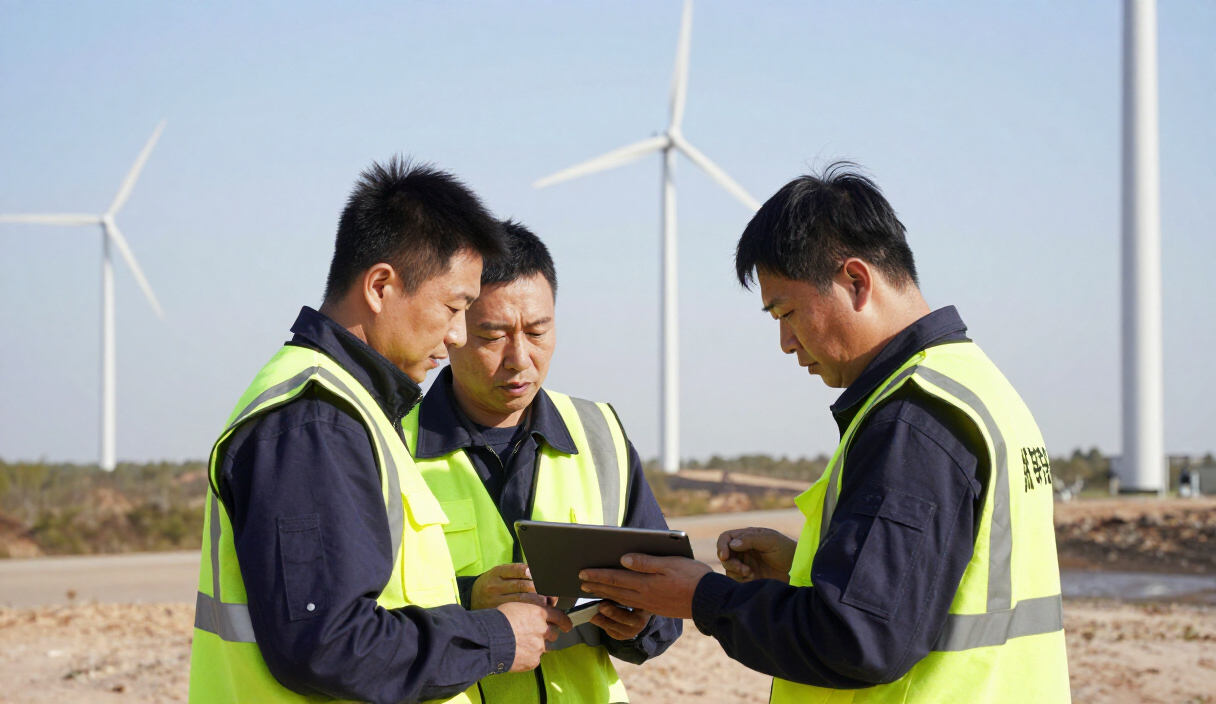
Renewable-energy construction rarely fits inside a neat site boundary. A wind project can involve distributed locations, dozens of turbine positions, rotating crews and acceptance walks carried out far from a reliable mobile connection. Decisions still have to be recorded. Defects still need evidence. Meetings still need an accountable trail. When a crew enters a dead zone, the documentation cannot simply stop.

Get backup power and energy gear delivered free with Prime
- Fast, free delivery on millions of items
- Prime Video, Amazon Music and more included
- Member-only deals all year
Energie & Öko · Wind-farm documentation
The site continues beyond the signal.
Wind construction spreads people, assets and decisions across dozens of turbine positions. Gewerkton’s answer is to begin the record at the point of work—even when the network is absent.
01 · Distributed work, continuous evidence
From spoken field observation to accountable project record
Voice-first capture keeps documentation close to the turbine position, rotating crew or acceptance walk. Defects, meetings and evidence do not have to wait for connectivity.
02 · Platform structure
3Connected product lines
03 · Cross-border fieldwork
27Content languages
EU, US and APAC participants can work in their own languages while the evidence original remains unambiguous. Chinese, Korean and Vietnamese crews are explicitly supported.
04 · Regional AI choice
13AI providers in the BYO-AI model
Organisations can bring their own keys and choose providers by region—including the EU, US, Asia and mainland China—alongside an EU cloud or their own infrastructure.
05 · German depth
Four named commercial integrations
GAEB · REB · XRechnung · DATEV
“On site, what counts is what’s proven.”
Product status: Gewerkton is in beta now, with a public beta planned for fall 2026. It is an emerging system, not a finished, generally available product.
That operating reality makes wind farms and renewables natural territory for Gewerkton, a voice-first construction documentation and defect management platform developed for global markets. Born in the German market, it combines deep German commercial integration with multilingual capture, regional AI-provider choice and an offline field workflow designed for locations where connectivity is inconsistent.
The platform is in beta now, with a public beta planned for fall 2026. That status matters: this is an emerging system, not a finished, generally available product. Its direction is nevertheless clear. Gewerkton is built around the idea that site records should begin where the work happens, using speech to turn observations into structured evidence rather than asking field teams to reconstruct events later.
Its marketing line puts the principle plainly: “On site, what counts is what’s proven.” For renewable-energy projects, that is more than a slogan. Distributed construction magnifies the cost of fragmented information because the people, assets and decisions may all be in different places.
Products Worth Considering

Jackery Explorer 300 Portable Power Station, 292Wh

Bose SoundLink Flex Bluetooth Speaker (2nd Gen), Portable Waterproof Speaker, Black

Jackery Explorer 2000 v2 Portable Power Station with Two 200W Solar Panels
As an affiliate, we earn on qualifying purchases.
A documentation problem shaped by distance
A wind farm is not one continuous working area. Its construction activity is spread across turbine positions, while crews rotate through locations and acceptance walks move from one part of the project to another. A conventional documentation process can become strained under those conditions. Records have to retain their connection to the correct location, meeting and defect even as the work advances across the site.
Gewerkton’s wind and renewables deployment field centres on precisely these conditions: distributed sites, rotating crews, field acceptance and offline capture in dead zones. Information can be captured without a live connection and synced later. That lets documentation continue at the point of work instead of being postponed until someone reaches coverage.
The distinction is important. A delayed note is not the same thing as a field record made while the relevant condition is in front of the person documenting it. Voice-first capture is intended to shorten the gap between observation and record. The field team dictates what it sees, and the platform turns that input into evidence, defects and other project documentation.
The product line carrying this workflow is Gewerkton Field. It is the voice-first construction site app within the wider platform, covering dictation to evidence, defects, daywork reports, takt and a portal. For wind projects, its defining role is straightforward: it keeps capture close to the turbine position, the acceptance walk and the crew carrying out the work.
Offline capture is a project requirement, not an edge case
Digital construction tools are often presented as though permanent connectivity were a given. Renewable sites make that assumption difficult to sustain. Dead zones are part of the stated deployment context for Gewerkton, so its field workflow allows offline capture followed by later synchronisation.
This approach separates the act of documenting from the availability of a network. A user does not have to wait for a connection before recording an observation. The record can begin in the field, then enter the connected project environment when coverage returns.
That matters across dozens of turbine positions because meetings and defects must remain documented as activity moves from one location to another. The operational challenge is not merely collecting more notes. It is maintaining continuity across a project whose physical layout naturally disperses people and information.
The same logic applies to charging-infrastructure construction. EV-adjacent sites may differ from wind projects in scale and physical form, but they share the need to document work across locations in the field. Where coverage is unreliable, offline capture provides the same practical foundation: record now, sync later.
From a spoken observation to project evidence
Voice-first documentation is particularly relevant on active sites because the information originates with people inspecting, coordinating or carrying out the work. Gewerkton Field is designed to convert dictation into evidence rather than leaving spoken observations detached from the project record.
That does not make documentation discipline automatic. It gives the discipline a field-oriented route. The person at the relevant location still has to capture the observation, and the project still has to manage what follows. But the input method is aligned with the reality of moving between turbine positions and conducting acceptance walks outside an office setting.
Defects are part of the same flow. They remain documented alongside meetings, giving the project a record that can persist across rotating crews and widely separated work areas. For renewable-energy construction, the useful idea is not technology for its own sake. It is continuity: the ability to keep evidence connected while the physical work is distributed.
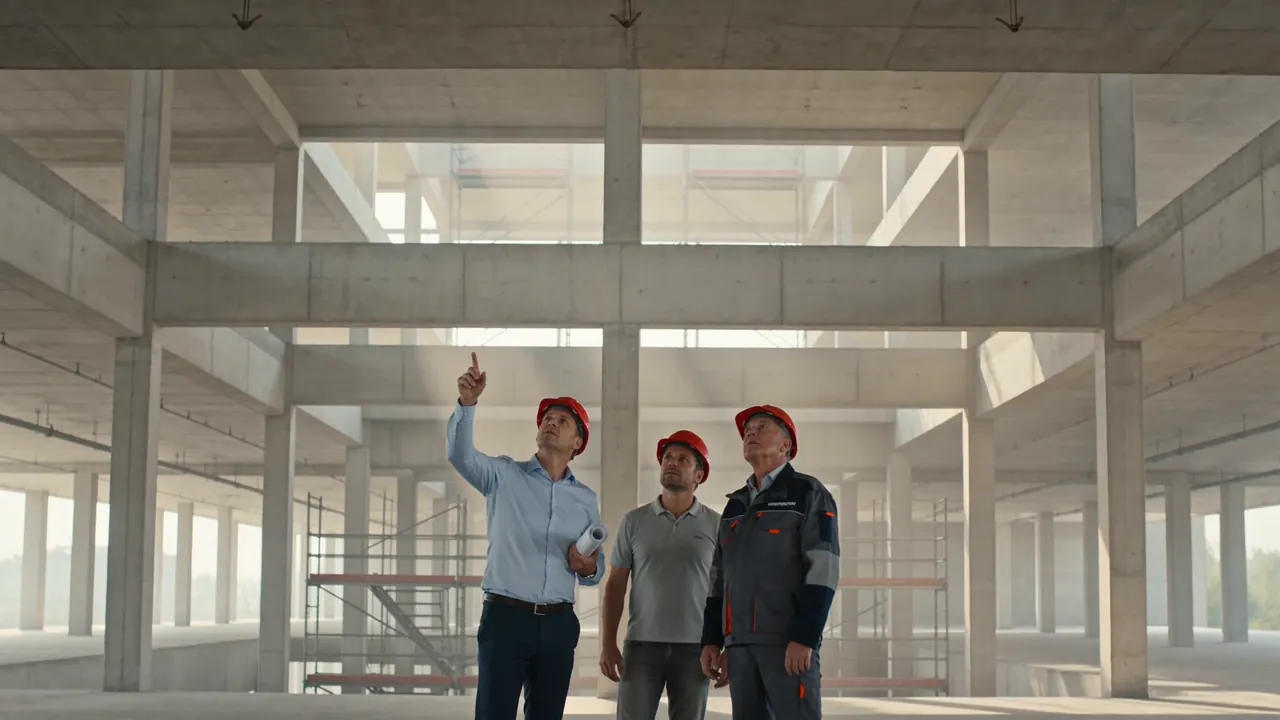
This is also where sustainable construction meets verification. Environmental ambition does not replace the need for a traceable account of what happened on site. Documentation discipline is what makes sustainable building claims verifiable. If a project is intended to contribute to lower-carbon infrastructure, its green purpose does not make careful site records less important; it makes the relationship between claim and evidence more visible.
Field is one part of a three-line system
Gewerkton is organised as a branded house with three product lines: Field, Studio and Cloud. Field is the site-facing application and the central product for the wind-farm story, but its information sits within a broader workflow.
Gewerkton Studio is the browser workspace for plans and models. Where no model exists, the site team can create one in the browser. That gives project information a plan-and-model context without assuming that every job begins with a complete model already available.
Gewerkton Cloud handles operations and model or data coordination between Field, Studio and third parties. Together, the three lines connect site capture, browser-based plans and models, and the coordination layer around them.
The structure is relevant to distributed renewables because a field record does not exist in isolation. It may originate during an acceptance walk, but it also belongs to a wider project environment. Field carries the immediate site workflow; Studio provides the workspace for plans and models; Cloud coordinates operations and data across the platform and outside parties.
Multilingual work without treating language as an afterthought
Renewable-energy projects can bring together organisations and crews from different regions. Gewerkton supports 27 content languages and lists cross-border teams as one of its six deployment fields. EU, US and APAC participants can work on the same project in their own languages while the evidence original remains unambiguous.
Projects in Asia are another stated deployment field. The platform supports Chinese, Korean and Vietnamese crews with multilingual handling from capture through to report. This is paired with a choice of where and how AI services are provided, rather than one mandatory provider or region.
Its BYO-AI model covers 13 AI providers. Organisations can bring their own keys and select providers by region, including the EU, US and Asia, with mainland China included. Gewerkton describes this as a way to avoid vendor lock-in. Data residency is also presented as a choice: an EU cloud or the organisation’s own infrastructure.
For a wind project involving rotating or cross-border crews, these capabilities address two distinct concerns. Language affects how people capture and use project information, while provider region and data residency affect where the supporting systems operate. Gewerkton treats both as configurable dimensions of the platform.
German commercial depth, global deployment scope
Although designed for global markets, Gewerkton was born in the German market and has its deepest commercial integration there. The stated integrations are GAEB, REB, XRechnung and DATEV. Those foundations sit alongside the 27-language content model and regional AI-provider choice.
The combination reflects the platform’s two-part position: detailed integration in its home market and a wider architecture intended for international use. It does not present global deployment as a single uniform environment. Instead, language, provider region and data residency are choices within the system.

That flexibility is relevant beyond renewables. Gewerkton identifies six deployment fields in total:
- Wind farms and renewables, with distributed sites, rotating crews, field acceptance and offline capture in dead zones.
- Data centres and industrial plants, where many trades work in parallel under tight deadlines and meeting decisions become trade-sorted task lists.
- Housing and building construction, with defects recorded using a photo and deadline, dictated daywork reports, and signature on the device at handover.
- Infrastructure and tunnels, where projects run for long periods, change orders are numerous and instructions are backed by original audio.
- Cross-border teams spanning the EU, US and APAC, with each participant working in their own language while the evidence original remains unambiguous.
- Projects in Asia, supporting Chinese, Korean and Vietnamese crews from multilingual capture through to report, with data residency chosen by the organisation.
Wind and renewables stand out within that list because several of the platform’s central ideas meet in one setting: work distributed across locations, crews changing over time, documentation conducted in the field and connectivity that cannot be assumed.
A technically unusual development story
Gewerkton is being built by a solo founder directing a fleet of coding agents using Codex and Claude. In one night, that fleet shipped 21 software packages, verified with negative controls and mutation tests. The development model is unusual, but the more consequential question for potential users remains what the beta demonstrates in actual project conditions.
The current beta status should remain front and centre when assessing the platform. A public beta is planned for fall 2026, and the present product should be understood in that context. Its stated capabilities describe the intended construction workflow, while broader use will provide a clearer view of how that workflow performs across the six deployment fields.
The surrounding marketing operation follows an equally deliberate technical position. Gewerkton’s website is available in 27 languages, uses zero trackers, has no cookie banner and runs on a fully egress-free architecture. Its media bank contains more than 51 self-produced clips and posters.
Those details do not determine how documentation behaves beside a turbine, but they reinforce the company’s emphasis on multilingual access, controlled infrastructure and direct production. The field proposition, however, remains the main test: whether crews can capture what matters where it happens, including when a signal is unavailable.
Why documentation belongs in the renewables conversation
Renewable-energy coverage tends to focus on generation capacity, equipment and the transition away from fossil fuels. Construction documentation is less visible, yet it sits underneath the delivery of the physical assets. Turbine positions still have to be inspected. Acceptance activity still has to be recorded. Defects and meeting decisions still have to remain intelligible as crews and work fronts move.
Gewerkton’s argument is that voice-first capture can make this process more native to the field. For wind farms, the strongest part of that argument is not novelty. It is the fit between a distributed project and a documentation method that continues offline.
The platform’s wider architecture then carries that record beyond the point of capture. Field handles the site workflow, Studio provides the browser environment for plans and models, and Cloud coordinates operations and data between the platform and third parties. Multilingual content, selectable AI regions and a choice between EU cloud hosting and an organisation’s own infrastructure extend the model to cross-border work.
For green building and renewable infrastructure, disciplined documentation is not administrative decoration. It is how project claims remain tied to evidence. That is why the most relevant question at a remote turbine position may also be the simplest: can the team record what happened, even without a signal, and keep that record connected when the project moves on?