When shipping lithium batteries, many people overlook proper hazard labels and capacity limits, risking delays or safety issues. You must use clear, durable labels indicating hazards like “Dangerous Goods” and guarantee your batteries meet international capacity restrictions. Failing to follow these guidelines can lead to shipment rejection or legal penalties. Staying aware of the correct labels, limits, and documentation is vital—if you want to avoid common mistakes and ensure safe, compliant transportation, there’s more to learn.
Key Takeaways
- Incorrect or unclear hazard labels can lead to shipment delays, rejections, or safety risks.
- Overlooking capacity limits may cause shipments to be improperly classified as dangerous goods.
- Failing to properly label batteries according to regulations can result in non-compliance and legal issues.
- Misunderstanding quantity restrictions per package can lead to regulatory violations and logistical problems.
- Inadequate documentation or record-keeping hampers regulatory audits and safety verification.
Transporting lithium batteries requires careful attention to safety regulations because of their potential fire risk if mishandled. When you’re preparing batteries for shipment, you need to prioritize proper battery packaging to prevent damage during transit. Adequate packaging involves using sturdy, non-conductive materials that can withstand shocks and impacts. You should also ensure the batteries are securely cushioned to avoid movement, which could cause internal damage or short circuits. This step is vital not only for safety but also to stay compliant with international shipping standards. Proper packaging minimizes the risk of thermal runaway, which can lead to fires, and helps you meet regulatory compliance requirements set by organizations like the International Air Transport Association (IATA) and the Department of Transportation (DOT). Additionally, understanding the thermal behavior of batteries during transport helps prevent dangerous incidents caused by temperature fluctuations.
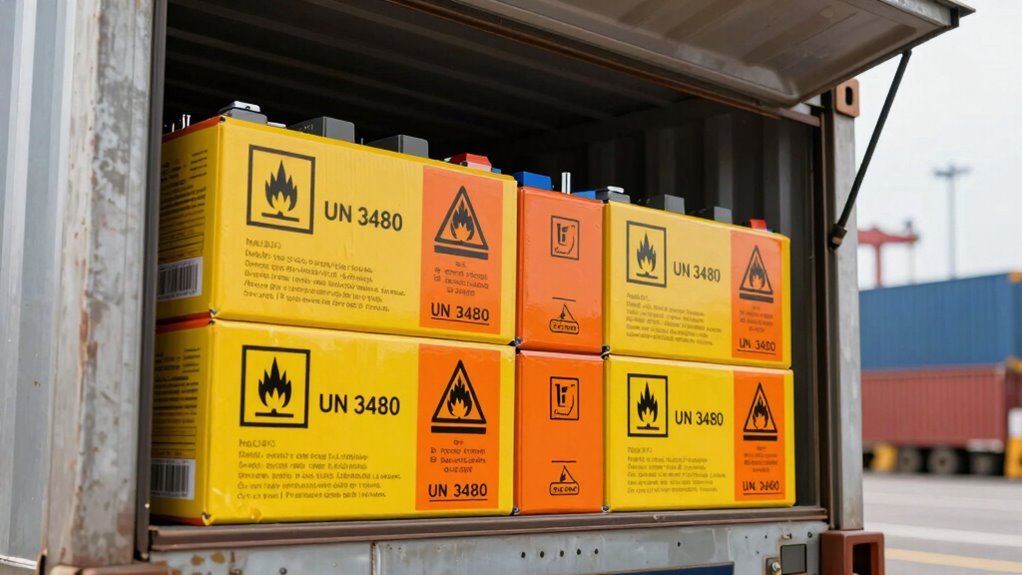
Regulatory compliance is fundamental when shipping lithium batteries because mishandling can lead to hefty fines, delays, or even dangerous incidents. You need to familiarize yourself with the specific regulations that apply to your shipment, including labeling and documentation. These regulations specify the types of labels you must affix to your packages—such as “Dangerous Goods,” “Handle with Care,” or specific hazard labels based on the battery type. Incorrect or missing labels are a common mistake that can cause shipments to be rejected or delayed at customs or airports. The labels must be clear, durable, and visible to guarantee handlers are aware of the potential risks.
Beyond labels, the limits on the quantity and capacity of batteries you can ship in a single package are often misunderstood. For instance, there are restrictions on the watt-hour ratings for lithium-ion batteries and the number of batteries allowed per package. If you don’t adhere to these limits, your shipment could be classified as dangerous goods, requiring special handling and documentation. It’s essential to check the latest regulations because they evolve over time, especially with technology advancements and updates in safety protocols.
In addition, you should keep detailed records of your packaging and shipping procedures to demonstrate compliance if audited. This includes documentation of the battery type, quantity, packaging materials, and how you’ve adhered to all regulatory guidelines. Staying informed and meticulous about these details not only safeguards your shipment but also protects you legally. When you follow correct battery packaging and maintain regulatory compliance, you reduce the risk of accidents and ensure your lithium batteries reach their destination safely and legally.

Great Eastern – 500 Pcs Lithium Ion Battery Transport Labels, 4" x 4" | Semi-Gloss Waterproof Adhesive Hazard Class 9 Stickers for Shipping Packages, Cartons & Equipment (1 Roll)
- Hazard Class 9 Lithium Ion Battery Labels: Each label measures 4" ×…
- Durable Semi-Gloss Finish: Made from high-quality semi-gloss paper…
- Strong Adhesive Backing: Designed to stick securely to…
As an affiliate, we earn on qualifying purchases.
As an affiliate, we earn on qualifying purchases.
Frequently Asked Questions
Are There International Differences in Lithium Battery Transportation Rules?
Yes, there are international differences in lithium battery transportation rules. You need to be aware of international standards, like IATA and ICAO, which set global guidelines. However, regional regulations, such as those from the EU or US DOT, can vary considerably. These differences impact labeling, packaging, and quantity limits. So, always check the specific regulations for each destination to guarantee compliance and safe transport of your lithium batteries.
How Do Labels Impact Liability During Shipment?
Proper labeling impacts liability during shipment by clearly demonstrating your adherence to regulations, which can reduce liability implications if issues arise. Accurate labeling shows you’ve followed safety protocols, helping protect you from legal claims or fines. Conversely, incorrect or missing labels can increase your liability, making you responsible for damages or accidents. Always verify labeling accuracy to minimize risks and demonstrate your commitment to safe, compliant lithium battery transportation.
Can Personal Shipments Bypass Certain Lithium Battery Restrictions?
Personal shipments generally cannot bypass lithium battery restrictions. You’re required to follow specific regulations, including proper labeling and packaging, no matter if it’s a personal or commercial shipment. Ignoring battery restrictions can lead to delays, fines, or even confiscation. To avoid issues, always check airline and carrier policies, and ensure your lithium batteries are compliant with the latest safety standards. Staying informed helps you ship safely and within legal limits.
What Are the Penalties for Incorrect Labeling or Packaging?
Incorrect labeling or packaging might seem minor, but it carries serious consequences. You could face hefty fines, shipment delays, or even legal action. Penalties for non-compliance highlight the importance of strict adherence to labeling compliance and packaging regulations. You must verify your lithium batteries are correctly labeled and packaged to avoid costly disruptions, protect safety, and maintain your reputation. Stay vigilant and follow all guidelines meticulously to prevent these risks.
How Do Different Transportation Modes Affect Lithium Battery Limits?
You need to take into account how different transportation modes impact lithium battery limits, especially regarding battery capacity and packaging requirements. Air transport usually has stricter limits for batteries over 100Wh, requiring specialized packaging and labeling. Road and sea transport often allow larger capacities but still demand proper packaging to prevent short circuits or damage. Always check the specific regulations for each mode to ensure safe and compliant transportation.
Conclusion
Remember, when transporting lithium batteries, it’s vital to follow the proper labels and limits—think of it as your own personal “Now, I, Robot” moment, where safety rules keep everything running smoothly. Ignoring these guidelines is like trying to sail a ship without a compass in a storm; chaos ensues. By staying informed and cautious, you guarantee your shipment reaches its destination, safe and sound—like a well-guarded, high-tech vault of the future.