
If your battery seems weak or dead but the electrical issues persist, check your ground connections first. Use a multimeter to measure voltage between the negative terminal and the chassis—ideally, it should be 0.2V or less. Inspect and clean corroded or loose ground wires and make certain all connections are secure. Sometimes, a bad ground mimics a failing battery; learning how to identify and fix these can save you time and money.

Get backup power and energy gear delivered free with Prime
- Fast, free delivery on millions of items
- Prime Video, Amazon Music and more included
- Member-only deals all year
Key Takeaways
- Perform voltage tests with the engine off and running to verify proper battery and alternator function.
- Inspect and clean all ground connections, especially the negative terminal and chassis grounds, for corrosion or looseness.
- Measure voltage between the negative terminal and chassis; a reading above 0.2V indicates a poor ground.
- Check other grounding points and wiring inside cables for hidden corrosion or damage affecting electrical flow.
- Recognize that bad grounds can mimic dead batteries; ensure all ground connections are secure and clean before replacing the battery.
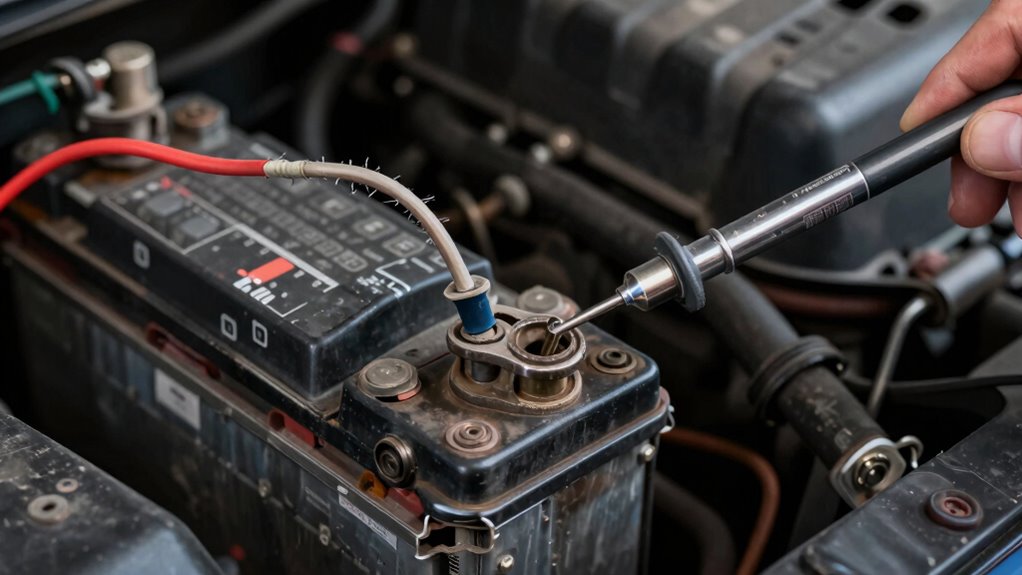
A vehicle that struggles to start or exhibits electrical issues often points to a faulty battery or poor grounding. While a weak battery is a common culprit, sometimes the root cause lies in the ground connection. You might think your battery is failing when, in fact, a poor ground is causing the problem. To diagnose this accurately, you should begin with voltage testing and ground wire inspection.
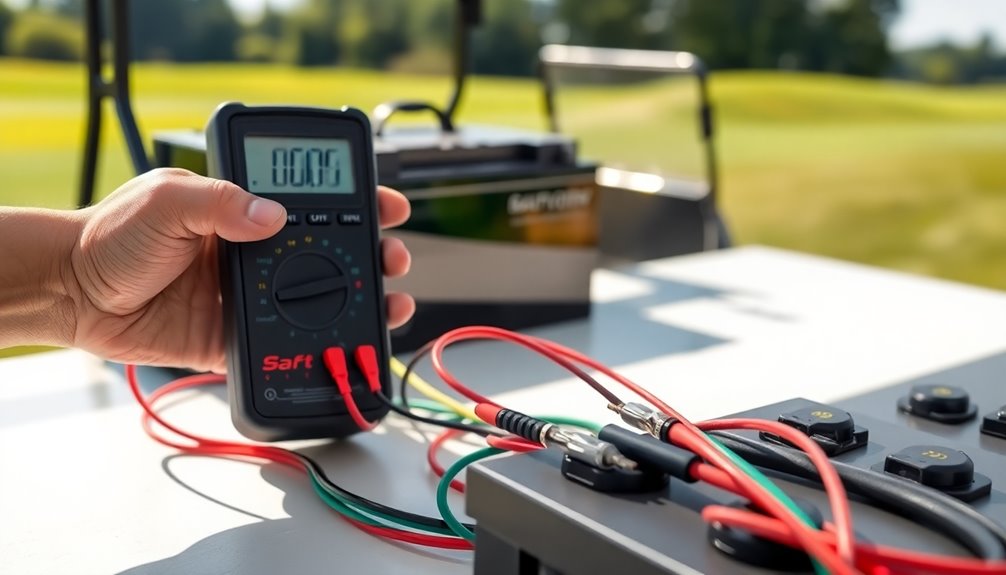
Voltage testing is straightforward and essential. Using a digital multimeter, set it to measure DC voltage. First, ensure your engine is off, then connect the multimeter’s red lead to the positive terminal of the battery and the black lead to the negative terminal. A healthy, fully charged battery should read around 12.6 volts. When you start the engine, the voltage should rise to about 13.8 to 14.4 volts, indicating the alternator’s charging properly. If the voltage remains low or fluctuates erratically, your battery might indeed be weak, but it could also signal a bad ground connection.
Use a multimeter to check for 12.6V with engine off and 13.8–14.4V when running to diagnose battery and charging system health.
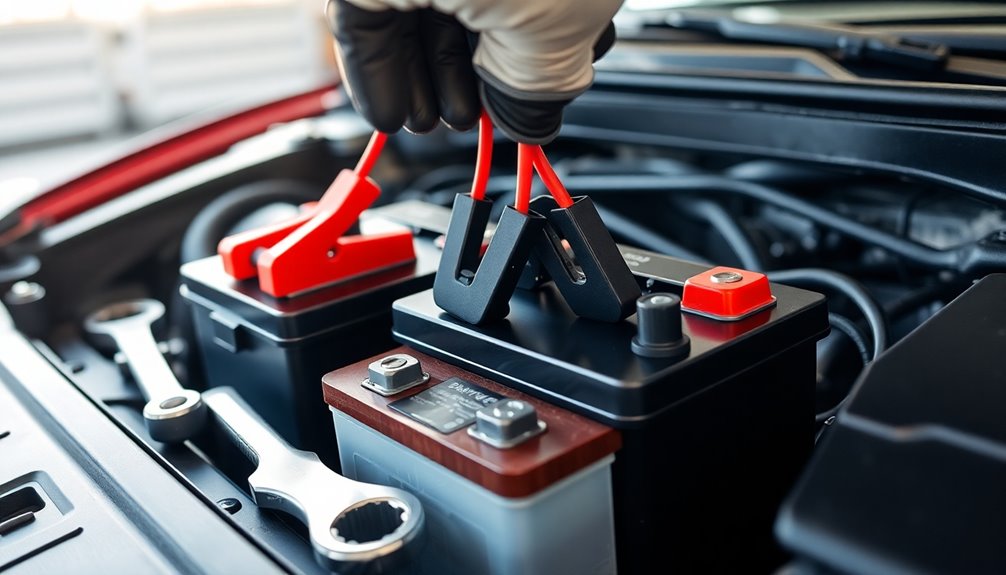
Next, perform a ground wire inspection. Locate the battery’s negative terminal and trace the ground wire back to the vehicle’s chassis or engine block. Look for corrosion, loose connections, or damaged wiring. A loose or corroded ground wire can cause electrical resistance, leading to starting problems or erratic electrical behavior. Remove the ground wire clamp, clean the contact surfaces with a wire brush or sandpaper until they’re shiny, and then reattach it tightly. A solid, corrosion-free connection ensures that electrical current flows smoothly and reliably.
If your voltage test shows low readings or fluctuations, and your ground wire appears clean and secure, consider testing the ground connection directly. Place one multimeter lead on the negative battery terminal and the other on the vehicle’s chassis or engine block. If you see a voltage difference exceeding 0.2 volts, that indicates a poor ground connection. This can cause voltage drops that interfere with starting and electrical system performance.
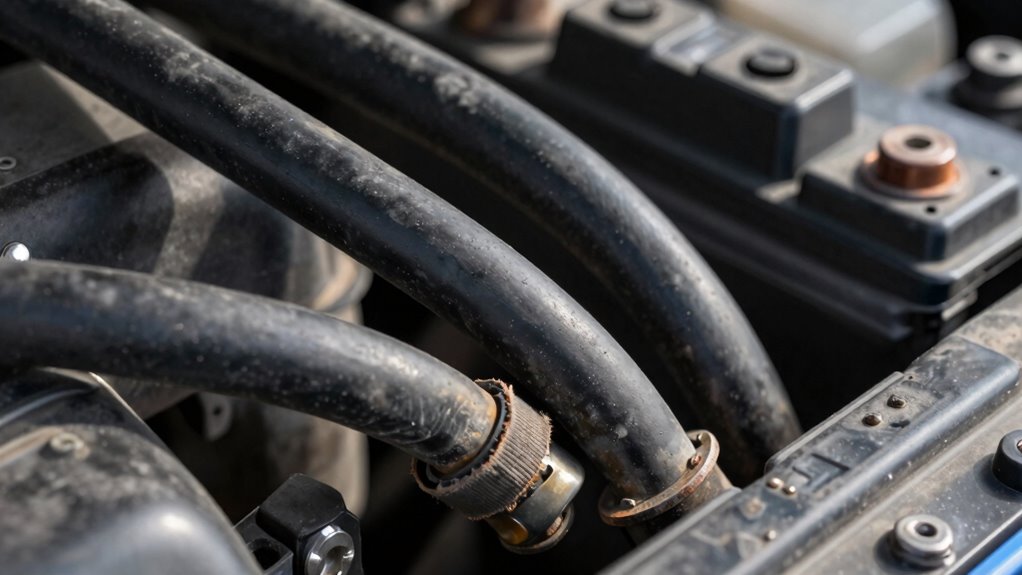
Sometimes, the problem isn’t just the battery or the visible ground wire. Hidden corrosion inside the cable or a bad connection at the grounding point can cause issues. Also, check other grounding points for corrosion or looseness. Remember, a good ground is crucial for a vehicle’s electrical health. Properly testing vehicle grounds and inspecting all connections often reveals that a “bad battery” is actually just a bad ground. Fixing these problems restores proper electrical flow, ensuring your vehicle starts reliably and runs smoothly.
digital multimeter for automotive use
As an affiliate, we earn on qualifying purchases.
As an affiliate, we earn on qualifying purchases.
Frequently Asked Questions
Can a Bad Ground Cause a Car to Not Start Even With a Good Battery?
Yes, a bad ground can prevent your car from starting even if the battery is good. When ground wiring or electrical grounding is faulty, it disrupts the electrical flow needed to start the engine. You should inspect the ground connections and wiring for corrosion, looseness, or damage. Ensuring proper electrical grounding and secure ground wiring helps restore the circuit, allowing your vehicle to start reliably.
How Can I Tell if My Battery Terminal Is Corroded?
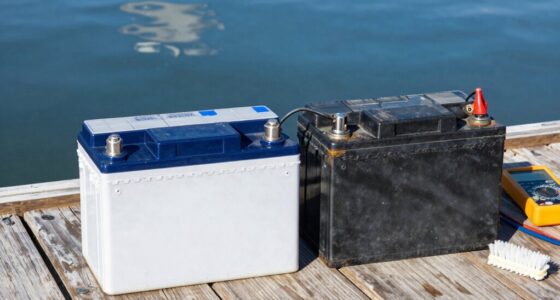
You can tell if your battery terminal is corroded by inspecting for white, green, or bluish powder around the terminal. Look for any buildup or corrosion on the battery posts and cable ends. Perform a ground inspection by checking for loose or damaged connections. If you notice corrosion, clean it with a wire brush and apply a protective terminal spray to prevent future issues. This simple step helps assure your battery and ground connections stay solid.
Do All Electrical Issues in a Car Point to the Battery or Ground?
Think of your car’s electrical system as a team working together. Not all issues stem from the battery or ground; alternator problems can cause dim lights, and fuse box issues might trigger blown fuses. While these are common culprits, other factors like wiring faults also play a role. So, don’t assume it’s always the battery or ground—check the alternator, fuse box, and wiring to find the real troublemaker.
Is It Safe to Test My Vehicle’s Ground Connection Myself?
Yes, it’s safe to test your vehicle’s ground connection yourself if you follow proper DIY safety precautions. When doing ground testing, make sure the engine is off, the keys are removed, and you wear insulated gloves and eye protection. Use a multimeter to check for continuity and voltage. Avoid touching live wires or moving parts, and work in a well-ventilated area to stay safe during the process.
How Often Should I Check My Vehicle’s Battery and Ground Connection?
You should perform regular battery maintenance and ground inspection every six months to keep your vehicle running smoothly. This routine check helps catch potential issues early, preventing unexpected breakdowns. During your inspection, look for corrosion, loose connections, or frayed wires. Keeping your battery and ground connection in tip-top shape ensures reliable starts and maximum performance, giving you peace of mind on every drive.
Conclusion
Remember, troubleshooting your car’s electrical issues is like peeling back layers of an onion—you need to get to the root cause. Sometimes, what seems like a bad battery is really a poor ground connection. By systematically checking both, you’ll save yourself time and money. Don’t jump to conclusions too quickly; a fresh perspective can often reveal the real problem. Keep your wits about you, and you’ll get to the bottom of it in no time.
Halloween Picks
halloween
As an affiliate, we earn on qualifying purchases.