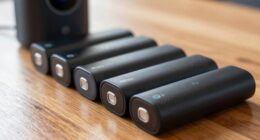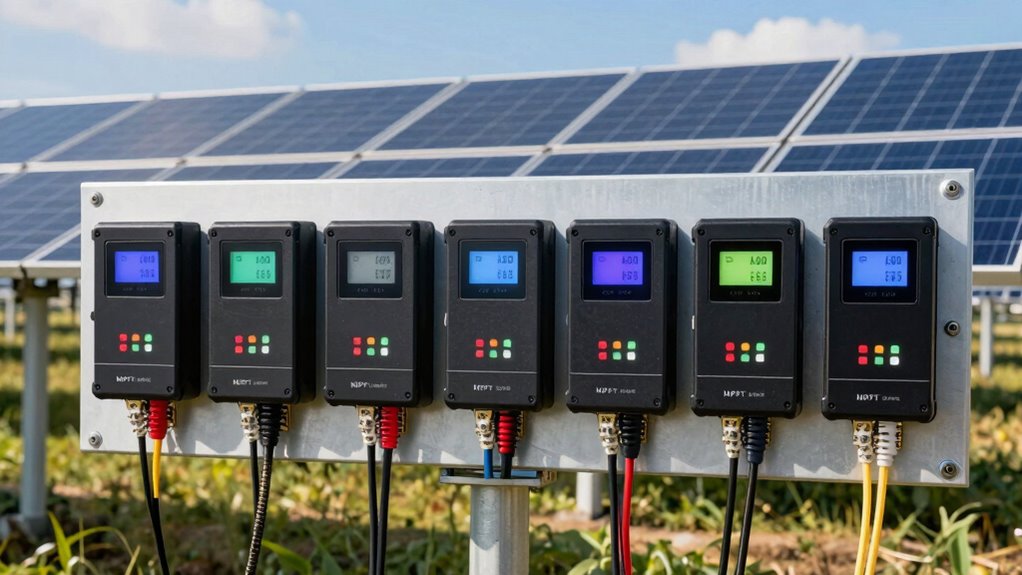

If you’re searching for an mppt solar charge controller 150a, you’re likely balancing power capacity with features and value. The Victron Energy SmartSolar MPPT 150V 100A stands out for its reliability and advanced Bluetooth connectivity, making it ideal for serious off-grid setups. The 150A MPPT Controller with LCD and USB offers a versatile option for RV and boat owners needing straightforward operation. Meanwhile, the POWLAND 120A MPPT Controller provides a more budget-friendly choice, though it sacrifices some capacity and advanced features. The main tradeoffs in this category include balancing maximum current handling, system compatibility, usability features like displays, and cost. Keep reading for a detailed breakdown to help you choose the best fit for your needs.

Get backup power and energy gear delivered free with Prime
- Fast, free delivery on millions of items
- Prime Video, Amazon Music and more included
- Member-only deals all year
Key Takeaways
- The highest-rated controllers combine robust build quality with intuitive interfaces such as LCD screens or Bluetooth connectivity.
- Choosing a slightly lower amperage model can save cost while still supporting most off-grid or RV systems, but may limit future expansion.
- Battery compatibility varies; some controllers support lithium and lead-acid batteries, influencing long-term flexibility.
- Input voltage capacity (max PV input) is critical to prevent system overloads and ensure longevity.
- Dual USB outputs are common and convenient, but their power output and reliability differ across models.


| mppt solar charge controller 150a | Protection Features |
|---|---|
| Victron Energy SmartSolar MPPT | — |
| 150A MPPT Solar Charge Control | Overvoltage, short circuit, overheating |
| POWLAND 120A MPPT Solar Charge | — |
| 150A MPPT Solar Charge Control | Overvoltage, over-current, reverse connection |
| 150A MPPT Solar Charge Control | Overvoltage, overcurrent, overtemperature |
| Victron Energy SmartSolar MPPT | — |
| 120A MPPT Solar Charge Control | Over Current, Overvoltage, Load Overload, Over-Temp, Low-Temp Charging |
More Details on Our Top Picks
Victron Energy SmartSolar MPPT Solar Charge Controller 150V 100A for 12/24/36/48V Systems
This Victron SmartSolar controller stands out for its lightning-fast MPPT tracking and intelligent system synchronization, making it ideal for those who want maximum efficiency and seamless system management. Compared to the dual USB options or basic LCD displays, the VictronConnect app offers advanced monitoring and setup, but this sophistication can be daunting for beginners. Its high efficiency and ability to coordinate multiple controllers set it apart for larger or more complex installations, yet it demands compatible batteries and a careful setup process.
Best For: Advanced users seeking high efficiency and system-wide control in a scalable setup.
Not Ideal For: Beginners or those with simple, small-scale systems due to its complex setup requirements.
- High efficiency with lightning-fast MPPT tracking
- Synchronized multiple controllers for larger systems
- User-friendly app connectivity for real-time monitoring
- Requires compatible batteries and panels for optimal performance
- Setup can be complex for those unfamiliar with advanced solar systems
Verdict: This controller is perfect for experienced users wanting maximum efficiency and system integration, but it may be overkill for small or simple setups.
Pros:- Lightning-fast MPPT tracking for maximum energy harvest
- Supports synchronized operation of multiple controllers
- Intuitive app-based monitoring and configuration
Cons:- Requires compatible batteries and system setup knowledge
- Complex initial configuration for newcomers
Best for: Experienced solar system integrators who need scalable, high-efficiency control
Not ideal for: Beginners or DIY users with small or straightforward systems
- Model:SmartSolar MPPT
- Voltage Range:150V
- Current:100A
- Compatible Voltages:12V, 24V, 36V, 48V
Our verdict“This pick suits users who prioritize efficiency and system control over simplicity, making it ideal for larger or professional-grade installations.”
150A MPPT Solar Charge Controller, 12V/24V/36V/48V Auto with LCD Display, Smart Timer & Dual USB for RV, Boat, Cabin, Off-Grid Power System
This 150A controller excels in versatility, automatically recognizing multiple voltage systems and supporting various applications like RVs, boats, and cabins. Its LCD display provides real-time insight, and dual USB ports add convenience for charging mobile devices. Unlike the Victron model, it’s more straightforward to set up but may lack some of the advanced system synchronization features. The high current capacity makes it suitable for larger off-grid systems but could be excessive for small-scale or simple setups.
Best For: Off-grid enthusiasts and mobile users needing automatic voltage recognition and simple monitoring.
Not Ideal For: Small or fixed residential systems where overcapacity or complex features are unnecessary.
- Automatic voltage recognition for flexible installation
- Real-time monitoring via LCD display
- Dual USB ports for device charging
- Setup may require some technical knowledge
- High current capacity might be overkill for small systems
Verdict: This controller offers excellent versatility and ease of use for mobile or off-grid systems but might be more than needed for small, fixed installations.
Pros:- Auto-recognition of multiple voltage systems
- LCD for real-time system status
- Dual USB charging ports for convenience
Cons:- Setup can be complex for less experienced users
- Overcapacity for small or simple systems
Best for: Off-grid users and mobile setups requiring automatic voltage detection and straightforward monitoring
Not ideal for: Small residential systems or users seeking deep system integration and customization
- Voltage Compatibility:12V/24V/36V/48V
- Current:150A
- Display:LCD
- Protection Features:Overvoltage, short circuit, overheating
Our verdict“Ideal for mobile and off-grid applications where versatility and straightforward monitoring are priorities, though it may be overpowered for small systems.”
POWLAND 120A MPPT Solar Charge Controller for 12V-96V Systems
The POWLAND 120A controller emphasizes versatility with automatic detection across a wide voltage range up to 96V, making it well-suited for larger off-grid or mobile systems. Its efficiency reaches up to 98%, comparable to the leading options, but the setup involves more technical steps, especially with multiple battery types like LiFePO4 and AGM. Unlike the other controllers, its broader voltage support makes it more flexible for complex systems, but limited info on durability or warranty could be a concern.
Best For: Large-scale or multi-voltage systems needing broad compatibility and high efficiency.
Not Ideal For: Small or straightforward systems where high complexity isn’t justified.
- Supports a wide voltage range for large systems
- High efficiency up to 98%
- Supports multiple battery chemistries
- Setup may be complex for non-technical users
- Limited warranty info and durability data
Verdict: This controller is suitable for advanced setups requiring extensive voltage support and high efficiency, but it’s less friendly for beginners.
Pros:- Supports voltages up to 96V for large systems
- High efficiency up to 98%
- Compatible with multiple battery chemistries
Cons:- Setup can be technically demanding
- Limited information on warranty or long-term durability
Best for: Large or complex off-grid systems with diverse battery types and voltage needs
Not ideal for: Small, simple systems or users without technical setup experience
- Max Input Voltage:230V
- Voltage Compatibility:12V-96V
- Max Current:120A
- Battery Types:LiFePO4, AGM, GEL, Flooded Lead-Acid
Our verdict“This model suits experienced users managing large, high-voltage systems with diverse batteries, though it’s less beginner-friendly.”
150A MPPT Solar Charge Controller, 12V/24V/36V/48V, LCD Display, Max 100V Input, Dual USB, for Lead-Acid and Lithium Batteries
This 150A controller offers a solid balance of high capacity and user-friendly features, supporting multiple battery types including Lithium and Lead-Acid. Its LCD display provides clear, real-time system data, and dual USB ports enhance convenience. Compared with the Victron or POWLAND controllers, it emphasizes straightforward operation, but the maximum input voltage of 100V may limit some high-voltage panel setups. Its safety features and broad compatibility make it suitable for diverse off-grid or mobile applications, though its MPPT capabilities may not be as advanced as premium models.
Best For: Users seeking broad battery compatibility and an easy-to-understand monitoring interface.
Not Ideal For: Systems requiring top-tier MPPT precision or very high voltage input support.
- Supports multiple battery chemistries
- High efficiency with 99.5% MPPT accuracy
- Easy-to-read LCD display
- Input voltage limited to 100V, less suited for high-voltage panels
- Setup may be challenging for absolute beginners
Verdict: This controller provides reliable, user-friendly performance for a broad range of batteries, ideal for those who prioritize compatibility and monitoring ease over extreme voltage support.
Pros:- Supports multiple battery chemistries including Lithium
- High efficiency with 99.5% MPPT accuracy
- Clear LCD for real-time system status
Cons:- Input voltage limited to 100V, restricting some panel configurations
- Setup complexity may challenge beginners
Best for: DIY enthusiasts and off-grid users needing broad battery support with simple monitoring
Not ideal for: High-voltage panel setups or users seeking the most advanced MPPT features
- Max Input Voltage:100V
- Battery Voltage Support:12V, 24V, 36V, 48V
- Charging Current:150A
- Protection Features:Overvoltage, over-current, reverse connection
Our verdict“Designed for broad battery compatibility and ease of use, this model suits users who want reliable monitoring without the need for ultra-high voltage support.”
150A MPPT Solar Charge Controller for 12V/24V/36V/48V Systems with LCD Display and Dual USB Ports
This 150A controller emphasizes versatility with broad voltage support and a straightforward interface, making it suitable for residential or commercial off-grid setups. Its MPPT efficiency reaches up to 98%, comparable to more expensive models, and the backlit LCD offers clear real-time data. While it provides comprehensive protections, its size and setup complexity may pose challenges for small or simple systems. Compared to the Victron or POWLAND options, it leans toward ease of use and safety features but might lack some advanced system integration capabilities.
Best For: Large residential or commercial off-grid projects requiring reliable, versatile control.
Not Ideal For: Very small or simple systems where a compact, minimalist controller suffices.
- Supports multiple voltage systems for flexible installation
- High efficiency with up to 98% MPPT conversion
- Backlit LCD for easy real-time monitoring
- Size may be bulky for small systems
- Setup can be complex for beginners needing detailed configuration
Verdict: Best suited for larger, versatile systems where reliability and safety are priorities, though it may be cumbersome for minimal setups.
Pros:- Supports multiple voltages for various system sizes
- High MPPT efficiency up to 98%
- Backlit LCD simplifies real-time monitoring
Cons:- Relatively large size for small applications
- Setup complexity may challenge novices
Best for: Large-scale residential or commercial off-grid systems needing broad voltage support and safety features
Not ideal for: Small or simple systems where size and minimal setup are preferred
- Maximum Current:150A
- Voltage Compatibility:12V, 24V, 36V, 48V
- Display:Backlit LCD
- Protection Features:Overvoltage, overcurrent, overtemperature
Our verdict“This controller excels in large, versatile systems prioritizing safety and reliability, but it might be overbuilt for smaller projects.”
Victron Energy SmartSolar MPPT VE.Can Solar Charge Controller (Bluetooth) – 250V, 100A, 12/24/36/48V
This Victron Energy model stands out for its high efficiency and seamless system integration, especially when combining multiple controllers. Its fast MPPT tracking maximizes energy harvest, and the Bluetooth connectivity simplifies system monitoring, which is a significant advantage over more basic controllers like the 120A MPPT that lack remote management features. The ability to synchronize multiple controllers ensures consistent performance across larger installations. However, the setup process can be complex for beginners and requires a compatible app for full functionality, which may be a hurdle for some users. Compared with the 120A controller, this model is better suited for users who prioritize system monitoring and expansion but are comfortable with a more involved setup. Its support for intelligent load management adds a layer of battery protection, making it ideal for advanced off-grid or grid-tied setups.
Pros:- High efficiency with fast MPPT tracking ensures maximum energy harvest
- Bluetooth connectivity allows easy monitoring and configuration
- Supports synchronized operation of multiple controllers for system-wide optimization
- Includes intelligent load management to protect batteries
Cons:- Requires compatible app for full functionality, adding complexity
- Setup can be challenging for users without technical experience
Best for: System integrators or experienced DIYers managing large, multi-controller solar setups who value remote monitoring and system synchronization.
Not ideal for: Beginners or users seeking a plug-and-play solution without the need for smartphone apps or complex configurations.
- Voltage:12/24/36/48V
- Maximum Voltage:250V
- Current:100A
- Connectivity:Bluetooth, VE.Can
- Efficiency:Up to 99%
- Features:Fast MPPT, Synchronized control, Load management
Our verdict“This controller is best suited for advanced users who need reliable, scalable system management with remote access.”
120A MPPT Solar Charge Controller, 12V-96V Battery System, LCD Display, Max Input PV 230V, Compatible with Lithium and Lead-Acid Batteries
This 120A MPPT controller offers broad voltage compatibility and supports multiple battery types, making it a flexible choice for varied solar setups. Its high peak efficiency of up to 98% ensures effective energy conversion, comparable to the Victron but without the advanced system synchronization features. The inclusion of an LCD display makes real-time monitoring straightforward, which is more accessible than Bluetooth-only models like the Victron for users who prefer physical readouts. However, its larger size might be unsuitable for small or space-constrained systems, and the complex setup could challenge less technical users. Compared with the Victron, it lacks remote connectivity and multi-controller synchronization but compensates with broader battery support and a more direct monitoring interface. This pick makes the most sense for users who prioritize flexibility and ease of local monitoring over system expansion capabilities.
Pros:- High MPPT efficiency up to 98% maximizes solar energy use
- Supports a wide range of battery types including lithium and lead-acid
- LCD display provides immediate system status updates
- Multiple protections improve safety and longevity
Cons:- Complex setup may require technical knowledge
- Large physical size may not fit smaller installations
- Price is not specified, which could be a concern for budget-conscious buyers
Best for: Homeowners or small-scale off-grid users needing support for multiple battery chemistries and voltage systems with easy on-site monitoring.
Not ideal for: Users with very limited space or those seeking advanced system integration with remote management features.
- Max Input PV:230V
- Battery System Voltage:12V-96V
- Max Current:120A
- Supported Battery Types:FLD, LiFePO4, SLD, GEL, AGM
- Protection Features:Over Current, Overvoltage, Load Overload, Over-Temp, Low-Temp Charging
- Display:LCD
Our verdict“This controller is ideal for users who need versatile battery support and easy local monitoring but do not require system-wide synchronization.”

How We Picked
These controllers were selected based on a combination of power capacity, build quality, ease of use, and compatibility with different battery types. Key evaluation factors included maximum input voltage, user interface features like LCD or Bluetooth, and overall value for their price point. We prioritized models that are versatile enough for various applications—off-grid, RVs, or boats—while maintaining high build standards. The ranking reflects a focus on reliability, expandability, and user convenience, ensuring each option offers a meaningful advantage for different buyer needs.| mppt solar charge controller 150a | Protection Features |
|---|---|
| Victron Energy SmartSolar MPPT | — |
| 150A MPPT Solar Charge Control | Overvoltage, short circuit, overheating |
| POWLAND 120A MPPT Solar Charge | — |
| 150A MPPT Solar Charge Control | Overvoltage, over-current, reverse connection |
| 150A MPPT Solar Charge Control | Overvoltage, overcurrent, overtemperature |
| Victron Energy SmartSolar MPPT | — |
| 120A MPPT Solar Charge Control | Over Current, Overvoltage, Load Overload, Over-Temp, Low-Temp Charging |
Factors to Consider When Choosing Mppt Solar Charge Controller 150a
When choosing an MPPT solar charge controller 150A, it’s important to consider several factors that impact performance, longevity, and compatibility. Understanding these can help avoid common pitfalls like overloading your system or buying features you won’t need. The right controller balances capacity, features, and price, fitting seamlessly into your solar setup.System Voltage Compatibility
Ensure the controller supports your system voltage—commonly 12V, 24V, 36V, or 48V. Many controllers can handle multiple voltages, which adds flexibility as your system grows. Picking a controller with a voltage range that surpasses your current setup offers future-proofing, especially if you plan to expand or upgrade batteries. Overlooking this can lead to system inefficiencies or the need for additional components.
Maximum PV Input Voltage
The maximum PV input voltage determines how much solar array voltage your controller can handle. Exceeding this limit risks damage and system failure. It’s wise to select a controller with a margin above your current array voltage—if your panels produce 150V, choose a controller rated for at least 170V or more. This prevents accidental overloads during voltage spikes or temperature variations.
Current Capacity and Scalability
A 150A controller should match or exceed your maximum current needs. If your panels or future expansions might push current beyond 150A, consider models with higher ratings or modular options. Under-sizing can cause overheating, reduced efficiency, or system shutdowns. Conversely, overspending on capacity you won’t use can inflate costs unnecessarily, so assess your current and anticipated power requirements carefully.
User Interface and Monitoring
Features like LCD displays, Bluetooth connectivity, or app control significantly improve usability. They help monitor system performance, diagnose issues, and optimize energy flow. If you prefer quick, on-site checks, an LCD is invaluable. For remote monitoring, Bluetooth or Wi-Fi features add convenience, but they often come at a higher price. Think about how much you want to interact with the system regularly.
Battery Compatibility
Not all controllers work equally well with lithium versus lead-acid batteries. Some have specific charging algorithms or settings for different chemistries. Ensuring compatibility prevents damage and maximizes battery lifespan. If you plan to switch chemistries later, choose a controller with flexible settings. Overlooking this can lead to inefficient charging or battery failure.
Additional Features and Cost
Extra features such as dual USB ports, smart timers, or integrated data logging can add convenience but also increase costs. Balance these extras against your actual needs; for instance, a simple system might not need USB ports, making a basic model more economical. Evaluate whether premium features justify the price premium or if a more straightforward controller suits your application better.
Frequently Asked Questions
Can I upgrade my system to a higher voltage with a 150A MPPT controller?
Yes, many 150A controllers support multiple voltages, enabling system upgrades. However, you must ensure the controller’s maximum input voltage and current ratings are compatible with your new array. Upgrading also involves verifying wiring and safety components. It’s wise to consult the controller’s specifications and possibly a professional to ensure your upgrade is safe and effective.
Is Bluetooth connectivity necessary on a solar charge controller?
Bluetooth offers convenience by allowing remote monitoring through a smartphone app, reducing the need for physical inspections. It’s especially useful for systems in hard-to-reach locations or for users who want real-time data access. However, Bluetooth controllers tend to be more expensive, and if you prefer basic operation, a model with an LCD display might suffice. Consider your monitoring needs and budget when choosing.
How do I know if a 150A controller is enough for my system?
Calculate your total panel current and ensure the controller’s rated current exceeds this value, preferably by 25-30% to account for surge and future expansion. Also, consider your battery capacity and typical load demands. Overloading a controller can cause overheating and shutdowns, so accurate calculations are vital. If your system is close to 150A, opting for a slightly higher-rated controller adds safety margin.
What are the risks of choosing a controller with too high a capacity?
While higher capacity controllers offer room for expansion, they often come at a higher cost and may include features unnecessary for smaller systems. Over-specifying can lead to wasted money and complex wiring setups. For small to medium systems, choosing a controller just above your current needs is more cost-effective and simplifies installation. Excess capacity generally doesn’t harm but may not be justified economically.
Should I prioritize build quality over features like USB ports?
Build quality directly impacts the longevity and reliability of your controller, especially in outdoor or harsh environments. Features like USB ports are convenient but secondary to core performance and durability. Prioritize controllers from reputable brands with good reviews for build integrity. You can always add external accessories later if needed, but a faulty controller can jeopardize your entire system.
Conclusion
For those seeking the best overall performance and durability, the Victron Energy SmartSolar MPPT 150V 100A remains the top choice. Budget-conscious buyers will appreciate the POWLAND 120A MPPT Controller for its balance of features and price, although it offers less capacity. New users or small systems should consider models with simpler interfaces, like the 150A MPPT Controller with LCD. If you need advanced connectivity, the Victron VE.Can Bluetooth model provides seamless remote monitoring. Ultimately, select a controller that matches your current system size, future plans, and preferred features to ensure reliable, efficient solar power.
As an affiliate, we earn on qualifying purchases.Halloween Picks
halloween