
Solar-powered laptop chargers split into two very different camps: compact solar power banks you can toss in a backpack, and larger portable power stations paired with fold-out panels that can keep a laptop running for days off-grid. The main tradeoff is portability versus real charging capacity — most small banks recover only a trickle from their tiny built-in panels, while full generator kits deliver genuine off-grid independence at the cost of weight and price. The SinKeu 24000mAh power bank stands out as my best overall pick for laptop users, thanks to its AC outlet and a sensible balance of capacity, size, and price. Budget-conscious buyers get strong value from the SOARAISE 48000mAh, while the Portable Solar Generator 300W with 60W panel is the most complete off-grid kit in the lineup. Keep reading for the full breakdown, including who each model suits and who should skip it.

Get backup power and energy gear delivered free — and shop member deals
- Fast, free delivery on millions of items
- Access to Prime Big Deal Days deals on October 6–7
- Prime Video, Amazon Music and more included
Key Takeaways
- Capacity claims are misleading without doing the math: a 48000mAh bank sounds bigger than an 89.6Wh station, but milliamp-hours are rated at 3.7V — the Takki‘s 88.8Wh actually stores comparable laptop charge to the SOARAISE despite the smaller-sounding number.
- Built-in solar panels on power banks are emergency trickle chargers, not primary charging sources — topping up a 24000mAh bank by sun alone can take days, so panel-included generator kits (the 60W and 40W bundles) are the only true solar-first options here.
- Two products in this roundup ship without any solar panel at all (the 146Wh and 280Wh stations), which matters if you specifically want solar charging out of the box rather than expandability later.
- Battery chemistry became a real differentiator: the Daran‘s LiFePO4 cells should outlast the standard lithium-ion packs by hundreds of charge cycles, justifying its higher price for frequent users.
- Wattage ceilings determined laptop compatibility more than capacity — 65W and 100W outputs cover most ultrabooks, but gamers and 16-inch workstation laptops need the 300W-class stations to charge under load.
| SinKeu 24000mAh Portable Power Bank with AC Outlet and Solar Charging |  | Best for Backpackers and Frequent Flyers | Battery Capacity: 24000mAh | AC Output: 110V/65W | Ports: USB-A, DC 9-12.6V/10A | VIEW LATEST PRICE | See Our Full Breakdown |
| SOARAISE Solar Power Bank 48000mAh Wireless Portable Charger with 4 Cables |  | Best All-in-One Solar Value | Capacity: 48000mAh | Solar Panels: 4 high-efficiency panels | Ports: 2 USB-A, 1 USB-C (input/output) | VIEW LATEST PRICE | See Our Full Breakdown |
| Daran Portable Power Station 89.6Wh LiFePO4 Battery 100W Solar Power Bank |  | Best Battery Longevity | Battery Capacity: 89.6Wh LiFePO4 | Maximum Output: 100W | Cycle Life: 3500+ cycles | VIEW LATEST PRICE | See Our Full Breakdown |
| Portable Power Station 146Wh 100W Solar Powered Power Bank with AC Outlet | 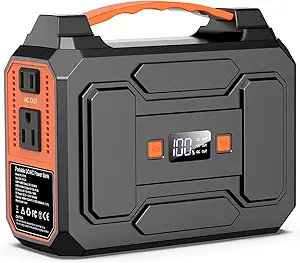 | Best Mid-Size Capacity for the Price | Capacity: 146Wh / 39600mAh | AC Output: 2x 110V, 100W max | USB Output: 2x 3.1A, 1x Quick Charge 3.0 | VIEW LATEST PRICE | See Our Full Breakdown |
| Portable Power Station 300W, 110V Solar Generator 280Wh (Without Solar Panel) | 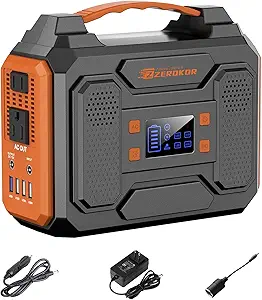 | Best for Heavier Loads and Outages | Power Output: 300W max | Battery Capacity: 280Wh | AC Outlets: 2 | VIEW LATEST PRICE | See Our Full Breakdown |
| Portable Solar Generator 300W with 60W Solar Panel | 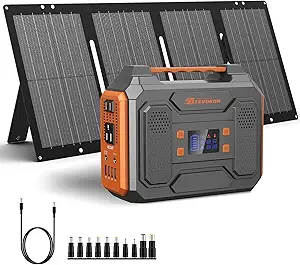 | Best Full Solar Kit for Off-Grid Work | Power Output: 300W (2 x AC outlets) | Solar Panel: 60W foldable monocrystalline | Solar Conversion Efficiency: 20.5% | VIEW LATEST PRICE | See Our Full Breakdown |
| Takki Solar Generator 120W Peak Portable Power Station with 21W Solar Panel |  | Best Ultralight Starter Kit | Battery Capacity: 88.8Wh | Peak Power: 120W | Solar Panel: 21W foldable | VIEW LATEST PRICE | See Our Full Breakdown |
| Portable Power Station with 40W Solar Panel, 100W Solar Powered Generator |  | Best Value Solar Kit | Power Output: 100W (2 x AC outlets) | Solar Panel: 40W foldable | Conversion Efficiency: 22.8% | VIEW LATEST PRICE | See Our Full Breakdown |
| Portable Solar Power Bank with AC Outlet 65W 110V |  | Best Pocketable Laptop Charger | Battery Capacity: 24,000mAh lithium-ion | AC Output: 65W, 110V | DC Output: 9V–12.6V/10A max | VIEW LATEST PRICE | See Our Full Breakdown |
| solar-powered laptop charger | Battery Capacity |
|---|---|
| SinKeu 24000mAh Portable Power | 24000mAh |
| SOARAISE Solar Power Bank 4800 | — |
| Daran Portable Power Station 8 | 89.6Wh LiFePO4 |
| Portable Power Station 146Wh 1 | — |
| Portable Power Station 300W | 280Wh |
| Portable Solar Generator 300W | — |
| Takki Solar Generator 120W Pea | 88.8Wh |
| Portable Power Station with 40 | — |
| Portable Solar Power Bank with | 24,000mAh lithium-ion |
More Details on Our Top Picks
SinKeu 24000mAh Portable Power Bank with AC Outlet and Solar Charging
Most options in this category are chunky power stations, but the SinKeu 24000mAh takes a different approach: it slips into the laptop-friendly gap between a slim power bank and a full generator. The 110V/65W AC outlet covers most ultrabooks and 13-inch laptops, and the OLED display gives real-time feedback the Daran 89.6Wh unit only partially matches. Compared with the SOARAISE 48000mAh, it sacrifices roughly half the capacity in exchange for a footprint that actually fits a backpack pocket. The tradeoff is real, though — 65W means gaming laptops and 16-inch workstations won’t charge reliably, and recharging over solar input at this size is a trickle rather than a flow, so plan on wall power between trips.
Pros:- Genuinely compact for a unit with a real AC outlet
- OLED display makes charge status easy to read at a glance
- BMS safety system with multi-port flexibility
- Wall plug built in, so no separate charger to carry
Cons:- 65W AC ceiling excludes higher-draw laptops
- Solar recharging is too slow to be a primary input
- Capacity falls short for multi-day off-grid use
Best for: Ultrabook and 13-inch laptop owners who want AC power in a travel-friendly size
Not ideal for: Owners of gaming laptops or 65W+ machines — the AC outlet will cap out before charging completes
- Battery Capacity:24000mAh
- AC Output:110V/65W
- Ports:USB-A, DC 9-12.6V/10A
- Battery Type:Lithium Polymer
- Dimensions:6.8 x 3.8 x 1.78 inches
- Display:OLED status screen
Our verdict“Buy this if you need occasional laptop AC power in a bag-friendly form and recharge nightly at an outlet.”
SOARAISE Solar Power Bank 48000mAh Wireless Portable Charger with 4 Cables
The SOARAISE 48000mAh is the only pick here where solar isn’t an afterthought — four integrated folding panels give it meaningful sun-harvesting surface, unlike the SinKeu, which accepts solar input but barely benefits from it. For buyers who hate buying accessories, the built-in cable set (USB-C, USB-A, Micro, plus a phone connector) eliminates the tangled-pouch problem entirely, and wireless charging pads a fifth device onto the load. The compromises are predictable: all those panels and that capacity make it bulky and pocket-hostile, and it depends on direct, angled sunlight — cloud cover cuts solar input hard. It also tops out at USB charging speeds, so laptop charging happens through USB-C PD at 3A rather than a full AC outlet.
Pros:- Four solar panels charge noticeably faster than single-panel rivals
- Built-in cables remove the need to pack any
- 48000mAh capacity handles phones, tablets, and small laptops for days
- Wireless charging adds convenience for compatible phones
Cons:- Large and heavy compared with standard power banks
- No AC outlet — laptops charge via USB-C only
- Solar performance collapses in cloudy or shaded conditions
Best for: Campers and multi-device households who want solar built in and never want to buy separate panels or cables
Not ideal for: USB-C-only laptop users needing 60W+ charging, or anyone wanting a true wall-style AC outlet
- Capacity:48000mAh
- Solar Panels:4 high-efficiency panels
- Ports:2 USB-A, 1 USB-C (input/output)
- Fast Charging:3A via USB-C
- Wireless Charging:Yes
- Built-in Cables:USB-C, Phone, USB-A, Micro
Our verdict“This is the pick if you want solar charging genuinely built into the device rather than bolted on as an optional input.”
Daran Portable Power Station 89.6Wh LiFePO4 Battery 100W Solar Power Bank
What separates the Daran 89.6Wh from the similarly sized SinKeu is chemistry: its LiFePO4 battery is rated for 3500+ cycles, versus the several-hundred-cycle lifespan typical of the lithium-polymer packs elsewhere in this lineup. For a device meant to live in a go-bag or car trunk for years, that durability is the whole argument. At 2.54 pounds and with seven ports including two AC outlets, it covers more simultaneous devices than the 146Wh station below while staying lighter. The catch: no solar panel is included, so the ‘solar’ in its marketing costs extra, and the 100W output ceiling rules out anything hungrier than a standard laptop. Pair it with a separate panel and it earns its place; buy it expecting out-of-box solar and you’ll be disappointed.
Pros:- LiFePO4 chemistry rated for 3500+ charge cycles
- Seven ports including two AC outlets for simultaneous charging
- Multiple recharge paths: AC, USB-C PD, car, and solar
- Compact 2.54-pound build with LED flashlight
Cons:- Solar panel and charging cable not included
- 100W maximum limits higher-draw laptops and appliances
- 89.6Wh capacity runs out quickly with multiple devices
Best for: Preparedness-minded buyers who want a station that survives years of emergency standby and occasional camping
Not ideal for: Buyers expecting solar capability in the box — the panel is a separate purchase
- Battery Capacity:89.6Wh LiFePO4
- Maximum Output:100W
- Cycle Life:3500+ cycles
- Ports:2 AC, 2 USB-C, 2 USB-A, 1 DC5521
- Weight:2.54 lbs
- Recharging:AC, USB-C PD, car, solar (panel sold separately)
- Safety:12 protection systems
Our verdict“Choose the Daran if battery lifespan matters more than included solar hardware — then budget for a panel separately.”
Portable Power Station 146Wh 100W Solar Powered Power Bank with AC Outlet
Sitting between the Daran’s 89.6Wh and the 280Wh station at the top of this batch, the 146Wh unit hits a practical middle ground: enough to recharge a laptop two or three times plus phones, at 3.3 pounds that still carries like gear rather than luggage. It out-runs the Daran on runtime per charge while undercutting the 300W model on weight and, usually, price. Output flexibility is solid — two 110V AC outlets, QC 3.0 USB, and a 12V DC port cover most camp setups, and the dual LED flashlights with multiple modes beat the single light on the Daran. Like its siblings here, though, the solar panel is sold separately, and the 100W AC ceiling means it powers laptops and lights, not kettles or coolers.
Pros:- 146Wh capacity supports multiple laptop recharges
- Two AC outlets plus QC 3.0 and DC ports
- Lighter than larger stations with similar output
- Dual LED flashlights with multiple modes for camp use
Cons:- Solar panel not included despite solar branding
- 100W AC limit excludes higher-wattage devices
- No fast USB-C PD charging for modern laptops
Best for: Weekend campers who need several laptop recharges and multiple device ports without hauling a big generator
Not ideal for: Anyone wanting a complete solar kit — the panel is an added cost, as is true of most units here
- Capacity:146Wh / 39600mAh
- AC Output:2x 110V, 100W max
- USB Output:2x 3.1A, 1x Quick Charge 3.0
- DC Output:1x 12V
- Weight:3.3 lbs
- Recharging:AC wall, car, solar (panel not included)
Our verdict“The balanced pick when you want more runtime than the Daran without the weight of the 280W-class stations.”
Portable Power Station 300W, 110V Solar Generator 280Wh (Without Solar Panel)
If the smaller units in this roundup feel like phone chargers with delusions, the 300W/280Wh station is the one that behaves like a real backup generator in miniature. Its 300W output is triple the Daran’s ceiling, enough to run a laptop and a monitor, a small fan, or a router through an outage — something none of the 100W-class picks here can claim. Capacity-wise, it nearly doubles the 146Wh model, which explains the jump to roughly five pounds: this is car-camping and home-standby gear, not backpack equipment. The familiar tradeoff applies — the solar panel is sold separately, so the complete solar setup costs meaningfully more than the sticker — and 300W still won’t touch a microwave or hair dryer.
Pros:- 300W output runs devices the 100W units can’t touch
- 280Wh capacity sustains laptops and small appliances for hours
- Multiple charging paths: AC, car, and solar
- Short-circuit, over-current, over-voltage, and overload protection
Cons:- Solar panel not included — required for solar charging
- Around 5 pounds, the least portable in this lineup
- 300W still excludes high-wattage kitchen appliances
Best for: Home-outage preppers and car campers who need to run several devices or slightly hungrier gear at once
Not ideal for: Hikers and anyone counting ounces — at ~5 lbs it’s the heaviest pick in this batch
- Power Output:300W max
- Battery Capacity:280Wh
- AC Outlets:2
- USB Ports:3x 5V/3A, 1x QC (9V/2A)
- DC Output:9V~12.6V/10A max
- Weight:About 5 lbs
- Recharging:AC, car 12V, solar panel (sold separately)
Our verdict“The right choice when outage resilience and multi-device runtime matter more than portability.”
Portable Solar Generator 300W with 60W Solar Panel
This pairing of a 300W power station with a 60W foldable panel is the closest thing in this roundup to a genuine off-grid laptop workstation. Most of the field — like the Takki 88.8Wh unit — tops out around 80W of usable device output, while this kit’s dual AC outlets handle a laptop, monitor light, and phone simultaneously without tripping. The 60W panel is also triple the size of the 21W panel bundled with the Takki, which translates into meaningfully faster solar recovery during a short camping afternoon. Compared with the 100W station with 40W panel, the tradeoff is weight and bulk: this is kit luggage, not something that slides into a daypack. The junction box also isn’t waterproof, so the panel needs thoughtful placement in bad weather.
Pros:- 300W output runs laptops plus multiple devices at once
- 60W panel recharges far faster than the 21W and 40W kits here
- Three recharge paths: AC wall, solar, and 12V carport
- Full BMS protection with cooling built in
Cons:- Hard 300W ceiling rules out power tools or kitchen appliances
- Solar panel junction box is not waterproof
- Battery degrades if left uncharged for long stretches
Best for: Remote workers and campers who need to run a laptop plus accessories off-grid for days at a time
Not ideal for: Minimalist backpackers — the station and panel together are far heavier than power-bank-style options like the 24,000mAh AC model
- Power Output:300W (2 x AC outlets)
- Solar Panel:60W foldable monocrystalline
- Solar Conversion Efficiency:20.5%
- USB Ports:3 x 5V/3A, 1 x QC 5V/3A, 9V/2A
- DC Port:9V–12.6V/10A max
- Charging Methods:AC outlet, solar panel, 12V carport
- Battery Management System:Yes — short circuit, over-current, over-voltage, overload, overheating
Our verdict“Buy this if solar is your primary charging source and your laptop work happens far from outlets; skip it if you only need occasional top-ups.”
Takki Solar Generator 120W Peak Portable Power Station with 21W Solar Panel
At 2.29 lbs with a 0.92 lb panel, this Takki kit is the lightest true generator-and-panel bundle in the batch, and that changes who it’s for. Where the 300W kit demands car camping or a basecamp setup, this one rides in a backpack for summit nights or emergency go-bags. The catch is raw capability: an 88.8Wh battery with an 80W device ceiling means it will charge most modern laptops slowly, one at a time, and not at all if you own a gaming machine or 16-inch workstation. The 21W panel takes 5–7 hours of good sun to reach 80%, so multi-day independence isn’t realistic. Compared with the 24,000mAh solar power bank, you gain a real AC outlet and a bigger battery, but you give up pocketability.
Pros:- Featherweight 2.29 lb station plus sub-1 lb panel
- Complete kit: battery, panel, AC outlet, and flashlight in one purchase
- Fast 2-hour AC recharge to 80%
- LED flashlight with SOS mode adds emergency utility
Cons:- Only supports devices up to 80W sustained
- Manufacturer advises against charging devices while recharging the station
- Solar recharge takes 5–7 hours in ideal sun
Best for: Hikers, emergency preppers, and first-time solar buyers who want a complete low-cost starter kit under 4 lbs total
Not ideal for: Anyone running power-hungry laptops or multiple devices — the 80W sustained limit and small battery won’t keep up
- Battery Capacity:88.8Wh
- Peak Power:120W
- Solar Panel:21W foldable
- Weight:2.29 lbs (station); 0.92 lbs (panel)
- Dimensions:5.7 x 4.13 x 3 inches
- AC Recharge:2 hours to 80%
- Solar Recharge:5–7 hours to 80%
Our verdict“The right pick if portability matters more than capacity — just don’t expect it to be your laptop’s only power source on long trips.”
Portable Power Station with 40W Solar Panel, 100W Solar Powered Generator
This kit lands in the sweet spot between the stripped-down Takki and the heavier 300W setup: a 100W station paired with a 40W panel, at a price that undercuts bigger systems. Its standout spec is the 22.8% conversion efficiency — the highest of any panel in this roundup — plus a genuine MPPT charge controller, which squeezes more usable power out of marginal light than the basic controllers elsewhere here. That matters when your solar window is short. Output-wise, it splits the difference: enough for a standard laptop charger or a router during an outage, but dual AC outlets don’t leave much headroom. Compared with the Takki, you get roughly double the solar harvesting for moderate added bulk. The non-waterproof junction box and the need to top up the battery every couple of weeks are manageable but real maintenance demands.
Pros:- Highest solar conversion efficiency in this lineup at 22.8%
- MPPT controller extracts more power in weak sunlight
- Balanced 40W panel and 100W station for the price
- Built-in BMS safety protections
Cons:- 100W output limit excludes power-hungry appliances
- Junction box is not waterproof for outdoor exposure
- Battery requires recharging at least twice a month when idle
Best for: Budget-conscious buyers who want efficient solar charging for a laptop, phone, and small essentials without paying for 300W headroom
Not ideal for: Users with high-draw devices like air compressors or older gaming laptops — the 100W ceiling will shut things down
- Power Output:100W (2 x AC outlets)
- Solar Panel:40W foldable
- Conversion Efficiency:22.8%
- Charge Controller:MPPT
- USB Ports:USB1, USB2, QC USB, USB-C
- Built-in BMS:Yes
Our verdict“The smart middle-ground buy if you want efficient solar for laptop-level loads at a kit price well below the big 300W rigs.”
Portable Solar Power Bank with AC Outlet 65W 110V
This is the only product in the batch that behaves like a traditional power bank with a 65W AC outlet — a 24,000mAh slab that actually fits in a laptop bag at 6.89 inches long. Against the Takki station, it wins on grab-and-go convenience: no separate brick to manage, just the bank and a folding 30W panel that slips flat into a sleeve. Its 65W output covers most Ultrabooks, tablets, and cameras, which makes it a genuine laptop charger rather than a phone accessory with pretensions. The tradeoffs are control and headroom: the AC outlet needs manual switching on and off, which is easy to forget and drains capacity, and anything above 65W — gaming laptops, printers — simply won’t run. The SinKeu 24,000mAh bank covers similar ground, but this one’s bundled 30W panel makes it a complete off-grid pairing out of the box.
Pros:- True laptop-capable 65W AC outlet in a power-bank form factor
- Complete kit includes a slim folding 30W solar panel
- Recharges via wall, car, or sun
- Built-in BMS safety protection
Cons:- AC outlet requires manual on/off, inviting accidental drain
- Hard 65W ceiling excludes higher-draw laptops
- Panel junction box is not waterproof
Best for: Commuters, travelers, and digital nomads who want laptop-class charging in a bag pocket, with solar as a backup refill
Not ideal for: Owners of gaming or workstation laptops over 65W, and anyone needing all-day multi-device power — capacity runs out fast
- Battery Capacity:24,000mAh lithium-ion
- AC Output:65W, 110V
- DC Output:9V–12.6V/10A max
- Solar Panel:30W foldable
- USB Ports:5V/2.4A; QC 5V/3A, 9V/2A
- Size:6.89 x 3.98 x 1.89 inches
- Folded Panel Size:12.7 x 8.4 x 0.3 inches
Our verdict“The pick for people whose laptop goes everywhere with them and who want solar backup without carrying a power station.”

How We Picked
My ranking logic starts with one question: can this product actually charge a laptop, and how many times? I converted every capacity claim into watt-hours so power banks and stations could be compared on equal footing, then matched each product’s AC output wattage against real laptop charging demands — a 45W ultrabook and a 140W gaming machine have very different needs. Products that couldn’t reliably run a laptop under load were penalized regardless of their headline capacity.
From there, I weighed solar charging realism (built-in panel versus bundled panel versus no panel), portability, battery chemistry and cycle life, and price per usable watt-hour. I favored products whose strengths matched a clear buyer type — backpackers, campers, emergency preppers — rather than ranking raw specs, because the best solar charger for a weekend hiker is a poor choice for RV living. Every pick below earned its slot by doing one job clearly better than the alternatives, and every pick has a real drawback I’d want to know about before buying.
Factors to Consider When Choosing Solar-powered Laptop Chargers
Before settling on a specific model, it helps to understand what actually separates a useful solar laptop charger from an expensive paperweight. These are the factors that shaped my rankings — and the mistakes I see buyers make most often.
Convert Everything to Watt-Hours
The single most common mistake in this category is comparing milliamp-hours to watt-hours directly, and marketers know it. A 48000mAh power bank delivers roughly 177Wh in theory — but after voltage conversion losses, expect closer to 130Wh of real output, putting it near the 146Wh station in this lineup rather than far above it. Meanwhile an 88.8Wh station like the Takki sounds modest but stores almost the same usable energy as a bank advertised at 24000mAh×2. My rule of thumb: divide mAh by 1000, multiply by 3.7, then knock off 20–25% for conversion losses. A typical 13-inch laptop battery holds 50–70Wh, so a 90Wh charger gives you one comfortable full recharge, while a 280Wh unit covers a multi-day work trip.
Built-In Solar vs. Bundled Panels: Know What You’re Getting
Products in this roundup take three different approaches to solar, and conflating them leads to disappointment. A power bank with a small built-in panel — like the SinKeu or SOARAISE — might harvest 2–5W in good sun, meaning full solar recovery takes several days; treat that panel as an emergency float, not a charging strategy. Bundled kits like the 60W and 40W panel stations can genuinely recharge meaningfully in a sunny afternoon, which is why they rank higher for true off-grid use despite the extra bulk. And the two panel-free stations are solar-compatible, not solar-powered until you add a panel, so budget for that separately if off-grid charging is the goal. If you’ll be near an outlet weekly, a bank with a token solar panel is fine; if you won’t see grid power for a week, only a real panel setup works.
Output Wattage and Battery Chemistry Decide Longevity
Capacity tells you how many charges you get per refill; output wattage tells you whether your laptop will charge at all while running. A 65W AC output covers most ultrabooks and Chromebooks, 100W handles 14–15 inch machines comfortably, and only the 300W-class stations should be trusted with gaming laptops or simultaneous multi-device loads. Undersizing here means a laptop that drains even while plugged in — a frustrating and expensive surprise. Chemistry matters for lifespan too: the Daran’s LiFePO4 cells are rated for roughly 2000+ cycles versus 500–800 for standard lithium-ion, which changes the long-term math if you’ll cycle the charger weekly. For occasional campers, lithium-ion is fine; for daily off-grid workers, the chemistry premium pays for itself.
Weight, Ports, and Airline Rules
A charger you won’t carry is worthless, and the jump across this lineup is dramatic — from roughly a pound for the smallest banks to over seven pounds for the 280Wh station. Backpackers should stay under about 2 pounds and accept one laptop recharge; car campers and RV owners can ignore weight entirely. Check the port spread too: multiple USB-C PD outputs matter more than raw AC outlets for modern laptops, and the SOARAISE’s built-in cables eliminate a forgotten-cable disaster. One hard limit: airline regulations cap batteries at 100Wh for carry-on without airline approval, which rules out flying with the larger stations in this lineup and even restricts the biggest banks. If your off-grid trips start with a flight, that constraint alone narrows your choices.
When to Pay More — and When Not To
The price spread here runs from budget banks to full generator kits, and the premium is worth paying only for specific reasons: LiFePO4 chemistry, a genuinely capable bundled panel, pure sine wave AC output (which some laptops’ chargers prefer), or 300W-class headroom for power-hungry machines. If none of those apply to you, the mid-range picks deliver 90% of the utility at half the cost. A common overbuying trap is choosing a big station for emergency home backup and then finding it’s too heavy to ever take anywhere — at that point a dedicated home power station outside this category makes more sense. Match the purchase to your actual usage pattern: occasional camping, daily off-grid work, and emergency preparedness each point to a different product in this lineup.
Frequently Asked Questions
Can a solar power bank’s built-in panel actually charge my laptop?
Not realistically, no — and this is the biggest expectation gap in the category. The small panels embedded in power banks like the SinKeu and SOARAISE typically produce 2–5 watts in direct sun, while most laptops draw 45–65W while charging. What the built-in panel can do is slowly offset the bank’s own self-drain or recover some capacity over several sunny days, acting as an emergency float. If genuinely solar-charging your laptop matters, you need a bundled panel of 40W or more — which in this lineup means the 60W or 40W generator kits. The banks are best understood as versatile power banks with a bonus trickle feature, and they’re excellent in that role when charged from the wall before you leave.
What capacity do I need to charge my laptop, and how do I compare mAh to Wh?
Convert everything to watt-hours, because mAh ratings are measured at the battery’s 3.7V cell voltage while your laptop charges at much higher voltage. Multiply mAh by 3.7 and divide by 1000, then subtract 20–25% for conversion losses — so a 24000mAh bank yields roughly 70Wh usable, about one full charge for a 13-inch laptop. Most ultrabook batteries hold 50–70Wh, while 16-inch machines can exceed 90Wh. That means the 88.6–100Wh products in this roundup deliver one solid laptop charge, and the 280Wh station covers three to four charges or a weekend of mixed device use. Sizing up one tier from your exact need is wise, since capacity degrades over the battery’s lifetime.
Is a 65W or 100W AC outlet enough for my laptop?
For most modern laptops, yes — 65W covers the majority of 13–14 inch ultrabooks, and 100W handles 15–16 inch machines under light to moderate load. The trouble comes with gaming laptops and mobile workstations, which can draw 140–230W under load; plugged into a 100W outlet, those machines may charge only while sleeping or drain slowly despite being connected. Check your laptop’s original charger wattage — printed on the brick — as your baseline. If your charger says 100W or less, the smaller products here will serve you fine. If it says more, only the 280Wh 300W-class station in this lineup will keep you running at full performance, and even then check its surge rating against your machine’s power spikes.
Are these chargers allowed on flights?
Partially, and this constraint disqualifies several products for travel-heavy buyers. TSA and most international airlines allow batteries up to 100Wh in carry-on without approval, and 100–160Wh with airline permission; anything larger is generally prohibited. That rules the 280Wh station and the biggest banks out of air travel entirely, and puts the roughly 90Wh models — the Takki and the Daran — right at the practical ceiling. Power banks must also go in carry-on, never checked luggage. If your trips involve flights followed by off-grid time, the smarter strategy is often flying with a sub-100Wh bank and relying on wall charging at your destination, reserving the large station for road-based camping and home backup.
Do I need pure sine wave AC output for my laptop charger?
Usually not, which saves you money — most modern laptop bricks use switching power supplies that tolerate modified sine wave output without issue. Problems arise mainly with older chargers, some Apple adapters, and sensitive audio or medical equipment, which can run hot, buzz, or behave erratically on modified sine wave. Pure sine wave inverters cost more and are typically found on higher-end stations; if a product listing doesn’t specify, assume modified sine wave. If you own a premium laptop and plan heavy daily use on the charger, pure sine wave is cheap insurance for your expensive adapter. For occasional weekend charging, it’s a specification you can safely ignore in favor of capacity and price.
Conclusion
Choosing among these nine solar-powered laptop chargers comes down to honestly answering one question: how far off the grid do you actually go? For most buyers, the SinKeu 24000mAh power bank is my best overall pick — it delivers one reliable laptop charge, a real AC outlet, and backpack-friendly size at a fair price, with the solar panel serving as backup rather than gimmick. Best value goes to the SOARAISE 48000mAh, which nearly doubles usable capacity and includes built-in cables for less money, provided you accept the weight and slow solar recovery. Beginners should start with the Takki 88.8Wh generator with its 21W panel — it’s an affordable, complete kit that teaches you how solar input and battery storage work together without a big investment.
Buyers who want the premium off-grid solution should step up to the Portable Solar Generator 300W with 60W panel, the only bundle here with enough panel output and battery capacity for multi-day laptop work away from any outlet, or the Daran if LiFePO4 longevity matters more than bundled solar. For specific needs: the 280Wh station suits RV owners and home-backup planners who’ll add a panel later, the 146Wh station fits car campers who want capacity without generator weight, and the 65W solar power bank is the right call for ultrabook users who prioritize packability above all. Whichever direction you take, buy for the trips you actually take — not the ones you imagine — and none of these picks will disappoint.
Fall Picks
fall essentials
As an affiliate, we earn on qualifying purchases.