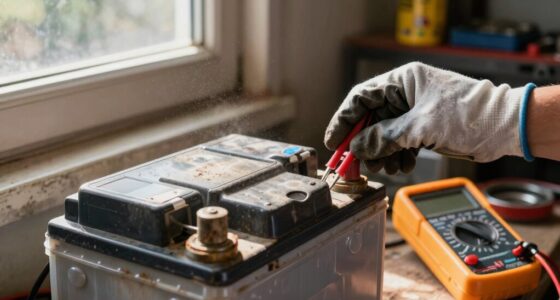
Battery accessories can create hidden failure points because incompatible chargers or connectors can cause overcharging or undercharging, damaging your system over time. Corrosion on terminals and connectors, especially in humid environments, increases resistance and hampers performance, often without obvious signs. Neglecting regular inspection and maintenance allows these issues to develop silently, risking unexpected failures. Staying aware of these potential problems and how to prevent them will help you keep your system safe and reliable.

Get backup power and energy gear delivered free with Prime
- Fast, free delivery on millions of items
- Prime Video, Amazon Music and more included
- Member-only deals all year
Key Takeaways
- Incompatible accessories can cause hidden electrical issues, leading to long-term battery damage.
- Corrosion at contact points can silently increase resistance, impairing performance over time.
- Mismatched connectors or voltage ratings can result in unseen overcharging or undercharging.
- Neglected maintenance allows corrosion and connection issues to develop unnoticed.
- Hidden failure points from accessories can cause sudden power loss and system unreliability.

Battery accessories might seem like simple add-ons, but they can harbor hidden failure points that compromise your entire power system. When you add components like chargers, adapters, or connectors, you might overlook how essential proper compatibility is. Charging compatibility isn’t just about plugging in a charger; it’s about ensuring that the voltage, current, and connector types match your battery’s specifications. Using incompatible chargers can lead to overcharging, undercharging, or uneven charging cycles, all of which reduce your battery’s lifespan. Sometimes, a seemingly minor mismatch can cause the charger to malfunction or even damage the battery, creating a hidden failure point that’s hard to detect until it’s too late.
Accessory corrosion is another silent threat lurking within your battery system. Over time, contact points, terminals, and connectors can develop corrosion, especially in humid or salty environments. Corrosion impairs electrical connections, leading to increased resistance and voltage drops, which can cause inconsistent charging and discharging. This not only hampers performance but also increases the risk of complete failure if the corrosion spreads or worsens. Because corrosion often starts subtly, you might not notice the signs until your system begins to falter or fails unexpectedly. Regular inspection and maintenance are essential to catch corrosion early, but many overlook this simple step, leaving their battery accessories vulnerable to hidden damage. Implementing preventive maintenance can help identify issues before they escalate.
The combination of poor charging compatibility and unnoticed corrosion creates a perfect storm for hidden failure points. You might think your setup is working fine until sudden issues arise—like unexpected power loss or reduced battery capacity. These problems often stem from overlooked accessory issues rather than the battery itself. When you use inappropriate chargers or neglect to check connections regularly, you risk introducing failure points that aren’t immediately visible but can cause long-term damage. Corrosion further complicates this, as it gradually degrades connections without obvious signs, making it easier to ignore until it’s too late. Implementing regular maintenance routines can prevent potential damage and extend the lifespan of your system. Additionally, understanding how battery accessories impact system reliability can help you take proactive steps to safeguard your power setup. Staying vigilant about these factors is crucial for long-term performance and safety.
battery charger compatible with [device]
As an affiliate, we earn on qualifying purchases.
As an affiliate, we earn on qualifying purchases.
Frequently Asked Questions
How Can I Identify Hidden Failure Points in Battery Accessories?
To identify hidden failure points in battery accessories, inspect for corrosion buildup, especially around connection points. Look for signs of connection corrosion, like discoloration or a crusty residue, which can indicate compromised conductivity. Regularly clean and maintain your accessories, and use a multimeter to check for voltage drops or poor connections. Staying vigilant helps prevent unexpected failures caused by hidden corrosion issues that weaken overall performance.
Are Certain Brands More Prone to Hidden Failure Issues?
Some brands are more prone to hidden failure issues, much like a house with hidden leaks. You should focus on brand reliability and accessory quality when choosing battery accessories. Reputable brands often conduct rigorous testing, reducing the risk of failure. Cheaper or lesser-known brands might cut corners, increasing the chances of hidden problems. Always research reviews and specifications to guarantee you’re investing in accessories that are less likely to cause unexpected failures.
What Are the Signs of a Failing Battery Accessory?
You’ll notice signs of a failing battery accessory through decreased charging efficiency, where it takes longer to charge or doesn’t reach full capacity. You might also see reduced battery lifespan, with the accessory overheating or showing visible damage like frayed wires or corrosion. If your device’s performance drops unexpectedly or it struggles to hold a charge, these are clear indicators that your accessory may be failing and needs replacing.
How Often Should I Inspect Battery Accessories for Potential Failure?
You should inspect your battery accessories regularly, ideally every three to six months, to guarantee safe battery maintenance. Frequent inspections help you spot early signs of wear or potential failure, especially when considering accessory upgrades. Keep an eye on connections, corrosion, and any unusual behavior. Regular checks prevent hidden failure points, keep your system reliable, and extend the lifespan of your battery and its accessories.
Can Improper Installation Cause Hidden Failure Points?
Improper installation can indeed cause hidden failure points, leading to battery corrosion and electrical interference. When connections aren’t secure or terminals aren’t properly cleaned, corrosion can quietly develop, weakening the connection. Faulty fittings may also cause electrical interference, disrupting performance and potentially damaging the system. You should always follow manufacturer instructions carefully, ensuring proper placement and tight connections, to prevent these sneaky, silent failures from sabotaging your battery’s reliability.
Conclusion
Remember, every accessory you add to your battery can be a silent saboteur, lurking unseen until it causes a failure. Don’t let these hidden failure points turn your power source into a ticking time bomb. Instead, treat your battery accessories like trusted allies—carefully chosen and maintained. After all, isn’t it wiser to prevent the storm before it hits than to weather its aftermath? Stay vigilant, and keep your power flowing smoothly.
Halloween Picks
halloween
As an affiliate, we earn on qualifying purchases.