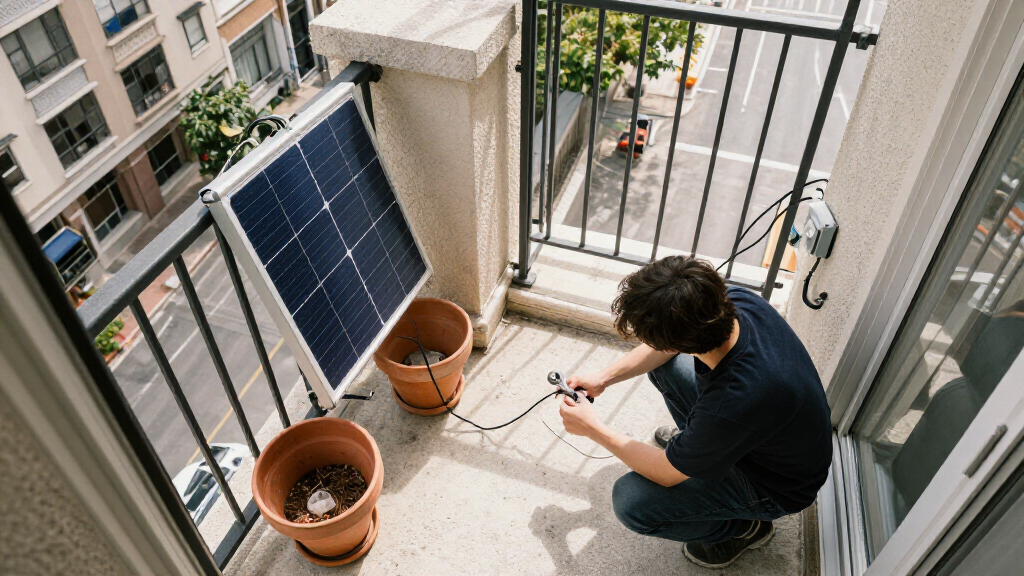
The best balcony solar panels balance usable output with the space, mounting limits and sun exposure of your balcony. My best overall pick is the Callsun 400W Bifacial N-Type Solar Panel Set, a useful middle ground for buyers who want a two-panel setup and the potential to collect light from both sides. The Renogy ShadowFlux 400W two-panel set stands out for its shade-focused design, while the ECO-WORTHY 400W set of four 100W panels offers more flexibility for arranging smaller panels. Buyers still need to weigh rigid-panel efficiency and durability against the lighter, more adaptable fit of flexible panels. Read on for the full breakdown and a guide to matching panel type and output to your balcony.

Get backup power and energy gear delivered free with Prime
- Fast, free delivery on millions of items
- Prime Video, Amazon Music and more included
- Member-only deals all year
Key Takeaways
- Two 200W panels are the clearest all-round format in this lineup: Callsun, Renogy ShadowFlux and HQST each offer a 400W-class setup without splitting the array into four smaller panels.
- Shade tolerance separates Renogy’s ShadowFlux options: the 200W single panel suits a smaller installation, while its 400W two-panel version provides more rated capacity for a larger usable area.
- Flexible panels trade mounting adaptability for different installation demands: ECO-WORTHY’s 200W HJT and 130W monocrystalline pairs, the 100W panel and the 1000W kit can suit curved or weight-sensitive locations, but a buyer must check the mounting surface and heat conditions.
- The 1000W flexible kit is not automatically the strongest balcony choice: its high stated output is useful only if the balcony can fit, safely support and orient both 500W panels.
- Panel count matters as much as total wattage: ECO-WORTHY’s four 100W rigid panels can be easier to place around obstructions than a single large surface, while two-panel sets simplify layout but need broad, unobstructed space.
| 1000W Portable Flexible Solar Panel Kit, 2 × 500W Monocrystalline Panels |  | Best for High-Output Flexible Setups | Maximum power: 1000 watts | Included panels: 2 × 500W | Cell type: Monocrystalline silicon | VIEW LATEST PRICE | See Our Full Breakdown |
| Callsun 400W Bifacial N-Type Solar Panel Set, 2 × 200W |  | Best Rigid Bifacial Set | Total maximum power: 400 W | Panel configuration: 2 × 200 W | Cell type: N-type monocrystalline | VIEW LATEST PRICE | See Our Full Breakdown |
| 100W 12V Flexible Monocrystalline Solar Panel |  | Best Compact Starter Panel | Maximum power: 100 W | Maximum voltage: 18 V | Amperage capacity: 5.56 A | VIEW LATEST PRICE | See Our Full Breakdown |
| Renogy 400W ShadowFlux Flexible Solar Panel (2-Pack, 200W Each) |  | Best for Partly Shaded Curved Balconies | Total power: 400 watts | Panel configuration: 2 × 200W | Cell type: N-type monocrystalline | VIEW LATEST PRICE | See Our Full Breakdown |
| Renogy ShadowFlux 200W N-Type Solar Panel |  | Best Single Rigid Panel for Partial Shade | Power: 200 watts | Cell type: N-type, 16BB | Efficiency: 25% | VIEW LATEST PRICE | See Our Full Breakdown |
| ECO-WORTHY 400W N-Type Monocrystalline Solar Panel Set, 4 × 100W |  | Best for Modular Balcony Layouts | Total power: 400 watts | Panel count: 4 | Power per panel: 100 watts | VIEW LATEST PRICE | See Our Full Breakdown |
| HQST 400W Solar Panel (2 x 200W), N-Type, 16BB, Up to 25.4% Efficiency, IP65 |  | Best for Space-Constrained Rigid Mounts | Panel count: 2 | Power per panel: 200 watts | Efficiency: Up to 25.4% | VIEW LATEST PRICE | See Our Full Breakdown |
| ECO-WORTHY 2-Pack 200W Flexible HJT Solar Panels |  | Best Flexible Pick for Curved Mounts | Quantity: 2 panels | Maximum power: 200 watts per panel | Output voltage: 18 volts DC | VIEW LATEST PRICE | See Our Full Breakdown |
| ECO-WORTHY 2-Pack 130W Flexible Monocrystalline Solar Panels (260W Total) |  | Best for Lightweight, Irregular Balcony Surfaces | Total power: 260 watts | Panel count: 2 × 130 watts | Cell type: Monocrystalline silicon | VIEW LATEST PRICE | See Our Full Breakdown |
| balcony solar panel | Cell type | Dimensions | Efficiency | Weight |
|---|---|---|---|---|
| 1000W Portable Flexible Solar | Monocrystalline silicon | — | — | — |
| Callsun 400W Bifacial N-Type S | N-type monocrystalline | — | Up to 25.6% | — |
| 100W 12V Flexible Monocrystall | Monocrystalline PERC | 38.1 × 20.8 × 0.3 in | — | Conflicting listing figures: 4.19 lb and 3 lb |
| Renogy 400W ShadowFlux Flexibl | N-type monocrystalline | 62.2 × 27.4 × 1.2 in | 25% | 15.4 lb |
| Renogy ShadowFlux 200W N-Type | N-type, 16BB | 49.69 × 30.08 × 1.18 inches | 25% | 23.8 pounds |
| ECO-WORTHY 400W N-Type Monocry | — | 35.63 × 23.03 × 1.18 inches per panel | Up to 25% | — |
| HQST 400W Solar Panel | N-type monocrystalline | 47 × 31 × 3.5 inches per panel | Up to 25.4% | 20.17 pounds |
| ECO-WORTHY 2-Pack 200W Flexibl | N-type monocrystalline | 57.09 × 27.17 × 0.1 inches per panel | — | — |
| ECO-WORTHY 2-Pack 130W Flexibl | Monocrystalline silicon | 37.8 × 27.1 × 0.1 inches per panel | 25% | 12.6 pounds |
More Details on Our Top Picks
1000W Portable Flexible Solar Panel Kit, 2 × 500W Monocrystalline Panels
This kit stands out for its stated 1000W combined capacity and included 50A charge controller, making it a higher-output option than the 100W 12V Flexible Monocrystalline Solar Panel. Its two panels bend up to 30 degrees, a modest curve range that can help with gently uneven mounting surfaces but is less accommodating than that smaller panel’s stated 240-degree flexibility. The ETFE-coated surface and IP67 junction box are aimed at outdoor use, while controller monitoring and electrical protections give buyers more of a ready-to-connect system than a panel-only purchase. The tradeoff is uncertainty: the listing does not independently verify the unusually high output claim, and the dimensions and mounting needs may be awkward on a typical balcony. I’d choose it only where the available space and system design can make use of its claimed capacity.
Pros:- Two flexible panels offer a stated 1000W combined maximum output.
- ETFE coating is designed for outdoor use and abrasion resistance.
- Included 50A controller provides monitoring and electrical protections.
- IP67-rated junction box supports weather-exposed installation.
Cons:- The stated kit output is not independently verified in the listing.
- Bends only up to 30 degrees, less than the 100W flexible panel’s stated range.
- Panel size and system capacity may exceed what a typical balcony can accommodate.
Best for: Balcony or off-grid system builders with ample mounting area who want a flexible, higher-output kit and an included charge controller.
Not ideal for: Apartment residents with a small railing or limited mounting space, or buyers who need independently substantiated output figures.
- Maximum power:1000 watts
- Included panels:2 × 500W
- Cell type:Monocrystalline silicon
- Conversion efficiency:23%
- Flexibility:Bends up to 30 degrees
- Surface coating:ETFE film
- Charge controller:50A
- Junction box:IP67 waterproof
Our verdict“Choose this kit for a spacious mounting area and a controller-inclusive setup, but verify the output and installation fit before buying.”
Callsun 400W Bifacial N-Type Solar Panel Set, 2 × 200W
The Callsun set is the lineup’s rigid-panel choice for balconies that can support a framed installation and offer useful reflected light behind the modules. Its bifacial design may collect some rear-side light, but that gain depends on clearance and the mounting surface; a panel placed flush against a dark wall will have less opportunity to benefit. Compared with the flexible Renogy 400W ShadowFlux, these glass-and-aluminum panels are not designed to bend around a curved railing, yet their tempered-glass construction suits buyers seeking a conventional framed format. The two-module layout is described as limiting the effects of partial shade, a useful consideration near balcony rails or neighboring buildings. Each panel weighs 23.8 pounds, so installation and secure support need planning. I’d favor this set where a sturdy mount and rear-light exposure are available, not where low weight or easy handling matters most.
Pros:- Bifacial construction can collect reflected light from the rear when installation conditions allow.
- Two-module design is intended to reduce losses from partial shading.
- Tempered glass and aluminum frame provide a conventional rigid-panel build.
- IP68-rated junction box is designed for outdoor exposure.
Cons:- Each panel weighs 23.8 pounds, complicating balcony mounting and handling.
- Rear-side energy gain depends on clearance and light conditions.
- Rigid glass panels cannot conform to curved balcony surfaces.
Best for: Balcony owners with a sturdy mounting structure, room for two framed modules, and a bright or reflective surface behind the panels.
Not ideal for: Renters needing a lightweight, curved, or easily repositioned panel, or anyone unable to safely support two 23.8-pound modules.
- Total maximum power:400 W
- Panel configuration:2 × 200 W
- Cell type:N-type monocrystalline
- Efficiency:Up to 25.6%
- Dimensions per panel:51.3 × 30.3 × 1.4 in
- Weight per panel:23.8 lb
- Junction box:IP68-rated
- Performance commitment:At least 84.5% rated output after 25 years
Our verdict“Pick the Callsun set when your balcony can support rigid panels and provide rear-side light; choose a flexible model for curved or weight-sensitive mounts.”
100W 12V Flexible Monocrystalline Solar Panel
For a small balcony or a first solar setup, this 100W flexible panel is easier to place and handle than the larger Callsun and Renogy 400W sets. Its stated bend range of up to 240 degrees gives it an advantage when a flat rigid module will not sit neatly against a curved surface. At 38.1 × 20.8 inches, it is a more modest footprint, and the listing includes MC4 connectors, cables, and pre-drilled holes to help with basic mounting. That convenience comes with limited capacity: buyers seeking substantial generation will need multiple panels or a different system, and the stated daily energy figure depends on sunlight and installation conditions. I’d also treat its weight cautiously because the listing gives conflicting figures of 4.19 and 3 pounds. Compared with the Renogy ShadowFlux 200W, this is the simpler, lower-output choice for tight spaces.
Pros:- Compact 100W format is easier to fit on limited balcony space than the 400W sets.
- Flexible construction can accommodate curved or irregular surfaces.
- MC4 connectors and included cables support straightforward system connections.
- IP67-rated junction box and pre-drilled mounting holes aid outdoor installation.
Cons:- Lower 100W capacity may not suit buyers seeking substantial household generation.
- Listing gives conflicting panel weights of 4.19 and 3 pounds.
- Daily energy output depends on sunlight and other installation conditions.
Best for: Balcony beginners, renters, and RV owners who need one lightweight-format panel for a small 12V system or curved mounting surface.
Not ideal for: Households seeking higher output from one module, or buyers who need consistent, clearly stated weight information before planning a mount.
- Maximum power:100 W
- Maximum voltage:18 V
- Amperage capacity:5.56 A
- Cell type:Monocrystalline PERC
- Conversion efficiency:23%
- Dimensions:38.1 × 20.8 × 0.3 in
- Weight:Conflicting listing figures: 4.19 lb and 3 lb
- Maximum bend:240 degrees
Our verdict“Choose this panel for a compact, flexible starter setup, not as a one-panel answer for high energy needs.”
Renogy 400W ShadowFlux Flexible Solar Panel (2-Pack, 200W Each)
The Renogy ShadowFlux 400W set is the most specialized pick here: it pairs two flexible 200W N-type panels with anti-shading technology for balconies where rails, nearby buildings, or other obstructions may cast intermittent shadows. Its stated 270-degree bend range makes it more adaptable to curved mounting than the rigid Callsun bifacial set, while the 25% efficiency claim targets buyers trying to make useful output from limited panel area. The stated 15.4-pound weight and long panel dimensions still call for careful mounting; flexibility does not remove the need for secure support. Renogy also says the panels are reinforced, but the listing warns that installation must avoid cracking, and flexible panels generally have a shorter lifespan than rigid glass designs. I’d put this ahead of the smaller 100W panel for buyers with shading concerns and room for the two-module set, but not for those prioritizing long-term rigid-panel durability.
Pros:- Anti-shading technology is designed to limit output losses when part of a panel is shaded.
- Two 200W panels provide a higher stated capacity than the 100W flexible starter panel.
- Up to 270-degree flexibility can suit curved mounting surfaces.
- IP68 rating and UV-resistant reinforced material are intended for outdoor use.
Cons:- Flexible construction generally has a shorter lifespan than rigid glass panels.
- The listing calls for careful installation to avoid cracking.
- Long panels require adequate balcony space and secure mounting.
Best for: Balcony owners with curved mounting surfaces and intermittent shade who have room to securely install two long, flexible modules.
Not ideal for: Buyers who prioritize rigid glass construction, compact dimensions, or a panel that can be mounted without careful handling.
- Total power:400 watts
- Panel configuration:2 × 200W
- Cell type:N-type monocrystalline
- Efficiency:25%
- Dimensions:62.2 × 27.4 × 1.2 in
- Weight:15.4 lb
- Flexibility:Up to 270 degrees
- Ingress protection:IP68
Our verdict“Choose this set for a partly shaded, curved balcony with room for secure mounting; choose a rigid panel if durability is your priority.”
Renogy ShadowFlux 200W N-Type Solar Panel
This single-panel Renogy is a more contained alternative to the Callsun 400W bifacial set: it offers a stated 200W output in one rigid module rather than two heavy panels, with ShadowFlux technology aimed at maintaining generation in partial shade and reducing hot-spot risks. Its 25% efficiency claim may appeal where usable balcony area is limited, but the panel still measures nearly 50 by 30 inches and weighs 23.8 pounds, so it is not a small or effortless railing accessory. The aluminum-and-monocrystalline construction, IP67-or-higher protection, and stated long-term output warranty give it a more conventional fixed-installation profile than the flexible Renogy 400W set. The compromise is capacity: one module provides half the stated power of that set, and its size may still rule it out for narrow balconies. I’d choose it for a sturdy mount with occasional shade, not for a lightweight or highly portable setup.
Pros:- ShadowFlux technology is designed to support generation in partial shade and reduce hot-spot risks.
- Stated 25% efficiency suits buyers seeking output from a limited panel area.
- IP67-or-higher protection supports weather-exposed installation.
- Includes stated materials and workmanship and long-term output warranties.
Cons:- At 23.8 pounds, the panel needs a secure mount and careful handling.
- Nearly 50 inches long and 30 inches wide, it may not fit narrow balconies.
- One 200W module has lower stated total capacity than the Renogy 400W set.
Best for: Balcony owners who want one rigid 200W module, have a sturdy mounting point, and face intermittent shade from rails or nearby structures.
Not ideal for: Buyers with narrow balcony space, weak railing mounts, or a need for a lightweight panel that is easy to reposition.
- Power:200 watts
- Cell type:N-type, 16BB
- Efficiency:25%
- Maximum voltage:36.5 volts
- Output voltage:12 volts DC
- Dimensions:49.69 × 30.08 × 1.18 inches
- Weight:23.8 pounds
- Warranty:5-year materials and workmanship; 25-year output warranty with 80% output guarantee
Our verdict“Choose this single panel for a sturdy, partly shaded balcony with space for one large module, but skip it if weight or fit is a concern.”
ECO-WORTHY 400W N-Type Monocrystalline Solar Panel Set, 4 × 100W
This set suits balconies where a single large panel is awkward but several smaller panels can be arranged around railings or other obstructions. Its four 100W panels offer more layout flexibility than the HQST kit’s two 200W panels, while bypass diodes can help limit the effect of partial shade on panel output. N-type bifacial cells and a stated efficiency of up to 25% add appeal when available light is limited, though actual balcony production depends on placement and sunlight. The tradeoff is that four panels mean more individual mounting points and wiring to manage than a two-panel setup. This set is aimed at 12V or 24V systems, not a complete plug-in balcony power system; the provided information does not specify an inverter or balcony-specific mounting hardware.
Pros:- Four 100W panels allow more placement options than a pair of larger panels.
- Bypass diodes can reduce output losses when part of a panel is shaded.
- MC4 connectors and pre-drilled holes simplify wiring and mounting.
- Specified for 12V and 24V systems, giving it a clear use with compatible setups.
Cons:- Four panels require more mounting points and cable management than two-panel alternatives.
- The set ships in two boxes that may arrive at different times.
- No balcony-specific brackets, inverter, or plug-in system are listed.
Best for: Balcony solar buyers with several separate mounting spots who need a 400W panel set for an existing 12V or 24V system.
Not ideal for: Renters or apartment owners seeking a ready-to-connect balcony kit, or anyone who cannot securely mount four separate rigid panels.
- Total power:400 watts
- Panel count:4
- Power per panel:100 watts
- Cell technology:N-type bifacial monocrystalline
- Efficiency:Up to 25%
- Dimensions:35.63 × 23.03 × 1.18 inches per panel
- Connector:MC4
- Maximum voltage:25.2 volts
Our verdict“Choose this set if you can mount four separate panels and want layout flexibility for a compatible 12V or 24V system.”
HQST 400W Solar Panel (2 x 200W), N-Type, 16BB, Up to 25.4% Efficiency, IP65
The HQST kit puts its 400 watts into two 200W rigid panels, making it simpler to arrange than ECO-WORTHY’s four-panel 400W set. Its stated efficiency of up to 25.4% is the highest among these four options, and the N-type cells are described as performing well in low light. That can help when balcony sun is limited, but it does not overcome a poor orientation or persistent shade. The aluminum frame, tempered glass, and IP65 protection suit outdoor exposure, while each panel’s 47-by-31-inch footprint still demands a fairly broad, unobstructed mounting area. Unlike the flexible ECO-WORTHY panels, this kit cannot conform to curved surfaces. The supplied information also focuses on RV and rooftop use, so balcony buyers should confirm their mounting method and electrical compatibility before choosing it.
Pros:- Two 200W panels simplify placement compared with a four-panel 400W arrangement.
- Up to 25.4% stated efficiency and N-type cells are suited to limited-light conditions.
- Aluminum frame and IP65 protection support outdoor use.
- Tempered-glass construction offers a rigid-panel alternative to flexible modules.
Cons:- Each panel measures 47 by 31 inches, which may not fit a small balcony.
- Rigid panels cannot conform to curved or uneven mounting surfaces.
- Balcony mounting hardware and inverter compatibility are not specified.
Best for: Balcony owners with a broad, flat mounting area who want two rigid panels for a compatible solar setup.
Not ideal for: Buyers with curved railings, narrow or irregular balcony space, or a need for a complete balcony plug-in kit.
- Panel count:2
- Power per panel:200 watts
- Efficiency:Up to 25.4%
- Dimensions:47 × 31 × 3.5 inches per panel
- Weight:20.17 pounds
- Cell type:N-type monocrystalline
- Stated service life:30 years at 87.4% output
Our verdict“Pick the HQST set if your balcony has room for two large rigid panels and you value a simpler layout over flexibility.”
ECO-WORTHY 2-Pack 200W Flexible HJT Solar Panels
For a balcony surface that cannot take a rigid frame, these two flexible 200W panels offer a much thinner profile than the HQST glass-and-aluminum panels. Their 0.1-inch thickness and included grommets and stainless-steel ties make them easier to attach to some curved or uneven surfaces, while the ETFE surface and stated efficiency of up to 25% give the pair a strong output claim for flexible modules. The blocking diode helps prevent reverse current, but it is not a substitute for a suitable charge controller or other system components. Mounting still needs care: adhesive is not included, and the supplied ties may not suit every balcony railing or local installation rule. Compared with the 260W ECO-WORTHY flexible pair, this set offers more rated capacity but uses larger panels that may be harder to position.
Pros:- Flexible, 0.1-inch-thick construction can suit curved or uneven mounting surfaces.
- Two 200W panels provide 400W of stated maximum power.
- ETFE surface and up to 25% stated efficiency make the output specification competitive.
- Grommets, stainless-steel ties, and a blocking diode are included.
Cons:- Adhesive is not included, and the included ties may not fit every balcony.
- Large panel dimensions can make placement difficult on compact balconies.
- No warranty duration is stated in the supplied information.
Best for: Balcony owners who need flexible panels for a curved or uneven surface and can provide a secure, compatible mounting method.
Not ideal for: Renters who cannot attach panels securely, buyers who need included adhesive or a complete plug-in system, and balconies with limited panel area.
- Quantity:2 panels
- Maximum power:200 watts per panel
- Output voltage:18 volts DC
- Cell type:N-type monocrystalline
- Conversion efficiency:Up to 25%
- Surface material:ETFE
- Dimensions:57.09 × 27.17 × 0.1 inches per panel
- Mounting:4 pre-drilled grommets and 6 stainless-steel zip ties per panel
Our verdict“Choose this pair when flexible mounting and a 400W rating matter more than included adhesive or a rigid, self-supporting frame.”
ECO-WORTHY 2-Pack 130W Flexible Monocrystalline Solar Panels (260W Total)
This 260W pair is the more manageable choice when a balcony has curved or irregular surfaces and a 400W array would be difficult to place. Each panel is 0.1 inch thick and the set weighs 12.6 pounds, so handling and positioning may be easier than with the rigid HQST panels. Its stated 25% efficiency and IP68 waterproof rating are useful specifications for outdoor mounting, while the claimed ability to bend up to 270 degrees speaks to its shape flexibility. That bend rating does not make the panel self-mounting: you still need a secure attachment method, and the product data lists no rigid frame or dedicated balcony brackets. Compared with ECO-WORTHY’s 400W flexible HJT pair, this option has less total rated power, but its shorter 37.8-inch length may be easier to fit on a cramped balcony.
Pros:- Flexible construction can fit curved and irregular surfaces.
- Two panels provide 260W total rated power in a thin profile.
- IP68 waterproof rating is specified for outdoor exposure.
- MC4 connectors and 18V DC output are listed.
Cons:- At 260W total, it has less rated output than the 400W ECO-WORTHY flexible pair.
- Requires a suitable mounting method because it has no rigid frame.
- Flexible panels generally offer lower power density than rigid glass panels of similar area.
Best for: Balcony owners with curved or irregular mounting surfaces who prioritize lighter handling and a smaller panel footprint over maximum rated output.
Not ideal for: Buyers seeking a rigid, framed panel, a ready-made mounting solution, or the higher 400W capacity of the flexible HJT pair.
- Total power:260 watts
- Panel count:2 × 130 watts
- Cell type:Monocrystalline silicon
- Efficiency:25%
- Dimensions:37.8 × 27.1 × 0.1 inches per panel
- Weight:12.6 pounds
- Output voltage:18 volts DC
- Connector:MC4
- Bending angle:Up to 270 degrees
Our verdict“Choose this pair if your balcony needs a lightweight flexible fit and 260W of rated capacity is sufficient.”
How We Picked
I compared the nine listed products for the realities of balcony solar: available mounting area, panel format, rated output, shade-related features, and the effort needed to create a safe, compatible installation. I gave more weight to options with a practical balance of capacity and placement flexibility than to a large wattage claim on its own. I also treated flexible and rigid panels as different solutions, since low weight and conformity to a surface do not automatically outweigh questions about airflow, attachment and long-term exposure.
The ranking favors products that make sense for a broad range of balconies, then assigns more specialized options to buyers with specific constraints. The Callsun 400W bifacial set leads as a balanced two-panel choice; Renogy’s ShadowFlux set follows for buyers who prioritize shade performance; and the ECO-WORTHY four-panel set earns a place for more adaptable panel placement. Single panels and flexible kits rank lower for general use because they fit narrower needs or require closer checks of usable area, mounting and system compatibility.
| balcony solar panel | Cell type |
|---|---|
| 1000W Portable Flexible Solar | Monocrystalline silicon |
| Callsun 400W Bifacial N-Type S | N-type monocrystalline |
| 100W 12V Flexible Monocrystall | Monocrystalline PERC |
| Renogy 400W ShadowFlux Flexibl | N-type monocrystalline |
| Renogy ShadowFlux 200W N-Type | N-type, 16BB |
| ECO-WORTHY 400W N-Type Monocry | — |
| HQST 400W Solar Panel | N-type monocrystalline |
| ECO-WORTHY 2-Pack 200W Flexibl | N-type monocrystalline |
| ECO-WORTHY 2-Pack 130W Flexibl | Monocrystalline silicon |
Factors to Consider When Choosing Best Balcony Solar Panels
Balcony solar shopping starts with the site, not the wattage printed on the listing. I would map the usable area, note shade and mounting restrictions, then check the electrical setup before choosing a panel format. These broader checks can prevent a high-output kit from becoming an awkward or unusable installation.
Measure the usable mounting area, not the balcony floor
Measure the clear section where panels can actually sit, including space for clamps, brackets, cables and safe access. Railings, outward-opening doors and building rules can reduce the usable area more than expected. Compare the dimensions of the whole kit rather than dividing total wattage by panel count. Smaller modules, such as four 100W panels, can fit around obstacles, but more separate pieces may mean more attachment points and cable planning. A two-panel set can be simpler when the balcony has one uninterrupted stretch. Do not buy based on a claimed output until you know the full array can be positioned safely.
Choose panel construction for the mounting surface
Rigid panels generally need a secure support structure and enough clearance behind them for airflow. Flexible panels can suit weight-sensitive or gently curved surfaces, but flexibility does not mean they can be bent sharply or attached to any railing. Heat trapped against a surface may affect performance and service life, so check the maker’s mounting instructions and ventilation needs. Also verify whether your building allows drilled fixtures, clamps or panels extending beyond the balcony line. A lighter kit may reduce mounting complexity, yet it still needs secure, weather-appropriate attachment. Treat the mounting method as part of the purchase, not an afterthought.
Match rated wattage to real sun and shade
Panel wattage is a rating under set test conditions, not a promise of daily energy on a balcony. Orientation, seasonal sun angle, nearby buildings and railing shadows all affect production. If shade crosses the array, look for product features intended to handle partial shading, but do not assume they remove the impact of shade. Consider whether the shadow falls on one panel or across the whole set, and whether separate placement could keep some modules in direct sun. A larger array can help capture more energy when light is available, but it cannot compensate fully for a persistently shaded location. Estimate your likely sun window before paying for capacity you cannot use.
Check the complete electrical system before buying panels
A panel kit is only one part of a balcony solar setup. Confirm whether the package includes a compatible microinverter, charge controller or other required equipment, since the products listed here vary by panel type and stated configuration. Match voltage, current and connector requirements to the equipment you plan to use, and check whether the system is intended for grid connection, battery charging or another use. Grid-connected systems may require utility approval, an approved inverter and electrical work that meets local rules. Avoid assuming that panels with similar wattage can be connected together without checking compatibility. If specifications or wiring requirements are unclear, ask a qualified installer before purchase.
Balance panel count against placement and wiring complexity
More panels give you more ways to divide an array, but each added module can bring extra wiring, connectors and attachment points. Four smaller panels can work around a balcony obstruction better than two large panels, while a compact two-panel layout may be easier to mount and inspect. Check how the intended electrical configuration handles panels with different levels of sun; one shaded module can affect output depending on the system design. Keep cable runs short where practical and protected from pinching, standing water and foot traffic. Leave access for cleaning and inspection rather than filling every available gap. The best layout is the one that fits the space and can be secured and maintained, not simply the one with the most modules.
Treat safety, permissions and upkeep as part of the cost
Balcony panels face wind, rain and vibration, so the attachment system must suit both the panel and the building. Check landlord, homeowners association and local restrictions before ordering; rules may limit exterior fixtures or changes to railings. Make sure the installation does not block exits, create a falling-object risk or interfere with neighbors. Plan to inspect mounting hardware and cables periodically, and choose a position that can be cleaned without unsafe reaching. Flexible panels may be harder to inspect if bonded closely to a surface, while rigid panels can collect debris around their frame. A setup that is straightforward to reach and maintain can be a better long-term choice than one that uses every inch of space.
Frequently Asked Questions
Can I connect balcony solar panels directly to a regular wall outlet?
Do not assume that a panel set can connect directly to a household outlet. A grid-connected balcony system typically needs a compatible inverter and must follow local electrical and utility requirements. The nine products listed are panel options, and their names alone do not establish that they include the equipment needed for a complete plug-in system. Check the full package contents, electrical specifications and approved connection method before buying. If you are unsure, ask a qualified electrician or your utility provider.
Should I choose a 400W set or the 1000W flexible kit?
Choose based on the balcony’s usable area and sun exposure, not the larger rating by itself. The 1000W kit uses two 500W flexible panels, so it needs room for both modules and a mounting plan suited to their size. A 400W set may be easier to fit and use well on a smaller balcony, especially if it can stay clear of shade. Compare dimensions, system compatibility and the hours of direct light your location receives. Extra rated capacity has limited value if the array cannot be placed safely or gets little sun.
Are flexible solar panels a better choice for a balcony railing?
Flexible panels may suit a location where low weight or a conforming surface matters, but they are not automatically the safer or more durable choice for every railing. Check the manufacturer’s bend limits, attachment instructions, wind exposure guidance and ventilation requirements. A railing can cast shadows and may not provide a suitable surface for secure attachment. Rigid panels need a stronger mounting arrangement, but can be easier to keep elevated and inspect. Compare the installation requirements with your building’s rules before deciding between formats.
Will bifacial panels produce more power on any balcony?
No. A bifacial panel’s rear side can collect reflected light, but the benefit depends on what is behind the panel and how much light reaches it. A panel mounted close to a dark wall or opaque balcony surface may get little useful rear-side light. Bright surroundings and an installation with open space behind the panel can offer better conditions, though actual output still varies with weather and orientation. The Callsun set’s bifacial design is a feature to match to your site, not a guarantee of extra production. Check the mounting arrangement and product documentation before counting on that added contribution.
Do I need permission to install solar panels on my balcony?
Possibly; requirements depend on your building, landlord or association, local rules and whether the system connects to the grid. Exterior changes, drilled mounts, panels that extend past a railing and electrical connections may each have separate restrictions. Ask for written approval before ordering if you rent or live in a managed building. For grid-connected equipment, check utility and electrical-code requirements as well. A panel that fits physically may still be prohibited by building or safety rules.
Conclusion
For most buyers comparing the best balcony solar panels, I would start with the Callsun 400W Bifacial N-Type set as the best overall choice, provided the site can make use of its two-sided design. The ECO-WORTHY 400W set of four 100W panels is my best value-style pick for balconies where smaller modules make placement easier, while the Renogy ShadowFlux 400W set is the premium-leaning choice for buyers prioritizing a shade-focused design. Beginners who want a straightforward capacity and panel count to compare may prefer one of the 400W two-panel sets, after confirming whether the necessary inverter and mounting hardware are included. For tight or weight-sensitive mounting needs, compare the flexible ECO-WORTHY pairs and the single 100W panel; for a large, open, sunlit balcony, the 1000W kit may be worth investigating. Match the panel dimensions, shade pattern, mounting rules and electrical equipment to your balcony before choosing.
Halloween Picks
halloween
As an affiliate, we earn on qualifying purchases.