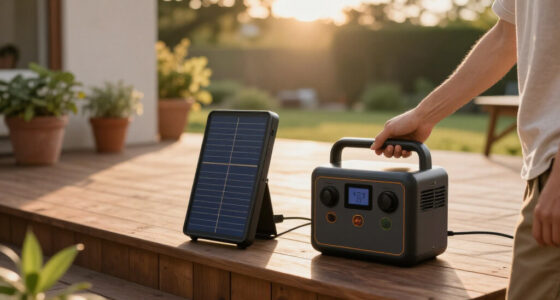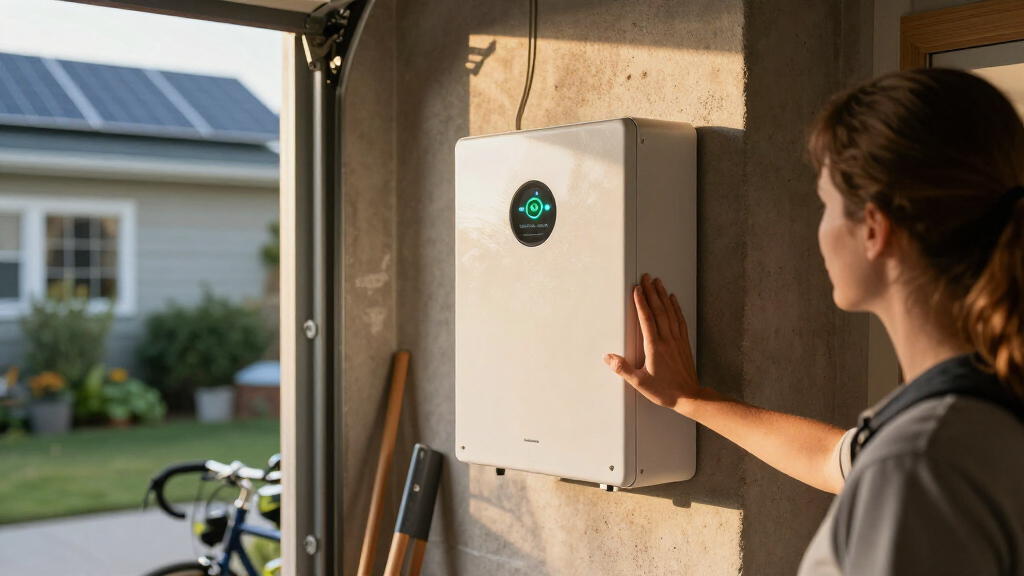
Choosing a home battery in 2026 comes down to one question before anything else: do you want a plug-and-play backup system, or are you building your own battery bank? That single decision splits this category in half. On the plug-and-play side, the Jackery Solar Generator 5000 Plus is my top overall pick because it delivers 7200W of rated output, 120V/240V support, and direct compatibility with a transfer switch — meaning it can genuinely run essential household circuits, not just gadgets. On the DIY side, the VATRER POWER 460Ah takes the crown for serious off-grid builders, pairing massive storage with self-heating and a 300A BMS. The ECO-WORTHY 314Ah is the value pick for mid-size systems, while the ROSINLI 2-pack suits budget-conscious beginners. The main tradeoffs you will weigh throughout this guide are integration versus flexibility, weight versus capacity, and whether you need cold-weather features like self-heating or just a basic low-temp cutoff.

Get backup power and energy gear delivered free with Prime
- Fast, free delivery on millions of items
- Prime Video, Amazon Music and more included
- Member-only deals all year
Complete the kit


Key Takeaways
- The Jackery 5000 Plus is the only pick here that connects directly to home circuits via a 60A transfer switch, making it the true whole-home backup option.
- Self-heating (VATRER) is not the same as low-temperature cutoff (ECO-WORTHY, ROSINLI) — cutoff prevents damage but blocks charging, while heating keeps the battery usable in freezing conditions.
- Expandability varies widely: Jackery scales to 60kWh, ECO-WORTHY to 32.15kWh, VATRER supports 4P4S, and ROSINLI tops out at 400Ah — match this to your long-term energy plans.
- The 12V batteries require you to supply your own inverter, charger, and wiring, which adds cost and complexity compared with an all-in-one power station.
- Weight and handling differ sharply: the ROSINLI batteries are manageable at 22.6 lb each, while the ECO-WORTHY and VATRER units exceed 60 lb and need careful installation planning.
| Jackery Solar Generator 5000 Plus Portable Power Station |  | Best Overall — True Whole-Home Backup | Battery capacity: 5040Wh | Battery chemistry: LiFePO4 | Surge output: 14,400W | VIEW LATEST PRICE | See Our Full Breakdown |
| ECO-WORTHY 12.8V 314Ah LiFePO4 Battery with Bluetooth and Low-Temperature Protection |  | Best Value for Mid-Size Systems | Battery chemistry: LiFePO4 | Voltage: 12.8V | Capacity: 314Ah | VIEW LATEST PRICE | See Our Full Breakdown |
| ROSINLI 2-Pack 12V 100Ah Group 24 LiFePO4 Batteries |  | Best for Beginners and Small Setups | Quantity: 2 batteries | Battery chemistry: LiFePO4 (automotive-grade cells) | Nominal voltage: 12V | VIEW LATEST PRICE | See Our Full Breakdown |
| VATRER POWER 12.8V 460Ah Self-Heating LiFePO4 RV Battery |  | Best Premium for Off-Grid and Cold Climates | Chemistry: LiFePO4 | Voltage: 12.8V | Capacity: 460Ah (5,888Wh) | VIEW LATEST PRICE | See Our Full Breakdown |
| home batterie | Battery chemistry | Voltage | Capacity | BMS |
|---|---|---|---|---|
| Jackery Solar Generator 5000 P | LiFePO4 | 120V/240V, 60Hz | — | — |
| ECO-WORTHY 12.8V 314Ah LiFePO4 | LiFePO4 | 12.8V | 314Ah | 200A |
| ROSINLI 2-Pack 12V 100Ah Group | LiFePO4 (automotive-grade cells) | — | 100Ah per battery | Built-in smart 100A BMS |
| VATRER POWER 12.8V 460Ah Self- | — | 12.8V | 460Ah (5,888Wh) | — |
More Details on Our Top Picks
Jackery Solar Generator 5000 Plus Portable Power Station
This option stands out for a reason the other three picks cannot match: it is the only product in this lineup designed to power your actual home circuits. With a rated output of 7200W, 120V/240V split-phase support, and compatibility with Jackery’s 60A Smart Transfer Switch, the 5000 Plus can run up to twelve 120V circuits or six 240V circuits. That means furnaces, well pumps, and 240V appliances — loads the 12V batteries here cannot approach without a substantial external inverter system.
The base 5040Wh capacity is enough for roughly a day of essential household loads, but the real story is expansion to 60kWh, which puts it in genuinely multi-day outage territory. Solar input up to 4000W means a full recharge in about two hours under good conditions — a spec that matters more than people realize during extended grid failures, when every daylight hour counts.
Compared with the ECO-WORTHY 314Ah, which stores a similar 4,019Wh, the Jackery costs more upfront but bundles the inverter, charge controller, and monitoring into one chassis — the ECO-WORTHY requires you to source and wire all of that yourself. The tradeoffs are real, though: solar panels are sold separately, and without the transfer switch (also a separate purchase), you are limited to the two onboard outlets. The ChargeShield 2.0 electronics and LiFePO4 cells are rated for up to eleven years of daily cycling, which helps justify the premium over smaller DIY banks.
Pros:- 7200W rated output with both 120V and 240V split-phase support for real household circuits
- Expands from 5040Wh up to 60kWh for multi-day outages
- Accepts up to 4000W of solar for roughly two-hour recharges
- LiFePO4 cells with ChargeShield 2.0 rated for up to 11 years of daily use
Cons:- Solar panels are optional and must be purchased separately
- Requires the 60A Smart Transfer Switch to power home circuits, adding cost and installation
Best for: Homeowners who want a turnkey, whole-house backup solution that integrates with their electrical panel and can scale over time
Not ideal for: Budget buyers building small off-grid systems, or anyone unwilling to add the transfer switch and panels needed to unlock its full potential
- Battery capacity:5040Wh
- Battery chemistry:LiFePO4
- Surge output:14,400W
- Voltage:120V/240V, 60Hz
- Maximum capacity:60kWh
- Maximum solar input:4000W
- Transfer switch compatibility:Jackery 60A Smart Transfer Switch
- Supported circuits:Up to 12 at 120V or 6 at 240V
Our verdict“If the goal is genuine home backup rather than a DIY project, this is the most complete and capable package in the comparison.”
ECO-WORTHY 12.8V 314Ah LiFePO4 Battery with Bluetooth and Low-Temperature Protection
Where the Jackery is an appliance, the ECO-WORTHY 314Ah is a component — and a well-priced one. This single 12.8V battery stores 4,019.2Wh, nearly matching the Jackery’s base capacity on paper, but delivering it as raw storage you pair with your own inverter and charging setup. For builders who already own solar equipment or want to customize their system piece by piece, that flexibility is the whole point.
The 200A BMS handles respectable continuous loads, and the low-temperature charging cutoff at -7°C prevents the cell damage that plagues lithium batteries charged in freezing conditions. Note the distinction: compared with the VATRER 460Ah, which actively heats itself, the ECO-WORTHY simply refuses to charge when it gets too cold. That protects the battery but leaves you without solar input on cold winter days — a meaningful limitation for off-grid cabins in northern climates.
What this model does better than the ROSINLI two-pack is monitoring: Bluetooth app visibility plus SOC and status LEDs on the case let you check state of charge at a glance or from your phone, which is genuinely useful once batteries are tucked into a bay or cabinet. Expansion to 32.15kWh in 4P2S or 2P4S configurations gives growing systems room. The main frustration is handling: at 60.4 lb, this is a two-person lift, and multi-battery orders can arrive in separate packages on different days.
Pros:- Bluetooth app monitoring plus SOC and status LED display
- Low-temperature charging cutoff protects cells from freeze damage
- Expandable up to 32.15kWh in 4P2S or 2P4S configurations
- Grade A LiFePO4 cells with 200A BMS
Cons:- 60.4 lb weight makes it awkward to install alone
- Requires separate inverter, charger, and wiring to become a functioning system
- Multi-battery orders may arrive split across several packages
Best for: DIY solar builders and off-grid homeowners who want substantial storage with monitoring at a lower cost per watt-hour than an all-in-one station
Not ideal for: Anyone wanting a ready-to-run backup box, or cold-climate users who need charging to continue below freezing
- Battery chemistry:LiFePO4
- Voltage:12.8V
- Capacity:314Ah
- Energy:4,019.2Wh
- BMS:200A
- Low-temp charging cutoff:-7°C (19.4°F)
- Maximum expanded capacity:32.15kWh (4P2S or 2P4S)
- Weight:60.4 lb
- Monitoring:Bluetooth app and SOC/status LEDs
Our verdict“The sweet spot between the ROSINLI’s entry-level capacity and the VATRER’s premium price, with the best monitoring-to-cost ratio of the DIY picks.”
ROSINLI 2-Pack 12V 100Ah Group 24 LiFePO4 Batteries
The ROSINLI two-pack takes a different approach to entry-level storage: instead of one big heavy battery, you get two Group 24 units at 22.6 lb each, which changes the entire ownership experience. Carrying them into an RV bay, mounting them under a bunk, or rearranging a setup is a one-person job — something that cannot be said for the 60-pound ECO-WORTHY or the even heftier VATRER.
Each battery pairs automotive-grade LiFePO4 cells with a smart 100A BMS covering overcharge, over-discharge, overcurrent, and short-circuit protection, plus a low-temperature cutoff. That protection suite matches what the pricier picks offer; what you give up is capacity per dollar spent on hardware and monitoring — there is no Bluetooth app here, so you will want a separate battery monitor to track state of charge.
The connection flexibility is better than the capacity numbers suggest. With support for up to 4S or 4P, these batteries can scale to a 400Ah bank or a 48V system, making them a legitimate starting point for a growing off-grid build rather than a dead end. Compared with the ECO-WORTHY 314Ah, you trade capacity density and app monitoring for modularity and easy handling. Two cautions shape the buying decision: these are deep-cycle storage batteries, not engine starters, and they need a proper LiFePO4 charger — an old lead-acid charging setup will not do them justice. The included 5-year warranty is generous for this class.
Pros:- Lightweight 22.6 lb units are easy to handle and mount individually
- Smart 100A BMS with low-temperature cutoff and full electrical protections
- Series and parallel support up to 4S or 4P for scalable banks
- 5-year warranty is generous for this category
Cons:- Not suitable for engine starting despite the automotive-style sizing
- No built-in app or Bluetooth monitoring
- Requires a proper LiFePO4-compatible charging setup
Best for: RV owners, boaters, and first-time solar users who want light, modular batteries they can expand later without heavy lifting
Not ideal for: Households needing substantial backup capacity in one unit, or anyone expecting to crank an engine with them
- Quantity:2 batteries
- Battery chemistry:LiFePO4 (automotive-grade cells)
- Nominal voltage:12V
- Capacity:100Ah per battery
- BMS:Built-in smart 100A BMS
- Maximum configuration:4S or 4P (up to 400Ah or 51.2V)
- Weight:22.6 lb per battery
- Warranty:5 years
Our verdict“The friendliest on-ramp into lithium home and RV storage, prioritizing modularity and easy handling over raw capacity.”
VATRER POWER 12.8V 460Ah Self-Heating LiFePO4 RV Battery
This model makes the most sense for one specific buyer: the off-grid household that needs maximum storage in a single battery and lives somewhere cold. The 460Ah capacity translates to 5,888Wh — more stored energy than the Jackery’s base configuration and 46% more than the ECO-WORTHY, delivered without needing to wire multiple batteries in parallel first.
The headline feature is automatic self-heating, which activates between -4°F and 41°F. This is where the VATRER pulls away from the ECO-WORTHY and ROSINLI: their low-temperature cutoffs merely stop charging to prevent damage, leaving those batteries effectively offline during freezing weather. The VATRER instead warms its cells and keeps charging, which is the difference between a battery bank that hibernates all winter and one that keeps your cabin running through it.
The 300A continuous discharge also outclasses the ECO-WORTHY’s 200A BMS, supporting high-draw appliances without tripping protection. App monitoring covers current, voltage, temperature, and cycle life — the same visibility the ECO-WORTHY offers, but with the added peace of mind of watching the heating system work. Expansion up to 4P4S allows serious bank building. The tradeoffs are physical and minor: the SPCC-cased unit is large and heavy, demanding a properly planned installation, and the app is mandatory if you want detailed monitoring rather than just using the main switch. A 5-year limited warranty rounds out the premium positioning.
Pros:- Automatic self-heating keeps charging working from -4°F to 41°F
- Massive 460Ah capacity in a single unit
- 300A continuous discharge handles high-power appliances
- App monitoring for current, voltage, temperature, and cycle life
Cons:- Large and heavy — installation requires careful planning and mounting
- App download is required for detailed monitoring
- Premium capacity comes at a premium price per unit
Best for: Cold-climate off-grid homes and full-time RV setups that need the largest possible single-battery capacity with winter-ready charging
Not ideal for: Warm-climate users who would pay for self-heating they never use, or buyers wanting a simple portable unit
- Chemistry:LiFePO4
- Voltage:12.8V
- Capacity:460Ah (5,888Wh)
- Continuous discharge:300A
- Self-heating range:-4°F to 41°F
- Expandable configuration:Up to 4P4S
- Case material:SPCC steel
- Dimensions:18.9 × 10.82 × 9.84 in
- Warranty:5-year limited
Our verdict“The most capable single 12V battery here, and the only one that keeps charging through a freeze — worth it if winter is part of your plan.”

How We Picked
My ranking starts with a simple filter: how each product actually gets power into your home. A battery that needs an electrician, an inverter, and a wiring plan is a fundamentally different purchase than one you wheel into a garage and plug into a transfer switch, so I grouped the lineup accordingly before comparing anything else.
From there, I evaluated each option on usable capacity and expansion headroom, because backup needs rarely stay static — a household that starts with essentials like a fridge and lights often adds a well pump or HVAC circuit later. I also weighed chemistry safety and longevity, giving preference to LiFePO4 cells with robust battery management, since a home battery is something you live next to for a decade.
Cold-weather behavior was another differentiator. Some products simply stop charging below a threshold; others actively heat themselves. For anyone in a northern climate, that distinction can outweigh raw capacity numbers. Finally, I factored in installation burden, monitoring features, and total system cost — including the accessories each product quietly requires, like solar panels, transfer switches, or external inverters. The rankings below reflect who each product serves best, not just which spec sheet looks longest.
| home batterie | Battery chemistry |
|---|---|
| Jackery Solar Generator 5000 P | LiFePO4 |
| ECO-WORTHY 12.8V 314Ah LiFePO4 | LiFePO4 |
| ROSINLI 2-Pack 12V 100Ah Group | LiFePO4 (automotive-grade cells) |
| VATRER POWER 12.8V 460Ah Self- | — |
Factors to Consider When Choosing Best Home Batteries
Before choosing among these four options, it helps to understand the questions that separate them. The right pick depends less on which battery is objectively best and more on how you plan to get electricity into your home, what climate you live in, and how much system you are willing to build yourself.Plug-and-Play vs. DIY Component
The single biggest decision in this lineup. The Jackery 5000 Plus is a complete power system — inverter, charging, and monitoring integrated — that connects to your home through a transfer switch. The three 12V batteries are raw storage: you supply the inverter, charger, solar controller, and wiring. DIY builds can cost less per watt-hour and offer more flexibility, but they demand research, compatible components, and comfort with electrical work. If any of that sounds intimidating, the all-in-one route is worth the premium.
Capacity: How Much Do You Actually Need?
A refrigerator uses roughly 1–2kWh per day; a furnace fan, lights, and internet add another 1–2kWh. That puts a single-day essentials backup around 3–5kWh, which every pick here can cover at base capacity. Multi-day outages or whole-home coverage push you toward expansion — the Jackery’s 60kWh ceiling and the ECO-WORTHY’s 32.15kWh exist for exactly that reason. Buy for your realistic outage length, not your worst-case fantasy.
Cold-Weather Behavior
Lithium batteries can be damaged by charging below freezing, and manufacturers handle this two ways. A low-temperature cutoff (ECO-WORTHY, ROSINLI) blocks charging when it is cold — safe, but your solar input stops. Self-heating (VATRER) warms the cells first so charging continues. In mild climates this distinction barely matters; anywhere with real winters, it can be the deciding factor.
Expandability and Future-Proofing
Think about where your system ends up, not where it starts. The ROSINLI pair can grow to a 400Ah bank, the ECO-WORTHY scales to 32kWh, and the VATRER supports 4P4S arrays. If you expect to add solar panels or circuits later, choosing a battery with expansion headroom now avoids expensive replacement later. Batteries from different brands and ages should generally not be mixed, so your first purchase shapes your whole system.
Chemistry, Safety, and Lifespan
Every pick here uses LiFePO4 chemistry, and that is deliberate — it is more thermally stable than other lithium types and typically tolerates thousands of cycles. Look for a quality BMS (the 100A to 300A units here all include core protections) and Grade A cells. In an RV or home installation, where a failure means more than an inconvenience, I would not compromise on either.
Frequently Asked Questions
Can a portable power station like the Jackery really replace a home battery system?
For most households, yes, with caveats. The Jackery 5000 Plus delivers 7200W of rated output with 240V support, which covers the same essential circuits a permanently installed battery would back up — provided you add the 60A Smart Transfer Switch so it connects to your panel rather than just running extension cords to its outlets. What it cannot easily replicate is automatic, seamless whole-home coverage of a professionally installed system with a large fixed battery bank. For essential-circuit backup during outages, though, it performs the same job with far less installation complexity and the bonus of portability for RV or camping use.
What is the difference between low-temperature cutoff and self-heating in a lithium battery?
Charging a lithium iron phosphate battery below freezing can cause permanent cell damage, so manufacturers include protective measures. A low-temperature cutoff, like the ones in the ECO-WORTHY 314Ah and ROSINLI batteries, simply prevents charging when the battery is too cold — it protects the cells but means your solar input contributes nothing until temperatures rise. Self-heating, as found in the VATRER 460Ah, actively warms the cells using a small amount of the battery’s own power, allowing charging to proceed even when ambient temperatures dip below freezing. If you live somewhere with long, cold winters and rely on off-grid power, self-heating keeps your system producing year-round instead of going dormant.
Can I mix these batteries together in one system?
I would advise against it. Batteries from different manufacturers — and even different capacities or ages from the same manufacturer — can have mismatched internal resistance, charge curves, and BMS behavior. In parallel configurations this leads to imbalanced charging and premature wear; in series it can trigger BMS shutdowns or worse. The better approach is to plan your end-state capacity first, then buy matching batteries together. Each pick in this lineup supports expansion within its own family: the ROSINLI scales to 400Ah, the ECO-WORTHY to 32.15kWh, and the VATRER supports 4P4S configurations, so there is room to grow without mixing brands.
How much battery capacity do I need for home backup?
A practical starting point is to list what you actually need to run during an outage and add up the daily consumption. A refrigerator runs about 1–2kWh per day, LED lighting and internet together use well under 1kWh, and a furnace fan might add another 1–2kWh depending on runtime. That puts a typical essentials-only day at 3–5kWh, which the Jackery’s 5040Wh, the ECO-WORTHY’s 4,019Wh, and the VATRER’s 5,888Wh can each cover individually. If you want air conditioning, well pumps, or multi-day autonomy, plan for expansion from the start — and remember that a 12V battery’s stored watt-hours must pass through an inverter, which loses roughly 10–15% of the energy along the way.
Are LiFePO4 batteries safe to keep inside a home or RV?
Yes, when used as intended, and that is a major reason all four picks use this chemistry. Lithium iron phosphate is the most thermally stable of the common lithium chemistries — it is far less prone to the runaway events associated with older lithium-ion types. Each battery here also includes a battery management system that guards against overcharging, over-discharge, overcurrent, and short circuits, and several add low-temperature protection on top. Basic precautions still apply: install in a reasonably ventilated space, secure the battery against movement in an RV, use correctly sized wiring and fuses, and follow the manufacturer’s charging specifications rather than reusing old lead-acid equipment.
Conclusion
After comparing all four, my recommendations split cleanly by buyer type. Homeowners who want real backup power with minimal fuss should choose the Jackery Solar Generator 5000 Plus — the transfer switch compatibility, 240V support, and expansion to 60kWh make it the only pick that genuinely powers a house. Off-grid builders and cold-climate dwellers get the most from the VATRER 460Ah, where self-heating and the largest single-unit capacity justify the premium. Mid-size DIY system builders who want the best storage-per-dollar with app monitoring will be happiest with the ECO-WORTHY 314Ah. And RV owners, boaters, and first-time solar users should start with the ROSINLI two-pack, whose lightweight modular design makes getting started easy and leaves room to grow. Whichever route you take, buy for the system you will eventually build, not just the battery you need today — expansion headroom is the one spec you cannot add later.
Halloween Picks
halloween
As an affiliate, we earn on qualifying purchases.