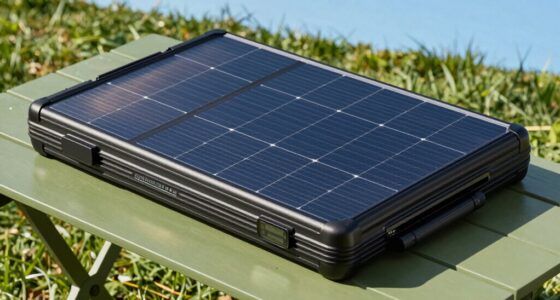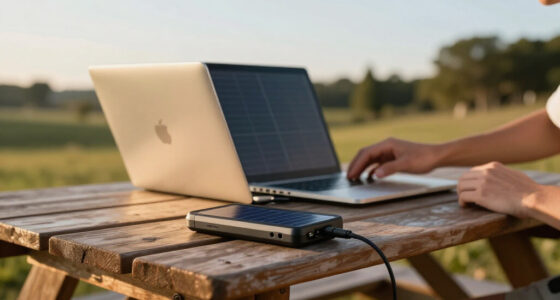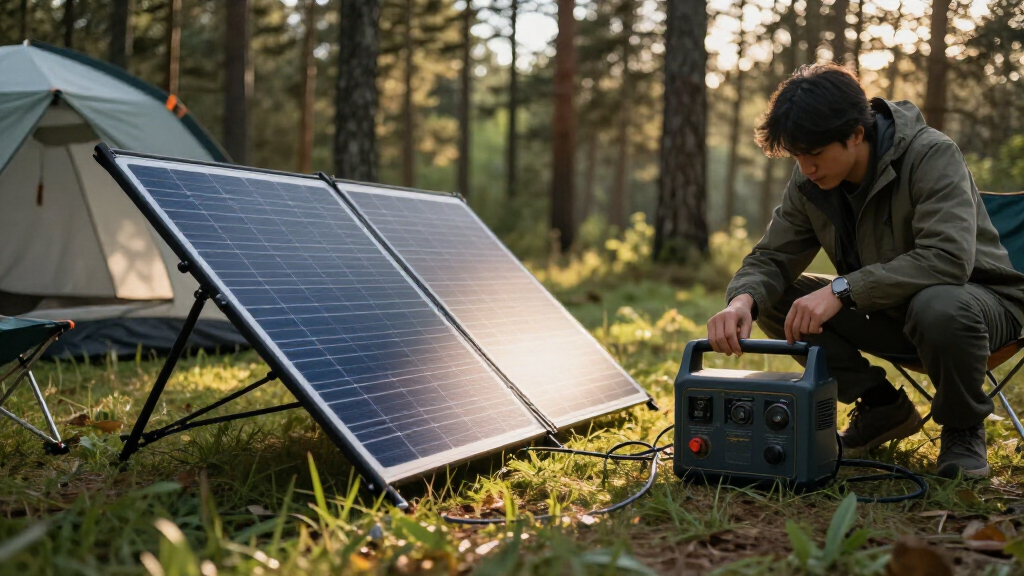

Portable power stations with solar panels give you electricity anywhere the sun shines, but the gap between a $100 emergency kit and a $2,000 home backup system is enormous — and the right choice depends entirely on what you plan to power. For most buyers who want real capability without overspending, the Jackery Solar Generator 1000 v2 with 200W panel stands out as the best overall balance of capacity, recharging speed, and portability. If you need whole-home emergency power, the Jackery HomePower 3600 Plus is in a different league, while the Apowking 100W kit covers basic camping and phone-charging duty for a fraction of the cost. The main tradeoffs in this category come down to battery chemistry, panel wattage versus station capacity, and weight — cheap bundles often pair big stations with tiny panels that take days to recharge them. Keep reading for the full breakdown of all 15 options.

Get backup power and energy gear delivered free with Prime
- Fast, free delivery on millions of items
- Prime Video, Amazon Music and more included
- Member-only deals all year
Complete the kit


Key Takeaways
- The bundled solar panel is the weak link in most budget kits — several sub-$150 options pair a 288Wh station with only a 30-40W panel, meaning a full solar recharge can take two days or more of good sunlight.
- Mid-range kits around 1000Wh (the Jackery 1000 v2 and BLUETTI Elite 100 V2) with 200W panels hit the sweet spot: roughly 4-6 hours of sun for a full recharge, enough for fridges, CPAP machines, and multi-day off-grid trips.
- LiFePO4 battery chemistry appeared in most newer models and offers far more charge cycles (2000+) than older NMC cells — worth prioritizing if you plan to use the station weekly rather than once a year.
- The BROWEY 1600W’s built-in solar panel sounds convenient but caps solar input severely compared to detachable-panel rivals, illustrating why integrated panels rarely make sense above weekend-camping scale.
- Two Jackery Explorer 300 variants made the list, and the addition of a 40W panel changes the product’s entire purpose — as a bare power station it’s an indoor-outlet substitute, but with a panel it becomes a genuine off-grid starter kit.
| Jackery HomePower 3600 Plus Portable Power Station with Two 200W Solar Panels |  | Best for Whole-Home Backup | Battery capacity: 3,584Wh | AC output: 3,600W (7,200W in parallel) | Voltage: 120V; 240V in parallel | VIEW LATEST PRICE | See Our Full Breakdown |
| Apowking 100W Portable Power Station with 40W Solar Panel |  | Best Ultra-Light Budget Kit | Battery capacity: 146Wh / 39,600mAh | AC output: 100W continuous, 200W peak | Solar panel output: 40W monocrystalline | VIEW LATEST PRICE | See Our Full Breakdown |
| ZeroKor 300W Portable Power Station with 60W Solar Panel | 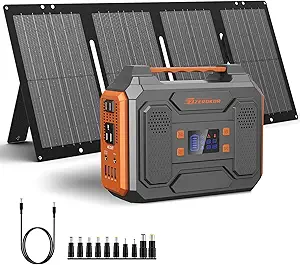 | Best Entry-Level Solar Setup | Maximum output: 300W | Included solar panel: 60W monocrystalline | Solar efficiency: 20.5% | VIEW LATEST PRICE | See Our Full Breakdown |
| Jackery Solar Generator 1000 v2 with 200W Solar Panel |  | Best Overall for Camping and Emergencies | Battery capacity: 1,070Wh LFP | AC output: 1,500W (3,000W surge) | AC ports: 3 pure sine wave | VIEW LATEST PRICE | See Our Full Breakdown |
| 350W Portable Power Station with 40W Foldable Solar Panel, 288Wh LiFePO4 Battery |  | Best Value LiFePO4 Compact | Battery capacity: 288Wh LiFePO4 | AC output: 350W pure sine wave (600W surge) | Output ports: 2 AC, 1 USB-C PD 60W, 2 USB-A QC 18W, 1 car port | VIEW LATEST PRICE | See Our Full Breakdown |
| ZeroKor Portable Solar Generator with 40W Foldable Panel, 300W Power Station and 100W Power Pack |  | Best for a Two-Unit Camping Kit | Power station capacity: 280Wh | Power station maximum output: 300W | Power station surge output: 550W starting wattage | VIEW LATEST PRICE | See Our Full Breakdown |
| DaranEner 300W Portable Power Station with 30W Solar Panel |  | Best Compact LiFePO4 Pick | Battery capacity: 192Wh | Battery type: LiFePO4 | AC output: Two 300W pure sine wave outlets; 600W surge | VIEW LATEST PRICE | See Our Full Breakdown |
| BROWEY 1600W Portable Power Station with Built-In Solar Panel |  | Best for Built-In Solar Convenience | Battery capacity: 1024Wh | Battery chemistry: LiFePO4 | AC output: 1600W pure sine wave; 3200W peak | VIEW LATEST PRICE | See Our Full Breakdown |
| EnginStar 300W Portable Power Station with 60W Foldable Solar Panel |  | Best Solar Panel Pairing for a 300W Station | Battery capacity: 296Wh | AC output: 300W | AC outlets: 2 × 110V pure sine wave | VIEW LATEST PRICE | See Our Full Breakdown |
| BLUETTI AC180 Solar Generator with 200W Solar Panel, 1152Wh |  | Best for Higher-Power Backup | Battery capacity: 1152Wh | Battery type: LiFePO4 | AC output: 1800W | VIEW LATEST PRICE | See Our Full Breakdown |
| DARAN 350W Portable Power Station with 40W Solar Panel, 288Wh |  | Best Compact Camping Kit | Capacity: 288Wh | Battery: LiFePO4, 3,000+ cycles | Included solar panel: 40W foldable | VIEW LATEST PRICE | See Our Full Breakdown |
| Jackery Explorer 300 Portable Power Station, 292Wh |  | Best Station-Only Starter (Add Your Own Panel) | Capacity: 292Wh | Solar charging: 80% in ~2.8 hours with 100W panel (not included) | Ports: 100W USB-C PD, 2 USB-A, 120W car port | VIEW LATEST PRICE | See Our Full Breakdown |
| Jackery Explorer 300 Portable Power Station with 40W Solar Panel |  | Best for Beginners | Capacity: 292Wh | Battery: LiFePO4, 4,000+ cycles to 70% | Included solar panel: 40W | VIEW LATEST PRICE | See Our Full Breakdown |
| BLUETTI Elite 100 V2 Solar Generator with 200W Solar Panel, 1024Wh |  | Best Premium Solar Generator | Capacity: 1024Wh LiFePO4 (4,000+ cycles to 80%) | AC output: 1800W (3600W surge, 2700W power lifting) | Included solar panel: 200W (shipped separately) | VIEW LATEST PRICE | See Our Full Breakdown |
| MARBERO M823 Portable Power Station with 60W Foldable Solar Panel |  | Best Value Entry Kit | Capacity: 237Wh / 64,000mAh | AC output: 300W pure sine wave (375W peak) | Battery: Lithium-ion | VIEW LATEST PRICE | See Our Full Breakdown |
| portable power stations with solar panel | Included solar panel | AC output | Weight | Battery capacity |
|---|---|---|---|---|
| Jackery HomePower 3600 Plus Po | — | 3,600W (7,200W in parallel) | — | 3,584Wh |
| Apowking 100W Portable Power S | — | 100W continuous, 200W peak | 3.3 lb | 146Wh / 39,600mAh |
| ZeroKor 300W Portable Power St | 60W monocrystalline | — | — | — |
| Jackery Solar Generator 1000 v | 200W | 1,500W (3,000W surge) | 23.8 lbs | 1,070Wh LFP |
| 350W Portable Power Station wi | 40W foldable | 350W pure sine wave (600W surge) | 8.2 lbs | 288Wh LiFePO4 |
| ZeroKor Portable Solar Generat | 40W foldable | — | — | — |
| DaranEner 300W Portable Power | 30W | Two 300W pure sine wave outlets; 600W surge | 5.84 lbs | 192Wh |
| BROWEY 1600W Portable Power St | — | 1600W pure sine wave; 3200W peak | — | 1024Wh |
| EnginStar 300W Portable Power | 60W monocrystalline, foldable | 300W | 6.5 lbs | 296Wh |
| BLUETTI AC180 Solar Generator | 200W | 1800W | — | 1152Wh |
| DARAN 350W Portable Power Stat | 40W foldable | — | 8.2 lbs | — |
| Jackery Explorer 300 Portable | — | — | ~7.5 lbs | — |
| Jackery Explorer 300 Portable | 40W | — | 7.5 lbs | — |
| BLUETTI Elite 100 V2 Solar Gen | 200W (shipped separately) | 1800W (3600W surge, 2700W power lifting) | 25 lbs | — |
| MARBERO M823 Portable Power St | 60W foldable, 21.5–23.5% conversion | 300W pure sine wave (375W peak) | — | — |
More Details on Our Top Picks
Jackery HomePower 3600 Plus Portable Power Station with Two 200W Solar Panels
This is the heavyweight of the lineup, and it plays in a different league than everything else here. Where the Jackery Solar Generator 1000 v2 is designed for camping trips and short outages, the HomePower 3600 Plus delivers 3,600W of continuous output and 3,584Wh of capacity — enough to run refrigerators, space heaters, and power tools through an extended blackout. The 240V parallel capability and expandability up to 43kWh mean this can genuinely stand in for a home battery system rather than a weekend gadget. The tradeoffs are real, though: 240V output requires a second unit, and the power station and solar panels may arrive in separate packages, which complicates gifting or tight project timelines. The wheeled design and telescopic handle offset the weight problem reasonably well.
Pros:- 3,600W output handles major appliances, not just phones and laptops
- Expandable up to 43kWh for serious home backup
- Four charging options including gas generator and hybrid mode
- Wheels and telescopic handle make relocation manageable
Cons:- Full 240V output requires buying and connecting a second unit
- Power station and solar panels may ship separately, complicating delivery
Best for: Homeowners preparing for multi-day outages who want expandable backup power without installing a fixed system
Not ideal for: Campers and van lifers — this is far heavier and more capacity than any mobile setup needs
- Battery capacity:3,584Wh
- AC output:3,600W (7,200W in parallel)
- Voltage:120V; 240V in parallel
- Expandable capacity:Up to 21kWh per unit, 43kWh with multiple units
- Battery cycle life:6,000 cycles (LFP)
- Charging options:Hybrid AC+DC, AC, solar, gas generator
- Solar charging time:4 hours
- Included solar panels:Two 200W panels
Our verdict“If your goal is keeping a household running during an outage rather than charging devices at a campsite, this is the pick that justifies its size.”
Apowking 100W Portable Power Station with 40W Solar Panel
At 3.3 pounds, this is the most portable solar generator in the entire roundup, and that portability is the whole point. The Apowking makes sense for buyers whose needs stop at phones, tablets, cameras, and LED lights — it charges all of them simultaneously across its seven outputs. Compared with the ZeroKor 300W, you give up most AC capability (100W continuous won’t run a blender or a proper fan), but you also cut the weight and price dramatically. The included 40W panel with 20.5% conversion efficiency is serviceable for trickle-charging the small 146Wh battery over a sunny afternoon. The dual LED lights with SOS mode make it a genuine emergency kit component for a car or hiking pack rather than just a gadget.
Pros:- Featherweight 3.3 lb design fits in a backpack
- Seven outputs including USB-C and Quick Charge 3.0
- Complete kit with panel, AC adapter, and car cable included
- Dual LED lights with flashlight, strobe, and SOS modes
Cons:- 100W continuous AC output can’t handle most household devices
- 40W panel means slow solar recharges of the full battery
Best for: Hikers, festival-goers, and car-campers who need device charging and light without carrying real weight
Not ideal for: Anyone wanting to run AC appliances — 100W continuous rules out nearly everything with a plug-in motor
- Battery capacity:146Wh / 39,600mAh
- AC output:100W continuous, 200W peak
- Solar panel output:40W monocrystalline
- Solar efficiency:20.5%
- Total outlets:7
- Weight:3.3 lb
- Charging methods:Solar, AC adapter, car
- Warranty support:12 months
Our verdict“This is a device-charging emergency kit, not a power station in the household sense — buy it for weight savings, not capability.”
ZeroKor 300W Portable Power Station with 60W Solar Panel
The ZeroKor sits in the sweet spot between the tiny Apowking 100W and full-size units like the Jackery Solar Generator 1000 v2. Its 60W included panel is the largest in the budget tier of this roundup — bigger than the 40W panels bundled with the Apowking and the 350W LiFePO4 station — which means faster solar recharges when you’re off-grid. Two AC outlets, three USB ports, and a quick-charge port cover the basics for a campsite or an emergency drawer. The built-in safety protections (short-circuit, over-current, overheating) are reassuring at this price. The honest weaknesses: 300W caps you at small electronics and low-draw appliances, the solar panel junction box isn’t waterproof, and the listing never states battery capacity — a gap that makes real runtime comparisons with rivals impossible.
Pros:- 60W panel outcharges the 40W panels common at this tier
- Two AC outlets plus five USB/DC ports for a small campsite
- Full battery management with temperature-controlled cooling
- Three recharge methods including 12V car outlet
Cons:- Solar panel junction box is not waterproof, limiting outdoor durability
- Battery capacity is not stated, complicating comparisons
Best for: First-time buyers testing whether solar generator ownership fits their camping or emergency-prep habits
Not ideal for: Buyers who need to compare runtime on paper — the unstated battery capacity makes planning difficult
- Maximum output:300W
- Included solar panel:60W monocrystalline
- Solar efficiency:20.5%
- AC outlets:2
- USB ports:3 × 5V/3A plus quick-charge port
- DC output:9V–12.6V, 10A max
- Charging methods:AC outlet, solar, 12V car outlet
- Safety features:Short-circuit, over-current, over-voltage, overload, overheating protection
Our verdict“A sensible training-wheels solar generator: enough capability to be useful, low enough commitment to be low-risk.”
Jackery Solar Generator 1000 v2 with 200W Solar Panel
If one kit in this roundup balances portability, capability, and longevity best, it’s this one. The 1,070Wh capacity and 1,500W output put it in a different class from the ZeroKor 300W — it can run a portable fridge, a microwave, or power tools, not just phones and fans. The LFP battery rated for 4,000+ cycles and five-year warranty give it a lifespan measured in years of regular use, where cheaper NMC-based budget units fade much sooner. The bundled 200W solar panel is the largest panel pairing in this batch outside the Jackery HomePower, meaning realistic off-grid recharging rather than day-long trickle top-ups. At 23.8 lbs it’s carryable, though not backpack-friendly like the Apowking. Two annoyances: the headline one-hour charge requires enabling emergency mode in the app, and the panel ships separately from the station.
Pros:- 1,500W output runs appliances most budget stations can’t touch
- LFP chemistry rated for 4,000+ cycles with a 5-year warranty
- 200W panel delivers meaningful solar recharge speeds
- App-controlled charging modes plus pure sine wave AC
Cons:- Fast one-hour charging requires enabling emergency mode in the app
- Generator and solar panel ship separately
Best for: Campers, RV owners, and emergency preppers who want real appliance power with a battery that outlasts the typical portable unit
Not ideal for: Backcountry hikers — at 23.8 lbs this belongs in a car or RV, not a pack
- Battery capacity:1,070Wh LFP
- AC output:1,500W (3,000W surge)
- AC ports:3 pure sine wave
- USB ports:2 × USB-C (PD 100W), 1 × USB-A
- Battery lifespan:70%+ capacity after 4,000 cycles
- Included solar panel:200W
- Weight:23.8 lbs
- Warranty:5 years
Our verdict“The most complete balance of power, lifespan, and solar capability here — buy it if your budget matches your ambition.”
350W Portable Power Station with 40W Foldable Solar Panel, 288Wh LiFePO4 Battery
This unit’s standout trait is LiFePO4 chemistry at a compact size and price — something rare in this tier, where rivals like the ZeroKor 300W don’t even disclose their battery type or capacity. At 288Wh with 350W pure sine wave output, it occupies the middle ground between the tiny Apowking 100W and the far pricier Jackery Solar Generator 1000 v2: enough for a CPAP, a fan, a laptop setup, or a few phone charges per night. The foldable 40W panel packs flatter than rigid panels, which matters if space is tight in a car kit. Be aware of the corners cut: the car charger cable isn’t included despite the car-charging capability being advertised, and a 90W AC input means a full wall recharge takes hours. The 40W panel is more of a maintenance trickle than a real recharge source.
Pros:- LiFePO4 chemistry offers far more charge cycles than same-price NMC units
- 350W pure sine wave safely runs sensitive electronics like CPAP machines
- Foldable panel packs flatter than rigid alternatives
- Six output ports plus a four-mode LED light in an 8.2 lb body
Cons:- Car charger cable not included despite car-charging support
- 40W panel is underpowered for the 288Wh battery
Best for: Budget-conscious campers and CPAP users who want long-life battery chemistry without paying premium-brand prices
Not ideal for: Off-grid users relying primarily on solar — the 40W panel recharges this battery too slowly to be the main source
- Battery capacity:288Wh LiFePO4
- AC output:350W pure sine wave (600W surge)
- Output ports:2 AC, 1 USB-C PD 60W, 2 USB-A QC 18W, 1 car port
- Included solar panel:40W foldable
- Recharge methods:AC (90W), solar, car (100W)
- Weight:8.2 lbs
- Dimensions:10.04 × 8.23 × 6.61 in
- LED light modes:4
Our verdict“A smart middle-path buy: modern battery chemistry and honest capacity for small-appliance needs, as long as solar speed isn’t your priority.”
ZeroKor Portable Solar Generator with 40W Foldable Panel, 300W Power Station and 100W Power Pack
The standout here is the separate 100W power pack: it lets you keep small devices supplied while the 300W station handles compatible AC gear. That split can be useful around camp, though the smaller unit is not a second option for power-hungry appliances. Compared with the EnginStar 300W, this kit has a smaller 40W solar panel, so replenishing its 280Wh station may take longer in suitable sunlight. Its station offers two 110V AC outlets, several USB ports, and a flashlight with reading and SOS modes, covering practical campsite needs. The tradeoff is its firm 300W ceiling; check appliance draw before relying on it, and expect limited solar input from the included panel.
Pros:- Includes a foldable 40W solar panel
- Adds a separate 100W power pack for small devices
- Provides AC, USB, and DC outputs across the two units
- Station flashlight includes reading and SOS modes
Cons:- The 300W station cannot support devices requiring higher output
- The 100W pack is unsuitable for higher-powered equipment
- The 40W panel provides limited solar charging input
Best for: Campers who want a main 300W station plus a separate low-output pack for phones and other small devices
Not ideal for: Buyers who need to run appliances above 300W or prioritize faster solar input from the included panel
- Power station capacity:280Wh
- Power station maximum output:300W
- Power station surge output:550W starting wattage
- Included solar panel:40W foldable
- Power station AC outlets:2 × 110V
- Power pack AC output:2 outlets, 110V, 100W maximum
- Power station USB ports:3 USB ports, including 1 QC3.0 port
- Protection:Short circuit, over-current, over-voltage, and overload
Our verdict“Choose this kit if you value two separate power sources for camping and can work within their modest output limits.”
DaranEner 300W Portable Power Station with 30W Solar Panel
At 5.84 pounds, this is the most travel-friendly choice among the listed 300W stations, and its LiFePO4 battery is rated for 3,500+ cycles to 80% capacity. That longevity rating distinguishes it from the lithium-ion ZeroKor and EnginStar options, while the DaranEner gives up battery capacity at 192Wh. The included 30W panel is also the smallest of those three panels, so this setup favors portability over quick solar replenishment. Two pure sine wave AC outlets and a 60W USB-C PD port give it useful flexibility for laptops and small electronics, but its 300W AC limit rules out many larger appliances. It makes the most sense for a light travel kit where compact size and battery chemistry matter more than runtime or panel wattage.
Pros:- Lightweight at 5.84 pounds
- LiFePO4 battery rated for 3,500+ cycles to 80% capacity
- Can recharge from AC, a car, or the included solar panel
- 60W USB-C PD port and two pure sine wave AC outlets
Cons:- 192Wh capacity is lower than the ZeroKor and EnginStar stations in this group
- Included solar panel is limited to 30W
- 300W AC output excludes higher-power appliances
Best for: Solo campers and travelers who want a lightweight station for phones, laptops, lights, and other modest loads
Not ideal for: Buyers who need longer runtimes, faster solar charging, or AC power for appliances above 300W
- Battery capacity:192Wh
- Battery type:LiFePO4
- AC output:Two 300W pure sine wave outlets; 600W surge
- Battery cycle life:3,500+ cycles to 80% capacity
- Weight:5.84 lbs
- Dimensions:8.4 × 5.3 × 7.4 in
- Included solar panel:30W
- USB-C outputs:One 60W PD port and one 30W port
- Recharge options:AC up to 90W, car up to 60W, or included solar panel
Our verdict“Pick the DaranEner for a light, long-cycle travel station when compact carry matters more than capacity or solar speed.”
BROWEY 1600W Portable Power Station with Built-In Solar Panel
The BROWEY’s 40W built-in solar panel is its defining convenience: there is no separate panel to pack or set up, and the station can collect sunlight while powering devices. Its 1024Wh LiFePO4 battery and 1600W pure sine wave output put it in a different capacity class from the compact ZeroKor and EnginStar kits. Against the BLUETTI AC180, though, BROWEY has a smaller battery and lower output, and its built-in panel is far less powerful than BLUETTI’s included 200W panel. That makes the BROWEY appealing for stationary use where easy solar exposure matters, but not for buyers seeking fast solar replenishment. The stated three-hour charge to 80% also depends on using AC and USB-C charging simultaneously.
Pros:- 1024Wh LiFePO4 battery rated for 3000+ cycles to 80% capacity
- Built-in 40W solar panel with MPPT controller
- 1600W pure sine wave output
- Supports AC, USB-C, car, and solar charging
Cons:- Built-in solar charging is limited to 40W
- Three-hour charge to 80% requires simultaneous AC adapter and USB-C charging
- Lower capacity and output than the BLUETTI AC180 in this lineup
Best for: Campers or backup-power users who want a higher-capacity station with solar collection built into the unit
Not ideal for: Buyers who need rapid solar recharging or more output and capacity than the BLUETTI AC180 provides
- Battery capacity:1024Wh
- Battery chemistry:LiFePO4
- AC output:1600W pure sine wave; 3200W peak
- Battery life:3000+ cycles to 80% capacity
- Built-in solar charging:40W with MPPT controller
- USB-C PD output:100W
- Ports:8 across AC, DC, and USB-C PD
- AC and USB-C charging time:3 hours to 80% when used simultaneously
Our verdict“Choose the BROWEY if you want a larger station that can collect solar without a separate panel and can accept slow solar input.”
EnginStar 300W Portable Power Station with 60W Foldable Solar Panel
Among the modest-output stations here, the EnginStar pairs a 296Wh battery with the largest included panel in that group: a 60W foldable monocrystalline panel. That gives it a solar-input advantage over the 30W DaranEner and 40W ZeroKor kits, though actual recharge time depends on sunlight and its listed maximum charging speed is 65W. The two pure sine wave AC outlets and several DC, USB-A, and USB-C outputs make it practical for a spread of small devices. Its 300W AC ceiling still limits appliance choices, and its lithium-ion battery is rated for more than 1,000 cycles, below the DaranEner’s stated LiFePO4 cycle life. Choose this model for a balanced capacity and panel bundle, rather than long-term cycle life or high-wattage loads.
Pros:- Includes a 60W foldable monocrystalline panel
- 296Wh capacity exceeds the DaranEner’s 192Wh
- Offers pure sine wave AC, regulated DC, USB-A, and USB-C outputs
- Can recharge from solar, wall power, or a 12V car socket
Cons:- 300W AC output limits compatible appliances
- Solar recharge speed depends on available sunlight
- Battery is rated for more than 1,000 cycles, below the DaranEner’s stated cycle rating
Best for: Campers who want a 300W-class station with more battery capacity and a stronger included panel than the DaranEner kit
Not ideal for: Buyers who need to run high-wattage appliances or prioritize a long cycle-life rating
- Battery capacity:296Wh
- AC output:300W
- AC outlets:2 × 110V pure sine wave
- Included solar panel:60W monocrystalline, foldable
- Solar panel conversion efficiency:23%
- USB-C output:18W
- Maximum charging speed:65W
- Weight:6.5 lbs
- Battery cycle life:More than 1,000 charge cycles
Our verdict“Choose the EnginStar for a more substantial 300W solar bundle when panel wattage and capacity matter more than cycle-life claims.”
BLUETTI AC180 Solar Generator with 200W Solar Panel, 1152Wh
For buyers who need more than camping electronics, the AC180 offers the strongest combination here of capacity and AC output: 1152Wh and 1800W, with a 200W panel included. That is a substantial step up from the BROWEY’s 1024Wh, 1600W, and 40W built-in panel, especially when solar replenishment is part of the plan. The tradeoff is a larger system to manage, and solar charging is listed at 4.8–9.6 hours, depending on conditions. Its UPS transfer time of 10ms or less can help keep essential devices running through an outage, while app-enabled output reaches 2700W. This is the broadest-use choice in the batch, but it is more station than buyers with only phone and light charging needs need to carry.
Pros:- 1152Wh LiFePO4 battery with 3000+ cycle rating
- 1800W AC output with 2700W peak output
- Includes a 200W solar panel
- UPS transfer time of 10ms or less for essential devices
Cons:- Solar charging can take up to 9.6 hours
- The larger capacity and output may be unnecessary for basic device charging
- Solar panels are shipped separately
Best for: Households and campers who need to power several essential devices or higher-draw equipment and want a substantial included solar panel
Not ideal for: Light travelers who only need to charge phones and small electronics and want a compact, low-capacity kit
- Battery capacity:1152Wh
- Battery type:LiFePO4
- AC output:1800W
- Peak output:2700W
- Outlets:11
- Included solar panel:200W
- Solar charging time:4.8–9.6 hours
- UPS transfer time:≤10ms
Our verdict“Choose the AC180 when you need substantial backup output and capacity with a capable included solar panel.”
DARAN 350W Portable Power Station with 40W Solar Panel, 288Wh
Between the 288Wh LiFePO4 battery, a bundled 40W foldable solar panel, and an 8.2 lb frame, this DARAN kit hits a practical middle ground for campers who want everything in one box. Compared with the MARBERO M823, DARAN’s slightly larger capacity and LiFePO4 chemistry give it a real longevity edge — 3,000+ cycles versus a standard lithium-ion pack that degrades faster. Charging six devices at once, including a CPAP or mini-fridge overnight, is realistic here where it isn’t on smaller units. The tradeoff is wattage: 350W of AC output rules out kettles, hair dryers, and anything with a heating element. And like most bundles at this size, the 40W panel is slow — plan on patience or topping up from the car socket between stops.
Pros:- LiFePO4 battery rated for 3,000+ cycles, far outlasting standard lithium-ion rivals
- Complete kit with a 40W foldable panel included, no separate purchase needed
- Three recharge methods — AC, solar, and 12V car socket — add flexibility on the road
- Runs up to six devices at once with a built-in three-mode LED light
Cons:- 350W rated output excludes most heating appliances and power tools
- 40W panel means multi-hour solar recharge times even in good sun
Best for: Car campers and RV travelers who want a lightweight LiFePO4 kit for phones, laptops, drones, and overnight CPAP use
Not ideal for: Anyone hoping to run kettles, induction cooktops, or power tools — the 350W ceiling stops those cold
- Capacity:288Wh
- Battery:LiFePO4, 3,000+ cycles
- Included solar panel:40W foldable
- Ports:2 AC, 1 USB-C PD (60W), 2 USB-A, 1 car outlet
- AC recharge time:0–80% in 2.4 hours
- Weight:8.2 lbs
- Warranty:1 year
Our verdict“This is the pick for weight-conscious campers who want durable battery chemistry and a full solar kit without paying for capacity they won’t carry.”
Jackery Explorer 300 Portable Power Station, 292Wh
The Explorer 300 makes sense for buyers who already own a solar panel or want to choose their own wattage later. That flexibility is its whole pitch: unlike the DARAN or MARBERO bundles, nothing here is locked to a modest 40–60W panel, and with a separate 100W panel it reaches 80% charge in roughly 2.8 hours — far faster than bundled kits at this capacity. The 100W USB-C PD port is also stronger than most rivals’ and can charge a laptop at full speed. The compromises are obvious: buying a panel separately adds real cost, and Jackery’s own listing mixes lithium-ion and LiFePO4 claims for the same product, which makes long-term lifespan harder to trust than the DARAN’s clearly stated 3,000-cycle rating.
Pros:- Freedom to pair with any panel wattage, enabling much faster solar charging than 40W bundles
- 100W USB-C PD port charges laptops at full speed
- Light 7.5 lb design with integrated carry handle
- Trusted brand with broad accessory and panel compatibility
Cons:- Solar panel sold separately, so the true cost of a solar setup is higher
- Conflicting battery-chemistry listings make cycle life uncertain
Best for: Buyers who already own a compatible solar panel or plan to buy a higher-wattage one separately
Not ideal for: First-time buyers who want a complete out-of-the-box solar kit — the panel costs extra here
- Capacity:292Wh
- Solar charging:80% in ~2.8 hours with 100W panel (not included)
- Ports:100W USB-C PD, 2 USB-A, 120W car port
- AC outlets:2
- Weight:~7.5 lbs
- AC charge time:~4 hours
Our verdict“Choose this if you’d rather pick your own panel than accept a slow bundled 40W one — just budget for the panel separately.”
Jackery Explorer 300 Portable Power Station with 40W Solar Panel
This is the Explorer 300 for people who want the panel in the box, and it upgrades the story with a confirmed LiFePO4 battery rated for over 4,000 cycles — the strongest longevity claim in this capacity class, edging even the DARAN’s 3,000+ figure. For a first solar generator, that matters more than raw speed: a beginner buys once and expects the kit to last years of occasional camping trips and outage backup. The 7.5 lb weight and integrated handle keep it genuinely portable. The honest tradeoff is solar patience — the included 40W panel needs roughly 7.5 hours of good sun to reach 80%, so this suits weekend pacing rather than off-grid living. Compared with buying the standalone Explorer 300 plus a panel, this bundle simplifies the decision at the cost of charging speed.
Pros:- LiFePO4 battery rated for over 4,000 cycles to 70% capacity
- Complete beginner kit — station and 40W panel together
- Powers up to six devices with a 100W USB-C PD port
- Light and grab-and-go at 7.5 lbs with built-in handle
Cons:- 40W panel takes roughly 7.5 hours to reach 80% in good conditions
- Station and panel may arrive in separate shipments
Best for: First-time buyers who want a trusted brand, a durable battery, and everything included in one purchase
Not ideal for: Impatient off-grid users — the bundled panel’s multi-hour charge times won’t keep pace with heavy daily use
- Capacity:292Wh
- Battery:LiFePO4, 4,000+ cycles to 70%
- Included solar panel:40W
- Ports:100W USB-C PD, 2 USB-A, 2 AC, 120W car port
- Solar charge time:~7.5 hours to 80% with included panel
- Weight:7.5 lbs
Our verdict“The easiest on-ramp into solar generators: one box, one trusted brand, and a battery built to outlast the beginner phase.”
BLUETTI Elite 100 V2 Solar Generator with 200W Solar Panel, 1024Wh
In a batch dominated by 300–350W units, the Elite 100 V2 plays a different sport. With 1024Wh of capacity, 1800W of AC output, and a 3600W surge rating, it runs microwaves, kettles, and power tools that would trip every other kit here — the DARAN and both Jackery 300s simply aren’t in the conversation for real appliances. The bundled 200W panel, up to 1000W of solar input, and 1200W AC input mean this machine actually recharges at speeds matching its size, and the ≤10ms UPS switchover lets it double as sump-pump or home-office backup during outages. You pay for it in muscle: at 25 lbs, this is a two-hand carry, not a backpack companion. Buyers wanting weekend-trip lightness should stay with the smaller kits; buyers wanting genuine emergency capability should step up here.
Pros:- 1800W AC output with 3600W surge runs appliances no 300W rival can touch
- 200W included panel and 1000W max solar input recharge a large battery quickly
- 10ms UPS switchover makes it genuinely useful as home backup, not just camping gear
- Quiet 30dB silent mode and 4,000+ cycle LiFePO4 battery
Cons:- 25 lb weight and larger footprint limit portability
- Solar panel ships separately from the station
Best for: Households wanting real emergency backup — powering appliances, routers, and medical devices through outages — plus fast solar recharge when camping
Not ideal for: Hikers and minimalists — 25 lbs and a full-size 200W panel make this overkill for phone-and-laptop trips
- Capacity:1024Wh LiFePO4 (4,000+ cycles to 80%)
- AC output:1800W (3600W surge, 2700W power lifting)
- Included solar panel:200W (shipped separately)
- Max solar input:1000W
- AC charging input:1200W
- UPS switchover:≤10ms
- Ports:11 total, 4 AC outlets
- Weight:25 lbs
Our verdict“If you want one kit that bridges serious home backup and fast off-grid recharging, this is the only option in this lineup that qualifies.”
MARBERO M823 Portable Power Station with 60W Foldable Solar Panel
For buyers who want the biggest bundled panel per dollar, the MARBERO M823 leads this group — its 60W foldable panel outcharges the 40W panels bundled with the DARAN and Jackery Explorer 300 kits, cutting solar recharge time meaningfully despite the smaller 237Wh battery. The pure sine wave AC output is a genuine plus at this price tier, running sensitive electronics like camera gear and small fans more cleanly than modified-sine rivals. Four USB-A ports plus USB-C and DC round out a generous port spread for a small unit. The catch is chemistry: the lithium-ion battery won’t match the DARAN’s 3,000+ LiFePO4 cycles, and the 300W ceiling is strict — MARBERO warns that exceeding it can damage the unit, so there’s no surge headroom for anything ambitious.
Pros:- 60W foldable panel is the largest bundled panel in this capacity class
- Pure sine wave AC is safer for sensitive electronics than modified sine rivals
- Six output options across AC, USB-A, USB-C, and DC
- Built-in flashlight with strobe and SOS modes doubles as an emergency tool
Cons:- Standard lithium-ion battery lacks the cycle life of LiFePO4 competitors like the DARAN
- Hard 300W limit with damage risk above it — no meaningful surge tolerance
Best for: Budget-conscious campers and emergency-prep beginners who prioritize a larger included panel over battery longevity
Not ideal for: Buyers planning years of frequent cycling or anything approaching 300W loads — the lithium-ion battery and strict power cap don’t allow it
- Capacity:237Wh / 64,000mAh
- AC output:300W pure sine wave (375W peak)
- Battery:Lithium-ion
- Included solar panel:60W foldable, 21.5–23.5% conversion
- Ports:2 AC, 2 USB-A QC3.0 (18W), 2 USB-A (15W), 1 USB-C (18W), DC output
- Flashlight:3 modes: light, strobe, SOS
Our verdict“The smartest low-cost way to get a fast-charging solar panel in the box, as long as your devices stay small and your expectations modest.”

How We Picked
My ranking logic starts with the pairing ratio between panel wattage and battery capacity, because that single factor determines whether a kit actually works off-grid or just pretends to. A 1000Wh station charged by a 40W panel is an emergency battery, not a solar generator — so I penalized bundles where the panel is undersized relative to the station. I then weighed inverter output (what the station can actually run), battery chemistry (LiFePO4 versus older lithium-ion for lifespan), and port versatility, since AC outlets alone don’t cut it when you’re charging drones, cameras, and laptops simultaneously.
Practical factors rounded out the evaluation: weight and handle design for portability, build quality of the foldable panels, whether the bundle pricing makes sense versus buying components separately, and how forgiving each kit is for beginners setting up solar for the first time. Higher-ranked picks tend to be ones where every component matches the use case the product claims to serve — and where a buyer can realistically understand what they’re getting without decoding spec sheets.
Factors to Consider When Choosing Portable Power Stations With Solar Panels
Before matching yourself to a specific kit, it helps to understand the patterns I found across all 15 products — and the mistakes that catch buyers in this category most often.Match Panel Wattage to Battery Size (The Most Common Mistake)
The single biggest error buyers make is treating the power station and the panel as separate purchases in their head. A rough rule that emerged from this comparison: you want at least 1W of solar for every 5Wh of battery, or a full recharge takes multiple days of sunlight. That means a 288Wh station wants at least a 60W panel to recharge in a single sunny day, while a 1000Wh station really needs 200W. Many budget bundles fail this test badly — a 30W panel on a 288Wh battery is essentially a trickle maintainer. If you only camp occasionally and recharge at home between trips, a weak panel matters less, but anyone buying these for true off-grid use or emergencies should run this ratio before clicking buy. Also remember that real-world panel output is typically 50-75% of the rated wattage depending on angle, clouds, and heat.
Battery Chemistry Determines How Long the Kit Lives
Most newer stations in this roundup use LiFePO4 (lithium iron phosphate) cells, rated for roughly 2,000-3,000 charge cycles before dropping to 80% capacity — that’s five to eight years of weekly use. Older lithium-ion NMC cells typically manage 500-800 cycles. The catch is that LiFePO4 cells are slightly heavier per watt-hour and a bit less efficient in freezing temperatures. If you’re buying for occasional hurricane preparedness, cycle life matters less than calendar life, and both chemistries degrade slowly when stored at partial charge. But for van lifers, frequent campers, or anyone cycling the battery weekly, paying more for LiFePO4 usually pays for itself. A cheap NMC kit used hard can effectively cost more per year than a mid-range LiFePO4 system.
Inverter Wattage: What You Can Actually Run
Battery capacity gets all the marketing attention, but the inverter’s continuous output rating decides whether your device even turns on. A 300W inverter runs phones, laptops, lights, and a small fan — but not a blender, hair dryer, or most coffee makers, which draw 800-1500W. Anything with a heating element or motor is where small stations hit a wall. Also check the surge rating: refrigerators and power tools draw 2-3x their running wattage at startup. A pattern in this lineup: capacity and inverter size don’t always scale together, so read both numbers. A 1000Wh station with a 300W inverter is a long-runtime phone charger; an 1800W inverter like the BLUETTI AC180’s opens up real kitchen appliances. Match the inverter to your single most demanding device, then buy capacity around runtime needs.
Expandability and Ecosystem Lock-In
High-capacity units like the Jackery HomePower 3600 Plus support extra battery modules and additional panels, which changes the buying math — you can start with the base kit and grow into whole-home backup later. Smaller stations are closed systems: what you buy is what you have forever. That’s fine for a dedicated camping kit, but buyers who aren’t sure of their future needs should weight expandability heavily. The tradeoff is that expansion batteries only work within the same brand, so an expandable purchase is a commitment to that ecosystem’s pricing and availability. Before choosing a big expandable system, check whether the expansion batteries are actually easy to find in stock — a stubbed expansion path is worse than no expansion at all.
Weight, Portability, and the Realism of ‘Portable’
Everything in this category is called portable, but there’s a practical cliff around 30-40 pounds where a station stops being something you carry to the campsite and becomes something you wheel or leave in the trunk. The small 288-293Wh units weigh 7-10 pounds and genuinely fit in a backpack — appropriate for hikers, photographers, and emergency car kits. The 1000-1200Wh mid-tier units land in the 25-35 pound range, which is car-camping territory. Home-backup units above 3000Wh can exceed 80 pounds even before panels. Pair this with panel weight too: a 200W folding panel is a two-handed carry that wants a flat surface and full sun, so plan where you’ll actually deploy it, not just how you’ll carry the station.
When to Skip the Bundle and Build Your Own
Bundles look tidy, but they’re not always the better deal — sometimes the station is excellent and the included panel is a weak point, as I saw on several budget kits here. Most stations accept third-party panels via standard connectors (check voltage limits and adapter compatibility), so buying a strong station plus a separate quality panel can outperform a bundled pairing at similar cost. Bundles make the most sense at the extremes: tiny kits where the simplicity is worth it for beginners, and large systems where manufacturer pairing guarantees charging compatibility and warranty coverage. If you already own a compatible panel from a previous kit, buying the station alone — as with the bare Jackery Explorer 300 — avoids paying for hardware twice.
Frequently Asked Questions
Can a small 300W power station with a 40W solar panel actually run off-grid indefinitely?
Only for very light loads, and that’s the honest limit of most budget kits. A 40W panel delivers roughly 25-30W in real conditions, which means 150-250Wh of charging on a good sunny day — enough to keep phones, headlamps, and a laptop alive indefinitely, but not enough to run a 12V fridge around the clock. If your daily consumption stays under about 150Wh, these kits work as a genuine solar loop. Above that, you’ll slowly drain the battery across cloudy days. Anyone dreaming of running a mini-fridge or CPAP machine for a full weekend off one of these should size up to a 1000Wh station with a 200W panel instead.
Is it better to buy one large 3600W system or two 1000Wh solar generators?
One large system wins for home backup: higher inverter output runs appliances like refrigerators and microwaves simultaneously, and expandable platforms like the HomePower 3600 Plus support extra battery modules later. Two smaller units win for flexibility — you can split them between a campsite and a vehicle, keep one at home and one in an RV, and still have power if one fails. Large systems also charge faster from the wall, which matters for storm preparation when you have hours, not days. The redundancy argument is real but often overstated; a quality single unit rarely fails within its warranty period. My rule: whole-home or long-outage buyers should go big, everyone else gets more practical value from two capable mid-size kits.
How long do the solar panels themselves last, and do I need more than one?
Quality folding panels typically last 10+ years, since they have no moving parts and degrade only about 0.5-1% of output per year — they’ll usually outlive the battery they charge. What actually kills cheap panels is physical damage: cracked cells from being sat on, corroded connectors, and UV breakdown of the fabric casing on no-name units. On quantity: one 200W panel recharges a 1000Wh station in roughly a full sunny day, which is fine for camping but slow for daily off-grid living. Adding a second panel roughly halves recharge time, and most mid-size stations accept parallel panel input up to their solar input ceiling. Check that ceiling before buying extra panels — exceeding it wastes money on wattage the station can’t absorb.
Are built-in solar panels like the BROWEY 1600W’s a good idea?
Integrated panels are convenient on paper but constrained in practice, because the panel has to be small enough to fold into the chassis — which caps solar input well below what the battery needs. To recharge the BROWEY’s battery from its built-in panel alone takes far longer than connecting an external 200W panel to a comparable station. Built-in panels also fix your charging angle to wherever the station sits, while detached panels can be angled and repositioned toward the sun throughout the day, easily doubling effective harvest. The design makes sense for casual day-use top-ups and people who hate managing cables and separate gear. For anyone depending on solar as their primary recharge method, a detachable panel with a stand will always outperform it.
What can I realistically run during a power outage with a 1000Wh solar generator?
A 1000Wh capacity with a 1000-1800W inverter covers the essentials for most households for roughly a day per charge: a modern refrigerator (150-200Wh per hour of compressor runtime), phones and laptops, lights, a Wi-Fi router, and a CPAP machine overnight. Running just a fridge plus communications gear, expect 12-20 hours before needing to recharge — and a 200W panel can stretch that indefinitely in sunny weather, effectively running the fridge on solar with battery covering nights and clouds. What it won’t do: central HVAC, electric water heating, an electric range, or a clothes dryer. Those loads need either a dedicated home battery system or a fuel generator. For medical devices, note that CPAPs with humidifiers draw noticeably more — budget closer to 400-600Wh per night.
Conclusion
For best overall, the Jackery Solar Generator 1000 v2 pairs a genuinely fast-recharging 200W panel with enough capacity for weekends off-grid and real outage duty — the kit where every component earns its place. The BLUETTI AC180 takes best premium mid-size honors with its 1800W inverter that runs kitchen appliances, while the Jackery HomePower 3600 Plus is the clear home backup choice for whole-outage coverage and future expansion. On value: the ZeroKor and EnginStar 300W kits with 60W panels are the budget picks that respect the panel-to-battery ratio, whereas the Apowking 100W is the cheapest legitimate entry point for pure basics. For beginners, the Jackery Explorer 300 with 40W panel or the DaranEner 300W kit offers a low-risk way to learn solar basics before committing to a bigger system. Skip anything where the bundled panel can’t recharge the battery within a full day of sun — that single test filters this entire category faster than any spec sheet.
Halloween Picks
halloween
As an affiliate, we earn on qualifying purchases.