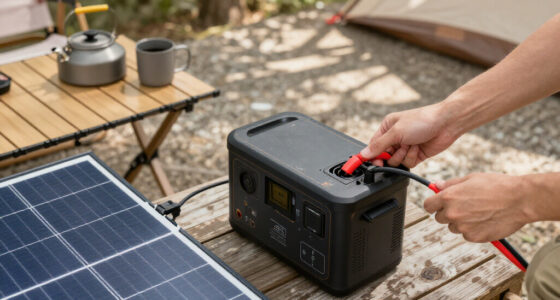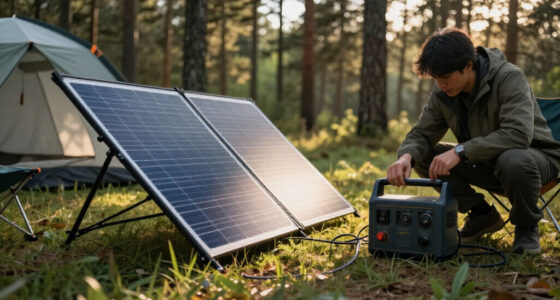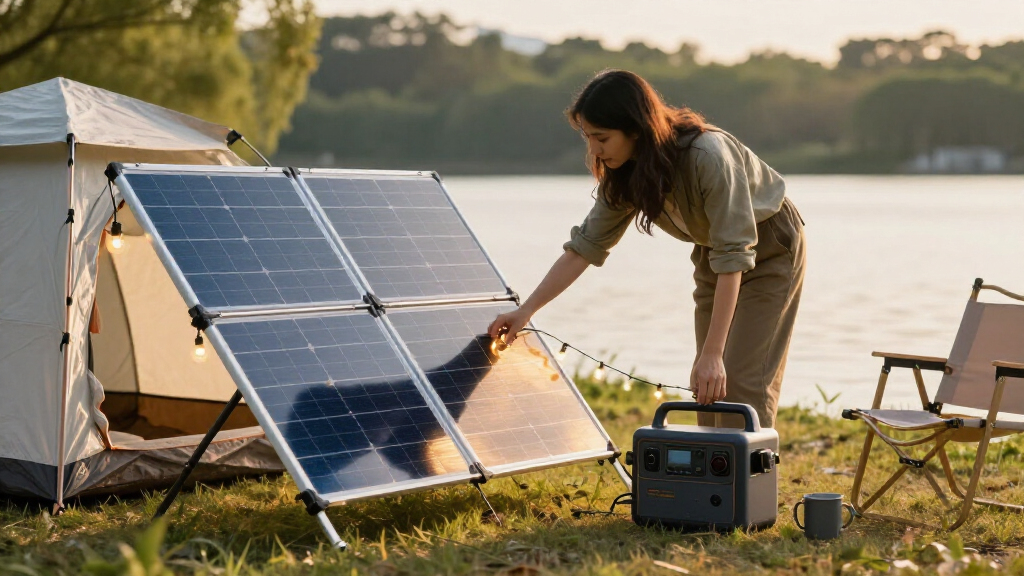

Portable power stations with solar panels let you generate your own electricity off-grid, but the right pick depends heavily on how much power you actually need. The Jackery Solar Generator 1000 v2 with 200W panel stands out as the best overall choice, balancing a 1070Wh capacity, fast charging, and a genuinely useful panel in one package. If your budget is tighter, the BLUETTI Elite 100 V2 delivers similar capacity with app control and fast wall charging, while the Apowking 100W kit covers basic emergencies for a fraction of the cost. The main tradeoff in this category is capacity versus price and weight: a 300Wh weekend kit and a 3600Wh home backup unit serve completely different buyers. Solar panel wattage matters too, since a 40W panel can take days to refill a large battery. Read on for the full breakdown of all 14 kits.

Get backup power and energy gear delivered free with Prime
- Fast, free delivery on millions of items
- Prime Video, Amazon Music and more included
- Member-only deals all year
Complete the kit


Key Takeaways
- Bundled solar panel wattage varied more than battery capacity in this lineup — from 30W to 400W total — and a small panel paired with a big battery is the most common mismatch I found.
- The mid-range 1000Wh class (Jackery 1000 v2, BLUETTI Elite 100 V2, BLUETTI AC180) offers the best cost-per-usable-watt for camping and emergency use, which is why they dominate the top of the ranking.
- Sub-300W kits like the MARBERO M823 and EnginStar 300W are genuinely useful for lights, phones, and CPAP backups but cannot run appliances — their panels (60W) are actually well-matched to their small batteries.
- The Jackery HomePower 3600 Plus is the only kit here suited to real home backup, but its weight and price make it overkill for camping; it earns a niche role, not the top spot.
- BROWEY‘s built-in solar panel is convenient but slow to charge compared to separate 200W folding panels — integration comes at the cost of charging speed.
| Jackery Solar Generator 1000 v2 with 200W Solar Panel |  | Best Overall | Battery capacity: 1,070Wh | Battery type: LFP | AC output: 1,500W | VIEW LATEST PRICE | See Our Full Breakdown |
| BROWEY 1600W Portable Power Station with Built-In Solar Panel |  | Best for Integrated Solar | Capacity: 1,024Wh | Battery chemistry: LiFePO4 | AC output: 1,600W pure sine wave | VIEW LATEST PRICE | See Our Full Breakdown |
| BLUETTI Elite 100 V2 Solar Generator with 200W Solar Panel, 1024Wh |  | Best for Backup Switching | Battery capacity: 1,024Wh | Battery type: LiFePO₄ | AC output: 1,800W | VIEW LATEST PRICE | See Our Full Breakdown |
| Apowking 100W Portable Power Station with 40W Solar Panel |  | Best Lightweight Emergency Kit | Battery capacity: 146Wh | Solar panel output: 40W | Solar cell conversion efficiency: 20.5% | VIEW LATEST PRICE | See Our Full Breakdown |
| Jackery Explorer 300 Portable Power Station with 40W Solar Panel |  | Best Compact Pick | Capacity: 292Wh | Peak surge: 600W | Battery chemistry: LiFePO₄ | VIEW LATEST PRICE | See Our Full Breakdown |
| 350W Portable Power Station with 40W Foldable Solar Panel, 288Wh LiFePO4 Battery |  | Best Battery Longevity for Casual Campers | Battery capacity: 288Wh | Battery type: LiFePO4 | AC output: 350W pure sine wave, 600W surge | VIEW LATEST PRICE | See Our Full Breakdown |
| ZeroKor 300W Portable Power Station with 60W Solar Panel | 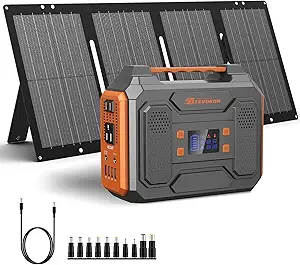 | Best Budget Solar Starter Kit | Maximum output: 300W | Included solar panel: 60W monocrystalline, 20.5% efficiency | AC outlets: 2 | VIEW LATEST PRICE | See Our Full Breakdown |
| Jackery HomePower 3600 Plus Portable Power Station with Two 200W Solar Panels |  | Best Premium Home Backup System | Battery capacity: 3,584Wh | AC output: 3,600W (7,200W parallel) | Voltage: 120V; 240V in parallel | VIEW LATEST PRICE | See Our Full Breakdown |
| MARBERO M823 Portable Power Station with 60W Foldable Solar Panel |  | Best Lightweight Weekend Kit | Battery capacity: 237Wh / 64,000mAh lithium-ion | AC output: 300W pure sine wave, 375W peak | Solar panel: 60W foldable, 21.5–23.5% conversion | VIEW LATEST PRICE | See Our Full Breakdown |
| EnginStar 300W Portable Power Station with 60W Foldable Solar Panel |  | Best Value All-Rounder | Battery capacity: 296Wh lithium-ion | AC output: 300W, 2 × 110V pure sine wave | Solar panel: 60W foldable monocrystalline, 23% efficiency | VIEW LATEST PRICE | See Our Full Breakdown |
| DARAN 350W Portable Power Station with 40W Solar Panel, 288Wh |  | Best Mid-Size Value for Campers | Capacity: 288Wh LiFePO4 | AC output: 350W (600W surge) | Solar panel: 40W foldable | VIEW LATEST PRICE | See Our Full Breakdown |
| DaranEner 300W Portable Power Station with 30W Solar Panel |  | Best Lightweight Kit for Travel | Capacity: 192Wh LiFePO4 | AC output: 2 × 300W pure sine wave (600W surge) | Solar panel: 30W included | VIEW LATEST PRICE | See Our Full Breakdown |
| ZeroKor Portable Solar Generator with 40W Foldable Panel, 300W Power Station and 100W Power Pack |  | Best Two-Unit Kit for Beginners | Station capacity: 280Wh lithium-ion | Station AC output: 2 × 110V outlets, 300W max (550W starting) | Power pack output: 2 × 110V outlets, 100W max | VIEW LATEST PRICE | See Our Full Breakdown |
| BLUETTI AC180 Solar Generator with 200W Solar Panel, 1152Wh |  | Best Premium Pick for Home Backup | Capacity: 1152Wh LiFePO4 | AC output: 1800W (2700W peak via app) | Outlets: 11 | VIEW LATEST PRICE | See Our Full Breakdown |
| portable power stations with solar panel | AC output | Solar panel | Weight | Battery capacity |
|---|---|---|---|---|
| Jackery Solar Generator 1000 v | 1,500W | 200W | 23.8 lb | 1,070Wh |
| BROWEY 1600W Portable Power St | 1,600W pure sine wave | — | — | — |
| BLUETTI Elite 100 V2 Solar Gen | 1,800W | 200W | 25 lb | 1,024Wh |
| Apowking 100W Portable Power S | 100W continuous, 200W peak | — | 3.3 lb | 146Wh |
| Jackery Explorer 300 Portable | — | 40W | 7.5 lb | — |
| 350W Portable Power Station wi | 350W pure sine wave, 600W surge | 40W foldable | 8.2 lbs | 288Wh |
| ZeroKor 300W Portable Power St | — | — | — | — |
| Jackery HomePower 3600 Plus Po | 3,600W (7,200W parallel) | — | — | 3,584Wh |
| MARBERO M823 Portable Power St | 300W pure sine wave, 375W peak | 60W foldable, 21.5–23.5% conversion | — | 237Wh / 64,000mAh lithium-ion |
| EnginStar 300W Portable Power | 300W, 2 × 110V pure sine wave | 60W foldable monocrystalline, 23% efficiency | 6.5 lbs | 296Wh lithium-ion |
| DARAN 350W Portable Power Stat | 350W (600W surge) | 40W foldable | 8.2 lbs | — |
| DaranEner 300W Portable Power | 2 × 300W pure sine wave (600W surge) | 30W included | 5.84 lbs | — |
| ZeroKor Portable Solar Generat | — | 40W foldable | — | — |
| BLUETTI AC180 Solar Generator | 1800W (2700W peak via app) | 200W included | — | — |
More Details on Our Top Picks
Jackery Solar Generator 1000 v2 with 200W Solar Panel
I’d put the Jackery Solar Generator 1000 v2 first for buyers who want a substantial battery and a useful panel in one camping or backup kit. Its 1,070Wh LFP battery and 1,500W AC output give it more room for appliance use than the compact Jackery Explorer 300, while the included 200W panel can contribute meaningfully to recharging when sunlight is available. Three AC outlets, USB-C ports, and app-controlled charging add flexibility across devices and use cases. The tradeoff is portability: at 23.8 lb, it is much heavier than small weekend units. Its fastest stated charging mode also requires enabling emergency charging in the app, and the station and panel ship separately. I’d choose it for capacity and output, not for the lightest carry.
Pros:- 1,070Wh LFP battery with a stated lifespan above 4,000 cycles before capacity falls below 70%
- Includes a 200W solar panel for more useful replenishment than the 40W panels bundled with compact options
- 1,500W AC output and 3,000W surge peak support a broader range of appliances
- Three AC outlets, two USB-C ports, USB-A, DC, and app-controlled charging
Cons:- At 23.8 lb, it is substantially heavier than the 7.5 lb Jackery Explorer 300
- One-hour charging requires enabling emergency charging in the app
- The station and solar panel ship separately
Best for: Campers and households seeking a mid-size solar kit that can run several devices and some higher-draw appliances
Not ideal for: Backpackers or buyers who need a very light station, or anyone relying on simple one-step emergency charging
- Battery capacity:1,070Wh
- Battery type:LFP
- AC output:1,500W
- Surge peak:3,000W
- Solar panel:200W
- Weight:23.8 lb
- AC ports:3 pure sine wave
- USB-C charging:PD 100W
Our verdict“Choose this Jackery if you want a capable 1,000Wh-class station with a 200W panel and can manage its weight and app-dependent fast-charge mode.”
BROWEY 1600W Portable Power Station with Built-In Solar Panel
The BROWEY 1600W suits buyers who value a solar surface attached to the station itself. That built-in 40W panel can collect sunlight while the unit powers devices, avoiding the setup of a separate panel in some situations. Its 1,024Wh LiFePO4 battery and 1,600W pure sine wave output put its power capacity near the Jackery Solar Generator 1000 v2, but the Jackery’s bundled 200W panel has far more solar input potential. BROWEY’s advantage is convenience, not rapid solar recovery: 40W is a modest source for a battery this size. The stated three-hour charge to 80% also depends on using AC and USB-C charging simultaneously. I’d favor it for simple, opportunistic charging, while buyers planning regular solar recharging should consider a larger panel setup.
Pros:- Built-in 40W solar panel and MPPT controller allow charging without deploying a separate panel
- 1,024Wh LiFePO4 battery rated for 3,000+ cycles to 80% capacity
- 1,600W pure sine wave output with 3,200W peak
- Supports AC, USB-C PD, car, and solar charging
Cons:- 40W built-in solar input is modest beside the Jackery Solar Generator 1000 v2’s included 200W panel
- Three-hour charge to 80% requires AC and USB-C charging at the same time
- The provided description does not specify weight, limiting comparison for carry-focused buyers
Best for: Van campers and casual outdoor users who want a station that can gather some sunlight without setting up a separate panel
Not ideal for: Buyers who need fast off-grid recharging or expect the built-in panel to refill a 1,024Wh battery quickly
- Capacity:1,024Wh
- Battery chemistry:LiFePO4
- AC output:1,600W pure sine wave
- Peak output:3,200W
- Built-in solar charging:40W
- Battery life:3,000+ cycles to 80% capacity
- USB-C PD output:100W
- Ports:8 across AC, DC, and USB-C PD
Our verdict“Pick BROWEY for an always-attached solar panel and flexible charging, but choose a kit with a larger panel for meaningful solar replenishment.”
BLUETTI Elite 100 V2 Solar Generator with 200W Solar Panel, 1024Wh
The BLUETTI Elite 100 V2 earns its place for buyers who want a solar-ready station that can also serve as a quick-switch backup for sensitive equipment. Its ≤10ms UPS switchover is the standout distinction from the Jackery Solar Generator 1000 v2, which offers higher stated capacity but no UPS feature in the supplied details. The BLUETTI pairs a 1,024Wh LiFePO₄ battery with 1,800W AC output and a bundled 200W panel, giving it a strong mix for camping and household backup. It also accepts up to 1,000W of solar input, useful for owners who later add compatible panels. The costs are practical: it weighs 25 lb, and its included panel ships separately. I’d rank it below the Jackery for lighter carry and above basic kits when UPS switching matters.
Pros:- ≤10ms UPS switchover can help keep connected equipment powered through brief outages
- Includes a 200W solar panel and supports up to 1,000W maximum solar input
- 1,800W AC output with 3,600W surge power
- LiFePO₄ battery rated for over 4,000 cycles to 80% capacity
Cons:- At 25 lb, it is heavier than the Jackery Solar Generator 1000 v2
- The solar panel ships separately from the station
- The 200W included panel uses only part of the stated 1,000W maximum solar input
Best for: Campers and home-office users who want a 1,000Wh-class solar kit with fast UPS switching for connected equipment
Not ideal for: Buyers prioritizing low carry weight or a compact, all-in-one shipment
- Battery capacity:1,024Wh
- Battery type:LiFePO₄
- AC output:1,800W
- Surge power:3,600W
- Solar panel:200W
- Maximum solar input:1,000W
- UPS switchover:≤10ms
- Weight:25 lb
Our verdict“Choose the Elite 100 V2 when UPS switching and expandable solar input matter more than keeping the kit light.”
Apowking 100W Portable Power Station with 40W Solar Panel
At 3.3 lb, the Apowking is the easiest model here to carry for short trips, and its included 40W panel makes it a self-contained entry point to solar charging. The tradeoff is its small 146Wh capacity and 100W continuous AC output: it is suited to phones, lights, and modest electronics rather than the appliances the Jackery Solar Generator 1000 v2 can handle. The panel’s 20.5% conversion efficiency is a useful detail, but its 40W rating still limits how quickly it can add energy. Seven outputs and dual LED lights broaden its usefulness as an emergency kit, including flashlight and SOS modes. I’d choose Apowking for low-weight carry and basic device support, not as a scaled-down substitute for a full-size power station.
Pros:- Very light at 3.3 lb and compact enough for easy travel
- Includes a 40W monocrystalline solar panel and AC and car charging accessories
- Seven outputs cover AC, USB, USB-C, and 12V DC devices
- Dual LED lights offer flashlight, strobe, and SOS modes
Cons:- 146Wh capacity provides far less stored energy than the Jackery Explorer 300’s 292Wh
- 100W continuous AC output rules out many appliances
- 40W solar output limits how quickly the battery can recharge
Best for: Day hikers, car campers, and emergency-kit builders who need light charging for phones, lights, and small electronics
Not ideal for: Buyers who need to run kitchen appliances, tools, or several high-draw devices for extended periods
- Battery capacity:146Wh
- Solar panel output:40W
- Solar cell conversion efficiency:20.5%
- AC output:100W continuous, 200W peak
- Total outputs:7
- Weight:3.3 lb
- Dimensions:7.5 × 3.7 × 6.1 in
- DC output:9–12.6V, up to 10A
Our verdict“Choose Apowking for a light, basic solar kit for small devices, and skip it if you need appliance-level power or longer runtimes.”
Jackery Explorer 300 Portable Power Station with 40W Solar Panel
The Jackery Explorer 300 is the compact choice for buyers who want more capacity than a tiny emergency unit without carrying a full-size station. At 292Wh and 7.5 lb, it offers double the stored energy of the Apowking 146Wh kit while remaining far lighter than the Jackery Solar Generator 1000 v2. A 40W panel is included, but the stated solar charge time—about 7.5 hours to reach 80%—shows the limit of pairing a small panel with a battery of this size. Its 300W rated output and two AC outlets suit small electronics and select low-draw devices, not appliances. The LiFePO₄ battery’s rating above 4,000 cycles adds long-term value for frequent use. I’d choose it for portable weekend power, with the panel’s slow recharge in mind.
Pros:- 292Wh capacity in a 7.5 lb unit with an integrated handle
- Includes a 40W solar panel
- LiFePO₄ battery rated for over 4,000 cycles before reaching 70% capacity
- Two AC outlets and USB-C PD up to 100W support several device types
Cons:- 300W rated output limits the appliances it can run compared with the Jackery Solar Generator 1000 v2
- Included 40W panel takes about 7.5 hours to reach 80% capacity under the stated charging conditions
- Power station and panel may ship separately
Best for: Car campers and travelers who need a light station for phones, laptops, lights, and other modest loads
Not ideal for: Buyers who need to power high-wattage appliances or recharge quickly from the included panel
- Capacity:292Wh
- Peak surge:600W
- Battery chemistry:LiFePO₄
- Weight:7.5 lb
- Solar panel:40W
- AC outlets:2
- USB-C port:100W PD
Our verdict“Pick the Explorer 300 for lightweight weekend power and long cycle life if its 300W output and slow included-panel recharge fit your needs.”
350W Portable Power Station with 40W Foldable Solar Panel, 288Wh LiFePO4 Battery
This option stands out for pairing a 288Wh LiFePO4 battery with a modest 40W panel, which puts the emphasis on long-term cell durability rather than raw charging speed. Compared with the EnginStar 300W setup, which uses a lithium-ion battery rated for just over 1,000 cycles, the LiFePO4 chemistry here should comfortably outlast it, making this the smarter long-horizon choice for someone who camps a few times a season. The 60W USB-C PD port is a genuine advantage over the MARBERO M823, whose USB-C tops out at 18W — laptops will charge far faster here. The tradeoff is the included panel: at 40W, it trails the 60W panels bundled with the MARBERO and ZeroKor, so solar recharge times will stretch considerably. Factor in the missing car charger cable, and this kit works best when wall power is available between trips.
Pros:- LiFePO4 battery chemistry offers far more charge cycles than standard lithium-ion rivals
- 60W USB-C PD port charges laptops much faster than competing budget kits
- Six output ports plus three recharge methods cover most small-device scenarios
- At 8.2 lbs with a built-in four-mode LED light, it stays genuinely portable
Cons:- 40W solar panel is the weakest in this batch of kits, dragging out off-grid recharge times
- Car charger cable is not included, so vehicle recharging requires an extra purchase
- 350W AC ceiling rules out kettles, hair dryers, and most heating appliances
Best for: Weekend campers and laptop-toting travelers who want a battery that degrades slowly over years of light-to-moderate use
Not ideal for: Anyone planning to rely primarily on solar input — the 40W panel recharges this battery slowly compared with 60W alternatives in this roundup
- Battery capacity:288Wh
- Battery type:LiFePO4
- AC output:350W pure sine wave, 600W surge
- Solar panel:40W foldable
- USB-C PD output:60W
- Output ports:6 total including 2 AC and 12V car port
- Weight:8.2 lbs
Our verdict“This kit makes the most sense for campers who recharge at home between trips and want a battery that will still hold up years from now.”
ZeroKor 300W Portable Power Station with 60W Solar Panel
For a first dip into solar generators, this ZeroKor bundle keeps the entry barrier low while still including a 60W monocrystalline panel — a step up from the 40W panels shipped with the Jackery Explorer 300 and DARAN kits. That extra wattage matters more than it sounds: 20.5% conversion efficiency on a 60W panel means meaningfully faster top-ups when you’re off-grid for days. The layered safety protections, including temperature-controlled cooling, give it an edge over cheaper no-name alternatives that skip battery management entirely. The honest tradeoff is transparency — unlike the EnginStar 300W kit, which clearly states its 296Wh capacity, this listing never specifies battery capacity, making it hard to predict runtime. The non-waterproof junction box on the panel also demands careful placement in bad weather.
Pros:- 60W panel is generous for this price tier and includes USB-A, USB-C, and DC outputs for direct device charging
- Comprehensive protection suite covers short circuits, over-current, overheating, and overload
- SOS flashlight mode adds genuine emergency utility
- Three recharge methods including 12V car outlet
Cons:- Battery capacity is not disclosed anywhere in the listing, so runtime is a guessing game
- Solar panel junction box is not waterproof and needs shelter in rain
- 300W ceiling with potential damage above it leaves no headroom for motor-driven appliances
Best for: First-time buyers who want to experiment with solar charging without committing serious money to a bigger system
Not ideal for: Buyers who need to calculate exact runtime for medical devices or CPAP machines — the unstated battery capacity makes planning impossible
- Maximum output:300W
- Included solar panel:60W monocrystalline, 20.5% efficiency
- AC outlets:2
- USB ports:3 × 5V/3A plus quick-charge port
- Charging methods:AC outlet, solar panel, 12V car outlet
- Safety features:Short-circuit, over-current, over-voltage, overload, overheating protection
Our verdict“A reasonable low-risk entry point for solar curious buyers, but anyone who needs to plan runtimes precisely should pick a kit with published capacity.”
Jackery HomePower 3600 Plus Portable Power Station with Two 200W Solar Panels
Sitting at the opposite end of the spectrum from the MARBERO M823’s 237Wh capacity, this Jackery system is built for whole-home backup rather than campsite convenience. Its 3,584Wh capacity and 3,600W output can run refrigerators, well pumps, and HVAC circuits, while the expandability to 43kWh across linked units positions it as an alternative to a standby generator rather than a competitor to camping kits. Compared with the BLUETTI AC180’s 1,152Wh, this is an entirely different class of machine. The 400W of included solar panels genuinely move the needle — a claimed 4-hour solar recharge is workable for extended outages. Tradeoffs are real: 240V output requires buying a second unit for parallel connection, the station and panels may arrive in separate shipments, and the wheeled design, while helpful, still means moving a piece of serious hardware rather than a 6.5-pound box like the EnginStar.
Pros:- 3,600W output with 7,200W parallel capability runs household appliances, not just gadgets
- Capacity expands up to 43kWh across multiple units, scaling with your backup needs
- Hybrid AC plus solar charging reaches full in about 2 hours
- Wheels and telescopic handle make an otherwise heavy unit manageable
Cons:- Full 240V operation requires a second unit in parallel, doubling the investment
- Station and solar panels may ship in separate packages, complicating delivery and setup
- Massive overkill — and over-spending — for anyone with only small-device needs
Best for: Homeowners in outage-prone areas who want gasoline-free whole-circuit backup and may expand the system over time
Not ideal for: Car campers and van lifers — this is far too heavy and over-specced for keeping phones and a lantern charged
- Battery capacity:3,584Wh
- AC output:3,600W (7,200W parallel)
- Voltage:120V; 240V in parallel
- Expandable capacity:Up to 21kWh per unit, 43kWh with multiple units
- Battery cycle life:6,000 cycles (LFP cells)
- Charging options:Hybrid AC+DC, AC, solar, gas generator
- Solar charging time:Approximately 4 hours
- Included solar panels:Two 200W panels
Our verdict“If your goal is keeping a household running through multi-day outages instead of charging devices at a campsite, this is the system to buy.”
MARBERO M823 Portable Power Station with 60W Foldable Solar Panel
With its 237Wh capacity and 60W panel, the MARBERO M823 hits a practical sweet spot for short trips where every pound counts. Its 21.5–23.5% panel conversion rate edges out the ZeroKor’s 20.5%, and unlike the ZeroKor, MARBERO publishes its capacity — so you can actually plan how many phone and camera charges you’ll get. The pure sine wave AC output is a meaningful inclusion at this size, keeping sensitive electronics like laptops and camera chargers safe in a way modified sine wave units don’t. The tradeoff against the 288Wh LiFePO4 unit earlier in this lineup is two-fold: the smaller battery runs out sooner, and its lithium-ion chemistry will degrade faster over years. The four USB-A ports, however, outpace most rivals here and suit groups charging multiple devices at once.
Pros:- Pure sine wave AC output protects sensitive electronics like laptops and camera gear
- Four USB-A ports plus USB-C handle group device-charging without adapters
- High-efficiency 60W foldable panel recharges faster than 40W bundled kits
- Three-mode flashlight including SOS adds emergency utility at minimal weight
Cons:- 237Wh is the smallest capacity in this batch and drains quickly under combined loads
- Lithium-ion chemistry offers fewer total cycles than the LiFePO4 competition
- USB-C limited to 18W makes laptop charging slow compared with 60W PD rivals
Best for: Solo travelers and couples on 1–3 day trips who prioritize packability and know their power needs are modest
Not ideal for: Anyone hoping to run a mini-fridge, electric blanket, or any heating appliance — the 300W ceiling and 237Wh capacity rule these out entirely
- Battery capacity:237Wh / 64,000mAh lithium-ion
- AC output:300W pure sine wave, 375W peak
- Solar panel:60W foldable, 21.5–23.5% conversion
- USB ports:4 × USB-A plus 1 × USB-C 18W PD
- DC output:12–16.8V / 10A, 14A max
- Flashlight modes:Flashlight, strobe, SOS
Our verdict“Choose this when weight and portability matter more than capacity — skip it if your trips run long or your devices run hungry.”
EnginStar 300W Portable Power Station with 60W Foldable Solar Panel
The EnginStar earns its place by balancing the numbers better than its direct rivals: 296Wh of published capacity beats the MARBERO M823’s 237Wh while matching its 60W panel, and its 6.5-pound frame undercuts the 8.2-pound LiFePO4 unit elsewhere in this lineup. The two regulated 12V/24V DC outputs are a differentiator none of the other budget kits offer, which matters if you run DC appliances like portable fridges where voltage stability protects the compressor. A stated ~3-hour recharge time and a 12-month warranty add predictability the ZeroKor listing lacks. The honest tradeoffs: 1,000-plus cycles is half or less of what LiFePO4 chemistry delivers, the 18W USB-C port lags the 60W PD port on the LiFePO4 pick, and the 300W ceiling means no heating appliances — a boundary the manual is explicit about.
Pros:- 296Wh published capacity leads this price tier and enables honest runtime planning
- Regulated 12V/24V DC outputs safely run portable fridges and 12V accessories
- 60W panel with 23% efficiency recharges notably faster than 40W bundled kits
- Lightest full-size option here at 6.5 lbs with a 12-month warranty
Cons:- Lithium-ion chemistry rated for just over 1,000 cycles versus thousands for LiFePO4 rivals
- 18W USB-C charging is slow for modern laptops
- Solar recharge speed varies heavily with weather, and the 300W limit excludes most kitchen appliances
Best for: Budget-conscious campers and emergency-prep beginners who want the most usable capacity per dollar in a portable package
Not ideal for: Buyers who plan to keep and use the kit heavily for many years — the lithium-ion cycle life falls well short of LiFePO4 alternatives
- Battery capacity:296Wh lithium-ion
- AC output:300W, 2 × 110V pure sine wave
- Solar panel:60W foldable monocrystalline, 23% efficiency
- DC outputs:2 regulated outputs (12V/24V)
- USB output:USB-A 5V/3.1A max, USB-C 18W
- Recharge time:Approximately 3 hours at 65W max
- Weight:6.5 lbs
- Battery cycle life:More than 1,000 cycles
Our verdict“This is the best-balanced kit for someone buying their first solar generator who wants published specs, real capacity, and portability without paying for premium chemistry.”
DARAN 350W Portable Power Station with 40W Solar Panel, 288Wh
DARAN’s 288Wh kit carves out a sensible middle ground between the anemic sub-200Wh options and the pricier big-capacity units. Compared with the smaller DaranEner 300W bundle, this one trades half a pound of portability for 50% more battery capacity, which translates to noticeably longer laptop or CPAP runtimes on a weekend trip. The LiFePO4 chemistry rated for 3,000+ cycles means the battery should outlast the rest of the kit by years, unlike the ZeroKor’s standard lithium-ion pack. Charging from 0–80% in 2.4 hours over AC is genuinely quick for this class. The tradeoffs are real, though: 350W caps you out of anything with a heating element, and the 40W panel is slow — expect a full day of good sun for a recharge. It also costs more than lighter kits.
Pros:- 288Wh LiFePO4 battery rated for 3,000+ cycles
- Fast AC recharge to 80% in 2.4 hours
- Three charging methods including the included 40W panel
- Powers up to six devices at once at just 8.2 lbs
Cons:- 350W output can’t handle high-wattage appliances
- 40W solar panel means slow off-grid recharging
Best for: Weekend campers and CPAP users who want multi-day capacity without hauling a 30 lb unit
Not ideal for: Anyone hoping to run a kettle, microwave, or hair dryer — the 350W ceiling rules them out
- Capacity:288Wh LiFePO4
- AC output:350W (600W surge)
- Solar panel:40W foldable
- Ports:2 AC, 1 USB-C PD (60W), 2 USB-A, 1 car outlet
- Recharging:AC, solar, 12V car socket
- Battery cycles:3,000+
- Weight:8.2 lbs
Our verdict“A balanced pick for campers who need real runtime and battery longevity but not high wattage.”
DaranEner 300W Portable Power Station with 30W Solar Panel
At 5.84 lbs, this is the kit you actually carry — tucked into a backpack, an overhead bin, or the corner of a car trunk. The DaranEner makes the most sense for buyers who prioritize portability over capacity, sitting alongside the Jackery Explorer 300 bundle in weight class but edging it on battery chemistry with a LiFePO4 cell rated for 3,500+ cycles. The two pure sine wave outlets are a nice touch at this price, keeping sensitive electronics like laptops and camera chargers safe. The compromises are straightforward: 192Wh limits you to roughly a laptop charge or two plus phone top-ups, and the 30W panel is more of a trickle charger than a real power source. Compared with the DARAN 350W kit, you’re giving up capacity and panel wattage to save weight — a fair trade only if you truly carry it.
Pros:- Featherweight at 5.84 lbs with a compact footprint
- LiFePO4 battery rated for 3,500+ cycles
- Two pure sine wave AC outlets for sensitive electronics
- Powers up to eight devices simultaneously
Cons:- 192Wh capacity handles only light-duty loads
- 30W solar panel extends off-grid recharge times considerably
Best for: Hikers, festival-goers, and airline travelers who need light backup power for phones, cameras, and a laptop
Not ideal for: Anyone planning multi-day off-grid trips — 192Wh runs dry quickly and the 30W panel recharges slowly
- Capacity:192Wh LiFePO4
- AC output:2 × 300W pure sine wave (600W surge)
- Solar panel:30W included
- Ports:2 AC, 1 USB-C 60W PD, 1 USB-C 30W, 1 QC USB-A, car socket, 2 DC5521
- Recharging:90W AC, 60W car, or solar
- Battery cycles:3,500+ to 80% capacity
- Weight:5.84 lbs
Our verdict“The right choice when weight matters more than watt-hours, and wrong when it doesn’t.”
ZeroKor Portable Solar Generator with 40W Foldable Panel, 300W Power Station and 100W Power Pack
ZeroKor’s angle is redundancy: instead of one box, you get a 280Wh station plus a separate 100W power pack, letting you keep a phone and headlamp charging at camp while the main unit stays in the tent or RV. For a household new to solar generators, that split makes the kit feel more flexible than single-unit rivals like the EnginStar 300W bundle. The built-in safety protections — over-current, over-voltage, overload, and short circuit — matter for beginners who don’t yet know their devices’ draw. But the fine print deserves attention: the station uses a standard lithium-ion battery rather than the LiFePO4 cells in the DARAN or DaranEner kits, so cycle life will be shorter. And anything drawing over 300W risks damaging the unit outright, which the product itself warns about. The 100W pack, meanwhile, is strictly for small gadgets.
Pros:- Two independent units for flexible power distribution
- Foldable 40W panel plus multiple AC, USB, and DC outputs
- Flashlight with reading and SOS modes
- Comprehensive built-in electrical protections
Cons:- Lithium-ion battery offers shorter cycle life than LiFePO4 rivals
- Loads above 300W can damage the station
- 100W power pack is limited to small devices
Best for: First-time solar generator buyers who want two separate power sources for basic camping and emergency prep
Not ideal for: Buyers prioritizing battery longevity — the lithium-ion chemistry ages faster than the LiFePO4 packs elsewhere in this roundup
- Station capacity:280Wh lithium-ion
- Station AC output:2 × 110V outlets, 300W max (550W starting)
- Power pack output:2 × 110V outlets, 100W max
- Solar panel:40W foldable
- Station USB:3 USB ports, 1 QC3.0
- Power pack ports:DC, 2 USB, QC USB, USB-C
- Protection:Short circuit, over-current, over-voltage, overload
Our verdict“A beginner-friendly starter kit whose two-box design is its best feature — as long as you keep loads light.”
BLUETTI AC180 Solar Generator with 200W Solar Panel, 1152Wh
The AC180 sits at the opposite end of this roundup from the DaranEner kit — four times the capacity, six times the output, and a 200W panel that actually recharges the battery in a day rather than a week. Where the smaller kits here are camping accessories, this one is a genuine home backup solution: 1800W runs refrigerators, microwaves, and power tools, the app-enabled 2700W peak handles motor startups, and the ≤10ms UPS transfer keeps computers running through an outage without a flicker. Compared with the Jackery Solar Generator 1000 v2, it pushes higher output while matching the solar panel size. The drawbacks: it’s heavy, it’s the most expensive entry in this batch, the solar panel ships separately so deliveries may arrive on different days, and a full solar recharge can stretch to 9.6 hours in imperfect conditions.
Pros:- 1152Wh LiFePO4 battery with 3,000+ cycles
- 1800W output runs major appliances, with 2700W app-enabled peak
- 200W solar panel for meaningful off-grid recharging
- UPS function switches over in ≤10ms during outages
Cons:- Solar panels ship separately from the station
- Full solar recharge can take up to 9.6 hours
Best for: Homeowners who want real outage insurance plus off-grid capability, not just a camping charger
Not ideal for: Casual campers and day-trippers — the weight and cost are wasted if you only need phone and laptop charging
- Capacity:1152Wh LiFePO4
- AC output:1800W (2700W peak via app)
- Outlets:11
- Solar panel:200W included
- Solar recharge time:4.8–9.6 hours
- AC charging power:Up to 1440W
- UPS transfer time:≤10ms
- Battery cycles:3,000+
Our verdict“If your goal is powering a fridge through an outage rather than a phone through a hike, this is the pick.”

How We Picked
My ranking logic starts with one question: how well does the solar panel match the battery it’s paired with? A 288Wh battery with a 40W panel can recharge in a day of good sun, while the same panel on a 1000Wh battery would leave you waiting three. I favored kits where the manufacturer got this ratio right, because a mismatched bundle is where buyers lose the most value. From there, I weighed capacity per dollar of realistic use, charging speed, battery chemistry, output wattage, port selection, and portability.
For battery chemistry, LiFePO4 units earn a ranking boost because they last roughly six times more charge cycles than older NMC cells — a long-term ownership advantage that isn’t visible on day one. Output wattage determined which role each kit could fill: 100–350W units are for devices, 1000W-class units handle kitchen appliances and power tools, and only the 3600W-class unit approaches whole-home relevance. Finally, I penalized kits with vague spec sheets, missing surge ratings, or panels without weather resistance, since reliability matters most when the grid is already down.
Factors to Consider When Choosing Portable Power Stations With Solar Panels
Before choosing a solar generator kit, it helps to understand the patterns I saw across all 14 products — and the mistakes that trip up most first-time buyers.Match Panel Wattage to Battery Size
The single most common mistake in this category is buying a big battery with a tiny panel. As a rule of thumb, divide battery watt-hours by panel watts to estimate a full solar recharge in ideal sun — then add 30–50% for clouds, panel angle, and shorter winter days. A 1000Wh battery with a 200W panel is a one-day recharge; the same battery with a 40W panel is a multi-day project that defeats the purpose of off-grid power. Some manufacturers bundle small panels to hit an attractive price point, so always check the panel wattage before the battery capacity. If you find a kit with a mismatched ratio, you can often add a second compatible panel later — but confirm the station’s solar input limit first, because many small units cap input at 60–100W.
Calculate Your Real Wattage Needs Before Shopping
Most buyers overestimate the capacity they need for camping and underestimate it for home backup. Write down the devices you’ll actually run and their wattage: phone and laptop charging might total 60W, a CPAP machine runs 50–100W overnight, a mini fridge cycles around 60W, while an electric kettle or microwave demands 1000W or more. Then multiply by hours of runtime to get watt-hours, and add 20% for inverter losses. This exercise usually reveals that a 300Wh unit covers a weekend of device charging, while genuine emergency backup for a fridge and medical devices starts around 1000Wh. The surge rating matters too — anything with a motor or compressor can draw double its rated wattage at startup, which trips underpowered inverters.
Battery Chemistry and Cycle Life
LiFePO4 (lithium iron phosphate) batteries now dominate this category for good reason: they typically rate 3000+ charge cycles before degrading to 80% capacity, versus roughly 500–800 cycles for older NMC lithium cells. That difference means a LiFePO4 unit can last a decade of regular use while an NMC unit may need replacement in a few years — a hidden cost the sticker price doesn’t show. LiFePO4 is also more thermally stable, which matters for a device that sits in a hot car or trailer. The tradeoff is slight: LiFePO4 cells are a bit heavier per watt-hour and perform somewhat worse in freezing temperatures. If you’re charging the unit mostly from the wall and using it occasionally, chemistry matters less; if you’ll cycle it daily off-grid, pay for the better chemistry.
Weight and Portability Tradeoffs
Weight in this category ranges from under five pounds to over 80, and the right choice depends entirely on how it travels. A kit that lives in your car trunk for emergencies has different requirements than one you carry to a campsite a half-mile from the parking lot. Stations above roughly 1500Wh almost always need wheels or a two-person carry, which is fine for home backup but awkward for overlanding. Also consider the panel itself: a 200W folding panel is bulky and needs a flat spot with direct sun, while 40–60W panels strap to a backpack. One honest question to ask: will you actually deploy the solar panel regularly, or would a wall-charged station you top up before trips serve you better?
Inverter Type and Output Quality
Cheaper stations use modified sine wave inverters, which deliver rougher power that can cause motors, fans, and some electronics to run hot or buzz. Pure sine wave inverters replicate grid-quality power and are necessary for sensitive electronics, CPAP machines, and anything with a variable-speed motor. Most 1000Wh-class units now include pure sine wave as standard, which is part of why they rank higher than bargain 300W kits. Check the AC output rating against your devices, and look at the total simultaneous output — some budget stations split wattage across ports in ways that limit what you can run at once. Also verify whether the unit supports pass-through charging, which lets you use it as a UPS-style power source while it recharges.
Expandability and Ecosystem Lock-In
Think about whether your first kit will be your last. Some stations accept extra batteries or additional panels, letting you scale up as needs grow, while others are closed systems where the only upgrade path is buying a whole new unit. Proprietary connectors and MC4 adapters vary between brands, so mixing panels across brands sometimes requires third-party adapters and can void warranties. If you anticipate wanting home backup later, buying into an expandable ecosystem from the start is cheaper than replacing a standalone unit. Conversely, if your needs are fixed and modest — a camp light, a phone, a fan — paying for expandability you’ll never use is wasted money. Buy for the needs you can document today, with a growth path only if those needs are genuinely likely to change.
Frequently Asked Questions
Can a small 40W solar panel actually recharge a 1000Wh power station?
Technically yes, but you won’t enjoy it. A 40W panel producing realistic output in good sun delivers roughly 150–250Wh per day, meaning a 1000Wh battery takes four to six sunny days for a full recharge. That’s why I flagged panel-to-battery ratios as a key ranking factor — kits like the Jackery 1000 v2 and BLUETTI Elite 100 V2 pair 200W panels with their 1000Wh batteries for a same-day recharge. If you already own a large station with a small panel, check the unit’s solar input limit and add a second panel; many stations accept 200–400W of combined input. Otherwise, plan to top up from a wall outlet before your trip and treat the small panel as a trickle maintainer.
Is a 300Wh power station big enough for camping?
For device-focused camping, yes — a 300Wh unit like the MARBERO M823 or EnginStar 300W will run phones, headlamps, a fan, and a laptop for a weekend, and their 60W panels can realistically top them off during the day. Where 300Wh falls short is anything thermal: electric blankets, kettles, portable heaters, and most coffee makers draw too much or drain the battery within an hour or two. A CPAP machine overnight is borderline — usually feasible at 50–100W for 7–8 hours, but verify your machine’s actual draw including humidifier. If you want a blender, induction cooking, or a mini fridge at camp, step up to the 1000Wh class, which is exactly why those kits rank higher for all-around use.
What’s the advantage of a built-in solar panel like the BROWEY?
The main benefit is simplicity: there’s no separate panel to carry, connect, or leave behind, and you can charge the unit by simply setting it in the sun. For casual users who want zero setup — a tailgate, a balcony, emergency preparedness for someone who isn’t outdoorsy — that convenience is real. The tradeoff is charging speed and flexibility: the built-in surface area captures far less sunlight than a 200W folding panel you can angle directly at the sun, so recharges take considerably longer. You also can’t move the panel into sunlight while keeping the station in the shade, which matters because batteries charge less efficiently when hot. I’d treat built-in panels as a backup charging method rather than a primary one.
How long do these batteries last, and does chemistry matter?
Chemistry is the biggest long-term cost factor in this category. LiFePO4 batteries, used in the BLUETTI kits and several budget options here, are typically rated for 3000+ cycles before dropping to 80% capacity — roughly a decade of weekly use. Older NMC lithium cells common in legacy designs are rated closer to 500–800 cycles, so they can fade within a few years of regular cycling. All lithium stations also degrade on the shelf: store them around 50–60% charge, recharge every few months, and keep them out of extreme heat. If you’re comparing two similarly priced kits, the LiFePO4 one is usually the better long-term purchase unless you’ll only use it a few times per year.
Do I need a 3600W station like the Jackery HomePower 3600 Plus?
Only if home backup is your actual use case. A 3600W-class station can run refrigerators, well pumps, window AC units, and multiple appliances simultaneously during an outage, and its two 200W panels give it a meaningful off-grid recovery rate. But it weighs a fraction of what a person can carry alone, takes significant storage space, and costs far more than a 1000Wh kit — all wasted money if your real need is camping. For most buyers in this roundup, the 1000Wh class hits the sweet spot: enough for emergency fridge runtime and camp cooking without the bulk. Buy the 3600W class if outages are frequent or long in your area, or if you’re building toward a semi-off-grid setup with expansion batteries.
Conclusion
After comparing all 14 kits, the right choice comes down to honestly matching the kit to your usage. For best overall, the Jackery Solar Generator 1000 v2 wins on capacity, charging speed, and a well-matched 200W panel — it handles both camping and real emergency duty. The BLUETTI Elite 100 V2 is my best value pick for buyers who want similar capacity with modern app control, while the BLUETTI AC180 is the stronger choice if you need more inverter headroom for power-hungry appliances. For best premium, the Jackery HomePower 3600 Plus is the only kit here built for genuine home backup, provided you accept its weight and price. Beginners and casual campers should start with the MARBERO M823 or EnginStar 300W — their 60W panels are properly sized to their batteries, which is rare at this price. For tight budgets, the Apowking 100W kit covers phone and light essentials, and the BROWEY with built-in panel suits anyone who values zero-setup convenience over charging speed. Whatever you choose, check that panel-to-battery ratio first — it’s the detail that separates a solar generator that works from one that spends its life plugged into the wall.
Halloween Picks
halloween
As an affiliate, we earn on qualifying purchases.