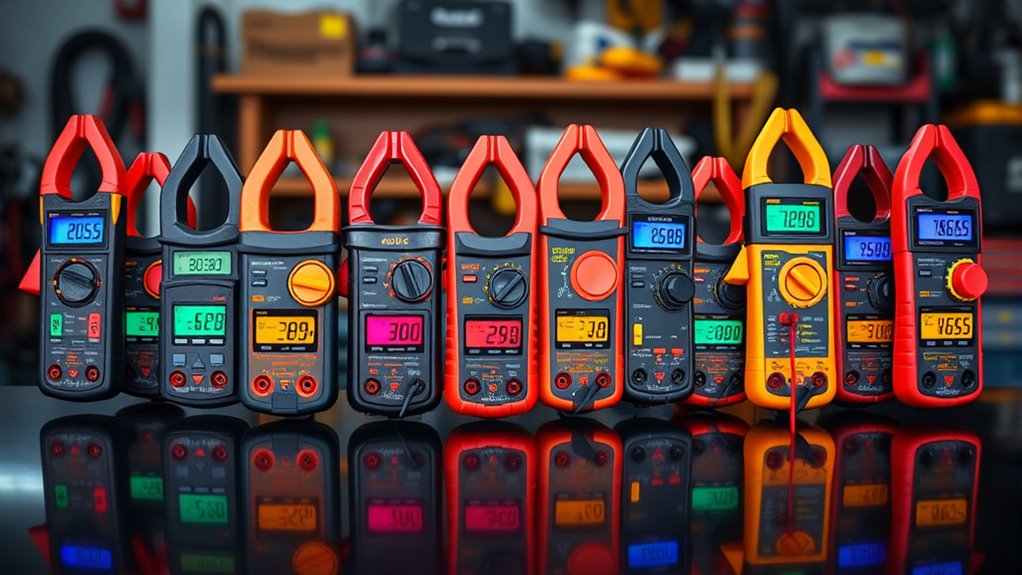

An amp clamp meter lets you measure current without breaking a circuit, which is why it has largely replaced the basic multimeter for electrical troubleshooting. After comparing 15 popular models, the AstroAI Inrush 1000A TRMS stands out as the best overall pick for its True RMS accuracy, VFD mode, and inrush current capture at a hobby-friendly price. For professional-grade reliability, the Fluke 302+ is the benchmark, while the UNI-T UT210E wins on portability if you work in tight panels. The main tradeoffs in this category come down to accuracy versus cost, AC-only versus AC/DC measurement, and CAT safety ratings versus compact size. Keep reading for the full breakdown of all 15 meters and which one fits your work.

Get backup power and energy gear delivered free — and shop member deals
- Fast, free delivery on millions of items
- Access to Prime Big Deal Days deals on October 6–7
- Prime Video, Amazon Music and more included
Key Takeaways
- True RMS measurement was the single biggest differentiator in this roundup — basic averaging meters like the KAIWEETS KC400 and ANENG 4000-count models gave noticeably less stable readings on variable-speed drives and dimmer circuits.
- Only the higher-tier models (AstroAI Inrush, Westinghouse, Fluke 302+) combine a 600A-or-higher rating with AC/DC current and voltage measurement, which matters if you service HVAC systems or vehicles.
- Sub-compact pliers-style meters like the UNI-T UT210E and KAIWEETS 200A sacrifice jaw opening and measurement range for one-handed pocketability — great for low-current electronics work, wrong for main panel diagnostics.
- DC current measurement is rare at budget prices: most entry models under $30 clamp AC only, so anyone working on solar, automotive, or battery systems needs to verify that spec before buying.
- Inrush current capture, found only on the AstroAI Inrush model here, is the killer feature for motor starting and compressor troubleshooting — no other budget meter in this lineup offers it.
| KAIWEETS DC Clamp Meter 200A AC/DC Amp Meter True RMS Compact Multimeter |  | Best for EV and Low-Current DC Work | Current Range: 200A AC/DC | Measurement Type: True RMS | Jaw Design: Round jaw for multi-size wires | VIEW ON AMAZON | See Our Full Breakdown |
| UNI-T UT210E Mini Digital Clamp Meter 100A AC DC Current Voltage True RMS Pliers Ammeter |  | Best Pocket-Sized Pick | Current Range: 100A AC/DC | Resolution: 1 mA | Measurement Type: True RMS | VIEW ON AMAZON | See Our Full Breakdown |
| AstroAI Inrush Digital Clamp Meter Multimeter 1000A TRMS 6000 Counts |  | Best Overall | Current Range: 1000A AC/DC | Voltage Range: 1000V DC / 750V AC | Display: 6000 counts, True RMS, backlit | VIEW ON AMAZON | See Our Full Breakdown |
| ANENG Digital Clamp Meter Multimeter Tester, 4000 Count, NCV, Amp Voltmeter |  | Best Budget Troubleshooter | Current Range: AC current only | Display: 4000 counts, average-responding | Jaw Capacity: Up to 1.42-inch wire diameter, double-open clamp | VIEW ON AMAZON | See Our Full Breakdown |
| Fluke 302+ Digital Clamp Meter, 30mm Jaw, 400A AC Current, AC/DC Voltage to 600V |  | Best Premium Build | Current Range: 400A AC | Voltage Range: 600V AC/DC | Basic Accuracy: 1.8% | VIEW ON AMAZON | See Our Full Breakdown |
| Westinghouse Auto-Ranging True RMS Digital Clamp Meter, 600A Current, 1000V AC/DC |  | Best for Future-Proof Home Electrics | Current Range: 600A | Voltage Range: 1000V AC/DC | Display: 6000-count backlit LCD | VIEW ON AMAZON | See Our Full Breakdown |
| KAIWEETS Digital Clamp Meter KC400, 2000 Counts, 400A AC Current |  | Best Budget Starter Clamp Meter | Current Range: 400A AC max | Voltage Range: 600V AC/DC | Display: 2000-count with auto backlight | VIEW ON AMAZON | See Our Full Breakdown |
| AstroAI Digital Clamp Meter Multimeter CM2K0R, 2000 Counts, NCV |  | Best Value Household Troubleshooter | Current Range: AC current (no DC) | Voltage Range: 600V AC/DC | Display: 2000-count backlit LCD | VIEW ON AMAZON | See Our Full Breakdown |
| FNIRSI DMC-100 Clamp Meter 9999 Counts TRMS, 600A AC/DC |  | Best Display and Data Logging | Current Range: 600A AC/DC | Display: 2-inch color TFT, 9999 counts, dual themes | Data Logging: 8 real-time + 30 historical records with curve display | VIEW ON AMAZON | See Our Full Breakdown |
| Clamp Meter Multimeter 1000A AC/DC Current TRMS, 6000 Counts |  | Best Capacity for Demanding Circuits | Current Range: 1000A AC/DC | Voltage Range: 750V AC / 1000V DC | Display: 6000-count backlit LCD | VIEW ON AMAZON | See Our Full Breakdown |
| BINTA Digital Clamp Meter Multimeter, 2000 Counts, Auto-Ranging, NCV, TRMS |  | Best Budget Starter Pick | Display Counts: 2000 | Current Capacity: 600A AC | Clamp Jaw Opening: 25mm | VIEW ON AMAZON | See Our Full Breakdown |
| AstroAI Digital Clamp Meter Multimeter 4000 Counts Auto-ranging Amp Tester |  | Best Value All-Rounder | Display Counts: 4000 | Ranging: Auto-ranging | Current Measurement: AC/DC via clamp | VIEW ON AMAZON | See Our Full Breakdown |
| MY2610D Digital Clamp Meter TRMS 6000 Counts Auto-Ranging Multimeter |  | Best Resolution for Diagnostics | Model: MY2610D | Display Counts: 6000 | Measurement Type: True RMS | VIEW ON AMAZON | See Our Full Breakdown |
| KAIWEETS Digital Clamp Meter Multimeter with D-Shaped Jaw, 4000 Counts | 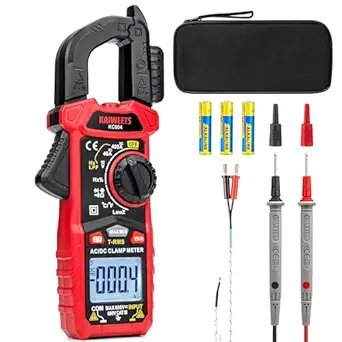 | Best Ergonomics and Kit | Display Counts: 4000 | Jaw Design: D-shaped, opens to 1.1 inches | Current Measurement: AC/DC via clamp | VIEW ON AMAZON | See Our Full Breakdown |
| Klein Tools CL120 Digital Clamp Meter, Auto-Ranging 400 Amp AC |  | Best for Working Electricians | Current Capacity: 400A AC | Ranging: Auto-ranging | NCV Detection: Integrated into clamp jaw | VIEW ON AMAZON | See Our Full Breakdown |
| amp clamp meter | Current Range |
|---|---|
| KAIWEETS DC Clamp Meter 200A A | 200A AC/DC |
| UNI-T UT210E Mini Digital Clam | 100A AC/DC |
| AstroAI Inrush Digital Clamp M | 1000A AC/DC |
| ANENG Digital Clamp Meter Mult | AC current only |
| Fluke 302+ Digital Clamp Meter | 400A AC |
| Westinghouse Auto-Ranging True | 600A |
| KAIWEETS Digital Clamp Meter K | 400A AC max |
| AstroAI Digital Clamp Meter Mu | AC current (no DC) |
| FNIRSI DMC-100 Clamp Meter 999 | 600A AC/DC |
| Clamp Meter Multimeter 1000A A | 1000A AC/DC |
| BINTA Digital Clamp Meter Mult | — |
| AstroAI Digital Clamp Meter Mu | — |
| MY2610D Digital Clamp Meter TR | — |
| KAIWEETS Digital Clamp Meter M | — |
| Klein Tools CL120 Digital Clam | — |
More Details on Our Top Picks
KAIWEETS DC Clamp Meter 200A AC/DC Amp Meter True RMS Compact Multimeter
This KAIWEETS model earns its spot for one reason most budget clamps can’t match: true DC current measurement at low ranges. The 200A ceiling sounds modest next to the AstroAI 1000A workhorse, but for EV battery diagnostics, parasitic draw checks, and HVAC compressor lines, resolution matters more than headroom. The round jaw design grips uneven cable bundles that flat-jaw meters like the Klein CL120 tend to sit crooked on, and the DC zeroing function kills offset drift — a real accuracy killer on cheaper units. Compared with the UNI-T UT210E, the magnetic shielding here reduces leakage errors that plague no-name minis. Tradeoffs: 200A won’t cover service-panel or high-load industrial work, and there’s no temperature or capacitance range, so this is a specialist tool more than an all-rounder.
Pros:- True RMS AC/DC current with DC zeroing for precise low-amp readings
- Round jaw grips both thick battery cables and thin household wires securely
- Magnetic shielding reduces leakage-related misreadings
- Backlight auto-alerts when voltage exceeds 80V or current exceeds 3A
- One-hand operation at just 0.8 lbs with included case and batteries
Cons:- 200A maximum current rules out high-load panel and motor testing
- No temperature, capacitance, or frequency functions found on rivals
Best for: EV owners, HVAC techs, and automotive DIYers who need accurate low-range DC current readings
Not ideal for: Electricians working on mains panels or motors drawing hundreds of amps — the 200A ceiling is too low
- Current Range:200A AC/DC
- Measurement Type:True RMS
- Jaw Design:Round jaw for multi-size wires
- Special Functions:Peak hold, DC zeroing, data hold, high-load backlight alert, auto-off
- Weight:0.8 lbs
- Included:Test leads, 2 AAA batteries, case, manual
- Warranty:3 years
Our verdict“The right pick if your work centers on EV, automotive, or HVAC DC circuits where small-current accuracy beats raw amperage headroom.”
UNI-T UT210E Mini Digital Clamp Meter 100A AC DC Current Voltage True RMS Pliers Ammeter
The UT210E is the only meter in this lineup I’d genuinely call pocketable — at 170 g and plier-shaped, it disappears into a shirt pocket the way a full-size clamp like the Fluke 302+ never will. What sets it apart from other minis is 1 mA resolution on the 100A range, which lets you chase parasitic draws and small signal currents that coarser 2000-count meters (the ANENG, for instance) simply blur over. Add true RMS, capacitance, diode test, NCV, and a VFC mode for filtering high-frequency interference on variable-speed drives, and it out-features meters twice its size. The compromises are real, though: a tiny clamp opening limits you to single conductors, the display is small for aging eyes, and 100A caps your ceiling well below the AstroAI’s 1000A.
Pros:- Genuinely pocketable at 170 g with a pliers-style grip
- 1 mA resolution makes small-current and parasitic-draw testing possible
- VFC mode filters VFD high-frequency interference
- Full multimeter functions including resistance, capacitance, and diode test
- UL-listed
Cons:- Small jaw opening fits only single thin conductors
- Compact display is harder to read than full-size units
- 100A ceiling is the lowest practical range in this roundup
Best for: Service techs and hobbyists who carry a meter all day and need milliamp-level resolution on the go
Not ideal for: Anyone measuring large conductors or loads above 100A — the mini jaw and range won’t stretch that far
- Current Range:100A AC/DC
- Resolution:1 mA
- Measurement Type:True RMS
- Functions:AC/DC current and voltage, resistance, capacitance, diode, NCV, VFC
- Weight:170 g
- Dimensions:2.36 x 6.89 x 1.32 in
- Certification:UL
Our verdict“Buy it as an always-with-you diagnostic tool; skip it if it’s your only meter for heavy circuits.”
AstroAI Inrush Digital Clamp Meter Multimeter 1000A TRMS 6000 Counts
If one meter has to do everything, this AstroAI is the strongest all-around choice here. The 1000A AC/DC range handles service panels and motor loads the KAIWEETS 200A can’t touch, while the 6000-count display with True RMS delivers finer resolution than the 4000-count ANENG or 2000-count budget models elsewhere in this guide. Two features justify the top slot on their own: inrush current capture for diagnosing motor startup faults, and a LoZ mode that eliminates ghost voltages — a trap that fools cheaper meters into reporting dead wires as live. VFD-specific measurement accuracy also puts it ahead of the UNI-T UT210E for industrial variable-frequency drive work. It’s larger and heavier than the mini picks, the clamp jaw is bulky in tight cabinets, and inrush only works on AC, not DC.
Pros:- 1000A AC/DC range covers panels, motors, and solar installs
- Inrush capture pinpoints motor startup problems in about 100ms
- LoZ mode eliminates ghost voltages for safer live-power checks
- CAT IV 600V / CAT III 1000V safety rating
- Measures temperature, capacitance, frequency, and duty cycle
Cons:- Inrush function works only on AC current, not DC
- Full-size body is awkward in cramped panels compared to minis
- Feature-dense dial has a learning curve for beginners
Best for: Electricians, industrial maintenance techs, and solar installers who need one meter for high-current and VFD work
Not ideal for: Casual homeowners testing occasional appliance draws — its size and feature depth are overkill and harder to handle
- Current Range:1000A AC/DC
- Voltage Range:1000V DC / 750V AC
- Display:6000 counts, True RMS, backlit
- Special Functions:Inrush current, VFD mode, LoZ volts, NCV, temperature, capacitance, frequency
- Convenience:Data hold, Max/Min, auto/manual ranging, flashlight
Our verdict“The most complete package in this roundup — buy it if you troubleshoot motors, VFDs, or high-current circuits and want one meter that does it all.”
ANENG Digital Clamp Meter Multimeter Tester, 4000 Count, NCV, Amp Voltmeter
The ANENG plays a clear role: basic AC troubleshooting at a starter price. The double-open jaw accommodates wires up to 1.42 inches — wider than the UNI-T UT210E’s mini jaw — and the generous accessory bundle (alligator clips, puncture needles, U-shaped inserts) saves the add-on purchases pricier meters don’t include. You get AC/DC voltage, resistance, capacitance, continuity, diode, and frequency coverage plus NCV detection, which covers most household fault-finding. But know what you’re giving up: AC current only — no DC amps, so EV and automotive work goes to the KAIWEETS; there’s no True RMS, so readings on distorted waveforms from dimmers or VFDs will drift; and the manual REL zeroing step before clamping is easy to forget. The 4000-count display beats 2000-count budget rivals, at least.
Pros:- Extra-wide 1.42-inch jaw handles thick conductors easily
- Extensive accessory kit includes alligator clips and puncture needles
- NCV detection plus live/zero wire identification for quick safety checks
- 4000-count display offers finer resolution than 2000-count budget rivals
Cons:- Cannot measure DC current at all
- Lacks True RMS, so distorted waveforms produce inaccurate readings
- Requires manual REL zeroing before every clamp measurement
Best for: Budget-minded homeowners and hobbyists doing basic AC troubleshooting around the house
Not ideal for: Anyone measuring DC current (EV, automotive, solar) or working on VFD-driven equipment where True RMS matters
- Current Range:AC current only
- Display:4000 counts, average-responding
- Jaw Capacity:Up to 1.42-inch wire diameter, double-open clamp
- Functions:AC/DC voltage, resistance, capacitance, continuity, diode, frequency, live/zero wire, NCV
- Included:Combination lead set with alligator clips and puncture needles, batteries, storage bag
Our verdict“A sensible cheap entry point for household AC diagnostics, provided you never need DC amps or True RMS accuracy.”
Fluke 302+ Digital Clamp Meter, 30mm Jaw, 400A AC Current, AC/DC Voltage to 600V
The Fluke 302+ takes the professional-reliability slot. Where the AstroAI wins on feature count, the 302+ wins on trust: 1.8% basic accuracy, a CAT IV 300V / CAT III 600V safety rating from a brand whose calibration holds up on real job sites, and a 30mm jaw that swallows large conductors the UNI-T mini can’t. It’s the meter you reach for when a misreading costs a callback. The honest tradeoff is scope: it measures AC current only up to 400A — no DC amps, no capacitance, no temperature, no inrush — so feature-for-feature it looks sparse next to the AstroAI at similar money. You’re paying for durability, proven safety engineering, and the included TL75 Hard Point lead set plus a two-year warranty rather than a long spec sheet.
Pros:- 1.8% basic accuracy outclasses most budget-meter specifications
- CAT IV 300V / CAT III 600V safety rating with Fluke’s field-proven reputation
- 30mm jaw fits large conductors and bus bars comfortably
- Includes TL75 Hard Point test leads and a two-year warranty
Cons:- AC current only — cannot measure DC amperage
- Feature set is minimal: no temperature, capacitance, or inrush capture
- Premium price without premium feature count compared to rivals
Best for: Working electricians who prioritize trusted accuracy, safety certification, and field durability over gadget count
Not ideal for: Feature hunters and DC-current users — no DC amps, no temperature, and no inrush mode means it covers less ground than cheaper rivals
- Current Range:400A AC
- Voltage Range:600V AC/DC
- Basic Accuracy:1.8%
- Jaw Size:30mm
- Included:TL75 Hard Point test lead set
- Warranty:2 years
Our verdict“Buy it for reliability and safety pedigree on AC troubleshooting jobs; choose the AstroAI or KAIWEETS if you need DC amps or richer functions instead.”
Westinghouse Auto-Ranging True RMS Digital Clamp Meter, 600A Current, 1000V AC/DC
This option stands out for its 1000V AC/DC voltage range, which goes past the 600V ceiling of the KAIWEETS KC400 and the AstroAI CM2K0R — a real advantage if you’re dealing with solar arrays, EV chargers, or battery backup systems where higher DC voltages appear. True RMS accuracy keeps readings trustworthy on modern electronics with switching power supplies, and the meter carries UL and CSA safety certifications rather than the generic IEC self-declaration most budget brands rely on. The 6.5-foot drop resistance and 2-year warranty with around-the-clock support signal a tool built for job sites, not just a workbench drawer. The tradeoff: the 600A current ceiling is lower than the 1000A generic-brand meter later in this list, so heavy commercial feeders are off the menu.
Pros:- 1000V AC/DC range exceeds the typical 600V budget-meter limit
- UL 61010-1 and CSA certified for verified safety standards
- True RMS plus VFD, inrush, capacitance and temperature in one tool
- 2-meter drop resistance and a 2-year warranty
Cons:- 600A current ceiling is modest for the price class
- Feature-dense dial can overwhelm occasional DIY users
Best for: Homeowners and electricians wiring solar, EV charging, or battery storage who need certified safety at voltages above 600V
Not ideal for: HVAC or industrial techs measuring large motor circuits — the 600A clamp limit falls short of 1000A-class tools
- Current Range:600A
- Voltage Range:1000V AC/DC
- Display:6000-count backlit LCD
- Measurement Modes:True RMS, inrush, VFD, capacitance, frequency, temperature, diode
- Durability:6.5 ft (2 m) drop resistance
- Warranty:2 years
Our verdict“This pick makes the most sense for anyone prepping their home’s electrical toolkit for EVs and solar, provided they don’t need 1000A capacity.”
KAIWEETS Digital Clamp Meter KC400, 2000 Counts, 400A AC Current
The KC400 wins on simplicity and portability. At roughly half the size of a traditional clamp meter, it slips into a tool bag the way the bulkier Westinghouse never will, and it arrives ready to work with probes and batteries included. A single FUNC button cycles through the five core modes, which keeps the learning curve friendly for a first-time buyer. Compared with the AstroAI CM2K0R, you give up capacitance measurement and non-contact voltage detection, and the 2000-count resolution with ±2.5% current accuracy is coarser than the 6000-count Westinghouse — fine for checking an appliance circuit, less so for precise diagnostics. The 400A AC ceiling covers most household panel work comfortably.
Pros:- Palm-sized body is dramatically smaller than standard clamp meters
- One-button function switching is genuinely beginner-friendly
- Ships complete with probes and AAA batteries
- 3-year warranty from an established budget brand
Cons:- AC current only — no DC clamp measurement for automotive work
- 2000-count resolution and ±2.5% current accuracy trail 6000-count rivals
Best for: DIY homeowners and hobbyists who want a simple, pocketable meter for appliance and household circuit checks
Not ideal for: Technicians who need DC current measurement, NCV detection, or tight accuracy — this meter only clamps AC current
- Current Range:400A AC max
- Voltage Range:600V AC/DC
- Display:2000-count with auto backlight
- Accuracy:±2.5% rdg + 8 digits (AC current)
- Functions:AC current, AC/DC voltage, resistance, continuity, diode
- Power:2× AAA batteries (included)
- Warranty:3 years
Our verdict“A sensible first clamp meter for household AC troubleshooting, as long as you accept its DC and precision limits.”
AstroAI Digital Clamp Meter Multimeter CM2K0R, 2000 Counts, NCV
Where the KAIWEETS KC400 strips features down, the AstroAI CM2K0R adds them back while staying firmly in budget territory. The standout is non-contact voltage detection with a two-stage audio-visual alarm — a slow green-beep for weak signals, a fast red-beep for strong ones — which makes it quicker and safer to identify live wires than the KC400’s probe-only approach. You also get capacitance testing, something the KC400 omits entirely, useful for appliance repair. The limitations deserve attention: it cannot measure DC current at all, so automotive parasitic-drain testing is off the table (the FNIRSI DMC-100 handles that), and its 2000-count display matches the KC400’s coarse resolution. Still, for the price of a basic meter you get a genuinely versatile diagnostic tool.
Pros:- Two-stage NCV alarm with light and sound for fast wire identification
- Capacitance measurement absent from most budget rivals like the KC400
- Data hold, max/min, auto shut-off and flashlight included
- CAT III 600V safety rating with responsive US-based support
Cons:- No DC current measurement limits automotive usefulness
- 2000-count resolution trails 4000- and 6000-count alternatives
- Clamp jaw is current-only; misuse with voltage is easy for novices
Best for: Budget-conscious homeowners and appliance repairers who want NCV detection and capacitance testing without paying for pro features
Not ideal for: Automotive and DC-system work — the clamp measures AC current only, a hard stop for battery diagnostics
- Current Range:AC current (no DC)
- Voltage Range:600V AC/DC
- Display:2000-count backlit LCD
- Functions:AC/DC voltage, AC current, capacitance, resistance, diode, continuity, NCV
- Extras:Data hold, max/min, flashlight, audible alarm
- Power:2× AAA batteries (included)
Our verdict“This model is better suited to AC household diagnostics than anything else at its price, provided DC current never enters your workflow.”
FNIRSI DMC-100 Clamp Meter 9999 Counts TRMS, 600A AC/DC
The DMC-100 earns its slot on two features nothing else in this lineup offers: a 2-inch full-color TFT display with dual light/dark themes, and real-time curve recording that graphs electrical behavior on screen while storing 8 live and 30 historical datasets. That graphing capability turns intermittent-fault hunting — the hardest part of electrical diagnostics — from guesswork into pattern-spotting, something the Westinghouse’s min/max memory can’t match. With 9999-count True RMS resolution and 600A AC/DC clamping, it also out-resolves every 2000-count option here, and the rechargeable 1500mAh battery with Type-C charging ends the AAA replacement cycle. Tradeoffs exist: FNIRSI lacks the UL/CSA third-party certification of the Westinghouse, and the color screen drains that battery faster than a plain LCD would.
Pros:- Real-time waveform graphing with stored history is unique at this price
- Color TFT display with dual themes excels outdoors and in dark engine bays
- 9999-count True RMS resolution leads this lineup
- Rechargeable Type-C battery eliminates recurring battery costs
Cons:- No UL/CSA third-party safety certification stated
- 600A ceiling trails the 1000A generic-brand alternative
- Color display increases battery draw compared to simple LCDs
Best for: Automotive and RV techs chasing intermittent battery-drain faults who benefit from live graphing and DC clamping
Not ideal for: Buyers who prioritize certified safety credentials or want a meter that runs for months on disposable cells
- Current Range:600A AC/DC
- Display:2-inch color TFT, 9999 counts, dual themes
- Data Logging:8 real-time + 30 historical records with curve display
- Measurement Modes:True RMS voltage, current, resistance, capacitance, frequency, temperature, NCV
- Power:1500mAh rechargeable lithium, Type-C charging
Our verdict“Compared with similar options, this is the pick for data-driven diagnostics where seeing a fault’s trend matters more than brand-name certification.”
Clamp Meter Multimeter 1000A AC/DC Current TRMS, 6000 Counts
When raw measurement range is the deciding factor, this unbranded 1000A meter leads the field — it doubles the current ceiling of both the Westinghouse and the FNIRSI DMC-100, and its 1.18-inch D-shaped jaw swallows thicker cables than standard round clamps. The LoZ mode is a genuinely professional touch, loading the circuit to strip out stray ghost voltages that fool cheaper meters, and inrush capture plus VFD mode cover motor-start and variable-frequency-drive diagnostics the KAIWEETS KC400 can’t touch. It ships in a hard case with thermocouple and accessories, adding real kit value. The catch is provenance: a generic brand with a 24-month email-based replacement policy carries more risk than Westinghouse’s certified, supported product, and the 6000-count resolution sits below the FNIRSI’s 9999.
Pros:- 1000A AC/DC range is the highest capacity in this batch
- LoZ, VFD and inrush modes handle professional-grade diagnostics
- 1.18-inch D-shaped jaw fits larger cables than standard clamps
- Complete hard case package with thermocouple and accessories
Cons:- Generic brand with no third-party safety certification
- Support limited to email-based replacement within 24 months
- 6000-count resolution trails the FNIRSI DMC-100
Best for: Motor and equipment techs who need 1000A inrush-capable clamping over large conductors without paying Fluke prices
Not ideal for: Buyers who value brand accountability and third-party safety certification — the generic branding offers neither
- Current Range:1000A AC/DC
- Voltage Range:750V AC / 1000V DC
- Display:6000-count backlit LCD
- Measurement Modes:True RMS, inrush, VFD, LoZ, NCV, capacitance, frequency, temperature
- Jaw Opening:1.18 in D-shaped
- Power:2× AAA alkaline batteries (included)
- Warranty:24-month replacement via Amazon email
Our verdict“This is the capacity play — maximum measurement range and pro modes for the money, traded against brand trust and certified credentials.”
BINTA Digital Clamp Meter Multimeter, 2000 Counts, Auto-Ranging, NCV, TRMS
For a first amp clamp meter that won’t strain a hobby budget, this BINTA covers the fundamentals: true RMS for accurate readings on modern loads, auto-ranging so beginners aren’t hunting for the right scale, and non-contact voltage detection before touching anything live. The bundled alligator clips, test leads, and zippered pouch make it ready to work out of the box, something pricier basics like the Fluke 302+ don’t always match at this level. Compared with the AstroAI 4000-count model, though, the resolution gap is real — 2000 counts means less granular readings when you’re chasing small differences. The bigger limitation is that the clamp reads AC current only, so automotive DC work will require the test leads instead.
Pros:- True RMS accuracy at a budget price point
- NCV detection adds a safety layer for beginners
- Includes alligator clips, leads, and a zippered pouch
- Backlit display with built-in flashlight for dark panels
Cons:- 2000-count resolution limits reading granularity
- Clamp measures AC current only, no DC clamping
Best for: Homeowners and DIY beginners who need a safe, complete starter kit for household AC troubleshooting
Not ideal for: Automotive and battery-bank users, since the clamp cannot measure DC current directly
- Display Counts:2000
- Current Capacity:600A AC
- Clamp Jaw Opening:25mm
- Max Operating Voltage:600V
- Measurement Modes:AC/DC voltage, AC current, resistance, capacitance, continuity, diode, NCV
- Certification:CE
- Weight:183 g
Our verdict“A sensible, complete starter kit for household AC electrical work, as long as you never need to clamp DC circuits.”
AstroAI Digital Clamp Meter Multimeter 4000 Counts Auto-ranging Amp Tester
This AstroAI hits a balance point in the lineup: 4000 counts doubles the resolution of the BINTA starter, and unlike that model it measures DC as well as AC current through the clamp, which opens up automotive and battery work. The feature list runs deep — capacitance, frequency, duty cycle, diode tests, and a live-wire function — with a zeroing function that cancels stray magnetic fields for cleaner readings. The NCV alarm escalates from green light and slow beep to red light and fast beep, giving an intuitive sense of signal strength without guessing. Its slim body handles crowded panels better than chunkier options like the Westinghouse. Tradeoff: it lacks temperature measurement, which the KAIWEETS D-jaw model includes, and 4000 counts still trails the MY2610D’s 6000.
Pros:- AC/DC current measurement through the clamp covers more project types
- 4000-count display with true RMS accuracy
- Dual-stage NCV alarms with sound and light
- CAT III 600V safety rated with pollution degree 2 compliance
Cons:- No temperature measurement function
- Resolution below premium 6000-count competitors
Best for: DIYers and hobbyists who want one meter that handles both AC household and DC automotive/battery projects
Not ideal for: Users who need temperature readings or maximum resolution for fine diagnostics
- Display Counts:4000
- Ranging:Auto-ranging
- Current Measurement:AC/DC via clamp
- Measurements:Voltage, current, capacitance, frequency, duty cycle, resistance, diode, continuity, live wire, NCV
- Special Features:Data hold, max/min, zero function, backlight, flashlight, auto power-off
Our verdict“The most versatile feature-to-price proposition here for mixed AC and DC household and automotive use.”
MY2610D Digital Clamp Meter TRMS 6000 Counts Auto-Ranging Multimeter
When you’re chasing small reading differences — a parasitic draw, an unbalanced circuit — the MY2610D’s 6000-count display gives a full 50% more resolution than the AstroAI or KAIWEETS 4000-count meters, and it doesn’t sacrifice breadth to get there. It measures AC/DC current and voltage, capacitance, frequency, duty cycle, resistance, temperature, and diodes, with true RMS throughout. The 1.02-inch jaw swallows thicker bundles than the compact BINTA’s 25mm opening, and full-range overload protection plus CAT III 600V rating make it forgiving of mistakes. Annoyances exist: the protective cap must be pulled off the test leads every single time, and the 15-minute auto power-off will interrupt long monitoring sessions mid-read. For diagnostic depth, though, nothing else in this batch resolves finer.
Pros:- 6000-count display offers the finest resolution in this group
- Temperature measurement included alongside full electrical range
- Full-range overload protection circuit
- CAT III 600V safety compliance
Cons:- Test lead protective cap must be removed before every use
- 15-minute auto power-off interrupts longer jobs
Best for: Troubleshooters who need fine resolution and temperature readings for detailed electrical diagnostics
Not ideal for: Anyone planning extended logging or monitoring sessions, since auto power-off forces frequent restarts
- Model:MY2610D
- Display Counts:6000
- Measurement Type:True RMS
- Current/Voltage:AC/DC both
- Jaw Opening:1.02 inches
- Safety Standard:CAT III 600V, Pollution Degree 2
- Additional Measurements:Capacitance, frequency, duty cycle, resistance, temperature, diode, continuity, NCV
Our verdict“The pick for detail-oriented diagnostics where resolution and measurement breadth matter more than convenience touches.”
KAIWEETS Digital Clamp Meter Multimeter with D-Shaped Jaw, 4000 Counts
The D-shaped jaw is the differentiator here — it grips round and irregular cables more securely than the circular jaws on the AstroAI or MY2610D, and opens to a generous 1.1 inches for thicker conductors. KAIWEETS builds in genuinely thoughtful touches: an orange screen warning above 80V or 1A that flags danger at a glance, on-board test lead storage so probes aren’t loose in the bag, and a carry case with two lead sets plus an included thermocouple for temperature work. This makes it a natural fit for solar and automotive troubleshooting, where mixed AC/DC clamping and thermal checks go hand in hand. Against the MY2610D it trades resolution (4000 vs 6000 counts) for better handling and a richer accessory package. The 36-month support term adds peace of mind for long-term ownership.
Pros:- D-shaped 1.1-inch jaw grips varied cable shapes securely
- Orange high-voltage/high-current screen warning
- Includes thermocouple, two lead sets, and carry case
- CAT III 600V and IEC61010-1 certified with 36-month support
Cons:- 4000-count resolution trails the MY2610D
- Auto power-off after 15 minutes can interrupt longer tasks
Best for: Solar installers and automotive DIYers who clamp thick or irregular cables and value temperature readings
Not ideal for: Users needing maximum numeric resolution for fine-grained diagnostics
- Display Counts:4000
- Jaw Design:D-shaped, opens to 1.1 inches
- Current Measurement:AC/DC via clamp
- Measurements:Voltage, current, temperature, NCV, capacitance, frequency, resistance, continuity, diode
- Special Features:Backlight, flashlight, low battery indicator, lead storage, auto power-off
- Included Accessories:Carry case, two lead sets, thermocouple, manual
Our verdict“The most handling-friendly and complete kit here, best suited to solar and automotive work where grip and accessories matter.”
Klein Tools CL120 Digital Clamp Meter, Auto-Ranging 400 Amp AC
Klein builds this meter the way professional electricians expect: the NCV sensor is integrated into the clamp jaw itself, so you can check for live voltage with the same motion you’d use to clamp — a smarter workflow than the separate-wand approach on the AstroAI or BINTA. The side-mounted test lead holder and optional magnetic hanger free up both hands on a ladder, and the included leads come with CAT III/CAT IV safety caps for higher-energy environments than most rivals here. Compared with the Fluke 302+, the CL120 offers comparable electrician-focused simplicity with more onboard convenience features. The tradeoff is scope: 400A AC-only clamping with no DC current, no capacitance, no frequency — this is a jobsite workhorse, not a do-everything multimeter like the MY2610D.
Pros:- NCV detection built into the clamp jaw for one-motion testing
- Magnetic hanger compatibility and lead holder for hands-free work
- CAT III/CAT IV rated test leads included
- Includes batteries, carrying case, and instructions as a complete package
Cons:- Limited to 400A AC current with no DC clamping
- Lacks capacitance, frequency, and temperature functions
Best for: Working electricians who prioritize jobsite durability, hands-free use, and fast live-wire checks
Not ideal for: Automotive and electronics users who need DC current clamping or capacitance and frequency measurement
- Current Capacity:400A AC
- Ranging:Auto-ranging
- NCV Detection:Integrated into clamp jaw
- Lead-Based Measurements:AC/DC voltage, resistance, continuity
- Special Features:Backlit display, max/data hold, auto power-off, test lead holder, optional magnetic hanger
- Included:Carrying case, test leads, instructions, 3 x AAA batteries
Our verdict“A focused jobsite tool for electricians who value workflow speed and durability over measurement breadth.”

How We Picked
I ranked these amp clamp meters on four factors that directly affect real-world measurements: measurement accuracy and range (True RMS versus averaging, AC/DC capability, current ceiling), safety design (CAT III/CAT IV ratings, input protection, build quality of the jaw and housing), usability (display readability, auto-ranging speed, one-handed operation, backlight quality), and feature depth (inrush capture, VFD mode, NCV detection, temperature, capacitance). A meter that reads unstable on distorted waveforms was penalized regardless of how many extras it carried.
The ranking logic also weighed who each meter is actually for. A 100A mini clamp is not competing with a Fluke — it serves electricians who need a pocketable second meter for low-current work. Products that clearly committed to a niche ranked higher than generalists that did everything at a mediocre level. Durability signals like warranty length, holster design, and brand service reputation broke ties between similarly specced models.
Factors to Consider When Choosing Amp Clamp Meter
Choosing an amp clamp meter comes down to matching the meter’s measurement capabilities to the circuits you actually work on. These are the factors that separate a smart purchase from an expensive mistake.True RMS Versus Averaging Measurement
This is the most commonly misunderstood spec in the category. Averaging meters assume a clean sine wave, which almost never exists on modern circuits — variable-frequency drives, LED drivers, dimmers, and switching power supplies all distort the waveform enough to skew an averaging meter’s readings by 10 percent or more. A True RMS meter calculates the actual heating value of the waveform, giving trustworthy numbers on dirty power. The mistake buyers make is paying for a high current rating while skipping True RMS, then wondering why readings drift on motor circuits. If you troubleshoot HVAC equipment, well pumps, or anything with an electronic speed control, True RMS is non-negotiable. For simple resistive loads like water heaters and baseboard heating, an averaging meter is adequate and saves money.
Current Range and Jaw Opening
A meter’s current ceiling needs headroom above your typical measurement, not just a match to it. Inrush current on a motor start can hit six to eight times the running current, so a 200A-rated meter measuring a hard-starting compressor can peg and give a false peak reading. Jaw opening matters just as much: a 30mm jaw like the Fluke 302+’s handles most 4/0 conductors and paralleled runs in residential panels, while a mini pliers jaw may not close around anything larger than a #10 wire. Buyers routinely overlook jaw size and end up unable to clamp the conductors they bought the meter for. If you work on service entrances or commercial distribution, prioritize both the amp ceiling and the physical jaw. For branch-circuit and electronics work, a smaller jaw is a fair trade for portability.
AC Versus DC Current Capability
Many budget clamp meters measure AC current only, and this trips up buyers more than any other spec gap. If you work on automotive electrical, solar arrays, battery banks, RV systems, or DC power supplies, you need a meter with a Hall-effect sensor capable of DC current clamping — like the KAIWEETS 200A or UNI-T UT210E in this lineup. The distinction is invisible on the packaging sometimes, listed only as ‘AC current’ in the fine print. Another common mistake: assuming a meter that measures DC voltage also measures DC current — these are entirely separate capabilities. Always confirm the current function lists both AC and DC explicitly before purchasing. Electricians doing purely residential AC work can safely skip the DC function and save money.
Safety Category Ratings
The CAT rating tells you what transient voltage a meter can survive, and underspeccing it is a genuine safety hazard rather than a convenience issue. A CAT III 600V rating is the sensible minimum for work on residential panels and distribution circuits, while CAT IV is designed for service entrances and outdoor connections where transient spikes are largest. Cheap unbadged meters or those rated only CAT II should stay on bench electronics, never on a live panel. The rating should be printed on the meter itself — a rating that appears only in the listing description is a red flag. This is also where brand reputation earns its premium: established manufacturers design to the standard they claim, and a two-year warranty like Fluke’s reflects confidence in that protection circuitry. Never buy a clamp meter on price alone for panel-level work.
Feature Bloat Versus Features You’ll Use
Modern clamp meters compete on spec-sheet length, but half the listed functions go unused by most owners. Capacitance and temperature measurement sound appealing until you realize you own a meter that does each task worse than a dedicated tool. The features with real diagnostic value are inrush capture for motor-start problems, NCV detection for verifying de-energized circuits before touching them, LOZ mode for eliminating ghost voltages, and a VFD mode that filters drive output for readable readings. Backlight quality and auto-ranging speed affect every single use, so they deserve more weight than exotic functions you’ll trigger twice a year. A focused meter that does six things well beats a twenty-function meter with a laggy rotary switch and a dim display.
Resolution, Counts, and Display Realism
Count ratings — 2000, 4000, 6000, or 9999 — determine the smallest change a meter can display, but higher counts don’t automatically mean better accuracy. A 6000-count meter with a ±2 percent accuracy spec is less trustworthy than a 2000-count meter at ±1 percent. What counts genuinely help with is low-current resolution: measuring parasitic draws and standby loads on a branch circuit requires fine granularity that a coarse 2000-count display can muddy. Display size and digit height matter more in practice than most buyers expect, since clamp meters are often read at arm’s length while both hands are occupied. Consider whether you’ll actually read milliamp-level differences; if you’re checking whether a circuit is drawing 12A or 15A, extra counts are wasted spend.
Frequently Asked Questions
Do I need True RMS, or is it just marketing?
True RMS matters whenever the current or voltage waveform isn’t a clean sine wave, which describes most modern electrical loads. Variable-frequency drives, LED lighting, computers, dimmers, and anything with a switching power supply produce distorted waveforms that cause averaging meters to read low — sometimes by enough to miss an overload entirely. If your work is limited to resistive heating elements, incandescent loads, or simple verification of ‘is this circuit live and roughly how much is it drawing,’ an averaging meter will serve you fine and costs less. But for HVAC diagnostics, motor troubleshooting, or any commercial work, the readings from an averaging meter can actively mislead you. Across this lineup, the True RMS models also tended to hold their readings steadier on difficult loads, which makes the diagnostic process faster regardless of accuracy.
Can a clamp meter measure DC current, like on a car or solar system?
Only if the meter explicitly lists DC current measurement, because it requires a Hall-effect sensor that budget AC-only clamps omit. In this roundup, models like the KAIWEETS 200A, UNI-T UT210E, FNIRSI DMC-100, and the D-shaped jaw KAIWEETS handle DC current, while several of the cheapest options clamp AC only. This distinction trips up buyers constantly because nearly every meter measures DC voltage — the assumption that current works the same way is understandable but wrong. For automotive parasitic-draw testing, a DC-capable clamp is actually safer and faster than the traditional series-ammeter method, since you never break the circuit. If solar battery banks or EV charging are on your project list, verify the DC spec and check the zeroing function, because DC clamps need to be zeroed before each measurement to remove residual offset.
Is a cheap clamp meter safe to use on my electrical panel?
The safety question comes down to the CAT rating and build quality, not the price tag alone — though they usually correlate. Look for at least a CAT III 600V rating printed on the meter body itself for residential panel work; the Fluke 302+ and Westinghouse models here meet that standard with credible construction. The hazard isn’t the measurement current, it’s transient voltage spikes from lightning or utility switching, which can arc inside an under-designed meter. Very inexpensive meters with vague or missing CAT markings are fine for low-voltage electronics, battery projects, and automotive work, but they don’t belong on a live 240V panel. Also check the lead rating — the test leads are often the weakest link, and fraying probes on a quality meter create the same risk. When in doubt, clamp the conductor without using the probes at all, which is the safest operating mode of any clamp meter.
What does inrush current measurement actually do for me?
Inrush capture records the split-second current spike when a motor, compressor, or power supply first energizes — a value a normal meter can’t register because its sampling rate is too slow. This is one of the most useful diagnostic functions in electrical troubleshooting because so many real-world complaints trace back to inrush: breakers that trip only when the AC starts, dimming lights when the fridge kicks on, and generators that stall under motor starting loads. The AstroAI Inrush model in this lineup is the only budget-tier option that offers it, which is why it ranks as my top overall pick. Without inrush capture, you’re left inferring the problem from running current alone, which can look perfectly normal on a motor with a failing start capacitor. If you service appliances, well pumps, or HVAC units, this single feature justifies choosing one model over another.
Should I buy a compact pliers-style meter or a full-size clamp?
Match the form factor to your most frequent measurement, because each design fails at the other’s job. Compact pliers-style meters like the UNI-T UT210E excel at squeezing into crowded panels, measuring individual conductors in a bundle, and living in a tool pouch unnoticed — but their narrow jaws physically can’t close around large conductors, and their current ceilings top out around 100A. Full-size clamps handle 600A to 1000A, bigger wire, and usually offer more measurement functions, at the cost of one-handed awkwardness in tight spaces. Many working electricians eventually own both, using the full-size meter for service work and the mini for branch-circuit diagnostics. If you can only buy one, the full-size meter is the safer default because it covers small loads fine, while the mini simply cannot measure big ones. The deciding question is the largest conductor you’ll ever need to clamp.
Conclusion
The right amp clamp meter depends entirely on the circuits you diagnose and the accuracy you demand. For best overall, the AstroAI Inrush 1000A TRMS delivers professional-grade functions — True RMS, inrush capture, VFD mode, and LOZ — at a price that undercuts dedicated brands badly. For best value, the KAIWEETS KC400 covers AC current, voltage, and continuity competently for basic home electrical work without the premium features most homeowners never touch. The best premium pick is the Fluke 302+: it measures fewer things than cheaper rivals, but its build quality, calibration consistency, and warranty make it the meter working electricians trust on live panels for years.
For beginners, the AstroAI 2000-count auto-ranging model simplifies operation by removing range selection entirely, and its live-wire and NCV functions add safety margin while you’re still learning. Two specific-need picks round out the lineup: the UNI-T UT210E for anyone who needs a pocketable DC-capable clamp for automotive and electronics work, and the FNIRSI DMC-100 for fine-resolution measurements where its 9999-count display earns its keep. Whatever you choose, verify the CAT rating, confirm DC capability if your projects need it, and favor True RMS — those three checks prevent the most common disappointing purchases in this category.
Halloween Picks
halloween
As an affiliate, we earn on qualifying purchases.