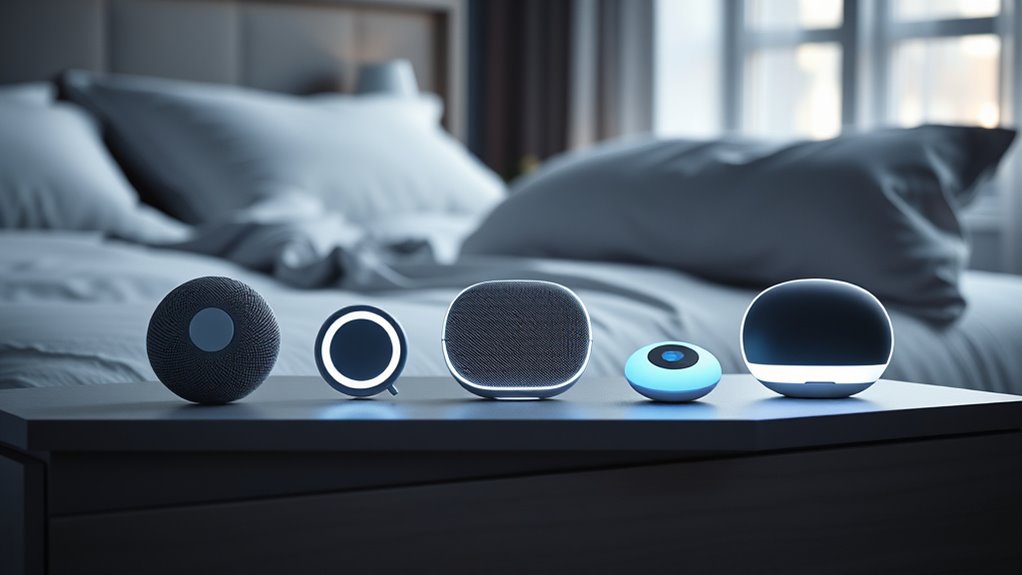

If you have been eyeing the Hatch Restore 2 but hesitated over its subscription model, app dependence, or price point, you are in good company. The Restore 2 helped popularize the all-in-one bedside sleep device, but it is far from the only way to get a sunrise alarm, white noise machine, and gentle wind-down lighting on your nightstand. In this roundup, I compare five devices that answer the Restore 2 in different ways, and two of them come from Hatch itself — which says something about how quickly this category keeps evolving.

Get backup power and energy gear delivered free with Prime
- Fast, free delivery on millions of items
- Prime Video, Amazon Music and more included
- Member-only deals all year
My top pick overall is the Hatch Restore 3, the direct successor with better audio and more on-device controls, making it the strongest choice if you want the Restore 2 formula refined rather than replaced. For buyers who want to escape ecosystems entirely, the Odokee Sunrise Alarm Clock delivers sunrise simulation, 25 sounds, and Bluetooth streaming with nothing but physical buttons — no app, no subscription, no Wi-Fi. The main tradeoff you will be weighing throughout this guide is convenience versus commitment: subscription-backed platforms offer richer content and smarter routines, while standalone devices stay simple forever but never grow. A second tension is audio power versus bedside subtlety, where the Dreamegg Vibe 1 plays in a different league than the rest.
Key Takeaways
- The Hatch Restore 3 is the closest match to the Restore 2 experience, with upgraded audio and more phone-free on-device controls — but the Hatch+ subscription paywall still applies.
- The Restore 2 itself remains a legitimate pick if you find it appealing and don’t need the Restore 3’s audio improvements; functionally, the core sunrise-and-sound experience is similar.
- The Odokee is the best fully standalone alternative: sunrise alarm, 25 sounds, and Bluetooth with zero app or subscription requirements.
- The Dreamegg Vibe 1 trades light features for serious noise-masking power thanks to its 10W driver — the strongest choice for drowning out snoring or traffic.
- The Hatch Sleep Clock adds contactless sleep tracking with personalized insights, something no other pick here offers, but it doubles down on the Hatch ecosystem and its subscription.
| Hatch Restore 3 Sleep Assistant with Circadian Lighting (Putty) |  | Best Overall | Color: Putty | Sleep sounds: 80+ science-backed options | Alarm: Sunrise alarm clock | VIEW ON AMAZON | See Our Full Breakdown |
| Hatch Restore 2 Sunrise Alarm Clock & Sound Machine (Putty) |  | Best Value Pick Within the Hatch Lineup | Color: Putty | Alarm: Sunrise alarm clock | Sleep sounds: Nature-inspired sound library | VIEW ON AMAZON | See Our Full Breakdown |
| Dreamegg Vibe 1 White Noise Machine |  | Best for Serious Noise Masking | Power: 10W driver | Sound options: 29 total (7 white noise, 7 fan, 8 nature, 5 lullaby, 2 meditation) | Volume range: 46–87 dB | VIEW ON AMAZON | See Our Full Breakdown |
| Hatch Sleep Clock Bedside Sleep Tracker, Smart Light, Sound Machine, Putty |  | Best for Data-Driven Sleepers | Tracking: Contactless, 97% claimed accuracy | Audio library: 2,500+ tracks (meditations, podcasts, audiobooks, music) | Lighting: Circadian-backed smart light with dynamic bedtime reminders | VIEW ON AMAZON | See Our Full Breakdown |
| Odokee Sunrise Alarm Clock with White Noise Machine and Bluetooth Speaker |  | Best Subscription-Free Alternative | Sunrise simulation: 5–60 minutes | Sound options: 25 (white/pink/brown/blue noise, nature sounds) | Speaker power: 5W stereo | VIEW ON AMAZON | See Our Full Breakdown |
| hatch restore 2 alternative | Connectivity | Alarm | Power |
|---|---|---|---|
| Hatch Restore 3 Sleep Assistan | Bluetooth setup, Wi-Fi for ongoing use | Sunrise alarm clock | Plugs into a power outlet |
| Hatch Restore 2 Sunrise Alarm | Bluetooth setup, Wi-Fi required | Sunrise alarm clock | Outlet only, no battery |
| Dreamegg Vibe 1 White Noise Ma | Bluetooth (speaker mode) | — | 10W driver |
| Hatch Sleep Clock Bedside Slee | Bluetooth setup, 2.4GHz Wi-Fi | Sunrise alarm clock | — |
| Odokee Sunrise Alarm Clock wit | Bluetooth | — | — |
More Details on Our Top Picks
Hatch Restore 3 Sleep Assistant with Circadian Lighting (Putty)
The easiest alternative to the Restore 2 is its own successor, and the Hatch Restore 3 earns the top spot by improving on the formula in the places buyers actually notice. The audio is noticeably better than the Restore 2’s, the library of sleep and light content has expanded, and — this is the change I’d highlight most — more controls live on the device itself, so you can start a wind-down routine or kill the morning alarm without picking up your phone. For a product whose whole philosophy is keeping screens out of the bedroom, that is a meaningful correction.
The core experience remains what drew people to this category: an 80-plus library of science-backed sleep sounds, a sunrise alarm that works with your circadian rhythm rather than against it, and a dimmable clock that keeps the room properly dark. Compared with the Odokee further down this list, the Restore 3 offers far deeper routine customization and richer content, but it asks more of you — Bluetooth setup, stable Wi-Fi, and a companion app. And the subscription question has not gone away: premium content beyond the free tier sits behind Hatch+ after a 30-day trial. If that model bothered you about the Restore 2, it will bother you here too, and the Odokee is your escape hatch. If it doesn’t, this is the most complete package in the lineup.
Pros:- Upgraded audio and expanded sleep and light content over the Restore 2
- More on-device controls support a genuinely phone-free bedroom
- Sunrise alarm and circadian lighting support natural sleep and wake cycles
- Dimmable clock design keeps the room dark overnight
Cons:- Full content library requires an ongoing Hatch+ subscription after the 30-day trial
- Subscription pricing applies only to new subscribers
- Requires Bluetooth for setup and stable Wi-Fi for ongoing use
Best for: Sleepers who want the most refined all-in-one routine builder and are comfortable with an app-and-subscription ecosystem
Not ideal for: Anyone determined to avoid recurring subscription costs or who dislikes app-dependent setup
- Color:Putty
- Sleep sounds:80+ science-backed options
- Alarm:Sunrise alarm clock
- Lighting:Circadian lighting with customizable routines
- Clock:Dimmable, screen-free night design
- Subscription:Hatch+ 30-day free trial, then $5.99/month or $59.99/year
- Connectivity:Bluetooth setup, Wi-Fi for ongoing use
- Power:Plugs into a power outlet
Our verdict“The most polished evolution of the Restore 2 concept, as long as you accept the Hatch ecosystem and its subscription.”
Hatch Restore 2 Sunrise Alarm Clock & Sound Machine (Putty)
Including the Hatch Restore 2 itself in a roundup of its own alternatives might seem odd, but it makes sense: the Restore 3’s arrival means this model is now the older, often more attainable entry into the same ecosystem, and for many buyers it remains the smarter buy. The fundamentals are identical in spirit — nature-inspired sleep sounds, a sunrise alarm for gentle waking, a dimmable clock for darkness on demand, and a single button press that starts your nighttime routine or silences the morning alarm.
Where it falls short of the Restore 3 is audio quality, content breadth, and on-device controls — meaning you will reach for your phone more often, which somewhat undercuts the screen-free pitch. Compared with the Odokee, the Restore 2 offers deeper routine customization through its companion app but demands Bluetooth setup, ongoing Wi-Fi, and the same Hatch+ subscription for premium content. One practical note: it only works while plugged into an outlet, which is normal for this category but worth knowing if your nightstand lacks a convenient socket. This pick makes the most sense for someone who wants the Hatch experience and is happy to skip the newest generation’s refinements to get it.
Pros:- Nature-inspired sleep sounds and gentle sunrise waking
- One-button control starts routines and silences alarms
- Dimmable clock keeps the bedroom dark
- Free companion app on iOS and Android for routine customization
Cons:- Audio quality and content trail the newer Restore 3
- Fewer on-device controls, so phone involvement is more frequent
- Requires Bluetooth setup, stable Wi-Fi, and a power outlet
Best for: Buyers sold on the Hatch ecosystem who want the core sunrise-and-sound experience without paying for the newest generation’s upgrades
Not ideal for: Anyone who wants strong on-device controls or the improved speaker of the Restore 3
- Color:Putty
- Alarm:Sunrise alarm clock
- Sleep sounds:Nature-inspired sound library
- Clock:Dimmable for dark sleeping
- Controls:Single-button routine start, companion app
- Connectivity:Bluetooth setup, Wi-Fi required
- Power:Outlet only, no battery
Our verdict“Still a capable sleep assistant — just know the Restore 3 exists with better audio and more phone-free controls.”
Dreamegg Vibe 1 White Noise Machine
The Dreamegg Vibe 1 takes a completely different approach to better sleep: instead of lighting and routines, it bets everything on raw audio performance. Its 10W driver produces rich, room-filling sound with genuine bass depth — a category above the 5W speaker in the Odokee and a different instrument entirely from either Hatch’s bedside-tuned audio. If your sleep problem is a snoring partner, thin apartment walls, or early-morning traffic, this is the pick built for that fight, with noise masking the brand says reduces interruptions by up to 90 percent.
The sound menu spans 29 options — seven white noise variants, seven fan sounds, eight nature tracks, five lullabies, and two meditation tones — plus timer settings of one, two, or eight hours and a volume range of 46 to 87 dB that covers everything from a whisper to genuinely loud. It also doubles as a Bluetooth speaker for music and podcasts, which gives it daytime utility the Hatch devices don’t really attempt. The tradeoff is obvious: there is no sunrise alarm, no circadian lighting, no routine building, and no app-based scheduling. Compared with the Restore 3, you are trading the entire wind-down experience for superior noise blocking. The lack of any stated battery or portability details also makes it a questionable travel companion despite its compact framing.
Pros:- Powerful 10W driver fills a room with deep, rich sound
- 29 sound options span white noise, fan, nature, lullaby, and meditation categories
- Doubles as a Bluetooth speaker for music and podcasts
- Wide 46–87 dB volume range with flexible 1, 2, or 8-hour timers
Cons:- No light features or sunrise alarm at all
- No app control or advanced customization
- Battery life and portability details are unspecified
Best for: Light sleepers whose biggest obstacle is environmental noise — snoring, neighbors, or street traffic
Not ideal for: Anyone who wants sunrise waking, circadian lighting, or structured bedtime routines
- Power:10W driver
- Sound options:29 total (7 white noise, 7 fan, 8 nature, 5 lullaby, 2 meditation)
- Volume range:46–87 dB
- Timer settings:1, 2, or 8 hours
- Connectivity:Bluetooth (speaker mode)
- Model:Vibe 1
Our verdict“A focused, powerful noise-masking specialist that beats every pick here on audio muscle but abandons the light-and-routine half of the equation.”
Hatch Sleep Clock Bedside Sleep Tracker, Smart Light, Sound Machine, Putty
The Hatch Sleep Clock is the most conceptually interesting device in this lineup because it asks a question none of the others do: what if your bedside device could tell you whether your routine is actually working? Using contactless sensors that detect micro-movements and breathing patterns with a claimed 97 percent accuracy, it tracks your sleep from the nightstand — nothing to wear, nothing to charge — and delivers personalized insights each morning. There is deliberately no sleep score and no judgment, just guidance on what to try tonight, which is a gentler framing than most wearables offer.
On the light-and-sound side, it covers the familiar Hatch ground: circadian-backed lighting, dynamic bedtime reminders, a sunrise alarm, and an ever-growing audio library of 2,500-plus wind-down options including meditations, podcasts, audiobooks, and sleep music. Compared with the Restore 3, the Sleep Clock trades some focus on routine refinement for its tracking layer — and inherits the same structural commitments: Bluetooth setup, stable 2.4GHz Wi-Fi, an outlet, and a Hatch+ subscription after the 30-day trial for the full content experience. If you already found the Restore 2’s ecosystem too enclosing, this device deepens that enclosure rather than easing it. But if you want feedback loops rather than just features, nothing else here competes.
Pros:- Contactless tracking with 97% claimed accuracy — nothing to wear or charge
- Personalized morning insights instead of judgmental sleep scores
- Large library of 2,500+ sleep-focused audio tracks
- Circadian lighting, bedtime reminders, and sunrise alarm in one device
Cons:- Heaviest ecosystem commitment of the lineup: app, Wi-Fi, and Hatch+ subscription
- Tracking adds complexity for those who just want light and sound
- Requires a stable 2.4GHz Wi-Fi connection and a power outlet
Best for: Analytical sleepers who want to see how their routines affect their rest without wearing a tracker to bed
Not ideal for: Anyone avoiding subscriptions, wearables-adjacent data tracking, or Wi-Fi-dependent devices
- Tracking:Contactless, 97% claimed accuracy
- Audio library:2,500+ tracks (meditations, podcasts, audiobooks, music)
- Lighting:Circadian-backed smart light with dynamic bedtime reminders
- Alarm:Sunrise alarm clock
- Control method:Companion app
- Connectivity:Bluetooth setup, 2.4GHz Wi-Fi
- Subscription:Hatch+ 30-day trial, then $5.99/month or $59.99/year
- Mounting:Tabletop, corded electric
Our verdict“The pick for sleepers who want evidence their routine works — provided they accept the deepest subscription and connectivity commitments here.”
Odokee Sunrise Alarm Clock with White Noise Machine and Bluetooth Speaker
For every reader whose hesitation about the Restore 2 boils down to one word — subscription — the Odokee Sunrise Alarm Clock is the answer. It hits the feature triangle the Hatch devices are known about — sunrise simulation, a white noise machine, and Bluetooth streaming — and asks nothing further of you: no app, no account, no Wi-Fi, no monthly fee. Every control is a physical button or dial, which in a dark bedroom at 2 a.m. is arguably more user-friendly than any companion app.
The sunrise simulation runs anywhere from 5 to 60 minutes, letting you tune how gradually your morning light builds, and there are three wake-up modes so you can use light plus sound, alarm only, or light only. The sound machine covers 25 options including white, pink, brown, and blue noise plus nature tracks — fewer than the Dreamegg’s 29 but broader in noise-color variety — and the fully dimmable display plus a 12-color night light round out the bedside experience. The honest weaknesses: the 5W stereo speaker is fine for a bedroom but will strain in a large room where the Dreamegg’s 10W driver does not, and there is no smart home integration or app-based scheduling if you ever want it. You are buying simplicity, and simplicity does not scale. That is the entire trade, and for a lot of buyers it is a good one.
Pros:- Fully standalone operation with intuitive physical controls and no app required
- Adjustable 5–60 minute sunrise simulation with three wake-up modes
- 25 sounds including four noise colors and nature tracks
- Fully dimmable display and 12-color night light
Cons:- 5W speaker underperforms in large rooms compared with the Dreamegg
- No smart home integration or app-based scheduling
- Fixed sound library with no path to expanded content
Best for: Buyers who want the Hatch-style experience with zero ongoing costs, accounts, or app dependence
Not ideal for: Smart-home tinkerers or anyone wanting app scheduling and expanding content libraries
- Sunrise simulation:5–60 minutes
- Sound options:25 (white/pink/brown/blue noise, nature sounds)
- Speaker power:5W stereo
- Connectivity:Bluetooth
- Display brightness:0–100% dimmable
- Night light:12 colors
- Alarm sounds:7 options across 3 wake-up modes
- Controls:Physical buttons and dials, no app
Our verdict“The cleanest escape from the subscription model — a genuinely capable sunrise-and-sound device that never asks for anything after checkout.”

How We Picked
Since the brief here is specifically alternatives to the Hatch Restore 2, I judged every product against what the Restore 2 actually does: circadian-friendly sunrise waking, a library of sleep sounds, a dimmable bedside clock, and routine-building through paired light and audio. A true alternative does not need to copy all of that, but it needs to cover enough of it — or cover one piece dramatically better — to justify a spot.
I weighed four factors. Feature coverage: how much of the light-plus-sound-plus-alarm triangle each device handles. Ecosystem dependence: whether the device works fully standalone or leans on an app, Wi-Fi, and ongoing subscription costs — a real sticking point for Restore 2 skeptics. Audio quality and range: driver power, sound variety, and how well each masks noise like snoring or street traffic. Usability: how easy the device is to operate half-asleep, in the dark, without reaching for a phone. Where possible, I compared products directly against each other rather than in isolation, because the differences between these five are more instructive than any single spec sheet.
| hatch restore 2 alternative | Connectivity |
|---|---|
| Hatch Restore 3 Sleep Assistan | Bluetooth setup, Wi-Fi for ongoing use |
| Hatch Restore 2 Sunrise Alarm | Bluetooth setup, Wi-Fi required |
| Dreamegg Vibe 1 White Noise Ma | Bluetooth (speaker mode) |
| Hatch Sleep Clock Bedside Slee | Bluetooth setup, 2.4GHz Wi-Fi |
| Odokee Sunrise Alarm Clock wit | Bluetooth |
Factors to Consider When Choosing Hatch Restore 2 Alternative
Before picking a winner, it helps to understand the three decisions that actually separate these five devices. The category looks uniform from the outside — everything here sits on a nightstand and helps you sleep — but the buyer experience diverges quickly once you account for ecosystems, audio, and data.Subscription or Standalone?
This is the single biggest fork in the road. The three Hatch devices — the Restore 3, Restore 2, and Sleep Clock — gate their richest content behind a Hatch+ subscription after a 30-day trial, which means your device keeps improving but your cost keeps accruing. The Odokee and Dreamegg take the opposite approach: what you buy is what you get, forever, with no account required. Neither philosophy is wrong. If you value expanding meditation libraries and curated routines, the subscription buys real value. If you just need a sunrise alarm and reliable white noise, paying monthly for content you will not use is money burned.
How Much Noise Are You Fighting?
Be honest about your bedroom. If your problem is falling asleep — a racing mind, an inconsistent routine — the light-and-routine devices (Restore 3, Sleep Clock) address that directly. If your problem is staying asleep despite a snoring partner or busy street, audio power matters more than circadian science, and the Dreamegg Vibe 1’s 10W driver and 87 dB ceiling outclass everything else here. The Odokee splits the difference with a respectable 5W speaker plus noise-color variety, while the Hatch devices tune their audio for bedside calm rather than volume.
Do You Want Data?
Only one device here answers yes: the Hatch Sleep Clock, with contactless tracking and personalized insights. That data layer is genuinely useful if you are experimenting with routines and want feedback, but it adds cost, complexity, and another reason your device needs Wi-Fi. Everyone else in this lineup assumes you already know what a good night feels like and just wants the tools to get there. Ask yourself whether you will actually change behavior based on a morning insight — if not, skip the tracker and save the commitment.
Controls and Bedroom Hygiene
A sleep device that forces you to grab your phone at bedtime undermines its own purpose. The Restore 3 improved here with more on-device controls; the Odokee goes furthest with an entirely app-free, button-and-dial interface. The Restore 2 sits in the middle with its single-button routine start, and the Sleep Clock leans most heavily on its app. Also check the practical basics: every Hatch device requires an outlet and stable Wi-Fi, while the Odokee and Dreamegg will work anywhere you can plug them in — a real advantage for guest rooms and cabins.
Frequently Asked Questions
Is the Hatch Restore 3 a big enough upgrade over the Restore 2 to matter?
It depends on what bothered you about the Restore 2. The Restore 3 brings improved audio, new sound and light content, and more on-device controls, which together address the two most common complaints about the older model: mediocre speaker quality and too much phone dependence. If neither of those ever bothered you, the Restore 2 covers the same core ground — sunrise alarm, sleep sounds, dimmable clock — and remains a sensible way into the ecosystem. But if you want the best version of the Hatch experience and plan to keep the device for years, the Restore 3’s refinements are the kind you notice daily rather than once a month.
Can I use these devices without paying for a subscription?
Yes, with caveats. The Odokee and Dreamegg Vibe 1 have no subscription at all — they are fully standalone out of the box. The Hatch devices include a 30-day Hatch+ trial, after which premium content costs $5.99 per month or $59.99 per year; the base functionality like alarms, core sounds, and lighting continues without it, but the richer meditations and curated content sit behind the paywall. If avoiding recurring costs is your main reason for leaving the Restore 2, the Odokee is purpose-built for that preference and never asks for an account or payment method after checkout.
Which of these is best for blocking out a snoring partner?
The Dreamegg Vibe 1 is the clear choice for noise masking. Its 10W driver produces fuller, bass-rich sound than anything else in this lineup, and its volume reaches 87 dB — enough to genuinely bury disruptive noise rather than merely distract from it. It also offers seven fan sounds alongside white noise variants, and fan tones are often the most effective mask for snoring because their broad frequency spread covers the snore’s range. The tradeoff is that it does nothing else: no sunrise alarm, no lighting, no routines. If you need both masking and gentle waking, pair it with a budget sunrise clock or accept the Odokee’s compromise of decent-but-not-dominant audio.
Does the contactless tracking on the Hatch Sleep Clock actually work?
Hatch claims 97 percent accuracy for its sensor-based tracking of micro-movements and breathing patterns, and the approach itself — radar-style sensing from the nightstand — is well established in the sleep-tech category. The practical caveats are shared by every contactless tracker: it needs to be positioned correctly relative to your bed, it may struggle with two people in one bed since it senses the nearest sleeper, and no consumer tracker of any kind matches clinical polysomnography. What it reliably delivers is trend data over weeks, which is more useful than any single night’s reading. If you want to know whether your new wind-down routine is measurably helping, that longitudinal feedback is where this device earns its place.
Do any of these work during a power outage or while traveling?
Honestly, none of them are great travel devices. Every product in this roundup is corded and outlet-dependent — the Hatch devices explicitly state they only work plugged in, and neither the Odokee nor the Dreamegg advertises a battery. That is typical for the category, since sunrise lamps and powerful speakers draw more current than a battery comfortably supplies. The Dreamegg is the most compact of the five but has no stated portability features or battery life figures. If you travel frequently, the honest advice is to treat these as bedside fixtures and keep a small battery-powered white noise machine in your bag as a separate purchase.
Conclusion
After comparing all five, my recommendations break down cleanly by buyer type. If you want the best overall experience and are fine within an ecosystem, the Hatch Restore 3 is the strongest pick — better audio and more phone-free controls than the Restore 2 it replaces, with the same polished sunrise-and-routine formula. If you are budget-conscious but loyal to Hatch, the Restore 2 itself still delivers the core experience and is the value play within that lineup.
For subscription-averse buyers, the Odokee Sunrise Alarm Clock is the standout — it covers sunrise simulation, multiple noise colors, Bluetooth streaming, and a night light with zero apps, accounts, or fees. If your enemy is noise specifically, choose the Dreamegg Vibe 1 and its 10W driver over any light feature you would rarely use. And if you are a data-driven optimizer who wants proof your routine is working, the Hatch Sleep Clock is the only option here with contactless tracking and personalized insights — just go in knowing it carries the deepest ecosystem commitment of the group. Whatever you choose, the real decision is the one this whole guide circles: how much convenience you are willing to trade for independence, and whether your bedroom problem is light, sound, or habits.
Halloween Picks
halloween
As an affiliate, we earn on qualifying purchases.