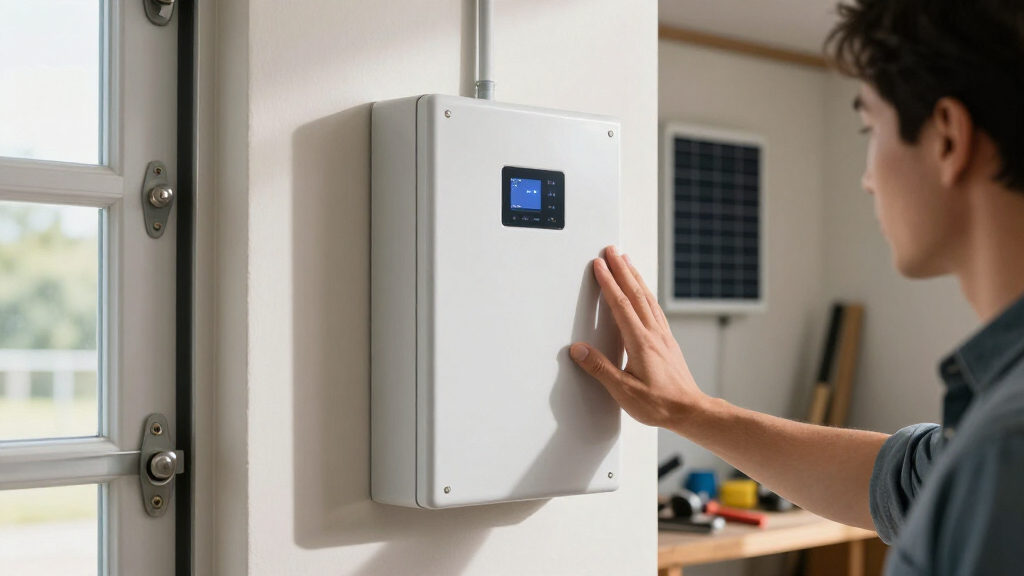

The best home solar battery system for most homeowners is the ECO-WORTHY 10KW Off-Grid Solar System Complete Kit, which balances 9.36kWh of usable storage with a genuine 120V/240V split-phase inverter and enough panel wattage to recharge daily. If whole-home backup with room to grow matters more, the Anker SOLIX E10 stands out for scaling from 6kWh up to 90kWh. For smaller budgets or partial-home backup, the Jackery HomePower 3000 offers a plug-and-play entry point without installation. The main tradeoff in this category is between complete kits (panels, inverter, and battery matched together) and battery-only systems that assume you already have solar. Read on for the full breakdown of all 14 systems.

Get backup power and energy gear delivered free with Prime
- Fast, free delivery on millions of items
- Prime Video, Amazon Music and more included
- Member-only deals all year
Key Takeaways
- Complete kits from ECO-WORTHY dominate the middle of this lineup because they bundle matched inverters and panels, but the quality gap between their entry-level and flagship kits is real — the 10KW split-phase kits handle whole-home loads while the 1.2kW kit suits only sheds and cabins.
- The Anker SOLIX E10 is the only system here that scales cleanly from 6kWh to 90kWh, making it the clear pick for buyers who want to start small and expand later without replacing hardware.
- Battery-only options like the ECO-WORTHY Powermega 314Ah and the generic 48V 314Ah packs cost less per kWh than full kits, but they assume you already own a compatible hybrid inverter — a hidden cost that erases the savings for anyone starting from scratch.
- UL certification (UL1973, UL9540) appeared only on the premium battery-only options in this roundup; most budget complete kits ship without it, which matters for permitting, insurance, and indoor installation.
- The two Jackery portable stations trade expandability and per-kWh value for speed — no electrician, no permitting — which makes them the wrong choice for daily off-grid living but the right one for renters and emergency-only backup.


More Details on Our Top Picks
AUECOOR 9.36KWH Complete Off-Grid Solar System with 12KW Split Phase Inverter and 2400W Solar Panels
AUECOOR’s kit stands out for true off-grid independence — it bundles a 12KW split-phase inverter, 2400W of panels, and a 9.36KWh wall-mounted LiFePO4 battery in one package, so there is no compatibility guesswork. Compared with the ECO-WORTHY 30kWh+ kit, capacity is roughly a third, but the 12KW inverter headroom means it can run heavy 240V appliances like well pumps that smaller kits can’t touch. The ability to parallel up to 15 batteries gives it a genuine growth path for buyers starting small. The tradeoff is installation complexity: twenty individual 120W panels means a lot of mounting and wiring labor versus the six large 590W panels in competing kits, and professional installation is realistic. The 10-year warranty and lifetime tech support soften that burden.
Pros:- Complete all-in-one kit with panels, inverter, battery, combiner box, and mounting hardware included
- Massive 12KW split-phase inverter headroom for 240V appliances and future expansion
- Parallel support for up to 15 batteries allows storage to grow with needs
- 10-year limited warranty with lifetime tech support
Cons:- Twenty small 120W panels create far more mounting and wiring work than fewer large panels
- Complex system that realistically requires professional installation
- 9.36KWh storage is modest for whole-home use at this price point
Best for: Rural homeowners or cabin builders who want a complete off-grid system they can expand over time without replacing the inverter
Not ideal for: Buyers wanting minimal installation effort — the 20-panel array and split-phase wiring demand real electrical work
- Storage Capacity:9.36KWh (51.2V 200Ah LiFePO4)
- Inverter Output:12000W, 120V/240V split-phase pure sine wave
- Solar Array:20 x 120W monocrystalline panels (2400W)
- MPPT Efficiency:Up to 99% tracking, 98% peak conversion
- Expansion:Up to 15 batteries in parallel
- Communication:RS485 and CAN
- Warranty:10-year limited, lifetime tech support
Our verdict“This pick makes the most sense for off-grid properties that need serious inverter power now and storage capacity later, provided the buyer is ready for a professional install.”
ECO-WORTHY 30kWh+ Solar Panel Kit with 48V 314Ah LiFePO4 Batteries and 10kW Hybrid Inverter
For buyers whose goal is keeping an entire house running through extended outages, this ECO-WORTHY kit is the heavyweight of the lineup. Its 30kWh+ of usable storage dwarfs the AUECOOR 9.36KWh system and roughly triples the ECO-WORTHY 10240Wh backup kit, and the 9000+ cycle rating at 80% depth of discharge means the batteries should outlast most competing packs by years. The safety layer here is unusually thorough for this category — active balancing, circuit breakers, and aerosol fire suppression inside the battery itself. Six 590W N-type panels also mean far less mounting labor than small-panel kits. The tradeoffs are logistical: palletized truck delivery requires an address that can accept freight, and the inverter ships in one of two cosmetic versions selected at random, which may bother detail-oriented buyers.
Pros:- 30kWh+ usable storage covers multi-day whole-home backup
- 9000+ cycle battery lifespan at 80% DoD outclasses most LiFePO4 packs
- Multi-layer safety including active balancing BMS and aerosol fire suppression
- App-based Bluetooth/WiFi monitoring with real-time battery status
Cons:- Requires palletized truck delivery and a freight-compatible address
- Inverter ships in one of two cosmetic versions selected by inventory
- Very high upfront cost and substantial physical footprint
Best for: Homeowners in outage-prone areas who want multi-day whole-home coverage without a generator
Not ideal for: Apartments, rentals, or homes without freight-accessible delivery and space for a large palletized system
- Total Capacity:30kWh+ usable (2 x 48V 314Ah LiFePO4)
- Inverter:10kW hybrid, 99.9% MPPT efficiency
- Solar Array:6 x 590W N-type monocrystalline panels
- Output:120V single-phase / 240V split-phase
- Cycle Life:9000+ cycles at 80% DoD
- Safety:Active balancing BMS, circuit breaker, aerosol fire suppression
- Monitoring:Bluetooth / WiFi app, RS485/CAN/RS232
- Delivery:Palletized truck freight
Our verdict“This is the kit for households that refuse to notice when the grid goes down, provided they can handle freight delivery and the price of admission.”
Dawnice 10kWh LiFePO4 Solar Battery, 51.2V 206Ah Energy Storage Pack with 100A BMS
Unlike most entries here, the Dawnice is a battery, not a full system — and that is exactly its value. Buyers who already own an inverter and panels (or plan to source them separately) get 10kWh of Grade A LiFePO4 storage for less than a complete kit like the AUECOOR 9.36KWh system, since they are not paying for components they don’t need. The IP54 outdoor rating is a genuine differentiator — most rack batteries in this roundup, like the ECO-WORTHY server-rack units, are indoor-only, so the Dawnice suits garages or covered exterior walls. The color touch screen and app monitoring are nice touches at this price. The main compromise is charge speed: a 50A recommended charging current means slower top-ups than its 100A discharge would suggest, so it fills deliberately even on abundant solar.
Pros:- 10kWh of Grade A LiFePO4 storage at a lower cost than full kit purchases
- IP54 outdoor waterproofing allows installation outside conditioned space
- Color touch screen plus mobile app monitoring
- Flexible wall or ground mounting with included pulleys
Cons:- 50A recommended charging current limits how quickly the battery refills
- No included inverter, panels, or controller — requires sourcing the rest of the system
- App reliability for remote monitoring depends on connectivity
Best for: DIY solar builders who already have an inverter and panels and need to add serious storage capacity
Not ideal for: Beginners expecting a plug-and-play solution — this ships with no inverter, no panels, and no charge controller
- Capacity:10kWh (51.2V 206Ah)
- Chemistry:Grade A LiFePO4, 16S1P
- Max Output Power:5120W (10547W max power rating)
- BMS:100A built-in with full protection suite
- Cycle Life:6000+ cycles, ~10-year lifespan
- Mounting:Wall or ground mount, 4 pulleys included
Our verdict“The right choice for system builders adding storage to existing solar infrastructure, especially where outdoor mounting is the only option.”
ECO-WORTHY 48V Home Backup Power Kit – 10240Wh LiFePO4 Battery with 5000W Hybrid Inverter
This kit earns its place through certification and scalability. UL1973 and UL1741 listings from Intertek plus CEC compliance put it ahead of most Amazon-sold systems on the paperwork front — a real factor for permit approvals, insurance, and installer willingness to integrate it. Compared with the Dawnice battery-only pick, it includes the 5000W pure sine inverter and 100A MPPT controller, giving beginners a matched, closed-loop communicating system out of the box. Its standout trait is expansion: up to 6 parallel inverters (30kW) and 32 parallel batteries (163.84kWh), meaning a modest starter investment can grow into the ECO-WORTHY 30kWh kit’s territory without discarding anything. The tradeoffs are familiar for this class — components ship separately and may arrive days apart, and the closed-loop setup is best handled by an electrician.
Pros:- UL1973/UL1741 certified and CEC compliant for permits and rebate eligibility
- Massive expansion ceiling: 30kW output and 163.84kWh storage
- Closed-loop CAN/RS485 communication keeps inverter and batteries synchronized
- Bluetooth/WiFi app monitoring included
Cons:- Components ship separately and may arrive at different times
- Installation complexity realistically requires a professional
- 10240Wh capacity alone won’t carry a whole home through long outages
Best for: Homeowners who need certified equipment for permits or rebates and want to start at 10kWh with room to scale
Not ideal for: Renters or anyone wanting backup power this weekend — professional installation and multi-box delivery take planning
- Total Capacity:10240Wh (2 x 51.2V 100Ah rack batteries)
- Inverter Output:5000W rated / 10000W peak pure sine wave
- MPPT Controller:100A, 120-500V DC PV input
- Expansion:Up to 6 inverters (30kW) and 32 batteries (163.84kWh)
- Certifications:UL1973, UL1741 (Intertek), CEC compliant
- Communication:CAN/RS485 closed-loop, Bluetooth, WiFi
- Output Voltage:120V (120/208/240V with parallel inverters)
Our verdict“The smart buy for buyers who value certification and a decade-long growth path over maximum capacity on day one.”
Jackery HomePower 3000 Portable Power Station with 2x SolarSaga 200W Solar Panels
Where every other entry demands an electrician, the Jackery HomePower 3000 works out of the box — plug it in, connect appliances, done. That simplicity is its whole argument: compared with the ECO-WORTHY 10240Wh kit, it stores a third as much energy but requires zero installation, permits, or wiring. The UL-certified UPS with ≤20ms switchover makes it genuinely useful for home backup of essentials like a fridge, router, and lights, and its compact CTB design is dramatically smaller and lighter than comparable 3kWh stations. LiFePO4 chemistry rated for 4,000 cycles means it won’t be a disposable purchase. The honest tradeoff is solar: 80% recharge takes nine hours with both included panels, so in a prolonged grid-down scenario it functions more as an efficient battery than a self-sustaining power plant.
Pros:- Zero-installation setup anyone can use in minutes
- UL-certified UPS with ≤20ms switchover for seamless outage response
- Fast 1.7-hour AC recharge via hybrid charging
- Compact CTB design, 43% lighter and 47% smaller than comparable 3kWh stations
Cons:- Solar recharge is slow: 80% in 9 hours with both included panels
- 3072Wh capacity covers essentials only, not whole-home loads
- Still a heavy, bulky item to move despite its compact design
Best for: First-time backup-power buyers and apartment or condo residents who need plug-and-play outage protection without installation
Not ideal for: Off-grid living or whole-home backup — 3072Wh and slow solar recharge can’t sustain a household
- Capacity:3072Wh LiFePO4 (4,000 cycles to 70%)
- AC Output:3600W (7200W surge)
- UPS Switchover:≤20ms, UL-certified
- Recharge Time:1.7 hours (AC+DC hybrid), 2.2 hours AC only
- Solar Recharge:80% in 9 hours with 2x 200W panels
- Ports:AC, 2x 100W USB-C PD, USB-A, DC, RV TT-30
- Technology:CTB (Cell-to-Body), ChargeShield 2.0
Our verdict“The best entry point into home battery backup for buyers who want protection today and no electrician visit — as long as expectations stay at essentials, not whole-home.”
ECO-WORTHY Powermega 48V 314Ah LiFePO4 Battery (16.1kWh), UL1973 Certified
This model stands out for its multi-layer safety engineering — Grade A cells, a 200A smart BMS with active balancing, an external circuit breaker, and aerosol fire-suppression modules inside the case. Compared with the generic 48V 314Ah LiFePO4 battery, the Powermega adds UL 1973 certification and a 10-year warranty, which matters for insurance, permitting, and long-term peace of mind. The 7-inch HD touchscreen with cell-level data is a step up from app-only monitoring. The main tradeoff is logistics: at this size, it arrives by pallet or freight, so buyers without a loading-friendly address should plan ahead. You’ll also need to confirm inverter compatibility over RS485/CAN before committing.
Pros:- UL 1973 certified with an unusually long 10-year warranty
- Expandable from 16kWh to 241kWh with 15 parallel units
- Fire-suppression modules and external breaker go beyond typical BMS protection
- 7-inch touchscreen shows cell-level diagnostic data without needing a phone
Cons:- Pallet/freight delivery may not suit all addresses
- Requires RS485/CAN inverter compatibility verification before purchase
Best for: Homeowners building a large, certified storage bank who want warranty-backed capacity scaling toward 241kWh
Not ideal for: Renters or buyers with limited delivery access — freight delivery and permanent installation make this impractical for temporary setups
Our verdict“This is the pick for buyers prioritizing certification, safety redundancy, and decade-long warranty coverage in a scalable whole-home battery bank.”
48V 314Ah LiFePO4 Lithium Battery (16.07kWh)
Matching the ECO-WORTHY Powermega on core specs — 16.07kWh, 200A BMS, 15-unit parallel scaling — this unbranded option competes on value and cycle life, with Grade A cells rated to 6,000 cycles at 80% state of health. Its six-layer BMS protection with dual breakers and confirmed compatibility with Victron, Schneider, and Growatt inverters makes integration straightforward. Where it trails the Powermega is documentation and certification: no listed UL 1973 rating or long warranty means buyers carry more risk, especially where permitting applies. Monitoring is solid across display, app, and PC software, though the interface is more utilitarian than the Powermega’s touchscreen. Handles and wheels ease installation despite the bulk.
Pros:- Up to 6,000 cycles at 80% SOH stretches usable lifespan well beyond cheaper chemistries
- Closed-loop communication with major inverter brands simplifies setup
- Three monitoring paths: onboard display, phone app, and PC software
- Built-in handles and heavy-duty wheels help with positioning
Cons:- Premium 16kWh capacity carries a premium price point
- No listed UL 1973 certification or 10-year warranty like the ECO-WORTHY Powermega
Best for: Off-grid builders already running Victron, Schneider, or Growatt inverters who want maximum kWh per dollar
Not ideal for: Homeowners needing certified equipment for permits or insurance claims — the absence of listed UL certification is a real hurdle
Our verdict“A strong choice for experienced off-gridders who value capacity and cycle life over certification paperwork.”
ECO-WORTHY 10KW Off-Grid Solar System Complete Kit – 12x 195W Panels, 10KW Inverter, 2x 48V 100AH Batteries
Unlike the standalone batteries above, this kit bundles panels, inverter, and storage in one purchase, which removes the compatibility guesswork that trips up most first-time off-grid buyers. The full UL stack — 1741, 1973, and 9540A plus CEC listing — is rare at this level and gives it an edge over the similar AUECOOR 9.36KWH system on certification depth. The bifacial N-Type panels at 25% efficiency with a 30-year lifespan help offset the modest 9.36kWh daily output. The tradeoff is storage: two 100Ah batteries give roughly 10kWh, half of what a single 314Ah unit like the Powermega provides, and the whole system demands professional installation rather than weekend DIY.
Pros:- Everything included: 12 bifacial panels, 10kW split-phase inverter, and two certified rack batteries
- UL 1741, UL 1973, UL 9540A, and CEC certifications cover permitting requirements
- Panels carry a 30-year lifespan with 25% efficiency
- Scalable to 60kW with up to six parallel inverter units
Cons:- Professional installation required — not a novice-friendly project
- Advertised 9.36kWh daily output depends on 4 hours of full sunshine, less in winter or cloudy regions
Best for: Cabin and homestead owners wanting one certified purchase that covers generation, conversion, and basic storage
Not ideal for: DIY novices — professional installation is effectively required, and the output math assumes four full sun hours daily
Our verdict“The most complete certified entry point for someone moving off-grid who would rather buy one system than assemble ten components.”
ECO-WORTHY 4.68KWh Solar Power Complete Kit 1200W 48V with Lithium Battery and Inverter
This is the smallest complete system in the lineup, and that’s its entire pitch: shed, cabin, and workshop power without a five-figure commitment. Its 2560Wh battery is a fraction of the 16kWh offered by the ECO-WORTHY 10kW kit, so it runs lights, tools, and a fridge — not air conditioning. The 3500W inverter with built-in 80A MPPT and 20ms UPS switching is generous for the system size, and the 58-pound battery at a third of lead-acid weight makes wall or shelf mounting realistic. Compared with a portable station like the Jackery HomePower 3000, this kit’s advantage is permanence and expandability up to 21kW; its drawback is multi-package shipping and permanent installation rather than plug-and-play convenience.
Pros:- Genuinely complete kit: panels, inverter with MPPT, battery, and accessories
- Lightweight 58-pound LiFePO4 battery with 4000+ cycles
- 20ms UPS switching makes it usable as an automatic backup source
- Parallel expansion to 21kW leaves room to grow
Cons:- Ships in multiple packages, risking incomplete delivery
- Requires 4 hours of full sunlight daily to hit the advertised 4.68kWh output
- 2560Wh storage limits runtime on demanding appliances
Best for: Owners of sheds, tiny cabins, or workshops who need reliable modest power and may expand later
Not ideal for: Households expecting whole-home backup — 2560Wh cannot sustain air conditioners or high-draw appliances for long
Our verdict“The right entry point for small off-grid spaces where a full 10kW system would be overkill.”
ECO-WORTHY 10000W Complete Off-Grid Solar Kit – 10kW Inverter, 48V 314Ah Battery, 2950W Panels
This kit pairs the large-format 314Ah battery from the premium tier with a 10kW split-phase inverter and 2950W of monocrystalline panels, making it the most complete whole-home option in this batch. Compared with the ECO-WORTHY 10KW kit with two 100Ah batteries, this version doubles usable storage to 16.1kWh while using fewer, higher-wattage panels — five 590W modules instead of twelve 195W ones — which simplifies roof layout. Dual MPPT controllers pushing up to 200A of charging and compatibility with AGM, gel, flooded, and lithium banks add flexibility the smaller kits lack. The tradeoffs are real: freight delivery, professional installation, and system complexity put this firmly out of beginner territory. Against the Anker SOLIX E10, it trades brand polish for raw expandability to 241kWh.
Pros:- 10kW continuous output with 20kW peak handles whole-home loads
- 16.1kWh of included storage, expandable to 241kWh
- Dual MPPT controllers support up to 200A charging
- Works with multiple battery chemistries including AGM, gel, and flooded
Cons:- Professional installation required; not recommended for novices
- Truck/pallet delivery needed due to size and weight
- More complex than plug-and-play alternatives like the Jackery systems
Best for: Homeowners going fully off-grid who need 10kW continuous power and serious storage from day one
Not ideal for: DIY beginners or anyone wanting a quick backup solution — this demands professional installation and significant planning
Our verdict“The strongest choice here for a genuine whole-home off-grid conversion with room to scale storage dramatically over time.”
ECO-WORTHY 48V 100Ah Server Rack Battery 6-Pack LiFePO4 Solar Battery Kit (30.72kWh)
This 6-pack of Cubix100 server rack batteries delivers 30.72kWh of storage, which puts it in the same capacity class as the ECO-WORTHY 30kWh+ kit but with a critical advantage: UL9540, UL1973, and CEC listing, a trio of certifications that matters enormously for insurance, permitting, and code compliance. The closed-loop CAN/RS485 communication with major inverters means the battery and charger actually talk to each other, extending cycle life compared with the dumb-charging setups common in budget racks. Expansion is the real story here — up to 32 units and 163.8kWh, dwarfing the ceiling of the Dawnice 10kWh pack. The tradeoffs are real: the Amazon listing is non-returnable, and this is battery-only, so buyers must already own or source an inverter, rack, and solar array separately.
Pros:- Full UL9540, UL1973, and CEC certification for permit-friendly installation
- Massive 30.72kWh baseline capacity expandable to 163.8kWh across 32 units
- Closed-loop CAN/RS485 communication with leading inverter brands protects battery health
- Bluetooth and WiFi app monitoring plus a 10-year limited warranty
Cons:- Listed as non-returnable on Amazon, with only a 30-day replacement window for verified defects
- Batteries-only kit — requires separate inverter, rack, and solar purchases plus technical setup
- RSD button reported to ship separately, complicating out-of-box completeness
Best for: Off-grid homeowners building a large, permitted, expandable whole-home battery bank who already have or plan to buy an inverter separately
Not ideal for: Buyers wanting a one-box solution — this ships without an inverter or panels and requires rack installation and closed-loop inverter configuration
- Capacity per Unit:100Ah
- Nominal Voltage:51.2V (48V system)
- Total Capacity:30.72kWh (6-pack)
- Chemistry:Grade A LiFePO4
- Certifications:UL9540, UL1973, CEC Listed
- Communication:CAN/RS485, Bluetooth, WiFi
- Max Parallel Units:32 (up to 163.8kWh)
- Warranty:10-year limited
Our verdict“This is the pick for serious off-grid builders who need certified, deeply expandable storage and are comfortable supplying the rest of the system themselves.”
ECO-WORTHY 5KW Off Grid Solar System Complete Kit – 2340W Panels, 48V 5000W Inverter, 48V 100Ah LiFePO4 Battery
Unlike the battery-only Cubix 6-pack above, this kit includes everything needed to generate, convert, and store power — 12 monocrystalline panels, a 5000W inverter, and a 100Ah LiFePO4 battery — which makes it the most accessible starting point in the roundup for a first off-grid project. The panels deserve notice: 25% efficient N-type cells squeeze more harvest from limited roof space than typical kits in this class. The honest tradeoff is a matched mismatch: the 2340W array underfeeds the 5KW inverter, and a single 5.12kWh battery drains quickly when the sun disappears — the ECO-WORTHY 10KW kit doubles the battery count for households with heavier loads. Compared with the AUECOOR 9.36kWh split-phase system, this is simpler and cheaper but not built for whole-house 240V appliances.
Pros:- True all-in-one kit with panels, inverter, and battery in one purchase
- High-efficiency 25% monocrystalline N-type panels maximize harvest from small arrays
- Deep-cycle LiFePO4 battery chemistry for long service life
- Flexible mounting options for roofs, ground mounts, or sheds
Cons:- 2340W of panel falls well short of the inverter’s 5KW ceiling, limiting peak solar harvest
- Whole-house wiring still demands real electrical knowledge despite the DIY framing
- Bulky multi-pallet shipment complicates delivery and handling
Best for: Cabin owners, shed converters, and DIY beginners who want a single purchase covering panels, inverter, and battery for modest off-grid loads
Not ideal for: Households running 240V well pumps, dryers, or AC — the single 100Ah battery and 2340W array won’t keep up with whole-house demand
- Solar Array:2340W total (12 x 195W mono N-type)
- Inverter:48V 5000W off-grid
- Battery:51.2V 100Ah Cubix LiFePO4
- Panel Efficiency:25%
- Output Voltage:120V AC
- Connector:MC4
- Panel Weight:21.9 lbs each
Our verdict“A sensible first off-grid purchase for light-to-moderate loads, as long as buyers accept the panel-to-inverter gap and modest battery capacity.”
Anker SOLIX E10 Whole-Home Battery Backup System (6kWh-90kWh, 7.6kW Output)
The E10 solves the problem the server-rack kits create: installation. Instead of racking batteries and configuring closed-loop comms like the ECO-WORTHY 6-pack, the E10 uses a stack-and-plug design that connects to an existing transfer switch in hours. Its 7.6kW continuous output comfortably runs a household’s essentials from day one, and scaling from 6kWh to 90kWh happens by stacking units rather than re-engineering the system. The NEMA 4 weatherproof rating opens up outdoor placement options that wall-mounted indoor units like the AUECOOR battery can’t touch, across a -4°F to 131°F range. Tradeoffs: a 5-year warranty is shorter than the 10 years offered on several LiFePO4 rivals here, and the single unit carries only two outlets, so it leans entirely on that transfer-switch hookup for real utility. Whole-home pricing is also steep at scale.
Pros:- Hours-long stack-and-plug installation via existing transfer switch or inlet box
- Scalable from 6kWh to 90kWh with up to 27kW solar input
- NEMA 4 weatherproof housing rated for outdoor use from -4°F to 131°F
- EV-class LFP cells with a strong 7.6kW continuous output per unit
Cons:- 5-year warranty trails the 10-year coverage on competing LiFePO4 systems
- Only 2 onboard outlets — nearly useless without a transfer-switch integration
- 60.6 lb units typically require two-person handling despite the compact size
Best for: Homeowners who want professional-grade whole-home backup without the multi-day installation and permitting complexity of rack systems
Not ideal for: Budget-limited buyers — stacking toward the 90kWh ceiling gets expensive fast, and DIY tinkerers get less configurability than open rack batteries
- Continuous Output:7.6kW (7680W)
- Peak Output:22.8kW (with 3 units)
- Battery Capacity:6kWh expandable to 90kWh
- Solar Input:9kW per unit, up to 27kW
- Battery Type:EV-class LFP
- Operating Temperature:-4°F to 131°F
- Weight:60.6 lbs
- Warranty:5 years
Our verdict“The right choice for buyers who prioritize fast, clean, scalable whole-home backup over maximum configurability or warranty length.”
Jackery HomePower 3600 Plus Portable Power Station with 500X Solar Panels
The 3600 Plus takes a different philosophy from everything else here: instead of a fixed installation like the Anker SOLIX E10, it’s a luggage-style power station with wheels and a telescopic handle that can roll from garage to kitchen to campsite. Its 3584Wh capacity expandable to 43kWh rivals dedicated systems, and the ceramic-membrane LFP cells rated for 6,000 cycles outlast the chemistry in most fixed banks. The 2-hour hybrid AC+DC recharge is the fastest full-recharge time in this roundup, and four charging paths — including a gas generator — give real outage flexibility. Compared with the Jackery HomePower 3000, this is the clear upgrade for household duty. The catch: 240V output requires running units in parallel, so single-unit buyers are limited to 120V, and it lacks the seamless transfer-switch integration that makes the Anker a true whole-home appliance.
Pros:- 3584Wh expandable to 43kWh — enough to power a small household for two weeks
- Fastest recharge in the lineup at 2 hours via hybrid AC+DC, with four total charging options
- 6,000-cycle ceramic-membrane LFP cells rated for a 10-year lifespan
- Genuinely portable design with wheels and handle, smaller and lighter than comparable units
Cons:- 240V output only available when running multiple units in parallel
- Full expandability to 43kWh carries a high cumulative cost
- Solar recharge takes 4 hours, roughly double the AC recharge time
Best for: Households and RV owners who want serious backup power they can move, store, or take on the road rather than permanently install
Not ideal for: Buyers wanting automatic whole-home coverage with 240V appliances — that requires parallel units and still lacks hardwired transfer-switch integration
- Capacity:3584Wh (expandable to 43kWh)
- AC Output:3600W (7200W in parallel)
- Voltage:120V & 240V (parallel)
- Battery Chemistry:LFP with ceramic membrane cells
- Battery Lifespan:6,000 cycles / 10 years
- Recharge Time:2 hours (hybrid AC+DC), 4 hours (solar)
- Charging Options:AC, solar, DC, gas generator
- Design:Luggage-style with wheels and telescopic handle
Our verdict“The smart buy for anyone who values mobility and recharge speed over hardwired, automatic home integration.”
How We Picked
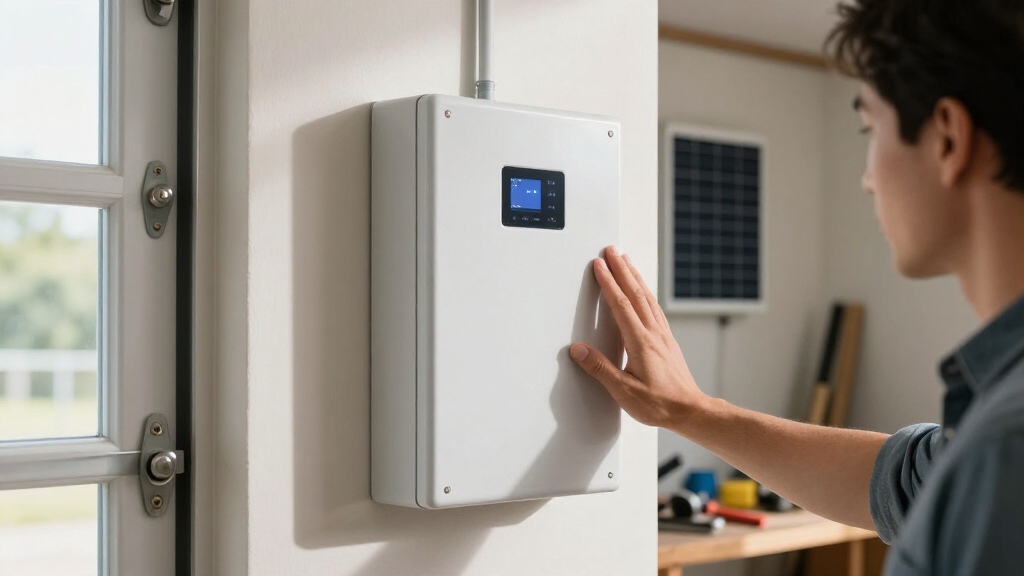
I evaluated each system through the lens a homeowner actually faces: how much of the house it can run, for how long, and at what total cost of getting there. That meant judging usable capacity (not just the headline kWh), inverter output and whether it supports 120V/240V split phase for well pumps, dryers, and HVAC, solar recharge capacity relative to battery size, and chemistry safety. LiFePO4 systems earned preference over older lithium-ion chemistries for cycle life and thermal stability, and UL certification was treated as a meaningful differentiator rather than a footnote, since it affects permitting and homeowner’s insurance in many jurisdictions.
Ranking also depended on who each system is actually for. A 1.2kW kit isn’t a failed whole-home system — it’s a legitimate cabin or workshop solution — so I grouped products by role before ordering them. Systems that integrate cleanly (matched inverter, battery, and panels from one vendor) ranked above pieced-together setups at the same capacity, because mismatched components are the most common failure point I see in this category. Finally, expandability mattered: systems that let you add battery capacity without replacing the inverter scored higher than fixed-architecture alternatives.
Factors to Consider When Choosing Best Home Solar Battery Systems
Before committing to any single system, it helps to understand the structural decisions that shape this category. The 14 products above differ less in chemistry — nearly all use LiFePO4 — and more in architecture, scale, and how much of the installation burden lands on you.Size for Your Real Loads, Not Your Peak Ambition
The most common mistake in this category is buying capacity based on a marketing headline rather than a load audit. A 10kWh battery sounds generous until you realize a single electric water heater can pull 4–5kWh per day and a central air conditioner can drain it in an afternoon. Before choosing, list the circuits you genuinely need during an outage — refrigerator, well pump, internet, some lighting — and multiply their daily consumption. Most households discover they need either a partial-home solution in the 5–10kWh range or a whole-home system at 20kWh and above, with very little in between. Buyers who skip this step end up either overspending on idle capacity or being disappointed the first time the grid drops. The systems in this roundup span that entire spectrum, which is exactly why matching size to load matters more than any individual product feature.
Complete Kit vs. Battery-Only: Know What You’re Missing
This roundup deliberately mixes complete kits (panels, inverter, battery) with battery-only packs because they serve different starting points. A battery-only unit like the 314Ah server rack batteries assumes you already have a compatible hybrid inverter and, ideally, solar panels — if you don’t, factor in an extra inverter purchase, wiring, and possibly panels before comparing prices. Complete kits remove that matching risk but lock you into one vendor’s ecosystem, and their bundled inverters are usually adequate rather than excellent. The tradeoff is integration versus flexibility: kits install faster and carry a single warranty, while component systems let you upgrade the inverter later without touching the batteries. Neither approach is universally better, but buying the wrong one for your starting point is the most expensive error in this category.
Split-Phase Power Is Non-Negotiable for Whole-Home Use
Many cheaper systems advertise impressive wattage but only deliver 120V output, which quietly excludes half of a typical home’s appliances. Well pumps, electric dryers, ranges, and most central HVAC units require 240V split-phase power, and no adapter solves that. This is why the 120V/240V split-phase inverters in the larger ECO-WORTHY kits rank above higher-wattage single-phase alternatives for whole-home buyers. If you only need backup for outlets, lighting, and refrigeration, single-phase is fine and saves money. But if any 240V appliance is on your must-run list, verify split-phase support before anything else — it’s a harder constraint to fix later than battery capacity, since adding batteries is easy while adding a second inverter means redesigning the system.
Certifications Affect More Than Safety
UL1973 and UL9540 certifications matter for reasons beyond fire safety: many jurisdictions won’t permit an uncertified battery for indoor or attached-garage installation, and some insurers question claims involving non-listed equipment. In this roundup, certification clustered on the premium battery-only options, while most budget complete kits ship without it — a hidden limitation if your installation plans involve interior walls or a utility room. Outdoor-rated enclosures or detached structures relax this requirement in many areas, but that limits placement options. If permitting is part of your plan, confirm certification status with your local authority before purchase rather than after delivery, when returns become difficult. Rural off-grid buyers typically face fewer restrictions, which partly explains why uncertified kits remain popular for cabins and homesteads.
Scalability: Buy for the System You’ll Have in Three Years
Battery capacity needs rarely stay static — people add EVs, heat pumps, or expand panels, and their storage appetite grows with them. Systems differ sharply here: modular rack batteries let you add capacity in 5kWh increments, while fixed-format portable stations and single-cabinet kits force a replace-or-augment decision later. The scalable options in this lineup cost more upfront per kWh but avoid stranded investment. A useful heuristic is to buy 60–70% of your projected long-term capacity now and confirm the platform supports expansion, rather than maxing out day one. Also check whether the inverter’s solar input has headroom — adding batteries without adding panels just extends how long you can run down, not how fast you recover.
Installation Reality Check
The gap between a pallet-delivered kit and a functioning system is wider than most buyers expect. Hardwired systems with split-phase inverters typically need a licensed electrician, permit drawings, and in some cases utility interconnection paperwork — budget for that labor and timeline, which can rival the cost of the hardware on smaller systems. Portable stations sidestep all of it but cap out on capacity and power. The middle path — wall-mounted batteries with plug-in inverters — varies by jurisdiction, so call your building department early. One pattern from this roundup worth repeating: the vendors offering complete kits generally provide better documentation and support for the DIY-adjacent buyer, while battery-only products assume competence. Match the product’s installation profile to your actual skills and local requirements, not just your enthusiasm.
Frequently Asked Questions
Can one of these systems really take my whole house off-grid?
Honestly running an entire average American home off-grid requires more than any single kit in this roundup provides — typically 20–30kWh of storage plus 8–12kW of solar just to cover normal consumption through cloudy stretches. The ECO-WORTHY 30kWh+ kit and a maxed-out Anker SOLIX E10 (90kWh) come closest, but success depends heavily on your load profile and local sun hours. Homes with electric heating, electric water heating, and an EV face a much harder equation than homes running on gas appliances. A more realistic approach for most buyers is partial off-grid: cutting the highest-consumption circuits over to solar while keeping grid connection as backup. Full off-grid works best for cabins, accessory dwellings, and homes that have already invested in efficiency upgrades.
Is a portable power station like the Jackery a legitimate alternative to a wired system?
It depends entirely on what you’re protecting against. For occasional outages affecting refrigeration, medical devices, internet, and lights, the Jackery HomePower 3000 and 3600 Plus handle the job with zero installation, no permits, and the ability to move them between locations — which is why they earn a place in this lineup at all. Where they fall short is sustained living: recharge rates from the included panels are measured in sunny days rather than hours, and 3–3.6kWh drains quickly if you add cooking or heating loads. Wired systems cost more and demand installation, but they recharge continuously, transfer automatically, and scale to loads portables can’t touch. Renters, condo owners, and emergency-only buyers should go portable; homeowners planning daily use should not.
Should I buy a matched complete kit or piece together batteries and an inverter separately?
Piece-together builds almost always win on cost per kWh, especially with the 314Ah server rack batteries in this roundup, but they demand you get compatibility right: voltage matching, BMS communication protocol, charge controller limits, and cable gauge all fall on you. A mismatched inverter can under-charge batteries, cut their lifespan, or refuse to communicate with the BMS entirely. Complete kits trade a premium for guaranteed compatibility, single-vendor warranty support, and documentation written for the exact combination you own. My guidance: if you’re comfortable reading spec sheets and have an electrician who works with solar regularly, piece it together and save. If this is your first energy system, buy the matched kit and let the vendor own the integration risk.
How much battery capacity do I actually need for backup during an outage?
Start with an honest audit rather than a rule of thumb. The essentials-only load for most homes — refrigerator, phone and internet gear, LED lighting, and a few outlets — runs roughly 2–4kWh per day, which even the mid-size systems in this roundup cover comfortably for two to three days. Adding a well pump pushes the requirement up sharply because of its 240V demand and surge draw, and adding any form of electric heat or cooling changes the math entirely, potentially doubling or tripling daily consumption. The other variable is recharge: with 2–3kW of panels, a 10kWh battery refills most of the way on a sunny day, turning a finite backup into an indefinite one for modest loads. Size the battery for your worst reasonable day, then confirm the panels can recover it within one good sun day.
Do I need UL-certified batteries, and what happens if I skip them?
Skip certification only if you’re certain of two things: your installation location and your local permitting rules. Uncertified batteries are widely used in off-grid cabins and detached structures where codes are loosely enforced, and they work fine there. Problems arise indoors — many building departments refuse permits for non-listed batteries inside living spaces or attached garages, and insurers can contest claims involving non-listed equipment even when the battery wasn’t the cause. In this roundup, UL1973/UL9540 listings appear mainly on the premium battery-only options, which is part of why they cost more per kWh than the budget complete kits. If you’re grid-tied, working with an installer, or installing in an attached structure, pay for the certification. If it’s a barn, cabin, or outdoor-rated enclosure, the uncertified kits offer better raw value.
Conclusion
After comparing all 14 systems, the right choice comes down to your starting point and scale of ambition. For best overall, the ECO-WORTHY 10KW Off-Grid Solar System Complete Kit delivers the best balance of capacity, split-phase power, and matched components for a typical home. The Anker SOLIX E10 takes best premium for buyers who want whole-home backup with a growth path to 90kWh and cleaner integration than any kit here. On value, the ECO-WORTHY Powermega 314Ah battery offers the lowest cost per certified kWh — provided you already have or plan to buy a compatible inverter. For beginners and renters, the Jackery HomePower 3000 removes every barrier to entry: no electrician, no permits, just plug in and have backup the same afternoon. Specific needs round out the map: the ECO-WORTHY 4.68kWh kit for cabins and workshops, the 30kWh server rack 6-pack for serious off-grid homesteads, and the Dawnice 10kWh for homeowners adding storage to an existing hybrid inverter. Whichever direction you choose, match the system to your measured loads and local permitting reality before you match it to your budget — in that order.
Fall Picks
fall essentials
As an affiliate, we earn on qualifying purchases.