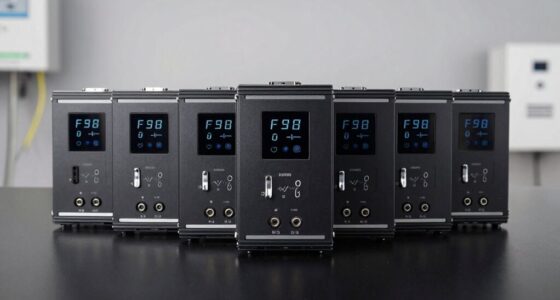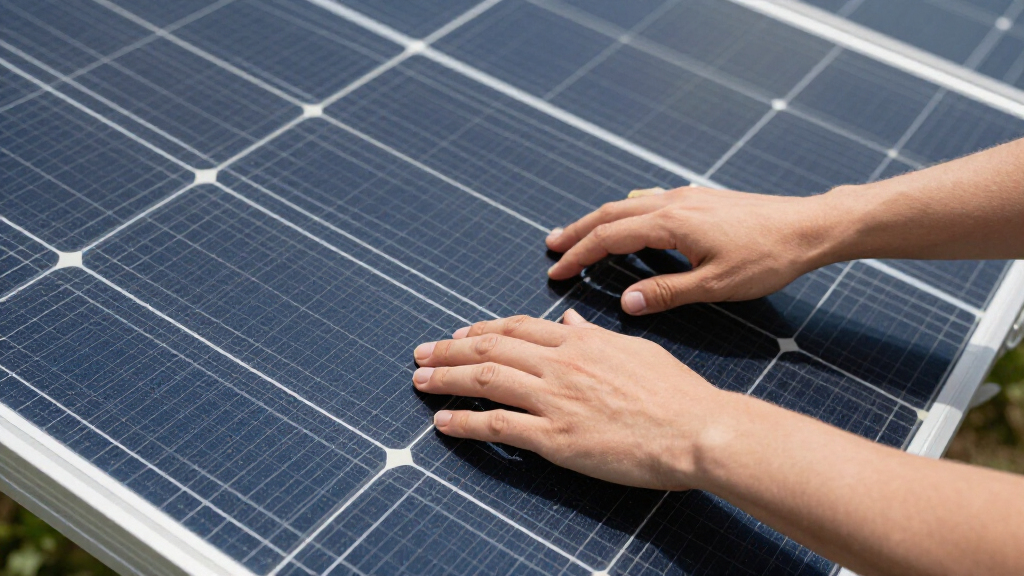

For maximizing solar output, I’d put the Solar Panel Dual Axis Tracking System with Tracker Controller and App Control first for its all-in-one approach, while the Dual Axis Solar Tracker Controller Kit with Sunlight and Wind Sensors stands out for sensor-based operation and the 12V Digital Solar Tracker Control Board MK3.1 for hands-on builders. The right choice depends on whether you need a complete tracking system or only a controller to pair with your own frame and motors. Dual-axis movement can follow the sun across two directions, but it also adds mechanical complexity, setup work, and more parts to maintain than a single-axis design. Controller voltage, actuator compatibility, and wind response can matter as much as the tracking method. Read on for the full comparison and guidance on matching a tracker to your installation.

Get backup power and energy gear delivered free with Prime
- Fast, free delivery on millions of items
- Prime Video, Amazon Music and more included
- Member-only deals all year
Key Takeaways
- The list includes both complete systems and controller-focused kits. Check what hardware is included before comparing them; a controller alone may need a frame, actuators, wiring, or sensors.
- Dual-axis designs dominate this roundup. They offer two-direction tracking, but their extra moving parts call for more careful installation and upkeep than the single-axis option.
- The sensor-equipped kit has a distinct role. Sunlight and wind sensors can support responsive operation, but buyers should verify sensor setup and compatibility with their build.
- The MK3.1 control board is geared toward hands-on projects. Its digital-board format may suit builders who want control over integration, but it is less suited to shoppers seeking a ready-to-mount system.
- Voltage and motor matching separate plausible choices from compatible ones. The Aitoserlea controller specifies 12V and 200W, while buyers should confirm the other options’ electrical and actuator requirements before purchase.


More Details on Our Top Picks
Solar Panel Dual Axis Tracking System with Tracker Controller and App Control
For buyers who want a complete, portable tracker rather than a controller to wire into a custom build, this system is the strongest all-around fit in this group. Its dual-axis movement and 10-direction light sensor are designed to keep a compatible panel aligned as the sun moves, while app control reduces the need for manual repositioning. The stated gain of up to 30% is a maximum claim, not a guaranteed output increase; site conditions and panel setup will affect results. Compared with the Aitoserlea 12V 200W Controller, this unit is aimed at mounting larger 300–500 W panels, not building a lower-capacity 12 V motor system. Its main constraint is fit: panels must be rigid, no wider than 1.1 m, and at most 25 kg. Buyers with foldable panels or larger modules should skip it.
Pros:- Dual-axis tracking with a 10-direction light sensor automatically follows changing sun position.
- App control reduces routine manual repositioning.
- Foldable, disassemblable design supports transport and installation flexibility.
- Designed for rigid panels in the 300–500 W range.
Cons:- Does not support foldable solar panels.
- Panel width and weight limits rule out some larger modules.
- The claimed efficiency increase of up to 30% is not a guaranteed result.
Best for: Owners of rigid 300–500 W panels who want app-controlled, automatic dual-axis positioning and a tracker that can be moved between locations.
Not ideal for: Owners of foldable panels or rigid modules wider than 1.1 m or heavier than 25 kg, since they fall outside the stated compatibility limits.
Our verdict“Choose this system if your rigid panel fits its limits and you want an app-controlled portable tracker rather than a standalone controller.”
Dual-Axis Solar Panel Tracking System with App Control
This model suits buyers who value broad tracking movement and flexible placement in a ready-to-move unit. Its 345° rotation, dual-axis motion, and 10-direction sensor give it a clear tracking focus, while app control lets the system manage panel positioning automatically. Like the Solar Panel Dual Axis Tracking System with Tracker Controller and App Control, it targets rigid panels up to 1.1 m wide and 25 kg, so the two are close alternatives rather than solutions for different panel sizes. The standout distinction here is the specified rotation range; that may help when the tracker needs to follow changing sun angles across a broad arc. The listed item weight is 55.1 lb, however, which makes “movable” less synonymous with lightweight. Its up-to-30% gain is a claim, not a promise of real-world production.
Pros:- Specified 345° rotation supports a broad tracking arc.
- Dual-axis movement and a 10-direction sensor automate sun following.
- Foldable construction allows flexible placement and transport.
- Supports rigid panels in the 300–500 W range.
Cons:- The listed 55.1 lb item weight may make frequent transport cumbersome.
- Panel compatibility is limited to rigid units up to 1.1 m wide and 25 kg.
- The stated efficiency improvement of up to 30% is not guaranteed.
Best for: Owners of compatible rigid 300–500 W panels who want automatic dual-axis tracking with a stated 345° rotation range.
Not ideal for: Buyers who need a lightweight portable rig, use foldable panels, or have a panel exceeding the listed width or weight limits.
Our verdict“Pick this over the closely related app-controlled tracker if its stated 345° rotation matters more to you than minimizing transport weight.”
Aitoserlea 12V 200W Dual Axis Solar Automatic Tracking Controller
The Aitoserlea is a controller for a builder’s setup, not a complete panel-and-mount tracking platform. Its 12 V input, 200 W maximum motor capacity, and 10 A output limit make it a more specific fit than either app-controlled tracker above, which are described for 300–500 W panels. Night homing, manual mode, and anti-jitter behavior add practical control options: the tracker can return to a parked position after dark, and the anti-jitter feature is intended to curb unnecessary movement. A waterproof, dustproof housing also suits installations exposed to the elements. The tradeoff is that buyers must supply and integrate the motors and mounting hardware themselves, and this variant includes only a 2 m line with no wind sensor. It is best for modest 12 V projects, not higher-capacity systems.
Pros:- Night homing, manual mode, and anti-jitter provide useful operating controls.
- Waterproof and dustproof housing is suited to outdoor controller placement.
- Terminal wiring and aviation plug connectivity support installation.
- 20-second-per-minute tracking frequency is specified.
Cons:- Limited to 12 V systems and 200 W motor capacity.
- This variant includes a 2 m line but no wind sensor.
- A controller alone requires compatible motors and tracking hardware.
Best for: DIY solar builders creating a modest 12 V dual-axis motor system who need night homing and manual control.
Not ideal for: Owners of 300–500 W panel-tracker systems or buyers seeking a complete mount, app, or included wind sensor.
Our verdict“Choose the Aitoserlea for a self-built, lower-capacity 12 V tracker, but skip it if you need a ready-to-install panel mount.”
WVCLTVJA 2-Axis Solar Tracker Controller, Bundle 1
This listing is the least documented option here, so its role is narrow: it may suit a buyer who already knows the required controller model and is matching a replacement part. It is described as an automatic 2-axis solar tracking system, but the product data identifies it as a motor speed controller and gives no voltage, current, sensor, motor, or panel compatibility details. That makes it difficult to judge whether it can control a particular tracker or improve panel exposure in a specific installation. By contrast, the Aitoserlea specifies 12 V input and motor capacity, while the WQV kit lists sensors and included components. WVCLTVJA may be worth investigating only when its model or part number matches an existing setup; buyers assembling a new solar tracker have too little information to make a confident fit decision.
Pros:- Described as a controller for automatic 2-axis solar tracking.
- Model and part number are provided for matching against an existing system.
- Identified product type may help buyers searching specifically for a motor speed controller.
Cons:- No operating voltage, current capacity, or motor compatibility is listed.
- Sensor, wiring, and installation details are not provided.
- Sparse specifications make suitability for a new tracker difficult to verify.
Best for: A technically experienced owner seeking a controller that matches an existing WVCLTVJA model or part number and can verify compatibility independently.
Not ideal for: First-time solar tracker buyers or anyone who needs confirmed voltage, motor, sensor, and wiring compatibility before purchase.
Our verdict“Consider this only as a verified match for an existing controller setup; for a new build, choose a better-documented option such as Aitoserlea.”
Dual Axis Solar Tracker Controller Kit with Sunlight and Wind Sensors
The WQV kit is the most feature-complete controller package in this group for buyers who want sunlight tracking and wind response in one setup. Its included sunlight sensor, wind-speed sensor, and two limit sensors support tracking plus position safeguards, while the LCD and remote offer ways to adjust settings without relying on an app. Automatic wind protection and return-to-position functions make it more weather-aware than the Aitoserlea controller, which lists night homing and anti-jitter but no wind sensor. The tradeoff is that the WQV still needs a compatible dual-axis mount and motors; it is not the same kind of ready-to-move panel tracker as the two app-controlled systems. Documentation is also a weak point: instructions must be requested from the seller, and southern-hemisphere users may need to adjust settings manually.
Pros:- Includes sunlight, wind-speed, and two limit sensors.
- Automatic wind protection and return-to-position functions add weather response.
- LCD display and remote support parameter changes.
- DC 10–28 V input accommodates a range of supply voltages.
Cons:- Compatible motors and mounting hardware are still needed for a full tracker.
- Instructions must be requested from the seller, and the manual is primarily for northern-hemisphere use.
- Remote control requires two AAA batteries, which are not included.
Best for: DIY installers building a dual-axis tracker who want included sunlight, wind, and limit sensors plus an LCD and remote.
Not ideal for: Buyers seeking a complete panel-and-mount tracker, or anyone who needs clear included instructions and minimal setup adjustments.
Our verdict“Choose the WQV kit if your DIY tracker needs wind-aware control and included sensors, and you can handle sourcing or requesting setup instructions.”
12V Digital Solar Tracker Control Board MK3.1
The 12V Digital Solar Tracker Control Board MK3.1 is the least complicated choice here for a buyer who already has a compatible tracking platform and needs a control board rather than a complete kit. Its 12V operation and solid-state surface-mount components make it a focused option, but the product data does not specify tracking axes, sensors, motor requirements, or weather protection. That leaves more compatibility work to the buyer than with the LeTkingok Dual-Axis Solar Tracking Controller, which spells out its two-motor platform requirements and operating features. The manufacturer describes this board as reliable and robust, but those claims are not backed here by durability ratings or installation details. Choose it when a straightforward 12V controller board fits a known system; skip it if you need a documented, ready-to-configure tracking package.
Pros:- Runs on a clearly specified 12V supply
- Solid-state surface-mount components
- Board-focused option for an existing tracker build
Cons:- No axis configuration or motor compatibility details are provided
- No sensor, enclosure, or environmental protection specifications are listed
Best for: DIY solar owners replacing or adding a control board to a known-compatible 12V tracking setup.
Not ideal for: First-time tracker builders or buyers who need confirmed axis, motor, sensor, and weatherproofing compatibility.
- Manufacturer:SBE Solar Technologies
- Model:ST-R4
- Listed product version:MK3.1
- Voltage:12V
- Components:Solid-state surface-mount parts
- Product type:Digital solar tracker control board
Our verdict“Choose this board for a compatible 12V retrofit, but pick a more fully documented controller if you are building a tracker from scratch.”
LeTkingok Dual-Axis Solar Tracking Controller
The LeTkingok Dual-Axis Solar Tracking Controller earns its place through clearly described tracking and positioning functions: it follows the sun on two axes, can level in high winds, and centers the platform on cloudy nights. That makes it more adaptable than the 12V Digital Solar Tracker Control Board MK3.1, whose listed details focus on its board and voltage rather than operating behavior. Its LCD, adjustable parameters, and infrared remote also give builders more ways to set up and operate a system. The tradeoff is strict platform compatibility: it requires two brushed DC motors and limit functionality, and its 24V output means buyers must match the rest of the setup accordingly. Choose it for a compatible platform; skip it if your tracker uses other motors or lacks limit controls.
Pros:- Real-time tracking on two axes
- Wind leveling and cloudy-night centering functions
- Supports northern and southern hemisphere use
- LCD, adjustable parameters, and infrared remote control
Cons:- Requires two brushed DC motors
- Platform must provide limit functionality
- 24V output restricts use with systems designed for other voltages
Best for: DIY builders with a 24V dual-axis platform using two brushed DC motors and limit functionality who want adjustable controls.
Not ideal for: Owners of single-axis trackers, brushless-motor platforms, or systems without limit functionality.
- Brand:LeTkingok
- Model number:TK26-0701
- Maximum voltage:24 volts
- Output voltage:24 V DC
- Tracking:Real-time, dual-axis
- Controls:Buttons and infrared wireless remote
- Platform requirements:Two brushed DC motors and limit functionality
- Unit count:1
Our verdict“Pick LeTkingok when your platform meets its motor and limit requirements and you want more positioning controls than a basic board offers.”
Dual-Axis Solar Tracker Controller
This Dual-Axis Solar Tracker Controller is listed as an automatic controller for a dual-axis system, giving it a clear broad purpose but little detail on how to match it to a particular tracker. The included package is one controller, not a full platform or a documented sensor-and-motor kit. Compared with the BINGOX Dual-Axis Solar Tracker Controller Kit, it comes with far less stated information about sensors, remote operation, and wind response, so it is harder to judge how it might help keep panels aligned through changing conditions. Its plastic body and LCD-or-LED display listing add uncertainty rather than a clear buying advantage, and the stated operating temperature of 15 °C offers no range. This option suits buyers who can verify compatibility with the seller; others should favor a better-documented controller.
Pros:- Designed for automatic dual-axis tracking
- Single-controller package for buyers sourcing other system parts separately
- LCD or LED display is specified as a feature
Cons:- Display type is unclear, listed as LCD or LED
- No detailed compatibility or installation information is provided
- Operating temperature is listed only as 15 °C, without a usable range
Best for: Experienced tracker owners who can confirm compatibility independently and need a single controller unit for a dual-axis system.
Not ideal for: Buyers who need clear motor, sensor, voltage, temperature-range, or installation specifications before purchasing.
- Brand:Jkjhbhged
- Part number:500289870
- Tracking type:Dual-axis automatic tracking
- Display type:LCD or LED (specific type unclear)
- Material:Plastic
- Color:White
- Operating temperature:15 °C (range not specified)
- Item weight:837 g
- Package contents:1 controller
Our verdict“Consider it only if you can verify its compatibility, since the BINGOX kit provides much clearer information about included controls and sensors.”
BINGOX Dual-Axis Solar Tracker Controller Kit
The BINGOX Dual-Axis Solar Tracker Controller Kit stands out for pairing two-axis sun tracking with a wind sensor that can adjust or lock panels in strong winds. That gives it a more protective feature set than the Dual-Axis Solar Tracker Controller, whose product data does not identify a wind sensor or a clear compatibility list. BINGOX also includes an LCD, wireless remote, and sunlight sensor, with sensor orientation support for both hemispheres. Those inclusions make the kit more informative and usable for off-grid or DIY builds, though buyers still need to handle wiring and provide a compatible 24V system. Its listed operating temperature is 177.8 °F, but the data does not clarify a range or conditions. Choose it when wind response is a priority and you can manage installation.
Pros:- Tracks panels east to west and north to south
- Wind sensor can adjust or lock panels in high winds
- Supports Northern and Southern Hemisphere sensor orientations
- Includes an LCD controller, wireless remote, and sunlight sensor
Cons:- Requires a 24-volt system
- Wiring is part of setup
- Operating-temperature information lacks a stated range or conditions
Best for: Off-grid and DIY solar builders with a 24V system who want dual-axis tracking, wind response, and included control accessories.
Not ideal for: Buyers seeking a plug-and-play installation, a 12V controller, or clearly documented operating-temperature limits.
- Brand:BINGOX
- Voltage:24 volts
- Tracking type:Dual-axis
- Display:LCD
- Operating temperature:177.8 °F (range not specified)
- Dimensions:9 × 8.2 × 5.3 inches
- Weight:2.2 pounds
- Material:Waterproof shell
- Included components:Solar tracking controller, wireless remote control, instruction manual
Our verdict“Choose BINGOX over the basic dual-axis controller when wind response and included sensors matter more than a simpler installation.”
Single-Axis Solar Sun Tracking Controller
For a builder who wants to avoid setting dual-axis parameters, the Single-Axis Solar Sun Tracking Controller offers a simpler tracking approach: a four-quadrant light sensor steers a compatible motor platform, while manual operation, night positioning, and limit detection add useful control options. It is factory adjusted, so setup does not depend on complex parameter changes. Compared with the LeTkingok Dual-Axis Solar Tracking Controller, this model gives up a second tracking axis and its wind-leveling feature, but it may suit a simpler platform better. The IP65 enclosure and stated 12–24V supply range add practical flexibility. Buyers still need a compatible motor platform, and the product description is unclear about supported axis configurations, so confirm the intended setup before purchase.
Pros:- Four-quadrant light sensor supports automatic sun tracking
- Manual operation, night positioning, and limit detection are listed
- Factory adjusted to reduce parameter setup
- IP65 controller enclosure and 12–24V power range
Cons:- Requires a compatible solar tracker motor platform
- Product wording is unclear about supported axis configurations
- Tracking frequency is listed, but no adjustment range is specified
Best for: Solar owners building or maintaining a compatible single-axis motor platform who want light-sensor tracking with limited setup.
Not ideal for: Buyers seeking confirmed dual-axis operation, an included motor platform, or a clearly documented axis configuration.
- Model:ST23092101
- Power supply:12–24 V
- Tracking frequency:1 minute 20 seconds
- Sensor:Four-quadrant light sensor
- Controller enclosure:IP65 waterproof
- Sensor cable length:2 m
- Dimensions:4.5 × 3.5 × 2 in
- Weight:1 lb
Our verdict“Choose this controller for a compatible, simpler tracking build, but choose LeTkingok if your priority is documented dual-axis movement.”

How We Picked
I ranked these products by how directly they can help a buyer build a working solar tracking setup, not by assuming that every controller produces the same output. I gave more weight to clearly described system scope, tracking axes, control method, sensor support, and stated electrical details. Those factors affect both the potential to follow the sun and the effort needed to make a tracker operate reliably.
The all-in-one app-controlled dual-axis system takes the top position because it presents the clearest integrated path among the listed options. Sensor-equipped and digitally configurable choices follow for buyers who prioritize environmental response or hands-on control, while simpler controller-only and single-axis products rank lower for readers seeking maximum tracking capability. Product names alone do not establish panel capacity, motor compatibility, weather protection, or measured energy gains, so I treat those as points buyers must verify rather than assume.
Factors to Consider When Choosing 13 Best Solar Panel Trackers For Maximizing Energy Output
Before choosing a tracker, I’d first work backward from the panel, mounting location, and motors you plan to use. A tracker that follows the sun well on paper can still underperform if its actuator cannot move the load, the controller does not match the wiring, or wind forces the structure into a poor position. These checks help separate a useful output upgrade from a complicated project that does not suit your site.
Choose Between One Axis and Two
A single-axis tracker moves along one path, which can simplify the frame and reduce the number of moving parts. A dual-axis setup can adjust across two directions, making it a stronger fit where you want more complete sun-following movement. That added motion comes with extra mechanical demands: the structure, pivots, and actuators all need to handle the panel’s weight and exposure. Do not assume two axes automatically produce worthwhile gains for every site; shading, seasonal sun paths, and the available tracking range all affect the result. If the installation is small or exposed to harsh weather, a simpler design may be easier to maintain. Match the axis count to the space and hardware you can support, not just the goal of maximum movement.
Confirm the Controller, Motor, and Panel Match
Before buying a controller, identify the motor or actuator type, its voltage, current draw, and travel limits. A controller’s stated voltage or power capacity only helps when it aligns with the rest of the system. The Aitoserlea listing calls out 12V and 200W, but that alone does not confirm that it suits a particular actuator or panel assembly. Check whether limit switches, wiring, and motor direction are supported, and ask how the controller behaves at the end of travel. A common mistake is to compare headline power figures without checking startup current or load under movement. For a DIY build, write down each component’s electrical requirements first and select the controller around the complete circuit.
Decide How Much Automation You Need
App control can make adjustments and status checks more convenient, particularly when the tracker is not near the home or workshop. It also adds setup questions: confirm how the app connects, whether a network connection is needed, and which functions remain available if the phone or connection is unavailable. Sensor-based control offers another route, using sunlight or wind inputs rather than relying only on manual settings. Sensors can add wiring and placement work, and their usefulness depends on correct installation and calibration. A basic controller may be enough for a small experimental build where manual checks are easy. Choose automation for a specific task you want to simplify, rather than treating extra controls as a guarantee of greater energy output.
Plan for Wind, Weather, and Mechanical Upkeep
Solar trackers place panels on moving structures, so the mounting frame matters as much as the electronics. Wind can put substantial force on a panel, and a wind sensor is only helpful if the full system can move to a safer position when needed. Verify whether the product includes a protective stow function or only provides a sensor input; the listing should make that distinction clear. Check the materials, mounting method, weather protection, and any stated operating limits before placing a tracker outdoors. Moving joints and actuators also need periodic inspection, especially in dusty, wet, or corrosive locations. Buyers who cannot access the installation easily may prefer a simpler system with fewer parts to service.
Compare the Complete Build, Not Just the Controller
Product titles can make a controller kit sound like a complete tracker, so check the package contents before planning your installation. Confirm whether the frame, actuators, sensors, cables, brackets, and mounting hardware are supplied or must be sourced separately. A lower-complexity controller can become a demanding project once you add compatible mechanical parts and weatherproofing. Conversely, an all-in-one system may reduce sourcing work while limiting flexibility for a custom build. Think through installation time, replacement parts, and how easily you can access the controller after mounting. Comparing the full bill of materials gives a more realistic view of fit than comparing the product names alone.
Frequently Asked Questions
Is a dual-axis tracker always the best way to maximize solar output?
Not always. Dual-axis tracking allows movement in two directions, but it also adds mechanical parts, installation demands, and maintenance points. The actual benefit depends on local sun conditions, shading, panel placement, and the tracker’s operating range. For a compact or difficult-to-service installation, a single-axis system may be a more practical choice even if it offers less movement. Compare the expected gain for your site with the extra complexity of the structure.
Can I buy one of these controllers and connect it to any solar panel?
No. The panel itself is only one part of the compatibility check; the controller also needs to match the actuators or motors, their voltage and current requirements, and the tracker’s wiring. Some listings describe a controller or control board rather than a complete mounting system. Confirm whether the panel’s weight and frame are within the actuator’s capacity, and check how travel limits are handled. If those details are missing, ask the seller or consult the product documentation before building around it.
What should I verify before choosing an app-controlled tracker?
Check what the app actually controls, how the tracker connects, and whether operation depends on a home network or cloud service. Find out whether manual controls remain available if the phone is unavailable or the connection drops. Also confirm whether the system reports position or power data, since app control does not necessarily include energy monitoring. For an outdoor installation, review how the controller and connectors are protected from weather. These checks reveal whether app access will simplify your setup or add a dependency you do not need.
Do sunlight and wind sensors make a tracker safer or more productive?
They can provide useful inputs, but sensors do not guarantee either higher output or protection by themselves. A sunlight sensor is only useful if its readings are translated into suitable movement, while a wind sensor needs to trigger a working response from the controller and structure. Confirm whether the kit includes the sensors, the control logic, and a defined stow behavior, rather than assuming those functions are automatic. Sensor placement and calibration can affect performance. Buyers should also retain a sound mounting design, since electronic controls cannot compensate for a frame that is not built for local wind conditions.
When does a single-axis tracker make more sense than a dual-axis model?
A single-axis option can make sense when you want a simpler mechanism, have a clear tracking path, or need to keep installation and service work manageable. It may suit a build where the panel’s movement along one direction addresses the main sun-angle limitation at the site. A dual-axis system can offer more freedom of movement, but it needs a frame and actuators designed for that added range. Compare the terrain, available clearance, wind exposure, and maintenance access before choosing. The best fit is the tracker your structure can operate reliably, not necessarily the one with the most axes.
Conclusion
For buyers seeking the clearest all-in-one starting point, I’d choose the Solar Panel Dual Axis Tracking System with Tracker Controller and App Control as the best overall pick. The Dual-Axis Solar Tracker Controller Kit with Sunlight and Wind Sensors is the better fit for builders who want sensor inputs, while the 12V Digital Solar Tracker Control Board MK3.1 suits hands-on users who prefer a control-board approach. I’d treat the Aitoserlea as a value-oriented candidate when its stated 12V and 200W specifications fit the build, not as a universal match. Beginners should favor the most complete package whose motor, mounting, and setup details are clearly documented; premium-minded buyers should pay for verified system integration and durable hardware rather than app features alone. For a simpler project, consider the single-axis controller, and for every option, confirm compatibility and wind handling before installation.
Fall Picks
fall essentials
As an affiliate, we earn on qualifying purchases.