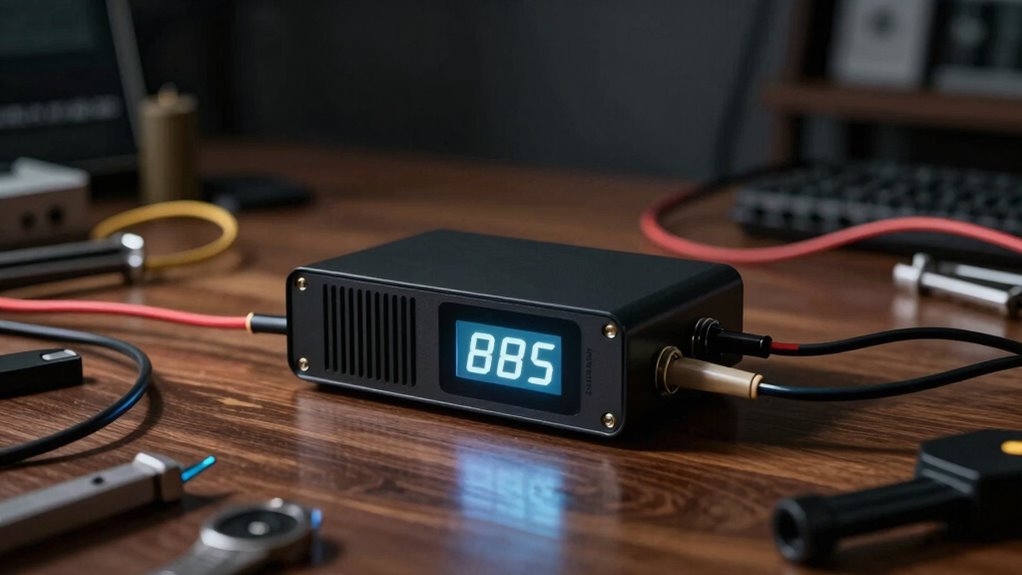

A Battery Management System (BMS) protects you from overcharging and deep discharging, preventing risks like swelling and permanent damage. It monitors voltage, current, and temperature, maximizing both safety and battery efficiency. However, it can’t shield against external damage from drops or extreme weather, nor can it fix problems from poor-quality batteries. Additionally, mismatched batteries may lead to uneven charging. To understand how a BMS impacts battery performance and reliability, keep exploring the topic.

Get backup power and energy gear delivered free with Prime
- Fast, free delivery on millions of items
- Prime Video, Amazon Music and more included
- Member-only deals all year
Key Takeaways
- A BMS protects against overcharging by cutting off charging when the battery is full, preventing swelling and potential fires.
- It monitors for deep discharges to avoid permanent damage to battery cells, ensuring safe operation.
- The system enhances battery performance and reliability through effective health monitoring and management.
- However, a BMS cannot prevent physical damage from drops or extreme weather conditions.
- It may struggle with mismatched or poor-quality batteries, leading to uneven charging and safety risks.
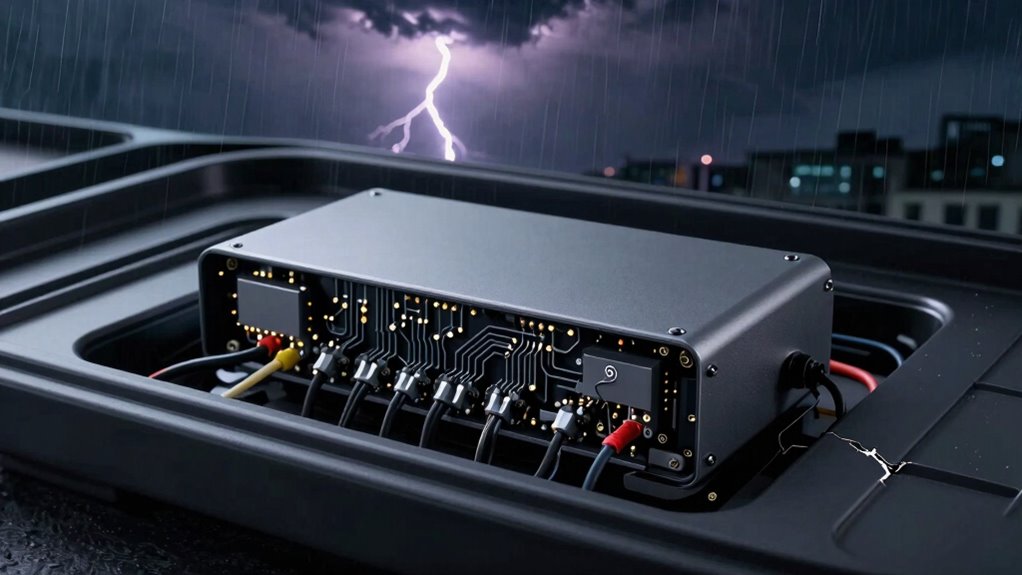
BMS protection is essential for safeguarding your battery system. A Battery Management System (BMS) plays an important role in monitoring and managing the health of your batteries. It guarantees you get the most out of your battery while maximizing safety. By actively monitoring voltage, current, and temperature, the BMS provides critical information that helps prevent issues like overcharging, deep discharging, and overheating. These safety features are designed to protect not only the battery itself but also the devices it powers.
When you use a BMS, you’re investing in a technology that actively protects against various risks. For instance, overcharging can lead to battery swelling or, in extreme cases, fires. The BMS prevents this by cutting off the charging process once it detects that the battery is full. Similarly, it monitors for deep discharges, which can permanently damage the battery cells. By making sure the battery stays within its safe operating limits, you’re increasing its lifespan and reliability.
However, it’s important to understand what a BMS doesn’t protect you from. While it excels at managing the battery’s health and safety, it can’t prevent external damage. If you accidentally drop your device or expose it to extreme weather conditions, the BMS won’t save it from physical harm. Additionally, a BMS can’t fix issues arising from poor-quality batteries. If the cells themselves are faulty or poorly manufactured, even the best BMS won’t be able to mitigate those risks.
Another limitation lies in the BMS’s ability to handle complex battery configurations. If you’re using a system with multiple batteries in series or parallel, the BMS might struggle to manage them effectively, especially if they’re not matched well. This mismatch can lead to uneven discharging or charging, which can compromise overall performance and safety.
battery management system for lithium batteries
As an affiliate, we earn on qualifying purchases.
As an affiliate, we earn on qualifying purchases.
Frequently Asked Questions
How Long Does a BMS Typically Last?
A BMS typically lasts as long as the battery lifespan, often around 5 to 10 years, depending on usage and maintenance. To maximize its life, follow some maintenance tips: keep the battery charged properly, avoid extreme temperatures, and check connections regularly. By doing this, you not only guarantee the BMS functions well but also extend the overall battery lifespan. Regular monitoring can help you catch issues before they become major problems.
Can a BMS Be Installed on Any Battery Type?
You might think a BMS can fit any battery type, but that’s not the case. A BMS has specific battery compatibility and installation requirements. For lithium-ion, lead-acid, or other chemistries, you’ll need a compatible BMS designed for that type. Installing one that doesn’t match your battery can lead to performance issues or even damage. Always check compatibility first to guarantee safe and effective operation, keeping your battery’s health in mind.
What Are the Signs of a Failing BMS?
If you’re noticing your battery draining faster than usual, or if it’s overheating, those could be signs of a failing battery management system (BMS). You might also experience inconsistent performance or system failures, like warnings on your device. Additionally, if the BMS struggles to balance the cells or fails to charge properly, it’s time to assess the situation. Regular checks can help you catch these issues early and avoid bigger problems.
Is a BMS Necessary for Small Battery Systems?
If you’re running a small solar-powered setup, you’ll definitely need a Battery Management System (BMS). It guarantees your battery operates efficiently, balancing charge levels and preventing over-discharge. Without it, you risk damaging your batteries, reducing their lifespan. For instance, a small electric bike can benefit greatly from a BMS, enhancing performance and safety. In small systems, a BMS isn’t just useful; it’s essential for ideal battery management and longevity.
How Much Does a BMS Usually Cost?
A battery management system (BMS) usually costs between $20 and $500, depending on its features and complexity. For basic models, you might spend around $20 to $100, while advanced systems with extra functionalities can reach up to $500 or more. When considering the cost breakdown, think about the number of cells, communication capabilities, and safety features. Investing in a good BMS can save you money and hassle down the line, so choose wisely!
Conclusion
In the world of batteries, a BMS is your trusty shield, guarding against overcharging and overheating, like a vigilant knight in shining armor. However, it can’t foresee every storm; it won’t protect you from physical damage or poor battery quality. Understanding these limits is vital to maximizing your battery’s lifespan and performance. So, while a BMS is essential, remember it’s just one piece of the puzzle in your battery management strategy.
Fall Picks
fall essentials
As an affiliate, we earn on qualifying purchases.