TL;DR

Get backup power and energy gear delivered free with Prime
- Fast, free delivery on millions of items
- Prime Video, Amazon Music and more included
- Member-only deals all year
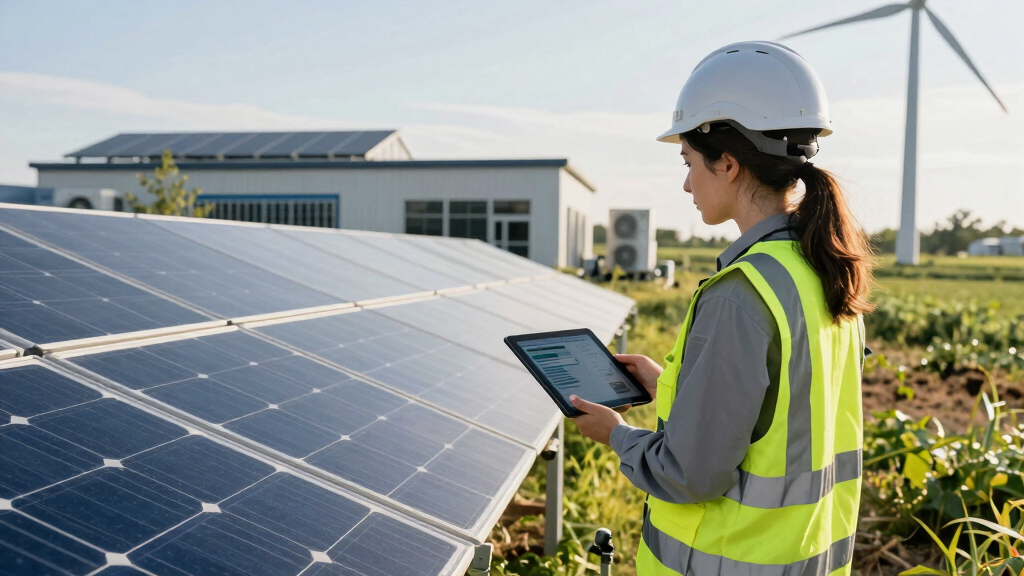
A study by LUT University shows that data centers can be reliably powered by wind and solar through extensive overbuild and backup systems. The research highlights location and flexibility as key factors, with implications for renewable energy policy and infrastructure planning.
A new study by LUT University finds that data centers in Nordic regions could operate continuously on wind and solar power when paired with substantial overcapacity and backup generation, making renewable-only power feasible in high-latitude environments.
The study concludes that achieving firm, continuous power from intermittent renewables like wind and solar requires at least seven times the data center’s baseload capacity. This overbuild would result in significant curtailment during peak production hours but can be managed with backup power and demand flexibility measures.
Researchers modeled a 1 GW renewable system for two hypothetical data center scenarios—full baseload operation and an 8,000-hour operational profile—within a Nordic context. Results indicate that location significantly influences costs, with the most favorable sites offering up to 24% lower levelized costs of electricity (LCOE). In optimal conditions, LCOE can fall below 80 €/MWh, comparable to nuclear power, especially when operational hours are high.
The study emphasizes that backup generation and demand-side flexibility are crucial, but also note that high overcapacity leads to curtailment of excess energy during peak times. The researchers did not model detailed data center operations like cooling loads, focusing instead on the potential for renewable baseload supply in Nordic environments.
Implications of Overcapacity for Renewable Data Center Feasibility
This research suggests that with sufficient overbuild and strategic siting, renewable energy can be a cost-competitive, reliable power source for data centers in high-latitude regions. This could influence energy policy, infrastructure investment, and data center siting decisions, especially as the industry seeks sustainable alternatives to traditional baseload power sources like nuclear and fossil fuels.
Moreover, the findings challenge the assumption that intermittent renewables cannot provide continuous power without extensive storage or grid integration, highlighting the importance of location-specific strategies and demand flexibility measures.
renewable energy data center cooling systems
As an affiliate, we earn on qualifying purchases.
As an affiliate, we earn on qualifying purchases.
Nordic Environment and Renewable Power Potential
The study builds on existing knowledge that high-latitude regions face seasonal constraints on renewable generation, primarily due to reduced solar insolation and wind variability. Prior analyses have shown that Nordic countries rely heavily on nuclear and hydro, but the LUT University research explores the possibility of replacing or supplementing these with wind and solar through large-scale overbuild and backup systems.
It references recent reports from IRENA indicating that solar PV and battery energy storage systems (BESS) can reach competitive costs in certain locations worldwide, supporting the viability of renewable baseload systems in regions like Finland.
While previous studies have examined the technical feasibility, this research emphasizes the economic aspects, including how location impacts costs and the role of demand-side flexibility in reducing operating expenses.
“It depends on the location. According to a recent report by IRENA, solar PV and BESS based baseload supply can reach levelized costs of less than €100 per MWh in several locations around the globe.”
— an anonymous researcher
Uncertainties in Cost and Operational Scalability
It is not yet clear how these findings will translate into real-world deployments, especially considering the operational complexity of data centers, such as cooling and dynamic load management. The study models simplified load profiles and does not account for detailed operational behaviors or potential regulatory hurdles. Additionally, the economic viability depends heavily on site-specific conditions, which vary widely across regions.
Next Steps for Validation and Practical Implementation
The researchers are preparing a project called Net Zero Energy Communities to analyze real-life cases and expand on the initial findings. Future work will involve detailed operational modeling, site-specific assessments, and pilot projects to validate the techno-economic feasibility of renewable-powered data centers in Nordic and other high-latitude regions.
Policy engagement and infrastructure planning will likely follow, as industry stakeholders seek to leverage these insights for sustainable data center development.
Key Questions
Can renewable energy reliably power data centers in high-latitude regions?
According to the study, with significant overcapacity, backup generation, and demand flexibility, it is technically and economically feasible to supply continuous power from wind and solar in Nordic environments.
What are the main challenges in implementing this renewable-powered model?
The primary challenges include the high level of overbuild required, managing curtailment of excess energy, site-specific cost factors, and operational complexities of data centers that were not modeled in detail.
How does location influence the cost-effectiveness of renewable data centers?
Location impacts the levelized cost of electricity, with favorable sites offering up to 24% lower costs. Seasonal variability and resource availability are key factors affecting overall economics.
Will this approach be applicable outside Nordic regions?
The study suggests that similar principles could apply elsewhere, but cost-effectiveness depends on regional renewable resource availability, infrastructure, and regulatory environment.
When will these findings influence industry practice?
Practical implementation depends on further validation through real-world projects, which are currently in planning stages. The upcoming publication in August 2026 will provide more detailed insights.
Source: PV Magazine
Halloween Picks
halloween
As an affiliate, we earn on qualifying purchases.