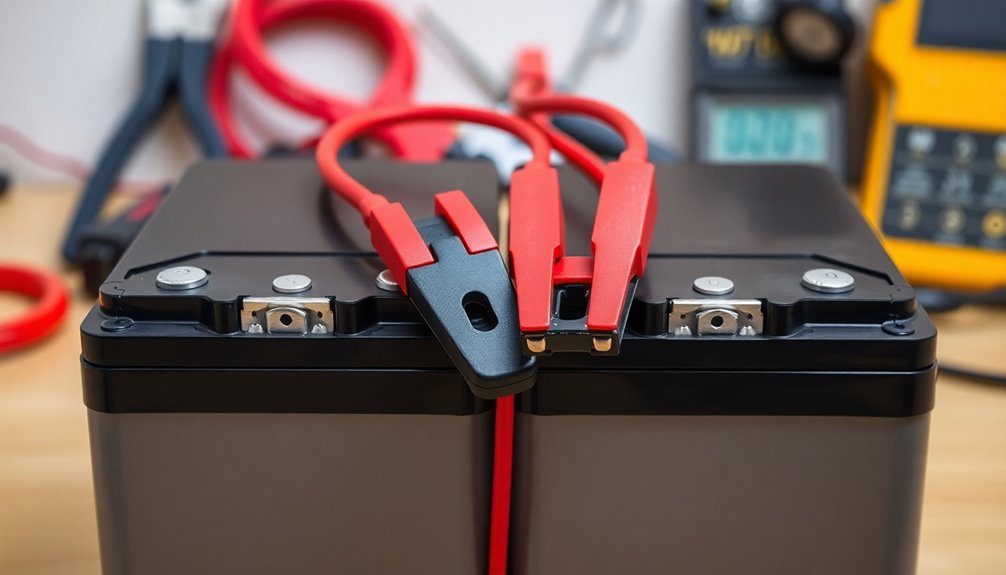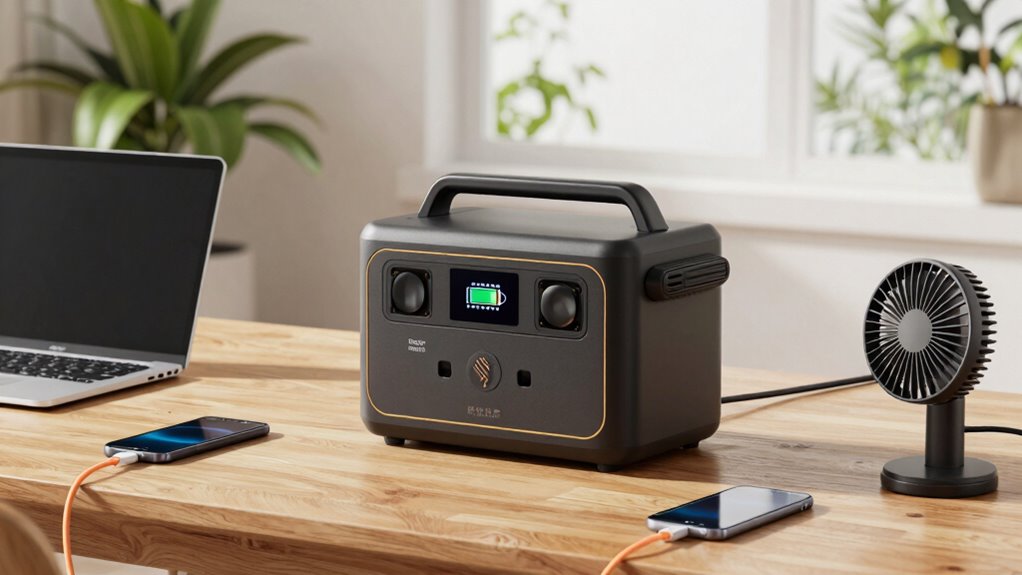

When picking a portable power station, your first question should be about its runtime based on your specific devices. Check the battery capacity in watt-hours (Wh) and compare it to your devices’ power needs. For instance, a 500Wh station can run a 100-watt device for about five hours. Remember, keeping usage below 80% capacity can enhance performance and battery life. Want to know more about maximizing your power station’s efficiency?

Get backup power and energy gear delivered free — and shop member deals
- Fast, free delivery on millions of items
- Access to Prime Big Deal Days deals on October 6–7
- Prime Video, Amazon Music and more included
Key Takeaways
- Determine the battery capacity in watt-hours (Wh) to understand total energy storage and potential runtime for your devices.
- Assess the power output of the station to ensure it meets the wattage requirements of your devices simultaneously.
- Identify the power needs of your devices to prioritize usage and avoid exceeding capacity limits.
- Consider safety margins by keeping output below 80% of capacity to enhance performance and prolong battery lifespan.
- Utilize power management techniques to optimize runtime and prevent unexpected shutdowns during device operation.
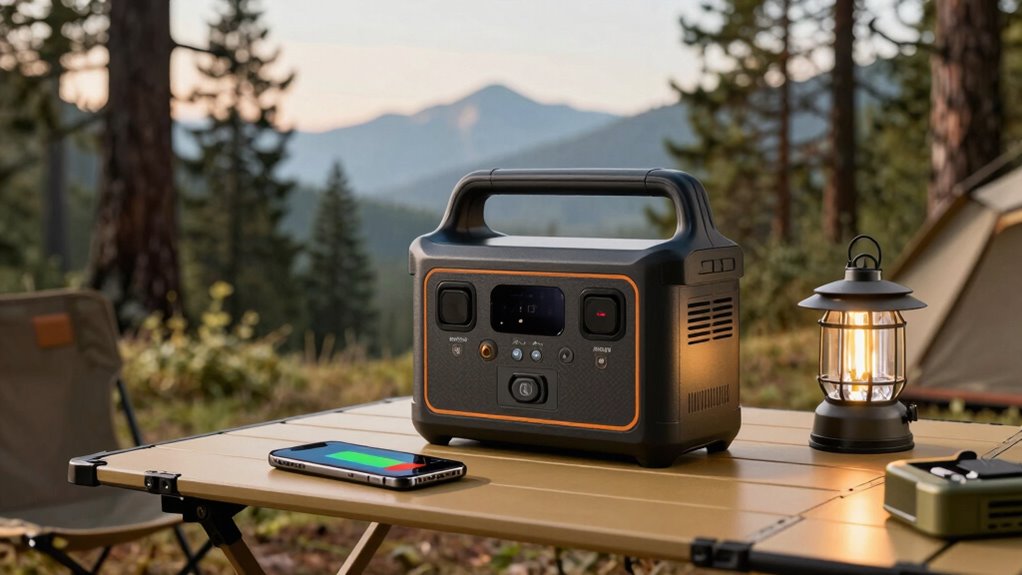
Have you ever wondered how long a portable power station can actually run your devices? It’s an essential question to ask, especially if you’re relying on one for camping trips, emergency situations, or outdoor activities. To answer this, you need to look closely at two main factors: battery capacity and power output. Understanding these elements will help you gauge how long your devices will stay charged.
Battery capacity is usually measured in watt-hours (Wh). This number tells you how much energy the power station can store. For example, if a portable power station has a battery capacity of 500Wh, it can theoretically deliver 500 watts for one hour or 250 watts for two hours. But you can’t just plug anything in and expect it to last. You need to know how much power your devices require. That’s where power output comes into play.
Battery capacity, measured in watt-hours (Wh), determines how long your devices can run, requiring knowledge of their power needs for effective usage.
Power output typically refers to how many watts the station can provide at once. If you’re using a device that needs 100 watts, you can run it for about five hours with a 500Wh power station under ideal conditions. However, remember that the efficiency of the inverter and other factors like temperature can affect this runtime. So, it’s not always a straightforward calculation. Additionally, knowing the battery efficiency can help you more accurately estimate actual runtime and prevent unexpected shutdowns.
Also, consider what devices you plan to power. Chargers for smartphones, laptops, and small appliances each have different power needs. For instance, a laptop might draw around 60-90 watts, while a mini fridge could consume up to 100-200 watts. This variance means you’ll have to prioritize which devices you can run simultaneously. Understanding the power needs of your devices can help you better plan your energy consumption.
It’s also wise to factor in a safety margin. You don’t want to push your power station to its limits. If you’re continuously using it at full capacity, you’ll drain the battery faster and decrease its lifespan. By keeping your power output below 80% of the station’s capacity, you’ll guarantee better performance over time. Additionally, understanding the battery capacity and how it relates to your devices’ energy needs can help optimize runtime and prolong your power station’s lifespan. Being aware of power management techniques can further improve efficiency and battery longevity.
As an affiliate, we earn on qualifying purchases.
Frequently Asked Questions
How Do I Calculate the Runtime for My Devices?
To calculate the runtime for your devices, first, determine the device wattage. Then, find out the battery capacity of your power station, usually in watt-hours (Wh). Divide the battery capacity by the device wattage to get the runtime in hours. For example, if your power station has a 500Wh capacity and your device uses 50 watts, you’ll get about 10 hours of runtime. Don’t forget to take into account efficiency losses!
What Factors Affect the Runtime of a Power Station?
When you’re counting on your power station, several factors can influence its runtime. First, consider its power capacity; a higher capacity means longer usage. Next, think about load management—how much power your devices draw. If you overload it, you’ll drain the battery faster. Temperature also plays a role; extreme conditions can reduce efficiency. So, before you head out, make sure you’ve got a solid plan to maximize your power usage!
Can Battery Age Impact Runtime Performance?
Yes, battery age can considerably impact runtime performance. As your power station’s battery ages, its lifespan decreases, which means it won’t hold a charge as effectively. Each charging cycle wears it down, reducing overall efficiency. You might notice shorter runtimes as the battery degrades over time. To maintain ideal performance, regularly monitor your battery’s health and replace it when necessary, ensuring you get the most out of your portable power station.
Are There Energy-Saving Tips to Extend Runtime?
When it comes to extending runtime, it’s best to keep your ducks in a row. Use energy-efficient appliances and turn off non-essential devices to maximize your power management. You can also lower the brightness on screens and avoid running multiple high-drain gadgets simultaneously. By planning your usage and being mindful of your energy consumption, you’ll stretch that runtime and get the most out of your portable power station.
How Does Temperature Influence Runtime Efficiency?
Temperature extremes can greatly impact your portable power station’s runtime efficiency. When it’s too hot or too cold, you’ll notice efficiency loss, meaning your device won’t perform at its best. For instance, extreme heat can cause battery degradation, while cold temperatures can reduce capacity. To maximize runtime, try to keep your power station within its recommended temperature range. This simple adjustment can help you get the most out of your investment.
Conclusion
When considering a portable power station, don’t forget the essential runtime question. Knowing how long your device can last under load can save you from sour surprises. So, before you buy, balance battery capacity and your power needs to guarantee peak performance. A well-informed choice ensures great adventures, fueling fun and freedom wherever you roam. Keep your energy expectations in check, and you’ll power through your trips with confidence and ease!
Halloween Picks
halloween
As an affiliate, we earn on qualifying purchases.