Flow batteries are a promising solution for grid storage because they’re scalable, cost-effective, and environmentally friendly. They let you easily increase capacity by adding more electrolyte, making them ideal for supporting renewable sources like wind and solar. These batteries help stabilize the grid and improve energy management. Advances in materials are making them more durable and affordable, overcoming previous challenges. Keep exploring to discover how innovations are shaping their future and expanding their applications.
Key Takeaways
- Flow batteries offer scalable, cost-effective energy storage essential for managing renewable energy and grid stability.
- Material innovations improve performance, durability, and reduce costs, enabling larger and more reliable grid-scale systems.
- Their flexible operation supports grid balancing, frequency regulation, and energy arbitrage.
- Challenges include system complexity, maintenance, and scaling issues that need ongoing technological solutions.
- Advancements in environmentally friendly materials and system design enhance long-term sustainability and deployment potential.
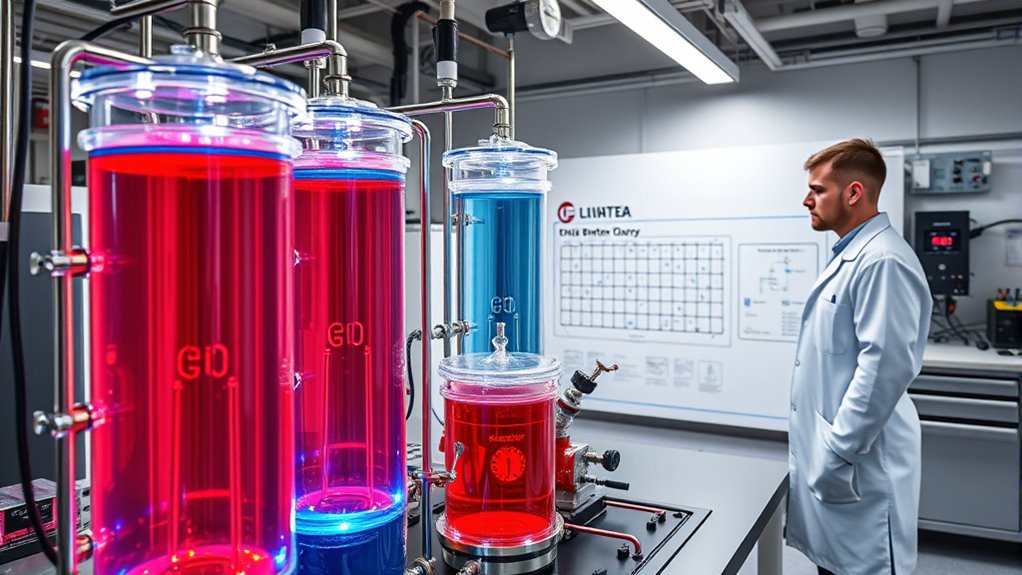
Flow batteries are emerging as a promising solution for grid storage, offering a scalable and cost-effective way to store large amounts of energy. As renewable energy sources like wind and solar become more prevalent, the need for reliable, flexible storage options grows. Flow batteries excel in this regard because their design allows for easy scalability; you can increase storage capacity simply by expanding the electrolyte volume. However, despite their potential, scaling these systems presents challenges that researchers are actively working to overcome. One major obstacle is managing the complexity of large-scale systems, which require careful balancing of electrolyte flow rates and system components to maintain efficiency. These scaling challenges can lead to increased costs, maintenance issues, and operational inefficiencies if not addressed properly.
Scaling flow batteries involves balancing system complexity to prevent increased costs and operational issues.
To tackle these issues, material innovations play a vital role. Advancements in electrode and electrolyte materials are driving improvements in performance, durability, and cost. Researchers are exploring new membrane materials that reduce degradation and improve ion selectivity, directly impacting the longevity of the system. Similarly, innovations in electrolyte chemistry aim to enhance energy density while lowering the costs associated with raw materials. By developing more stable and efficient electrolytes, you can increase the amount of energy stored without markedly inflating costs or system size. Additionally, the development of sustainable and environmentally friendly materials is becoming increasingly important to ensure the overall environmental viability of large-scale flow battery deployment.
Material innovations also focus on improving the overall lifespan of flow batteries. For instance, developing corrosion-resistant electrodes can reduce maintenance needs and extend operational life, making large-scale deployment more feasible. Additionally, more affordable and sustainable materials are being tested to replace expensive or scarce components, which could lower system costs and improve accessibility. As these innovations mature, they’ll help address the scaling challenges by making larger, more powerful flow battery systems easier and cheaper to produce and maintain.
Furthermore, integrating new materials into flow battery designs can lead to modular systems that are easier to upgrade or repair, facilitating larger installations without significant disruptions. This modularity is essential for grid applications, where flexibility and rapid deployment are critical. Through continuous material innovations, you can expect flow batteries to become more reliable and economically attractive for grid storage, helping to stabilize power grids and support a sustainable energy future. As this technology evolves, overcoming scaling challenges with smarter materials will be key to revealing the full potential of flow batteries in modern energy infrastructure.
Frequently Asked Questions
How Do Flow Batteries Compare Cost-Wise to Other Energy Storage Options?
You’ll find flow batteries generally have a higher initial cost compared to lithium-ion batteries, but their cost comparison improves over time due to longer lifespan and easier scalability. This makes them more economically feasible for large-scale grid storage. You should consider factors like maintenance, durability, and energy capacity, as these influence the overall economic feasibility. Ultimately, flow batteries can offer a cost-effective solution when long-term, large-scale storage is needed.
What Are the Environmental Impacts of Flow Battery Manufacturing and Disposal?
Think of flow batteries like a garden needing careful tending; their manufacturing and disposal pose environmental challenges. You’ll find recycling challenges because some materials, like vanadium, are hard to reclaim, and resource extraction can strain ecosystems. While they produce fewer emissions during use, their production and end-of-life stages may impact the environment, requiring mindful management and innovative recycling solutions to minimize ecological footprints.
Can Flow Batteries Be Scaled for Large Utility-Scale Storage Projects?
Yes, flow batteries can be scaled for large utility projects, but scalability challenges exist. You need to address issues like system size, cost, and complexity. Fortunately, technological advancements are improving flow battery designs, making them more efficient and affordable for grid storage. As these innovations continue, you’ll find it easier to deploy flow batteries at a utility scale, supporting renewable energy integration and grid stability effectively.
What Are the Limitations of Flow Battery Technology in Extreme Weather?
Did you know that extreme temperatures can reduce flow battery efficiency by up to 30%? In harsh weather, temperature sensitivity becomes a significant limitation, causing electrolyte viscosity changes and electrode degradation. These issues can impair performance and shorten lifespan. To combat this, you need robust thermal management systems. Without them, flow batteries may struggle to operate reliably in extreme weather, limiting their suitability for some outdoor, grid-scale applications.
How Long Do Flow Batteries Typically Last Before Replacement Is Needed?
Flow batteries typically last 8 to 15 years before needing replacement. You’ll find that electrolyte degradation over time reduces performance, while membrane durability plays a vital role in longevity. Proper maintenance can extend their lifespan, but eventually, electrolyte components may need replacement, and membranes can wear out. Monitoring these factors helps guarantee you get the most from your flow battery, maximizing its efficiency and service life.
Conclusion
Imagine a future where your energy needs are seamlessly met, like a steady river powering cities. Flow batteries stand at the forefront, offering reliable, scalable storage that keeps the grid alive and vibrant. As the sun sets and winds calm, these batteries step in, ensuring your world remains energized. Embrace this innovation, and you’ll see a brighter, more resilient energy landscape unfolding before your eyes—one where flow batteries truly power the future.