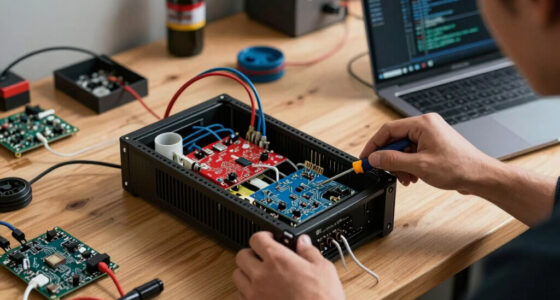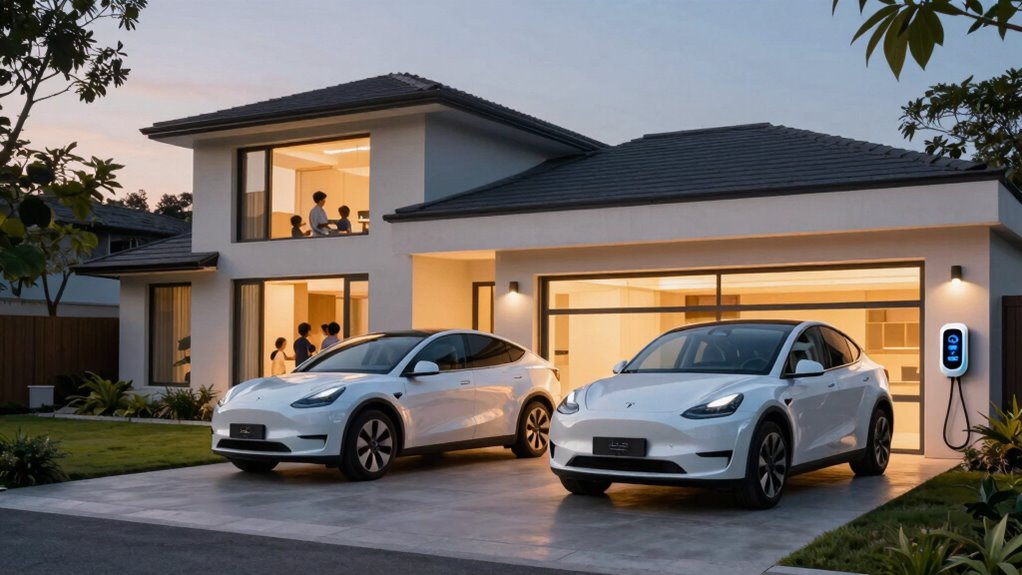

EV charger load balancing matters in real homes because it helps distribute charging demand evenly, preventing disruptions to your other appliances like refrigerators and air conditioners. It reduces the risk of circuit overloads and outages, saving you from costly repairs and higher energy bills. Plus, it makes your energy use more efficient and supports grid stability. Discover how this technology can enhance your home efficiency and charging experience.

Get backup power and energy gear delivered free with Prime
- Fast, free delivery on millions of items
- Prime Video, Amazon Music and more included
- Member-only deals all year
Key Takeaways
- Load balancing evenly distributes EV charging demand, preventing disruptions to essential household appliances like refrigerators and air conditioners.
- It reduces the risk of circuit overloads and outages, ensuring a reliable energy supply for all home devices.
- Smart charging technology enables scheduling during off-peak hours, taking advantage of lower electricity rates and flattening demand peaks.
- Integrating load management systems prioritizes EV charging based on household energy use, maintaining stability and preventing potential damage to the electrical system.
- Effective load balancing promotes sustainable charging habits, contributing to lower energy costs and a reduced carbon footprint.
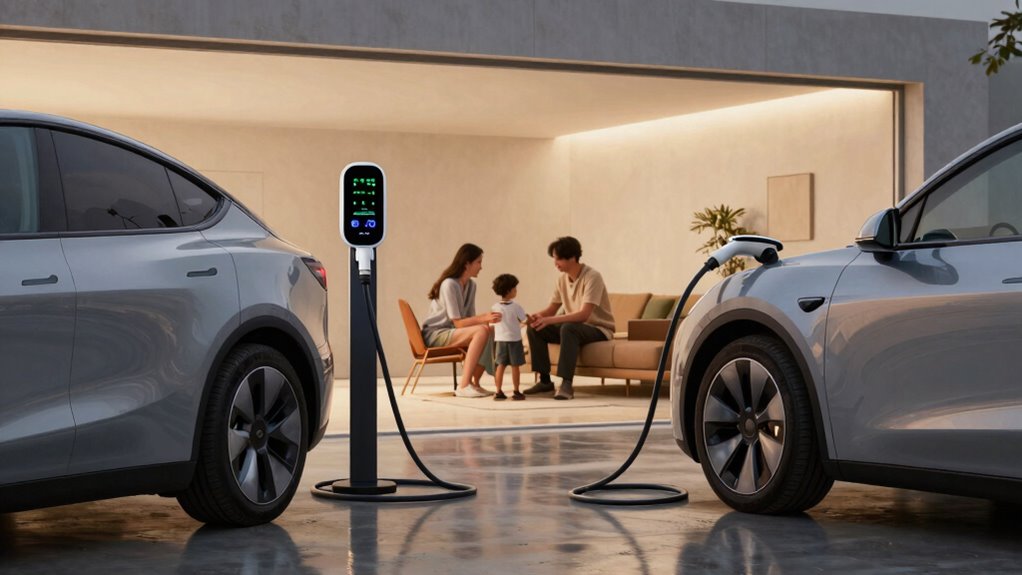
As electric vehicles (EVs) gain popularity, managing charging infrastructure effectively becomes vital. You might find yourself wondering how to best charge your EV without straining your home’s power supply or the local grid. This is where EV charger load balancing comes into play. By implementing smart charging solutions, you can optimize energy usage, guaranteeing both energy efficiency and grid stability.
When you plug in your EV, it’s easy to overlook the demands it places on your household’s electrical system. Load balancing helps distribute that demand evenly, so your home’s other appliances, like your refrigerator or air conditioner, can function without interruption. If you’re charging multiple EVs or running high-consumption devices, improper load management can lead to circuit overloads and even outages. That’s not just inconvenient; it can also be costly regarding repairs and higher energy bills.
Load balancing ensures your EV charging doesn’t disrupt other appliances, preventing costly circuit overloads and outages.
Smart charging technology is a game-changer. It allows you to schedule your EV charging during off-peak hours, taking advantage of lower electricity rates while reducing stress on the grid. Imagine charging your vehicle overnight while your home is using less power. This not only saves you money but also promotes grid stability by flattening demand peaks. Smart charging technology can adapt to real-time conditions, making your charging process even more efficient. Incorporating load management systems can further enhance your ability to monitor and control energy flow, ensuring optimal utilization.
Home integration is another essential aspect of effective load balancing. If you’ve got a home energy management system, it can prioritize how and when your EV charges. For instance, if your home’s energy consumption is high, the system can delay charging until demand decreases. This guarantees that you’re not just charging your EV efficiently but also maintaining a balanced and stable power supply in your home. Additionally, understanding your home’s electrical capacity is crucial for safe and effective load management. Proper electrical capacity assessment ensures your system can handle your charging needs without risking overloads or damage.
By focusing on energy efficiency, you can make your charging habits more sustainable. Load balancing helps minimize energy waste and can even contribute to a smaller carbon footprint. As technology advances, the integration of renewable energy sources into home charging systems is becoming increasingly feasible, further reducing environmental impact. Plus, many utilities offer incentives for smart charging practices, further sweetening the deal.
Incorporating these systems might seem like an extra step, but it’s one that pays off in the long run. You’ll enjoy the convenience of a fully charged EV without the hassle of managing power loads manually. So, if you’re considering an EV or already own one, embracing load balancing will enhance your charging experience and keep your home a comfortable, efficient haven.
EV charger load balancing system
As an affiliate, we earn on qualifying purchases.
As an affiliate, we earn on qualifying purchases.
Frequently Asked Questions
How Does Load Balancing Affect My Electricity Bill?
Load balancing can markedly affect your electricity bill by optimizing your EV charging through smart charging. By distributing power evenly, it prevents overloads and reduces peak demand charges. This energy efficiency means you’re using electricity when it’s cheaper, saving you money. When your EV charger works alongside your home’s energy usage, you’ll see lower costs on your bill while still ensuring your car is charged and ready when you need it.
Can I Install Multiple Chargers With Load Balancing?
Absolutely, you can install multiple chargers with load balancing! It’s like giving your home a smart upgrade, ensuring efficient power distribution without overwhelming your electrical system. By managing the load, you’ll avoid those dreaded spikes in your electricity bill. Plus, you’ll have peace of mind knowing each vehicle gets the right amount of charge without straining your home’s resources. Embrace the convenience while keeping your energy costs in check!
Is Load Balancing Compatible With All EV Models?
Load balancing is generally compatible with most EV models, but you should check charger compatibility with your specific vehicle standards. Different brands and models may have unique requirements, so it’s essential to verify that your chargers can communicate effectively with your EVs. If you’re planning to install multiple chargers, ensuring they work together seamlessly will help you optimize charging times and efficiency, making your home setup more convenient.
What Happens During a Power Outage With Load Balancing?
During a power outage, load balancing can help manage the energy use of your EV charger once power restoration occurs. It guarantees a steady flow of electricity, preventing overloads and potential damage. You’ll benefit from safety measures in place, which prioritize essential devices before charging your vehicle. Once the grid stabilizes, your charger gradually ramps up, allowing you to charge safely without risking your home’s electrical system.
Are There Any Maintenance Requirements for Load Balancing Systems?
Yes, load balancing systems do have maintenance requirements. You’ll want to regularly check connections and software updates to guarantee system reliability. During the installation process, you should also discuss ongoing maintenance with your installer. Keeping an eye on the system’s performance will help you catch issues early, preventing potential downtime. Regular inspections can save you from costly repairs and maintain your charging experience as efficient and seamless.
Conclusion
In a world where electric vehicles are becoming the norm, load balancing for EV chargers is essential. It guarantees you’re not left in the dark while charging your car. By distributing power efficiently, you save on energy costs and reduce strain on your home’s electrical system. Remember, a stitch in time saves nine; addressing load balancing now means smoother sailing in the future. Embrace this technology, and you’ll reap the benefits for years to come!
Halloween Picks
halloween
As an affiliate, we earn on qualifying purchases.